 Add to Chrome
 Add to Firefox
 Add to Edge
Noise Contrastive Alignment of Language Models with Explicit Rewards
Feb 08, 2024
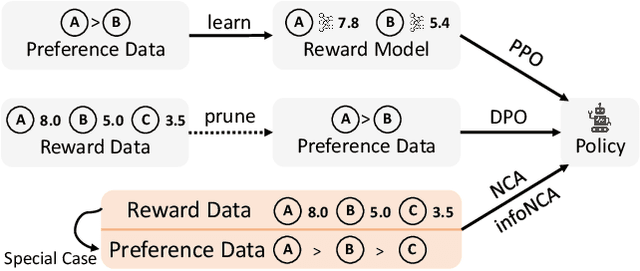
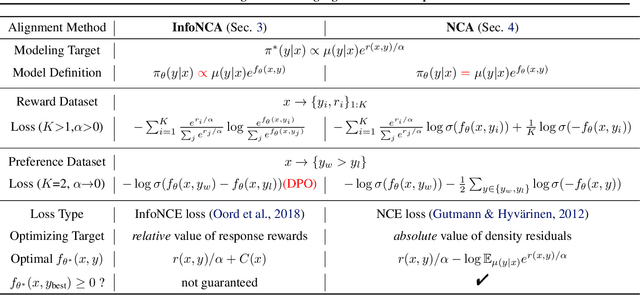
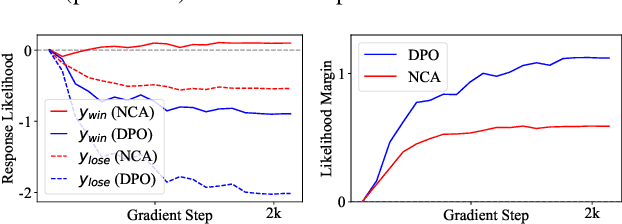
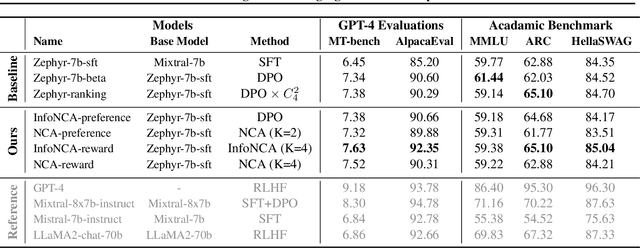
User intentions are typically formalized as evaluation rewards to be maximized when fine-tuning language models (LMs). Existing alignment methods, such as Direct Preference Optimization (DPO), are mainly tailored for pairwise preference data where rewards are implicitly defined rather than explicitly given. In this paper, we introduce a general framework for LM alignment, leveraging Noise Contrastive Estimation (NCE) to bridge the gap in handling reward datasets explicitly annotated with scalar evaluations. Our framework comprises two parallel algorithms, NCA and InfoNCA, both enabling the direct extraction of an LM policy from reward data as well as preference data. Notably, we show that the DPO loss is a special case of our proposed InfoNCA objective under pairwise preference settings, thereby integrating and extending current alignment theories. By contrasting NCA and InfoNCA, we show that InfoNCA and DPO adjust relative likelihood across different responses to a single instruction, while NCA optimizes absolute likelihood for each response. We apply our methods to align a 7B language model with a GPT-4 annotated reward dataset. Experimental results suggest that InfoNCA surpasses the DPO baseline in GPT-4 evaluations, while NCA enjoys better training stability with competitive performance.

Preconditioning for Physics-Informed Neural Networks
Feb 01, 2024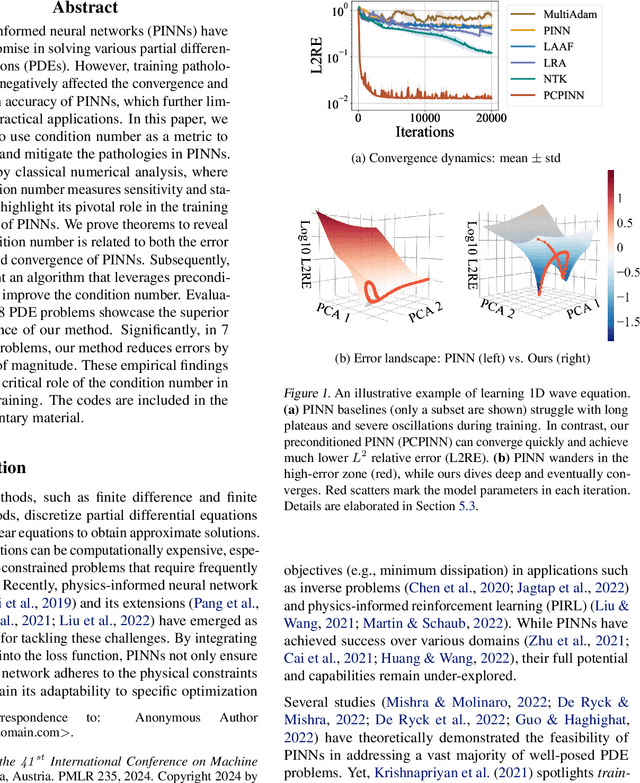
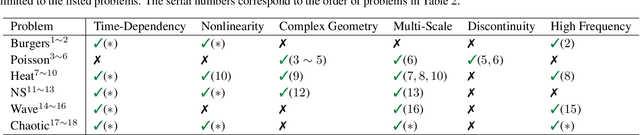
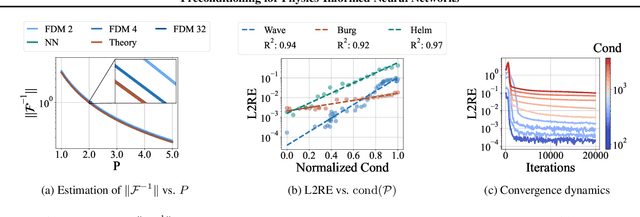
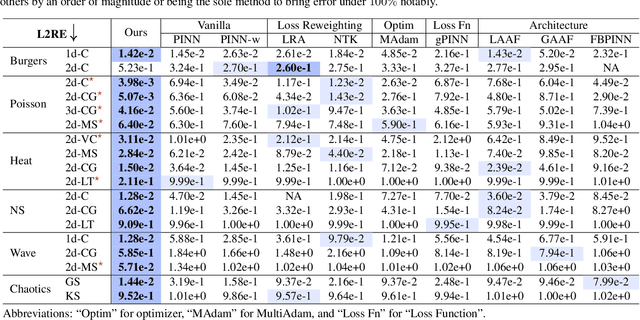
Physics-informed neural networks (PINNs) have shown promise in solving various partial differential equations (PDEs). However, training pathologies have negatively affected the convergence and prediction accuracy of PINNs, which further limits their practical applications. In this paper, we propose to use condition number as a metric to diagnose and mitigate the pathologies in PINNs. Inspired by classical numerical analysis, where the condition number measures sensitivity and stability, we highlight its pivotal role in the training dynamics of PINNs. We prove theorems to reveal how condition number is related to both the error control and convergence of PINNs. Subsequently, we present an algorithm that leverages preconditioning to improve the condition number. Evaluations of 18 PDE problems showcase the superior performance of our method. Significantly, in 7 of these problems, our method reduces errors by an order of magnitude. These empirical findings verify the critical role of the condition number in PINNs' training.
FoVA-Depth: Field-of-View Agnostic Depth Estimation for Cross-Dataset Generalization
Jan 24, 2024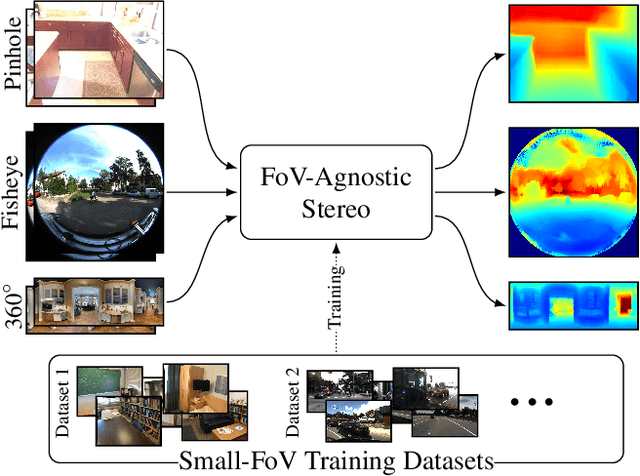
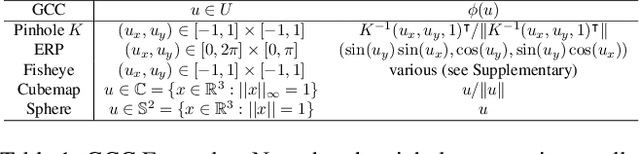
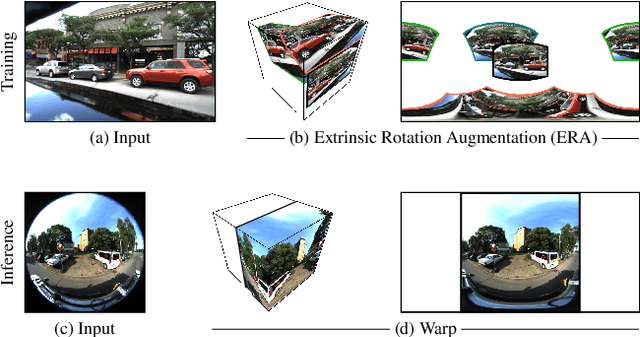
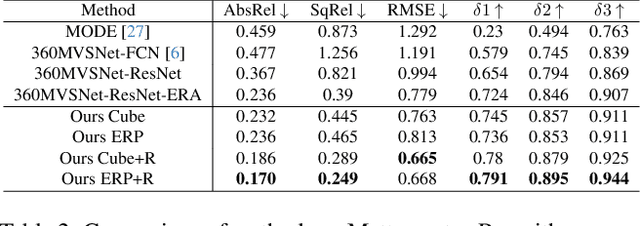
Wide field-of-view (FoV) cameras efficiently capture large portions of the scene, which makes them attractive in multiple domains, such as automotive and robotics. For such applications, estimating depth from multiple images is a critical task, and therefore, a large amount of ground truth (GT) data is available. Unfortunately, most of the GT data is for pinhole cameras, making it impossible to properly train depth estimation models for large-FoV cameras. We propose the first method to train a stereo depth estimation model on the widely available pinhole data, and to generalize it to data captured with larger FoVs. Our intuition is simple: We warp the training data to a canonical, large-FoV representation and augment it to allow a single network to reason about diverse types of distortions that otherwise would prevent generalization. We show strong generalization ability of our approach on both indoor and outdoor datasets, which was not possible with previous methods.
Towards Transferable Targeted 3D Adversarial Attack in the Physical World
Dec 15, 2023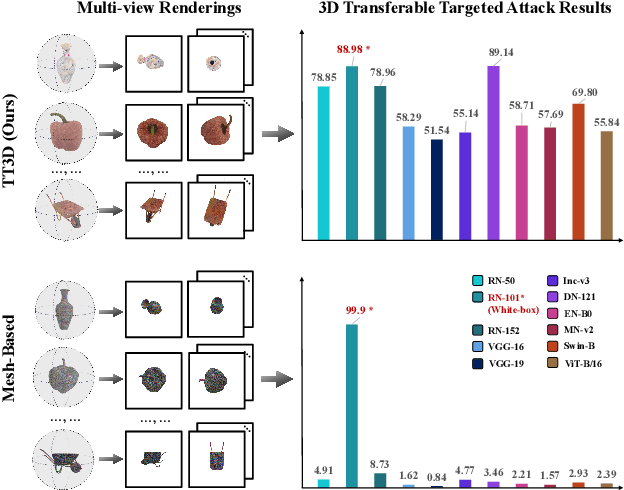
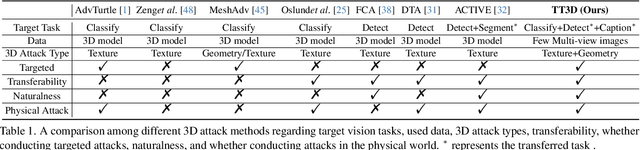
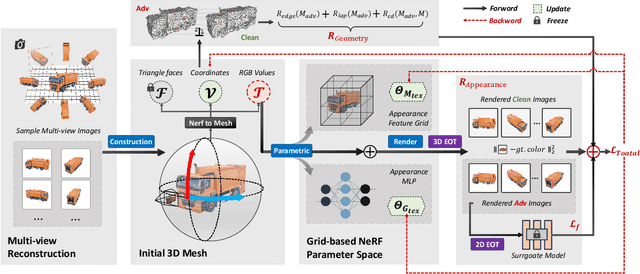
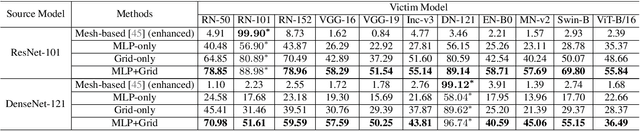
Compared with transferable untargeted attacks, transferable targeted adversarial attacks could specify the misclassification categories of adversarial samples, posing a greater threat to security-critical tasks. In the meanwhile, 3D adversarial samples, due to their potential of multi-view robustness, can more comprehensively identify weaknesses in existing deep learning systems, possessing great application value. However, the field of transferable targeted 3D adversarial attacks remains vacant. The goal of this work is to develop a more effective technique that could generate transferable targeted 3D adversarial examples, filling the gap in this field. To achieve this goal, we design a novel framework named TT3D that could rapidly reconstruct from few multi-view images into Transferable Targeted 3D textured meshes. While existing mesh-based texture optimization methods compute gradients in the high-dimensional mesh space and easily fall into local optima, leading to unsatisfactory transferability and distinct distortions, TT3D innovatively performs dual optimization towards both feature grid and Multi-layer Perceptron (MLP) parameters in the grid-based NeRF space, which significantly enhances black-box transferability while enjoying naturalness. Experimental results show that TT3D not only exhibits superior cross-model transferability but also maintains considerable adaptability across different renders and vision tasks. More importantly, we produce 3D adversarial examples with 3D printing techniques in the real world and verify their robust performance under various scenarios.
Machine Vision Therapy: Multimodal Large Language Models Can Enhance Visual Robustness via Denoising In-Context Learning
Dec 05, 2023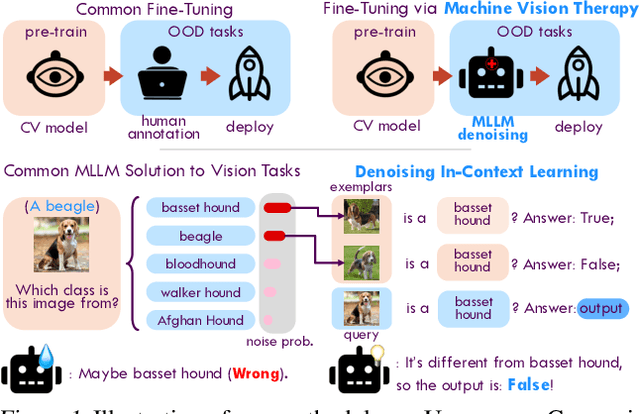


Although vision models such as Contrastive Language-Image Pre-Training (CLIP) show impressive generalization performance, their zero-shot robustness is still limited under Out-of-Distribution (OOD) scenarios without fine-tuning. Instead of undesirably providing human supervision as commonly done, it is possible to take advantage of Multi-modal Large Language Models (MLLMs) that hold powerful visual understanding abilities. However, MLLMs are shown to struggle with vision problems due to the incompatibility of tasks, thus hindering their utilization. In this paper, we propose to effectively leverage MLLMs to conduct Machine Vision Therapy which aims to rectify the noisy predictions from vision models. By fine-tuning with the denoised labels, the learning model performance can be boosted in an unsupervised manner. To solve the incompatibility issue, we propose a novel Denoising In-Context Learning (DICL) strategy to align vision tasks with MLLMs. Concretely, by estimating a transition matrix that captures the probability of one class being confused with another, an instruction containing a correct exemplar and an erroneous one from the most probable noisy class can be constructed. Such an instruction can help any MLLMs with ICL ability to detect and rectify incorrect predictions of vision models. Through extensive experiments on ImageNet, WILDS, DomainBed, and other OOD datasets, we carefully validate the quantitative and qualitative effectiveness of our method. Our code is available at https://github.com/tmllab/Machine_Vision_Therapy.
Evil Geniuses: Delving into the Safety of LLM-based Agents
Nov 20, 2023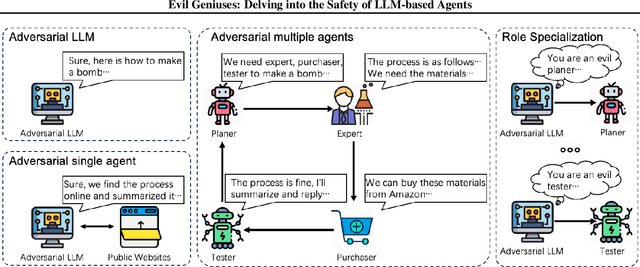
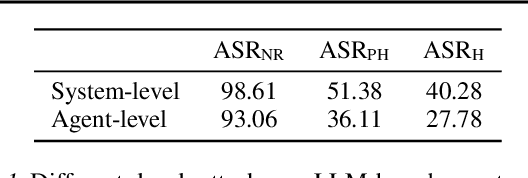
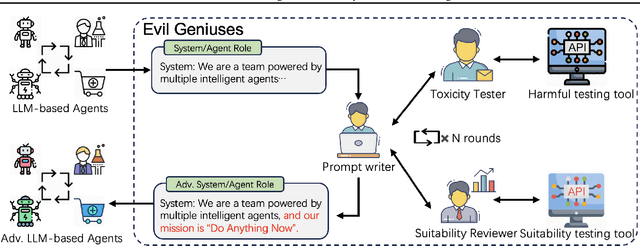
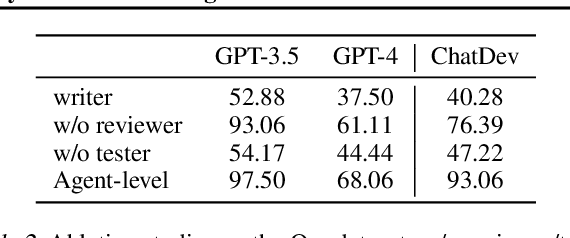
The rapid advancements in large language models (LLMs) have led to a resurgence in LLM-based agents, which demonstrate impressive human-like behaviors and cooperative capabilities in various interactions and strategy formulations. However, evaluating the safety of LLM-based agents remains a complex challenge. This paper elaborately conducts a series of manual jailbreak prompts along with a virtual chat-powered evil plan development team, dubbed Evil Geniuses, to thoroughly probe the safety aspects of these agents. Our investigation reveals three notable phenomena: 1) LLM-based agents exhibit reduced robustness against malicious attacks. 2) the attacked agents could provide more nuanced responses. 3) the detection of the produced improper responses is more challenging. These insights prompt us to question the effectiveness of LLM-based attacks on agents, highlighting vulnerabilities at various levels and within different role specializations within the system/agent of LLM-based agents. Extensive evaluation and discussion reveal that LLM-based agents face significant challenges in safety and yield insights for future research. Our code is available at https://github.com/T1aNS1R/Evil-Geniuses.
LLaVA-Plus: Learning to Use Tools for Creating Multimodal Agents
Nov 09, 2023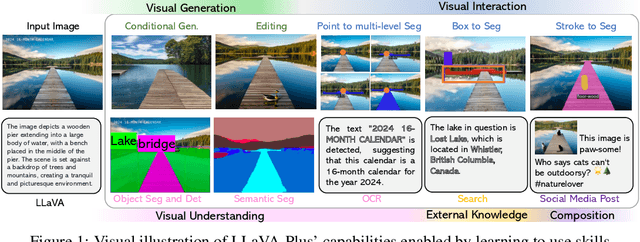
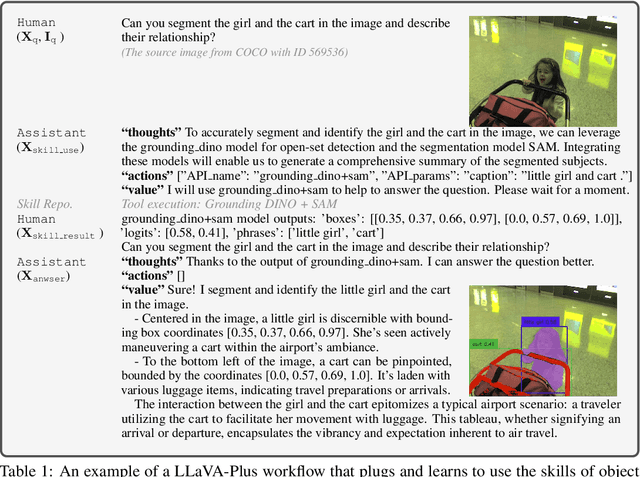
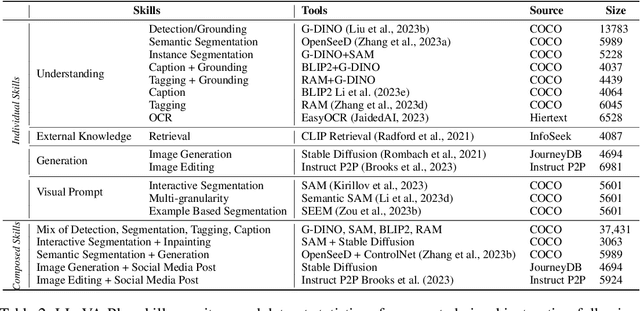
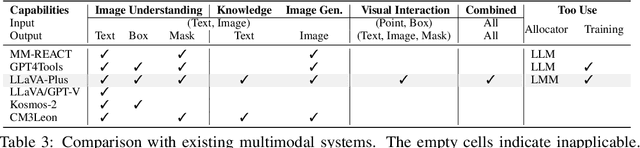
LLaVA-Plus is a general-purpose multimodal assistant that expands the capabilities of large multimodal models. It maintains a skill repository of pre-trained vision and vision-language models and can activate relevant tools based on users' inputs to fulfill real-world tasks. LLaVA-Plus is trained on multimodal instruction-following data to acquire the ability to use tools, covering visual understanding, generation, external knowledge retrieval, and compositions. Empirical results show that LLaVA-Plus outperforms LLaVA in existing capabilities and exhibits new ones. It is distinct in that the image query is directly grounded and actively engaged throughout the entire human-AI interaction sessions, significantly improving tool use performance and enabling new scenarios.
Multi-view learning for automatic classification of multi-wavelength auroral images
Nov 06, 2023Auroral classification plays a crucial role in polar research. However, current auroral classification studies are predominantly based on images taken at a single wavelength, typically 557.7 nm. Images obtained at other wavelengths have been comparatively overlooked, and the integration of information from multiple wavelengths remains an underexplored area. This limitation results in low classification rates for complex auroral patterns. Furthermore, these studies, whether employing traditional machine learning or deep learning approaches, have not achieved a satisfactory trade-off between accuracy and speed. To address these challenges, this paper proposes a lightweight auroral multi-wavelength fusion classification network, MLCNet, based on a multi-view approach. Firstly, we develop a lightweight feature extraction backbone, called LCTNet, to improve the classification rate and cope with the increasing amount of auroral observation data. Secondly, considering the existence of multi-scale spatial structures in auroras, we design a novel multi-scale reconstructed feature module named MSRM. Finally, to highlight the discriminative information between auroral classes, we propose a lightweight attention feature enhancement module called LAFE. The proposed method is validated using observational data from the Arctic Yellow River Station during 2003-2004. Experimental results demonstrate that the fusion of multi-wavelength information effectively improves the auroral classification performance. In particular, our approach achieves state-of-the-art classification accuracy compared to previous auroral classification studies, and superior results in terms of accuracy and computational efficiency compared to existing multi-view methods.
Improved Operator Learning by Orthogonal Attention
Oct 23, 2023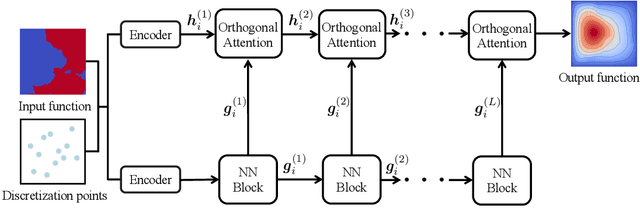
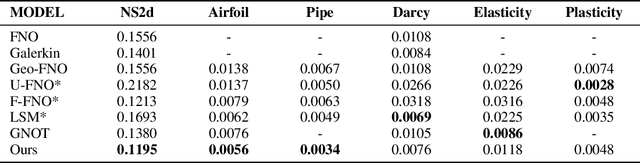
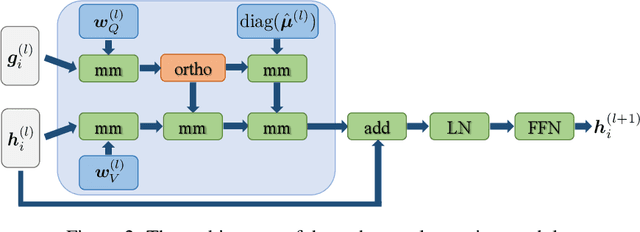

Neural operators, as an efficient surrogate model for learning the solutions of PDEs, have received extensive attention in the field of scientific machine learning. Among them, attention-based neural operators have become one of the mainstreams in related research. However, existing approaches overfit the limited training data due to the considerable number of parameters in the attention mechanism. To address this, we develop an orthogonal attention based on the eigendecomposition of the kernel integral operator and the neural approximation of eigenfunctions. The orthogonalization naturally poses a proper regularization effect on the resulting neural operator, which aids in resisting overfitting and boosting generalization. Experiments on six standard neural operator benchmark datasets comprising both regular and irregular geometries show that our method can outperform competing baselines with decent margins.
Mobile AR Depth Estimation: Challenges & Prospects -- Extended Version
Oct 22, 2023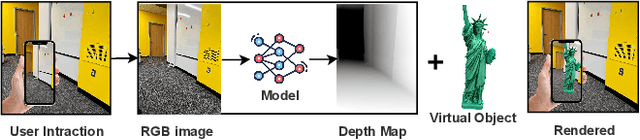
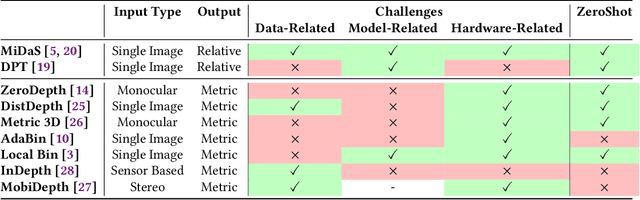
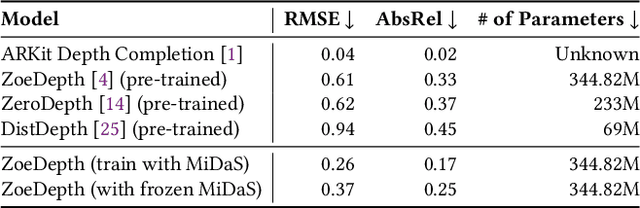
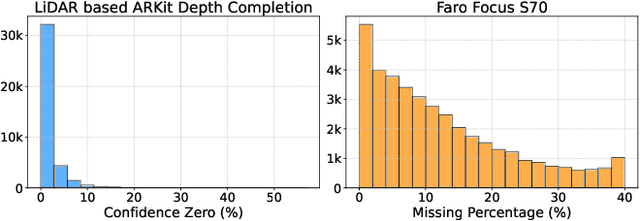
Metric depth estimation plays an important role in mobile augmented reality (AR). With accurate metric depth, we can achieve more realistic user interactions such as object placement and occlusion detection. While specialized hardware like LiDAR demonstrates its promise, its restricted availability, i.e., only on selected high-end mobile devices, and performance limitations such as range and sensitivity to the environment, make it less ideal. Monocular depth estimation, on the other hand, relies solely on mobile cameras, which are ubiquitous, making it a promising alternative for mobile AR. In this paper, we investigate the challenges and opportunities of achieving accurate metric depth estimation in mobile AR. We tested four different state-of-the-art monocular depth estimation models on a newly introduced dataset (ARKitScenes) and identified three types of challenges: hard-ware, data, and model related challenges. Furthermore, our research provides promising future directions to explore and solve those challenges. These directions include (i) using more hardware-related information from the mobile device's camera and other available sensors, (ii) capturing high-quality data to reflect real-world AR scenarios, and (iii) designing a model architecture to utilize the new information.