 Add to Chrome
 Add to Firefox
 Add to Edge
Optimizing Electric Bus Charging Scheduling with Uncertainties Using Hierarchical Deep Reinforcement Learning
May 15, 2025
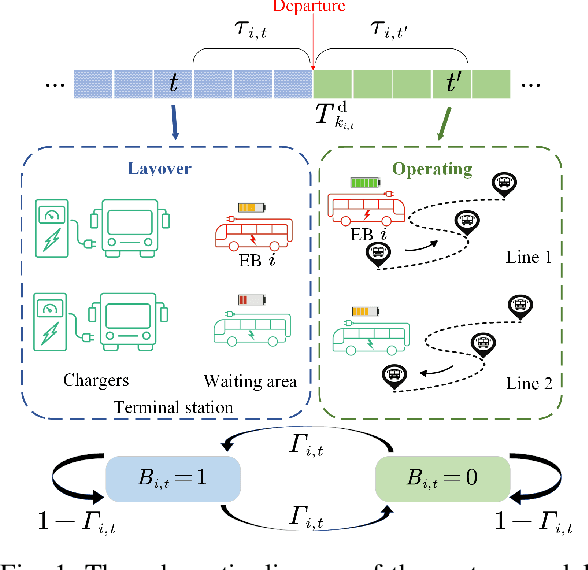
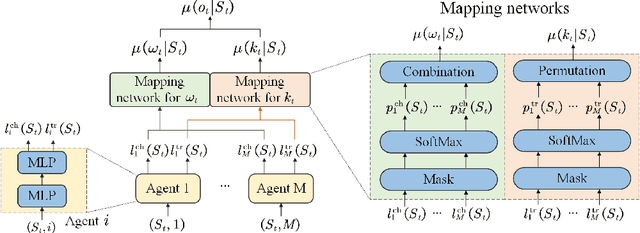
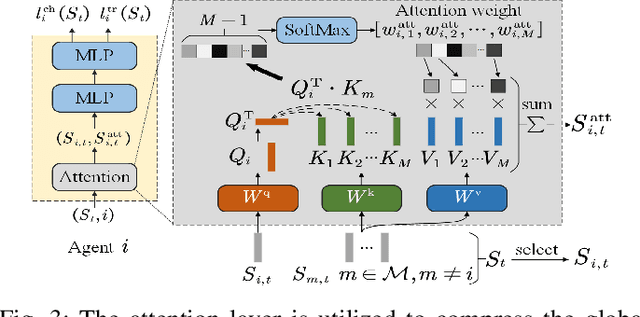

The growing adoption of Electric Buses (EBs) represents a significant step toward sustainable development. By utilizing Internet of Things (IoT) systems, charging stations can autonomously determine charging schedules based on real-time data. However, optimizing EB charging schedules remains a critical challenge due to uncertainties in travel time, energy consumption, and fluctuating electricity prices. Moreover, to address real-world complexities, charging policies must make decisions efficiently across multiple time scales and remain scalable for large EB fleets. In this paper, we propose a Hierarchical Deep Reinforcement Learning (HDRL) approach that reformulates the original Markov Decision Process (MDP) into two augmented MDPs. To solve these MDPs and enable multi-timescale decision-making, we introduce a novel HDRL algorithm, namely Double Actor-Critic Multi-Agent Proximal Policy Optimization Enhancement (DAC-MAPPO-E). Scalability challenges of the Double Actor-Critic (DAC) algorithm for large-scale EB fleets are addressed through enhancements at both decision levels. At the high level, we redesign the decentralized actor network and integrate an attention mechanism to extract relevant global state information for each EB, decreasing the size of neural networks. At the low level, the Multi-Agent Proximal Policy Optimization (MAPPO) algorithm is incorporated into the DAC framework, enabling decentralized and coordinated charging power decisions, reducing computational complexity and enhancing convergence speed. Extensive experiments with real-world data demonstrate the superior performance and scalability of DAC-MAPPO-E in optimizing EB fleet charging schedules.

Electric Bus Charging Schedules Relying on Real Data-Driven Targets Based on Hierarchical Deep Reinforcement Learning
May 15, 2025The charging scheduling problem of Electric Buses (EBs) is investigated based on Deep Reinforcement Learning (DRL). A Markov Decision Process (MDP) is conceived, where the time horizon includes multiple charging and operating periods in a day, while each period is further divided into multiple time steps. To overcome the challenge of long-range multi-phase planning with sparse reward, we conceive Hierarchical DRL (HDRL) for decoupling the original MDP into a high-level Semi-MDP (SMDP) and multiple low-level MDPs. The Hierarchical Double Deep Q-Network (HDDQN)-Hindsight Experience Replay (HER) algorithm is proposed for simultaneously solving the decision problems arising at different temporal resolutions. As a result, the high-level agent learns an effective policy for prescribing the charging targets for every charging period, while the low-level agent learns an optimal policy for setting the charging power of every time step within a single charging period, with the aim of minimizing the charging costs while meeting the charging target. It is proved that the flat policy constructed by superimposing the optimal high-level policy and the optimal low-level policy performs as well as the optimal policy of the original MDP. Since jointly learning both levels of policies is challenging due to the non-stationarity of the high-level agent and the sampling inefficiency of the low-level agent, we divide the joint learning process into two phases and exploit our new HER algorithm to manipulate the experience replay buffers for both levels of agents. Numerical experiments are performed with the aid of real-world data to evaluate the performance of the proposed algorithm.
VoI-Driven Joint Optimization of Control and Communication in Vehicular Digital Twin Network
May 12, 2025The vision of sixth-generation (6G) wireless networks paves the way for the seamless integration of digital twins into vehicular networks, giving rise to a Vehicular Digital Twin Network (VDTN). The large amount of computing resources as well as the massive amount of spatial-temporal data in Digital Twin (DT) domain can be utilized to enhance the communication and control performance of Internet of Vehicle (IoV) systems. In this article, we first propose the architecture of VDTN, emphasizing key modules that center on functions related to the joint optimization of control and communication. We then delve into the intricacies of the multitimescale decision process inherent in joint optimization in VDTN, specifically investigating the dynamic interplay between control and communication. To facilitate the joint optimization, we define two Value of Information (VoI) concepts rooted in control performance. Subsequently, utilizing VoI as a bridge between control and communication, we introduce a novel joint optimization framework, which involves iterative processing of two Deep Reinforcement Learning (DRL) modules corresponding to control and communication to derive the optimal policy. Finally, we conduct simulations of the proposed framework applied to a platoon scenario to demonstrate its effectiveness in ensu
Learning Value of Information towards Joint Communication and Control in 6G V2X
May 11, 2025As Cellular Vehicle-to-Everything (C-V2X) evolves towards future sixth-generation (6G) networks, Connected Autonomous Vehicles (CAVs) are emerging to become a key application. Leveraging data-driven Machine Learning (ML), especially Deep Reinforcement Learning (DRL), is expected to significantly enhance CAV decision-making in both vehicle control and V2X communication under uncertainty. These two decision-making processes are closely intertwined, with the value of information (VoI) acting as a crucial bridge between them. In this paper, we introduce Sequential Stochastic Decision Process (SSDP) models to define and assess VoI, demonstrating their application in optimizing communication systems for CAVs. Specifically, we formally define the SSDP model and demonstrate that the MDP model is a special case of it. The SSDP model offers a key advantage by explicitly representing the set of information that can enhance decision-making when available. Furthermore, as current research on VoI remains fragmented, we propose a systematic VoI modeling framework grounded in the MDP, Reinforcement Learning (RL) and Optimal Control theories. We define different categories of VoI and discuss their corresponding estimation methods. Finally, we present a structured approach to leverage the various VoI metrics for optimizing the ``When", ``What", and ``How" to communicate problems. For this purpose, SSDP models are formulated with VoI-associated reward functions derived from VoI-based optimization objectives. While we use a simple vehicle-following control problem to illustrate the proposed methodology, it holds significant potential to facilitate the joint optimization of stochastic, sequential control and communication decisions in a wide range of networked control systems.
AI-Driven Reinvention of Hydrological Modeling for Accurate Predictions and Interpretation to Transform Earth System Modeling
Jan 07, 2025Traditional equation-driven hydrological models often struggle to accurately predict streamflow in challenging regional Earth systems like the Tibetan Plateau, while hybrid and existing algorithm-driven models face difficulties in interpreting hydrological behaviors. This work introduces HydroTrace, an algorithm-driven, data-agnostic model that substantially outperforms these approaches, achieving a Nash-Sutcliffe Efficiency of 98% and demonstrating strong generalization on unseen data. Moreover, HydroTrace leverages advanced attention mechanisms to capture spatial-temporal variations and feature-specific impacts, enabling the quantification and spatial resolution of streamflow partitioning as well as the interpretation of hydrological behaviors such as glacier-snow-streamflow interactions and monsoon dynamics. Additionally, a large language model (LLM)-based application allows users to easily understand and apply HydroTrace's insights for practical purposes. These advancements position HydroTrace as a transformative tool in hydrological and broader Earth system modeling, offering enhanced prediction accuracy and interpretability.
NTIRE 2024 Challenge on Night Photography Rendering
Jun 18, 2024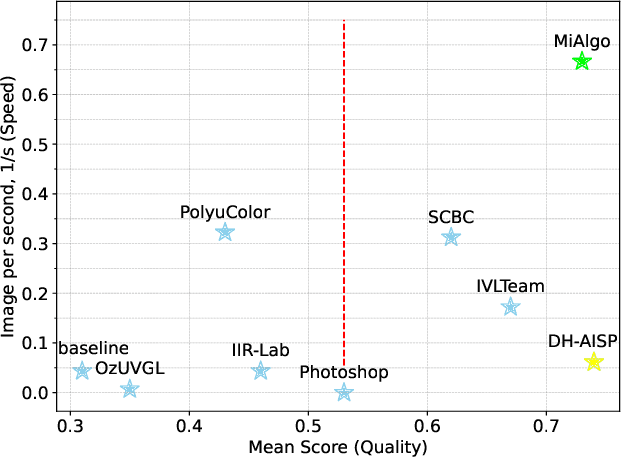
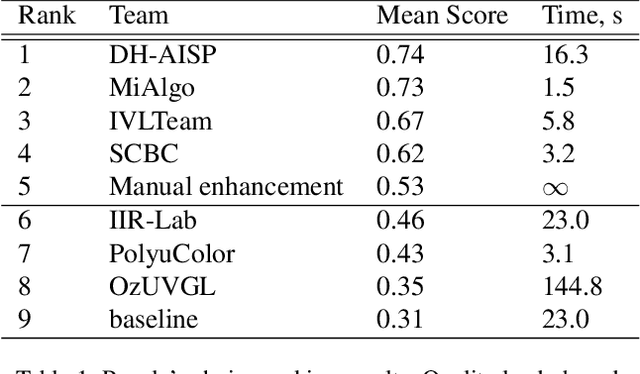

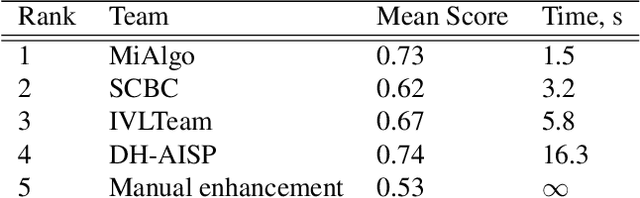
This paper presents a review of the NTIRE 2024 challenge on night photography rendering. The goal of the challenge was to find solutions that process raw camera images taken in nighttime conditions, and thereby produce a photo-quality output images in the standard RGB (sRGB) space. Unlike the previous year's competition, the challenge images were collected with a mobile phone and the speed of algorithms was also measured alongside the quality of their output. To evaluate the results, a sufficient number of viewers were asked to assess the visual quality of the proposed solutions, considering the subjective nature of the task. There were 2 nominations: quality and efficiency. Top 5 solutions in terms of output quality were sorted by evaluation time (see Fig. 1). The top ranking participants' solutions effectively represent the state-of-the-art in nighttime photography rendering. More results can be found at https://nightimaging.org.
MIPI 2024 Challenge on Nighttime Flare Removal: Methods and Results
Apr 30, 2024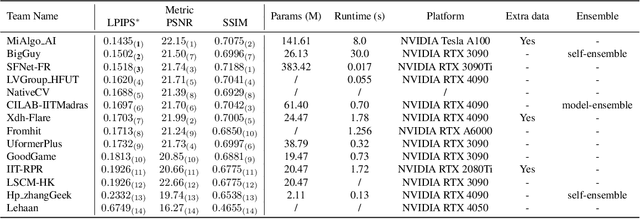
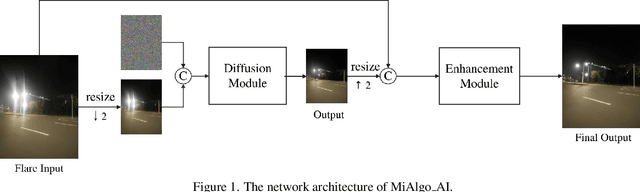
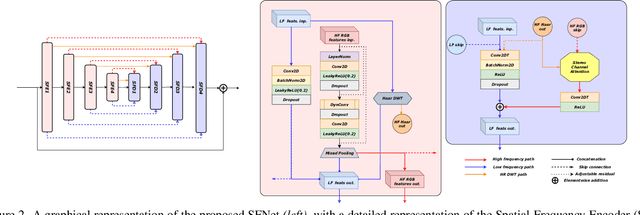

The increasing demand for computational photography and imaging on mobile platforms has led to the widespread development and integration of advanced image sensors with novel algorithms in camera systems. However, the scarcity of high-quality data for research and the rare opportunity for in-depth exchange of views from industry and academia constrain the development of mobile intelligent photography and imaging (MIPI). Building on the achievements of the previous MIPI Workshops held at ECCV 2022 and CVPR 2023, we introduce our third MIPI challenge including three tracks focusing on novel image sensors and imaging algorithms. In this paper, we summarize and review the Nighttime Flare Removal track on MIPI 2024. In total, 170 participants were successfully registered, and 14 teams submitted results in the final testing phase. The developed solutions in this challenge achieved state-of-the-art performance on Nighttime Flare Removal. More details of this challenge and the link to the dataset can be found at https://mipi-challenge.org/MIPI2024/.
RAAMove: A Corpus for Analyzing Moves in Research Article Abstracts
Mar 23, 2024Move structures have been studied in English for Specific Purposes (ESP) and English for Academic Purposes (EAP) for decades. However, there are few move annotation corpora for Research Article (RA) abstracts. In this paper, we introduce RAAMove, a comprehensive multi-domain corpus dedicated to the annotation of move structures in RA abstracts. The primary objective of RAAMove is to facilitate move analysis and automatic move identification. This paper provides a thorough discussion of the corpus construction process, including the scheme, data collection, annotation guidelines, and annotation procedures. The corpus is constructed through two stages: initially, expert annotators manually annotate high-quality data; subsequently, based on the human-annotated data, a BERT-based model is employed for automatic annotation with the help of experts' modification. The result is a large-scale and high-quality corpus comprising 33,988 annotated instances. We also conduct preliminary move identification experiments using the BERT-based model to verify the effectiveness of the proposed corpus and model. The annotated corpus is available for academic research purposes and can serve as essential resources for move analysis, English language teaching and writing, as well as move/discourse-related tasks in Natural Language Processing (NLP).
Multi-Timescale Control and Communications with Deep Reinforcement Learning -- Part II: Control-Aware Radio Resource Allocation
Nov 19, 2023


In Part I of this two-part paper (Multi-Timescale Control and Communications with Deep Reinforcement Learning -- Part I: Communication-Aware Vehicle Control), we decomposed the multi-timescale control and communications (MTCC) problem in Cellular Vehicle-to-Everything (C-V2X) system into a communication-aware Deep Reinforcement Learning (DRL)-based platoon control (PC) sub-problem and a control-aware DRL-based radio resource allocation (RRA) sub-problem. We focused on the PC sub-problem and proposed the MTCC-PC algorithm to learn an optimal PC policy given an RRA policy. In this paper (Part II), we first focus on the RRA sub-problem in MTCC assuming a PC policy is given, and propose the MTCC-RRA algorithm to learn the RRA policy. Specifically, we incorporate the PC advantage function in the RRA reward function, which quantifies the amount of PC performance degradation caused by observation delay. Moreover, we augment the state space of RRA with PC action history for a more well-informed RRA policy. In addition, we utilize reward shaping and reward backpropagation prioritized experience replay (RBPER) techniques to efficiently tackle the multi-agent and sparse reward problems, respectively. Finally, a sample- and computational-efficient training approach is proposed to jointly learn the PC and RRA policies in an iterative process. In order to verify the effectiveness of the proposed MTCC algorithm, we performed experiments using real driving data for the leading vehicle, where the performance of MTCC is compared with those of the baseline DRL algorithms.
Multi-Timescale Control and Communications with Deep Reinforcement Learning -- Part I: Communication-Aware Vehicle Control
Nov 19, 2023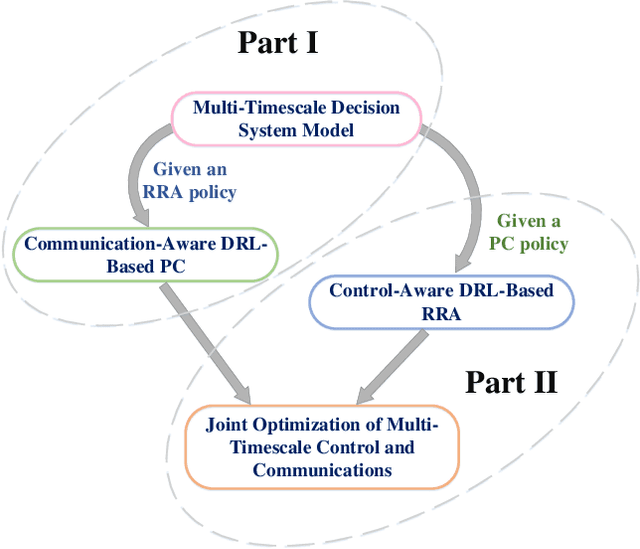
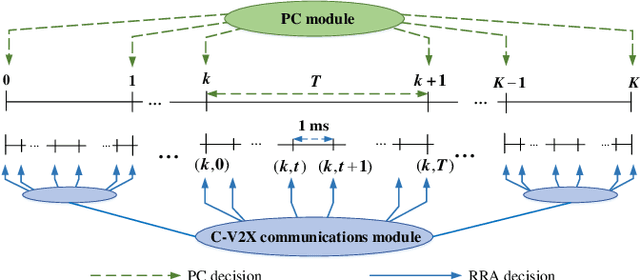

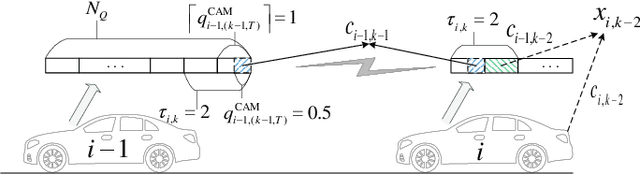
An intelligent decision-making system enabled by Vehicle-to-Everything (V2X) communications is essential to achieve safe and efficient autonomous driving (AD), where two types of decisions have to be made at different timescales, i.e., vehicle control and radio resource allocation (RRA) decisions. The interplay between RRA and vehicle control necessitates their collaborative design. In this two-part paper (Part I and Part II), taking platoon control (PC) as an example use case, we propose a joint optimization framework of multi-timescale control and communications (MTCC) based on Deep Reinforcement Learning (DRL). In this paper (Part I), we first decompose the problem into a communication-aware DRL-based PC sub-problem and a control-aware DRL-based RRA sub-problem. Then, we focus on the PC sub-problem assuming an RRA policy is given, and propose the MTCC-PC algorithm to learn an efficient PC policy. To improve the PC performance under random observation delay, the PC state space is augmented with the observation delay and PC action history. Moreover, the reward function with respect to the augmented state is defined to construct an augmented state Markov Decision Process (MDP). It is proved that the optimal policy for the augmented state MDP is optimal for the original PC problem with observation delay. Different from most existing works on communication-aware control, the MTCC-PC algorithm is trained in a delayed environment generated by the fine-grained embedded simulation of C-V2X communications rather than by a simple stochastic delay model. Finally, experiments are performed to compare the performance of MTCC-PC with those of the baseline DRL algorithms.