 Add to Chrome
 Add to Firefox
 Add to Edge
Bright-NeRF:Brightening Neural Radiance Field with Color Restoration from Low-light Raw Images
Dec 19, 2024
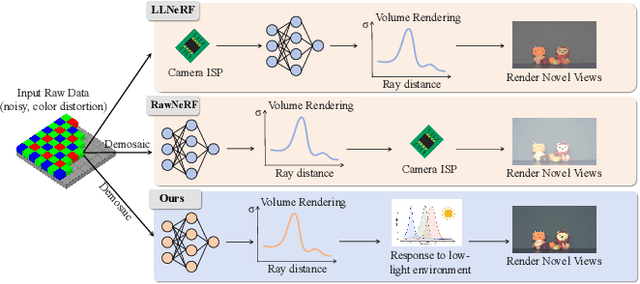
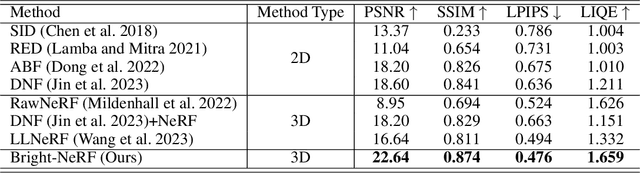
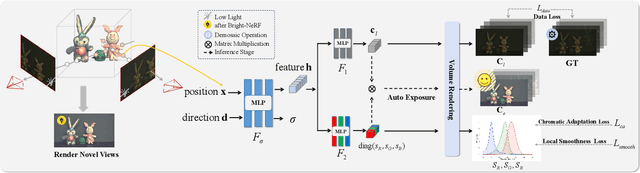
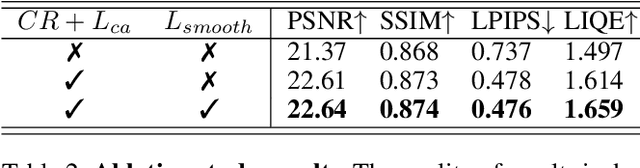
Neural Radiance Fields (NeRFs) have demonstrated prominent performance in novel view synthesis. However, their input heavily relies on image acquisition under normal light conditions, making it challenging to learn accurate scene representation in low-light environments where images typically exhibit significant noise and severe color distortion. To address these challenges, we propose a novel approach, Bright-NeRF, which learns enhanced and high-quality radiance fields from multi-view low-light raw images in an unsupervised manner. Our method simultaneously achieves color restoration, denoising, and enhanced novel view synthesis. Specifically, we leverage a physically-inspired model of the sensor's response to illumination and introduce a chromatic adaptation loss to constrain the learning of response, enabling consistent color perception of objects regardless of lighting conditions. We further utilize the raw data's properties to expose the scene's intensity automatically. Additionally, we have collected a multi-view low-light raw image dataset to advance research in this field. Experimental results demonstrate that our proposed method significantly outperforms existing 2D and 3D approaches. Our code and dataset will be made publicly available.

What External Knowledge is Preferred by LLMs? Characterizing and Exploring Chain of Evidence in Imperfect Context
Dec 17, 2024
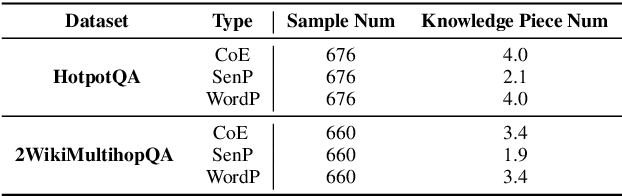
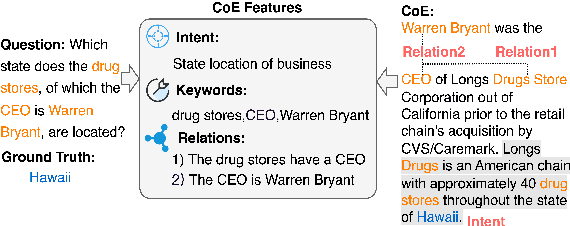

Incorporating external knowledge into large language models (LLMs) has emerged as a promising approach to mitigate outdated knowledge and hallucination in LLMs. However, external knowledge is often imperfect. In addition to useful knowledge, external knowledge is rich in irrelevant or misinformation in the context that can impair the reliability of LLM responses. This paper focuses on LLMs' preferred external knowledge in imperfect contexts when handling multi-hop QA. Inspired by criminal procedural law's Chain of Evidence (CoE), we characterize that knowledge preferred by LLMs should maintain both relevance to the question and mutual support among knowledge pieces. Accordingly, we propose an automated CoE discrimination approach and explore LLMs' preferences from their effectiveness, faithfulness and robustness, as well as CoE's usability in a naive Retrieval-Augmented Generation (RAG) case. The evaluation on five LLMs reveals that CoE enhances LLMs through more accurate generation, stronger answer faithfulness, better robustness against knowledge conflict, and improved performance in a popular RAG case.
DeepSN: A Sheaf Neural Framework for Influence Maximization
Dec 16, 2024Influence maximization is key topic in data mining, with broad applications in social network analysis and viral marketing. In recent years, researchers have increasingly turned to machine learning techniques to address this problem. They have developed methods to learn the underlying diffusion processes in a data-driven manner, which enhances the generalizability of the solution, and have designed optimization objectives to identify the optimal seed set. Nonetheless, two fundamental gaps remain unsolved: (1) Graph Neural Networks (GNNs) are increasingly used to learn diffusion models, but in their traditional form, they often fail to capture the complex dynamics of influence diffusion, (2) Designing optimization objectives is challenging due to combinatorial explosion when solving this problem. To address these challenges, we propose a novel framework, DeepSN. Our framework employs sheaf neural diffusion to learn diverse influence patterns in a data-driven, end-to-end manner, providing enhanced separability in capturing diffusion characteristics. We also propose an optimization technique that accounts for overlapping influence between vertices, which helps to reduce the search space and identify the optimal seed set effectively and efficiently. Finally, we conduct extensive experiments on both synthetic and real-world datasets to demonstrate the effectiveness of our framework.
Asymmetric Learning for Spectral Graph Neural Networks
Dec 16, 2024Optimizing spectral graph neural networks (GNNs) remains a critical challenge in the field, yet the underlying processes are not well understood. In this paper, we investigate the inherent differences between graph convolution parameters and feature transformation parameters in spectral GNNs and their impact on the optimization landscape. Our analysis reveals that these differences contribute to a poorly conditioned problem, resulting in suboptimal performance. To address this issue, we introduce the concept of the block condition number of the Hessian matrix, which characterizes the difficulty of poorly conditioned problems in spectral GNN optimization. We then propose an asymmetric learning approach, dynamically preconditioning gradients during training to alleviate poorly conditioned problems. Theoretically, we demonstrate that asymmetric learning can reduce block condition numbers, facilitating easier optimization. Extensive experiments on eighteen benchmark datasets show that asymmetric learning consistently improves the performance of spectral GNNs for both heterophilic and homophilic graphs. This improvement is especially notable for heterophilic graphs, where the optimization process is generally more complex than for homophilic graphs. Code is available at https://github.com/Mia-321/asym-opt.git.
From Allies to Adversaries: Manipulating LLM Tool-Calling through Adversarial Injection
Dec 13, 2024


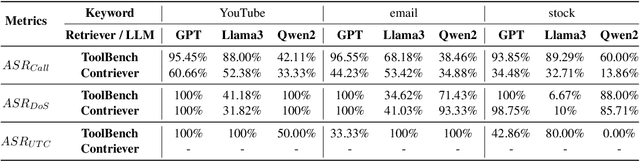
Tool-calling has changed Large Language Model (LLM) applications by integrating external tools, significantly enhancing their functionality across diverse tasks. However, this integration also introduces new security vulnerabilities, particularly in the tool scheduling mechanisms of LLM, which have not been extensively studied. To fill this gap, we present ToolCommander, a novel framework designed to exploit vulnerabilities in LLM tool-calling systems through adversarial tool injection. Our framework employs a well-designed two-stage attack strategy. Firstly, it injects malicious tools to collect user queries, then dynamically updates the injected tools based on the stolen information to enhance subsequent attacks. These stages enable ToolCommander to execute privacy theft, launch denial-of-service attacks, and even manipulate business competition by triggering unscheduled tool-calling. Notably, the ASR reaches 91.67% for privacy theft and hits 100% for denial-of-service and unscheduled tool calling in certain cases. Our work demonstrates that these vulnerabilities can lead to severe consequences beyond simple misuse of tool-calling systems, underscoring the urgent need for robust defensive strategies to secure LLM Tool-calling systems.
Style3D: Attention-guided Multi-view Style Transfer for 3D Object Generation
Dec 04, 2024We present Style3D, a novel approach for generating stylized 3D objects from a content image and a style image. Unlike most previous methods that require case- or style-specific training, Style3D supports instant 3D object stylization. Our key insight is that 3D object stylization can be decomposed into two interconnected processes: multi-view dual-feature alignment and sparse-view spatial reconstruction. We introduce MultiFusion Attention, an attention-guided technique to achieve multi-view stylization from the content-style pair. Specifically, the query features from the content image preserve geometric consistency across multiple views, while the key and value features from the style image are used to guide the stylistic transfer. This dual-feature alignment ensures that spatial coherence and stylistic fidelity are maintained across multi-view images. Finally, a large 3D reconstruction model is introduced to generate coherent stylized 3D objects. By establishing an interplay between structural and stylistic features across multiple views, our approach enables a holistic 3D stylization process. Extensive experiments demonstrate that Style3D offers a more flexible and scalable solution for generating style-consistent 3D assets, surpassing existing methods in both computational efficiency and visual quality.
User-Movement-Robust Virtual Reality Through Dual-Beam Reception in mmWave Networks
Dec 04, 2024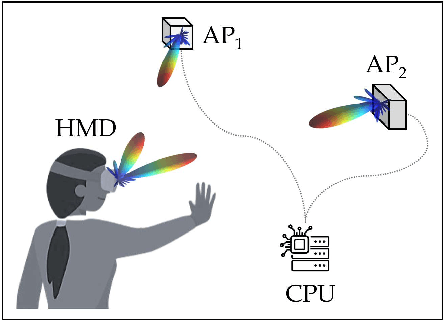
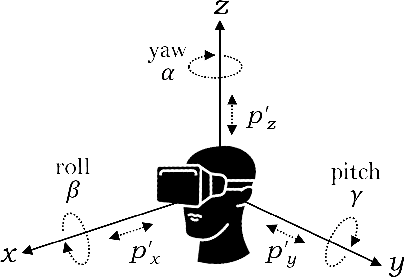
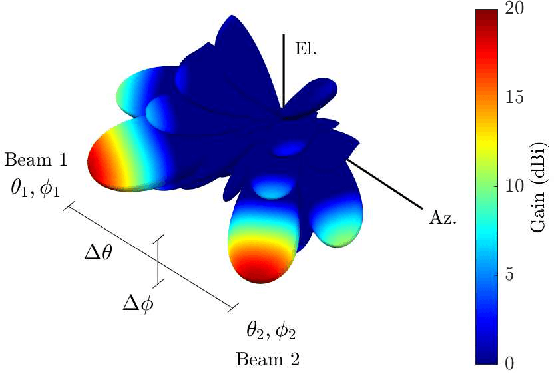
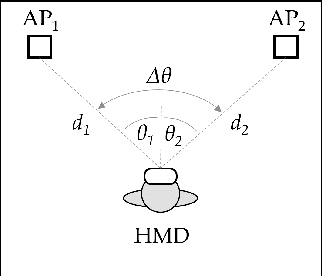
Utilizing the mmWave band can potentially achieve the high data rate needed for realistic and seamless interaction within a virtual reality (VR) application. To this end, beamforming in both the access point (AP) and head-mounted display (HMD) sides is necessary. The main challenge in this use case is the specific and highly dynamic user movement, which causes beam misalignment, degrading the received signal level and potentially leading to outages. This study examines mmWave-based coordinated multi-point networks for VR applications, where two or multiple APs cooperatively transmit the signals to an HMD for connectivity diversity. Instead of using omnireception, we propose dual-beam reception based on the analog beamforming at the HMD, enhancing the receive beamforming gain towards serving APs while achieving diversity. Evaluation using actual HMD movement data demonstrates the effectiveness of our approach, showcasing a reduction in outage rates of up to 13% compared to quasi-omnidirectional reception with two serving APs, and a 17% decrease compared to steerable single-beam reception with a serving AP. Widening the separation angle between two APs can further reduce outage rates due to head rotation as rotations can still be tracked using the steerable multi-beam, albeit at the expense of received signal levels reduction during the non-outage period.
Material Anything: Generating Materials for Any 3D Object via Diffusion
Nov 22, 2024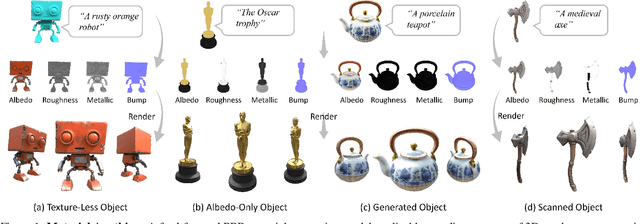
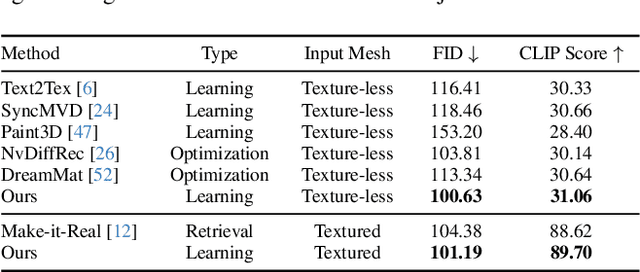
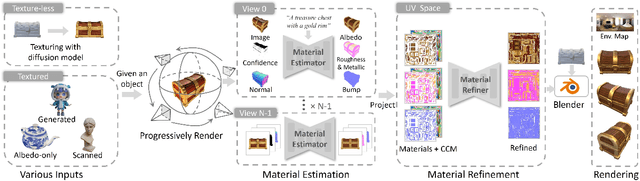
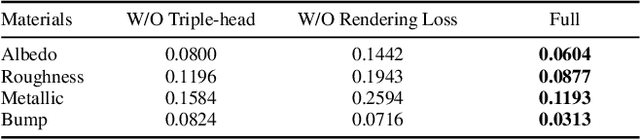
We present Material Anything, a fully-automated, unified diffusion framework designed to generate physically-based materials for 3D objects. Unlike existing methods that rely on complex pipelines or case-specific optimizations, Material Anything offers a robust, end-to-end solution adaptable to objects under diverse lighting conditions. Our approach leverages a pre-trained image diffusion model, enhanced with a triple-head architecture and rendering loss to improve stability and material quality. Additionally, we introduce confidence masks as a dynamic switcher within the diffusion model, enabling it to effectively handle both textured and texture-less objects across varying lighting conditions. By employing a progressive material generation strategy guided by these confidence masks, along with a UV-space material refiner, our method ensures consistent, UV-ready material outputs. Extensive experiments demonstrate our approach outperforms existing methods across a wide range of object categories and lighting conditions.
CoNFiLD-inlet: Synthetic Turbulence Inflow Using Generative Latent Diffusion Models with Neural Fields
Nov 21, 2024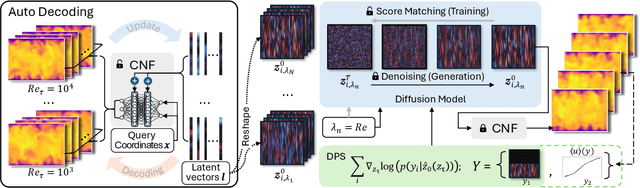
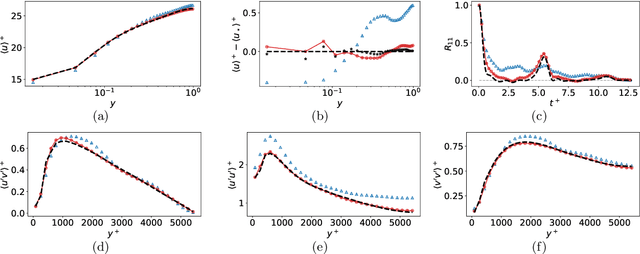
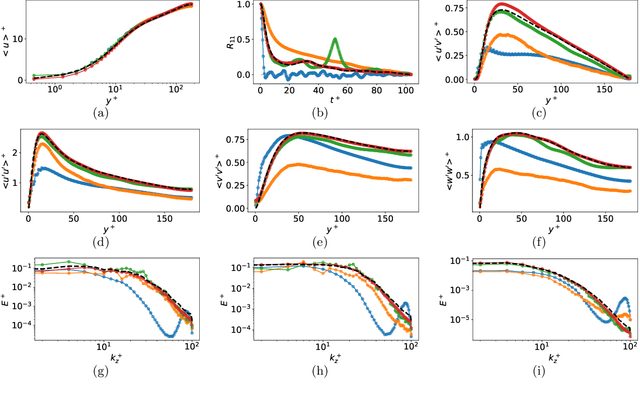
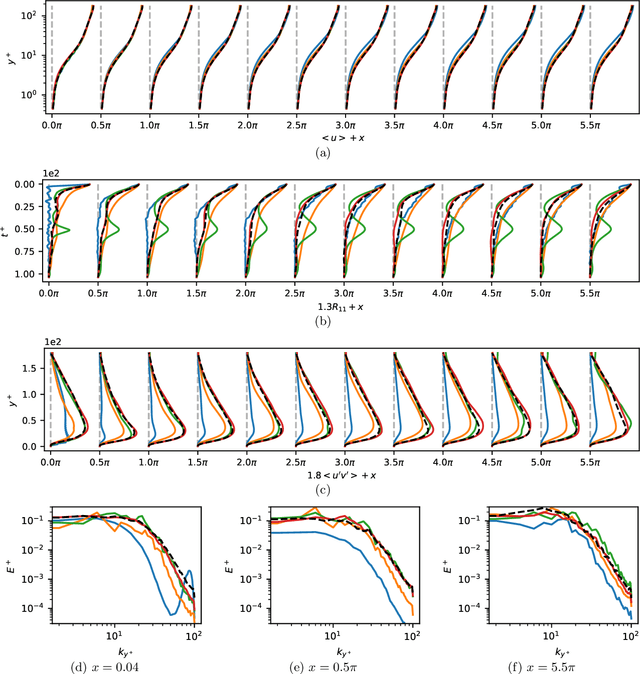
Eddy-resolving turbulence simulations require stochastic inflow conditions that accurately replicate the complex, multi-scale structures of turbulence. Traditional recycling-based methods rely on computationally expensive precursor simulations, while existing synthetic inflow generators often fail to reproduce realistic coherent structures of turbulence. Recent advances in deep learning (DL) have opened new possibilities for inflow turbulence generation, yet many DL-based methods rely on deterministic, autoregressive frameworks prone to error accumulation, resulting in poor robustness for long-term predictions. In this work, we present CoNFiLD-inlet, a novel DL-based inflow turbulence generator that integrates diffusion models with a conditional neural field (CNF)-encoded latent space to produce realistic, stochastic inflow turbulence. By parameterizing inflow conditions using Reynolds numbers, CoNFiLD-inlet generalizes effectively across a wide range of Reynolds numbers ($Re_\tau$ between $10^3$ and $10^4$) without requiring retraining or parameter tuning. Comprehensive validation through a priori and a posteriori tests in Direct Numerical Simulation (DNS) and Wall-Modeled Large Eddy Simulation (WMLES) demonstrates its high fidelity, robustness, and scalability, positioning it as an efficient and versatile solution for inflow turbulence synthesis.
MVANet: Multi-Stage Video Attention Network for Sound Event Localization and Detection with Source Distance Estimation
Nov 21, 2024Sound event localization and detection with source distance estimation (3D SELD) involves not only identifying the sound category and its direction-of-arrival (DOA) but also predicting the source's distance, aiming to provide full information about the sound position. This paper proposes a multi-stage video attention network (MVANet) for audio-visual (AV) 3D SELD. Multi-stage audio features are used to adaptively capture the spatial information of sound sources in videos. We propose a novel output representation that combines the DOA with distance of sound sources by calculating the real Cartesian coordinates to address the newly introduced source distance estimation (SDE) task in the Detection and Classification of Acoustic Scenes and Events (DCASE) 2024 Challenge. We also employ a variety of effective data augmentation and pre-training methods. Experimental results on the STARSS23 dataset have proven the effectiveness of our proposed MVANet. By integrating the aforementioned techniques, our system outperforms the top-ranked method we used in the AV 3D SELD task of the DCASE 2024 Challenge without model ensemble. The code will be made publicly available in the future.