 Add to Chrome
 Add to Firefox
 Add to Edge
CoFi-UCGen: Coarse-to-Fine Unsupervised Conditional Generation without Label Priors
Jun 04, 2026
Unsupervised conditional image generation (UCGen) aims to control generation without relying on manually annotated labels, yet remains challenging due to unstructured semantic representations across granularities. To address this, we propose a novel coarse-to-fine UCGen framework (CoFi-UCGen) that explicitly disentangles global semantics from fine-grained variations, which to the best of our knowledge, sets out the first successful attempt for both coarse- and fine-grained conditional generation without any labels. More specifically, we first propose the adversarial semantic reciprocal learning theory to ensure the semantic consistency and completeness between images and latent spaces. Based on the consistency, we propose the bit-codes to learn a structured coarse-grained latent space, and further prove distinct global semantics inherent from our bit-codes while preserving independent noise sampling for generation. Building upon these bit-codes, we establish a fine-grained semantic basis and introduce a hierarchical modulation mechanism in diffusion models, by enabling layer-wise injection from coarse conditions to progressively control fine-grained attributes during generation. Extensive experiments demonstrate that without any label priors or pre-trained feature extractors, our CoFi-UCGen consistently outperforms existing UCGen methods in terms of image quality, semantic consistency, and control accuracy, verifying the effectiveness of explicit coarse-to-fine semantic decomposition for the challenging UCGen task.

Self-supervised Dynamic Heterogeneous Degradation Modeling for Unified Zero-Shot Image Restoration
May 23, 2026Zero-shot image restoration provides a flexible way to handle diverse degradations without task-specific training. However, existing methods typically rely on stacked layers or pre-trained features to enhance degradation expression, while overlooking physically consistent priors. The insufficient degradation prompts impose the heavy training burden and high sampling costs during zero-shot diffusion. Moreover, the fixed inference trajectory often collapses to suboptimal solutions under complex corruptions. We observe that heterogeneous degradations can be reparameterized into a minimal set of physically coherent parameters for compact representation. Based on this insight, we first propose a unified physical zero-shot image restoration (UP-ZeroIR) framework that explicitly models heterogeneous degradations into a homogeneous all-in-one distribution. The distribution can be optimized directly in the latent space, enabling principled solution exploration and effective prompt adaptation. Besides, we introduce a dynamic quality-refinement strategy that adaptively adjusts the diffusion trajectory for robust globally optimal convergence. Extensive experiments demonstrate that our method achieves state-of-the-art performance across both single and mixed degradations. Our code is available at https://github.com/yangjinglyy/UP-ZeroIR
Low Light Image Enhancement Challenge at NTIRE 2026
Apr 19, 2026This paper presents a comprehensive review of the NTIRE 2026 Low Light Image Enhancement Challenge, highlighting the proposed solutions and final results. The objective of this challenge is to identify effective networks capable of producing clearer and visually compelling images in diverse and challenging conditions by learning representative visual cues with the purpose of restoring information loss due to low-contrast and noisy images. A total of 195 participants registered for the first track and 153 for the second track of the competition, and 22 teams ultimately submitted valid entries. This paper thoroughly evaluates the state-of-the-art advances in (joint denoising and) low-light image enhancement, showcasing the significant progress in the field, while leveraging samples of our novel dataset.
NTIRE 2026 Challenge on Short-form UGC Video Restoration in the Wild with Generative Models: Datasets, Methods and Results
Apr 12, 2026This paper presents an overview of the NTIRE 2026 Challenge on Short-form UGC Video Restoration in the Wild with Generative Models. This challenge utilizes a new short-form UGC (S-UGC) video restoration benchmark, termed KwaiVIR, which is contributed by USTC and Kuaishou Technology. It contains both synthetically distorted videos and real-world short-form UGC videos in the wild. For this edition, the released data include 200 synthetic training videos, 48 wild training videos, 11 validation videos, and 20 testing videos. The primary goal of this challenge is to establish a strong and practical benchmark for restoring short-form UGC videos under complex real-world degradations, especially in the emerging paradigm of generative-model-based S-UGC video restoration. This challenge has two tracks: (i) the primary track is a subjective track, where the evaluation is based on a user study; (ii) the second track is an objective track. These two tracks enable a comprehensive assessment of restoration quality. In total, 95 teams have registered for this competition. And 12 teams submitted valid final solutions and fact sheets for the testing phase. The submitted methods achieved strong performance on the KwaiVIR benchmark, demonstrating encouraging progress in short-form UGC video restoration in the wild.
VTEdit-Bench: A Comprehensive Benchmark for Multi-Reference Image Editing Models in Virtual Try-On
Mar 12, 2026As virtual try-on (VTON) continues to advance, a growing number of real-world scenarios have emerged, pushing beyond the ability of the existing specialized VTON models. Meanwhile, universal multi-reference image editing models have progressed rapidly and exhibit strong generalization in visual editing, suggesting a promising route toward more flexible VTON systems. However, despite their strong capabilities, the strengths and limitations of universal editors for VTON remain insufficiently explored due to the lack of systematic evaluation benchmarks. To address this gap, we introduce VTEdit-Bench, a comprehensive benchmark designed to evaluate universal multi-reference image editing models across various realistic VTON scenarios. VTEdit-Bench contains 24,220 test image pairs spanning five representative VTON tasks with progressively increasing complexity, enabling systematic analysis of robustness and generalization. We further propose VTEdit-QA, a reference-aware VLM-based evaluator that assesses VTON performance from three key aspects: model consistency, cloth consistency, and overall image quality. Through this framework, we systematically evaluate eight universal editing models and compare them with seven specialized VTON models. Results show that top universal editors are competitive on conventional tasks and generalize more stably to harder scenarios, but remain challenged by complex reference configurations, particularly multi-cloth conditioning.
REMAC: Reference-Based Martian Asymmetrical Image Compression
Jan 26, 2026To expedite space exploration on Mars, it is indispensable to develop an efficient Martian image compression method for transmitting images through the constrained Mars-to-Earth communication channel. Although the existing learned compression methods have achieved promising results for natural images from earth, there remain two critical issues that hinder their effectiveness for Martian image compression: 1) They overlook the highly-limited computational resources on Mars; 2) They do not utilize the strong \textit{inter-image} similarities across Martian images to advance image compression performance. Motivated by our empirical analysis of the strong \textit{intra-} and \textit{inter-image} similarities from the perspective of texture, color, and semantics, we propose a reference-based Martian asymmetrical image compression (REMAC) approach, which shifts computational complexity from the encoder to the resource-rich decoder and simultaneously improves compression performance. To leverage \textit{inter-image} similarities, we propose a reference-guided entropy module and a ref-decoder that utilize useful information from reference images, reducing redundant operations at the encoder and achieving superior compression performance. To exploit \textit{intra-image} similarities, the ref-decoder adopts a deep, multi-scale architecture with enlarged receptive field size to model long-range spatial dependencies. Additionally, we develop a latent feature recycling mechanism to further alleviate the extreme computational constraints on Mars. Experimental results show that REMAC reduces encoder complexity by 43.51\% compared to the state-of-the-art method, while achieving a BD-PSNR gain of 0.2664 dB.
* Accepted for publication in IEEE Transactions on Geoscience and Remote Sensing (TGRS). 2025 IEEE. Personal use is permitted, but republication/redistribution requires IEEE permission. 18 pages, 20 figures
Benchmarking and Enhancing VLM for Compressed Image Understanding
Dec 24, 2025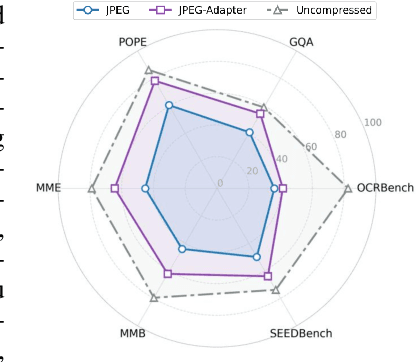

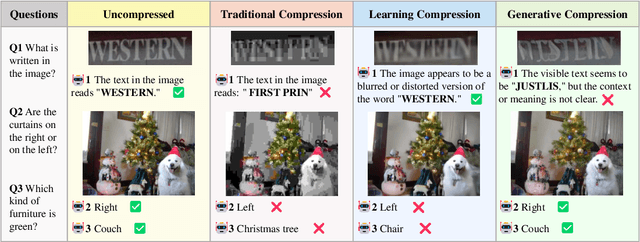
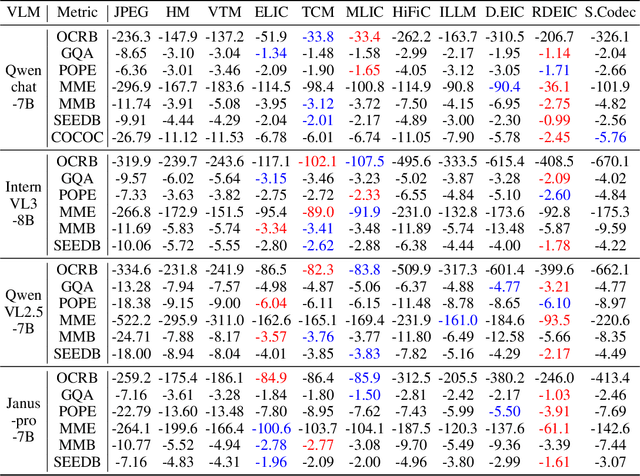
With the rapid development of Vision-Language Models (VLMs) and the growing demand for their applications, efficient compression of the image inputs has become increasingly important. Existing VLMs predominantly digest and understand high-bitrate compressed images, while their ability to interpret low-bitrate compressed images has yet to be explored by far. In this paper, we introduce the first comprehensive benchmark to evaluate the ability of VLM against compressed images, varying existing widely used image codecs and diverse set of tasks, encompassing over one million compressed images in our benchmark. Next, we analyse the source of performance gap, by categorising the gap from a) the information loss during compression and b) generalisation failure of VLM. We visualize these gaps with concrete examples and identify that for compressed images, only the generalization gap can be mitigated. Finally, we propose a universal VLM adaptor to enhance model performance on images compressed by existing codecs. Consequently, we demonstrate that a single adaptor can improve VLM performance across images with varying codecs and bitrates by 10%-30%. We believe that our benchmark and enhancement method provide valuable insights and contribute toward bridging the gap between VLMs and compressed images.
Machines Serve Human: A Novel Variable Human-machine Collaborative Compression Framework
Nov 12, 2025
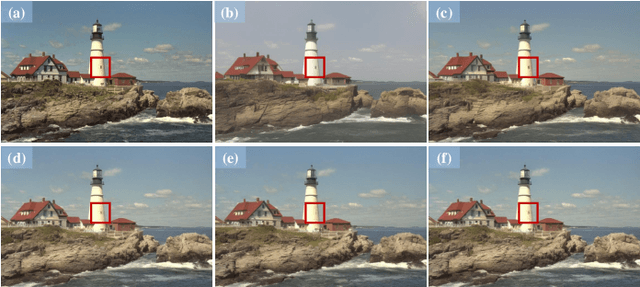
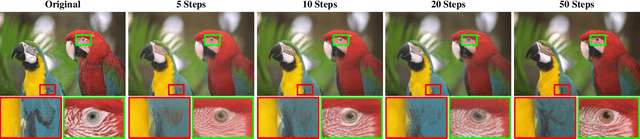
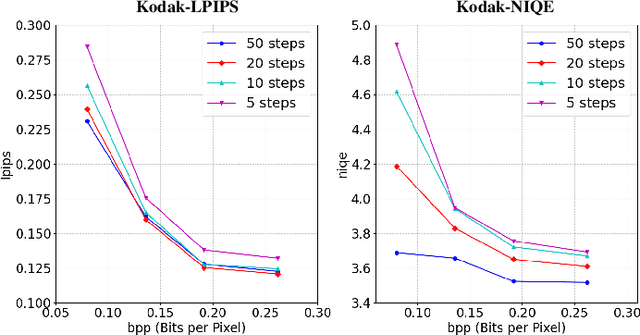
Human-machine collaborative compression has been receiving increasing research efforts for reducing image/video data, serving as the basis for both human perception and machine intelligence. Existing collaborative methods are dominantly built upon the de facto human-vision compression pipeline, witnessing deficiency on complexity and bit-rates when aggregating the machine-vision compression. Indeed, machine vision solely focuses on the core regions within the image/video, requiring much less information compared with the compressed information for human vision. In this paper, we thus set out the first successful attempt by a novel collaborative compression method based on the machine-vision-oriented compression, instead of human-vision pipeline. In other words, machine vision serves as the basis for human vision within collaborative compression. A plug-and-play variable bit-rate strategy is also developed for machine vision tasks. Then, we propose to progressively aggregate the semantics from the machine-vision compression, whilst seamlessly tailing the diffusion prior to restore high-fidelity details for human vision, thus named as diffusion-prior based feature compression for human and machine visions (Diff-FCHM). Experimental results verify the consistently superior performances of our Diff-FCHM, on both machine-vision and human-vision compression with remarkable margins. Our code will be released upon acceptance.
Burst Image Quality Assessment: A New Benchmark and Unified Framework for Multiple Downstream Tasks
Nov 11, 2025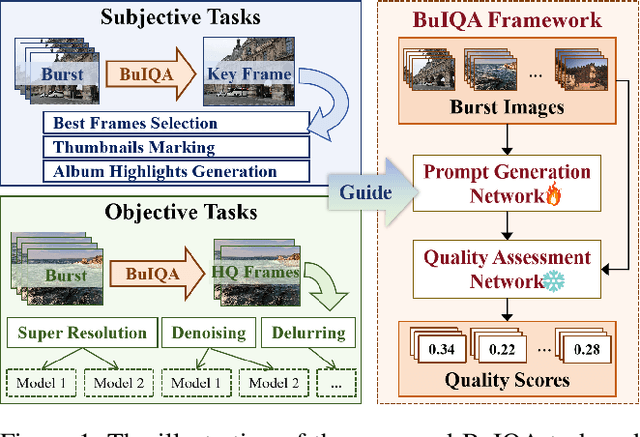
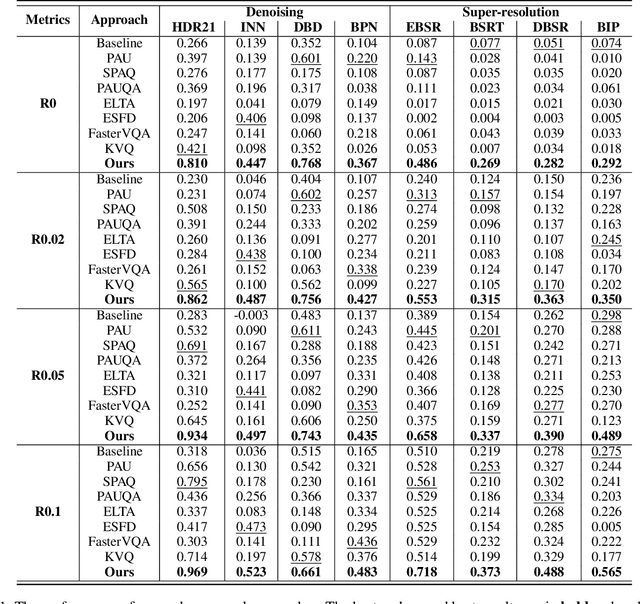

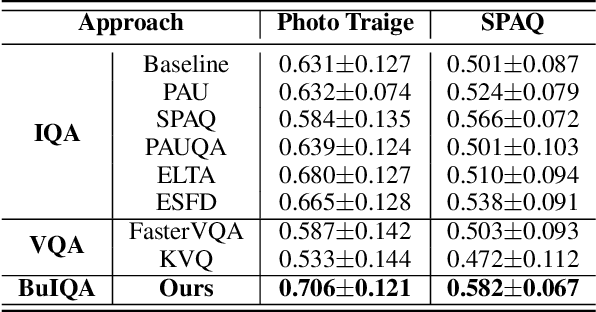
In recent years, the development of burst imaging technology has improved the capture and processing capabilities of visual data, enabling a wide range of applications. However, the redundancy in burst images leads to the increased storage and transmission demands, as well as reduced efficiency of downstream tasks. To address this, we propose a new task of Burst Image Quality Assessment (BuIQA), to evaluate the task-driven quality of each frame within a burst sequence, providing reasonable cues for burst image selection. Specifically, we establish the first benchmark dataset for BuIQA, consisting of $7,346$ burst sequences with $45,827$ images and $191,572$ annotated quality scores for multiple downstream scenarios. Inspired by the data analysis, a unified BuIQA framework is proposed to achieve an efficient adaption for BuIQA under diverse downstream scenarios. Specifically, a task-driven prompt generation network is developed with heterogeneous knowledge distillation, to learn the priors of the downstream task. Then, the task-aware quality assessment network is introduced to assess the burst image quality based on the task prompt. Extensive experiments across 10 downstream scenarios demonstrate the impressive BuIQA performance of the proposed approach, outperforming the state-of-the-art. Furthermore, it can achieve $0.33$ dB PSNR improvement in the downstream tasks of denoising and super-resolution, by applying our approach to select the high-quality burst frames.
Breaking the Multi-Enhancement Bottleneck: Domain-Consistent Quality Enhancement for Compressed Images
Jun 17, 2025Quality enhancement methods have been widely integrated into visual communication pipelines to mitigate artifacts in compressed images. Ideally, these quality enhancement methods should perform robustly when applied to images that have already undergone prior enhancement during transmission. We refer to this scenario as multi-enhancement, which generalizes the well-known multi-generation scenario of image compression. Unfortunately, current quality enhancement methods suffer from severe degradation when applied in multi-enhancement. To address this challenge, we propose a novel adaptation method that transforms existing quality enhancement models into domain-consistent ones. Specifically, our method enhances a low-quality compressed image into a high-quality image within the natural domain during the first enhancement, and ensures that subsequent enhancements preserve this quality without further degradation. Extensive experiments validate the effectiveness of our method and show that various existing models can be successfully adapted to maintain both fidelity and perceptual quality in multi-enhancement scenarios.