 Add to Chrome
 Add to Firefox
 Add to Edge
Kling-Omni Technical Report
Dec 18, 2025
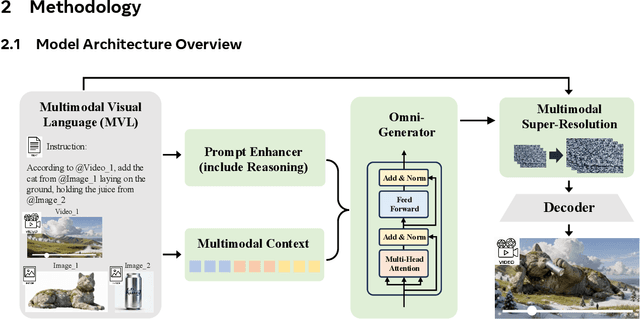
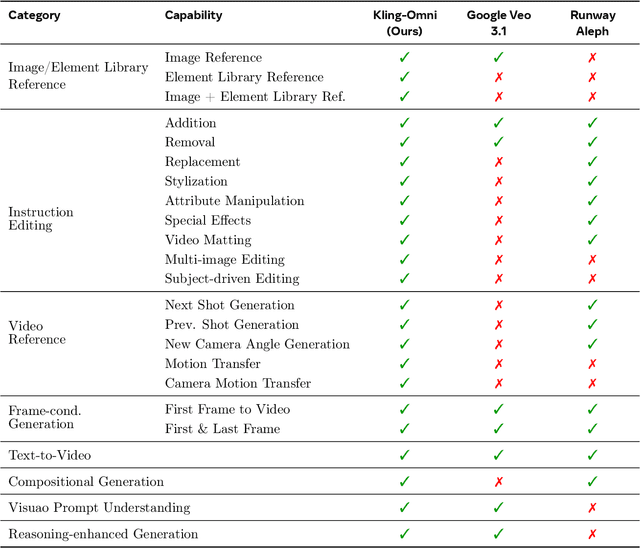
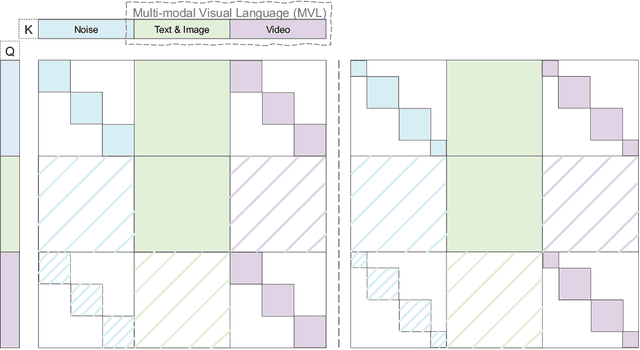
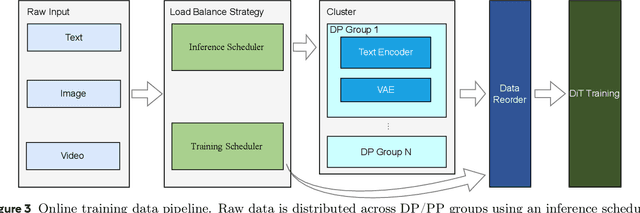
We present Kling-Omni, a generalist generative framework designed to synthesize high-fidelity videos directly from multimodal visual language inputs. Adopting an end-to-end perspective, Kling-Omni bridges the functional separation among diverse video generation, editing, and intelligent reasoning tasks, integrating them into a holistic system. Unlike disjointed pipeline approaches, Kling-Omni supports a diverse range of user inputs, including text instructions, reference images, and video contexts, processing them into a unified multimodal representation to deliver cinematic-quality and highly-intelligent video content creation. To support these capabilities, we constructed a comprehensive data system that serves as the foundation for multimodal video creation. The framework is further empowered by efficient large-scale pre-training strategies and infrastructure optimizations for inference. Comprehensive evaluations reveal that Kling-Omni demonstrates exceptional capabilities in in-context generation, reasoning-based editing, and multimodal instruction following. Moving beyond a content creation tool, we believe Kling-Omni is a pivotal advancement toward multimodal world simulators capable of perceiving, reasoning, generating and interacting with the dynamic and complex worlds.

PushGen: Push Notifications Generation with LLM
Dec 16, 2025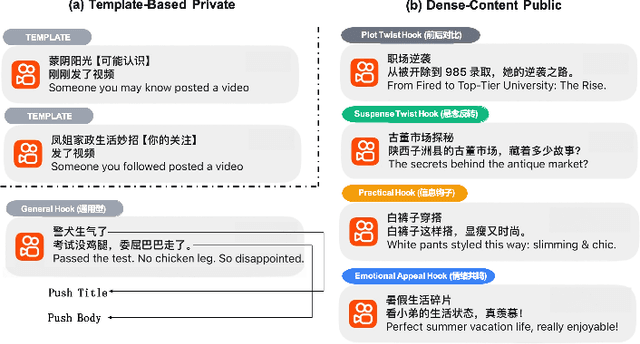
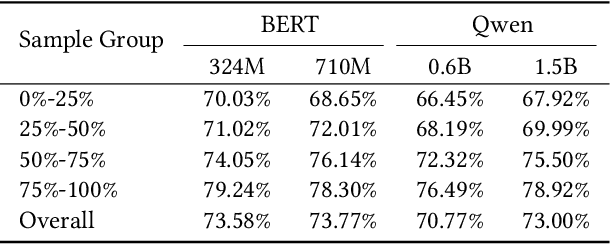
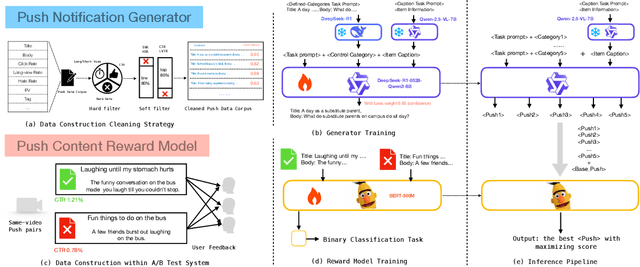
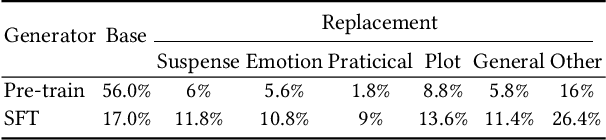
We present PushGen, an automated framework for generating high-quality push notifications comparable to human-crafted content. With the rise of generative models, there is growing interest in leveraging LLMs for push content generation. Although LLMs make content generation straightforward and cost-effective, maintaining stylistic control and reliable quality assessment remains challenging, as both directly impact user engagement. To address these issues, PushGen combines two key components: (1) a controllable category prompt technique to guide LLM outputs toward desired styles, and (2) a reward model that ranks and selects generated candidates. Extensive offline and online experiments demonstrate its effectiveness, which has been deployed in large-scale industrial applications, serving hundreds of millions of users daily.
KlingAvatar 2.0 Technical Report
Dec 15, 2025Avatar video generation models have achieved remarkable progress in recent years. However, prior work exhibits limited efficiency in generating long-duration high-resolution videos, suffering from temporal drifting, quality degradation, and weak prompt following as video length increases. To address these challenges, we propose KlingAvatar 2.0, a spatio-temporal cascade framework that performs upscaling in both spatial resolution and temporal dimension. The framework first generates low-resolution blueprint video keyframes that capture global semantics and motion, and then refines them into high-resolution, temporally coherent sub-clips using a first-last frame strategy, while retaining smooth temporal transitions in long-form videos. To enhance cross-modal instruction fusion and alignment in extended videos, we introduce a Co-Reasoning Director composed of three modality-specific large language model (LLM) experts. These experts reason about modality priorities and infer underlying user intent, converting inputs into detailed storylines through multi-turn dialogue. A Negative Director further refines negative prompts to improve instruction alignment. Building on these components, we extend the framework to support ID-specific multi-character control. Extensive experiments demonstrate that our model effectively addresses the challenges of efficient, multimodally aligned long-form high-resolution video generation, delivering enhanced visual clarity, realistic lip-teeth rendering with accurate lip synchronization, strong identity preservation, and coherent multimodal instruction following.
FilmWeaver: Weaving Consistent Multi-Shot Videos with Cache-Guided Autoregressive Diffusion
Dec 12, 2025Current video generation models perform well at single-shot synthesis but struggle with multi-shot videos, facing critical challenges in maintaining character and background consistency across shots and flexibly generating videos of arbitrary length and shot count. To address these limitations, we introduce \textbf{FilmWeaver}, a novel framework designed to generate consistent, multi-shot videos of arbitrary length. First, it employs an autoregressive diffusion paradigm to achieve arbitrary-length video generation. To address the challenge of consistency, our key insight is to decouple the problem into inter-shot consistency and intra-shot coherence. We achieve this through a dual-level cache mechanism: a shot memory caches keyframes from preceding shots to maintain character and scene identity, while a temporal memory retains a history of frames from the current shot to ensure smooth, continuous motion. The proposed framework allows for flexible, multi-round user interaction to create multi-shot videos. Furthermore, due to this decoupled design, our method demonstrates high versatility by supporting downstream tasks such as multi-concept injection and video extension. To facilitate the training of our consistency-aware method, we also developed a comprehensive pipeline to construct a high-quality multi-shot video dataset. Extensive experimental results demonstrate that our method surpasses existing approaches on metrics for both consistency and aesthetic quality, opening up new possibilities for creating more consistent, controllable, and narrative-driven video content. Project Page: https://filmweaver.github.io
SVG-T2I: Scaling Up Text-to-Image Latent Diffusion Model Without Variational Autoencoder
Dec 12, 2025Visual generation grounded in Visual Foundation Model (VFM) representations offers a highly promising unified pathway for integrating visual understanding, perception, and generation. Despite this potential, training large-scale text-to-image diffusion models entirely within the VFM representation space remains largely unexplored. To bridge this gap, we scale the SVG (Self-supervised representations for Visual Generation) framework, proposing SVG-T2I to support high-quality text-to-image synthesis directly in the VFM feature domain. By leveraging a standard text-to-image diffusion pipeline, SVG-T2I achieves competitive performance, reaching 0.75 on GenEval and 85.78 on DPG-Bench. This performance validates the intrinsic representational power of VFMs for generative tasks. We fully open-source the project, including the autoencoder and generation model, together with their training, inference, evaluation pipelines, and pre-trained weights, to facilitate further research in representation-driven visual generation.
ContextDrag: Precise Drag-Based Image Editing via Context-Preserving Token Injection and Position-Consistent Attention
Dec 09, 2025Drag-based image editing aims to modify visual content followed by user-specified drag operations. Despite existing methods having made notable progress, they still fail to fully exploit the contextual information in the reference image, including fine-grained texture details, leading to edits with limited coherence and fidelity. To address this challenge, we introduce ContextDrag, a new paradigm for drag-based editing that leverages the strong contextual modeling capability of editing models, such as FLUX-Kontext. By incorporating VAE-encoded features from the reference image, ContextDrag can leverage rich contextual cues and preserve fine-grained details, without the need for finetuning or inversion. Specifically, ContextDrag introduced a novel Context-preserving Token Injection (CTI) that injects noise-free reference features into their correct destination locations via a Latent-space Reverse Mapping (LRM) algorithm. This strategy enables precise drag control while preserving consistency in both semantics and texture details. Second, ContextDrag adopts a novel Position-Consistent Attention (PCA), which positional re-encodes the reference tokens and applies overlap-aware masking to eliminate interference from irrelevant reference features. Extensive experiments on DragBench-SR and DragBench-DR demonstrate that our approach surpasses all existing SOTA methods. Code will be publicly available.
LLM-Aligned Geographic Item Tokenization for Local-Life Recommendation
Nov 18, 2025Recent advances in Large Language Models (LLMs) have enhanced text-based recommendation by enriching traditional ID-based methods with semantic generalization capabilities. Text-based methods typically encode item textual information via prompt design and generate discrete semantic IDs through item tokenization. However, in domain-specific tasks such as local-life services, simply injecting location information into prompts fails to capture fine-grained spatial characteristics and real-world distance awareness among items. To address this, we propose LGSID, an LLM-Aligned Geographic Item Tokenization Framework for Local-life Recommendation. This framework consists of two key components: (1) RL-based Geographic LLM Alignment, and (2) Hierarchical Geographic Item Tokenization. In the RL-based alignment module, we initially train a list-wise reward model to capture real-world spatial relationships among items. We then introduce a novel G-DPO algorithm that uses pre-trained reward model to inject generalized spatial knowledge and collaborative signals into LLMs while preserving their semantic understanding. Furthermore, we propose a hierarchical geographic item tokenization strategy, where primary tokens are derived from discrete spatial and content attributes, and residual tokens are refined using the aligned LLM's geographic representation vectors. Extensive experiments on real-world Kuaishou industry datasets show that LGSID consistently outperforms state-of-the-art discriminative and generative recommendation models. Ablation studies, visualizations, and case studies further validate its effectiveness.
RelightMaster: Precise Video Relighting with Multi-plane Light Images
Nov 09, 2025Recent advances in diffusion models enable high-quality video generation and editing, but precise relighting with consistent video contents, which is critical for shaping scene atmosphere and viewer attention, remains unexplored. Mainstream text-to-video (T2V) models lack fine-grained lighting control due to text's inherent limitation in describing lighting details and insufficient pre-training on lighting-related prompts. Additionally, constructing high-quality relighting training data is challenging, as real-world controllable lighting data is scarce. To address these issues, we propose RelightMaster, a novel framework for accurate and controllable video relighting. First, we build RelightVideo, the first dataset with identical dynamic content under varying precise lighting conditions based on the Unreal Engine. Then, we introduce Multi-plane Light Image (MPLI), a novel visual prompt inspired by Multi-Plane Image (MPI). MPLI models lighting via K depth-aligned planes, representing 3D light source positions, intensities, and colors while supporting multi-source scenarios and generalizing to unseen light setups. Third, we design a Light Image Adapter that seamlessly injects MPLI into pre-trained Video Diffusion Transformers (DiT): it compresses MPLI via a pre-trained Video VAE and injects latent light features into DiT blocks, leveraging the base model's generative prior without catastrophic forgetting. Experiments show that RelightMaster generates physically plausible lighting and shadows and preserves original scene content. Demos are available at https://wkbian.github.io/Projects/RelightMaster/.
Klear-AgentForge: Forging Agentic Intelligence through Posttraining Scaling
Nov 08, 2025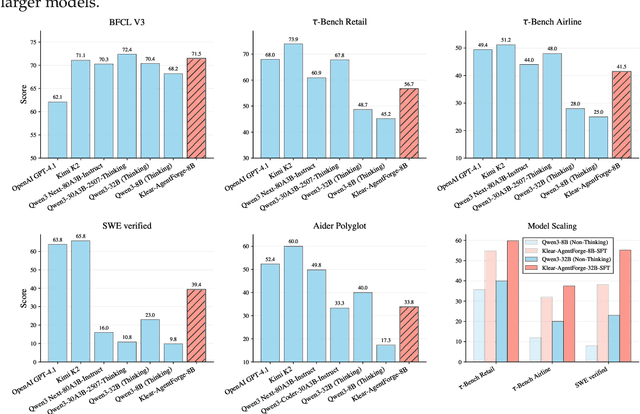
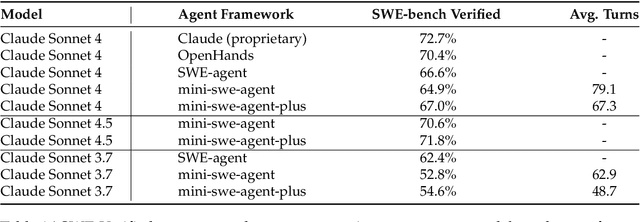
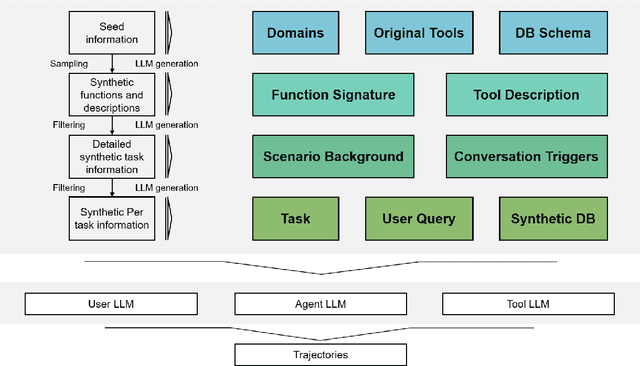
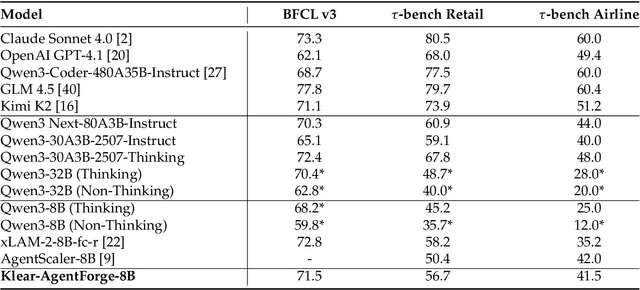
Despite the proliferation of powerful agentic models, the lack of critical post-training details hinders the development of strong counterparts in the open-source community. In this study, we present a comprehensive and fully open-source pipeline for training a high-performance agentic model for interacting with external tools and environments, named Klear-Qwen3-AgentForge, starting from the Qwen3-8B base model. We design effective supervised fine-tuning (SFT) with synthetic data followed by multi-turn reinforcement learning (RL) to unlock the potential for multiple diverse agentic tasks. We perform exclusive experiments on various agentic benchmarks in both tool use and coding domains. Klear-Qwen3-AgentForge-8B achieves state-of-the-art performance among LLMs of similar size and remains competitive with significantly larger models.
Sample By Step, Optimize By Chunk: Chunk-Level GRPO For Text-to-Image Generation
Oct 24, 2025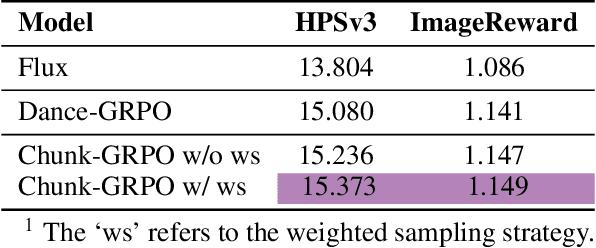
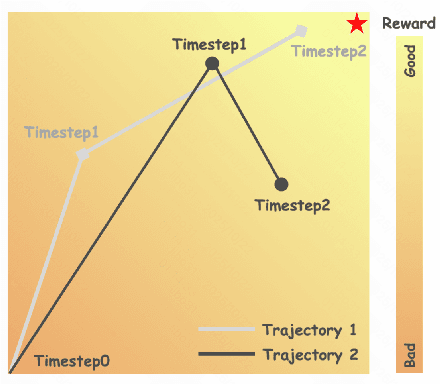
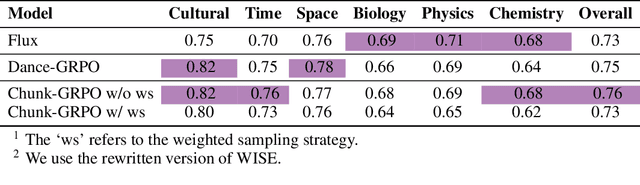
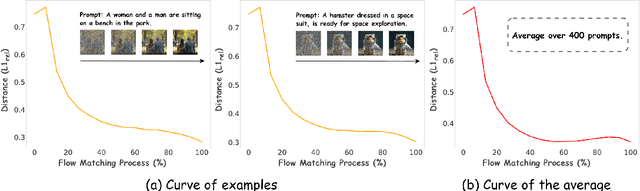
Group Relative Policy Optimization (GRPO) has shown strong potential for flow-matching-based text-to-image (T2I) generation, but it faces two key limitations: inaccurate advantage attribution, and the neglect of temporal dynamics of generation. In this work, we argue that shifting the optimization paradigm from the step level to the chunk level can effectively alleviate these issues. Building on this idea, we propose Chunk-GRPO, the first chunk-level GRPO-based approach for T2I generation. The insight is to group consecutive steps into coherent 'chunk's that capture the intrinsic temporal dynamics of flow matching, and to optimize policies at the chunk level. In addition, we introduce an optional weighted sampling strategy to further enhance performance. Extensive experiments show that ChunkGRPO achieves superior results in both preference alignment and image quality, highlighting the promise of chunk-level optimization for GRPO-based methods.