 Add to Chrome
 Add to Firefox
 Add to Edge
Chirp Parameter Optimization and Distributed Detection for Cooperative RSMA-AFDM Systems
Jun 11, 2026
Affine frequency division multiplexing (AFDM) exhibits excellent Doppler robustness and the ability to characterize doubly selective channels. However, its signal dispersion characteristics make it challenging to directly adopt traditional time-frequency multiple access schemes. To address this issue, we introduce cooperative rate splitting multiple access (RSMA) for AFDM systems. The flexible configuration of AFDM chirp parameters can reduce the correlation between users' equivalent channels, which decreases the interference from RSMA private streams. We conduct a theoretical analysis of the cooperative RSMA-AFDM system and demonstrate that minimizing the overlap in the channel column spaces among users can effectively enhance the system performance. Guided by this analysis, we design a chirp parameter optimization scheme that reduces multi-user interference and maximizes diversity gain. To fully exploit the diversity gain brought by the proposed chirp parameter optimization, two expectation propagation (EP)-based distributed cooperative detection schemes are proposed. First, a decision-fusion-based method is developed, where local information and cooperative information are fused by maximum ratio combining, achieving a globally consistent estimate of the common stream. Second, we develop a belief-consensus EP-based detection scheme. In each iteration, user nodes exchange and fuse the first- and second-order statistics of the common stream, and the resulting beliefs gradually converge to a consistent global decision, which significantly improves the overall reliability.

Beyond the Golden Data: Resolving the Motion-Vision Quality Dilemma via Timestep Selective Training
Mar 26, 2026Recent advances in video generation models have achieved impressive results. However, these models heavily rely on the use of high-quality data that combines both high visual quality and high motion quality. In this paper, we identify a key challenge in video data curation: the Motion-Vision Quality Dilemma. We discovered that visual quality and motion intensity inherently exhibit a negative correlation, making it hard to obtain golden data that excels in both aspects. To address this challenge, we first examine the hierarchical learning dynamics of video diffusion models and conduct gradient-based analysis on quality-degraded samples. We discover that quality-imbalanced data can produce gradients similar to golden data at appropriate timesteps. Based on this, we introduce the novel concept of Timestep selection in Training Process. We propose Timestep-aware Quality Decoupling (TQD), which modifies the data sampling distribution to better match the model's learning process. For certain types of data, the sampling distribution is skewed toward higher timesteps for motion-rich data, while high visual quality data is more likely to be sampled during lower timesteps. Through extensive experiments, we demonstrate that TQD enables training exclusively on separated imbalanced data to achieve performance surpassing conventional training with better data, challenging the necessity of perfect data in video generation. Moreover, our method also boosts model performance when trained on high-quality data, showcasing its effectiveness across different data scenarios.
PureCC: Pure Learning for Text-to-Image Concept Customization
Mar 08, 2026Existing concept customization methods have achieved remarkable outcomes in high-fidelity and multi-concept customization. However, they often neglect the influence on the original model's behavior and capabilities when learning new personalized concepts. To address this issue, we propose PureCC. PureCC introduces a novel decoupled learning objective for concept customization, which combines the implicit guidance of the target concept with the original conditional prediction. This separated form enables PureCC to substantially focus on the original model during training. Moreover, based on this objective, PureCC designs a dual-branch training pipeline that includes a frozen extractor providing purified target concept representations as implicit guidance and a trainable flow model producing the original conditional prediction, jointly achieving pure learning for personalized concepts. Furthermore, PureCC introduces a novel adaptive guidance scale $λ^\star$ to dynamically adjust the guidance strength of the target concept, balancing customization fidelity and model preservation. Extensive experiments show that PureCC achieves state-of-the-art performance in preserving the original behavior and capabilities while enabling high-fidelity concept customization. The code is available at https://github.com/lzc-sg/PureCC.
AEGPO: Adaptive Entropy-Guided Policy Optimization for Diffusion Models
Feb 06, 2026Reinforcement learning from human feedback (RLHF) shows promise for aligning diffusion and flow models, yet policy optimization methods such as GRPO suffer from inefficient and static sampling strategies. These methods treat all prompts and denoising steps uniformly, ignoring substantial variations in sample learning value as well as the dynamic nature of critical exploration moments. To address this issue, we conduct a detailed analysis of the internal attention dynamics during GRPO training and uncover a key insight: attention entropy can serve as a powerful dual-signal proxy. First, across different samples, the relative change in attention entropy (ΔEntropy), which reflects the divergence between the current policy and the base policy, acts as a robust indicator of sample learning value. Second, during the denoising process, the peaks of absolute attention entropy (Entropy(t)), which quantify attention dispersion, effectively identify critical timesteps where high-value exploration occurs. Building on this observation, we propose Adaptive Entropy-Guided Policy Optimization (AEGPO), a novel dual-signal, dual-level adaptive optimization strategy. At the global level, AEGPO uses ΔEntropy to dynamically allocate rollout budgets, prioritizing prompts with higher learning value. At the local level, it exploits the peaks of Entropy(t) to guide exploration selectively at critical high-dispersion timesteps rather than uniformly across all denoising steps. By focusing computation on the most informative samples and the most critical moments, AEGPO enables more efficient and effective policy optimization. Experiments on text-to-image generation tasks demonstrate that AEGPO significantly accelerates convergence and achieves superior alignment performance compared to standard GRPO variants.
SAM 3D for 3D Object Reconstruction from Remote Sensing Images
Dec 27, 2025Monocular 3D building reconstruction from remote sensing imagery is essential for scalable urban modeling, yet existing methods often require task-specific architectures and intensive supervision. This paper presents the first systematic evaluation of SAM 3D, a general-purpose image-to-3D foundation model, for monocular remote sensing building reconstruction. We benchmark SAM 3D against TRELLIS on samples from the NYC Urban Dataset, employing Frechet Inception Distance (FID) and CLIP-based Maximum Mean Discrepancy (CMMD) as evaluation metrics. Experimental results demonstrate that SAM 3D produces more coherent roof geometry and sharper boundaries compared to TRELLIS. We further extend SAM 3D to urban scene reconstruction through a segment-reconstruct-compose pipeline, demonstrating its potential for urban scene modeling. We also analyze practical limitations and discuss future research directions. These findings provide practical guidance for deploying foundation models in urban 3D reconstruction and motivate future integration of scene-level structural priors.
Kling-Omni Technical Report
Dec 18, 2025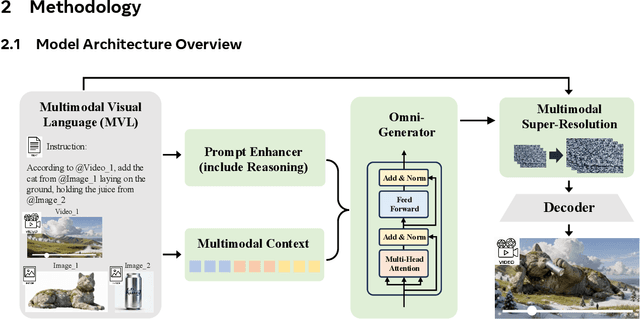
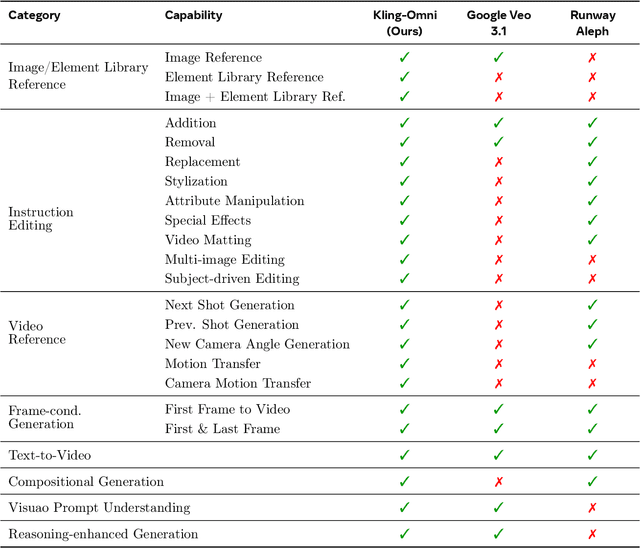
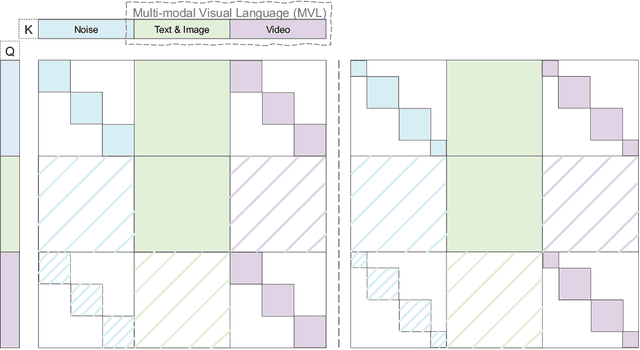
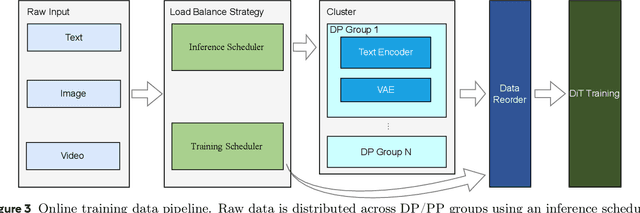
We present Kling-Omni, a generalist generative framework designed to synthesize high-fidelity videos directly from multimodal visual language inputs. Adopting an end-to-end perspective, Kling-Omni bridges the functional separation among diverse video generation, editing, and intelligent reasoning tasks, integrating them into a holistic system. Unlike disjointed pipeline approaches, Kling-Omni supports a diverse range of user inputs, including text instructions, reference images, and video contexts, processing them into a unified multimodal representation to deliver cinematic-quality and highly-intelligent video content creation. To support these capabilities, we constructed a comprehensive data system that serves as the foundation for multimodal video creation. The framework is further empowered by efficient large-scale pre-training strategies and infrastructure optimizations for inference. Comprehensive evaluations reveal that Kling-Omni demonstrates exceptional capabilities in in-context generation, reasoning-based editing, and multimodal instruction following. Moving beyond a content creation tool, we believe Kling-Omni is a pivotal advancement toward multimodal world simulators capable of perceiving, reasoning, generating and interacting with the dynamic and complex worlds.
FilmWeaver: Weaving Consistent Multi-Shot Videos with Cache-Guided Autoregressive Diffusion
Dec 12, 2025Current video generation models perform well at single-shot synthesis but struggle with multi-shot videos, facing critical challenges in maintaining character and background consistency across shots and flexibly generating videos of arbitrary length and shot count. To address these limitations, we introduce \textbf{FilmWeaver}, a novel framework designed to generate consistent, multi-shot videos of arbitrary length. First, it employs an autoregressive diffusion paradigm to achieve arbitrary-length video generation. To address the challenge of consistency, our key insight is to decouple the problem into inter-shot consistency and intra-shot coherence. We achieve this through a dual-level cache mechanism: a shot memory caches keyframes from preceding shots to maintain character and scene identity, while a temporal memory retains a history of frames from the current shot to ensure smooth, continuous motion. The proposed framework allows for flexible, multi-round user interaction to create multi-shot videos. Furthermore, due to this decoupled design, our method demonstrates high versatility by supporting downstream tasks such as multi-concept injection and video extension. To facilitate the training of our consistency-aware method, we also developed a comprehensive pipeline to construct a high-quality multi-shot video dataset. Extensive experimental results demonstrate that our method surpasses existing approaches on metrics for both consistency and aesthetic quality, opening up new possibilities for creating more consistent, controllable, and narrative-driven video content. Project Page: https://filmweaver.github.io
SPF-Portrait: Towards Pure Portrait Customization with Semantic Pollution-Free Fine-tuning
Apr 01, 2025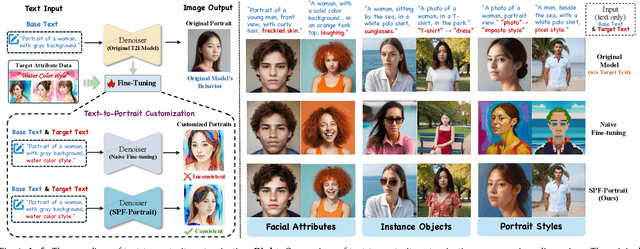
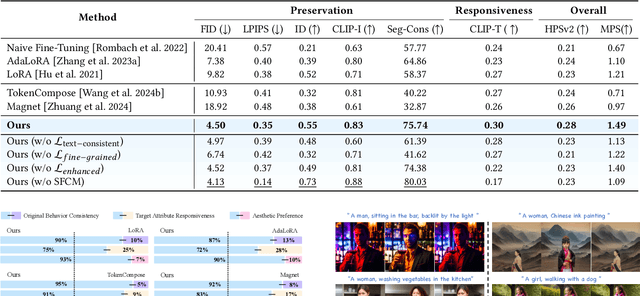
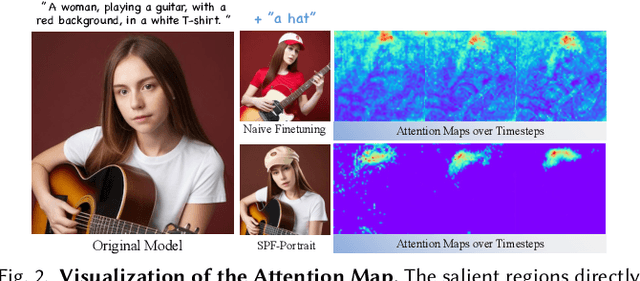
While fine-tuning pre-trained Text-to-Image (T2I) models on portrait datasets enables attribute customization, existing methods suffer from Semantic Pollution that compromises the original model's behavior and prevents incremental learning. To address this, we propose SPF-Portrait, a pioneering work to purely understand customized semantics while eliminating semantic pollution in text-driven portrait customization. In our SPF-Portrait, we propose a dual-path pipeline that introduces the original model as a reference for the conventional fine-tuning path. Through contrastive learning, we ensure adaptation to target attributes and purposefully align other unrelated attributes with the original portrait. We introduce a novel Semantic-Aware Fine Control Map, which represents the precise response regions of the target semantics, to spatially guide the alignment process between the contrastive paths. This alignment process not only effectively preserves the performance of the original model but also avoids over-alignment. Furthermore, we propose a novel response enhancement mechanism to reinforce the performance of target attributes, while mitigating representation discrepancy inherent in direct cross-modal supervision. Extensive experiments demonstrate that SPF-Portrait achieves state-of-the-art performance.
HumanAesExpert: Advancing a Multi-Modality Foundation Model for Human Image Aesthetic Assessment
Mar 31, 2025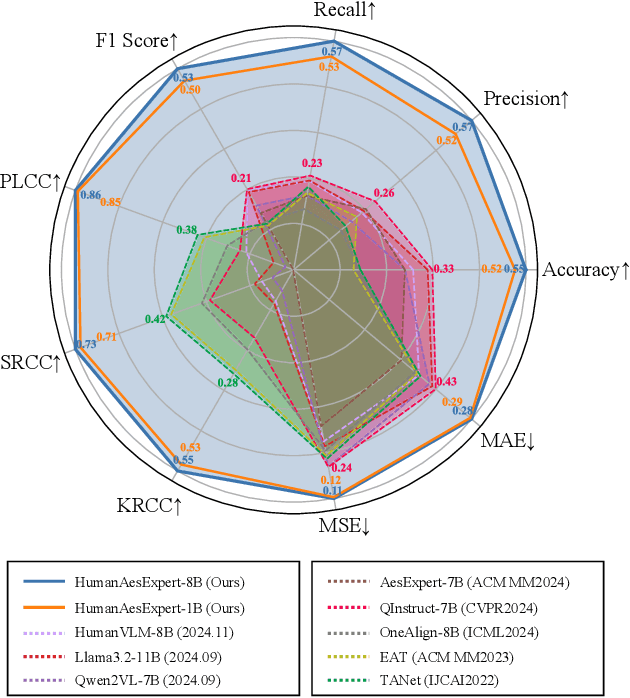
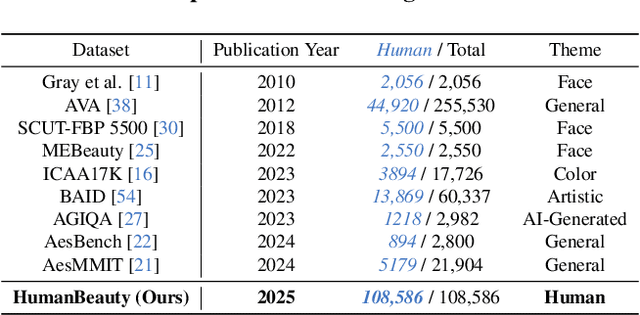
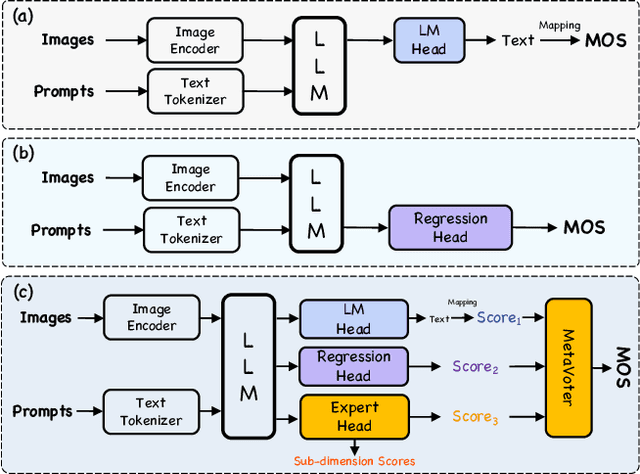
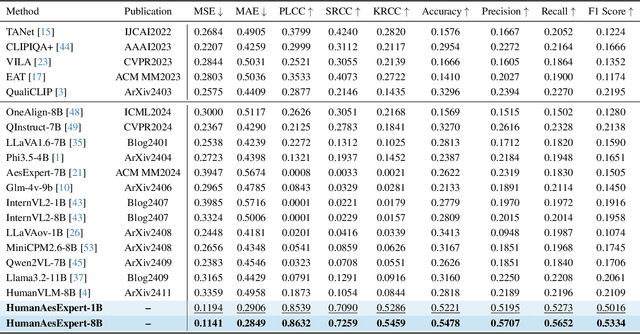
Image Aesthetic Assessment (IAA) is a long-standing and challenging research task. However, its subset, Human Image Aesthetic Assessment (HIAA), has been scarcely explored, even though HIAA is widely used in social media, AI workflows, and related domains. To bridge this research gap, our work pioneers a holistic implementation framework tailored for HIAA. Specifically, we introduce HumanBeauty, the first dataset purpose-built for HIAA, which comprises 108k high-quality human images with manual annotations. To achieve comprehensive and fine-grained HIAA, 50K human images are manually collected through a rigorous curation process and annotated leveraging our trailblazing 12-dimensional aesthetic standard, while the remaining 58K with overall aesthetic labels are systematically filtered from public datasets. Based on the HumanBeauty database, we propose HumanAesExpert, a powerful Vision Language Model for aesthetic evaluation of human images. We innovatively design an Expert head to incorporate human knowledge of aesthetic sub-dimensions while jointly utilizing the Language Modeling (LM) and Regression head. This approach empowers our model to achieve superior proficiency in both overall and fine-grained HIAA. Furthermore, we introduce a MetaVoter, which aggregates scores from all three heads, to effectively balance the capabilities of each head, thereby realizing improved assessment precision. Extensive experiments demonstrate that our HumanAesExpert models deliver significantly better performance in HIAA than other state-of-the-art models. Our datasets, models, and codes are publicly released to advance the HIAA community. Project webpage: https://humanaesexpert.github.io/HumanAesExpert/
Global OpenBuildingMap -- Unveiling the Mystery of Global Buildings
Apr 22, 2024Understanding how buildings are distributed globally is crucial to revealing the human footprint on our home planet. This built environment affects local climate, land surface albedo, resource distribution, and many other key factors that influence well-being and human health. Despite this, quantitative and comprehensive data on the distribution and properties of buildings worldwide is lacking. To this end, by using a big data analytics approach and nearly 800,000 satellite images, we generated the highest resolution and highest accuracy building map ever created: the Global OpenBuildingMap (Global OBM). A joint analysis of building maps and solar potentials indicates that rooftop solar energy can supply the global energy consumption need at a reasonable cost. Specifically, if solar panels were placed on the roofs of all buildings, they could supply 1.1-3.3 times -- depending on the efficiency of the solar device -- the global energy consumption in 2020, which is the year with the highest consumption on record. We also identified a clear geospatial correlation between building areas and key socioeconomic variables, which indicates our global building map can serve as an important input to modeling global socioeconomic needs and drivers.