 Add to Chrome
 Add to Firefox
 Add to Edge
TimePLE: Rethinking Temporal Representation for Video Temporal Grounding
Jul 27, 2026
Video temporal grounding (VTG) aims to localize the continuous video interval described by a natural-language query. However, current VLM-based methods typically produce this interval indirectly through two endpoint outputs, represented either as discrete timestamp tokens or continuous boundary coordinates. These formulations differ in how endpoints are encoded, but not in what is predicted: the event interval remains a derived object, while interval validity, duration, and interval-level similarity are handled only implicitly. We propose TimePLE, which reformulates VTG from endpoint prediction to interval-native grounding by predicting a single joint distribution over valid temporal intervals. TimePLE maps each interval to a point in a canonical position-duration square, where every support point corresponds to a valid span and neighboring points represent geometrically similar intervals. Given a video and query, the VLM generates a single latent <|TIMESPAN|> token whose hidden state is decoded into a joint interval distribution, refined through duration-aware coordinate correction, and converted into continuous boundaries. The same interval representation is used to encode input temporal anchors, aligning video-side temporal evidence with output-side span prediction. To reliably align the latent span representation with complete event intervals, we curate 90K-scale grounded samples and human-verify 3K-scale benchmark annotations. Experiments across four VTG benchmarks show that TimePLE consistently outperforms endpoint prediction baselines, achieving an average mIoU of 58.9, with clear gains on short-duration and medium-duration events.

CineCap: Structured Reasoning with Spatio-Temporal Anchors for Cinematographic Video Captioning
Jun 23, 2026Cinematographic captioning aims to describe how a video is filmed using professional film-language concepts such as camera movement, shot size, depth of field, composition, and shooting angle. This capability is important for fine-grained video understanding and controllable movie-quality video generation, yet remains underexplored in existing multimodal large language models. Unlike question-answering-based evaluation of cinematic understanding, cinematographic captioning requires a unified open-form description over multiple cinematographic dimensions. This task is challenging for two main reasons: the model must infer professional cinematographic concepts from subtle visual evidence, and it must generate captions that are both comprehensive and accurate. Accordingly, we propose CineCap, a framework that combines structured reasoning with spatio-temporal anchors and reinforcement learning with comprehensiveness, accuracy, and gated coverage rewards. The former grounds professional cinematographic descriptions in explicit visual evidence and organizes them into compact atomic reasoning for supervised fine-tuning, while the latter improves the balance between descriptive completeness and factual correctness. In addition, we construct CineCap Bench, a benchmark of 472 manually annotated video-caption pairs for systematic evaluation. Extensive experiments show that CineCap consistently outperforms strong proprietary and open-source baselines, establishing a new state of the art for cinematographic captioning. The code, model checkpoint, and benchmark are publicly available in https://github.com/Hectormxy/CineCap.git.
Fast-SAM3D: 3Dfy Anything in Images but Faster
Feb 05, 2026SAM3D enables scalable, open-world 3D reconstruction from complex scenes, yet its deployment is hindered by prohibitive inference latency. In this work, we conduct the \textbf{first systematic investigation} into its inference dynamics, revealing that generic acceleration strategies are brittle in this context. We demonstrate that these failures stem from neglecting the pipeline's inherent multi-level \textbf{heterogeneity}: the kinematic distinctiveness between shape and layout, the intrinsic sparsity of texture refinement, and the spectral variance across geometries. To address this, we present \textbf{Fast-SAM3D}, a training-free framework that dynamically aligns computation with instantaneous generation complexity. Our approach integrates three heterogeneity-aware mechanisms: (1) \textit{Modality-Aware Step Caching} to decouple structural evolution from sensitive layout updates; (2) \textit{Joint Spatiotemporal Token Carving} to concentrate refinement on high-entropy regions; and (3) \textit{Spectral-Aware Token Aggregation} to adapt decoding resolution. Extensive experiments demonstrate that Fast-SAM3D delivers up to \textbf{2.67$\times$} end-to-end speedup with negligible fidelity loss, establishing a new Pareto frontier for efficient single-view 3D generation. Our code is released in https://github.com/wlfeng0509/Fast-SAM3D.
Kling-Omni Technical Report
Dec 18, 2025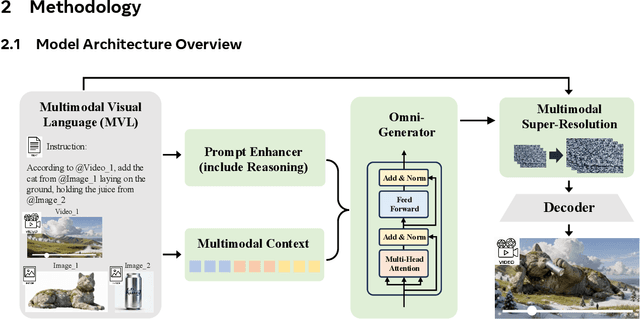
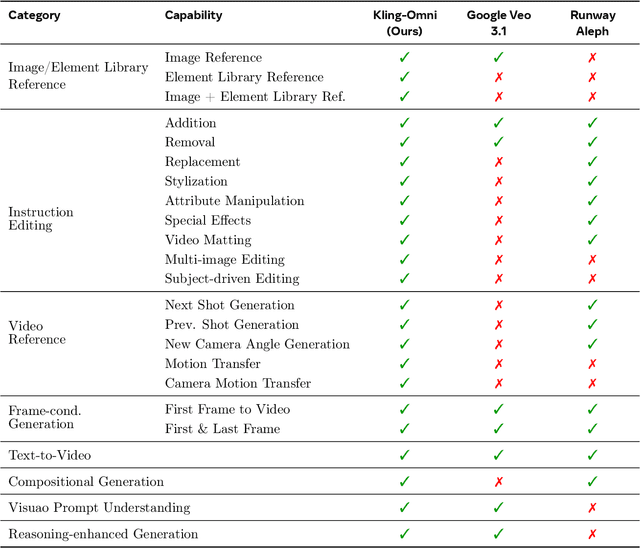
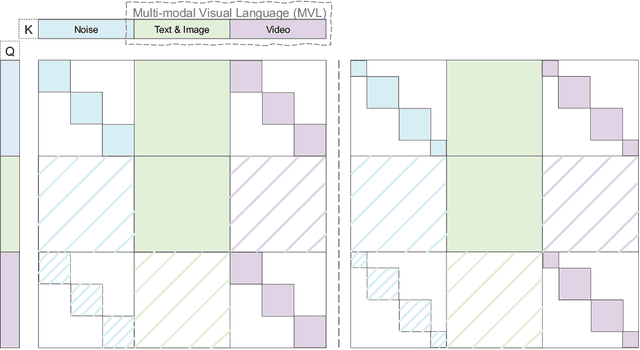
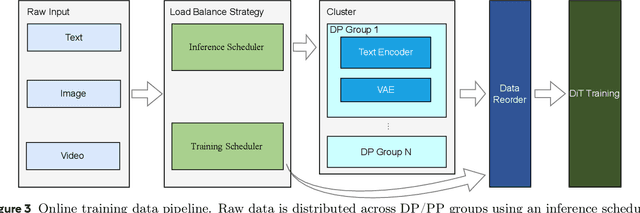
We present Kling-Omni, a generalist generative framework designed to synthesize high-fidelity videos directly from multimodal visual language inputs. Adopting an end-to-end perspective, Kling-Omni bridges the functional separation among diverse video generation, editing, and intelligent reasoning tasks, integrating them into a holistic system. Unlike disjointed pipeline approaches, Kling-Omni supports a diverse range of user inputs, including text instructions, reference images, and video contexts, processing them into a unified multimodal representation to deliver cinematic-quality and highly-intelligent video content creation. To support these capabilities, we constructed a comprehensive data system that serves as the foundation for multimodal video creation. The framework is further empowered by efficient large-scale pre-training strategies and infrastructure optimizations for inference. Comprehensive evaluations reveal that Kling-Omni demonstrates exceptional capabilities in in-context generation, reasoning-based editing, and multimodal instruction following. Moving beyond a content creation tool, we believe Kling-Omni is a pivotal advancement toward multimodal world simulators capable of perceiving, reasoning, generating and interacting with the dynamic and complex worlds.
FilmWeaver: Weaving Consistent Multi-Shot Videos with Cache-Guided Autoregressive Diffusion
Dec 12, 2025Current video generation models perform well at single-shot synthesis but struggle with multi-shot videos, facing critical challenges in maintaining character and background consistency across shots and flexibly generating videos of arbitrary length and shot count. To address these limitations, we introduce \textbf{FilmWeaver}, a novel framework designed to generate consistent, multi-shot videos of arbitrary length. First, it employs an autoregressive diffusion paradigm to achieve arbitrary-length video generation. To address the challenge of consistency, our key insight is to decouple the problem into inter-shot consistency and intra-shot coherence. We achieve this through a dual-level cache mechanism: a shot memory caches keyframes from preceding shots to maintain character and scene identity, while a temporal memory retains a history of frames from the current shot to ensure smooth, continuous motion. The proposed framework allows for flexible, multi-round user interaction to create multi-shot videos. Furthermore, due to this decoupled design, our method demonstrates high versatility by supporting downstream tasks such as multi-concept injection and video extension. To facilitate the training of our consistency-aware method, we also developed a comprehensive pipeline to construct a high-quality multi-shot video dataset. Extensive experimental results demonstrate that our method surpasses existing approaches on metrics for both consistency and aesthetic quality, opening up new possibilities for creating more consistent, controllable, and narrative-driven video content. Project Page: https://filmweaver.github.io
Interpretable Multimodal Learning for Tumor Protein-Metal Binding: Progress, Challenges, and Perspectives
Apr 04, 2025In cancer therapeutics, protein-metal binding mechanisms critically govern drug pharmacokinetics and targeting efficacy, thereby fundamentally shaping the rational design of anticancer metallodrugs. While conventional laboratory methods used to study such mechanisms are often costly, low throughput, and limited in capturing dynamic biological processes, machine learning (ML) has emerged as a promising alternative. Despite increasing efforts to develop protein-metal binding datasets and ML algorithms, the application of ML in tumor protein-metal binding remains limited. Key challenges include a shortage of high-quality, tumor-specific datasets, insufficient consideration of multiple data modalities, and the complexity of interpreting results due to the ''black box'' nature of complex ML models. This paper summarizes recent progress and ongoing challenges in using ML to predict tumor protein-metal binding, focusing on data, modeling, and interpretability. We present multimodal protein-metal binding datasets and outline strategies for acquiring, curating, and preprocessing them for training ML models. Moreover, we explore the complementary value provided by different data modalities and examine methods for their integration. We also review approaches for improving model interpretability to support more trustworthy decisions in cancer research. Finally, we offer our perspective on research opportunities and propose strategies to address the scarcity of tumor protein data and the limited number of predictive models for tumor protein-metal binding. We also highlight two promising directions for effective metal-based drug design: integrating protein-protein interaction data to provide structural insights into metal-binding events and predicting structural changes in tumor proteins after metal binding.
HumanAesExpert: Advancing a Multi-Modality Foundation Model for Human Image Aesthetic Assessment
Mar 31, 2025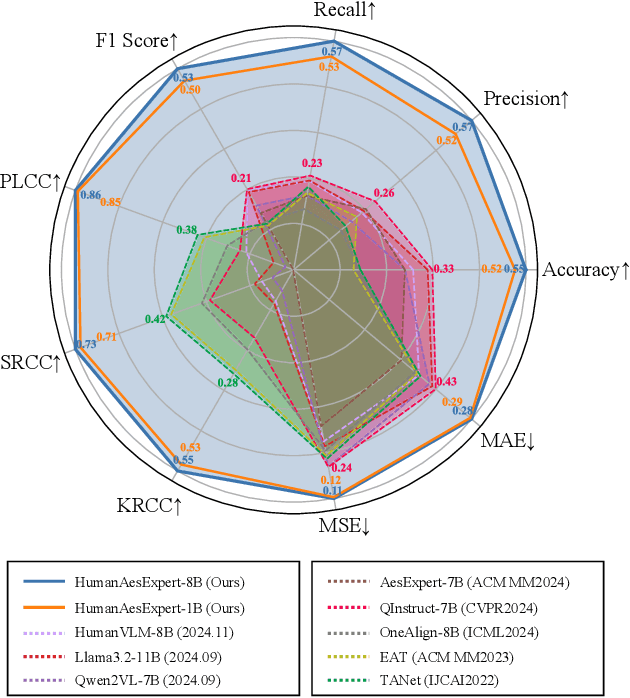
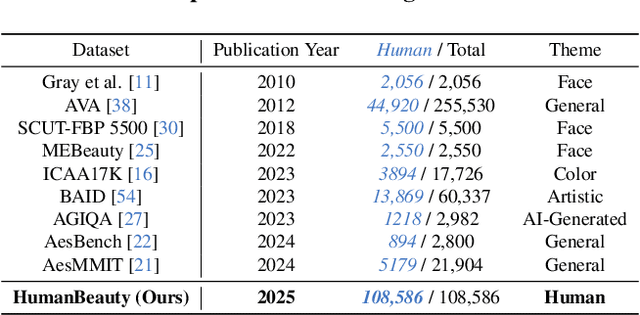
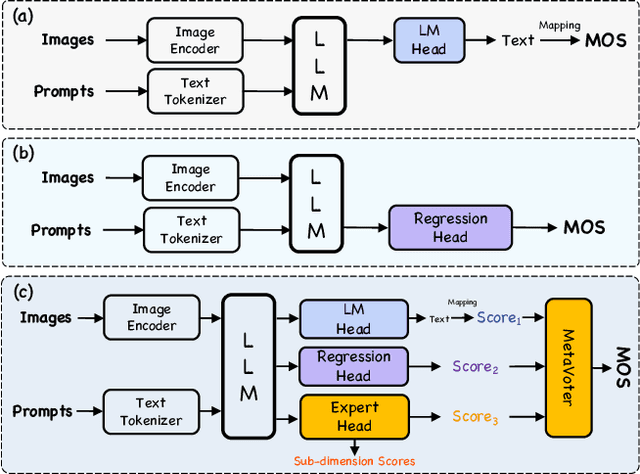
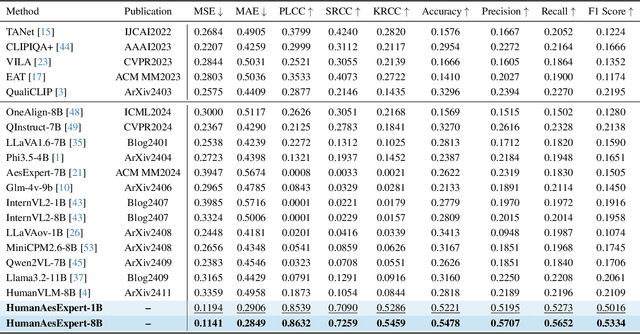
Image Aesthetic Assessment (IAA) is a long-standing and challenging research task. However, its subset, Human Image Aesthetic Assessment (HIAA), has been scarcely explored, even though HIAA is widely used in social media, AI workflows, and related domains. To bridge this research gap, our work pioneers a holistic implementation framework tailored for HIAA. Specifically, we introduce HumanBeauty, the first dataset purpose-built for HIAA, which comprises 108k high-quality human images with manual annotations. To achieve comprehensive and fine-grained HIAA, 50K human images are manually collected through a rigorous curation process and annotated leveraging our trailblazing 12-dimensional aesthetic standard, while the remaining 58K with overall aesthetic labels are systematically filtered from public datasets. Based on the HumanBeauty database, we propose HumanAesExpert, a powerful Vision Language Model for aesthetic evaluation of human images. We innovatively design an Expert head to incorporate human knowledge of aesthetic sub-dimensions while jointly utilizing the Language Modeling (LM) and Regression head. This approach empowers our model to achieve superior proficiency in both overall and fine-grained HIAA. Furthermore, we introduce a MetaVoter, which aggregates scores from all three heads, to effectively balance the capabilities of each head, thereby realizing improved assessment precision. Extensive experiments demonstrate that our HumanAesExpert models deliver significantly better performance in HIAA than other state-of-the-art models. Our datasets, models, and codes are publicly released to advance the HIAA community. Project webpage: https://humanaesexpert.github.io/HumanAesExpert/
Improving Video Generation with Human Feedback
Jan 23, 2025
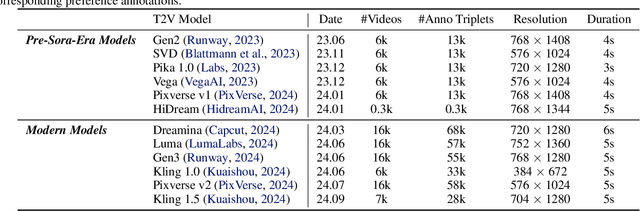

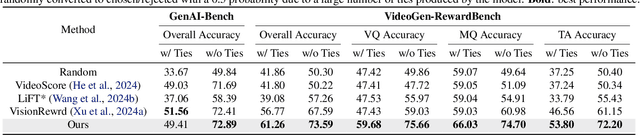
Video generation has achieved significant advances through rectified flow techniques, but issues like unsmooth motion and misalignment between videos and prompts persist. In this work, we develop a systematic pipeline that harnesses human feedback to mitigate these problems and refine the video generation model. Specifically, we begin by constructing a large-scale human preference dataset focused on modern video generation models, incorporating pairwise annotations across multi-dimensions. We then introduce VideoReward, a multi-dimensional video reward model, and examine how annotations and various design choices impact its rewarding efficacy. From a unified reinforcement learning perspective aimed at maximizing reward with KL regularization, we introduce three alignment algorithms for flow-based models by extending those from diffusion models. These include two training-time strategies: direct preference optimization for flow (Flow-DPO) and reward weighted regression for flow (Flow-RWR), and an inference-time technique, Flow-NRG, which applies reward guidance directly to noisy videos. Experimental results indicate that VideoReward significantly outperforms existing reward models, and Flow-DPO demonstrates superior performance compared to both Flow-RWR and standard supervised fine-tuning methods. Additionally, Flow-NRG lets users assign custom weights to multiple objectives during inference, meeting personalized video quality needs. Project page: https://gongyeliu.github.io/videoalign.