 Add to Chrome
 Add to Firefox
 Add to Edge
Cautious Optimizers: Improving Training with One Line of Code
Nov 25, 2024

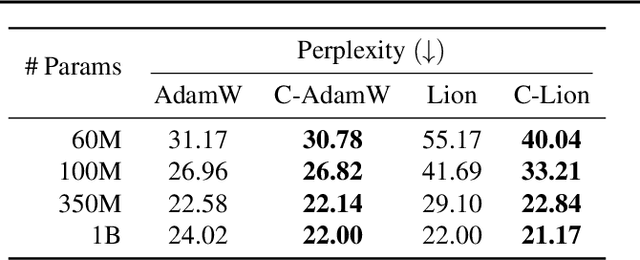


AdamW has been the default optimizer for transformer pretraining. For many years, our community searches for faster and more stable optimizers with only constraint positive outcomes. In this work, we propose a \textbf{single-line modification in Pytorch} to any momentum-based optimizer, which we rename Cautious Optimizer, e.g. C-AdamW and C-Lion. Our theoretical result shows that this modification preserves Adam's Hamiltonian function and it does not break the convergence guarantee under the Lyapunov analysis. In addition, a whole new family of optimizers is revealed by our theoretical insight. Among them, we pick the simplest one for empirical experiments, showing speed-up on Llama and MAE pretraining up to $1.47\times$. Code is available at https://github.com/kyleliang919/C-Optim

GOT4Rec: Graph of Thoughts for Sequential Recommendation
Nov 22, 2024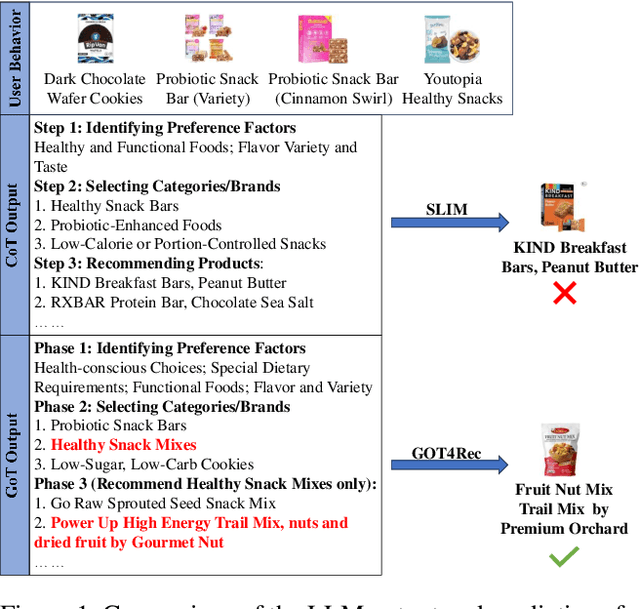
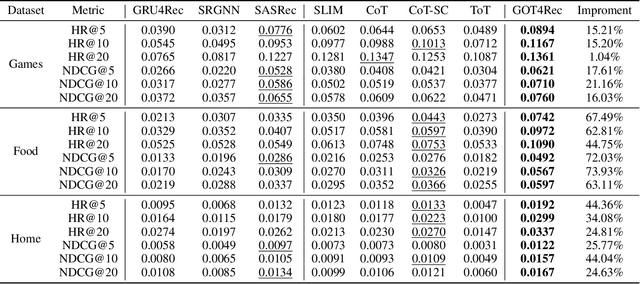
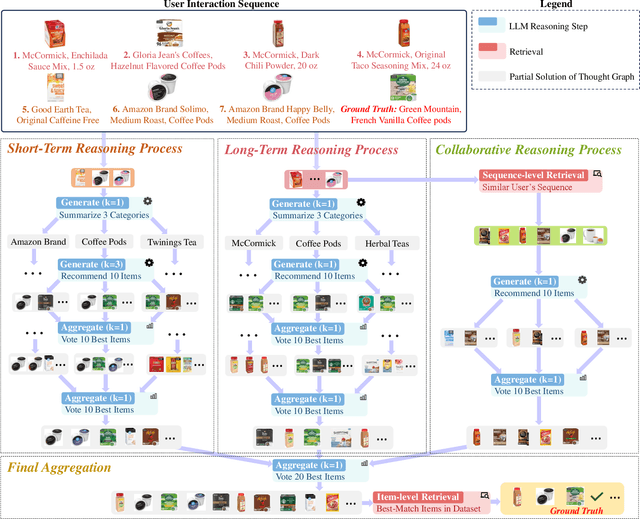
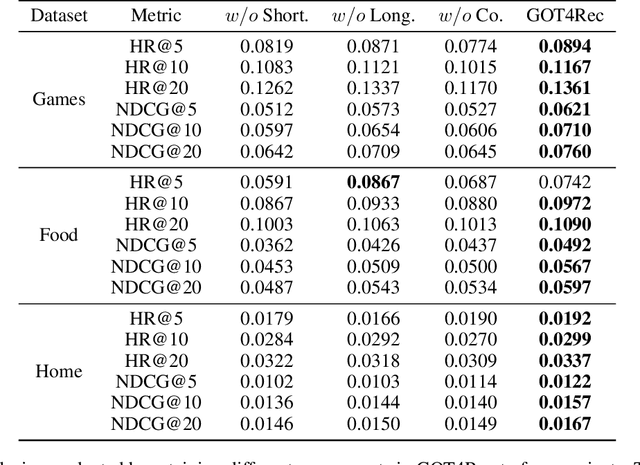
With the advancement of large language models (LLMs), researchers have explored various methods to optimally leverage their comprehension and generation capabilities in sequential recommendation scenarios. However, several challenges persist in this endeavor. Firstly, most existing approaches rely on the input-output prompting paradigm, which can result in irrelevant or inaccurate responses. Secondly, while there have been attempts to enhance LLMs using prompting strategies such as chain-of-thought (CoT), these efforts have not fully harnessed the reasoning abilities of LLMs or effectively captured the multifaceted information contained within user sequences. To address these limitations, we propose GOT4Rec, a sequential recommendation method that utilizes the graph of thoughts (GoT) prompting strategy. Specifically, we identify and utilize three key types of information within user history sequences: short-term interests, long-term interests and collaborative information from other users. Our approach enables LLMs to independently reason and generate recommendations based on these distinct types of information, subsequently aggregating the results within the GoT framework to derive the final recommended items. This method allows LLMs, with enhanced reasoning capabilities, to more effectively consider the diverse information within user sequences, resulting in more accurate recommendations and more comprehensive explanations. Extensive experiments on real-world datasets demonstrate the effectiveness of GOT4Rec, indicating that it outperforms existing state-of-the-art baselines. Our code is available at https://anonymous.4open.science/r/GOT4Rec-ED99.
Pin-Tuning: Parameter-Efficient In-Context Tuning for Few-Shot Molecular Property Prediction
Nov 02, 2024


Molecular property prediction (MPP) is integral to drug discovery and material science, but often faces the challenge of data scarcity in real-world scenarios. Addressing this, few-shot molecular property prediction (FSMPP) has been developed. Unlike other few-shot tasks, FSMPP typically employs a pre-trained molecular encoder and a context-aware classifier, benefiting from molecular pre-training and molecular context information. Despite these advancements, existing methods struggle with the ineffective fine-tuning of pre-trained encoders. We attribute this issue to the imbalance between the abundance of tunable parameters and the scarcity of labeled molecules, and the lack of contextual perceptiveness in the encoders. To overcome this hurdle, we propose a parameter-efficient in-context tuning method, named Pin-Tuning. Specifically, we propose a lightweight adapter for pre-trained message passing layers (MP-Adapter) and Bayesian weight consolidation for pre-trained atom/bond embedding layers (Emb-BWC), to achieve parameter-efficient tuning while preventing over-fitting and catastrophic forgetting. Additionally, we enhance the MP-Adapters with contextual perceptiveness. This innovation allows for in-context tuning of the pre-trained encoder, thereby improving its adaptability for specific FSMPP tasks. When evaluated on public datasets, our method demonstrates superior tuning with fewer trainable parameters, improving few-shot predictive performance.
Bi-Level Graph Structure Learning for Next POI Recommendation
Nov 02, 2024

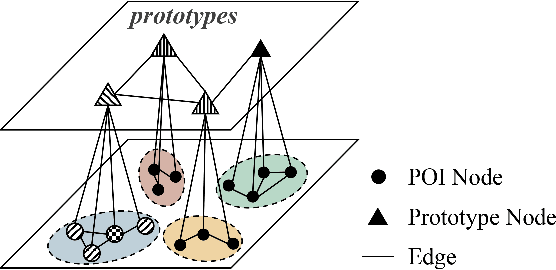

Next point-of-interest (POI) recommendation aims to predict a user's next destination based on sequential check-in history and a set of POI candidates. Graph neural networks (GNNs) have demonstrated a remarkable capability in this endeavor by exploiting the extensive global collaborative signals present among POIs. However, most of the existing graph-based approaches construct graph structures based on pre-defined heuristics, failing to consider inherent hierarchical structures of POI features such as geographical locations and visiting peaks, or suffering from noisy and incomplete structures in graphs. To address the aforementioned issues, this paper presents a novel Bi-level Graph Structure Learning (BiGSL) for next POI recommendation. BiGSL first learns a hierarchical graph structure to capture the fine-to-coarse connectivity between POIs and prototypes, and then uses a pairwise learning module to dynamically infer relationships between POI pairs and prototype pairs. Based on the learned bi-level graphs, our model then employs a multi-relational graph network that considers both POI- and prototype-level neighbors, resulting in improved POI representations. Our bi-level structure learning scheme is more robust to data noise and incompleteness, and improves the exploration ability for recommendation by alleviating sparsity issues. Experimental results on three real-world datasets demonstrate the superiority of our model over existing state-of-the-art methods, with a significant improvement in recommendation accuracy and exploration performance.
* Accepted by IEEE Transactions on Knowledge and Data Engineering
Beyond Filtering: Adaptive Image-Text Quality Enhancement for MLLM Pretraining
Oct 21, 2024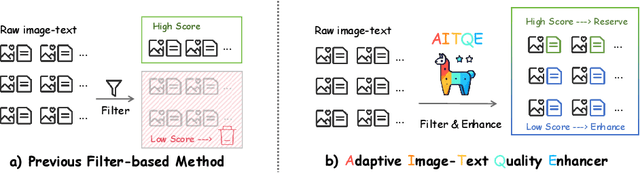
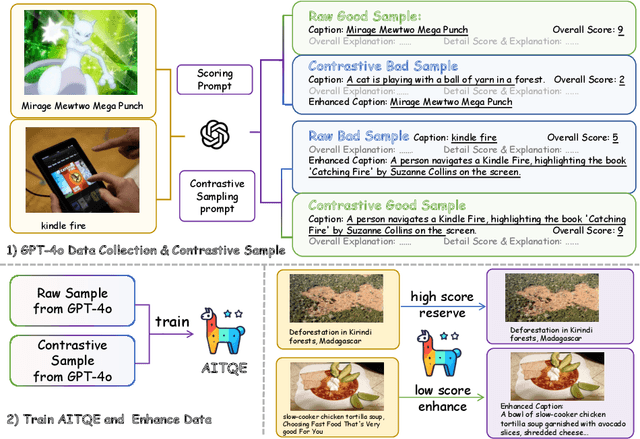
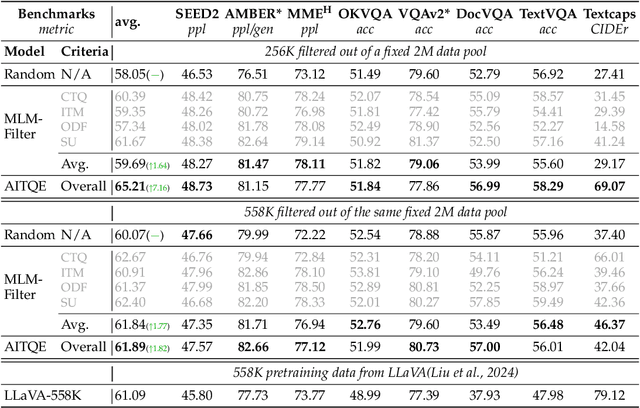
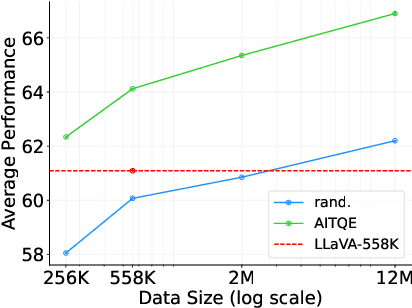
Multimodal large language models (MLLMs) have made significant strides by integrating visual and textual modalities. A critical factor in training MLLMs is the quality of image-text pairs within multimodal pretraining datasets. However, $\textit {de facto}$ filter-based data quality enhancement paradigms often discard a substantial portion of high-quality image data due to inadequate semantic alignment between images and texts, leading to inefficiencies in data utilization and scalability. In this paper, we propose the Adaptive Image-Text Quality Enhancer (AITQE), a model that dynamically assesses and enhances the quality of image-text pairs. AITQE employs a text rewriting mechanism for low-quality pairs and incorporates a negative sample learning strategy to improve evaluative capabilities by integrating deliberately selected low-quality samples during training. Unlike prior approaches that significantly alter text distributions, our method minimally adjusts text to preserve data volume while enhancing quality. Experimental results demonstrate that AITQE surpasses existing methods on various benchmark, effectively leveraging raw data and scaling efficiently with increasing data volumes. We hope our work will inspire future works. The code and model are available at: https://github.com/hanhuang22/AITQE.
Uncovering Overfitting in Large Language Model Editing
Oct 10, 2024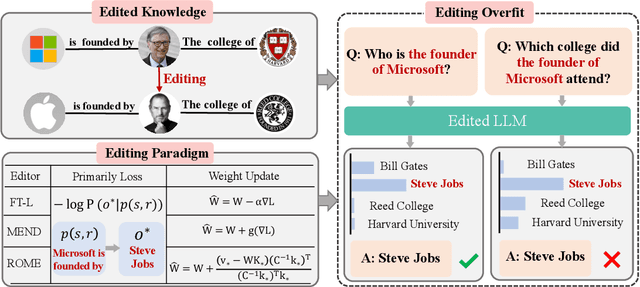
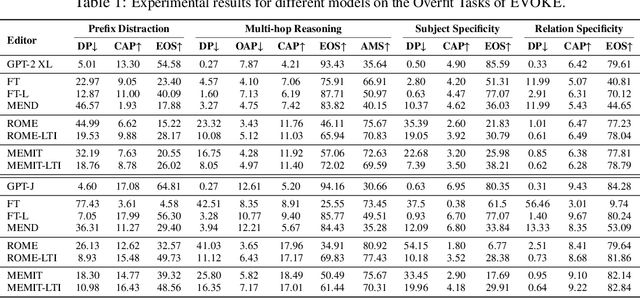
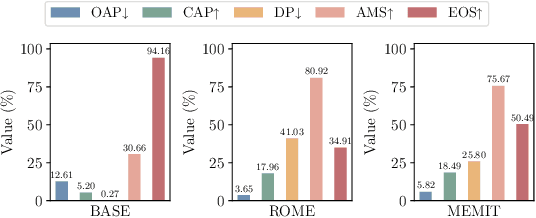
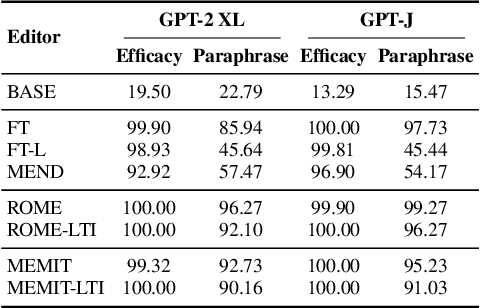
Knowledge editing has been proposed as an effective method for updating and correcting the internal knowledge of Large Language Models (LLMs). However, existing editing methods often struggle with complex tasks, such as multi-hop reasoning. In this paper, we identify and investigate the phenomenon of Editing Overfit, where edited models assign disproportionately high probabilities to the edit target, hindering the generalization of new knowledge in complex scenarios. We attribute this issue to the current editing paradigm, which places excessive emphasis on the direct correspondence between the input prompt and the edit target for each edit sample. To further explore this issue, we introduce a new benchmark, EVOKE (EValuation of Editing Overfit in Knowledge Editing), along with fine-grained evaluation metrics. Through comprehensive experiments and analysis, we demonstrate that Editing Overfit is prevalent in current editing methods and that common overfitting mitigation strategies are of limited effectiveness in knowledge editing. To overcome this, inspired by LLMs' knowledge recall mechanisms, we propose a new plug-and-play strategy called Learn to Inference (LTI), which introduce a Multi-stage Inference Constraint module to guide the edited models in recalling new knowledge similarly to how unedited LLMs leverage knowledge through in-context learning. Extensive experimental results across a wide range of tasks validate the effectiveness of LTI in mitigating Editing Overfit.
Fine-Grained Gradient Restriction: A Simple Approach for Mitigating Catastrophic Forgetting
Oct 01, 2024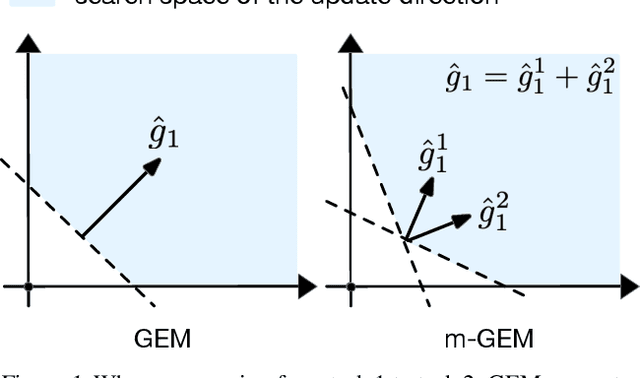
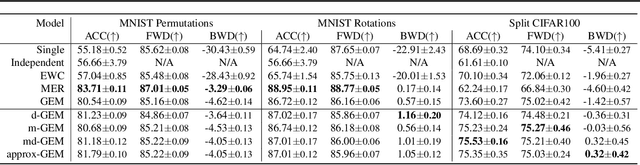
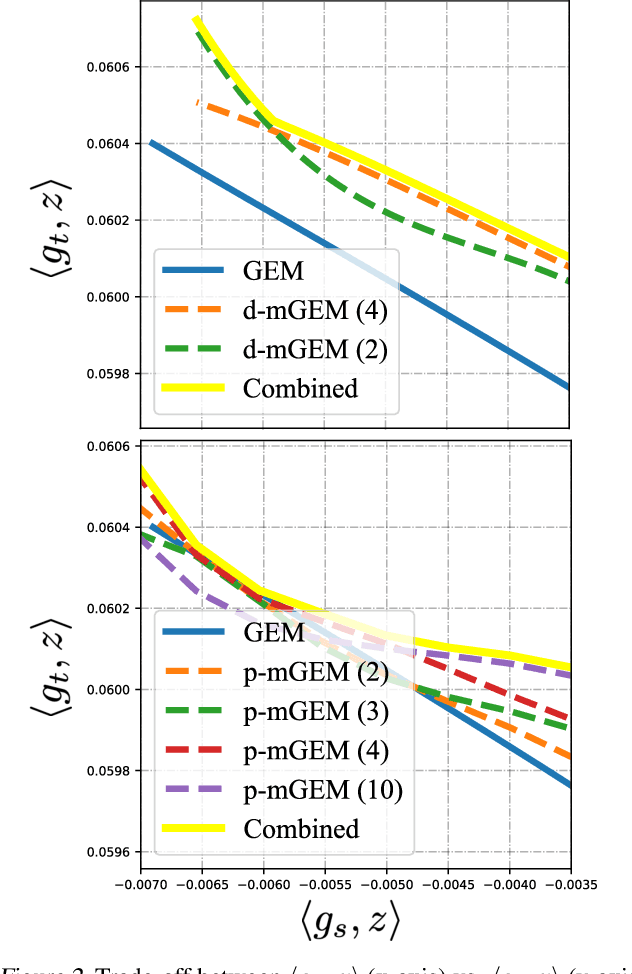
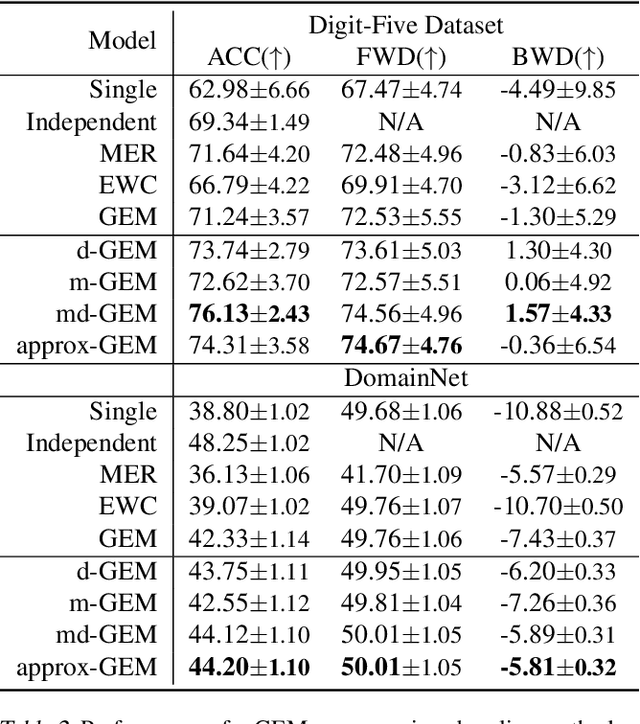
A fundamental challenge in continual learning is to balance the trade-off between learning new tasks and remembering the previously acquired knowledge. Gradient Episodic Memory (GEM) achieves this balance by utilizing a subset of past training samples to restrict the update direction of the model parameters. In this work, we start by analyzing an often overlooked hyper-parameter in GEM, the memory strength, which boosts the empirical performance by further constraining the update direction. We show that memory strength is effective mainly because it improves GEM's generalization ability and therefore leads to a more favorable trade-off. By this finding, we propose two approaches that more flexibly constrain the update direction. Our methods are able to achieve uniformly better Pareto Frontiers of remembering old and learning new knowledge than using memory strength. We further propose a computationally efficient method to approximately solve the optimization problem with more constraints.
On The Planning Abilities of OpenAI's o1 Models: Feasibility, Optimality, and Generalizability
Sep 30, 2024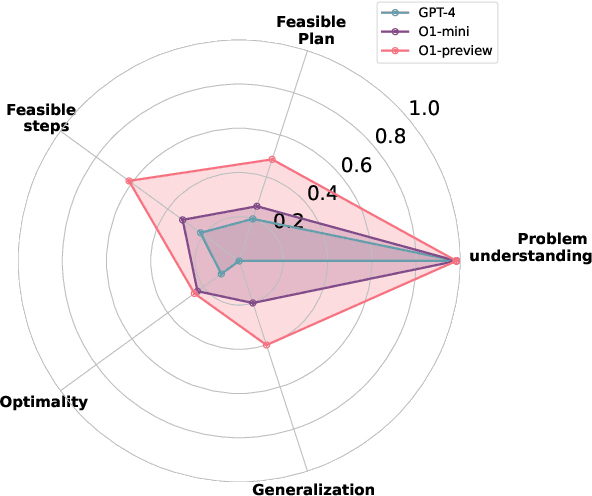


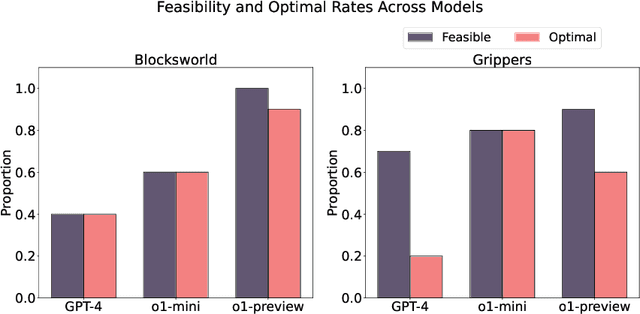
Recent advancements in Large Language Models (LLMs) have showcased their ability to perform complex reasoning tasks, but their effectiveness in planning remains underexplored. In this study, we evaluate the planning capabilities of OpenAI's o1 models across a variety of benchmark tasks, focusing on three key aspects: feasibility, optimality, and generalizability. Through empirical evaluations on constraint-heavy tasks (e.g., $\textit{Barman}$, $\textit{Tyreworld}$) and spatially complex environments (e.g., $\textit{Termes}$, $\textit{Floortile}$), we highlight o1-preview's strengths in self-evaluation and constraint-following, while also identifying bottlenecks in decision-making and memory management, particularly in tasks requiring robust spatial reasoning. Our results reveal that o1-preview outperforms GPT-4 in adhering to task constraints and managing state transitions in structured environments. However, the model often generates suboptimal solutions with redundant actions and struggles to generalize effectively in spatially complex tasks. This pilot study provides foundational insights into the planning limitations of LLMs, offering key directions for future research on improving memory management, decision-making, and generalization in LLM-based planning.
PRIME: Phase Reversed Interleaved Multi-Echo acquisition enables highly accelerated distortion-free diffusion MRI
Sep 11, 2024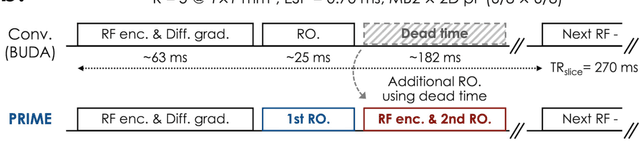
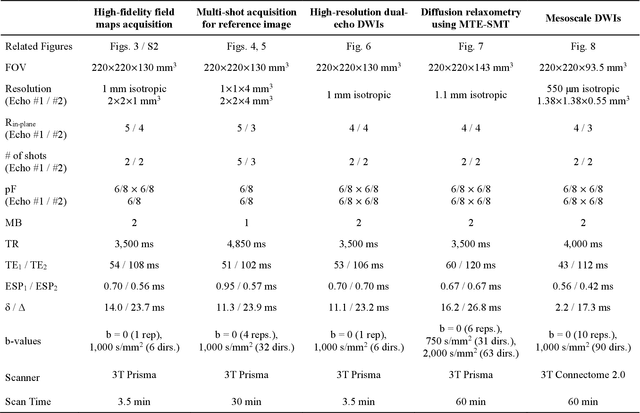
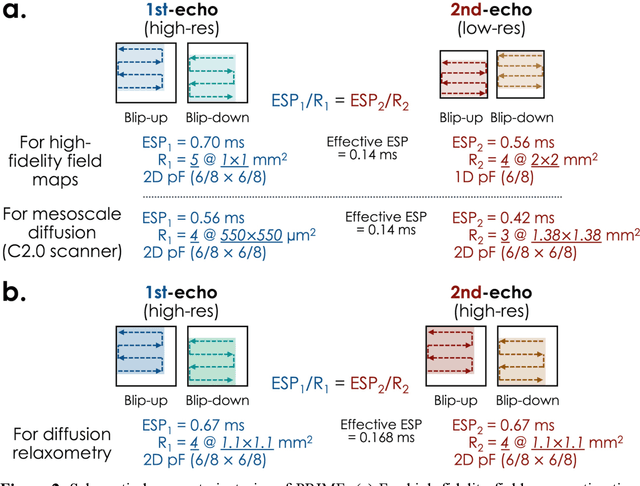
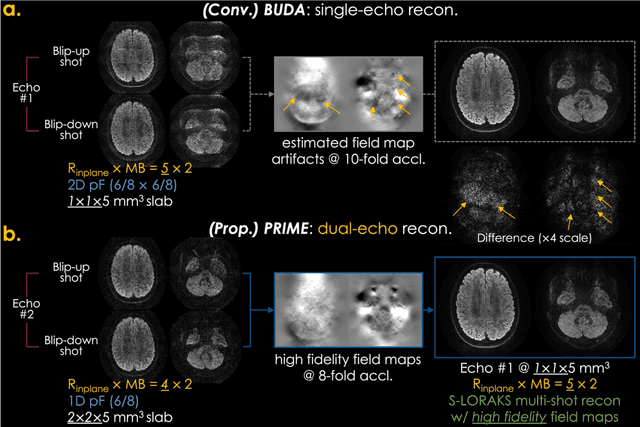
Purpose: To develop and evaluate a new pulse sequence for highly accelerated distortion-free diffusion MRI (dMRI) by inserting an additional echo without prolonging TR, when generalized slice dithered enhanced resolution (gSlider) radiofrequency encoding is used for volumetric acquisition. Methods: A phase-reversed interleaved multi-echo acquisition (PRIME) was developed for rapid, high-resolution, and distortion-free dMRI, which includes two echoes where the first echo is for target diffusion-weighted imaging (DWI) acquisition with high-resolution and the second echo is acquired with either 1) lower-resolution for high-fidelity field map estimation, or 2) matching resolution to enable efficient diffusion relaxometry acquisitions. The sequence was evaluated on in vivo data acquired from healthy volunteers on clinical and Connectome 2.0 scanners. Results: In vivo experiments demonstrated that 1) high in-plane acceleration (Rin-plane of 5-fold with 2D partial Fourier) was achieved using the high-fidelity field maps estimated from the second echo, which was made at a lower resolution/acceleration to increase its SNR while matching the effective echo spacing of the first readout, 2) high-resolution diffusion relaxometry parameters were estimated from dual-echo PRIME data using a white matter model of multi-TE spherical mean technique (MTE-SMT), and 3) high-fidelity mesoscale DWI at 550 um isotropic resolution could be obtained in vivo by capitalizing on the high-performance gradients of the Connectome 2.0 scanner. Conclusion: The proposed PRIME sequence enabled highly accelerated, high-resolution, and distortion-free dMRI using an additional echo without prolonging scan time when gSlider encoding is utilized.
Beyond Efficiency: Molecular Data Pruning for Enhanced Generalization
Sep 02, 2024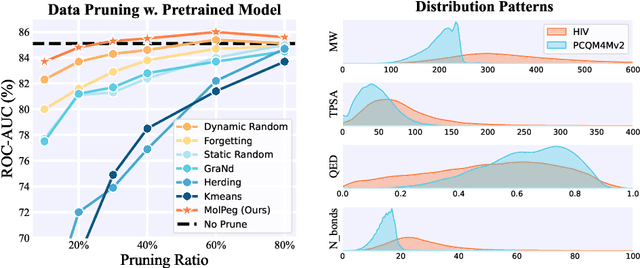
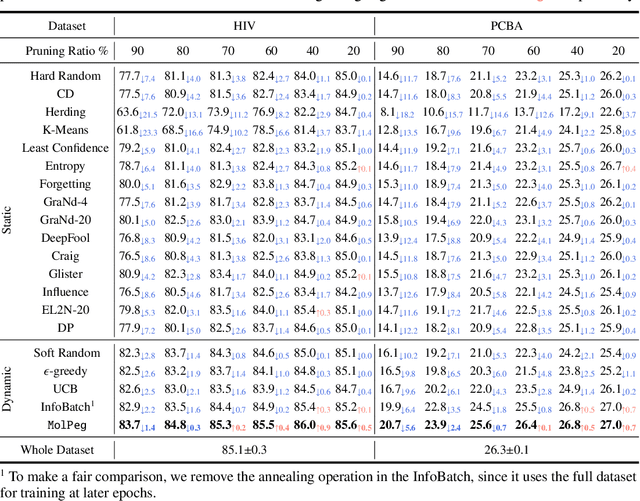
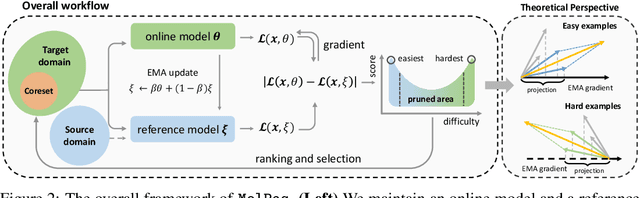
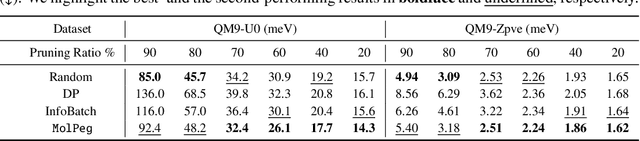
With the emergence of various molecular tasks and massive datasets, how to perform efficient training has become an urgent yet under-explored issue in the area. Data pruning (DP), as an oft-stated approach to saving training burdens, filters out less influential samples to form a coreset for training. However, the increasing reliance on pretrained models for molecular tasks renders traditional in-domain DP methods incompatible. Therefore, we propose a Molecular data Pruning framework for enhanced Generalization (MolPeg), which focuses on the source-free data pruning scenario, where data pruning is applied with pretrained models. By maintaining two models with different updating paces during training, we introduce a novel scoring function to measure the informativeness of samples based on the loss discrepancy. As a plug-and-play framework, MolPeg realizes the perception of both source and target domain and consistently outperforms existing DP methods across four downstream tasks. Remarkably, it can surpass the performance obtained from full-dataset training, even when pruning up to 60-70% of the data on HIV and PCBA dataset. Our work suggests that the discovery of effective data-pruning metrics could provide a viable path to both enhanced efficiency and superior generalization in transfer learning.