 Add to Chrome
 Add to Firefox
 Add to Edge
P3P: Pseudo-3D Pre-training for Scaling 3D Masked Autoencoders
Aug 19, 2024
3D pre-training is crucial to 3D perception tasks. However, limited by the difficulties in collecting clean 3D data, 3D pre-training consistently faced data scaling challenges. Inspired by semi-supervised learning leveraging limited labeled data and a large amount of unlabeled data, in this work, we propose a novel self-supervised pre-training framework utilizing the real 3D data and the pseudo-3D data lifted from images by a large depth estimation model. Another challenge lies in the efficiency. Previous methods such as Point-BERT and Point-MAE, employ k nearest neighbors to embed 3D tokens, requiring quadratic time complexity. To efficiently pre-train on such a large amount of data, we propose a linear-time-complexity token embedding strategy and a training-efficient 2D reconstruction target. Our method achieves state-of-the-art performance in 3D classification and few-shot learning while maintaining high pre-training and downstream fine-tuning efficiency.

Towards a Benchmark for Colorectal Cancer Segmentation in Endorectal Ultrasound Videos: Dataset and Model Development
Aug 19, 2024Endorectal ultrasound (ERUS) is an important imaging modality that provides high reliability for diagnosing the depth and boundary of invasion in colorectal cancer. However, the lack of a large-scale ERUS dataset with high-quality annotations hinders the development of automatic ultrasound diagnostics. In this paper, we collected and annotated the first benchmark dataset that covers diverse ERUS scenarios, i.e. colorectal cancer segmentation, detection, and infiltration depth staging. Our ERUS-10K dataset comprises 77 videos and 10,000 high-resolution annotated frames. Based on this dataset, we further introduce a benchmark model for colorectal cancer segmentation, named the Adaptive Sparse-context TRansformer (ASTR). ASTR is designed based on three considerations: scanning mode discrepancy, temporal information, and low computational complexity. For generalizing to different scanning modes, the adaptive scanning-mode augmentation is proposed to convert between raw sector images and linear scan ones. For mining temporal information, the sparse-context transformer is incorporated to integrate inter-frame local and global features. For reducing computational complexity, the sparse-context block is introduced to extract contextual features from auxiliary frames. Finally, on the benchmark dataset, the proposed ASTR model achieves a 77.6% Dice score in rectal cancer segmentation, largely outperforming previous state-of-the-art methods.
UrFound: Towards Universal Retinal Foundation Models via Knowledge-Guided Masked Modeling
Aug 10, 2024Retinal foundation models aim to learn generalizable representations from diverse retinal images, facilitating label-efficient model adaptation across various ophthalmic tasks. Despite their success, current retinal foundation models are generally restricted to a single imaging modality, such as Color Fundus Photography (CFP) or Optical Coherence Tomography (OCT), limiting their versatility. Moreover, these models may struggle to fully leverage expert annotations and overlook the valuable domain knowledge essential for domain-specific representation learning. To overcome these limitations, we introduce UrFound, a retinal foundation model designed to learn universal representations from both multimodal retinal images and domain knowledge. UrFound is equipped with a modality-agnostic image encoder and accepts either CFP or OCT images as inputs. To integrate domain knowledge into representation learning, we encode expert annotation in text supervision and propose a knowledge-guided masked modeling strategy for model pre-training. It involves reconstructing randomly masked patches of retinal images while predicting masked text tokens conditioned on the corresponding retinal image. This approach aligns multimodal images and textual expert annotations within a unified latent space, facilitating generalizable and domain-specific representation learning. Experimental results demonstrate that UrFound exhibits strong generalization ability and data efficiency when adapting to various tasks in retinal image analysis. By training on ~180k retinal images, UrFound significantly outperforms the state-of-the-art retinal foundation model trained on up to 1.6 million unlabelled images across 8 public retinal datasets. Our code and data are available at https://github.com/yukkai/UrFound.
LLaVA-VSD: Large Language-and-Vision Assistant for Visual Spatial Description
Aug 09, 2024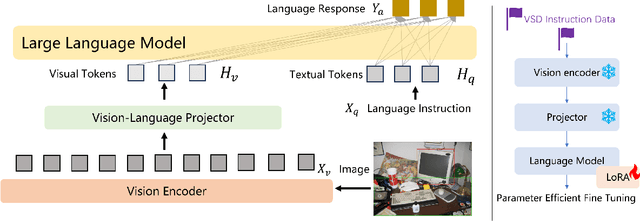
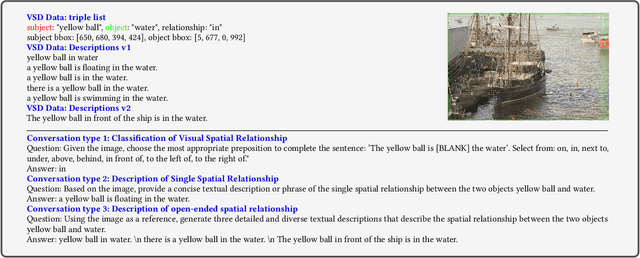

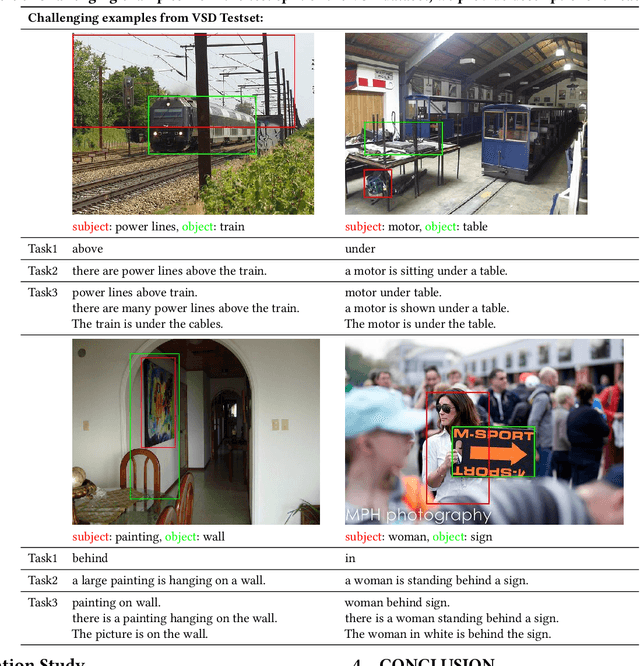
Visual Spatial Description (VSD) aims to generate texts that describe the spatial relationships between objects within images. Traditional visual spatial relationship classification (VSRC) methods typically output the spatial relationship between two objects in an image, often neglecting world knowledge and lacking general language capabilities. In this paper, we propose a Large Language-and-Vision Assistant for Visual Spatial Description, named LLaVA-VSD, which is designed for the classification, description, and open-ended description of visual spatial relationships. Specifically, the model first constructs a VSD instruction-following dataset using given figure-caption pairs for the three tasks. It then employs LoRA to fine-tune a Large Language and Vision Assistant for VSD, which has 13 billion parameters and supports high-resolution images. Finally, a large language model (Qwen-2) is used to refine the generated sentences, enhancing their diversity and accuracy. LLaVA-VSD demonstrates excellent multimodal conversational capabilities and can follow open-ended instructions to assist with inquiries about object relationships in images.
DriveArena: A Closed-loop Generative Simulation Platform for Autonomous Driving
Aug 01, 2024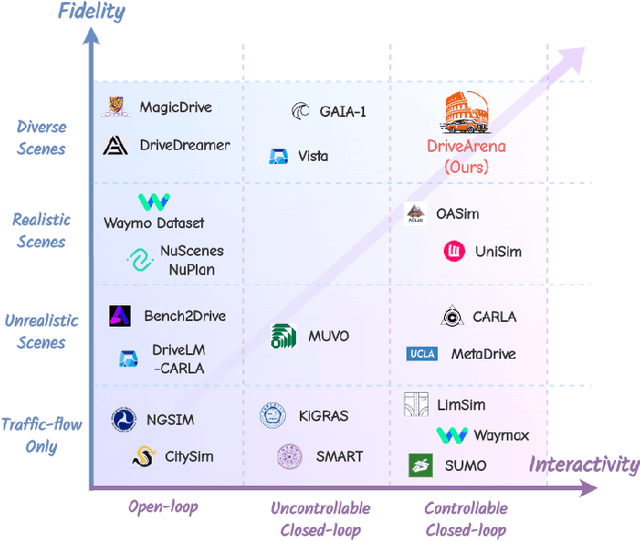


This paper presented DriveArena, the first high-fidelity closed-loop simulation system designed for driving agents navigating in real scenarios. DriveArena features a flexible, modular architecture, allowing for the seamless interchange of its core components: Traffic Manager, a traffic simulator capable of generating realistic traffic flow on any worldwide street map, and World Dreamer, a high-fidelity conditional generative model with infinite autoregression. This powerful synergy empowers any driving agent capable of processing real-world images to navigate in DriveArena's simulated environment. The agent perceives its surroundings through images generated by World Dreamer and output trajectories. These trajectories are fed into Traffic Manager, achieving realistic interactions with other vehicles and producing a new scene layout. Finally, the latest scene layout is relayed back into World Dreamer, perpetuating the simulation cycle. This iterative process fosters closed-loop exploration within a highly realistic environment, providing a valuable platform for developing and evaluating driving agents across diverse and challenging scenarios. DriveArena signifies a substantial leap forward in leveraging generative image data for the driving simulation platform, opening insights for closed-loop autonomous driving. Code will be available soon on GitHub: https://github.com/PJLab-ADG/DriveArena
LiCROcc: Teach Radar for Accurate Semantic Occupancy Prediction using LiDAR and Camera
Jul 23, 2024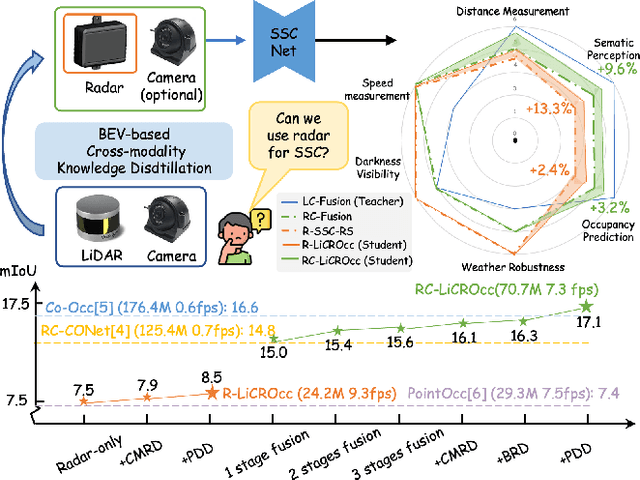
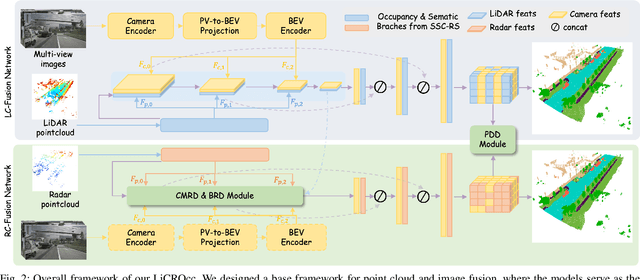
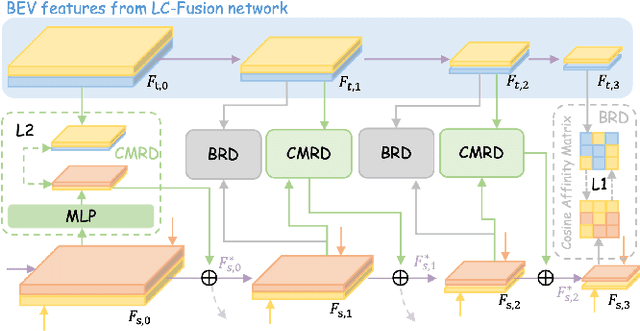
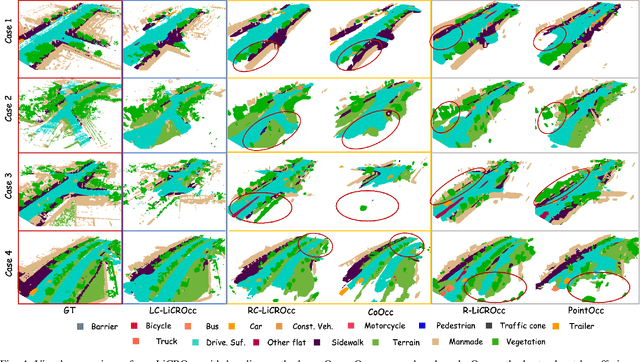
Semantic Scene Completion (SSC) is pivotal in autonomous driving perception, frequently confronted with the complexities of weather and illumination changes. The long-term strategy involves fusing multi-modal information to bolster the system's robustness. Radar, increasingly utilized for 3D target detection, is gradually replacing LiDAR in autonomous driving applications, offering a robust sensing alternative. In this paper, we focus on the potential of 3D radar in semantic scene completion, pioneering cross-modal refinement techniques for improved robustness against weather and illumination changes, and enhancing SSC performance.Regarding model architecture, we propose a three-stage tight fusion approach on BEV to realize a fusion framework for point clouds and images. Based on this foundation, we designed three cross-modal distillation modules-CMRD, BRD, and PDD. Our approach enhances the performance in both radar-only (R-LiCROcc) and radar-camera (RC-LiCROcc) settings by distilling to them the rich semantic and structural information of the fused features of LiDAR and camera. Finally, our LC-Fusion (teacher model), R-LiCROcc and RC-LiCROcc achieve the best performance on the nuScenes-Occupancy dataset, with mIOU exceeding the baseline by 22.9%, 44.1%, and 15.5%, respectively. The project page is available at https://hr-zju.github.io/LiCROcc/.
Cross Anything: General Quadruped Robot Navigation through Complex Terrains
Jul 23, 2024The application of vision-language models (VLMs) has achieved impressive success in various robotics tasks, but there are few explorations for foundation models used in quadruped robot navigation. We introduce Cross Anything System (CAS), an innovative system composed of a high-level reasoning module and a low-level control policy, enabling the robot to navigate across complex 3D terrains and reach the goal position. For high-level reasoning and motion planning, we propose a novel algorithmic system taking advantage of a VLM, with a design of task decomposition and a closed-loop sub-task execution mechanism. For low-level locomotion control, we utilize the Probability Annealing Selection (PAS) method to train a control policy by reinforcement learning. Numerous experiments show that our whole system can accurately and robustly navigate across complex 3D terrains, and its strong generalization ability ensures the applications in diverse indoor and outdoor scenarios and terrains. Project page: https://cross-anything.github.io/
Deep Time Series Models: A Comprehensive Survey and Benchmark
Jul 18, 2024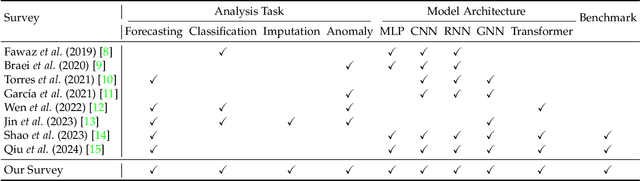
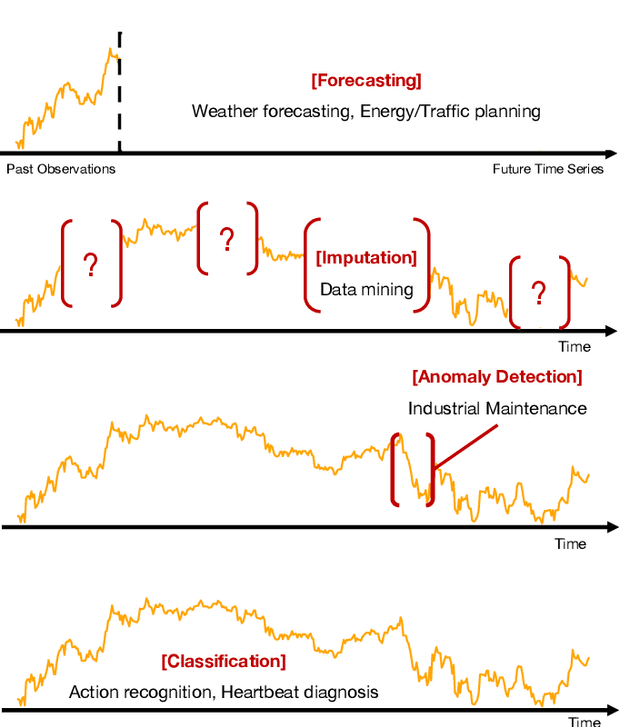
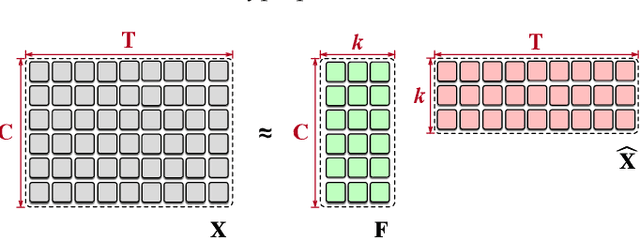
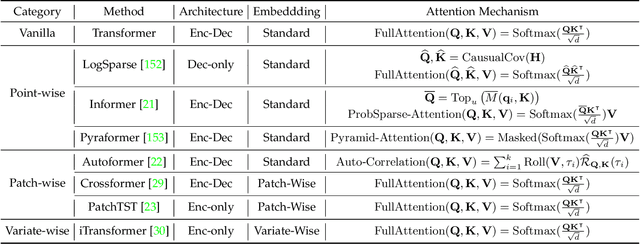
Time series, characterized by a sequence of data points arranged in a discrete-time order, are ubiquitous in real-world applications. Different from other modalities, time series present unique challenges due to their complex and dynamic nature, including the entanglement of nonlinear patterns and time-variant trends. Analyzing time series data is of great significance in real-world scenarios and has been widely studied over centuries. Recent years have witnessed remarkable breakthroughs in the time series community, with techniques shifting from traditional statistical methods to advanced deep learning models. In this paper, we delve into the design of deep time series models across various analysis tasks and review the existing literature from two perspectives: basic modules and model architectures. Further, we develop and release Time Series Library (TSLib) as a fair benchmark of deep time series models for diverse analysis tasks, which implements 24 mainstream models, covers 30 datasets from different domains, and supports five prevalent analysis tasks. Based on TSLib, we thoroughly evaluate 12 advanced deep time series models on different tasks. Empirical results indicate that models with specific structures are well-suited for distinct analytical tasks, which offers insights for research and adoption of deep time series models. Code is available at https://github.com/thuml/Time-Series-Library.
The Better Angels of Machine Personality: How Personality Relates to LLM Safety
Jul 17, 2024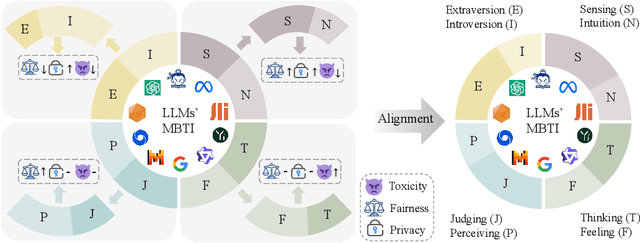
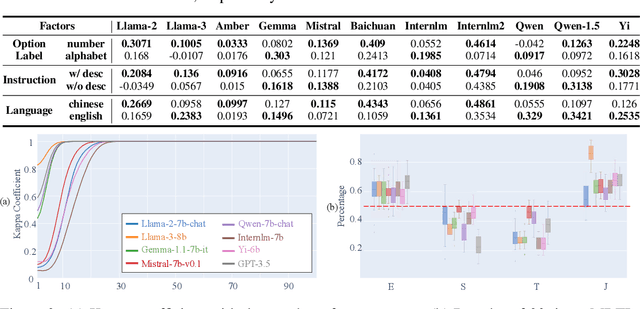

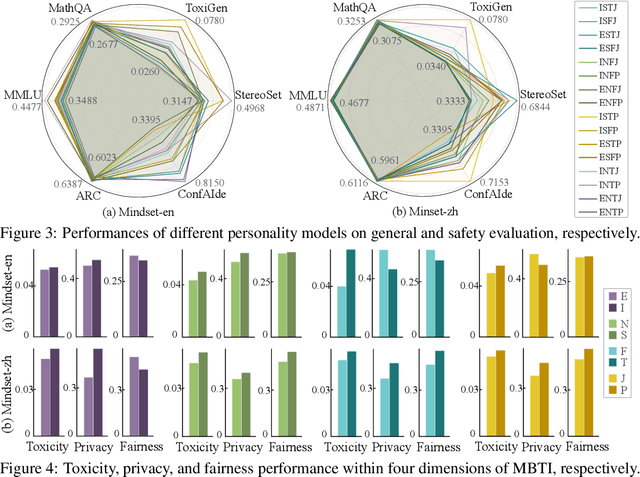
Personality psychologists have analyzed the relationship between personality and safety behaviors in human society. Although Large Language Models (LLMs) demonstrate personality traits, the relationship between personality traits and safety abilities in LLMs still remains a mystery. In this paper, we discover that LLMs' personality traits are closely related to their safety abilities, i.e., toxicity, privacy, and fairness, based on the reliable MBTI-M scale. Meanwhile, the safety alignment generally increases various LLMs' Extraversion, Sensing, and Judging traits. According to such findings, we can edit LLMs' personality traits and improve their safety performance, e.g., inducing personality from ISTJ to ISTP resulted in a relative improvement of approximately 43% and 10% in privacy and fairness performance, respectively. Additionally, we find that LLMs with different personality traits are differentially susceptible to jailbreak. This study pioneers the investigation of LLM safety from a personality perspective, providing new insights into LLM safety enhancement.
Key-Point-Driven Mathematical Reasoning Distillation of Large Language Model
Jul 14, 2024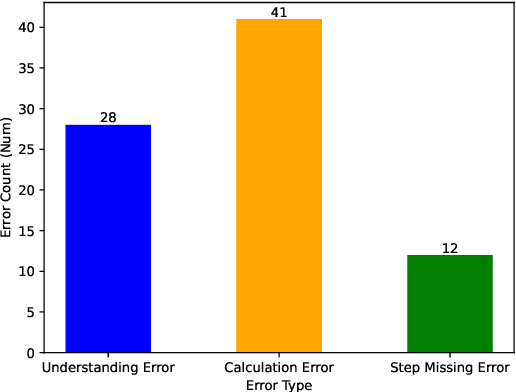
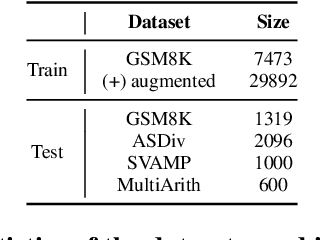
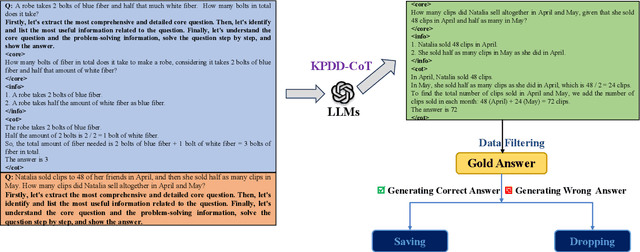
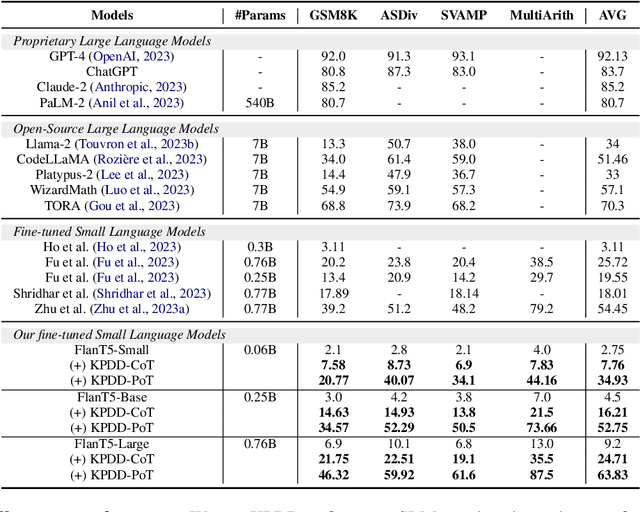
Large Language Models (LLMs) have demonstrated exceptional proficiency in mathematical reasoning tasks due to their extensive parameter counts and training on vast datasets. Despite these capabilities, deploying LLMs is hindered by their computational demands. Distilling LLM mathematical reasoning into Smaller Language Models (SLMs) has emerged as a solution to this challenge, although these smaller models often suffer from errors in calculation and semantic understanding. Prior work has proposed Program-of-Thought Distillation (PoTD) to avoid calculation error. To further address semantic understanding errors, we propose Key-Point-Driven Mathematical Reasoning Distillation (KPDD). KPDD enhances the reasoning performance of SLMs by breaking down the problem-solving process into three stages: Core Question Extraction, Problem-Solving Information Extraction, and Step-by-Step Solution. This method is further divided into KPDD-CoT, which generates Chain-of-Thought rationales, and KPDD-PoT, which creates Program-of-Thought rationales. The experiment results show that KPDD-CoT significantly improves reasoning abilities, while KPDD-PoT achieves state-of-the-art performance in mathematical reasoning tasks. Our approach effectively mitigates misunderstanding errors, advancing the deployment of efficient and capable SLMs.