 Add to Chrome
 Add to Firefox
 Add to Edge
CAMON: Cooperative Agents for Multi-Object Navigation with LLM-based Conversations
Jun 30, 2024
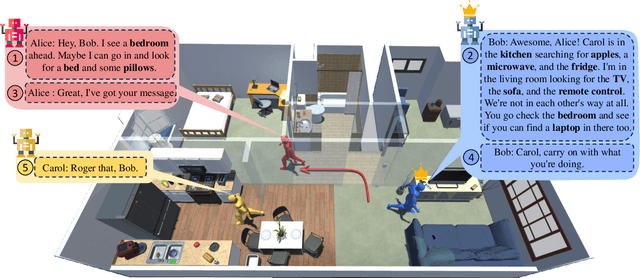
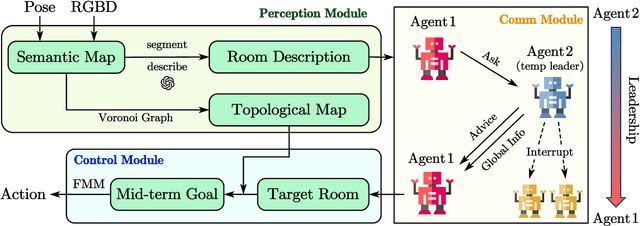
Visual navigation tasks are critical for household service robots. As these tasks become increasingly complex, effective communication and collaboration among multiple robots become imperative to ensure successful completion. In recent years, large language models (LLMs) have exhibited remarkable comprehension and planning abilities in the context of embodied agents. However, their application in household scenarios, specifically in the use of multiple agents collaborating to complete complex navigation tasks through communication, remains unexplored. Therefore, this paper proposes a framework for decentralized multi-agent navigation, leveraging LLM-enabled communication and collaboration. By designing the communication-triggered dynamic leadership organization structure, we achieve faster team consensus with fewer communication instances, leading to better navigation effectiveness and collaborative exploration efficiency. With the proposed novel communication scheme, our framework promises to be conflict-free and robust in multi-object navigation tasks, even when there is a surge in team size.

MatchTime: Towards Automatic Soccer Game Commentary Generation
Jun 26, 2024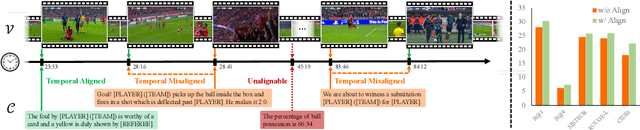
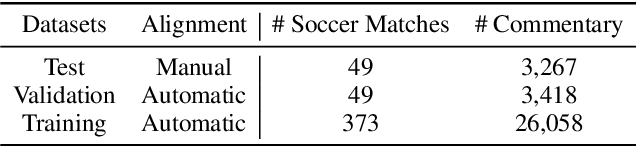
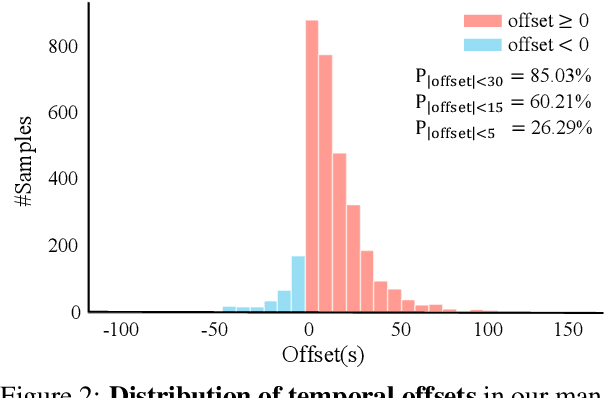
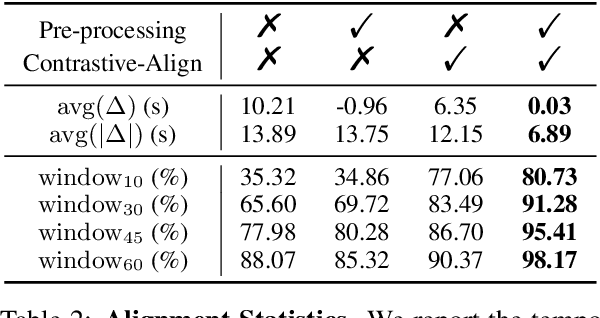
Soccer is a globally popular sport with a vast audience, in this paper, we consider constructing an automatic soccer game commentary model to improve the audiences' viewing experience. In general, we make the following contributions: First, observing the prevalent video-text misalignment in existing datasets, we manually annotate timestamps for 49 matches, establishing a more robust benchmark for soccer game commentary generation, termed as SN-Caption-test-align; Second, we propose a multi-modal temporal alignment pipeline to automatically correct and filter the existing dataset at scale, creating a higher-quality soccer game commentary dataset for training, denoted as MatchTime; Third, based on our curated dataset, we train an automatic commentary generation model, named MatchVoice. Extensive experiments and ablation studies have demonstrated the effectiveness of our alignment pipeline, and training model on the curated datasets achieves state-of-the-art performance for commentary generation, showcasing that better alignment can lead to significant performance improvements in downstream tasks.
PVUW 2024 Challenge on Complex Video Understanding: Methods and Results
Jun 24, 2024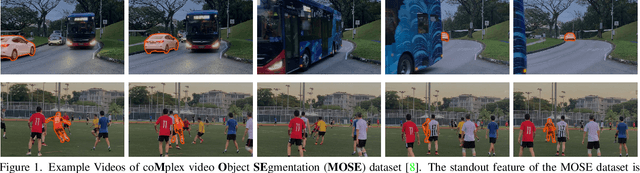
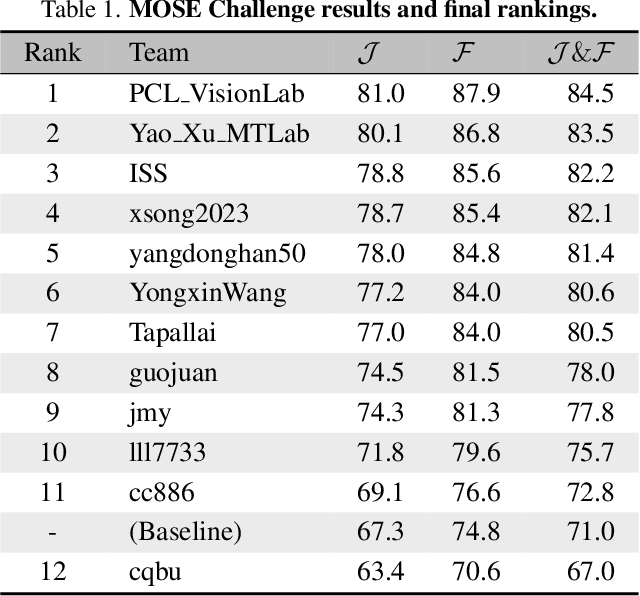

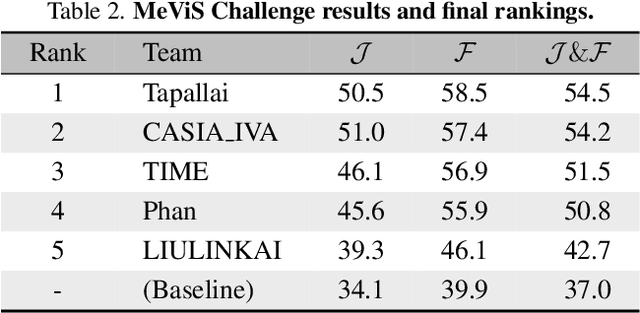
Pixel-level Video Understanding in the Wild Challenge (PVUW) focus on complex video understanding. In this CVPR 2024 workshop, we add two new tracks, Complex Video Object Segmentation Track based on MOSE dataset and Motion Expression guided Video Segmentation track based on MeViS dataset. In the two new tracks, we provide additional videos and annotations that feature challenging elements, such as the disappearance and reappearance of objects, inconspicuous small objects, heavy occlusions, and crowded environments in MOSE. Moreover, we provide a new motion expression guided video segmentation dataset MeViS to study the natural language-guided video understanding in complex environments. These new videos, sentences, and annotations enable us to foster the development of a more comprehensive and robust pixel-level understanding of video scenes in complex environments and realistic scenarios. The MOSE challenge had 140 registered teams in total, 65 teams participated the validation phase and 12 teams made valid submissions in the final challenge phase. The MeViS challenge had 225 registered teams in total, 50 teams participated the validation phase and 5 teams made valid submissions in the final challenge phase.
Make Your Actor Talk: Generalizable and High-Fidelity Lip Sync with Motion and Appearance Disentanglement
Jun 12, 2024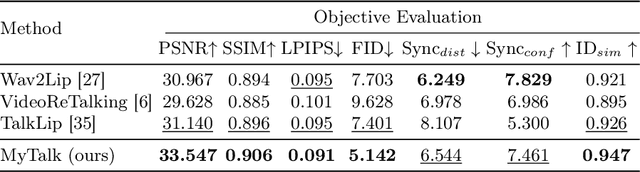


We aim to edit the lip movements in talking video according to the given speech while preserving the personal identity and visual details. The task can be decomposed into two sub-problems: (1) speech-driven lip motion generation and (2) visual appearance synthesis. Current solutions handle the two sub-problems within a single generative model, resulting in a challenging trade-off between lip-sync quality and visual details preservation. Instead, we propose to disentangle the motion and appearance, and then generate them one by one with a speech-to-motion diffusion model and a motion-conditioned appearance generation model. However, there still remain challenges in each stage, such as motion-aware identity preservation in (1) and visual details preservation in (2). Therefore, to preserve personal identity, we adopt landmarks to represent the motion, and further employ a landmark-based identity loss. To capture motion-agnostic visual details, we use separate encoders to encode the lip, non-lip appearance and motion, and then integrate them with a learned fusion module. We train MyTalk on a large-scale and diverse dataset. Experiments show that our method generalizes well to the unknown, even out-of-domain person, in terms of both lip sync and visual detail preservation. We encourage the readers to watch the videos on our project page (https://Ingrid789.github.io/MyTalk/).
A Hybrid Task-Constrained Motion Planning for Collaborative Robots in Intelligent Remanufacturing
Jun 12, 2024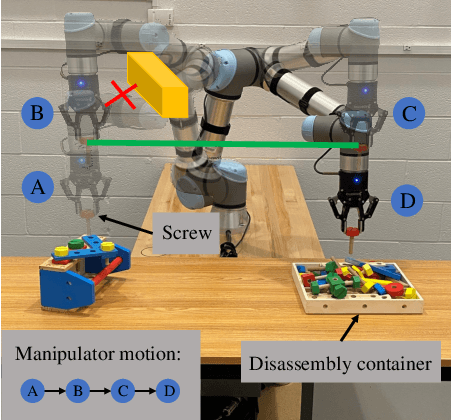
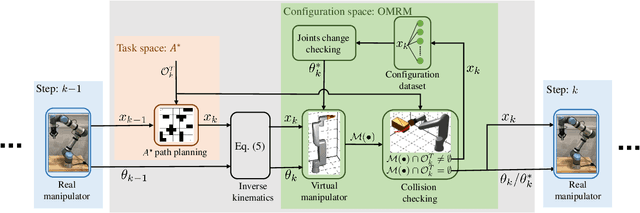
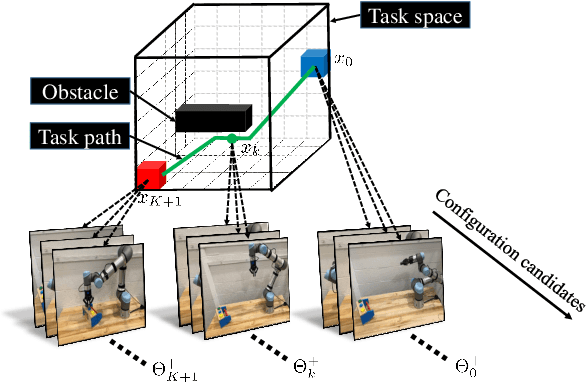
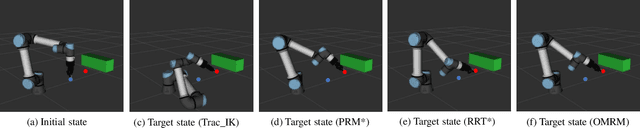
Industrial manipulators have extensively collaborated with human operators to execute tasks, e.g., disassembly of end-of-use products, in intelligent remanufacturing. A safety task execution requires real-time path planning for the manipulator's end-effector to autonomously avoid human operators. This is even more challenging when the end-effector needs to follow a planned path while avoiding the collision between the manipulator body and human operators, which is usually computationally expensive and limits real-time application. This paper proposes an efficient hybrid motion planning algorithm that consists of an A$^*$ algorithm and an online manipulator reconfiguration mechanism (OMRM) to tackle such challenges in task and configuration spaces respectively. The A$^*$ algorithm is first leveraged to plan the shortest collision-free path of the end-effector in task space. When the manipulator body is risky to the human operator, our OMRM then selects an alternative joint configuration with minimum reconfiguration effort from a database to assist the manipulator to follow the planned path and avoid the human operator simultaneously. The database of manipulator reconfiguration establishes the relationship between the task and configuration space offline using forward kinematics, and is able to provide multiple reconfiguration candidates for a desired end-effector's position. The proposed new hybrid algorithm plans safe manipulator motion during the whole task execution. Extensive numerical and experimental studies, as well as comparison studies between the proposed one and the state-of-the-art ones, have been conducted to validate the proposed motion planning algorithm.
MIPI 2024 Challenge on Few-shot RAW Image Denoising: Methods and Results
Jun 11, 2024

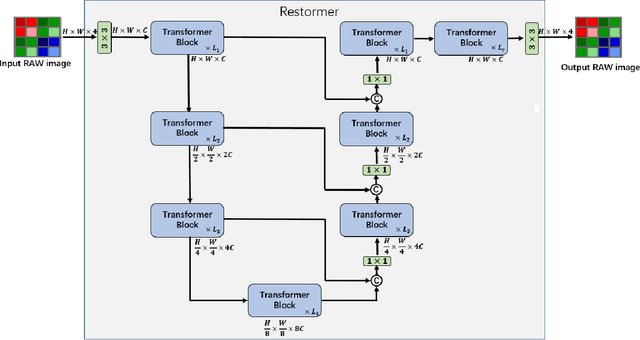

The increasing demand for computational photography and imaging on mobile platforms has led to the widespread development and integration of advanced image sensors with novel algorithms in camera systems. However, the scarcity of high-quality data for research and the rare opportunity for in-depth exchange of views from industry and academia constrain the development of mobile intelligent photography and imaging (MIPI). Building on the achievements of the previous MIPI Workshops held at ECCV 2022 and CVPR 2023, we introduce our third MIPI challenge including three tracks focusing on novel image sensors and imaging algorithms. In this paper, we summarize and review the Few-shot RAW Image Denoising track on MIPI 2024. In total, 165 participants were successfully registered, and 7 teams submitted results in the final testing phase. The developed solutions in this challenge achieved state-of-the-art erformance on Few-shot RAW Image Denoising. More details of this challenge and the link to the dataset can be found at https://mipichallenge.org/MIPI2024.
Benchmarking Trustworthiness of Multimodal Large Language Models: A Comprehensive Study
Jun 11, 2024


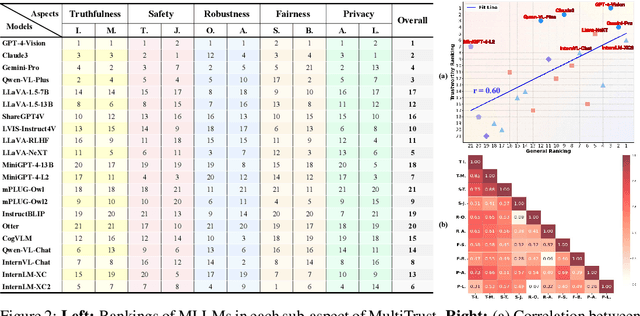
Despite the superior capabilities of Multimodal Large Language Models (MLLMs) across diverse tasks, they still face significant trustworthiness challenges. Yet, current literature on the assessment of trustworthy MLLMs remains limited, lacking a holistic evaluation to offer thorough insights into future improvements. In this work, we establish MultiTrust, the first comprehensive and unified benchmark on the trustworthiness of MLLMs across five primary aspects: truthfulness, safety, robustness, fairness, and privacy. Our benchmark employs a rigorous evaluation strategy that addresses both multimodal risks and cross-modal impacts, encompassing 32 diverse tasks with self-curated datasets. Extensive experiments with 21 modern MLLMs reveal some previously unexplored trustworthiness issues and risks, highlighting the complexities introduced by the multimodality and underscoring the necessity for advanced methodologies to enhance their reliability. For instance, typical proprietary models still struggle with the perception of visually confusing images and are vulnerable to multimodal jailbreaking and adversarial attacks; MLLMs are more inclined to disclose privacy in text and reveal ideological and cultural biases even when paired with irrelevant images in inference, indicating that the multimodality amplifies the internal risks from base LLMs. Additionally, we release a scalable toolbox for standardized trustworthiness research, aiming to facilitate future advancements in this important field. Code and resources are publicly available at: https://multi-trust.github.io/.
From Basic to Extra Features: Hypergraph Transformer Pretrain-then-Finetuning for Balanced Clinical Predictions on EHR
Jun 09, 2024Electronic Health Records (EHRs) contain rich patient information and are crucial for clinical research and practice. In recent years, deep learning models have been applied to EHRs, but they often rely on massive features, which may not be readily available for all patients. We propose HTP-Star, which leverages hypergraph structures with a pretrain-then-finetune framework for modeling EHR data, enabling seamless integration of additional features. Additionally, we design two techniques, namely (1) Smoothness-inducing Regularization and (2) Group-balanced Reweighting, to enhance the model's robustness during fine-tuning. Through experiments conducted on two real EHR datasets, we demonstrate that HTP-Star consistently outperforms various baselines while striking a balance between patients with basic and extra features.
Infusing Self-Consistency into Density Functional Theory Hamiltonian Prediction via Deep Equilibrium Models
Jun 06, 2024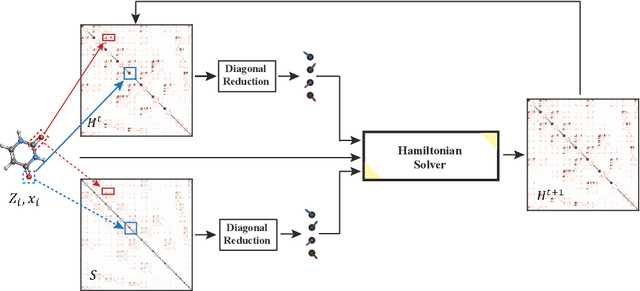
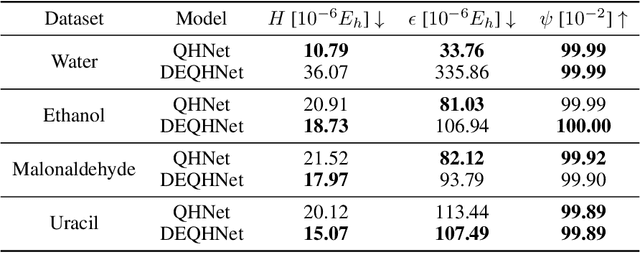
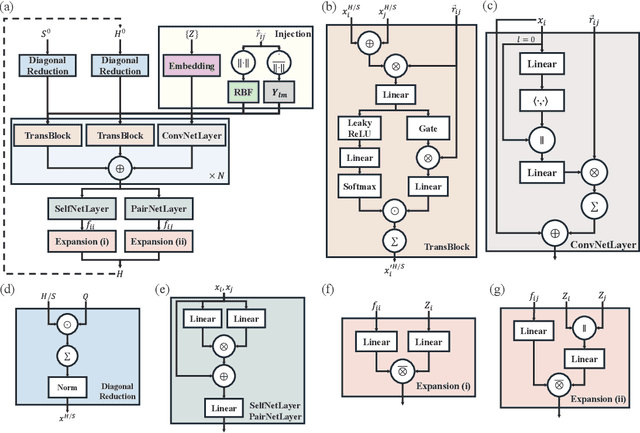
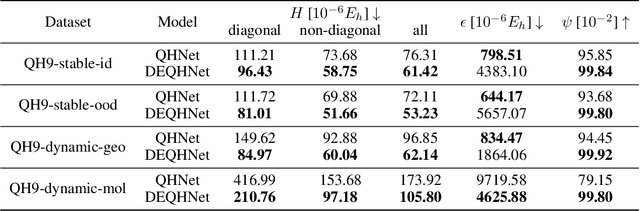
In this study, we introduce a unified neural network architecture, the Deep Equilibrium Density Functional Theory Hamiltonian (DEQH) model, which incorporates Deep Equilibrium Models (DEQs) for predicting Density Functional Theory (DFT) Hamiltonians. The DEQH model inherently captures the self-consistency nature of Hamiltonian, a critical aspect often overlooked by traditional machine learning approaches for Hamiltonian prediction. By employing DEQ within our model architecture, we circumvent the need for DFT calculations during the training phase to introduce the Hamiltonian's self-consistency, thus addressing computational bottlenecks associated with large or complex systems. We propose a versatile framework that combines DEQ with off-the-shelf machine learning models for predicting Hamiltonians. When benchmarked on the MD17 and QH9 datasets, DEQHNet, an instantiation of the DEQH framework, has demonstrated a significant improvement in prediction accuracy. Beyond a predictor, the DEQH model is a Hamiltonian solver, in the sense that it uses the fixed-point solving capability of the deep equilibrium model to iteratively solve for the Hamiltonian. Ablation studies of DEQHNet further elucidate the network's effectiveness, offering insights into the potential of DEQ-integrated networks for Hamiltonian learning.
Convolutional Unscented Kalman Filter for Multi-Object Tracking with Outliers
Jun 03, 2024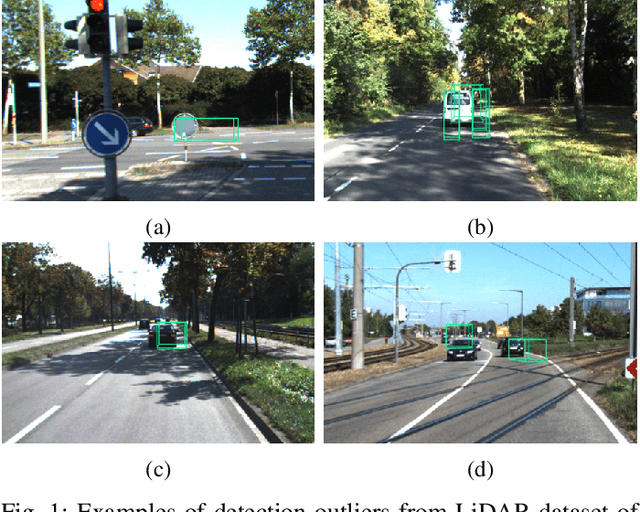
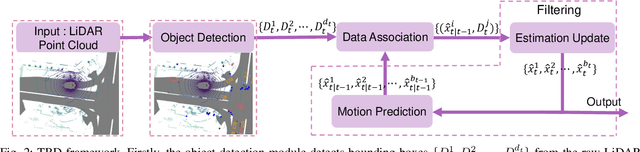
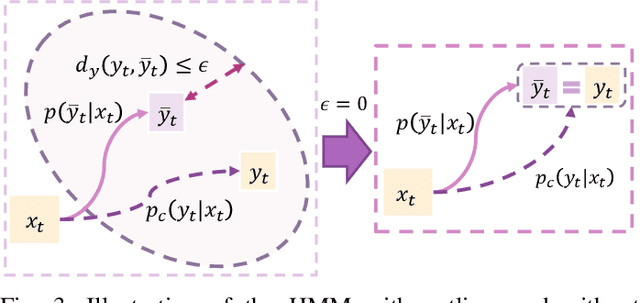
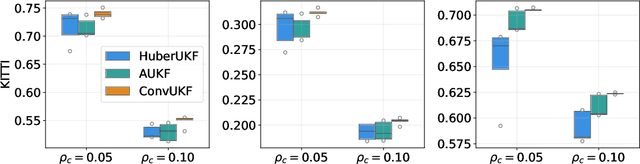
Multi-object tracking (MOT) is an essential technique for navigation in autonomous driving. In tracking-by-detection systems, biases, false positives, and misses, which are referred to as outliers, are inevitable due to complex traffic scenarios. Recent tracking methods are based on filtering algorithms that overlook these outliers, leading to reduced tracking accuracy or even loss of the objects trajectory. To handle this challenge, we adopt a probabilistic perspective, regarding the generation of outliers as misspecification between the actual distribution of measurement data and the nominal measurement model used for filtering. We further demonstrate that, by designing a convolutional operation, we can mitigate this misspecification. Incorporating this operation into the widely used unscented Kalman filter (UKF) in commonly adopted tracking algorithms, we derive a variant of the UKF that is robust to outliers, called the convolutional UKF (ConvUKF). We show that ConvUKF maintains the Gaussian conjugate property, thus allowing for real-time tracking. We also prove that ConvUKF has a bounded tracking error in the presence of outliers, which implies robust stability. The experimental results on the KITTI and nuScenes datasets show improved accuracy compared to representative baseline algorithms for MOT tasks.