 Add to Chrome
 Add to Firefox
 Add to Edge
AnyBokeh: Physics-Guided Any-to-Any Bokeh Editing with Optical Fingerprint Transfer
Jun 30, 2026
Depth-of-field control is a fundamental tool in photography, yet post-capture bokeh editing from a single image remains challenging. A practical editor should handle images captured under arbitrary focus and aperture settings. Existing methods typically assume an all-in-focus input, or first recover an all-in-focus image before rendering new bokeh. Such pipelines can discard useful blur cues from the source image and propagate reconstruction artifacts into the final edit. We introduce AnyBokeh, a physics-guided framework for any-to-any bokeh editing. Instead of treating source blur merely as a degradation to be removed, AnyBokeh estimates the source blur state with a signed circle-of-confusion map and a disparity map. By modeling the linear relation between signed circle of confusion and disparity difference, AnyBokeh estimates a source-specific optical fingerprint and transfers the source optical characteristics to the desired focus and aperture setting. A generative editor conditioned on both source and target circle-of-confusion maps then performs relative blur synthesis, enabling spatially adaptive deblurring, preservation, and defocus rendering. To support physically supervised learning, we further construct a high-fidelity synthetic dataset with accurate depth, focus distance, and full EXIF metadata. Experiments on real-world benchmarks show that AnyBokeh achieves faithful and controllable editing across any-to-any bokeh editing, all-in-focus-to-bokeh rendering, and defocus deblurring, while avoiding all-in-focus reconstruction and test-time bokeh-level calibration commonly required by existing approaches. The code and dataset will be available at https://github.com/itsmag11/AnyBokeh.

BaRA: Bayesian Adaptive Rank Allocation for Parameter-Efficient Fine-Tuning
Jun 28, 2026While Low-rank adaptation (LoRA) enables highly efficient fine-tuning by constraining task-specific updates to fixed low-rank subspaces, this rigid design limits representational flexibility and often results in overconfident predictions and miscalibrated uncertainty, especially in low-data regimes. Recent Bayesian LoRA variants improve uncertainty estimation by modeling posterior distributions over adaptation parameters. However, these approaches typically rely on fixed or heuristically determined ranks, overlooking the inherently context-dependent nature of adaptation capacity. In this paper, we propose BaRA, a Bayesian Adaptive Rank Allocation framework for parameter-efficient fine-tuning. Drawing inspiration from probabilistic topic models, BaRA dynamically allocates adaptation capacity by activating a sparse, context-dependent subset of disentangled latent factors, enabling instance-wise variation in effective rank. This Bayesian formulation provides principled, data-driven capacity control, mitigating over-parameterization while preserving expressiveness. Beyond the modeling contribution, we provide a complexity-theoretic generalization analysis showing that the generalization gap of BaRA depends on the learned joint effective rank $\bar{s}_{Φ,θ}$ induced by the global-local gate, rather than the maximum rank $r$. This result explains why sparse adaptive rank allocation can reduce the effective hypothesis complexity while preserving input-dependent expressiveness. Extensive experiments on diverse natural language benchmarks demonstrate that BaRA consistently improves predictive performance, robustness, and uncertainty calibration compared to standard LoRA and existing Bayesian LoRA variants.
SATB-VR: Training Few-Step Video Restoration Diffusion Model using SNR-Aware Trajectory Blending
Jun 27, 2026While diffusion models excel in video restoration, their reliance on extensive iterative steps limits efficiency. Conversely, aggressive single-step distillation often compromises fine texture recovery. To achieve an optimal balance, we present SATB-VR, a few-step paradigm that jump-starts the denoising process via an auxiliary predictor, explicitly bypassing early low signal-to-noise ratio (SNR) steps. However, naive joint training of the predictor and the denoiser inherently introduces a severe train-inference discrepancy. To resolve this, we propose the SNR-Aware Trajectory Blending (SATB) strategy. During the forward process, SATB constructs the noisy input by dynamically blending the predictor's output with the ground-truth trajectory based on the SNRs. This forces the denoiser to robustly compensate for initial prediction errors while smoothly converging to the clean data manifold. Furthermore, we introduce a Denoiser-Driven Consistency (DDC) loss, leveraging the concurrently updated denoiser as a dynamic evaluator to explicitly align internal features and boost predictor accuracy. Extensive experiments demonstrate that, under flexible few-step inference regimes (\eg, $\le 5$ steps), SATB-VR performs favorably against existing approaches on synthetic, real-world, and AIGC benchmarks.
Enhancing Underwater Light Field Images via Global Geometry-aware Diffusion Process
Jan 29, 2026This work studies the challenging problem of acquiring high-quality underwater images via 4-D light field (LF) imaging. To this end, we propose GeoDiff-LF, a novel diffusion-based framework built upon SD-Turbo to enhance underwater 4-D LF imaging by leveraging its spatial-angular structure. GeoDiff-LF consists of three key adaptations: (1) a modified U-Net architecture with convolutional and attention adapters to model geometric cues, (2) a geometry-guided loss function using tensor decomposition and progressive weighting to regularize global structure, and (3) an optimized sampling strategy with noise prediction to improve efficiency. By integrating diffusion priors and LF geometry, GeoDiff-LF effectively mitigates color distortion in underwater scenes. Extensive experiments demonstrate that our framework outperforms existing methods across both visual fidelity and quantitative performance, advancing the state-of-the-art in enhancing underwater imaging. The code will be publicly available at https://github.com/linlos1234/GeoDiff-LF.
SeedVR2: One-Step Video Restoration via Diffusion Adversarial Post-Training
Jun 05, 2025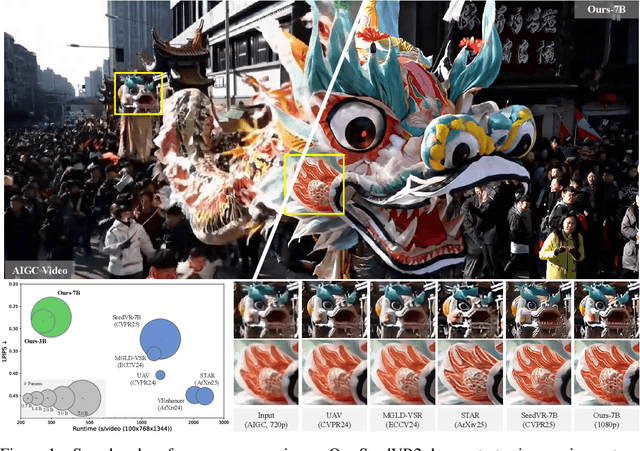
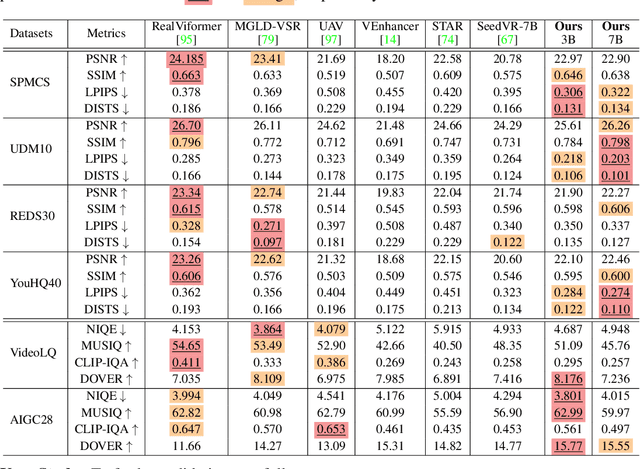
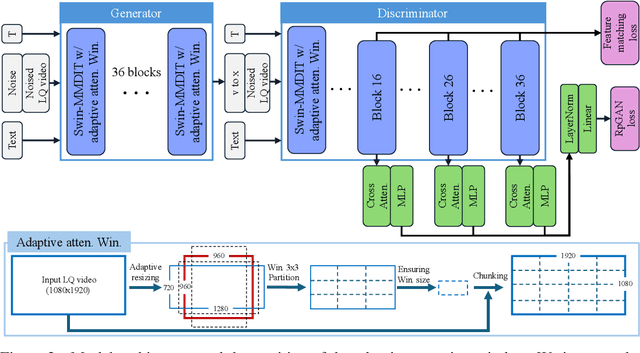
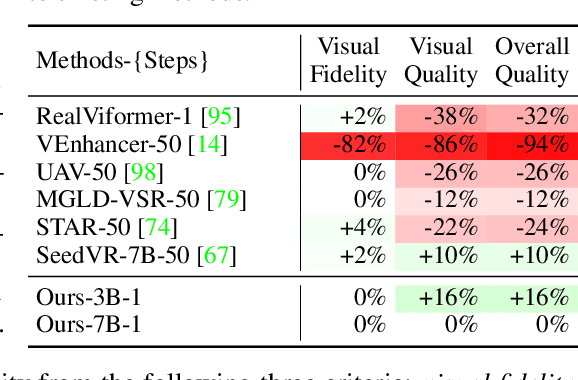
Recent advances in diffusion-based video restoration (VR) demonstrate significant improvement in visual quality, yet yield a prohibitive computational cost during inference. While several distillation-based approaches have exhibited the potential of one-step image restoration, extending existing approaches to VR remains challenging and underexplored, particularly when dealing with high-resolution video in real-world settings. In this work, we propose a one-step diffusion-based VR model, termed as SeedVR2, which performs adversarial VR training against real data. To handle the challenging high-resolution VR within a single step, we introduce several enhancements to both model architecture and training procedures. Specifically, an adaptive window attention mechanism is proposed, where the window size is dynamically adjusted to fit the output resolutions, avoiding window inconsistency observed under high-resolution VR using window attention with a predefined window size. To stabilize and improve the adversarial post-training towards VR, we further verify the effectiveness of a series of losses, including a proposed feature matching loss without significantly sacrificing training efficiency. Extensive experiments show that SeedVR2 can achieve comparable or even better performance compared with existing VR approaches in a single step.
Arbitrary-steps Image Super-resolution via Diffusion Inversion
Dec 12, 2024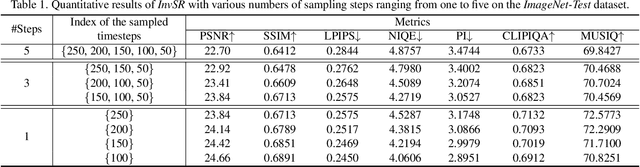
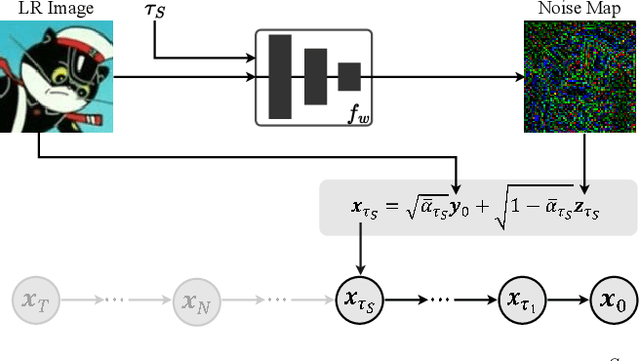


This study presents a new image super-resolution (SR) technique based on diffusion inversion, aiming at harnessing the rich image priors encapsulated in large pre-trained diffusion models to improve SR performance. We design a Partial noise Prediction strategy to construct an intermediate state of the diffusion model, which serves as the starting sampling point. Central to our approach is a deep noise predictor to estimate the optimal noise maps for the forward diffusion process. Once trained, this noise predictor can be used to initialize the sampling process partially along the diffusion trajectory, generating the desirable high-resolution result. Compared to existing approaches, our method offers a flexible and efficient sampling mechanism that supports an arbitrary number of sampling steps, ranging from one to five. Even with a single sampling step, our method demonstrates superior or comparable performance to recent state-of-the-art approaches. The code and model are publicly available at https://github.com/zsyOAOA/InvSR.
Omegance: A Single Parameter for Various Granularities in Diffusion-Based Synthesis
Nov 26, 2024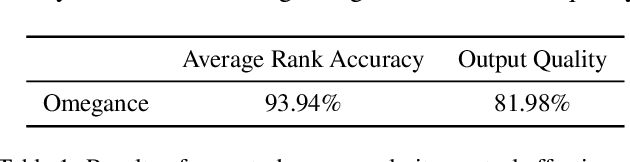

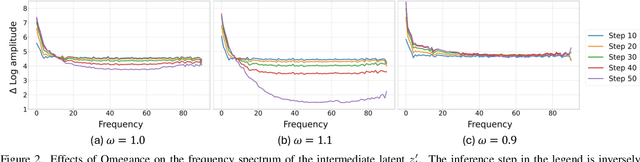
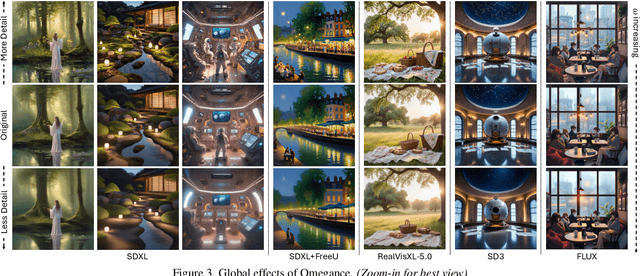
In this work, we introduce a single parameter $\omega$, to effectively control granularity in diffusion-based synthesis. This parameter is incorporated during the denoising steps of the diffusion model's reverse process. Our approach does not require model retraining, architectural modifications, or additional computational overhead during inference, yet enables precise control over the level of details in the generated outputs. Moreover, spatial masks or denoising schedules with varying $\omega$ values can be applied to achieve region-specific or timestep-specific granularity control. Prior knowledge of image composition from control signals or reference images further facilitates the creation of precise $\omega$ masks for granularity control on specific objects. To highlight the parameter's role in controlling subtle detail variations, the technique is named Omegance, combining "omega" and "nuance". Our method demonstrates impressive performance across various image and video synthesis tasks and is adaptable to advanced diffusion models. The code is available at https://github.com/itsmag11/Omegance.
Degradation-Guided One-Step Image Super-Resolution with Diffusion Priors
Sep 25, 2024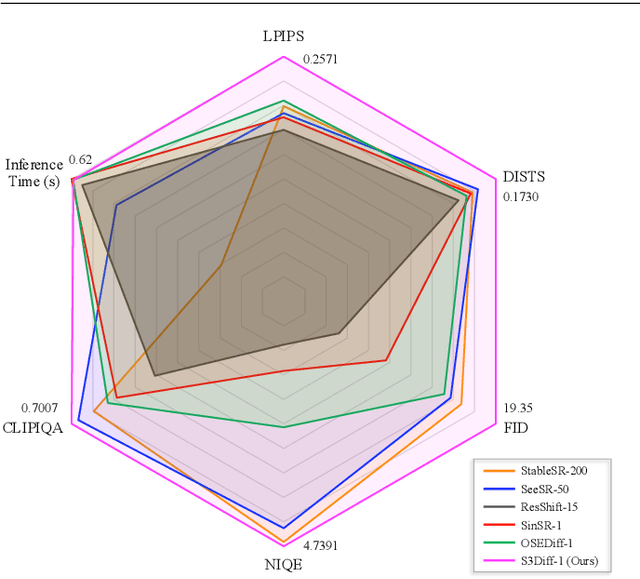
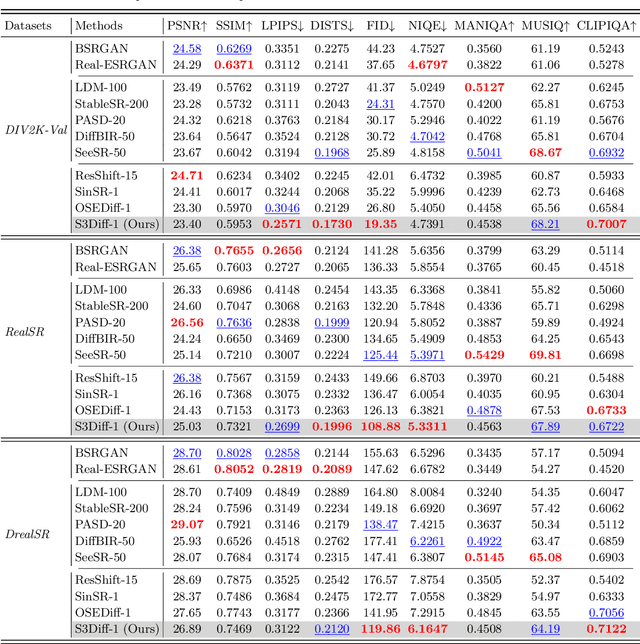
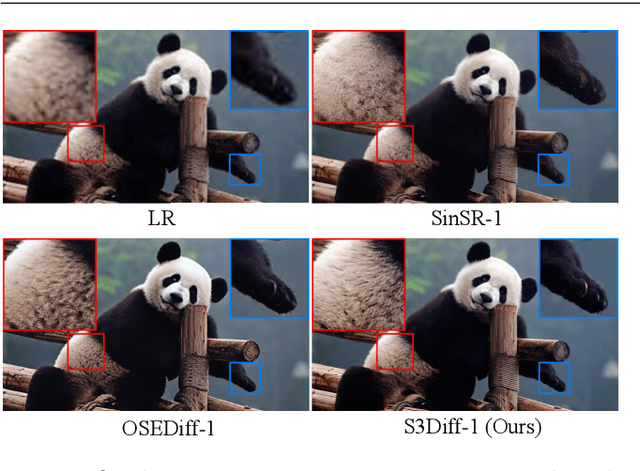

Diffusion-based image super-resolution (SR) methods have achieved remarkable success by leveraging large pre-trained text-to-image diffusion models as priors. However, these methods still face two challenges: the requirement for dozens of sampling steps to achieve satisfactory results, which limits efficiency in real scenarios, and the neglect of degradation models, which are critical auxiliary information in solving the SR problem. In this work, we introduced a novel one-step SR model, which significantly addresses the efficiency issue of diffusion-based SR methods. Unlike existing fine-tuning strategies, we designed a degradation-guided Low-Rank Adaptation (LoRA) module specifically for SR, which corrects the model parameters based on the pre-estimated degradation information from low-resolution images. This module not only facilitates a powerful data-dependent or degradation-dependent SR model but also preserves the generative prior of the pre-trained diffusion model as much as possible. Furthermore, we tailor a novel training pipeline by introducing an online negative sample generation strategy. Combined with the classifier-free guidance strategy during inference, it largely improves the perceptual quality of the super-resolution results. Extensive experiments have demonstrated the superior efficiency and effectiveness of the proposed model compared to recent state-of-the-art methods.
Blind Image Deconvolution by Generative-based Kernel Prior and Initializer via Latent Encoding
Jul 20, 2024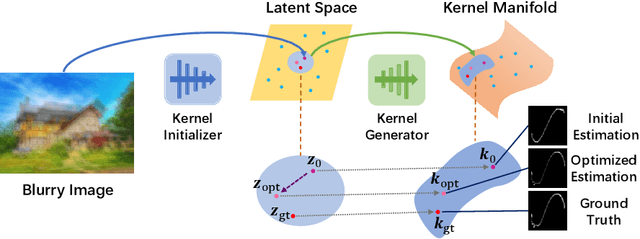
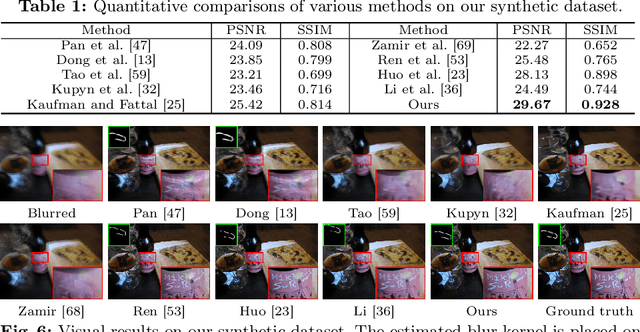
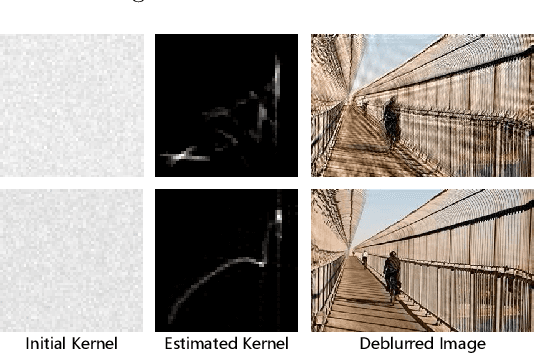
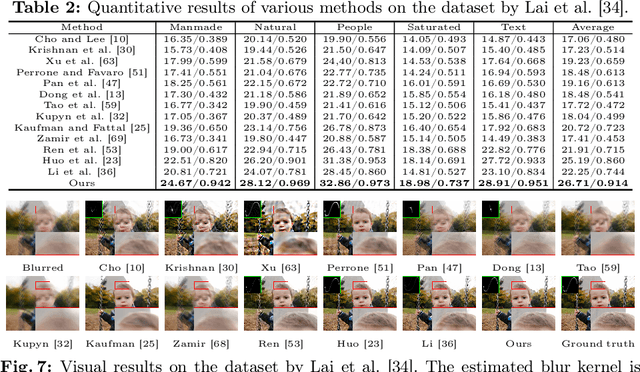
Blind image deconvolution (BID) is a classic yet challenging problem in the field of image processing. Recent advances in deep image prior (DIP) have motivated a series of DIP-based approaches, demonstrating remarkable success in BID. However, due to the high non-convexity of the inherent optimization process, these methods are notorious for their sensitivity to the initialized kernel. To alleviate this issue and further improve their performance, we propose a new framework for BID that better considers the prior modeling and the initialization for blur kernels, leveraging a deep generative model. The proposed approach pre-trains a generative adversarial network-based kernel generator that aptly characterizes the kernel priors and a kernel initializer that facilitates a well-informed initialization for the blur kernel through latent space encoding. With the pre-trained kernel generator and initializer, one can obtain a high-quality initialization of the blur kernel, and enable optimization within a compact latent kernel manifold. Such a framework results in an evident performance improvement over existing DIP-based BID methods. Extensive experiments on different datasets demonstrate the effectiveness of the proposed method.
Denoising as Adaptation: Noise-Space Domain Adaptation for Image Restoration
Jun 26, 2024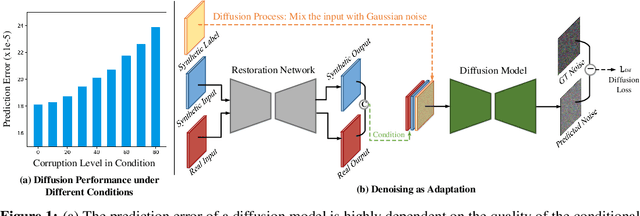

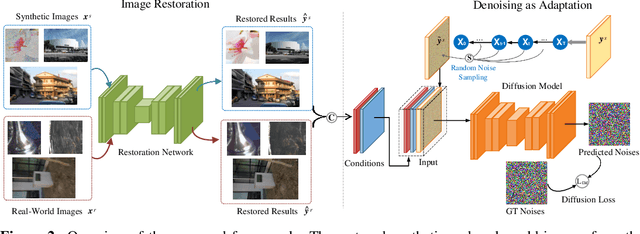

Although deep learning-based image restoration methods have made significant progress, they still struggle with limited generalization to real-world scenarios due to the substantial domain gap caused by training on synthetic data. Existing methods address this issue by improving data synthesis pipelines, estimating degradation kernels, employing deep internal learning, and performing domain adaptation and regularization. Previous domain adaptation methods have sought to bridge the domain gap by learning domain-invariant knowledge in either feature or pixel space. However, these techniques often struggle to extend to low-level vision tasks within a stable and compact framework. In this paper, we show that it is possible to perform domain adaptation via the noise-space using diffusion models. In particular, by leveraging the unique property of how the multi-step denoising process is influenced by auxiliary conditional inputs, we obtain meaningful gradients from noise prediction to gradually align the restored results of both synthetic and real-world data to a common clean distribution. We refer to this method as denoising as adaptation. To prevent shortcuts during training, we present useful techniques such as channel shuffling and residual-swapping contrastive learning. Experimental results on three classical image restoration tasks, namely denoising, deblurring, and deraining, demonstrate the effectiveness of the proposed method. Code will be released at: https://github.com/KangLiao929/Noise-DA/.