 Add to Chrome
 Add to Firefox
 Add to Edge
Emotion-Director: Bridging Affective Shortcut in Emotion-Oriented Image Generation
Dec 22, 2025
Image generation based on diffusion models has demonstrated impressive capability, motivating exploration into diverse and specialized applications. Owing to the importance of emotion in advertising, emotion-oriented image generation has attracted increasing attention. However, current emotion-oriented methods suffer from an affective shortcut, where emotions are approximated to semantics. As evidenced by two decades of research, emotion is not equivalent to semantics. To this end, we propose Emotion-Director, a cross-modal collaboration framework consisting of two modules. First, we propose a cross-Modal Collaborative diffusion model, abbreviated as MC-Diffusion. MC-Diffusion integrates visual prompts with textual prompts for guidance, enabling the generation of emotion-oriented images beyond semantics. Further, we improve the DPO optimization by a negative visual prompt, enhancing the model's sensitivity to different emotions under the same semantics. Second, we propose MC-Agent, a cross-Modal Collaborative Agent system that rewrites textual prompts to express the intended emotions. To avoid template-like rewrites, MC-Agent employs multi-agents to simulate human subjectivity toward emotions, and adopts a chain-of-concept workflow that improves the visual expressiveness of the rewritten prompts. Extensive qualitative and quantitative experiments demonstrate the superiority of Emotion-Director in emotion-oriented image generation.

Probing Scientific General Intelligence of LLMs with Scientist-Aligned Workflows
Dec 18, 2025Despite advances in scientific AI, a coherent framework for Scientific General Intelligence (SGI)-the ability to autonomously conceive, investigate, and reason across scientific domains-remains lacking. We present an operational SGI definition grounded in the Practical Inquiry Model (PIM: Deliberation, Conception, Action, Perception) and operationalize it via four scientist-aligned tasks: deep research, idea generation, dry/wet experiments, and experimental reasoning. SGI-Bench comprises over 1,000 expert-curated, cross-disciplinary samples inspired by Science's 125 Big Questions, enabling systematic evaluation of state-of-the-art LLMs. Results reveal gaps: low exact match (10--20%) in deep research despite step-level alignment; ideas lacking feasibility and detail; high code executability but low execution result accuracy in dry experiments; low sequence fidelity in wet protocols; and persistent multimodal comparative-reasoning challenges. We further introduce Test-Time Reinforcement Learning (TTRL), which optimizes retrieval-augmented novelty rewards at inference, enhancing hypothesis novelty without reference answer. Together, our PIM-grounded definition, workflow-centric benchmark, and empirical insights establish a foundation for AI systems that genuinely participate in scientific discovery.
SDAR-VL: Stable and Efficient Block-wise Diffusion for Vision-Language Understanding
Dec 16, 2025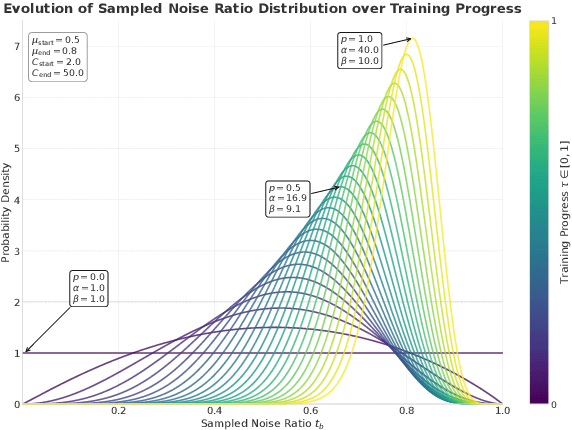
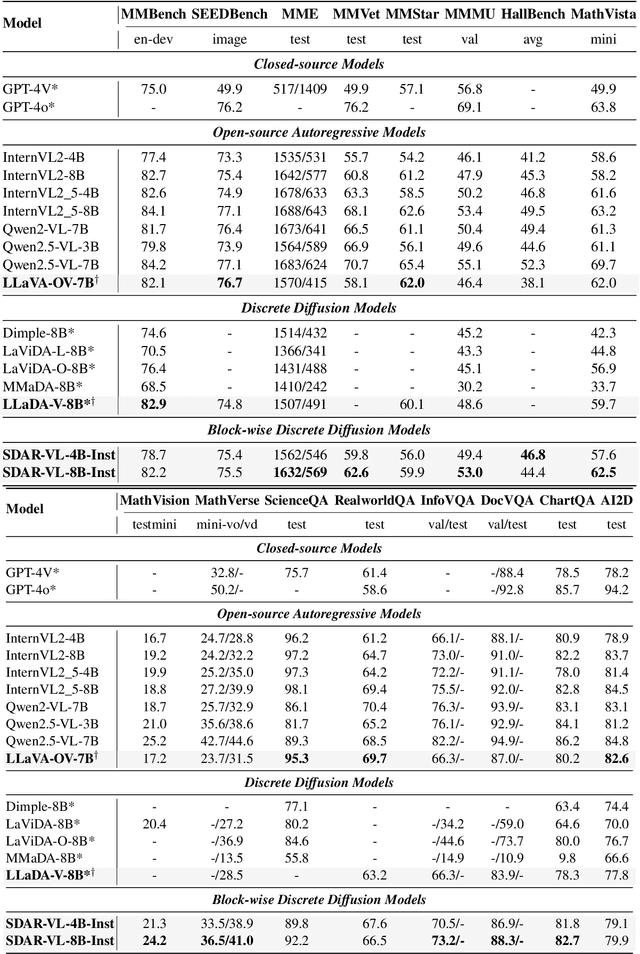
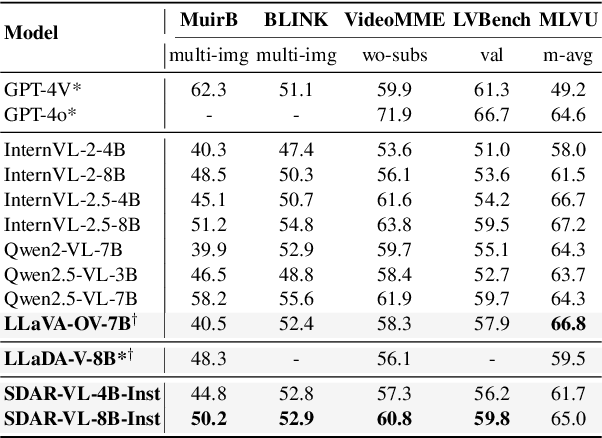
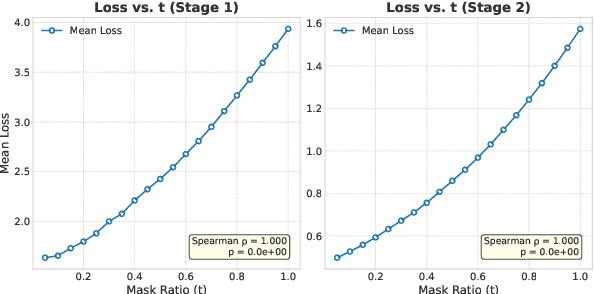
Block-wise discrete diffusion offers an attractive balance between parallel generation and causal dependency modeling, making it a promising backbone for vision-language modeling. However, its practical adoption has been limited by high training cost, slow convergence, and instability, which have so far kept it behind strong autoregressive (AR) baselines. We present \textbf{SDAR-VL}, the first systematic application of block-wise discrete diffusion to large-scale vision-language understanding (VLU), together with an \emph{integrated framework for efficient and stable training}. This framework unifies three components: (1) \textbf{Asynchronous Block-wise Noise Scheduling} to diversify supervision within each batch; (2) \textbf{Effective Mask Ratio Scaling} for unbiased loss normalization under stochastic masking; and (3) a \textbf{Progressive Beta Noise Curriculum} that increases effective mask coverage while preserving corruption diversity. Experiments on 21 single-image, multi-image, and video benchmarks show that SDAR-VL consistently improves \emph{training efficiency}, \emph{convergence stability}, and \emph{task performance} over conventional block diffusion. On this evaluation suite, SDAR-VL sets a new state of the art among diffusion-based vision-language models and, under matched settings, matches or surpasses strong AR baselines such as LLaVA-OneVision as well as the global diffusion baseline LLaDA-V, establishing block-wise diffusion as a practical backbone for VLU.
Accurate de novo sequencing of the modified proteome with OmniNovo
Dec 13, 2025Post-translational modifications (PTMs) serve as a dynamic chemical language regulating protein function, yet current proteomic methods remain blind to a vast portion of the modified proteome. Standard database search algorithms suffer from a combinatorial explosion of search spaces, limiting the identification of uncharacterized or complex modifications. Here we introduce OmniNovo, a unified deep learning framework for reference-free sequencing of unmodified and modified peptides directly from tandem mass spectra. Unlike existing tools restricted to specific modification types, OmniNovo learns universal fragmentation rules to decipher diverse PTMs within a single coherent model. By integrating a mass-constrained decoding algorithm with rigorous false discovery rate estimation, OmniNovo achieves state-of-the-art accuracy, identifying 51\% more peptides than standard approaches at a 1\% false discovery rate. Crucially, the model generalizes to biological sites unseen during training, illuminating the dark matter of the proteome and enabling unbiased comprehensive analysis of cellular regulation.
P1: Mastering Physics Olympiads with Reinforcement Learning
Nov 17, 2025Recent progress in large language models (LLMs) has moved the frontier from puzzle-solving to science-grade reasoning-the kind needed to tackle problems whose answers must stand against nature, not merely fit a rubric. Physics is the sharpest test of this shift, which binds symbols to reality in a fundamental way, serving as the cornerstone of most modern technologies. In this work, we manage to advance physics research by developing large language models with exceptional physics reasoning capabilities, especially excel at solving Olympiad-level physics problems. We introduce P1, a family of open-source physics reasoning models trained entirely through reinforcement learning (RL). Among them, P1-235B-A22B is the first open-source model with Gold-medal performance at the latest International Physics Olympiad (IPhO 2025), and wins 12 gold medals out of 13 international/regional physics competitions in 2024/2025. P1-30B-A3B also surpasses almost all other open-source models on IPhO 2025, getting a silver medal. Further equipped with an agentic framework PhysicsMinions, P1-235B-A22B+PhysicsMinions achieves overall No.1 on IPhO 2025, and obtains the highest average score over the 13 physics competitions. Besides physics, P1 models also present great performance on other reasoning tasks like math and coding, showing the great generalibility of P1 series.
Nirvana: A Specialized Generalist Model With Task-Aware Memory Mechanism
Oct 30, 2025Specialized Generalist Models (SGMs) aim to preserve broad capabilities while achieving expert-level performance in target domains. However, traditional LLM structures including Transformer, Linear Attention, and hybrid models do not employ specialized memory mechanism guided by task information. In this paper, we present Nirvana, an SGM with specialized memory mechanism, linear time complexity, and test-time task information extraction. Besides, we propose the Task-Aware Memory Trigger ($\textit{Trigger}$) that flexibly adjusts memory mechanism based on the current task's requirements. In Trigger, each incoming sample is treated as a self-supervised fine-tuning task, enabling Nirvana to adapt its task-related parameters on the fly to domain shifts. We also design the Specialized Memory Updater ($\textit{Updater}$) that dynamically memorizes the context guided by Trigger. We conduct experiments on both general language tasks and specialized medical tasks. On a variety of natural language modeling benchmarks, Nirvana achieves competitive or superior results compared to the existing LLM structures. To prove the effectiveness of Trigger on specialized tasks, we test Nirvana's performance on a challenging medical task, i.e., Magnetic Resonance Imaging (MRI). We post-train frozen Nirvana backbone with lightweight codecs on paired electromagnetic signals and MRI images. Despite the frozen Nirvana backbone, Trigger guides the model to adapt to the MRI domain with the change of task-related parameters. Nirvana achieves higher-quality MRI reconstruction compared to conventional MRI models as well as the models with traditional LLMs' backbone, and can also generate accurate preliminary clinical reports accordingly.
MinerU2.5: A Decoupled Vision-Language Model for Efficient High-Resolution Document Parsing
Sep 26, 2025We introduce MinerU2.5, a 1.2B-parameter document parsing vision-language model that achieves state-of-the-art recognition accuracy while maintaining exceptional computational efficiency. Our approach employs a coarse-to-fine, two-stage parsing strategy that decouples global layout analysis from local content recognition. In the first stage, the model performs efficient layout analysis on downsampled images to identify structural elements, circumventing the computational overhead of processing high-resolution inputs. In the second stage, guided by the global layout, it performs targeted content recognition on native-resolution crops extracted from the original image, preserving fine-grained details in dense text, complex formulas, and tables. To support this strategy, we developed a comprehensive data engine that generates diverse, large-scale training corpora for both pretraining and fine-tuning. Ultimately, MinerU2.5 demonstrates strong document parsing ability, achieving state-of-the-art performance on multiple benchmarks, surpassing both general-purpose and domain-specific models across various recognition tasks, while maintaining significantly lower computational overhead.
ScaleCUA: Scaling Open-Source Computer Use Agents with Cross-Platform Data
Sep 18, 2025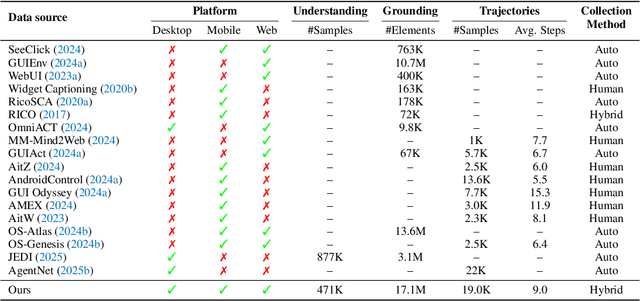
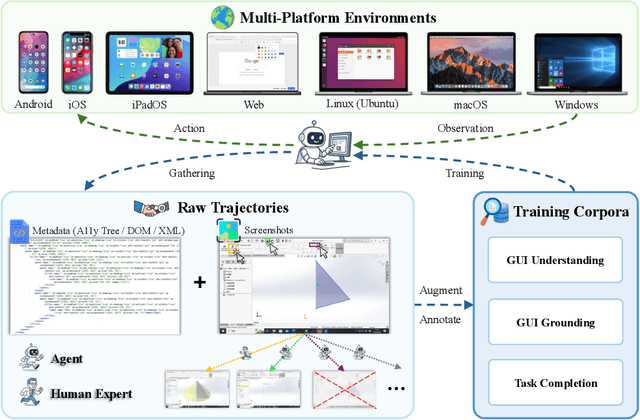
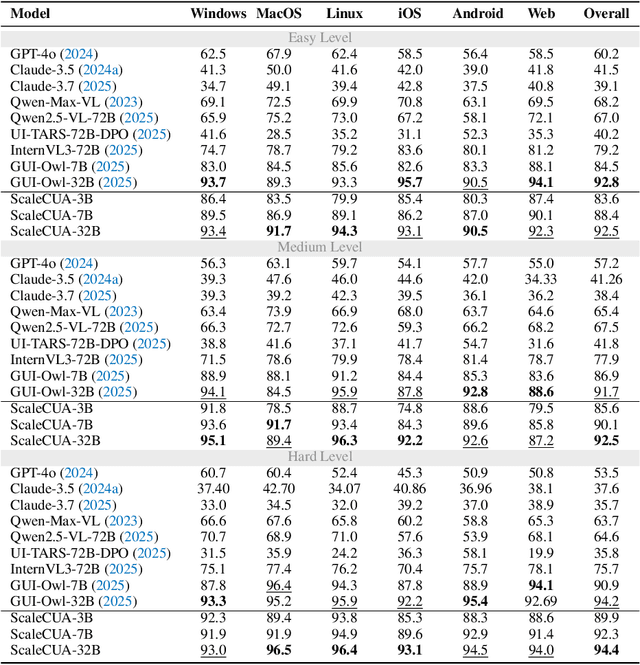
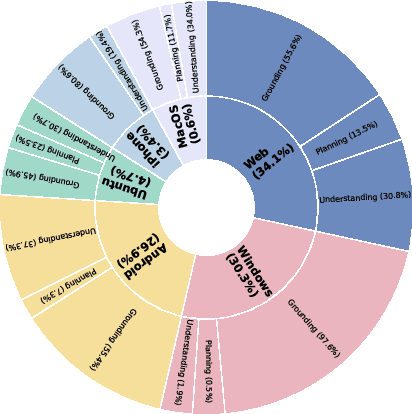
Vision-Language Models (VLMs) have enabled computer use agents (CUAs) that operate GUIs autonomously, showing great potential, yet progress is limited by the lack of large-scale, open-source computer use data and foundation models. In this work, we introduce ScaleCUA, a step toward scaling open-source CUAs. It offers a large-scale dataset spanning 6 operating systems and 3 task domains, built via a closed-loop pipeline uniting automated agents with human experts. Trained on this scaled-up data, ScaleCUA can operate seamlessly across platforms. Specifically, it delivers strong gains over baselines (+26.6 on WebArena-Lite-v2, +10.7 on ScreenSpot-Pro) and sets new state-of-the-art results (94.4% on MMBench-GUI L1-Hard, 60.6% on OSWorld-G, 47.4% on WebArena-Lite-v2). These findings underscore the power of data-driven scaling for general-purpose computer use agents. We will release data, models, and code to advance future research: https://github.com/OpenGVLab/ScaleCUA.
FlowRL: Matching Reward Distributions for LLM Reasoning
Sep 18, 2025We propose FlowRL: matching the full reward distribution via flow balancing instead of maximizing rewards in large language model (LLM) reinforcement learning (RL). Recent advanced reasoning models adopt reward-maximizing methods (\eg, PPO and GRPO), which tend to over-optimize dominant reward signals while neglecting less frequent but valid reasoning paths, thus reducing diversity. In contrast, we transform scalar rewards into a normalized target distribution using a learnable partition function, and then minimize the reverse KL divergence between the policy and the target distribution. We implement this idea as a flow-balanced optimization method that promotes diverse exploration and generalizable reasoning trajectories. We conduct experiments on math and code reasoning tasks: FlowRL achieves a significant average improvement of $10.0\%$ over GRPO and $5.1\%$ over PPO on math benchmarks, and performs consistently better on code reasoning tasks. These results highlight reward distribution-matching as a key step toward efficient exploration and diverse reasoning in LLM reinforcement learning.
MARS2 2025 Challenge on Multimodal Reasoning: Datasets, Methods, Results, Discussion, and Outlook
Sep 17, 2025
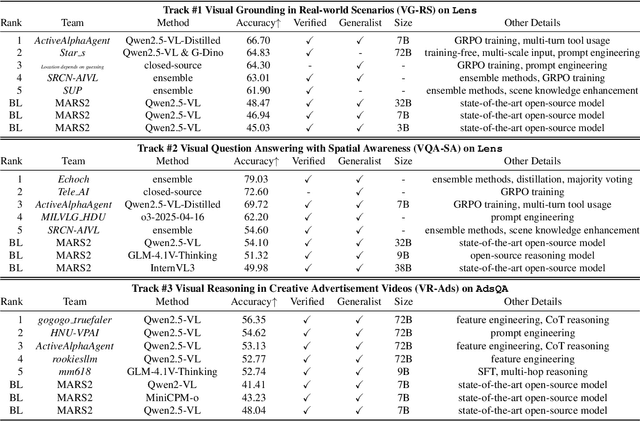

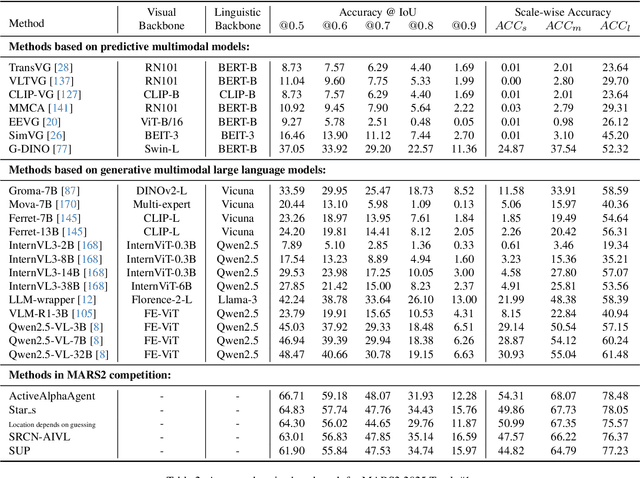
This paper reviews the MARS2 2025 Challenge on Multimodal Reasoning. We aim to bring together different approaches in multimodal machine learning and LLMs via a large benchmark. We hope it better allows researchers to follow the state-of-the-art in this very dynamic area. Meanwhile, a growing number of testbeds have boosted the evolution of general-purpose large language models. Thus, this year's MARS2 focuses on real-world and specialized scenarios to broaden the multimodal reasoning applications of MLLMs. Our organizing team released two tailored datasets Lens and AdsQA as test sets, which support general reasoning in 12 daily scenarios and domain-specific reasoning in advertisement videos, respectively. We evaluated 40+ baselines that include both generalist MLLMs and task-specific models, and opened up three competition tracks, i.e., Visual Grounding in Real-world Scenarios (VG-RS), Visual Question Answering with Spatial Awareness (VQA-SA), and Visual Reasoning in Creative Advertisement Videos (VR-Ads). Finally, 76 teams from the renowned academic and industrial institutions have registered and 40+ valid submissions (out of 1200+) have been included in our ranking lists. Our datasets, code sets (40+ baselines and 15+ participants' methods), and rankings are publicly available on the MARS2 workshop website and our GitHub organization page https://github.com/mars2workshop/, where our updates and announcements of upcoming events will be continuously provided.