 Add to Chrome
 Add to Firefox
 Add to Edge
MinerU2.5-Pro: Pushing the Limits of Data-Centric Document Parsing at Scale
Apr 06, 2026
Current document parsing methods compete primarily on model architecture innovation, while systematic engineering of training data remains underexplored. Yet SOTA models of different architectures and parameter scales exhibit highly consistent failure patterns on the same set of hard samples, suggesting that the performance bottleneck stems from shared deficiencies in training data rather than architecture itself. Building on this finding, we present \minerupro, which advances the state of the art solely through data engineering and training strategy optimization while keeping the 1.2B-parameter architecture of \mineru completely fixed. At its core is a Data Engine co-designed around coverage, informativeness, and annotation accuracy: Diversity-and-Difficulty-Aware Sampling expands training data from under 10M to 65.5M samples while correcting distribution shift; Cross-Model Consistency Verification leverages output agreement among heterogeneous models to assess sample difficulty and generate reliable annotations; the Judge-and-Refine pipeline improves annotation quality for hard samples through render-then-verify iterative correction. A three-stage progressive training strategy -- large-scale pre-training, hard sample fine-tuning, and GRPO alignment -- sequentially exploits these data at different quality tiers. On the evaluation front, we fix element-matching biases in OmniDocBench~v1.5 and introduce a Hard subset, establishing the more discriminative OmniDocBench~v1.6 protocol. Without any architectural modification, \minerupro achieves 95.69 on OmniDocBench~v1.6, improving over the same-architecture baseline by 2.71 points and surpassing all existing methods including models with over 200$\times$ more parameters.

PEARL: Personalized Streaming Video Understanding Model
Mar 20, 2026Human cognition of new concepts is inherently a streaming process: we continuously recognize new objects or identities and update our memories over time. However, current multimodal personalization methods are largely limited to static images or offline videos. This disconnects continuous visual input from instant real-world feedback, limiting their ability to provide the real-time, interactive personalized responses essential for future AI assistants. To bridge this gap, we first propose and formally define the novel task of Personalized Streaming Video Understanding (PSVU). To facilitate research in this new direction, we introduce PEARL-Bench, the first comprehensive benchmark designed specifically to evaluate this challenging setting. It evaluates a model's ability to respond to personalized concepts at exact timestamps under two modes: (1) Frame-level, focusing on a specific person or object in discrete frames, and (2) a novel Video-level, focusing on personalized actions unfolding across continuous frames. PEARL-Bench comprises 132 unique videos and 2,173 fine-grained annotations with precise timestamps. Concept diversity and annotation quality are strictly ensured through a combined pipeline of automated generation and human verification. To tackle this challenging new setting, we further propose PEARL, a plug-and-play, training-free strategy that serves as a strong baseline. Extensive evaluations across 8 offline and online models demonstrate that PEARL achieves state-of-the-art performance. Notably, it brings consistent PSVU improvements when applied to 3 distinct architectures, proving to be a highly effective and robust strategy. We hope this work advances vision-language model (VLM) personalization and inspires further research into streaming personalized AI assistants. Code is available at https://github.com/Yuanhong-Zheng/PEARL.
BrowseComp-$V^3$: A Visual, Vertical, and Verifiable Benchmark for Multimodal Browsing Agents
Feb 13, 2026Multimodal large language models (MLLMs), equipped with increasingly advanced planning and tool-use capabilities, are evolving into autonomous agents capable of performing multimodal web browsing and deep search in open-world environments. However, existing benchmarks for multimodal browsing remain limited in task complexity, evidence accessibility, and evaluation granularity, hindering comprehensive and reproducible assessments of deep search capabilities. To address these limitations, we introduce BrowseComp-$V^3$, a novel benchmark consisting of 300 carefully curated and challenging questions spanning diverse domains. The benchmark emphasizes deep, multi-level, and cross-modal multi-hop reasoning, where critical evidence is interleaved across textual and visual modalities within and across web pages. All supporting evidence is strictly required to be publicly searchable, ensuring fairness and reproducibility. Beyond final-answer accuracy, we incorporate an expert-validated, subgoal-driven process evaluation mechanism that enables fine-grained analysis of intermediate reasoning behaviors and systematic characterization of capability boundaries. In addition, we propose OmniSeeker, a unified multimodal browsing agent framework integrating diverse web search and visual perception tools. Comprehensive experiments demonstrate that even state-of-the-art models achieve only 36% accuracy on our benchmark, revealing critical bottlenecks in multimodal information integration and fine-grained perception. Our results highlight a fundamental gap between current model capabilities and robust multimodal deep search in real-world settings.
Exploring Information Seeking Agent Consolidation
Jan 31, 2026Information-seeking agents have emerged as a powerful paradigm for solving knowledge-intensive tasks. Existing information-seeking agents are typically specialized for open web, documents, or local knowledge bases, which constrains scalability and cross-domain generalization. In this work, we investigate how to consolidate heterogeneous information-seeking agents into a single foundation agentic model. We study two complementary consolidation strategies: data-level consolidation, which jointly trains a unified model on a mixture of domain-specific datasets, and parameter-level consolidation, which merges independently trained agent models at the parameter level. Our analysis compares these approaches in terms of performance retention, cross-domain generalization, and interference across information-seeking behaviors. Our results show that data-level consolidation remains a strong and stable baseline, while parameter-level consolidation offers a promising, efficient alternative but suffers from interference and robustness challenges. We further identify key design factors for effective agent consolidation at the parameter level, including fine-grained merging granularity, awareness of task heterogeneity, and principled consensus strategy.
DocDancer: Towards Agentic Document-Grounded Information Seeking
Jan 08, 2026Document Question Answering (DocQA) focuses on answering questions grounded in given documents, yet existing DocQA agents lack effective tool utilization and largely rely on closed-source models. In this work, we introduce DocDancer, an end-to-end trained open-source Doc agent. We formulate DocQA as an information-seeking problem and propose a tool-driven agent framework that explicitly models document exploration and comprehension. To enable end-to-end training of such agents, we introduce an Exploration-then-Synthesis data synthesis pipeline that addresses the scarcity of high-quality training data for DocQA. Training on the synthesized data, the trained models on two long-context document understanding benchmarks, MMLongBench-Doc and DocBench, show their effectiveness. Further analysis provides valuable insights for the agentic tool design and synthetic data.
DOCR-Inspector: Fine-Grained and Automated Evaluation of Document Parsing with VLM
Dec 11, 2025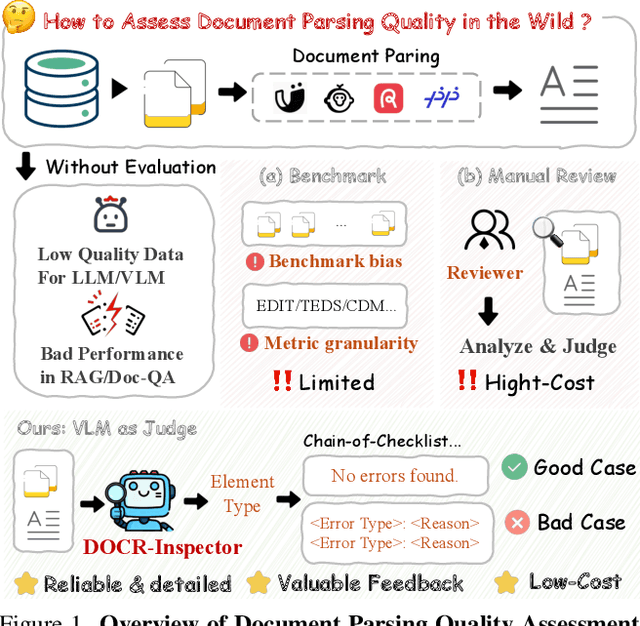
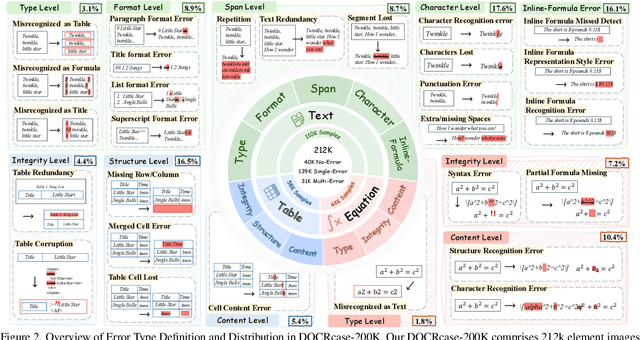
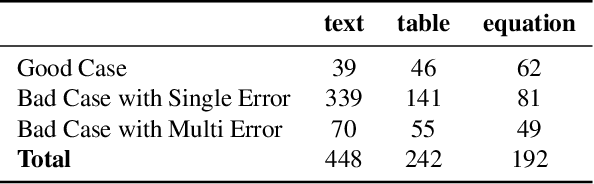
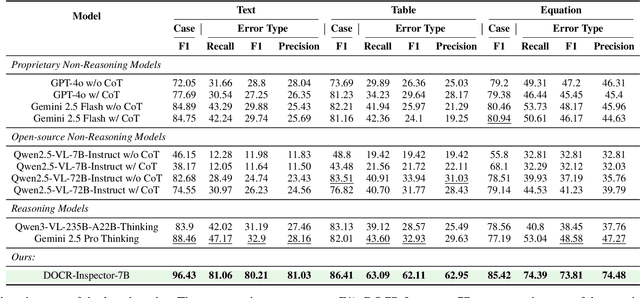
Document parsing aims to transform unstructured PDF images into semi-structured data, facilitating the digitization and utilization of information in diverse domains. While vision language models (VLMs) have significantly advanced this task, achieving reliable, high-quality parsing in real-world scenarios remains challenging. Common practice often selects the top-performing model on standard benchmarks. However, these benchmarks may carry dataset-specific biases, leading to inconsistent model rankings and limited correlation with real-world performance. Moreover, benchmark metrics typically provide only overall scores, which can obscure distinct error patterns in output. This raises a key challenge: how can we reliably and comprehensively assess document parsing quality in the wild? We address this problem with DOCR-Inspector, which formalizes document parsing assessment as fine-grained error detection and analysis. Leveraging VLM-as-a-Judge, DOCR-Inspector analyzes a document image and its parsed output, identifies all errors, assigns them to one of 28 predefined types, and produces a comprehensive quality assessment. To enable this capability, we construct DOCRcase-200K for training and propose the Chain-of-Checklist reasoning paradigm to enable the hierarchical structure of parsing quality assessment. For empirical validation, we introduce DOCRcaseBench, a set of 882 real-world document parsing cases with manual annotations. On this benchmark, DOCR-Inspector-7B outperforms commercial models like Gemini 2.5 Pro, as well as leading open-source models. Further experiments demonstrate that its quality assessments provide valuable guidance for parsing results refinement, making DOCR-Inspector both a practical evaluator and a driver for advancing document parsing systems at scale. Model and code are released at: https://github.com/ZZZZZQT/DOCR-Inspector.
MinerU2.5: A Decoupled Vision-Language Model for Efficient High-Resolution Document Parsing
Sep 26, 2025We introduce MinerU2.5, a 1.2B-parameter document parsing vision-language model that achieves state-of-the-art recognition accuracy while maintaining exceptional computational efficiency. Our approach employs a coarse-to-fine, two-stage parsing strategy that decouples global layout analysis from local content recognition. In the first stage, the model performs efficient layout analysis on downsampled images to identify structural elements, circumventing the computational overhead of processing high-resolution inputs. In the second stage, guided by the global layout, it performs targeted content recognition on native-resolution crops extracted from the original image, preserving fine-grained details in dense text, complex formulas, and tables. To support this strategy, we developed a comprehensive data engine that generates diverse, large-scale training corpora for both pretraining and fine-tuning. Ultimately, MinerU2.5 demonstrates strong document parsing ability, achieving state-of-the-art performance on multiple benchmarks, surpassing both general-purpose and domain-specific models across various recognition tasks, while maintaining significantly lower computational overhead.
Stop Looking for Important Tokens in Multimodal Language Models: Duplication Matters More
Feb 17, 2025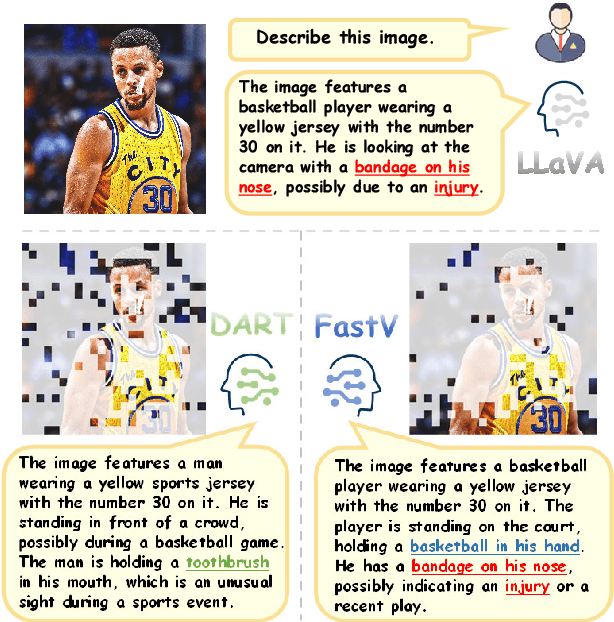
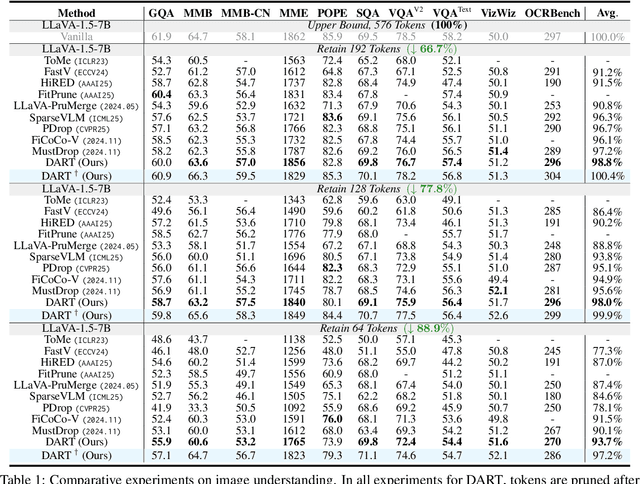
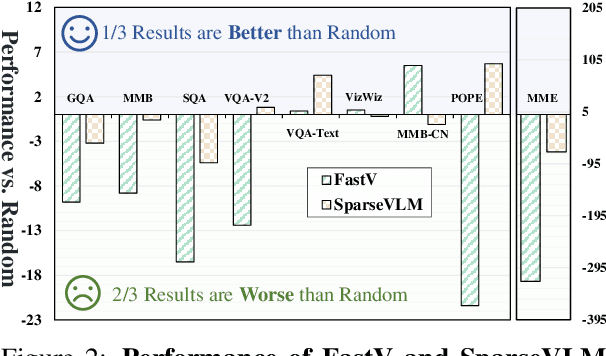
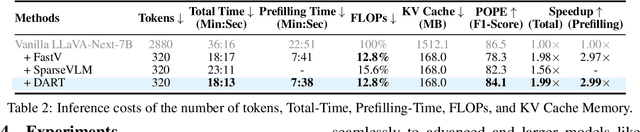
Vision tokens in multimodal large language models often dominate huge computational overhead due to their excessive length compared to linguistic modality. Abundant recent methods aim to solve this problem with token pruning, which first defines an importance criterion for tokens and then prunes the unimportant vision tokens during inference. However, in this paper, we show that the importance is not an ideal indicator to decide whether a token should be pruned. Surprisingly, it usually results in inferior performance than random token pruning and leading to incompatibility to efficient attention computation operators.Instead, we propose DART (Duplication-Aware Reduction of Tokens), which prunes tokens based on its duplication with other tokens, leading to significant and training-free acceleration. Concretely, DART selects a small subset of pivot tokens and then retains the tokens with low duplication to the pivots, ensuring minimal information loss during token pruning. Experiments demonstrate that DART can prune 88.9% vision tokens while maintaining comparable performance, leading to a 1.99$\times$ and 2.99$\times$ speed-up in total time and prefilling stage, respectively, with good compatibility to efficient attention operators. Our codes are available at https://github.com/ZichenWen1/DART.
OCR Hinders RAG: Evaluating the Cascading Impact of OCR on Retrieval-Augmented Generation
Dec 03, 2024Retrieval-augmented Generation (RAG) enhances Large Language Models (LLMs) by integrating external knowledge to reduce hallucinations and incorporate up-to-date information without retraining. As an essential part of RAG, external knowledge bases are commonly built by extracting structured data from unstructured PDF documents using Optical Character Recognition (OCR). However, given the imperfect prediction of OCR and the inherent non-uniform representation of structured data, knowledge bases inevitably contain various OCR noises. In this paper, we introduce OHRBench, the first benchmark for understanding the cascading impact of OCR on RAG systems. OHRBench includes 350 carefully selected unstructured PDF documents from six real-world RAG application domains, along with Q&As derived from multimodal elements in documents, challenging existing OCR solutions used for RAG To better understand OCR's impact on RAG systems, we identify two primary types of OCR noise: Semantic Noise and Formatting Noise and apply perturbation to generate a set of structured data with varying degrees of each OCR noise. Using OHRBench, we first conduct a comprehensive evaluation of current OCR solutions and reveal that none is competent for constructing high-quality knowledge bases for RAG systems. We then systematically evaluate the impact of these two noise types and demonstrate the vulnerability of RAG systems. Furthermore, we discuss the potential of employing Vision-Language Models (VLMs) without OCR in RAG systems. Code: https://github.com/opendatalab/OHR-Bench
Document Parsing Unveiled: Techniques, Challenges, and Prospects for Structured Information Extraction
Oct 29, 2024
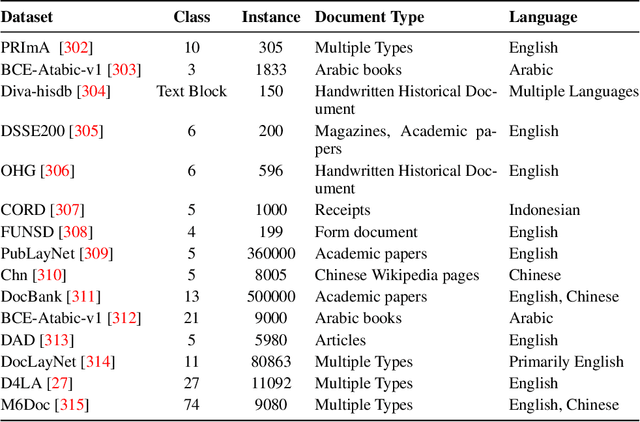

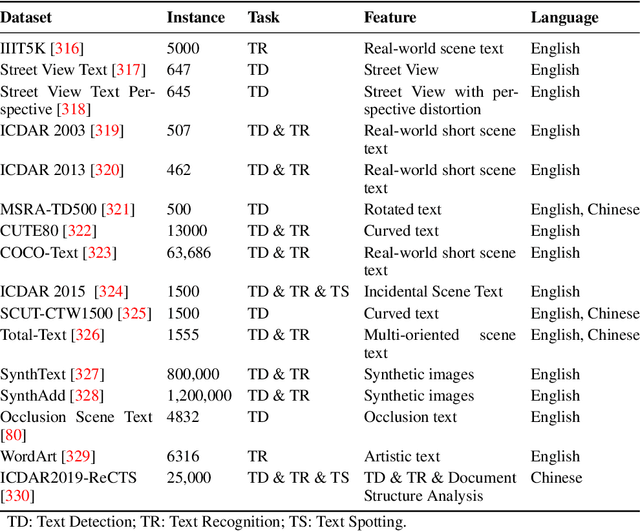
Document parsing is essential for converting unstructured and semi-structured documents-such as contracts, academic papers, and invoices-into structured, machine-readable data. Document parsing extract reliable structured data from unstructured inputs, providing huge convenience for numerous applications. Especially with recent achievements in Large Language Models, document parsing plays an indispensable role in both knowledge base construction and training data generation. This survey presents a comprehensive review of the current state of document parsing, covering key methodologies, from modular pipeline systems to end-to-end models driven by large vision-language models. Core components such as layout detection, content extraction (including text, tables, and mathematical expressions), and multi-modal data integration are examined in detail. Additionally, this paper discusses the challenges faced by modular document parsing systems and vision-language models in handling complex layouts, integrating multiple modules, and recognizing high-density text. It emphasizes the importance of developing larger and more diverse datasets and outlines future research directions.