 Add to Chrome
 Add to Firefox
 Add to Edge
AblateCell: A Reproduce-then-Ablate Agent for Virtual Cell Repositories
Apr 21, 2026
Systematic ablations are essential to attribute performance gains in AI Virtual Cells, yet they are rarely performed because biological repositories are under-standardized and tightly coupled to domain-specific data and formats. While recent coding agents can translate ideas into implementations, they typically stop at producing code and lack a verifier that can reproduce strong baselines and rigorously test which components truly matter. We introduce AblateCell, a reproduce-then-ablate agent for virtual cell repositories that closes this verification gap. AblateCell first reproduces reported baselines end-to-end by auto-configuring environments, resolving dependency and data issues, and rerunning official evaluations while emitting verifiable artifacts. It then conducts closed-loop ablation by generating a graph of isolated repository mutations and adaptively selecting experiments under a reward that trades off performance impact and execution cost. Evaluated on three single-cell perturbation prediction repositories (CPA, GEARS, BioLORD), AblateCell achieves 88.9% (+29.9% to human expert) end-to-end workflow success and 93.3% (+53.3% to heuristic) accuracy in recovering ground-truth critical components. These results enable scalable, repository-grounded verification and attribution directly on biological codebases.

HarmonyCell: Automating Single-Cell Perturbation Modeling under Semantic and Distribution Shifts
Mar 02, 2026Single-cell perturbation studies face dual heterogeneity bottlenecks: (i) semantic heterogeneity--identical biological concepts encoded under incompatible metadata schemas across datasets; and (ii) statistical heterogeneity--distribution shifts from biological variation demanding dataset-specific inductive biases. We propose HarmonyCell, an end-to-end agent framework resolving each challenge through a dedicated mechanism: an LLM-driven Semantic Unifier autonomously maps disparate metadata into a canonical interface without manual intervention; and an adaptive Monte Carlo Tree Search engine operates over a hierarchical action space to synthesize architectures with optimal statistical inductive biases for distribution shifts. Evaluated across diverse perturbation tasks under both semantic and distribution shifts, HarmonyCell achieves a 95% valid execution rate on heterogeneous input datasets (versus 0% for general agents) while matching or even exceeding expert-designed baselines in rigorous out-of-distribution evaluations. This dual-track orchestration enables scalable automatic virtual cell modeling without dataset-specific engineering.
Reflection Pretraining Enables Token-Level Self-Correction in Biological Sequence Models
Dec 24, 2025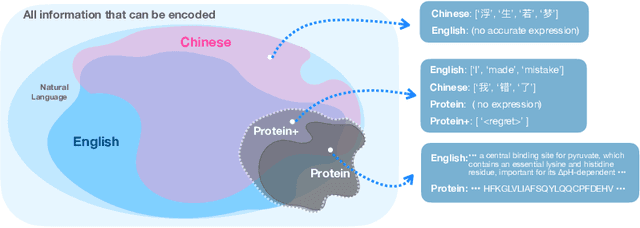
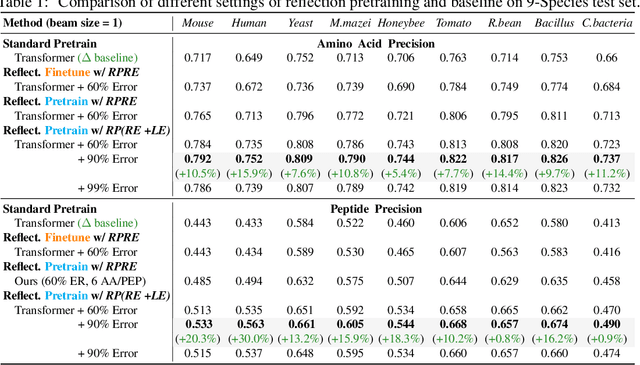
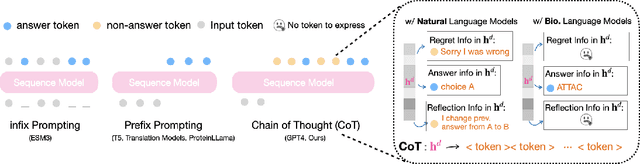
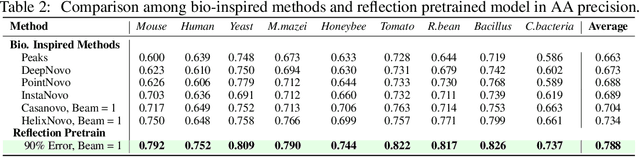
Chain-of-Thought (CoT) prompting has significantly advanced task-solving capabilities in natural language processing with large language models. Unlike standard prompting, CoT encourages the model to generate intermediate reasoning steps, non-answer tokens, that help guide the model toward more accurate final outputs. These intermediate steps enable more complex reasoning processes such as error correction, memory management, future planning, and self-reflection. However, applying CoT to non-natural language domains, such as protein and RNA language models, is not yet possible, primarily due to the limited expressiveness of their token spaces (e.g., amino acid tokens). In this work, we propose and define the concept of language expressiveness: the ability of a given language, using its tokens and grammar, to encode information. We show that the limited expressiveness of protein language severely restricts the applicability of CoT-style reasoning. To overcome this, we introduce reflection pretraining, for the first time in a biological sequence model, which enables the model to engage in intermediate reasoning through the generation of auxiliary "thinking tokens" beyond simple answer tokens. Theoretically, we demonstrate that our augmented token set significantly enhances biological language expressiveness, thereby improving the overall reasoning capacity of the model. Experimentally, our pretraining approach teaches protein models to self-correct and leads to substantial performance gains compared to standard pretraining.
Probing Scientific General Intelligence of LLMs with Scientist-Aligned Workflows
Dec 18, 2025Despite advances in scientific AI, a coherent framework for Scientific General Intelligence (SGI)-the ability to autonomously conceive, investigate, and reason across scientific domains-remains lacking. We present an operational SGI definition grounded in the Practical Inquiry Model (PIM: Deliberation, Conception, Action, Perception) and operationalize it via four scientist-aligned tasks: deep research, idea generation, dry/wet experiments, and experimental reasoning. SGI-Bench comprises over 1,000 expert-curated, cross-disciplinary samples inspired by Science's 125 Big Questions, enabling systematic evaluation of state-of-the-art LLMs. Results reveal gaps: low exact match (10--20%) in deep research despite step-level alignment; ideas lacking feasibility and detail; high code executability but low execution result accuracy in dry experiments; low sequence fidelity in wet protocols; and persistent multimodal comparative-reasoning challenges. We further introduce Test-Time Reinforcement Learning (TTRL), which optimizes retrieval-augmented novelty rewards at inference, enhancing hypothesis novelty without reference answer. Together, our PIM-grounded definition, workflow-centric benchmark, and empirical insights establish a foundation for AI systems that genuinely participate in scientific discovery.
Accurate de novo sequencing of the modified proteome with OmniNovo
Dec 13, 2025Post-translational modifications (PTMs) serve as a dynamic chemical language regulating protein function, yet current proteomic methods remain blind to a vast portion of the modified proteome. Standard database search algorithms suffer from a combinatorial explosion of search spaces, limiting the identification of uncharacterized or complex modifications. Here we introduce OmniNovo, a unified deep learning framework for reference-free sequencing of unmodified and modified peptides directly from tandem mass spectra. Unlike existing tools restricted to specific modification types, OmniNovo learns universal fragmentation rules to decipher diverse PTMs within a single coherent model. By integrating a mass-constrained decoding algorithm with rigorous false discovery rate estimation, OmniNovo achieves state-of-the-art accuracy, identifying 51\% more peptides than standard approaches at a 1\% false discovery rate. Crucially, the model generalizes to biological sites unseen during training, illuminating the dark matter of the proteome and enabling unbiased comprehensive analysis of cellular regulation.
Scientists' First Exam: Probing Cognitive Abilities of MLLM via Perception, Understanding, and Reasoning
Jun 12, 2025Scientific discoveries increasingly rely on complex multimodal reasoning based on information-intensive scientific data and domain-specific expertise. Empowered by expert-level scientific benchmarks, scientific Multimodal Large Language Models (MLLMs) hold the potential to significantly enhance this discovery process in realistic workflows. However, current scientific benchmarks mostly focus on evaluating the knowledge understanding capabilities of MLLMs, leading to an inadequate assessment of their perception and reasoning abilities. To address this gap, we present the Scientists' First Exam (SFE) benchmark, designed to evaluate the scientific cognitive capacities of MLLMs through three interconnected levels: scientific signal perception, scientific attribute understanding, scientific comparative reasoning. Specifically, SFE comprises 830 expert-verified VQA pairs across three question types, spanning 66 multimodal tasks across five high-value disciplines. Extensive experiments reveal that current state-of-the-art GPT-o3 and InternVL-3 achieve only 34.08% and 26.52% on SFE, highlighting significant room for MLLMs to improve in scientific realms. We hope the insights obtained in SFE will facilitate further developments in AI-enhanced scientific discoveries.