 Add to Chrome
 Add to Firefox
 Add to Edge
From Context to EDUs: Faithful and Structured Context Compression via Elementary Discourse Unit Decomposition
Dec 18, 2025
Managing extensive context remains a critical bottleneck for Large Language Models (LLMs), particularly in applications like long-document question answering and autonomous agents where lengthy inputs incur high computational costs and introduce noise. Existing compression techniques often disrupt local coherence through discrete token removal or rely on implicit latent encoding that suffers from positional bias and incompatibility with closed-source APIs. To address these limitations, we introduce the EDU-based Context Compressor, a novel explicit compression framework designed to preserve both global structure and fine-grained details. Our approach reformulates context compression as a structure-then-select process. First, our LingoEDU transforms linear text into a structural relation tree of Elementary Discourse Units (EDUs) which are anchored strictly to source indices to eliminate hallucination. Second, a lightweight ranking module selects query-relevant sub-trees for linearization. To rigorously evaluate structural understanding, we release StructBench, a manually annotated dataset of 248 diverse documents. Empirical results demonstrate that our method achieves state-of-the-art structural prediction accuracy and significantly outperforms frontier LLMs while reducing costs. Furthermore, our structure-aware compression substantially enhances performance across downstream tasks ranging from long-context tasks to complex Deep Search scenarios.

From Risk to Resilience: Towards Assessing and Mitigating the Risk of Data Reconstruction Attacks in Federated Learning
Dec 17, 2025Data Reconstruction Attacks (DRA) pose a significant threat to Federated Learning (FL) systems by enabling adversaries to infer sensitive training data from local clients. Despite extensive research, the question of how to characterize and assess the risk of DRAs in FL systems remains unresolved due to the lack of a theoretically-grounded risk quantification framework. In this work, we address this gap by introducing Invertibility Loss (InvLoss) to quantify the maximum achievable effectiveness of DRAs for a given data instance and FL model. We derive a tight and computable upper bound for InvLoss and explore its implications from three perspectives. First, we show that DRA risk is governed by the spectral properties of the Jacobian matrix of exchanged model updates or feature embeddings, providing a unified explanation for the effectiveness of defense methods. Second, we develop InvRE, an InvLoss-based DRA risk estimator that offers attack method-agnostic, comprehensive risk evaluation across data instances and model architectures. Third, we propose two adaptive noise perturbation defenses that enhance FL privacy without harming classification accuracy. Extensive experiments on real-world datasets validate our framework, demonstrating its potential for systematic DRA risk evaluation and mitigation in FL systems.
You Never Know a Person, You Only Know Their Defenses: Detecting Levels of Psychological Defense Mechanisms in Supportive Conversations
Dec 17, 2025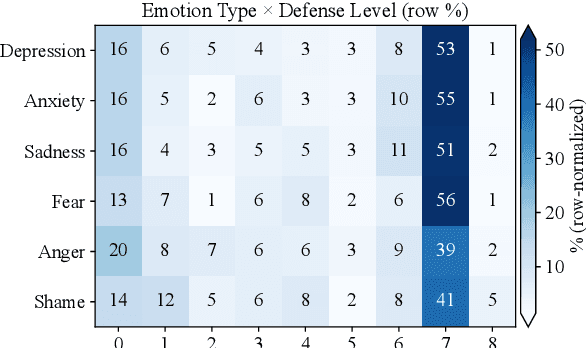
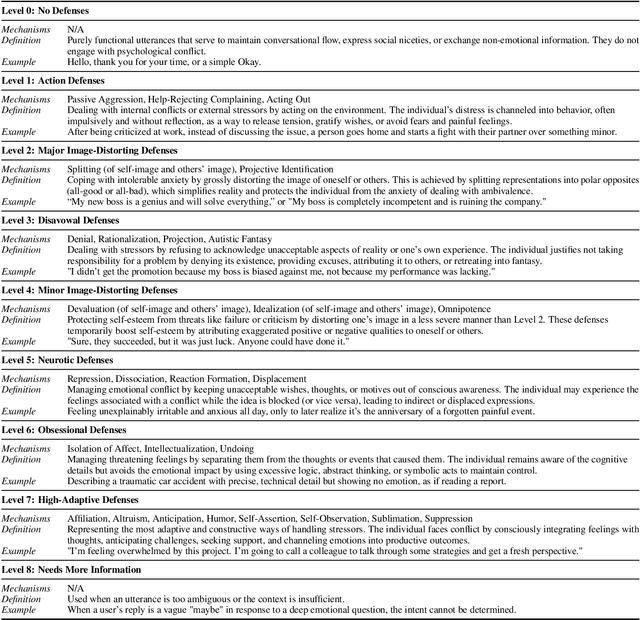
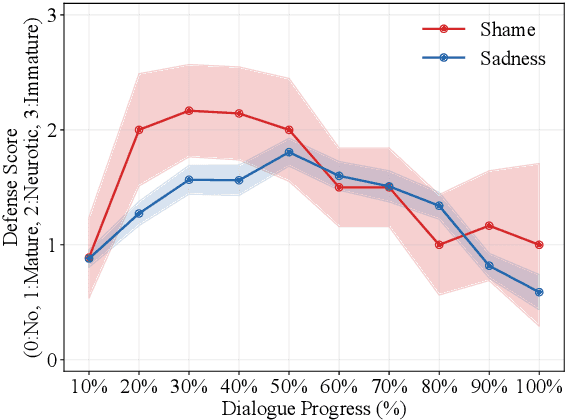
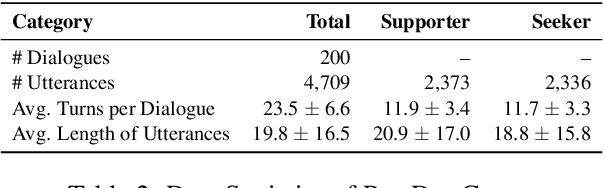
Psychological defenses are strategies, often automatic, that people use to manage distress. Rigid or overuse of defenses is negatively linked to mental health and shapes what speakers disclose and how they accept or resist help. However, defenses are complex and difficult to reliably measure, particularly in clinical dialogues. We introduce PsyDefConv, a dialogue corpus with help seeker utterances labeled for defense level, and DMRS Co-Pilot, a four-stage pipeline that provides evidence-based pre-annotations. The corpus contains 200 dialogues and 4709 utterances, including 2336 help seeker turns, with labeling and Cohen's kappa 0.639. In a counterbalanced study, the co-pilot reduced average annotation time by 22.4%. In expert review, it averaged 4.62 for evidence, 4.44 for clinical plausibility, and 4.40 for insight on a seven-point scale. Benchmarks with strong language models in zero-shot and fine-tuning settings demonstrate clear headroom, with the best macro F1-score around 30% and a tendency to overpredict mature defenses. Corpus analyses confirm that mature defenses are most common and reveal emotion-specific deviations. We will release the corpus, annotations, code, and prompts to support research on defensive functioning in language.
SLCFormer: Spectral-Local Context Transformer with Physics-Grounded Flare Synthesis for Nighttime Flare Removal
Dec 17, 2025Lens flare is a common nighttime artifact caused by strong light sources scattering within camera lenses, leading to hazy streaks, halos, and glare that degrade visual quality. However, existing methods usually fail to effectively address nonuniform scattered flares, which severely reduces their applicability to complex real-world scenarios with diverse lighting conditions. To address this issue, we propose SLCFormer, a novel spectral-local context transformer framework for effective nighttime lens flare removal. SLCFormer integrates two key modules: the Frequency Fourier and Excitation Module (FFEM), which captures efficient global contextual representations in the frequency domain to model flare characteristics, and the Directionally-Enhanced Spatial Module (DESM) for local structural enhancement and directional features in the spatial domain for precise flare removal. Furthermore, we introduce a ZernikeVAE-based scatter flare generation pipeline to synthesize physically realistic scatter flares with spatially varying PSFs, bridging optical physics and data-driven training. Extensive experiments on the Flare7K++ dataset demonstrate that our method achieves state-of-the-art performance, outperforming existing approaches in both quantitative metrics and perceptual visual quality, and generalizing robustly to real nighttime scenes with complex flare artifacts.
CLNet: Cross-View Correspondence Makes a Stronger Geo-Localizationer
Dec 16, 2025Image retrieval-based cross-view geo-localization (IRCVGL) aims to match images captured from significantly different viewpoints, such as satellite and street-level images. Existing methods predominantly rely on learning robust global representations or implicit feature alignment, which often fail to model explicit spatial correspondences crucial for accurate localization. In this work, we propose a novel correspondence-aware feature refinement framework, termed CLNet, that explicitly bridges the semantic and geometric gaps between different views. CLNet decomposes the view alignment process into three learnable and complementary modules: a Neural Correspondence Map (NCM) that spatially aligns cross-view features via latent correspondence fields; a Nonlinear Embedding Converter (NEC) that remaps features across perspectives using an MLP-based transformation; and a Global Feature Recalibration (GFR) module that reweights informative feature channels guided by learned spatial cues. The proposed CLNet can jointly capture both high-level semantics and fine-grained alignments. Extensive experiments on four public benchmarks, CVUSA, CVACT, VIGOR, and University-1652, demonstrate that our proposed CLNet achieves state-of-the-art performance while offering better interpretability and generalizability.
Visionary: The World Model Carrier Built on WebGPU-Powered Gaussian Splatting Platform
Dec 09, 2025Neural rendering, particularly 3D Gaussian Splatting (3DGS), has evolved rapidly and become a key component for building world models. However, existing viewer solutions remain fragmented, heavy, or constrained by legacy pipelines, resulting in high deployment friction and limited support for dynamic content and generative models. In this work, we present Visionary, an open, web-native platform for real-time various Gaussian Splatting and meshes rendering. Built on an efficient WebGPU renderer with per-frame ONNX inference, Visionary enables dynamic neural processing while maintaining a lightweight, "click-to-run" browser experience. It introduces a standardized Gaussian Generator contract, which not only supports standard 3DGS rendering but also allows plug-and-play algorithms to generate or update Gaussians each frame. Such inference also enables us to apply feedforward generative post-processing. The platform further offers a plug in three.js library with a concise TypeScript API for seamless integration into existing web applications. Experiments show that, under identical 3DGS assets, Visionary achieves superior rendering efficiency compared to current Web viewers due to GPU-based primitive sorting. It already supports multiple variants, including MLP-based 3DGS, 4DGS, neural avatars, and style transformation or enhancement networks. By unifying inference and rendering directly in the browser, Visionary significantly lowers the barrier to reproduction, comparison, and deployment of 3DGS-family methods, serving as a unified World Model Carrier for both reconstructive and generative paradigms.
ICLR: Inter-Chrominance and Luminance Interaction for Natural Color Restoration in Low-Light Image Enhancement
Nov 17, 2025Low-Light Image Enhancement (LLIE) task aims at improving contrast while restoring details and textures for images captured in low-light conditions. HVI color space has made significant progress in this task by enabling precise decoupling of chrominance and luminance. However, for the interaction of chrominance and luminance branches, substantial distributional differences between the two branches prevalent in natural images limit complementary feature extraction, and luminance errors are propagated to chrominance channels through the nonlinear parameter. Furthermore, for interaction between different chrominance branches, images with large homogeneous-color regions usually exhibit weak correlation between chrominance branches due to concentrated distributions. Traditional pixel-wise losses exploit strong inter-branch correlations for co-optimization, causing gradient conflicts in weakly correlated regions. Therefore, we propose an Inter-Chrominance and Luminance Interaction (ICLR) framework including a Dual-stream Interaction Enhancement Module (DIEM) and a Covariance Correction Loss (CCL). The DIEM improves the extraction of complementary information from two dimensions, fusion and enhancement, respectively. The CCL utilizes luminance residual statistics to penalize chrominance errors and balances gradient conflicts by constraining chrominance branches covariance. Experimental results on multiple datasets show that the proposed ICLR framework outperforms state-of-the-art methods.
CoordAR: One-Reference 6D Pose Estimation of Novel Objects via Autoregressive Coordinate Map Generation
Nov 17, 2025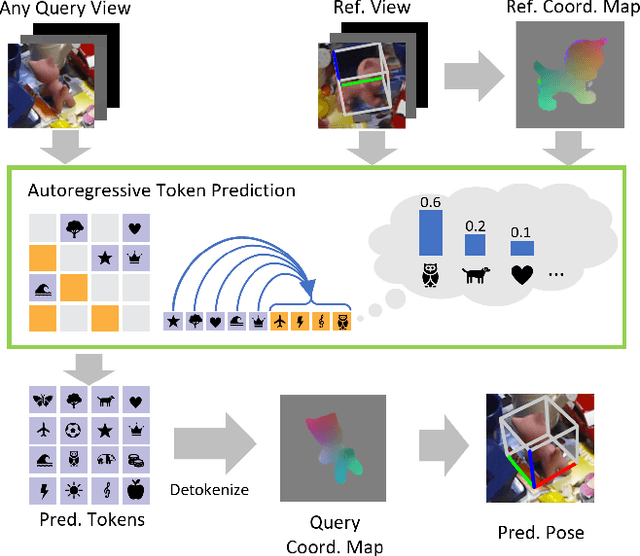
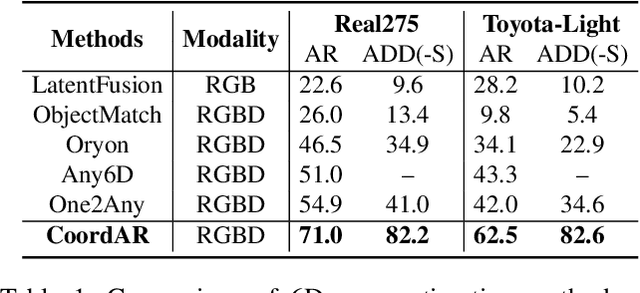
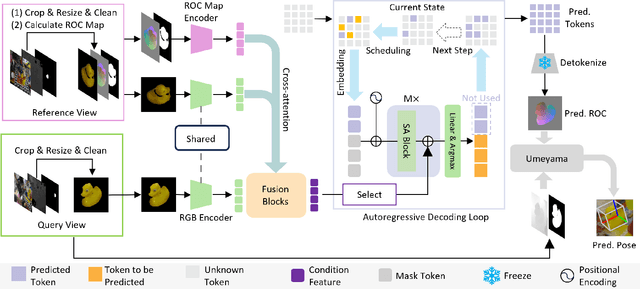
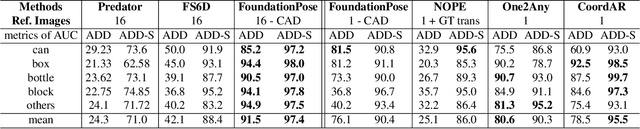
Object 6D pose estimation, a crucial task for robotics and augmented reality applications, becomes particularly challenging when dealing with novel objects whose 3D models are not readily available. To reduce dependency on 3D models, recent studies have explored one-reference-based pose estimation, which requires only a single reference view instead of a complete 3D model. However, existing methods that rely on real-valued coordinate regression suffer from limited global consistency due to the local nature of convolutional architectures and face challenges in symmetric or occluded scenarios owing to a lack of uncertainty modeling. We present CoordAR, a novel autoregressive framework for one-reference 6D pose estimation of unseen objects. CoordAR formulates 3D-3D correspondences between the reference and query views as a map of discrete tokens, which is obtained in an autoregressive and probabilistic manner. To enable accurate correspondence regression, CoordAR introduces 1) a novel coordinate map tokenization that enables probabilistic prediction over discretized 3D space; 2) a modality-decoupled encoding strategy that separately encodes RGB appearance and coordinate cues; and 3) an autoregressive transformer decoder conditioned on both position-aligned query features and the partially generated token sequence. With these novel mechanisms, CoordAR significantly outperforms existing methods on multiple benchmarks and demonstrates strong robustness to symmetry, occlusion, and other challenges in real-world tests.
Did Models Sufficient Learn? Attribution-Guided Training via Subset-Selected Counterfactual Augmentation
Nov 15, 2025In current visual model training, models often rely on only limited sufficient causes for their predictions, which makes them sensitive to distribution shifts or the absence of key features. Attribution methods can accurately identify a model's critical regions. However, masking these areas to create counterfactuals often causes the model to misclassify the target, while humans can still easily recognize it. This divergence highlights that the model's learned dependencies may not be sufficiently causal. To address this issue, we propose Subset-Selected Counterfactual Augmentation (SS-CA), which integrates counterfactual explanations directly into the training process for targeted intervention. Building on the subset-selection-based LIMA attribution method, we develop Counterfactual LIMA to identify minimal spatial region sets whose removal can selectively alter model predictions. Leveraging these attributions, we introduce a data augmentation strategy that replaces the identified regions with natural background, and we train the model jointly on both augmented and original samples to mitigate incomplete causal learning. Extensive experiments across multiple ImageNet variants show that SS-CA improves generalization on in-distribution (ID) test data and achieves superior performance on out-of-distribution (OOD) benchmarks such as ImageNet-R and ImageNet-S. Under perturbations including noise, models trained with SS-CA also exhibit enhanced generalization, demonstrating that our approach effectively uses interpretability insights to correct model deficiencies and improve both performance and robustness.
MPCGNet: A Multiscale Feature Extraction and Progressive Feature Aggregation Network Using Coupling Gates for Polyp Segmentation
Nov 14, 2025Automatic segmentation methods of polyps is crucial for assisting doctors in colorectal polyp screening and cancer diagnosis. Despite the progress made by existing methods, polyp segmentation faces several challenges: (1) small-sized polyps are prone to being missed during identification, (2) the boundaries between polyps and the surrounding environment are often ambiguous, (3) noise in colonoscopy images, caused by uneven lighting and other factors, affects segmentation results. To address these challenges, this paper introduces coupling gates as components in specific modules to filter noise and perform feature importance selection. Three modules are proposed: the coupling gates multiscale feature extraction (CGMFE) module, which effectively extracts local features and suppresses noise; the windows cross attention (WCAD) decoder module, which restores details after capturing the precise location of polyps; and the decoder feature aggregation (DFA) module, which progressively aggregates features, further extracts them, and performs feature importance selection to reduce the loss of small-sized polyps. Experimental results demonstrate that MPCGNet outperforms recent networks, with mDice scores 2.20% and 0.68% higher than the second-best network on the ETIS-LaribPolypDB and CVC-ColonDB datasets, respectively.