 Add to Chrome
 Add to Firefox
 Add to Edge
Did Models Sufficient Learn? Attribution-Guided Training via Subset-Selected Counterfactual Augmentation
Nov 15, 2025
In current visual model training, models often rely on only limited sufficient causes for their predictions, which makes them sensitive to distribution shifts or the absence of key features. Attribution methods can accurately identify a model's critical regions. However, masking these areas to create counterfactuals often causes the model to misclassify the target, while humans can still easily recognize it. This divergence highlights that the model's learned dependencies may not be sufficiently causal. To address this issue, we propose Subset-Selected Counterfactual Augmentation (SS-CA), which integrates counterfactual explanations directly into the training process for targeted intervention. Building on the subset-selection-based LIMA attribution method, we develop Counterfactual LIMA to identify minimal spatial region sets whose removal can selectively alter model predictions. Leveraging these attributions, we introduce a data augmentation strategy that replaces the identified regions with natural background, and we train the model jointly on both augmented and original samples to mitigate incomplete causal learning. Extensive experiments across multiple ImageNet variants show that SS-CA improves generalization on in-distribution (ID) test data and achieves superior performance on out-of-distribution (OOD) benchmarks such as ImageNet-R and ImageNet-S. Under perturbations including noise, models trained with SS-CA also exhibit enhanced generalization, demonstrating that our approach effectively uses interpretability insights to correct model deficiencies and improve both performance and robustness.

Compressed Sensing based Detection Schemes for Differential Spatial Modulation in Visible Light Communication Systems
Sep 10, 2024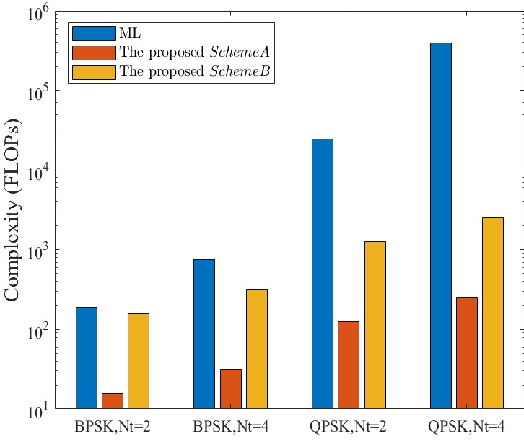
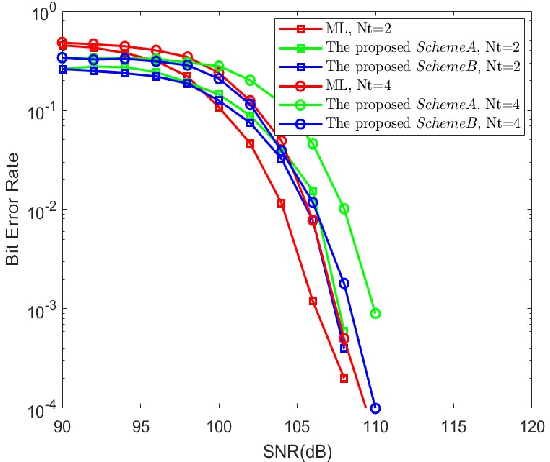
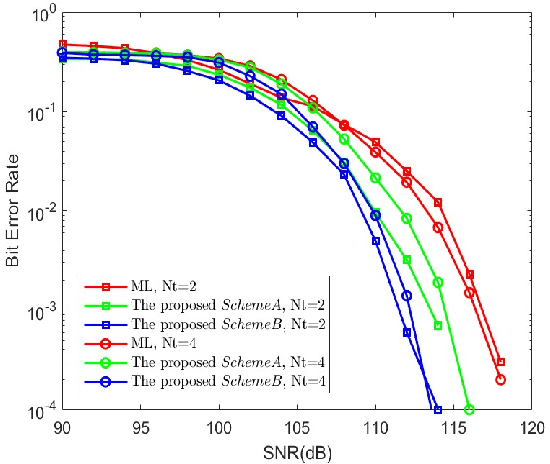
Differential spatial modulation (DSM) exploits the time dimension to facilitate the differential modulation, which can perfectly avoid the challenge in acquiring of heavily entangled channel state information of visible light communication (VLC) system. However, it has huge search space and high complexity for large number of transmitters. In this paper, a novel vector correction (VC)-based orthogonal matching pursuit (OMP) detection algorithm is proposed to reduce the complexity, which exploits the sparsity and relativity of all transmitters, and then employs a novel correction criterion by correcting the index vectors of the error estimation for improving the demodulation performance. To overcome the local optimum dilemma in the atoms searching, an OMP-assisted genetic algorithm is also proposed to further improve the bit error rate (BER) performance of the VLC-DSM system. Simulation results demonstrate that the proposed schemes can significantly reduce the computational complexity at least by 62.5% while achieving an excellent BER performance as compared with traditional maximum likelihood based receiver.