 Add to Chrome
 Add to Firefox
 Add to Edge
Stochastic Bridges as Effective Regularizers for Parameter-Efficient Tuning
May 28, 2023
Parameter-efficient tuning methods (PETs) have achieved promising results in tuning large pre-trained language models (PLMs). By formalizing frozen PLMs and additional tunable parameters as systems and controls respectively, PETs can be theoretically grounded to optimal control and further viewed as optimizing the terminal cost and running cost in the optimal control literature. Despite the elegance of this theoretical grounding, in practice, existing PETs often ignore the running cost and only optimize the terminal cost, i.e., focus on optimizing the loss function of the output state, regardless of the running cost that depends on the intermediate states. Since it is non-trivial to directly model the intermediate states and design a running cost function, we propose to use latent stochastic bridges to regularize the intermediate states and use the regularization as the running cost of PETs. As the first work to propose regularized PETs that use stochastic bridges as the regularizers (running costs) for the intermediate states, we show the effectiveness and generality of this regularization across different tasks, PLMs and PETs. In view of the great potential and capacity, we believe more sophisticated regularizers can be designed for PETs and better performance can be achieved in the future. The code is released at \url{https://github.com/thunlp/stochastic-bridge-pet/tree/main}.

Emergent Modularity in Pre-trained Transformers
May 28, 2023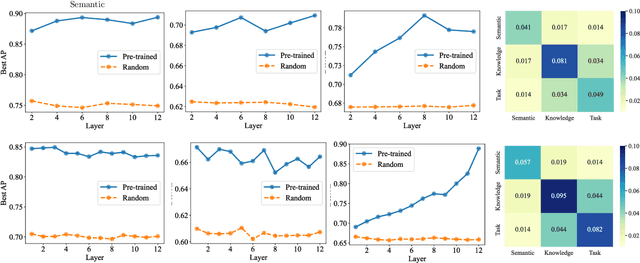
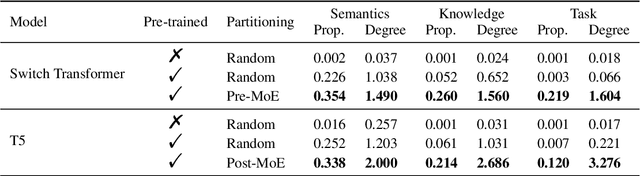
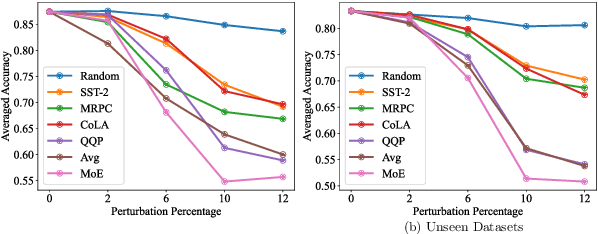
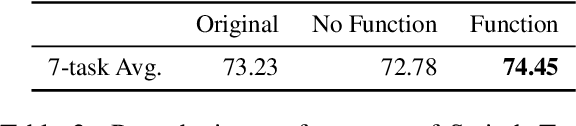
This work examines the presence of modularity in pre-trained Transformers, a feature commonly found in human brains and thought to be vital for general intelligence. In analogy to human brains, we consider two main characteristics of modularity: (1) functional specialization of neurons: we evaluate whether each neuron is mainly specialized in a certain function, and find that the answer is yes. (2) function-based neuron grouping: we explore finding a structure that groups neurons into modules by function, and each module works for its corresponding function. Given the enormous amount of possible structures, we focus on Mixture-of-Experts as a promising candidate, which partitions neurons into experts and usually activates different experts for different inputs. Experimental results show that there are functional experts, where clustered are the neurons specialized in a certain function. Moreover, perturbing the activations of functional experts significantly affects the corresponding function. Finally, we study how modularity emerges during pre-training, and find that the modular structure is stabilized at the early stage, which is faster than neuron stabilization. It suggests that Transformers first construct the modular structure and then learn fine-grained neuron functions. Our code and data are available at https://github.com/THUNLP/modularity-analysis.
Plug-and-Play Knowledge Injection for Pre-trained Language Models
May 28, 2023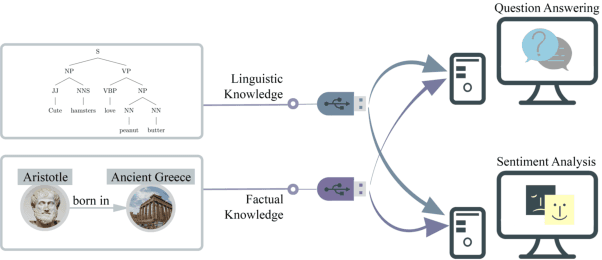
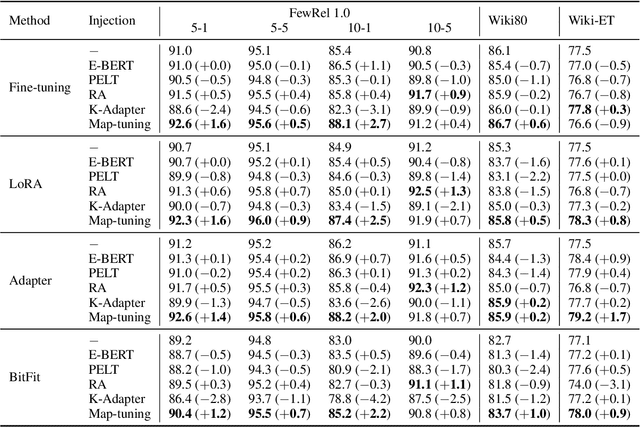

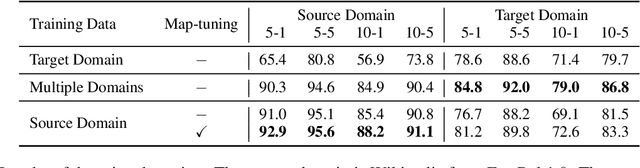
Injecting external knowledge can improve the performance of pre-trained language models (PLMs) on various downstream NLP tasks. However, massive retraining is required to deploy new knowledge injection methods or knowledge bases for downstream tasks. In this work, we are the first to study how to improve the flexibility and efficiency of knowledge injection by reusing existing downstream models. To this end, we explore a new paradigm plug-and-play knowledge injection, where knowledge bases are injected into frozen existing downstream models by a knowledge plugin. Correspondingly, we propose a plug-and-play injection method map-tuning, which trains a mapping of knowledge embeddings to enrich model inputs with mapped embeddings while keeping model parameters frozen. Experimental results on three knowledge-driven NLP tasks show that existing injection methods are not suitable for the new paradigm, while map-tuning effectively improves the performance of downstream models. Moreover, we show that a frozen downstream model can be well adapted to different domains with different mapping networks of domain knowledge. Our code and models are available at https://github.com/THUNLP/Knowledge-Plugin.
Personality Understanding of Fictional Characters during Book Reading
May 26, 2023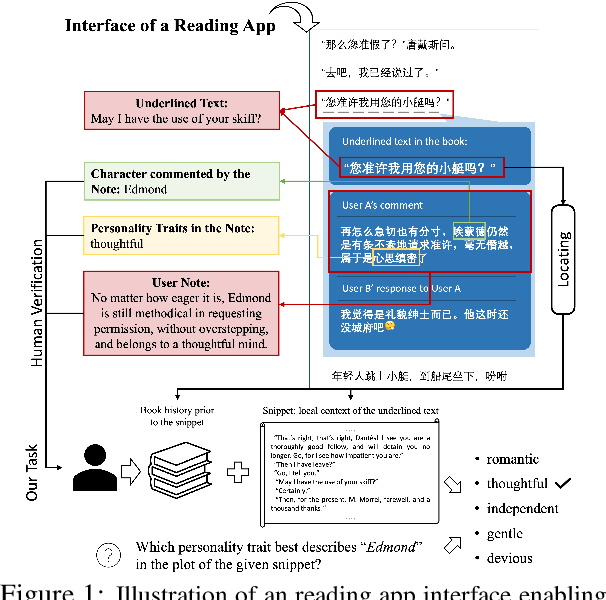
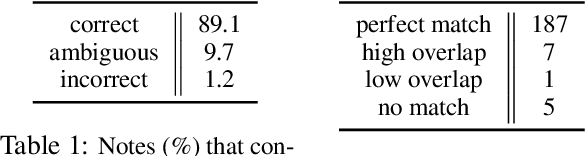
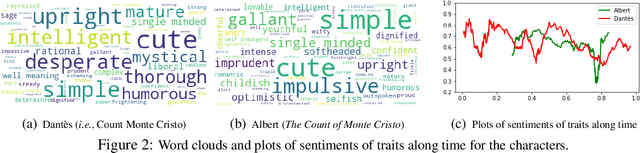
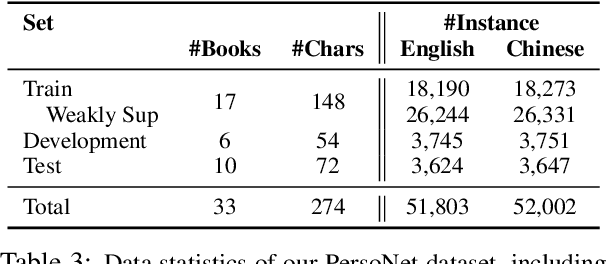
Comprehending characters' personalities is a crucial aspect of story reading. As readers engage with a story, their understanding of a character evolves based on new events and information; and multiple fine-grained aspects of personalities can be perceived. This leads to a natural problem of situated and fine-grained personality understanding. The problem has not been studied in the NLP field, primarily due to the lack of appropriate datasets mimicking the process of book reading. We present the first labeled dataset PersoNet for this problem. Our novel annotation strategy involves annotating user notes from online reading apps as a proxy for the original books. Experiments and human studies indicate that our dataset construction is both efficient and accurate; and our task heavily relies on long-term context to achieve accurate predictions for both machines and humans. The dataset is available at https://github.com/Gorov/personet_acl23.
VisionLLM: Large Language Model is also an Open-Ended Decoder for Vision-Centric Tasks
May 25, 2023
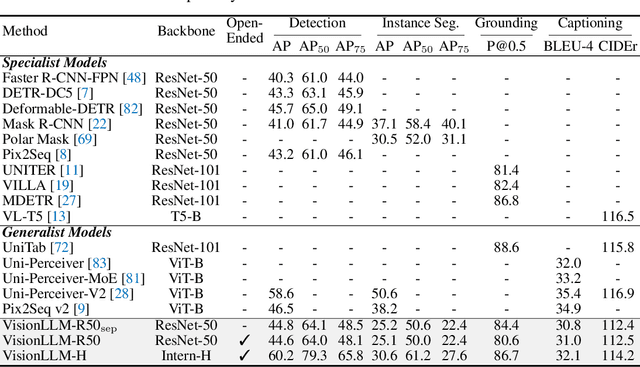


Large language models (LLMs) have notably accelerated progress towards artificial general intelligence (AGI), with their impressive zero-shot capacity for user-tailored tasks, endowing them with immense potential across a range of applications. However, in the field of computer vision, despite the availability of numerous powerful vision foundation models (VFMs), they are still restricted to tasks in a pre-defined form, struggling to match the open-ended task capabilities of LLMs. In this work, we present an LLM-based framework for vision-centric tasks, termed VisionLLM. This framework provides a unified perspective for vision and language tasks by treating images as a foreign language and aligning vision-centric tasks with language tasks that can be flexibly defined and managed using language instructions. An LLM-based decoder can then make appropriate predictions based on these instructions for open-ended tasks. Extensive experiments show that the proposed VisionLLM can achieve different levels of task customization through language instructions, from fine-grained object-level to coarse-grained task-level customization, all with good results. It's noteworthy that, with a generalist LLM-based framework, our model can achieve over 60\% mAP on COCO, on par with detection-specific models. We hope this model can set a new baseline for generalist vision and language models. The demo shall be released based on https://github.com/OpenGVLab/InternGPT. The code shall be released at https://github.com/OpenGVLab/VisionLLM.
WebCPM: Interactive Web Search for Chinese Long-form Question Answering
May 23, 2023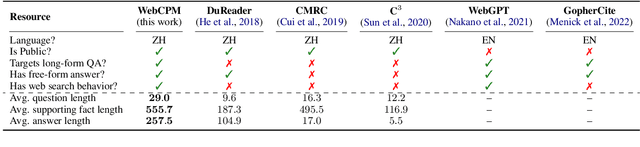
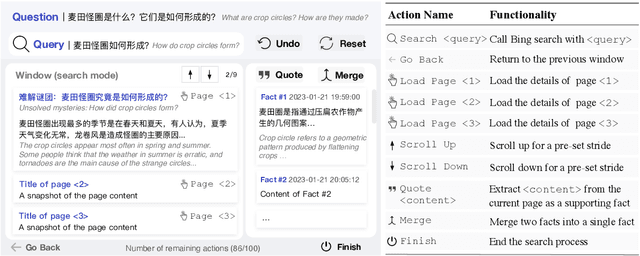
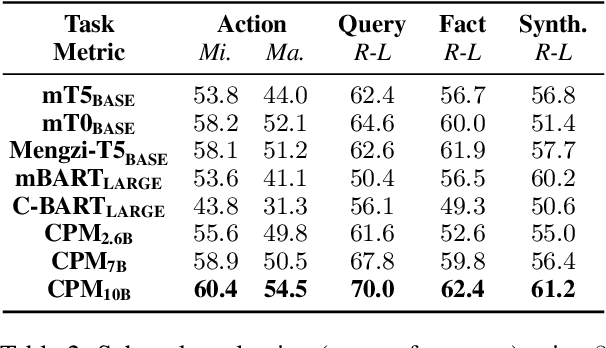
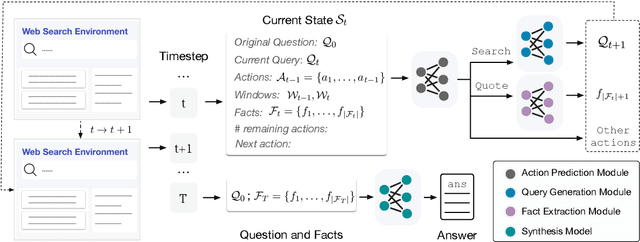
Long-form question answering (LFQA) aims at answering complex, open-ended questions with detailed, paragraph-length responses. The de facto paradigm of LFQA necessitates two procedures: information retrieval, which searches for relevant supporting facts, and information synthesis, which integrates these facts into a coherent answer. In this paper, we introduce WebCPM, the first Chinese LFQA dataset. One unique feature of WebCPM is that its information retrieval is based on interactive web search, which engages with a search engine in real time. Following WebGPT, we develop a web search interface. We recruit annotators to search for relevant information using our interface and then answer questions. Meanwhile, the web search behaviors of our annotators would be recorded. In total, we collect 5,500 high-quality question-answer pairs, together with 14,315 supporting facts and 121,330 web search actions. We fine-tune pre-trained language models to imitate human behaviors for web search and to generate answers based on the collected facts. Our LFQA pipeline, built on these fine-tuned models, generates answers that are no worse than human-written ones in 32.5% and 47.5% of the cases on our dataset and DuReader, respectively.
Label Words are Anchors: An Information Flow Perspective for Understanding In-Context Learning
May 23, 2023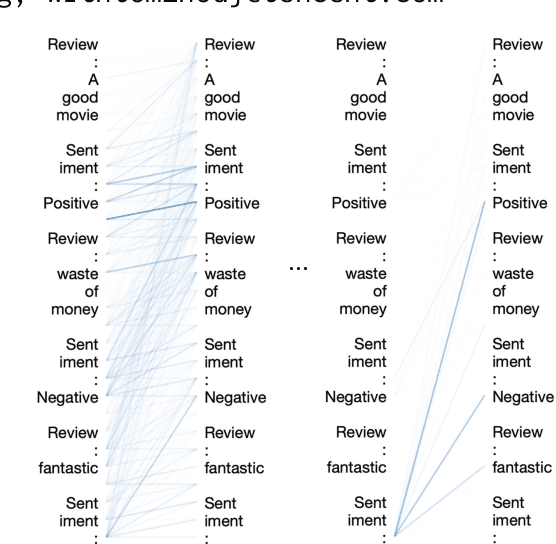
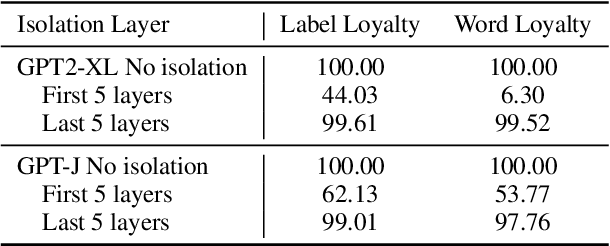
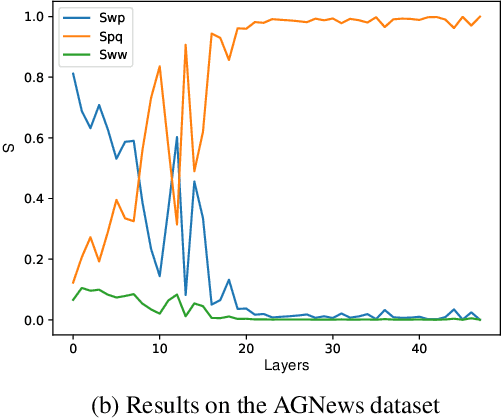

In-context learning (ICL) emerges as a promising capability of large language models (LLMs) by providing them with demonstration examples to perform diverse tasks. However, the underlying mechanism of how LLMs learn from the provided context remains under-explored. In this paper, we investigate the working mechanism of ICL through an information flow lens. Our findings reveal that label words in the demonstration examples function as anchors: (1) semantic information aggregates into label word representations during the shallow computation layers' processing; (2) the consolidated information in label words serves as a reference for LLMs' final predictions. Based on these insights, we introduce an anchor re-weighting method to improve ICL performance, a demonstration compression technique to expedite inference, and an analysis framework for diagnosing ICL errors in GPT2-XL. The promising applications of our findings again validate the uncovered ICL working mechanism and pave the way for future studies.
Farewell to Aimless Large-scale Pretraining: Influential Subset Selection for Language Model
May 22, 2023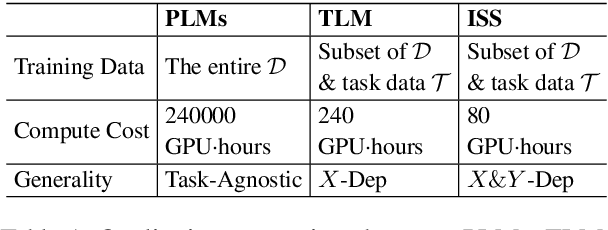
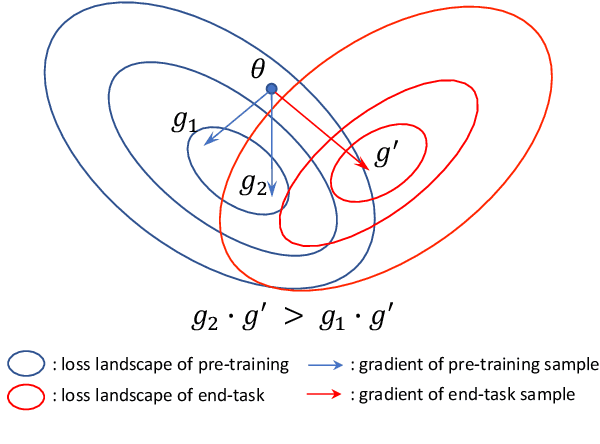
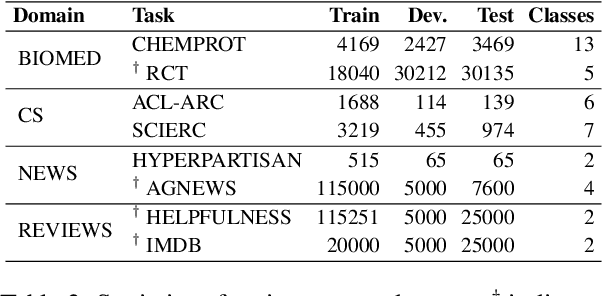
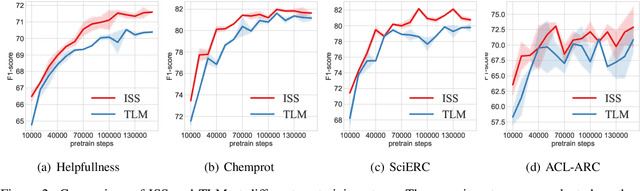
Pretrained language models have achieved remarkable success in various natural language processing tasks. However, pretraining has recently shifted toward larger models and larger data, and this has resulted in significant computational and energy costs. In this paper, we propose Influence Subset Selection (ISS) for language model, which explicitly utilizes end-task knowledge to select a tiny subset of the pretraining corpus. Specifically, the ISS selects the samples that will provide the most positive influence on the performance of the end-task. Furthermore, we design a gradient matching based influence estimation method, which can drastically reduce the computation time of influence. With only 0.45% of the data and a three-orders-of-magnitude lower computational cost, ISS outperformed pretrained models (e.g., RoBERTa) on eight datasets covering four domains.
D$^2$TV: Dual Knowledge Distillation and Target-oriented Vision Modeling for Many-to-Many Multimodal Summarization
May 22, 2023Many-to-many multimodal summarization (M$^3$S) task aims to generate summaries in any language with document inputs in any language and the corresponding image sequence, which essentially comprises multimodal monolingual summarization (MMS) and multimodal cross-lingual summarization (MXLS) tasks. Although much work has been devoted to either MMS or MXLS and has obtained increasing attention in recent years, little research pays attention to the M$^3$S task. Besides, existing studies mainly focus on 1) utilizing MMS to enhance MXLS via knowledge distillation without considering the performance of MMS or 2) improving MMS models by filtering summary-unrelated visual features with implicit learning or explicitly complex training objectives. In this paper, we first introduce a general and practical task, i.e., M$^3$S. Further, we propose a dual knowledge distillation and target-oriented vision modeling framework for the M$^3$S task. Specifically, the dual knowledge distillation method guarantees that the knowledge of MMS and MXLS can be transferred to each other and thus mutually prompt both of them. To offer target-oriented visual features, a simple yet effective target-oriented contrastive objective is designed and responsible for discarding needless visual information. Extensive experiments on the many-to-many setting show the effectiveness of the proposed approach. Additionally, we will contribute a many-to-many multimodal summarization (M$^3$Sum) dataset.
A Confidence-based Partial Label Learning Model for Crowd-Annotated Named Entity Recognition
May 21, 2023Existing models for named entity recognition (NER) are mainly based on large-scale labeled datasets, which always obtain using crowdsourcing. However, it is hard to obtain a unified and correct label via majority voting from multiple annotators for NER due to the large labeling space and complexity of this task. To address this problem, we aim to utilize the original multi-annotator labels directly. Particularly, we propose a Confidence-based Partial Label Learning (CPLL) method to integrate the prior confidence (given by annotators) and posterior confidences (learned by models) for crowd-annotated NER. This model learns a token- and content-dependent confidence via an Expectation-Maximization (EM) algorithm by minimizing empirical risk. The true posterior estimator and confidence estimator perform iteratively to update the true posterior and confidence respectively. We conduct extensive experimental results on both real-world and synthetic datasets, which show that our model can improve performance effectively compared with strong baselines.