 Add to Chrome
 Add to Firefox
 Add to Edge
Timestep Rescheduling in Diffusion Inversion
Jun 13, 2026
Diffusion inversion, which maps images back to the Gaussian latent space of a diffusion model, is a critical task for image reconstruction and editing. While DDIM enables fast deterministic inversion, it inherently introduces deviations that accumulate into noticeable inversion errors. Existing methods often address this by solving a fixed-point problem but largely overlook how the selection of the diffusion timestep in the noise scheduler influences inversion fidelity. In this work, we reveal that the deviation scale in diffusion inversion is strongly dependent on the timestep size, and exhibits a parabolic trend, with larger errors concentrated at both small and large timesteps. Based on this finding, we propose a simple yet effective nonuniform timestep scheduler that integrates a global rescaling with a local dynamic programming based rescheduling, enabling a strategic allocation of computational effort that minimizes the overall inversion error and preserves higher inversion accuracy. Our method serves as an off-the-shelf enhancement for existing inversion techniques and requires no extra parameters or computational overhead. Through extensive experiments, we verify that integrating our scheduler consistently boosts the performance of existing inversion methods, achieving superior results in image reconstruction and editing.

Adversarial Attacks Already Tell the Answer: Directional Bias-Guided Test-time Defense for Vision-Language Models
Jun 04, 2026Vision-Language Models (VLMs), such as CLIP, have shown strong zero-shot generalization but remain highly vulnerable to adversarial perturbations, posing serious risks in real-world applications. Test-time defenses for VLMs have recently emerged as a promising and efficient approach to defend against adversarial attacks without requiring costly large-scale retraining. In this work, we uncover a surprising phenomenon: under diverse input transformations, adversarial images in CLIP's feature space consistently shift along a dominant direction, in contrast to the dispersed patterns of clean images. We hypothesize that this dominant shift, termed the Defense Direction, opposes the adversarial shift, pointing features back toward their correct class centers. Building on this insight, we propose Directional Bias-guided Defense (DBD), a test-time framework that estimates the Defense Direction and employs a DB-score-based two-stream reconstruction strategy to recover robust representations. Experiments on 15 datasets demonstrate that DBD not only achieves SOTA adversarial robustness while preserving clean accuracy, but also reveals the counterintuitive result that adversarial accuracy can even surpass clean accuracy. This demonstrates that adversarial perturbations inherently encode directional priors about the true decision boundary.
NeuroFlow: Toward Unified Visual Encoding and Decoding from Neural Activity
Apr 10, 2026Visual encoding and decoding models act as gateways to understanding the neural mechanisms underlying human visual perception. Typically, visual encoding models that predict brain activity from stimuli and decoding models that reproduce stimuli from brain activity are treated as distinct tasks, requiring separate models and training procedures. This separation is inefficient and fails to model the consistency between encoding and decoding processes. To address this limitation, we propose NeuroFlow, the first unified framework that jointly models visual encoding and decoding from neural activity within a single flow model. NeuroFlow introduces two key components: (1) NeuroVAE is designed as a variational backbone to model neural variability and establish a compact, semantically structured latent space for bidirectional modeling across visual and neural modalities. (2) Cross-modal Flow Matching (XFM) bypasses the typical paradigm of noise-to-data diffusion guided by a specific modality condition, instead learning a reversibly consistent flow model between visual and neural latent distributions. For the first time, visual encoding and decoding are reformulated as a time-dependent, reversible process within a shared latent space for unified modeling. Empirical results demonstrate that NeuroFlow achieves superior overall performance in visual encoding and decoding tasks with higher computational efficiency compared to any isolated methods. We further analyze principal factors that steer the model toward encoding-decoding consistency and, through brain functional analyses, demonstrate that NeuroFlow captures consistent activation patterns underlying neural variability. NeuroFlow marks a major step toward unified visual encoding and decoding from neural activity, providing mechanistic insights that inform future bidirectional visual brain-computer interfaces.
Modeling of Human Body-coupled Electric Field Interference in Unshielded Ultra-Low Field MRI
Feb 25, 2026Portable ultra-low field MRI (ULF-MRI) systems operated in unshielded environments are susceptible to electromagnetic interference (EMI). Subject presence in the imaging region will lead to substantial noise increases, yet the dominant coupling mechanism remains insufficiently characterized. We develop a lumped-parameter circuit model of the coupled environment-body-receiver system. The model indicates that ambient time-varying electric fields induce a body common-mode potential, which is converted into differential-mode noise through capacitive imbalance between the head and the receive-coil terminals, yielding strong dependence on subject position and geometry. Circuit analysis, simulations, and controlled experiments support the model, with predicted imbalance consistent with measured noise variations. Guided by this mechanism, we implement a capacitive low-impedance bypass to clamp the body potential, achieving an approximately 3.5-fold SNR improvement on a 50 mT prototype. The proposed model offers a compact circuit-based tool for analyzing and mitigating human body-coupled electric-field interference in portable ULF-MRI.
Deeper detection limits in astronomical imaging using self-supervised spatiotemporal denoising
Feb 19, 2026The detection limit of astronomical imaging observations is limited by several noise sources. Some of that noise is correlated between neighbouring image pixels and exposures, so in principle could be learned and corrected. We present an astronomical self-supervised transformer-based denoising algorithm (ASTERIS), that integrates spatiotemporal information across multiple exposures. Benchmarking on mock data indicates that ASTERIS improves detection limits by 1.0 magnitude at 90% completeness and purity, while preserving the point spread function and photometric accuracy. Observational validation using data from the James Webb Space Telescope (JWST) and Subaru telescope identifies previously undetectable features, including low-surface-brightness galaxy structures and gravitationally-lensed arcs. Applied to deep JWST images, ASTERIS identifies three times more redshift > 9 galaxy candidates, with rest-frame ultraviolet luminosity 1.0 magnitude fainter, than previous methods.
InternAgent-1.5: A Unified Agentic Framework for Long-Horizon Autonomous Scientific Discovery
Feb 09, 2026We introduce InternAgent-1.5, a unified system designed for end-to-end scientific discovery across computational and empirical domains. The system is built on a structured architecture composed of three coordinated subsystems for generation, verification, and evolution. These subsystems are supported by foundational capabilities for deep research, solution optimization, and long horizon memory. The architecture allows InternAgent-1.5 to operate continuously across extended discovery cycles while maintaining coherent and improving behavior. It also enables the system to coordinate computational modeling and laboratory experimentation within a single unified system. We evaluate InternAgent-1.5 on scientific reasoning benchmarks such as GAIA, HLE, GPQA, and FrontierScience, and the system achieves leading performance that demonstrates strong foundational capabilities. Beyond these benchmarks, we further assess two categories of discovery tasks. In algorithm discovery tasks, InternAgent-1.5 autonomously designs competitive methods for core machine learning problems. In empirical discovery tasks, it executes complete computational or wet lab experiments and produces scientific findings in earth, life, biological, and physical domains. Overall, these results show that InternAgent-1.5 provides a general and scalable framework for autonomous scientific discovery.
Probing Scientific General Intelligence of LLMs with Scientist-Aligned Workflows
Dec 18, 2025Despite advances in scientific AI, a coherent framework for Scientific General Intelligence (SGI)-the ability to autonomously conceive, investigate, and reason across scientific domains-remains lacking. We present an operational SGI definition grounded in the Practical Inquiry Model (PIM: Deliberation, Conception, Action, Perception) and operationalize it via four scientist-aligned tasks: deep research, idea generation, dry/wet experiments, and experimental reasoning. SGI-Bench comprises over 1,000 expert-curated, cross-disciplinary samples inspired by Science's 125 Big Questions, enabling systematic evaluation of state-of-the-art LLMs. Results reveal gaps: low exact match (10--20%) in deep research despite step-level alignment; ideas lacking feasibility and detail; high code executability but low execution result accuracy in dry experiments; low sequence fidelity in wet protocols; and persistent multimodal comparative-reasoning challenges. We further introduce Test-Time Reinforcement Learning (TTRL), which optimizes retrieval-augmented novelty rewards at inference, enhancing hypothesis novelty without reference answer. Together, our PIM-grounded definition, workflow-centric benchmark, and empirical insights establish a foundation for AI systems that genuinely participate in scientific discovery.
ViRC: Enhancing Visual Interleaved Mathematical CoT with Reason Chunking
Dec 17, 2025CoT has significantly enhanced the reasoning ability of LLMs while it faces challenges when extended to multimodal domains, particularly in mathematical tasks. Existing MLLMs typically perform textual reasoning solely from a single static mathematical image, overlooking dynamic visual acquisition during reasoning. In contrast, humans repeatedly examine visual image and employ step-by-step reasoning to prove intermediate propositions. This strategy of decomposing the problem-solving process into key logical nodes adheres to Miller's Law in cognitive science. Inspired by this insight, we propose a ViRC framework for multimodal mathematical tasks, introducing a Reason Chunking mechanism that structures multimodal mathematical CoT into consecutive Critical Reasoning Units (CRUs) to simulate human expert problem-solving patterns. CRUs ensure intra-unit textual coherence for intermediate proposition verification while integrating visual information across units to generate subsequent propositions and support structured reasoning. To this end, we present CRUX dataset by using three visual tools and four reasoning patterns to provide explicitly annotated CRUs across multiple reasoning paths for each mathematical problem. Leveraging the CRUX dataset, we propose a progressive training strategy inspired by human cognitive learning, which includes Instructional SFT, Practice SFT, and Strategic RL, aimed at further strengthening the Reason Chunking ability of the model. The resulting ViRC-7B model achieves a 18.8% average improvement over baselines across multiple mathematical benchmarks. Code is available at https://github.com/Leon-LihongWang/ViRC.
EReLiFM: Evidential Reliability-Aware Residual Flow Meta-Learning for Open-Set Domain Generalization under Noisy Labels
Oct 14, 2025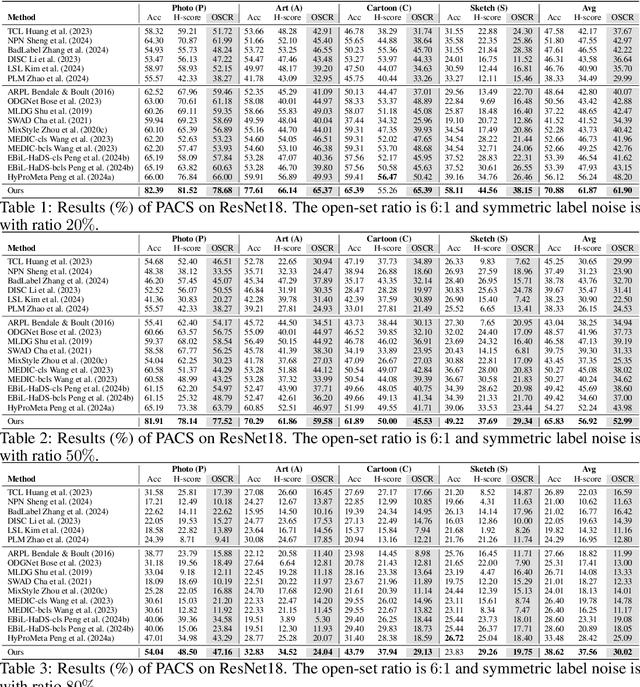
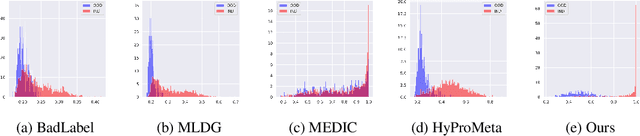
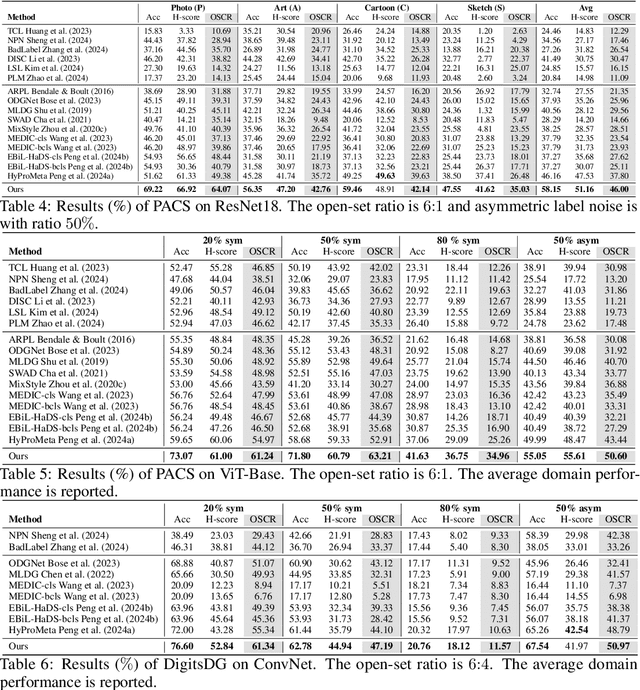
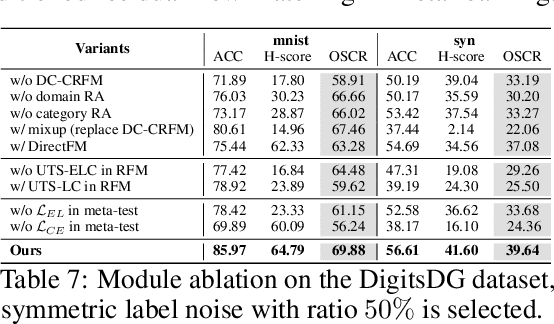
Open-Set Domain Generalization (OSDG) aims to enable deep learning models to recognize unseen categories in new domains, which is crucial for real-world applications. Label noise hinders open-set domain generalization by corrupting source-domain knowledge, making it harder to recognize known classes and reject unseen ones. While existing methods address OSDG under Noisy Labels (OSDG-NL) using hyperbolic prototype-guided meta-learning, they struggle to bridge domain gaps, especially with limited clean labeled data. In this paper, we propose Evidential Reliability-Aware Residual Flow Meta-Learning (EReLiFM). We first introduce an unsupervised two-stage evidential loss clustering method to promote label reliability awareness. Then, we propose a residual flow matching mechanism that models structured domain- and category-conditioned residuals, enabling diverse and uncertainty-aware transfer paths beyond interpolation-based augmentation. During this meta-learning process, the model is optimized such that the update direction on the clean set maximizes the loss decrease on the noisy set, using pseudo labels derived from the most confident predicted class for supervision. Experimental results show that EReLiFM outperforms existing methods on OSDG-NL, achieving state-of-the-art performance. The source code is available at https://github.com/KPeng9510/ERELIFM.
A Survey of Scientific Large Language Models: From Data Foundations to Agent Frontiers
Aug 28, 2025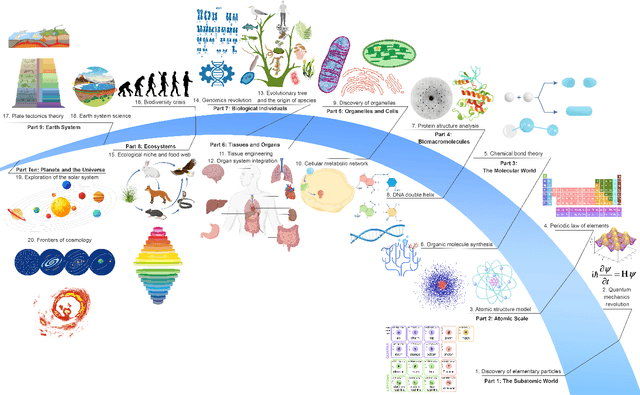
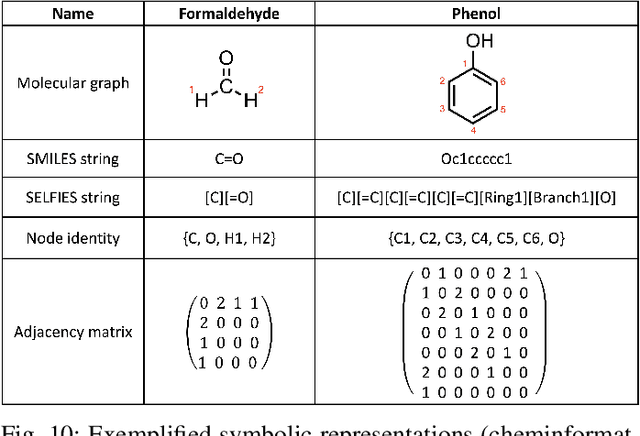
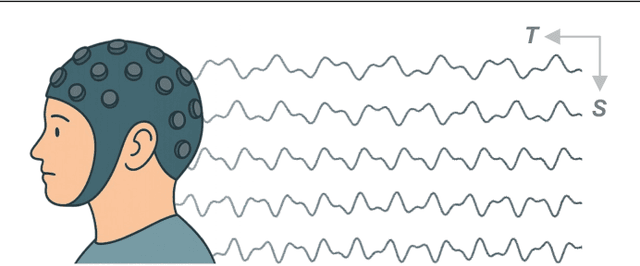
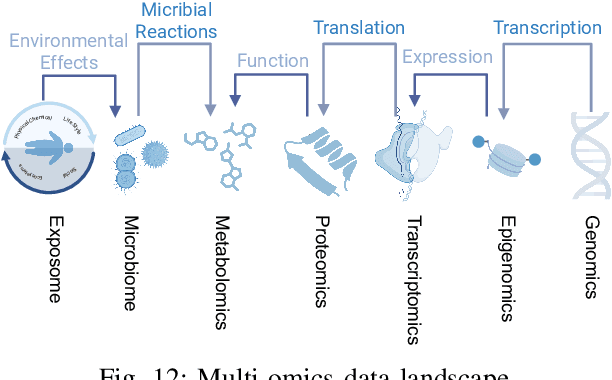
Scientific Large Language Models (Sci-LLMs) are transforming how knowledge is represented, integrated, and applied in scientific research, yet their progress is shaped by the complex nature of scientific data. This survey presents a comprehensive, data-centric synthesis that reframes the development of Sci-LLMs as a co-evolution between models and their underlying data substrate. We formulate a unified taxonomy of scientific data and a hierarchical model of scientific knowledge, emphasizing the multimodal, cross-scale, and domain-specific challenges that differentiate scientific corpora from general natural language processing datasets. We systematically review recent Sci-LLMs, from general-purpose foundations to specialized models across diverse scientific disciplines, alongside an extensive analysis of over 270 pre-/post-training datasets, showing why Sci-LLMs pose distinct demands -- heterogeneous, multi-scale, uncertainty-laden corpora that require representations preserving domain invariance and enabling cross-modal reasoning. On evaluation, we examine over 190 benchmark datasets and trace a shift from static exams toward process- and discovery-oriented assessments with advanced evaluation protocols. These data-centric analyses highlight persistent issues in scientific data development and discuss emerging solutions involving semi-automated annotation pipelines and expert validation. Finally, we outline a paradigm shift toward closed-loop systems where autonomous agents based on Sci-LLMs actively experiment, validate, and contribute to a living, evolving knowledge base. Collectively, this work provides a roadmap for building trustworthy, continually evolving artificial intelligence (AI) systems that function as a true partner in accelerating scientific discovery.