 Add to Chrome
 Add to Firefox
 Add to Edge
Intern-S2-Preview: Scientific Agentic Foundation Model
Aug 13, 2026
Scientific discovery increasingly requires AI systems that can reason over scientific evidence of heterogeneous modalities, interact with scientific tools and environments, and sustain progress across long task horizons. We present Intern-S2-Preview, a series of scientific agentic foundation models designed to support multimodal scientific understanding, reasoning, generation, and long-horizon tasks. The training pipeline begins with scientific multimodal pre-training over rendered scientific documents, interleaved image-text data, and diverse scientific corpora. Starting from the pretrained checkpoint, we apply a unified post-training pipeline consisting of supervised fine-tuning, scalable multi-task reinforcement learning (RL), black- and white-box agentic RL, and on-policy distillation. This pipeline is supported by practical techniques that improve rollout and training stability and efficiency, including partial rollout with off-policy correction, adaptive length regularization, online speculative decoding, robust multi-task optimization, and trace-aware experience assembly for agentic tasks. At the architecture level, Intern-S2-Preview-397B extends time series modelling from efficient long-sequence understanding to numerical forecasting, while Memory Decoder is studied as a separate memory-augmented path for rapid scientific specialization without modifying the frozen 397B backbone. Evaluations across scientific, multimodal, agentic, and general-purpose benchmarks show that Intern-S2-Preview-397B achieves competitive or leading results in multiple settings. The time series modules improve scientific signal understanding and forecasting on SciTS, while the separate Intern-MemDec-4B extension improves the Biology-Instructions average score from 56.92 to 60.32 without modifying the frozen 397B backbone.

Towards Physics-Faithful Generation of Scientific Diagrams
Aug 13, 2026Text-to-image generation has reached photorealistic quality, yet state-of-the-art systems remain unreliable at producing scientific diagrams, whose value depends not on appearance but on physical faithfulness: correct force directions, valid coordinate systems, consistent thermodynamic states, and equations matching the depicted scenario. Trained on web imagery with physically shallow captions, generic models produce diagrams that look plausible but are physically wrong, harmful in education and scientific communication. We present Princigram, a physics-faithful scientific-diagram generator, and its data pipeline. Our central advance is Structured Physical Chain-of-Thought (SP-CoT): a per-subdiscipline schema that decomposes a physics diagram into an explicit multi-step reasoning chain across six subdisciplines, from scene identification through force or process analysis to governing laws and synthesis. Unlike free-form chain-of-thought, SP-CoT follows a fixed schema with strict fidelity rules that separate visually grounded facts from physically inferred reasoning and type all mathematics symbolically; it serves both as dense training supervision and, at inference, as a structured "thinking" prompt. With it we curate and structurally annotate 4.3 million physics images, of which 115,037 carry expert-level annotation, and adapt a unified multimodal backbone. We further introduce VeriphyT2IBench, whose questions are derived from each held-out diagram's own structured annotation: each diagram becomes an item-specific bank of binary questions about its objects, forces, and states, so a judge model's score decomposes into named physical facts rather than one holistic number. On the physics subset of GenExam and on VeriphyT2IBench, Princigram shows that explicit physics-structured supervision improves the physical faithfulness of generated scientific diagrams.
Ideas Have Genomes: Benchmarking Scientific Lineage Reasoning and Lineage-Grounded Idea Generation
Jul 09, 2026Scientific ideas rarely start from a blank page. They inherit mechanisms, repair known limitations, and recombine pieces of earlier work, much like biological genomes. Current benchmarks still say little about whether AI systems can follow this inheritance structure. We present IdeaGene-Bench (IG-Bench), a benchmark for scientific lineage reasoning and lineage-grounded idea generation. IG-Bench is organized around the IdeaGene framework: each paper or proposal is represented as a set of minimal, typed, evidence-grounded Idea Genome objects, and a GenomeDiff aligns these objects to record inheritance, mutation, loss, external import, and novel insertion under six operational evolutionary dynamics. The benchmark contains 1,961 golden lineage traces, 1,085 curated Idea Genome objects, and 920 pairwise GenomeDiff records across 10 scientific domains. It supports two evaluations. IG-Exam (42 task types, 1,029 instances) tests closed-form lineage reasoning across Idea Genome abstraction, inheritance tracing, evolutionary reasoning, and lineage verification. IG-Arena evaluates generation with a lineage-conditioned Population-Evolution Score(PES), asking whether a proposal can be inserted as a coherent descendant of a given lineage population: it should inherit the right Idea Genome objects, vary meaningfully from nearby work, and offer selection value for future research. Experiments on 14 LLM-based scientists expose a compositional bottleneck. The strongest system reaches only 27.3% exact accuracy on lineage reasoning, and structured lineage context reshuffles system rankings rather than helping every participant uniformly.
Scaling the Horizon, Not the Parameters: Reaching Trillion-Parameter Performance with a 35B Agent
Jun 29, 2026We introduce Agents-A1, a 35B Mixture-of-Experts Agentic Model that reaches trillion-parameter-level performance by scaling the agent horizon. We investigate agent-horizon scaling from two perspectives: scaling long-horizon trajectories and scaling heterogeneous agent abilities. To support this goal, we build a long-horizon knowledge-action infrastructure that connects external knowledge, actions, observations, and verifier outcomes, producing agentic trajectories with an average length of 45K tokens. Based on this, we train Agents-A1 with a three-stage recipe. First, we perform full-domain supervised fine-tuning to align the base model with broad agentic behaviors. Second, we train domain-level teacher models to capture specialized expertise in each domain. Third, we propose a multi-teacher domain-routed on-policy distillation with salient vocabulary alignment to improve knowledge transfer efficiency across different domains, unifying six heterogeneous domains into one deployable student model. Agents-A1 achieves strong and broad performance for long-horizon agent benchmarks. Compared with 1T-parameter model such as Kimi-K2.6 and DeepSeek-V4-pro, Agents-A1 achieves leading results on SEAL-0 (56.4), IFBench (80.6), HiPhO (46.4), FrontierScience-Olympiad (79.0), and MolBench-Bind (56.8), and remains highly competitive on SciCode (44.3), HLE (47.6) and BrowseComp (75.5). We hope this work provides the community with a practical path for scaling the horizon using a 35B agent that can reach or match the performance of 1T models on long-horizon tasks.
Agents-K1: Towards Agent-native Knowledge Orchestration
Jun 11, 2026Current LLM-based research agents have advanced through agent orchestration, yet largely overlook scientific knowledge orchestration. Existing works often reduce papers to abstracts, surface mentions, and flat \texttt{cites} edges, omitting key entities, claims, evidence, mechanisms, and method lineages essential for scientific reasoning. To this end, we introduce \textbf{Agents-K1}, an end-to-end knowledge orchestration pipeline that converts raw documents into agent-native scientific knowledge graphs. Agents-K1 integrates three components under a unifying theoretical foundation: a multimodal parser whose five-module schema captures entities, multimodal evidence, citations, and typed inter-entity relations across the full paper rather than abstracts alone; a 4B information-extraction backbone trained with GRPO under a rule-based reward; and a graphanything CLI, a tri-source agent interface that unifies web search, multimodal graph retrieval, and cross-document traversal. On top of this, we process 2.46 million scientific papers across six subjects to produce \textbf{Scholar-KG}, of which we release a one-million-paper subset, and the full Scholar-KG is accessible via the SCP link below. The same pipeline can be extended to general-domain corpora and to schema-conformant data synthesis. Extensive experiments demonstrate that Agents-K1 achieves superior performance in scientific information extraction, knowledge graph construction, and multi-hop scientific reasoning.
MLEvolve: A Self-Evolving Framework for Automated Machine Learning Algorithm Discovery
Jun 04, 2026Large language model (LLM) agents are increasingly applied to long-horizon tasks such as scientific discovery and machine learning engineering (MLE), where sustained self-evolution becomes a key capability. However, existing MLE agents suffer from inter-branch information isolation, memoryless search, and lack of hierarchical control, which together hinder long-horizon optimization. We present MLEvolve, an LLM-based self-evolving multi-agent framework for end-to-end machine learning algorithm discovery. By extending tree search to Progressive MCGS, MLEvolve enables cross-branch information flow through graph-based reference edges and gradually shifts the search from broad exploration to focused exploitation with an entropy-inspired progressive schedule. To allow the agent to evolve with accumulated experience, we introduce Retrospective Memory, which combines a cold-start domain knowledge base with a dynamic global memory for task-specific experience retrieval and reuse. For stable long-horizon iteration, we further decouple strategic planning from code generation with adaptive coding modes. Evaluation on MLE-Bench shows that MLEvolve achieves state-of-the-art performance across multiple dimensions including average medal rate and valid submission rate under a 12-hour budget (half the standard runtime). Moreover, MLEvolve also outperforms specialized algorithm discovery methods including AlphaEvolve on mathematical algorithm optimization tasks, demonstrating strong cross-domain generalization. Our code is available at https://github.com/InternScience/MLEvolve.
InternAgent-1.5: A Unified Agentic Framework for Long-Horizon Autonomous Scientific Discovery
Feb 09, 2026We introduce InternAgent-1.5, a unified system designed for end-to-end scientific discovery across computational and empirical domains. The system is built on a structured architecture composed of three coordinated subsystems for generation, verification, and evolution. These subsystems are supported by foundational capabilities for deep research, solution optimization, and long horizon memory. The architecture allows InternAgent-1.5 to operate continuously across extended discovery cycles while maintaining coherent and improving behavior. It also enables the system to coordinate computational modeling and laboratory experimentation within a single unified system. We evaluate InternAgent-1.5 on scientific reasoning benchmarks such as GAIA, HLE, GPQA, and FrontierScience, and the system achieves leading performance that demonstrates strong foundational capabilities. Beyond these benchmarks, we further assess two categories of discovery tasks. In algorithm discovery tasks, InternAgent-1.5 autonomously designs competitive methods for core machine learning problems. In empirical discovery tasks, it executes complete computational or wet lab experiments and produces scientific findings in earth, life, biological, and physical domains. Overall, these results show that InternAgent-1.5 provides a general and scalable framework for autonomous scientific discovery.
SciEvalKit: An Open-source Evaluation Toolkit for Scientific General Intelligence
Dec 30, 2025We introduce SciEvalKit, a unified benchmarking toolkit designed to evaluate AI models for science across a broad range of scientific disciplines and task capabilities. Unlike general-purpose evaluation platforms, SciEvalKit focuses on the core competencies of scientific intelligence, including Scientific Multimodal Perception, Scientific Multimodal Reasoning, Scientific Multimodal Understanding, Scientific Symbolic Reasoning, Scientific Code Generation, Science Hypothesis Generation and Scientific Knowledge Understanding. It supports six major scientific domains, spanning from physics and chemistry to astronomy and materials science. SciEvalKit builds a foundation of expert-grade scientific benchmarks, curated from real-world, domain-specific datasets, ensuring that tasks reflect authentic scientific challenges. The toolkit features a flexible, extensible evaluation pipeline that enables batch evaluation across models and datasets, supports custom model and dataset integration, and provides transparent, reproducible, and comparable results. By bridging capability-based evaluation and disciplinary diversity, SciEvalKit offers a standardized yet customizable infrastructure to benchmark the next generation of scientific foundation models and intelligent agents. The toolkit is open-sourced and actively maintained to foster community-driven development and progress in AI4Science.
Probing Scientific General Intelligence of LLMs with Scientist-Aligned Workflows
Dec 18, 2025Despite advances in scientific AI, a coherent framework for Scientific General Intelligence (SGI)-the ability to autonomously conceive, investigate, and reason across scientific domains-remains lacking. We present an operational SGI definition grounded in the Practical Inquiry Model (PIM: Deliberation, Conception, Action, Perception) and operationalize it via four scientist-aligned tasks: deep research, idea generation, dry/wet experiments, and experimental reasoning. SGI-Bench comprises over 1,000 expert-curated, cross-disciplinary samples inspired by Science's 125 Big Questions, enabling systematic evaluation of state-of-the-art LLMs. Results reveal gaps: low exact match (10--20%) in deep research despite step-level alignment; ideas lacking feasibility and detail; high code executability but low execution result accuracy in dry experiments; low sequence fidelity in wet protocols; and persistent multimodal comparative-reasoning challenges. We further introduce Test-Time Reinforcement Learning (TTRL), which optimizes retrieval-augmented novelty rewards at inference, enhancing hypothesis novelty without reference answer. Together, our PIM-grounded definition, workflow-centric benchmark, and empirical insights establish a foundation for AI systems that genuinely participate in scientific discovery.
NovelSeek: When Agent Becomes the Scientist -- Building Closed-Loop System from Hypothesis to Verification
May 22, 2025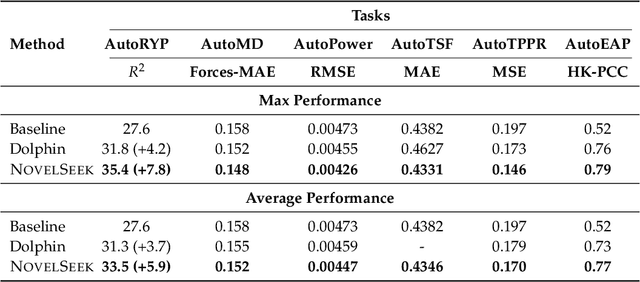
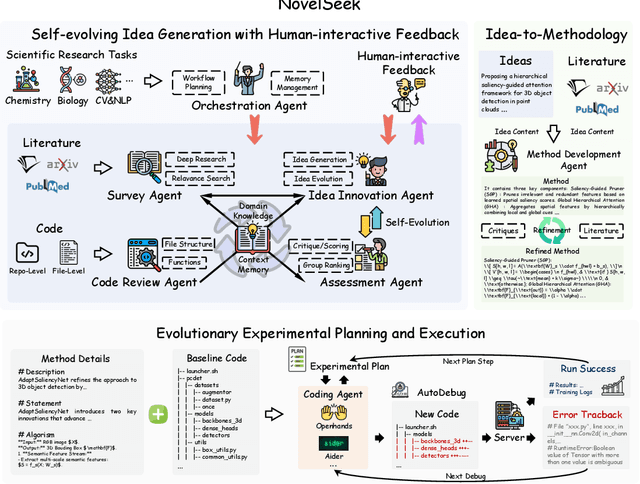
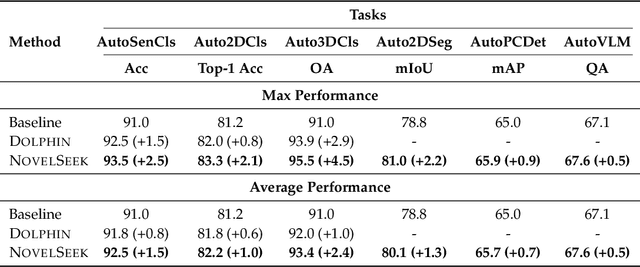
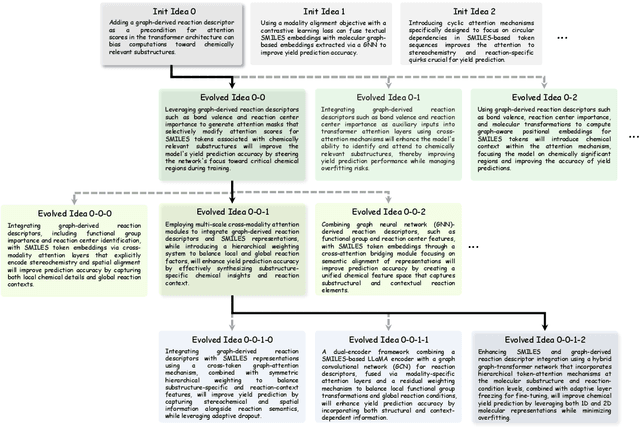
Artificial Intelligence (AI) is accelerating the transformation of scientific research paradigms, not only enhancing research efficiency but also driving innovation. We introduce NovelSeek, a unified closed-loop multi-agent framework to conduct Autonomous Scientific Research (ASR) across various scientific research fields, enabling researchers to tackle complicated problems in these fields with unprecedented speed and precision. NovelSeek highlights three key advantages: 1) Scalability: NovelSeek has demonstrated its versatility across 12 scientific research tasks, capable of generating innovative ideas to enhance the performance of baseline code. 2) Interactivity: NovelSeek provides an interface for human expert feedback and multi-agent interaction in automated end-to-end processes, allowing for the seamless integration of domain expert knowledge. 3) Efficiency: NovelSeek has achieved promising performance gains in several scientific fields with significantly less time cost compared to human efforts. For instance, in reaction yield prediction, it increased from 27.6% to 35.4% in just 12 hours; in enhancer activity prediction, accuracy rose from 0.52 to 0.79 with only 4 hours of processing; and in 2D semantic segmentation, precision advanced from 78.8% to 81.0% in a mere 30 hours.