 Add to Chrome
 Add to Firefox
 Add to Edge
PhyX: Does Your Model Have the "Wits" for Physical Reasoning?
May 21, 2025
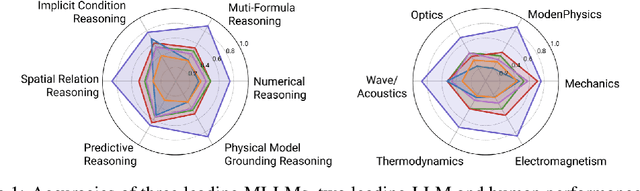
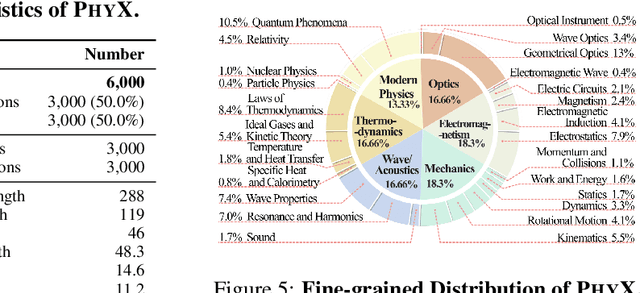
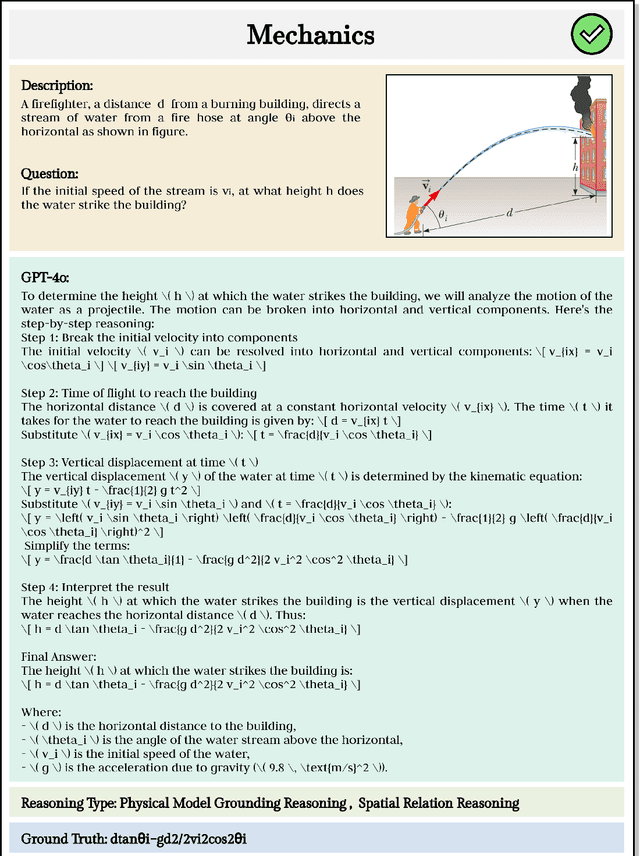
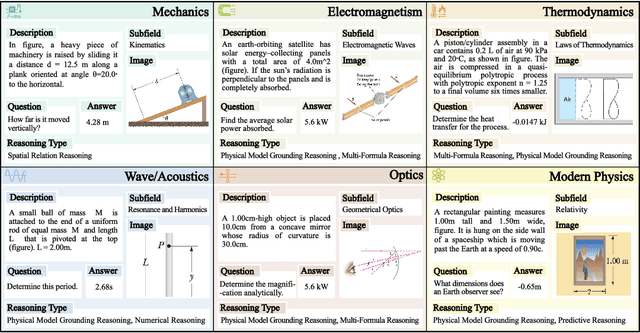
Existing benchmarks fail to capture a crucial aspect of intelligence: physical reasoning, the integrated ability to combine domain knowledge, symbolic reasoning, and understanding of real-world constraints. To address this gap, we introduce PhyX: the first large-scale benchmark designed to assess models capacity for physics-grounded reasoning in visual scenarios. PhyX includes 3K meticulously curated multimodal questions spanning 6 reasoning types across 25 sub-domains and 6 core physics domains: thermodynamics, electromagnetism, mechanics, modern physics, optics, and wave\&acoustics. In our comprehensive evaluation, even state-of-the-art models struggle significantly with physical reasoning. GPT-4o, Claude3.7-Sonnet, and GPT-o4-mini achieve only 32.5\%, 42.2\%, and 45.8\% accuracy respectively-performance gaps exceeding 29\% compared to human experts. Our analysis exposes critical limitations in current models: over-reliance on memorized disciplinary knowledge, excessive dependence on mathematical formulations, and surface-level visual pattern matching rather than genuine physical understanding. We provide in-depth analysis through fine-grained statistics, detailed case studies, and multiple evaluation paradigms to thoroughly examine physical reasoning capabilities. To ensure reproducibility, we implement a compatible evaluation protocol based on widely-used toolkits such as VLMEvalKit, enabling one-click evaluation.

Scaling Law for Quantization-Aware Training
May 20, 2025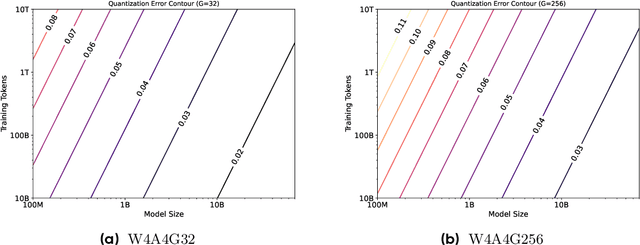
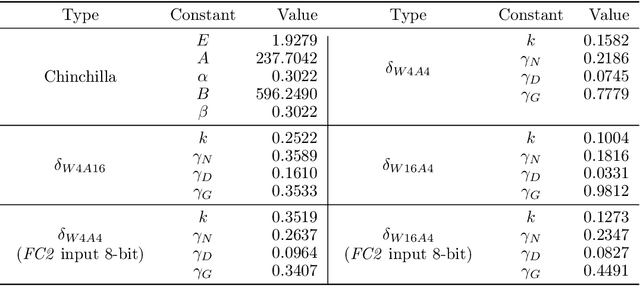
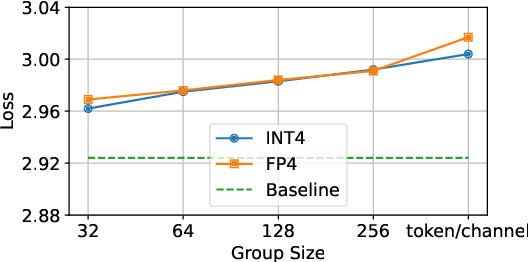
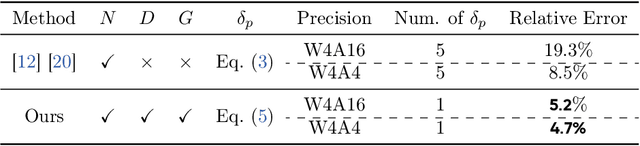
Large language models (LLMs) demand substantial computational and memory resources, creating deployment challenges. Quantization-aware training (QAT) addresses these challenges by reducing model precision while maintaining performance. However, the scaling behavior of QAT, especially at 4-bit precision (W4A4), is not well understood. Existing QAT scaling laws often ignore key factors such as the number of training tokens and quantization granularity, which limits their applicability. This paper proposes a unified scaling law for QAT that models quantization error as a function of model size, training data volume, and quantization group size. Through 268 QAT experiments, we show that quantization error decreases as model size increases, but rises with more training tokens and coarser quantization granularity. To identify the sources of W4A4 quantization error, we decompose it into weight and activation components. Both components follow the overall trend of W4A4 quantization error, but with different sensitivities. Specifically, weight quantization error increases more rapidly with more training tokens. Further analysis shows that the activation quantization error in the FC2 layer, caused by outliers, is the primary bottleneck of W4A4 QAT quantization error. By applying mixed-precision quantization to address this bottleneck, we demonstrate that weight and activation quantization errors can converge to similar levels. Additionally, with more training data, weight quantization error eventually exceeds activation quantization error, suggesting that reducing weight quantization error is also important in such scenarios. These findings offer key insights for improving QAT research and development.
AutoBio: A Simulation and Benchmark for Robotic Automation in Digital Biology Laboratory
May 20, 2025Vision-language-action (VLA) models have shown promise as generalist robotic policies by jointly leveraging visual, linguistic, and proprioceptive modalities to generate action trajectories. While recent benchmarks have advanced VLA research in domestic tasks, professional science-oriented domains remain underexplored. We introduce AutoBio, a simulation framework and benchmark designed to evaluate robotic automation in biology laboratory environments--an application domain that combines structured protocols with demanding precision and multimodal interaction. AutoBio extends existing simulation capabilities through a pipeline for digitizing real-world laboratory instruments, specialized physics plugins for mechanisms ubiquitous in laboratory workflows, and a rendering stack that support dynamic instrument interfaces and transparent materials through physically based rendering. Our benchmark comprises biologically grounded tasks spanning three difficulty levels, enabling standardized evaluation of language-guided robotic manipulation in experimental protocols. We provide infrastructure for demonstration generation and seamless integration with VLA models. Baseline evaluations with two SOTA VLA models reveal significant gaps in precision manipulation, visual reasoning, and instruction following in scientific workflows. By releasing AutoBio, we aim to catalyze research on generalist robotic systems for complex, high-precision, and multimodal professional environments. The simulator and benchmark are publicly available to facilitate reproducible research.
MM-PRM: Enhancing Multimodal Mathematical Reasoning with Scalable Step-Level Supervision
May 19, 2025While Multimodal Large Language Models (MLLMs) have achieved impressive progress in vision-language understanding, they still struggle with complex multi-step reasoning, often producing logically inconsistent or partially correct solutions. A key limitation lies in the lack of fine-grained supervision over intermediate reasoning steps. To address this, we propose MM-PRM, a process reward model trained within a fully automated, scalable framework. We first build MM-Policy, a strong multimodal model trained on diverse mathematical reasoning data. Then, we construct MM-K12, a curated dataset of 10,000 multimodal math problems with verifiable answers, which serves as seed data. Leveraging a Monte Carlo Tree Search (MCTS)-based pipeline, we generate over 700k step-level annotations without human labeling. The resulting PRM is used to score candidate reasoning paths in the Best-of-N inference setup and achieves significant improvements across both in-domain (MM-K12 test set) and out-of-domain (OlympiadBench, MathVista, etc.) benchmarks. Further analysis confirms the effectiveness of soft labels, smaller learning rates, and path diversity in optimizing PRM performance. MM-PRM demonstrates that process supervision is a powerful tool for enhancing the logical robustness of multimodal reasoning systems. We release all our codes and data at https://github.com/ModalMinds/MM-PRM.
DanceGRPO: Unleashing GRPO on Visual Generation
May 12, 2025
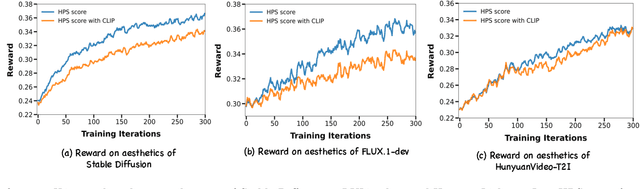
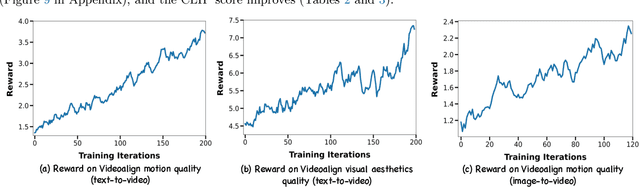

Recent breakthroughs in generative models-particularly diffusion models and rectified flows-have revolutionized visual content creation, yet aligning model outputs with human preferences remains a critical challenge. Existing reinforcement learning (RL)-based methods for visual generation face critical limitations: incompatibility with modern Ordinary Differential Equations (ODEs)-based sampling paradigms, instability in large-scale training, and lack of validation for video generation. This paper introduces DanceGRPO, the first unified framework to adapt Group Relative Policy Optimization (GRPO) to visual generation paradigms, unleashing one unified RL algorithm across two generative paradigms (diffusion models and rectified flows), three tasks (text-to-image, text-to-video, image-to-video), four foundation models (Stable Diffusion, HunyuanVideo, FLUX, SkyReel-I2V), and five reward models (image/video aesthetics, text-image alignment, video motion quality, and binary reward). To our knowledge, DanceGRPO is the first RL-based unified framework capable of seamless adaptation across diverse generative paradigms, tasks, foundational models, and reward models. DanceGRPO demonstrates consistent and substantial improvements, which outperform baselines by up to 181% on benchmarks such as HPS-v2.1, CLIP Score, VideoAlign, and GenEval. Notably, DanceGRPO not only can stabilize policy optimization for complex video generation, but also enables generative policy to better capture denoising trajectories for Best-of-N inference scaling and learn from sparse binary feedback. Our results establish DanceGRPO as a robust and versatile solution for scaling Reinforcement Learning from Human Feedback (RLHF) tasks in visual generation, offering new insights into harmonizing reinforcement learning and visual synthesis. The code will be released.
UniVLA: Learning to Act Anywhere with Task-centric Latent Actions
May 09, 2025A generalist robot should perform effectively across various environments. However, most existing approaches heavily rely on scaling action-annotated data to enhance their capabilities. Consequently, they are often limited to single physical specification and struggle to learn transferable knowledge across different embodiments and environments. To confront these limitations, we propose UniVLA, a new framework for learning cross-embodiment vision-language-action (VLA) policies. Our key innovation is to derive task-centric action representations from videos with a latent action model. This enables us to exploit extensive data across a wide spectrum of embodiments and perspectives. To mitigate the effect of task-irrelevant dynamics, we incorporate language instructions and establish a latent action model within the DINO feature space. Learned from internet-scale videos, the generalist policy can be deployed to various robots through efficient latent action decoding. We obtain state-of-the-art results across multiple manipulation and navigation benchmarks, as well as real-robot deployments. UniVLA achieves superior performance over OpenVLA with less than 1/20 of pretraining compute and 1/10 of downstream data. Continuous performance improvements are observed as heterogeneous data, even including human videos, are incorporated into the training pipeline. The results underscore UniVLA's potential to facilitate scalable and efficient robot policy learning.
PixelFlow: Pixel-Space Generative Models with Flow
Apr 10, 2025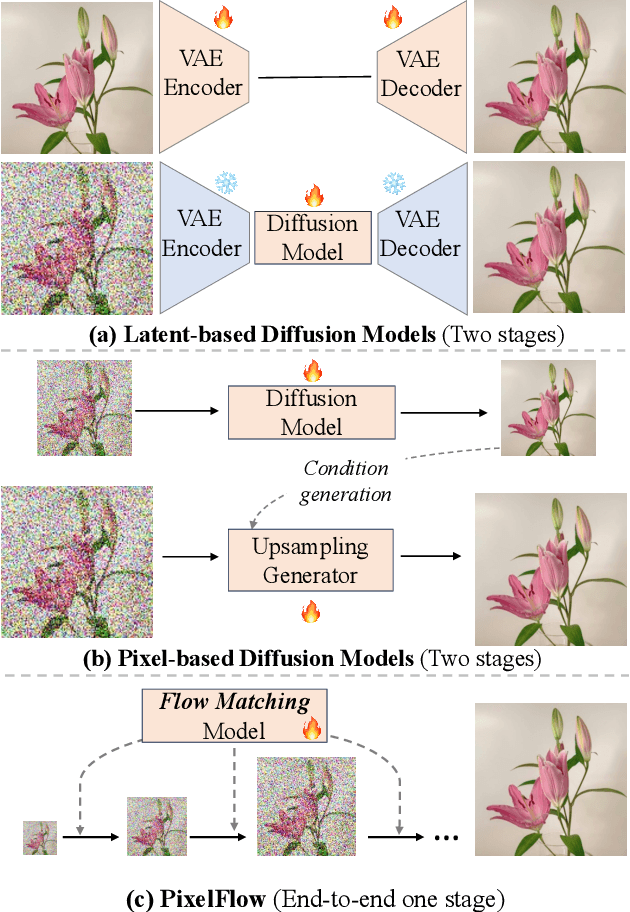
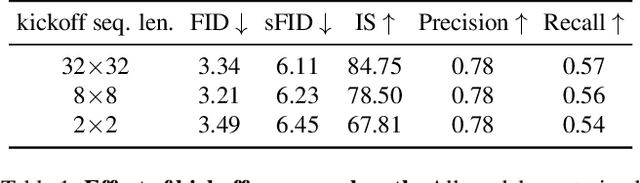
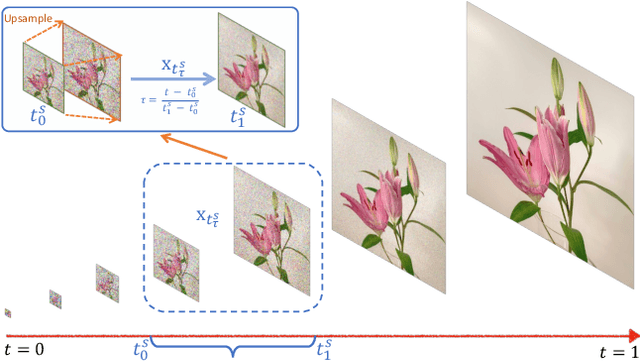
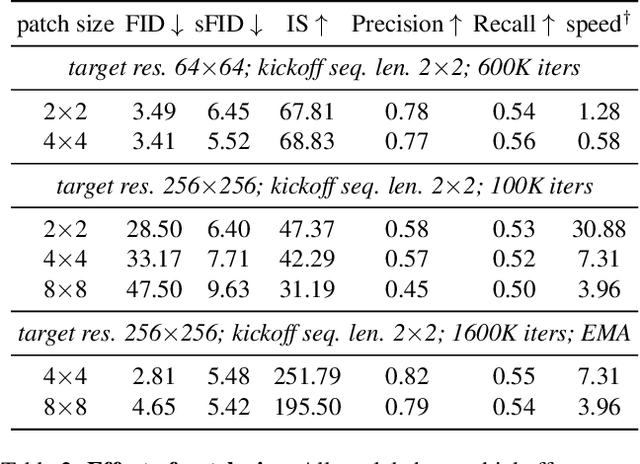
We present PixelFlow, a family of image generation models that operate directly in the raw pixel space, in contrast to the predominant latent-space models. This approach simplifies the image generation process by eliminating the need for a pre-trained Variational Autoencoder (VAE) and enabling the whole model end-to-end trainable. Through efficient cascade flow modeling, PixelFlow achieves affordable computation cost in pixel space. It achieves an FID of 1.98 on 256$\times$256 ImageNet class-conditional image generation benchmark. The qualitative text-to-image results demonstrate that PixelFlow excels in image quality, artistry, and semantic control. We hope this new paradigm will inspire and open up new opportunities for next-generation visual generation models. Code and models are available at https://github.com/ShoufaChen/PixelFlow.
Forensics-Bench: A Comprehensive Forgery Detection Benchmark Suite for Large Vision Language Models
Mar 19, 2025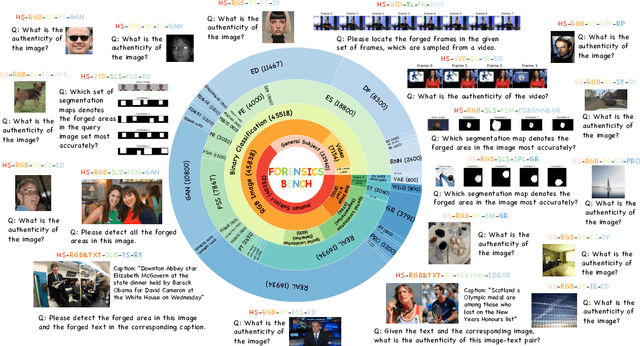
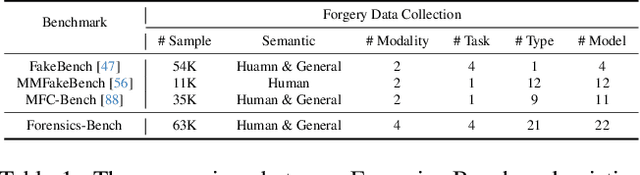
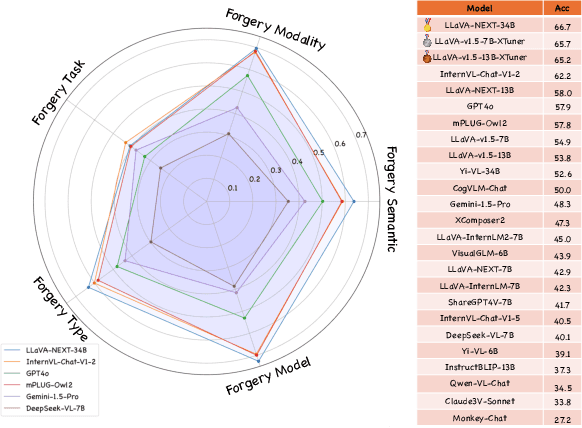
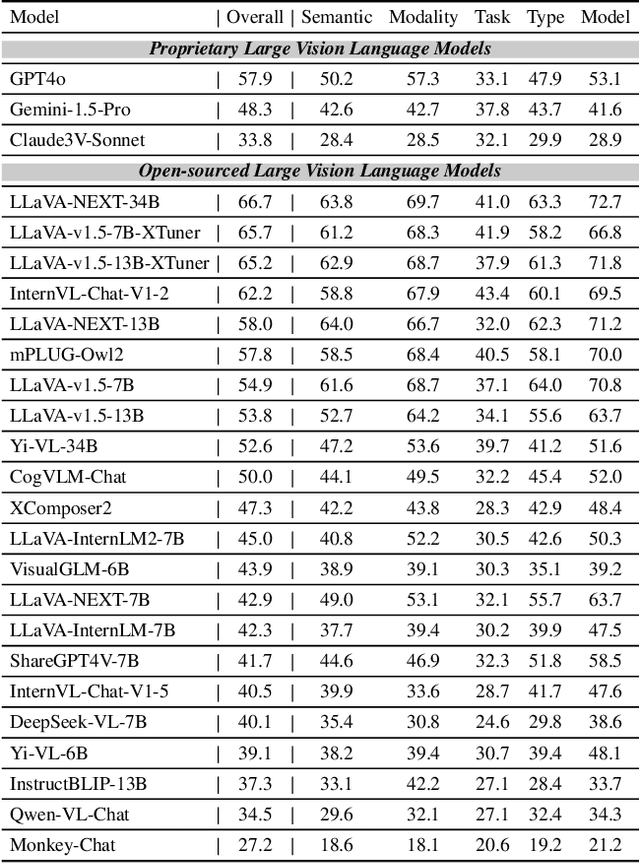
Recently, the rapid development of AIGC has significantly boosted the diversities of fake media spread in the Internet, posing unprecedented threats to social security, politics, law, and etc. To detect the ever-increasingly diverse malicious fake media in the new era of AIGC, recent studies have proposed to exploit Large Vision Language Models (LVLMs) to design robust forgery detectors due to their impressive performance on a wide range of multimodal tasks. However, it still lacks a comprehensive benchmark designed to comprehensively assess LVLMs' discerning capabilities on forgery media. To fill this gap, we present Forensics-Bench, a new forgery detection evaluation benchmark suite to assess LVLMs across massive forgery detection tasks, requiring comprehensive recognition, location and reasoning capabilities on diverse forgeries. Forensics-Bench comprises 63,292 meticulously curated multi-choice visual questions, covering 112 unique forgery detection types from 5 perspectives: forgery semantics, forgery modalities, forgery tasks, forgery types and forgery models. We conduct thorough evaluations on 22 open-sourced LVLMs and 3 proprietary models GPT-4o, Gemini 1.5 Pro, and Claude 3.5 Sonnet, highlighting the significant challenges of comprehensive forgery detection posed by Forensics-Bench. We anticipate that Forensics-Bench will motivate the community to advance the frontier of LVLMs, striving for all-around forgery detectors in the era of AIGC. The deliverables will be updated at https://Forensics-Bench.github.io/.
Centaur: Robust End-to-End Autonomous Driving with Test-Time Training
Mar 14, 2025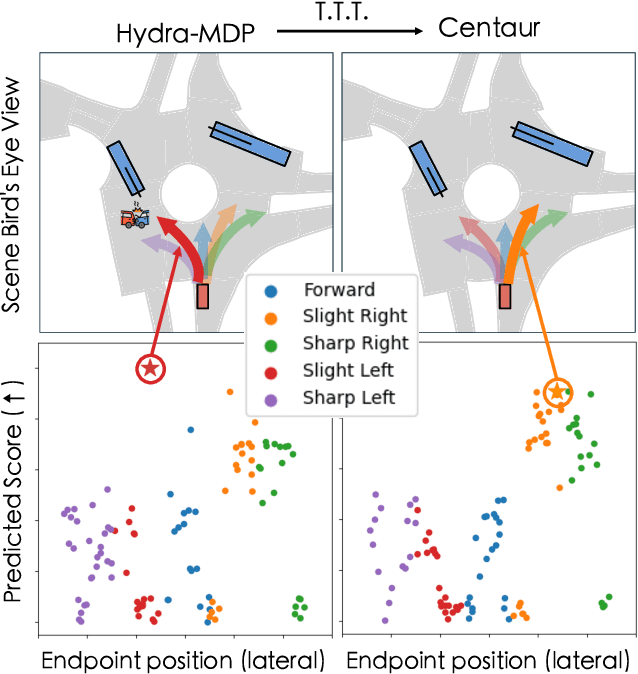
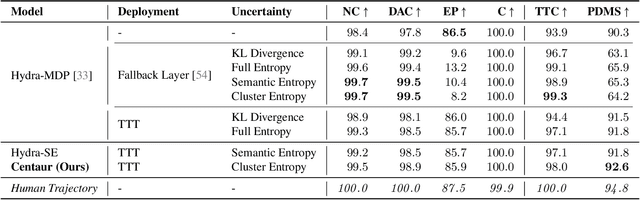
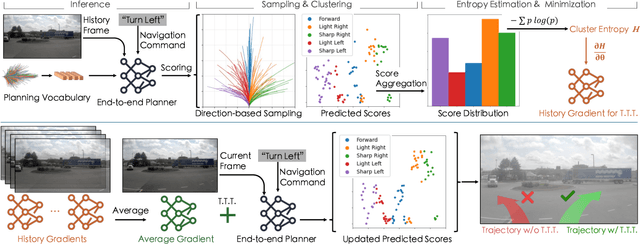
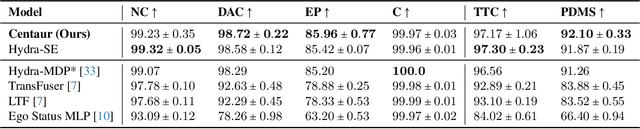
How can we rely on an end-to-end autonomous vehicle's complex decision-making system during deployment? One common solution is to have a ``fallback layer'' that checks the planned trajectory for rule violations and replaces it with a pre-defined safe action if necessary. Another approach involves adjusting the planner's decisions to minimize a pre-defined ``cost function'' using additional system predictions such as road layouts and detected obstacles. However, these pre-programmed rules or cost functions cannot learn and improve with new training data, often resulting in overly conservative behaviors. In this work, we propose Centaur (Cluster Entropy for Test-time trAining using Uncertainty) which updates a planner's behavior via test-time training, without relying on hand-engineered rules or cost functions. Instead, we measure and minimize the uncertainty in the planner's decisions. For this, we develop a novel uncertainty measure, called Cluster Entropy, which is simple, interpretable, and compatible with state-of-the-art planning algorithms. Using data collected at prior test-time time-steps, we perform an update to the model's parameters using a gradient that minimizes the Cluster Entropy. With only this sole gradient update prior to inference, Centaur exhibits significant improvements, ranking first on the navtest leaderboard with notable gains in safety-critical metrics such as time to collision. To provide detailed insights on a per-scenario basis, we also introduce navsafe, a challenging new benchmark, which highlights previously undiscovered failure modes of driving models.
JiSAM: Alleviate Labeling Burden and Corner Case Problems in Autonomous Driving via Minimal Real-World Data
Mar 13, 2025Deep-learning-based autonomous driving (AD) perception introduces a promising picture for safe and environment-friendly transportation. However, the over-reliance on real labeled data in LiDAR perception limits the scale of on-road attempts. 3D real world data is notoriously time-and-energy-consuming to annotate and lacks corner cases like rare traffic participants. On the contrary, in simulators like CARLA, generating labeled LiDAR point clouds with corner cases is a piece of cake. However, introducing synthetic point clouds to improve real perception is non-trivial. This stems from two challenges: 1) sample efficiency of simulation datasets 2) simulation-to-real gaps. To overcome both challenges, we propose a plug-and-play method called JiSAM , shorthand for Jittering augmentation, domain-aware backbone and memory-based Sectorized AlignMent. In extensive experiments conducted on the famous AD dataset NuScenes, we demonstrate that, with SOTA 3D object detector, JiSAM is able to utilize the simulation data and only labels on 2.5% available real data to achieve comparable performance to models trained on all real data. Additionally, JiSAM achieves more than 15 mAPs on the objects not labeled in the real training set. We will release models and codes.