 Add to Chrome
 Add to Firefox
 Add to Edge
Map as a Prompt: Learning Multi-Modal Spatial-Signal Foundation Models for Cross-scenario Wireless Localization
Jul 17, 2026
Accurate and robust wireless localization is a critical enabler for emerging 5G/6G applications, including autonomous driving, extended reality, and smart manufacturing. Despite its importance, achieving precise localization across diverse environments remains challenging due to the complex nature of wireless signals and their sensitivity to environmental changes. Existing data-driven approaches often suffer from limited generalization capability, requiring extensive labeled data and struggling to adapt to new scenarios. To address these limitations, we propose SigMap, a multimodal foundation model that introduces two key innovations: (1) A cycle-adaptive masking strategy that dynamically adjusts masking patterns based on channel periodicity characteristics to learn robust wireless representations; (2) A novel "map-as-prompt" framework that integrates 3D geographic information through lightweight soft prompts for effective cross-scenario adaptation. Extensive experiments demonstrate that our model achieves state-of-the-art performance across multiple localization tasks while exhibiting strong zero-shot generalization in unseen environments, significantly outperforming both supervised and self-supervised baselines by considerable margins.

TACO: Towards Task-Consistent Open-Vocabulary Adaptation in Video Recognition
Jun 24, 2026Adapting CLIP for open-vocabulary video recognition necessitates a delicate balance between newly acquired video knowledge and the pretrained generalization. While existing studies pursue this generalization-specialization trade-off with additional regularizations or constraints, we argue that they overlook the deviation of representations beyond the fine-tuning data distribution, resulting in suboptimal adaptation effects. We believe such deviation is inherited from the inconsistency between the fine-tuning and evaluation objectives, where model optimization is restricted to the known training distribution but evaluated on unseen ones. In this paper, we introduce \emph{TACO}, a simple yet effective framework to mitigate the potential negative effects induced by this inconsistency. Our key insight is that adaptation should preserve OOD-relevant alignment beyond the training distribution. To this end, we propose \emph{Relative Structure Distillation}, which regularizes the relative geometry of the representation space and suppresses harmful alignment shift during training. We further decouple the representation space from the optimization space with a lightweight specialization projection, allowing task-specific adaptation without directly overspecializing the representations used at test time. \emph{TACO} establishes state-of-the-art performance on diverse benchmarks under cross-dataset and base-to-novel settings. Code will be released at https://github.com/ZMHH-H/TACO.
Memory in the LLM Era: Modular Architectures and Strategies in a Unified Framework
Apr 02, 2026Memory emerges as the core module in the large language model (LLM)-based agents for long-horizon complex tasks (e.g., multi-turn dialogue, game playing, scientific discovery), where memory can enable knowledge accumulation, iterative reasoning and self-evolution. A number of memory methods have been proposed in the literature. However, these methods have not been systematically and comprehensively compared under the same experimental settings. In this paper, we first summarize a unified framework that incorporates all the existing agent memory methods from a high-level perspective. We then extensively compare representative agent memory methods on two well-known benchmarks and examine the effectiveness of all methods, providing a thorough analysis of those methods. As a byproduct of our experimental analysis, we also design a new memory method by exploiting modules in the existing methods, which outperforms the state-of-the-art methods. Finally, based on these findings, we offer promising future research opportunities. We believe that a deeper understanding of the behavior of existing methods can provide valuable new insights for future research.
Late-to-Early Training: LET LLMs Learn Earlier, So Faster and Better
Feb 05, 2026As Large Language Models (LLMs) achieve remarkable empirical success through scaling model and data size, pretraining has become increasingly critical yet computationally prohibitive, hindering rapid development. Despite the availability of numerous pretrained LLMs developed at significant computational expense, a fundamental real-world question remains underexplored: \textit{Can we leverage existing small pretrained models to accelerate the training of larger models?} In this paper, we propose a Late-to-Early Training (LET) paradigm that enables LLMs to explicitly learn later knowledge in earlier steps and earlier layers. The core idea is to guide the early layers of an LLM during early training using representations from the late layers of a pretrained (i.e. late training phase) model. We identify two key mechanisms that drive LET's effectiveness: late-to-early-step learning and late-to-early-layer learning. These mechanisms significantly accelerate training convergence while robustly enhancing both language modeling capabilities and downstream task performance, enabling faster training with superior performance. Extensive experiments on 1.4B and 7B parameter models demonstrate LET's efficiency and effectiveness. Notably, when training a 1.4B LLM on the Pile dataset, our method achieves up to 1.6$\times$ speedup with nearly 5\% improvement in downstream task accuracy compared to standard training, even when using a pretrained model with 10$\times$ fewer parameters than the target model.
IndexTTS 2.5 Technical Report
Jan 08, 2026In prior work, we introduced IndexTTS 2, a zero-shot neural text-to-speech foundation model comprising two core components: a transformer-based Text-to-Semantic (T2S) module and a non-autoregressive Semantic-to-Mel (S2M) module, which together enable faithful emotion replication and establish the first autoregressive duration-controllable generative paradigm. Building upon this, we present IndexTTS 2.5, which significantly enhances multilingual coverage, inference speed, and overall synthesis quality through four key improvements: 1) Semantic Codec Compression: we reduce the semantic codec frame rate from 50 Hz to 25 Hz, halving sequence length and substantially lowering both training and inference costs; 2) Architectural Upgrade: we replace the U-DiT-based backbone of the S2M module with a more efficient Zipformer-based modeling architecture, achieving notable parameter reduction and faster mel-spectrogram generation; 3) Multilingual Extension: We propose three explicit cross-lingual modeling strategies, boundary-aware alignment, token-level concatenation, and instruction-guided generation, establishing practical design principles for zero-shot multilingual emotional TTS that supports Chinese, English, Japanese, and Spanish, and enables robust emotion transfer even without target-language emotional training data; 4) Reinforcement Learning Optimization: we apply GRPO in post-training of the T2S module, improving pronunciation accuracy and natrualness. Experiments show that IndexTTS 2.5 not only supports broader language coverage but also replicates emotional prosody in unseen languages under the same zero-shot setting. IndexTTS 2.5 achieves a 2.28 times improvement in RTF while maintaining comparable WER and speaker similarity to IndexTTS 2.
Virtual Width Networks
Nov 17, 2025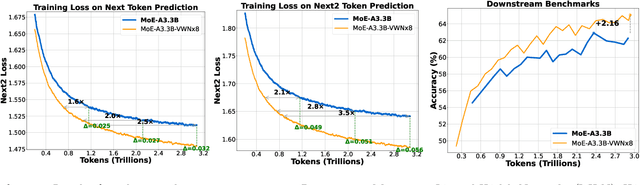
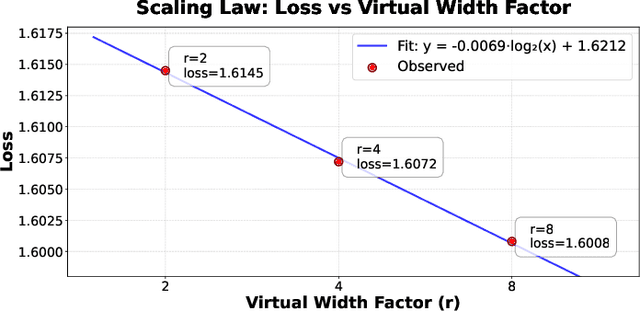
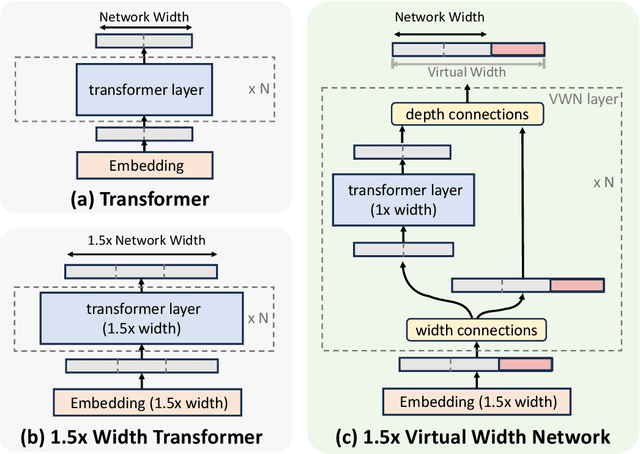
We introduce Virtual Width Networks (VWN), a framework that delivers the benefits of wider representations without incurring the quadratic cost of increasing the hidden size. VWN decouples representational width from backbone width, expanding the embedding space while keeping backbone compute nearly constant. In our large-scale experiment, an 8-times expansion accelerates optimization by over 2 times for next-token and 3 times for next-2-token prediction. The advantage amplifies over training as both the loss gap grows and the convergence-speedup ratio increases, showing that VWN is not only token-efficient but also increasingly effective with scale. Moreover, we identify an approximately log-linear scaling relation between virtual width and loss reduction, offering an initial empirical basis and motivation for exploring virtual-width scaling as a new dimension of large-model efficiency.
Scaling Latent Reasoning via Looped Language Models
Oct 29, 2025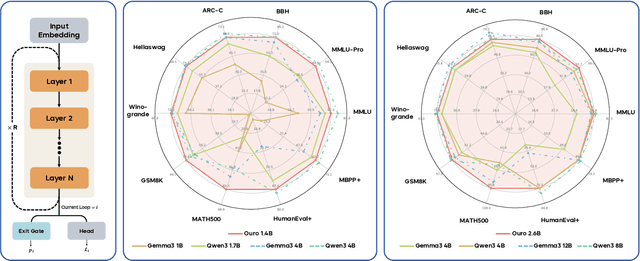
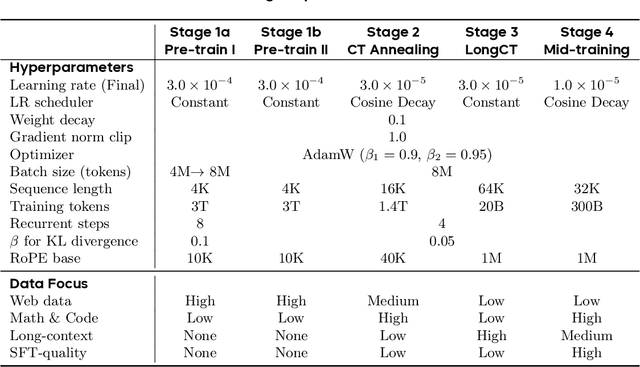
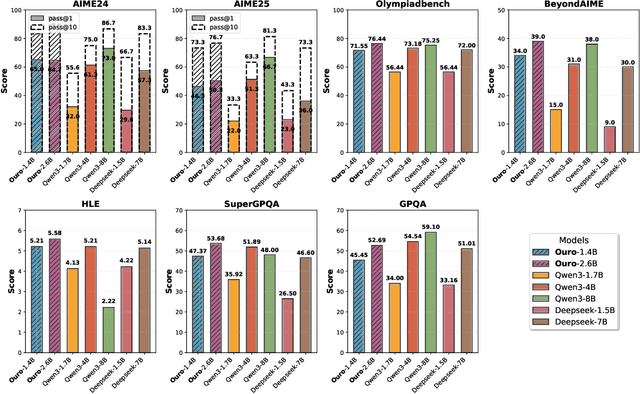

Modern LLMs are trained to "think" primarily via explicit text generation, such as chain-of-thought (CoT), which defers reasoning to post-training and under-leverages pre-training data. We present and open-source Ouro, named after the recursive Ouroboros, a family of pre-trained Looped Language Models (LoopLM) that instead build reasoning into the pre-training phase through (i) iterative computation in latent space, (ii) an entropy-regularized objective for learned depth allocation, and (iii) scaling to 7.7T tokens. Ouro 1.4B and 2.6B models enjoy superior performance that match the results of up to 12B SOTA LLMs across a wide range of benchmarks. Through controlled experiments, we show this advantage stems not from increased knowledge capacity, but from superior knowledge manipulation capabilities. We also show that LoopLM yields reasoning traces more aligned with final outputs than explicit CoT. We hope our results show the potential of LoopLM as a novel scaling direction in the reasoning era. Our model could be found in: http://ouro-llm.github.io.
UltraMemV2: Memory Networks Scaling to 120B Parameters with Superior Long-Context Learning
Aug 26, 2025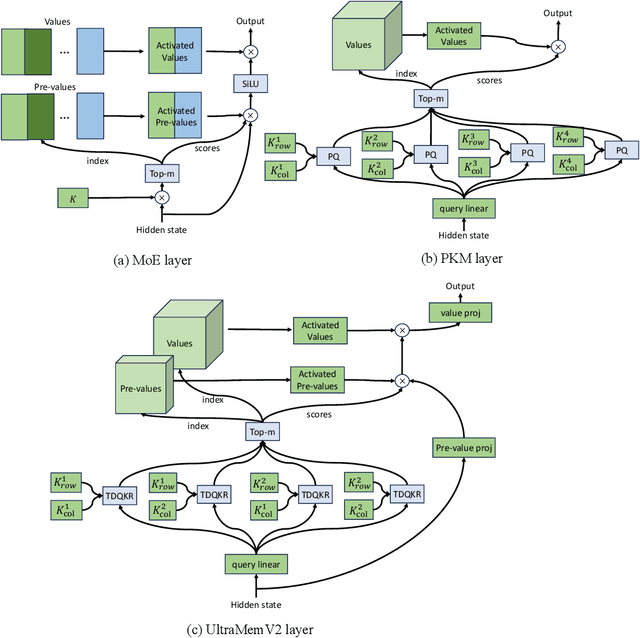
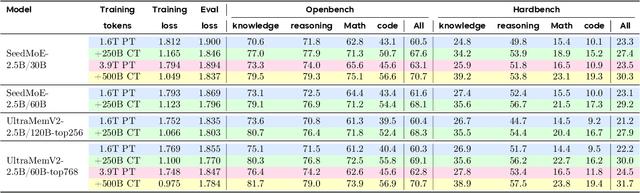

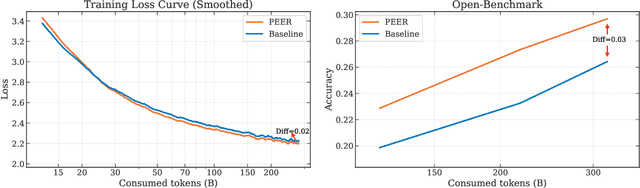
While Mixture of Experts (MoE) models achieve remarkable efficiency by activating only subsets of parameters, they suffer from high memory access costs during inference. Memory-layer architectures offer an appealing alternative with very few memory access, but previous attempts like UltraMem have only matched the performance of 2-expert MoE models, falling significantly short of state-of-the-art 8-expert configurations. We present UltraMemV2, a redesigned memory-layer architecture that closes this performance gap. Our approach introduces five key improvements: integrating memory layers into every transformer block, simplifying value expansion with single linear projections, adopting FFN-based value processing from PEER, implementing principled parameter initialization, and rebalancing memory-to-FFN computation ratios. Through extensive evaluation, we demonstrate that UltraMemV2 achieves performance parity with 8-expert MoE models under same computation and parameters but significantly low memory access. Notably, UltraMemV2 shows superior performance on memory-intensive tasks, with improvements of +1.6 points on long-context memorization, +6.2 points on multi-round memorization, and +7.9 points on in-context learning. We validate our approach at scale with models up to 2.5B activated parameters from 120B total parameters, and establish that activation density has greater impact on performance than total sparse parameter count. Our work brings memory-layer architectures to performance parity with state-of-the-art MoE models, presenting a compelling alternative for efficient sparse computation.
UW-3DGS: Underwater 3D Reconstruction with Physics-Aware Gaussian Splatting
Aug 08, 2025Underwater 3D scene reconstruction faces severe challenges from light absorption, scattering, and turbidity, which degrade geometry and color fidelity in traditional methods like Neural Radiance Fields (NeRF). While NeRF extensions such as SeaThru-NeRF incorporate physics-based models, their MLP reliance limits efficiency and spatial resolution in hazy environments. We introduce UW-3DGS, a novel framework adapting 3D Gaussian Splatting (3DGS) for robust underwater reconstruction. Key innovations include: (1) a plug-and-play learnable underwater image formation module using voxel-based regression for spatially varying attenuation and backscatter; and (2) a Physics-Aware Uncertainty Pruning (PAUP) branch that adaptively removes noisy floating Gaussians via uncertainty scoring, ensuring artifact-free geometry. The pipeline operates in training and rendering stages. During training, noisy Gaussians are optimized end-to-end with underwater parameters, guided by PAUP pruning and scattering modeling. In rendering, refined Gaussians produce clean Unattenuated Radiance Images (URIs) free from media effects, while learned physics enable realistic Underwater Images (UWIs) with accurate light transport. Experiments on SeaThru-NeRF and UWBundle datasets show superior performance, achieving PSNR of 27.604, SSIM of 0.868, and LPIPS of 0.104 on SeaThru-NeRF, with ~65% reduction in floating artifacts.
SecFwT: Efficient Privacy-Preserving Fine-Tuning of Large Language Models Using Forward-Only Passes
Jun 18, 2025Large language models (LLMs) have transformed numerous fields, yet their adaptation to specialized tasks in privacy-sensitive domains, such as healthcare and finance, is constrained by the scarcity of accessible training data due to stringent privacy requirements. Secure multi-party computation (MPC)-based privacy-preserving machine learning offers a powerful approach to protect both model parameters and user data, but its application to LLMs has been largely limited to inference, as fine-tuning introduces significant computational challenges, particularly in privacy-preserving backward propagation and optimizer operations. This paper identifies two primary obstacles to MPC-based privacy-preserving fine-tuning of LLMs: (1) the substantial computational overhead of backward and optimizer processes, and (2) the inefficiency of softmax-based attention mechanisms in MPC settings. To address these challenges, we propose SecFwT, the first MPC-based framework designed for efficient, privacy-preserving LLM fine-tuning. SecFwT introduces a forward-only tuning paradigm to eliminate backward and optimizer computations and employs MPC-friendly Random Feature Attention to approximate softmax attention, significantly reducing costly non-linear operations and computational complexity. Experimental results demonstrate that SecFwT delivers substantial improvements in efficiency and privacy preservation, enabling scalable and secure fine-tuning of LLMs for privacy-critical applications.