 Add to Chrome
 Add to Firefox
 Add to Edge
Sparse-Graph-Enabled Formation Planning for Large-Scale Aerial Swarms
Mar 26, 2024
The formation trajectory planning using complete graphs to model collaborative constraints becomes computationally intractable as the number of drones increases due to the curse of dimensionality. To tackle this issue, this paper presents a sparse graph construction method for formation planning to realize better efficiency-performance trade-off. Firstly, a sparsification mechanism for complete graphs is designed to ensure the global rigidity of sparsified graphs, which is a necessary condition for uniquely corresponding to a geometric shape. Secondly, a good sparse graph is constructed to preserve the main structural feature of complete graphs sufficiently. Since the graph-based formation constraint is described by Laplacian matrix, the sparse graph construction problem is equivalent to submatrix selection, which has combinatorial time complexity and needs a scoring metric. Via comparative simulations, the Max-Trace matrix-revealing metric shows the promising performance. The sparse graph is integrated into the formation planning. Simulation results with 72 drones in complex environments demonstrate that when preserving 30\% connection edges, our method has comparative formation error and recovery performance w.r.t. complete graphs. Meanwhile, the planning efficiency is improved by approximate an order of magnitude. Benchmark comparisons and ablation studies are conducted to fully validate the merits of our method.

InternLM2 Technical Report
Mar 26, 2024


The evolution of Large Language Models (LLMs) like ChatGPT and GPT-4 has sparked discussions on the advent of Artificial General Intelligence (AGI). However, replicating such advancements in open-source models has been challenging. This paper introduces InternLM2, an open-source LLM that outperforms its predecessors in comprehensive evaluations across 6 dimensions and 30 benchmarks, long-context modeling, and open-ended subjective evaluations through innovative pre-training and optimization techniques. The pre-training process of InternLM2 is meticulously detailed, highlighting the preparation of diverse data types including text, code, and long-context data. InternLM2 efficiently captures long-term dependencies, initially trained on 4k tokens before advancing to 32k tokens in pre-training and fine-tuning stages, exhibiting remarkable performance on the 200k ``Needle-in-a-Haystack" test. InternLM2 is further aligned using Supervised Fine-Tuning (SFT) and a novel Conditional Online Reinforcement Learning from Human Feedback (COOL RLHF) strategy that addresses conflicting human preferences and reward hacking. By releasing InternLM2 models in different training stages and model sizes, we provide the community with insights into the model's evolution.
FACT: Fast and Active Coordinate Initialization for Vision-based Drone Swarms
Mar 20, 2024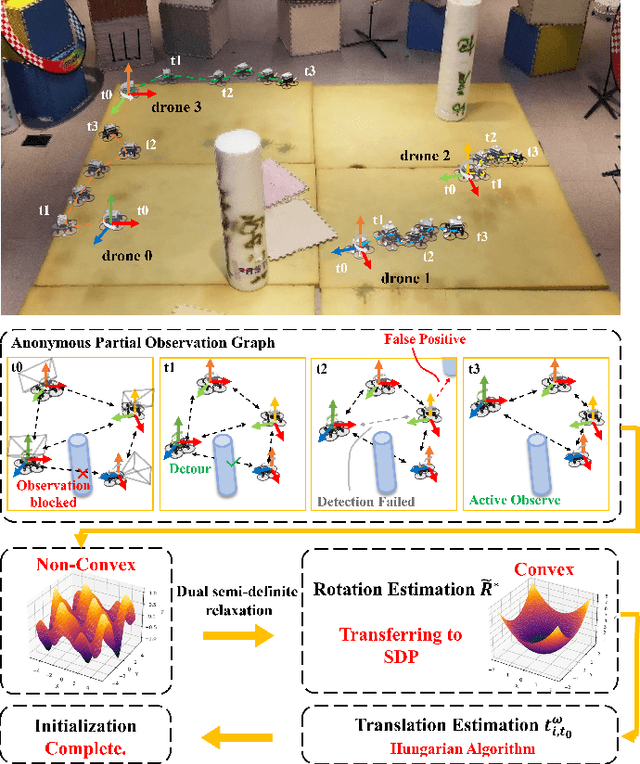
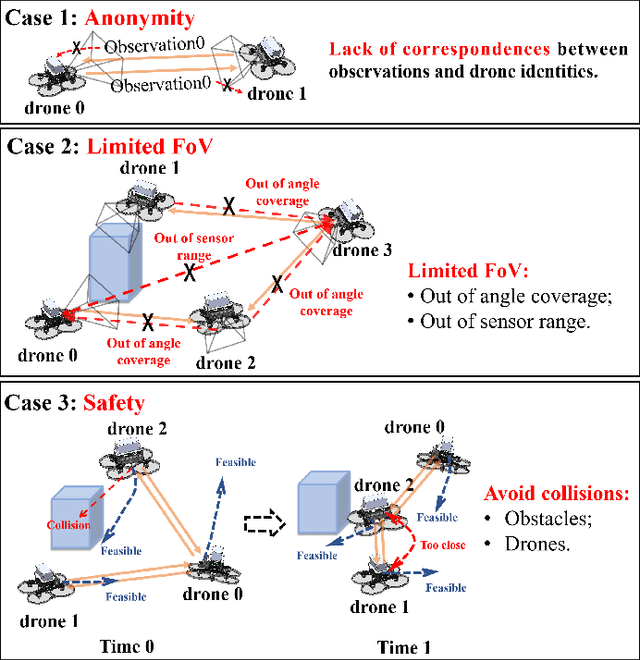
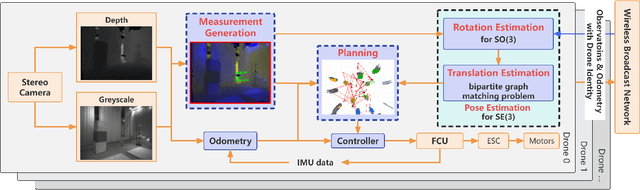
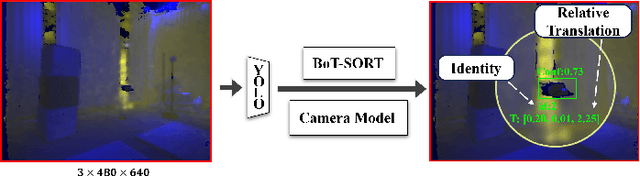
Swarm robots have sparked remarkable developments across a range of fields. While it is necessary for various applications in swarm robots, a fast and robust coordinate initialization in vision-based drone swarms remains elusive. To this end, our paper proposes a complete system to recover a swarm's initial relative pose on platforms with size, weight, and power (SWaP) constraints. To overcome limited coverage of field-of-view (FoV), the drones rotate in place to obtain observations. To tackle the anonymous measurements, we formulate a non-convex rotation estimation problem and transform it into a semi-definite programming (SDP) problem, which can steadily obtain global optimal values. Then we utilize the Hungarian algorithm to recover relative translation and correspondences between observations and drone identities. To safely acquire complete observations, we actively search for positions and generate feasible trajectories to avoid collisions. To validate the practicability of our system, we conduct experiments on a vision-based drone swarm with only stereo cameras and inertial measurement units (IMUs) as sensors. The results demonstrate that the system can robustly get accurate relative poses in real time with limited onboard computation resources. The source code is released.
Complementing Event Streams and RGB Frames for Hand Mesh Reconstruction
Mar 12, 2024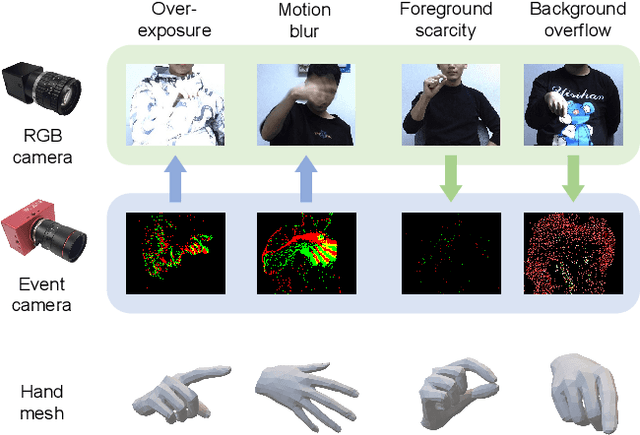
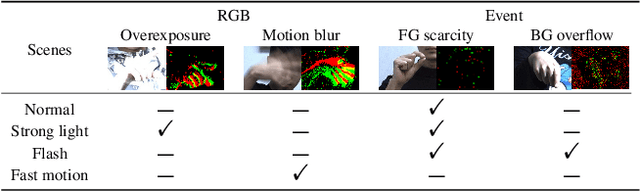
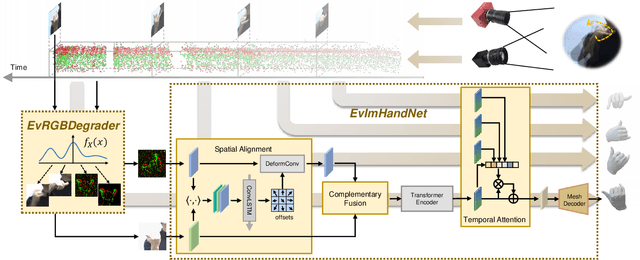
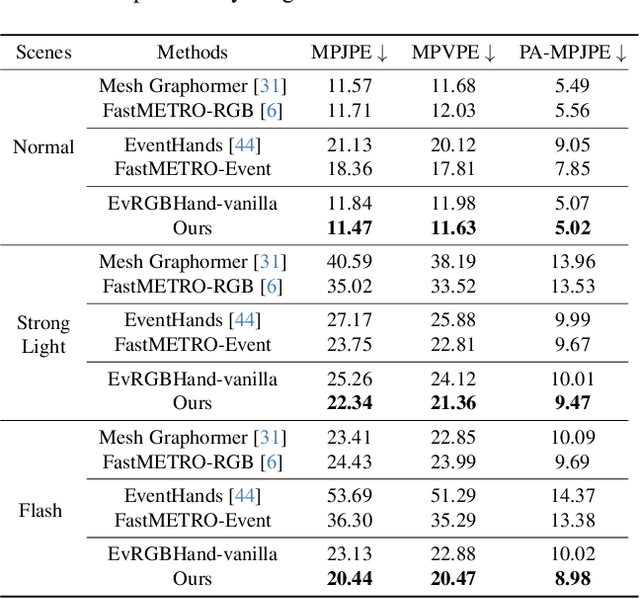
Reliable hand mesh reconstruction (HMR) from commonly-used color and depth sensors is challenging especially under scenarios with varied illuminations and fast motions. Event camera is a highly promising alternative for its high dynamic range and dense temporal resolution properties, but it lacks key texture appearance for hand mesh reconstruction. In this paper, we propose EvRGBHand -- the first approach for 3D hand mesh reconstruction with an event camera and an RGB camera compensating for each other. By fusing two modalities of data across time, space, and information dimensions,EvRGBHand can tackle overexposure and motion blur issues in RGB-based HMR and foreground scarcity and background overflow issues in event-based HMR. We further propose EvRGBDegrader, which allows our model to generalize effectively in challenging scenes, even when trained solely on standard scenes, thus reducing data acquisition costs. Experiments on real-world data demonstrate that EvRGBHand can effectively solve the challenging issues when using either type of camera alone via retaining the merits of both, and shows the potential of generalization to outdoor scenes and another type of event camera.
Fast Iterative Region Inflation for Computing Large 2-D/3-D Convex Regions of Obstacle-Free Space
Mar 05, 20241) Restrictive Inflation is designed to ensure the managibility of the generated convex polytope. Based on its characteristic of few variables but rich constraints, an efficient and numerically stable solver is designed. 2) A novel method that formulates the MVIE problem into SOCP formulation is proposed, which avoids directly confronting the positive definite constraints and improves the computational efficiency. 3) Especially for 2-D MVIE, a linear-time exact algorithm is introduced for the first time, filling a gap that existed for several decades and further enabling ultra-fast computational performance. 4) Building upon the above methods, a reliable convex polytope generation algorithm FIRI is proposed. Extensive experiments verify its superior comprehensive performance in terms of quality, efficiency, and managibility. High-performance implementation of FIRI will be open-sourced for the reference of the community.
Skater: A Novel Bi-modal Bi-copter Robot for Adaptive Locomotion in Air and Diverse Terrain
Mar 04, 2024


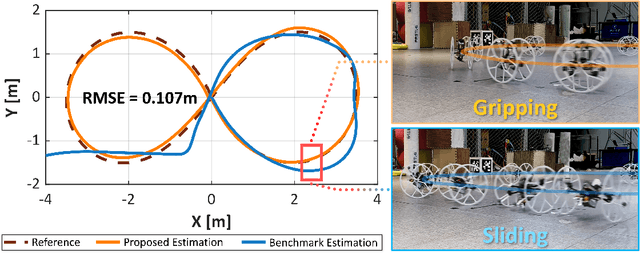
In this letter, we present a novel bi-modal bi-copter robot called Skater, which is adaptable to air and various ground surfaces. Skater consists of a bi-copter moving along its longitudinal direction with two passive wheels on both sides. Using longitudinally arranged bi-copter as the unified actuation system for both aerial and ground modes, this robot not only keeps concise and lightweight mechanism, but also possesses exceptional terrain traversing capability and strong steering capacity. Moreover, leveraging the vectored thrust characteristic of bi-copters, Skater can actively generate the centripetal force needed for steering, enabling it to achieve stable movement even on slippery surfaces. Furthermore, we model the comprehensive dynamics of Skater, analyze its differential flatness and introduce a controller using nonlinear model predictive control for trajectory tracking. The outstanding performance of the system is verified by extensive real-world experiments and benchmark comparisons.
FaceChain-ImagineID: Freely Crafting High-Fidelity Diverse Talking Faces from Disentangled Audio
Mar 04, 2024
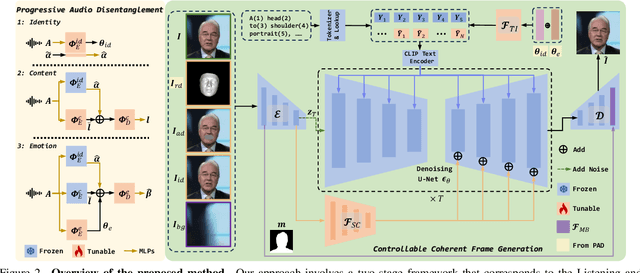


In this paper, we abstract the process of people hearing speech, extracting meaningful cues, and creating various dynamically audio-consistent talking faces, termed Listening and Imagining, into the task of high-fidelity diverse talking faces generation from a single audio. Specifically, it involves two critical challenges: one is to effectively decouple identity, content, and emotion from entangled audio, and the other is to maintain intra-video diversity and inter-video consistency. To tackle the issues, we first dig out the intricate relationships among facial factors and simplify the decoupling process, tailoring a Progressive Audio Disentanglement for accurate facial geometry and semantics learning, where each stage incorporates a customized training module responsible for a specific factor. Secondly, to achieve visually diverse and audio-synchronized animation solely from input audio within a single model, we introduce the Controllable Coherent Frame generation, which involves the flexible integration of three trainable adapters with frozen Latent Diffusion Models (LDMs) to focus on maintaining facial geometry and semantics, as well as texture and temporal coherence between frames. In this way, we inherit high-quality diverse generation from LDMs while significantly improving their controllability at a low training cost. Extensive experiments demonstrate the flexibility and effectiveness of our method in handling this paradigm. The codes will be released at https://github.com/modelscope/facechain.
Model-Based Planning and Control for Terrestrial-Aerial Bimodal Vehicles with Passive Wheels
Mar 01, 2024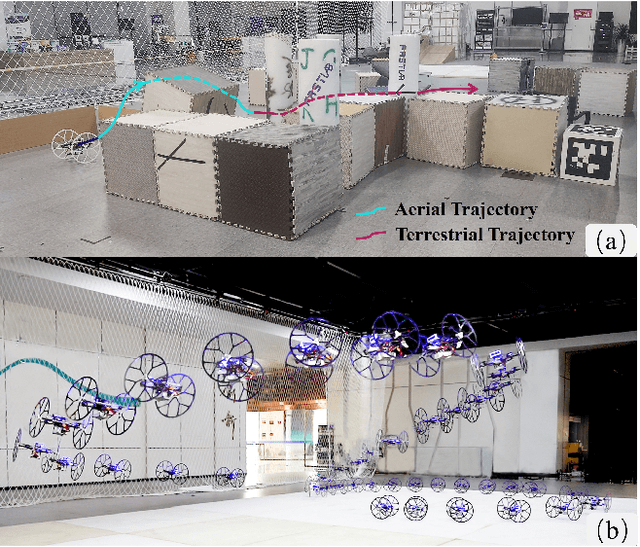
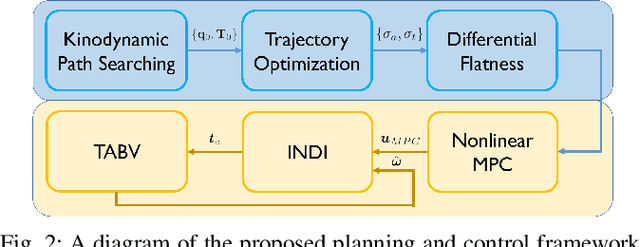
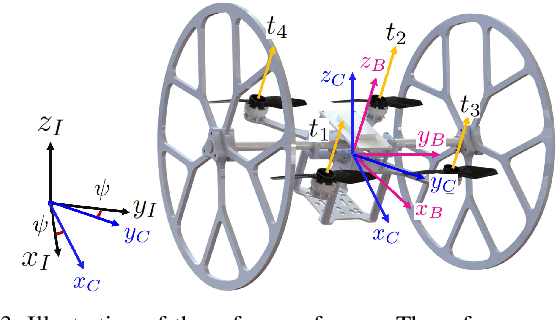
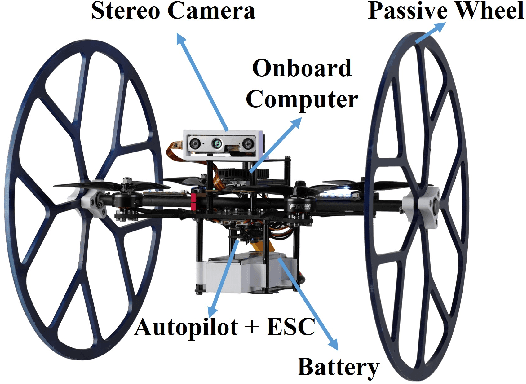
Terrestrial and aerial bimodal vehicles have gained widespread attention due to their cross-domain maneuverability. Nevertheless, their bimodal dynamics significantly increase the complexity of motion planning and control, thus hindering robust and efficient autonomous navigation in unknown environments. To resolve this issue, we develop a model-based planning and control framework for terrestrial aerial bi-modal vehicles. This work begins by deriving a unified dynamic model and the corresponding differential flatness. Leveraging differential flatness, an optimization-based trajectory planner is proposed, which takes into account both solution quality and computational efficiency. Moreover, we design a tracking controller using nonlinear model predictive control based on the proposed unified dynamic model to achieve accurate trajectory tracking and smooth mode transition. We validate our framework through extensive benchmark comparisons and experiments, demonstrating its effectiveness in terms of planning quality and control performance.
Learning to Deblur Polarized Images
Feb 28, 2024
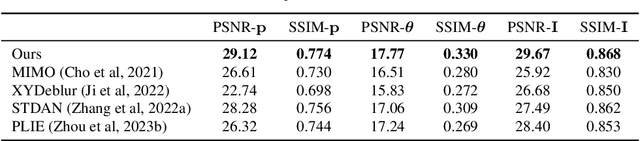
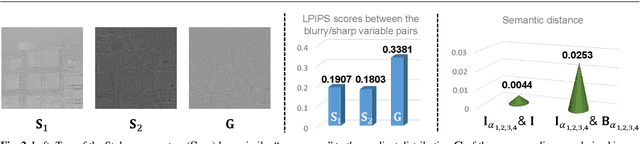
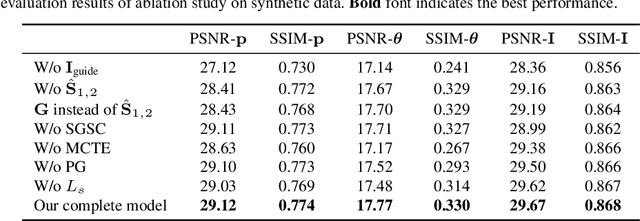
A polarization camera can capture four polarized images with different polarizer angles in a single shot, which is useful in polarization-based vision applications since the degree of polarization (DoP) and the angle of polarization (AoP) can be directly computed from the captured polarized images. However, since the on-chip micro-polarizers block part of the light so that the sensor often requires a longer exposure time, the captured polarized images are prone to motion blur caused by camera shakes, leading to noticeable degradation in the computed DoP and AoP. Deblurring methods for conventional images often show degenerated performance when handling the polarized images since they only focus on deblurring without considering the polarization constrains. In this paper, we propose a polarized image deblurring pipeline to solve the problem in a polarization-aware manner by adopting a divide-and-conquer strategy to explicitly decompose the problem into two less ill-posed sub-problems, and design a two-stage neural network to handle the two sub-problems respectively. Experimental results show that our method achieves state-of-the-art performance on both synthetic and real-world images, and can improve the performance of polarization-based vision applications such as image dehazing and reflection removal.
SPHINX-X: Scaling Data and Parameters for a Family of Multi-modal Large Language Models
Feb 08, 2024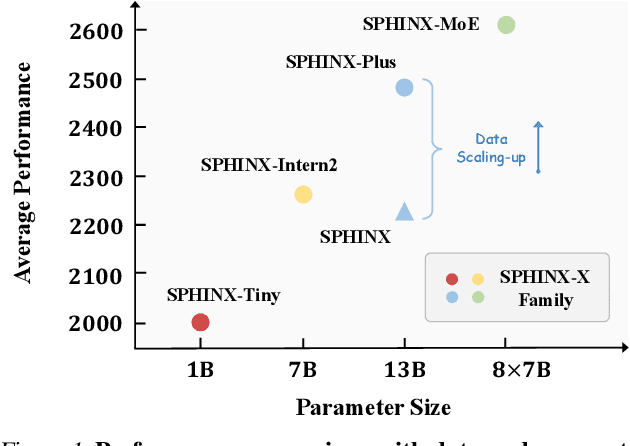
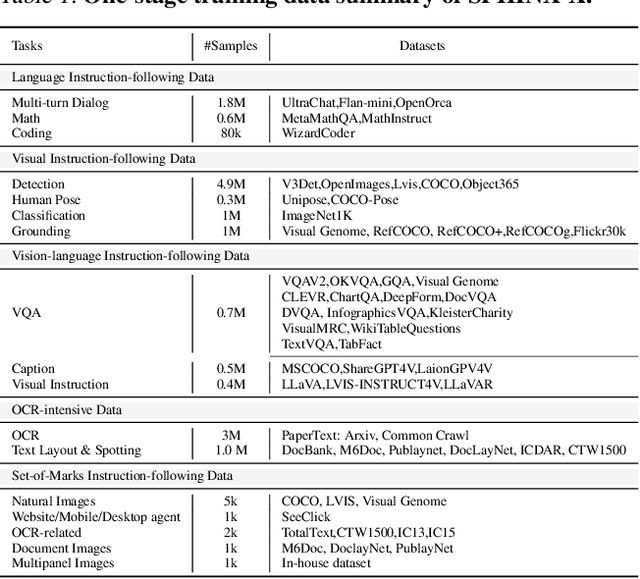
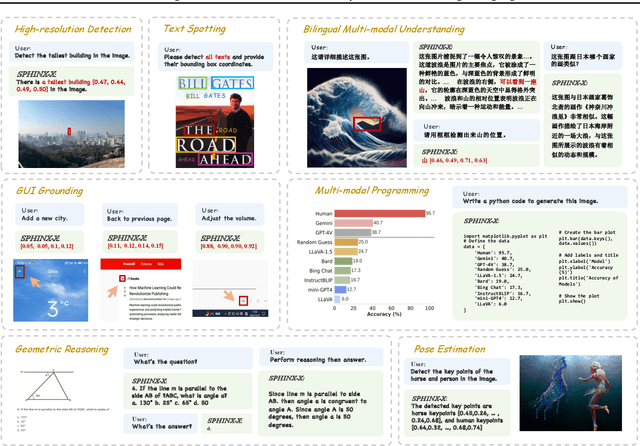
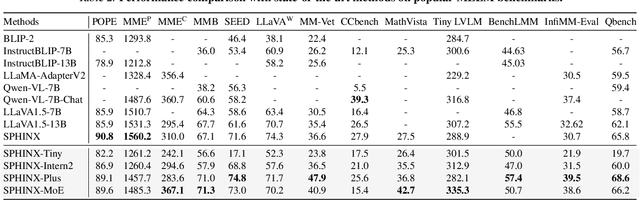
We propose SPHINX-X, an extensive Multimodality Large Language Model (MLLM) series developed upon SPHINX. To improve the architecture and training efficiency, we modify the SPHINX framework by removing redundant visual encoders, bypassing fully-padded sub-images with skip tokens, and simplifying multi-stage training into a one-stage all-in-one paradigm. To fully unleash the potential of MLLMs, we assemble a comprehensive multi-domain and multimodal dataset covering publicly available resources in language, vision, and vision-language tasks. We further enrich this collection with our curated OCR intensive and Set-of-Mark datasets, extending the diversity and generality. By training over different base LLMs including TinyLlama1.1B, InternLM2-7B, LLaMA2-13B, and Mixtral8x7B, we obtain a spectrum of MLLMs that vary in parameter size and multilingual capabilities. Comprehensive benchmarking reveals a strong correlation between the multi-modal performance with the data and parameter scales. Code and models are released at https://github.com/Alpha-VLLM/LLaMA2-Accessory