 Add to Chrome
 Add to Firefox
 Add to Edge
Evaluating Large Language Models on a Highly-specialized Topic, Radiation Oncology Physics
Apr 01, 2023
We present the first study to investigate Large Language Models (LLMs) in answering radiation oncology physics questions. Because popular exams like AP Physics, LSAT, and GRE have large test-taker populations and ample test preparation resources in circulation, they may not allow for accurately assessing the true potential of LLMs. This paper proposes evaluating LLMs on a highly-specialized topic, radiation oncology physics, which may be more pertinent to scientific and medical communities in addition to being a valuable benchmark of LLMs. We developed an exam consisting of 100 radiation oncology physics questions based on our expertise at Mayo Clinic. Four LLMs, ChatGPT (GPT-3.5), ChatGPT (GPT-4), Bard (LaMDA), and BLOOMZ, were evaluated against medical physicists and non-experts. ChatGPT (GPT-4) outperformed all other LLMs as well as medical physicists, on average. The performance of ChatGPT (GPT-4) was further improved when prompted to explain first, then answer. ChatGPT (GPT-3.5 and GPT-4) showed a high level of consistency in its answer choices across a number of trials, whether correct or incorrect, a characteristic that was not observed in the human test groups. In evaluating ChatGPTs (GPT-4) deductive reasoning ability using a novel approach (substituting the correct answer with "None of the above choices is the correct answer."), ChatGPT (GPT-4) demonstrated surprising accuracy, suggesting the potential presence of an emergent ability. Finally, although ChatGPT (GPT-4) performed well overall, its intrinsic properties did not allow for further improvement when scoring based on a majority vote across trials. In contrast, a team of medical physicists were able to greatly outperform ChatGPT (GPT-4) using a majority vote. This study suggests a great potential for LLMs to work alongside radiation oncology experts as highly knowledgeable assistants.

SoftCLIP: Softer Cross-modal Alignment Makes CLIP Stronger
Mar 30, 2023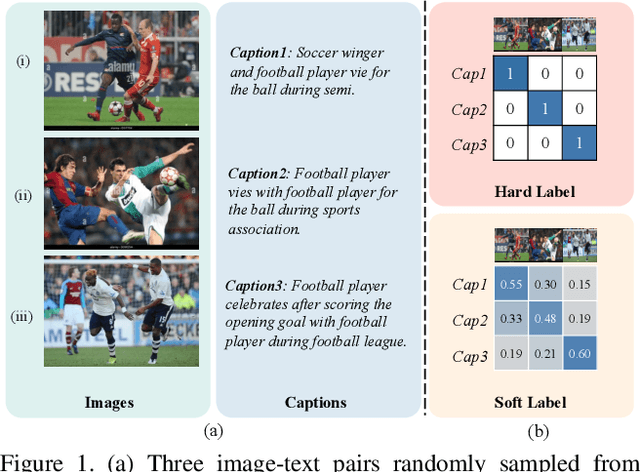
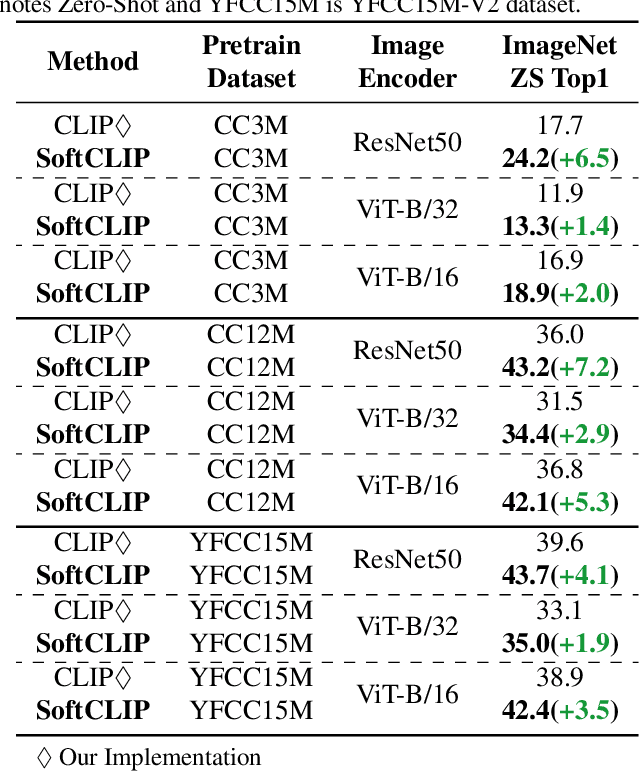
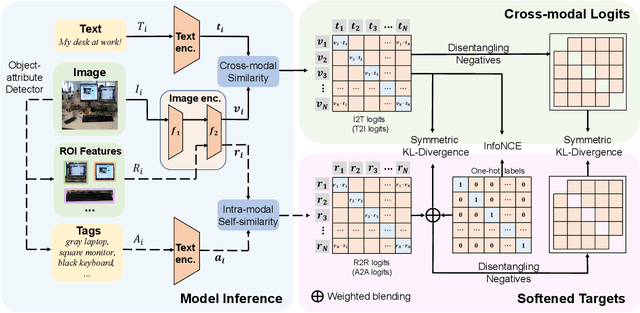
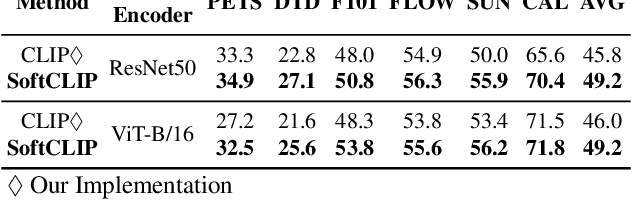
During the preceding biennium, vision-language pre-training has achieved noteworthy success on several downstream tasks. Nevertheless, acquiring high-quality image-text pairs, where the pairs are entirely exclusive of each other, remains a challenging task, and noise exists in the commonly used datasets. To address this issue, we propose SoftCLIP, a novel approach that relaxes the strict one-to-one constraint and achieves a soft cross-modal alignment by introducing a softened target, which is generated from the fine-grained intra-modal self-similarity. The intra-modal guidance is indicative to enable two pairs have some local similarities and model many-to-many relationships between the two modalities. Besides, since the positive still dominates in the softened target distribution, we disentangle the negatives in the distribution to further boost the relation alignment with the negatives in the cross-modal learning. Extensive experiments demonstrate the effectiveness of SoftCLIP. In particular, on ImageNet zero-shot classification task, using CC3M/CC12M as pre-training dataset, SoftCLIP brings a top-1 accuracy improvement of 6.8%/7.2% over the CLIP baseline.
Plug-and-Play Regulators for Image-Text Matching
Mar 23, 2023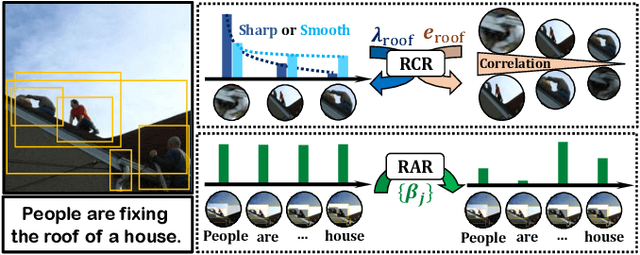
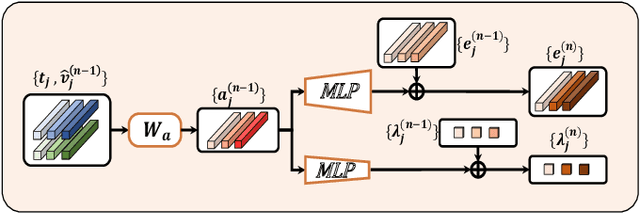
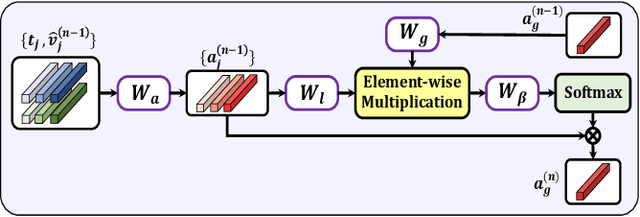
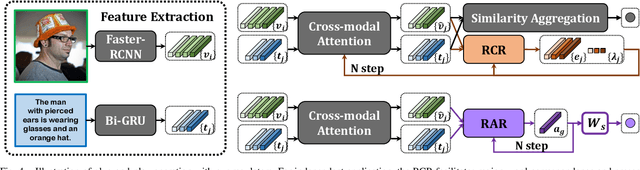
Exploiting fine-grained correspondence and visual-semantic alignments has shown great potential in image-text matching. Generally, recent approaches first employ a cross-modal attention unit to capture latent region-word interactions, and then integrate all the alignments to obtain the final similarity. However, most of them adopt one-time forward association or aggregation strategies with complex architectures or additional information, while ignoring the regulation ability of network feedback. In this paper, we develop two simple but quite effective regulators which efficiently encode the message output to automatically contextualize and aggregate cross-modal representations. Specifically, we propose (i) a Recurrent Correspondence Regulator (RCR) which facilitates the cross-modal attention unit progressively with adaptive attention factors to capture more flexible correspondence, and (ii) a Recurrent Aggregation Regulator (RAR) which adjusts the aggregation weights repeatedly to increasingly emphasize important alignments and dilute unimportant ones. Besides, it is interesting that RCR and RAR are plug-and-play: both of them can be incorporated into many frameworks based on cross-modal interaction to obtain significant benefits, and their cooperation achieves further improvements. Extensive experiments on MSCOCO and Flickr30K datasets validate that they can bring an impressive and consistent R@1 gain on multiple models, confirming the general effectiveness and generalization ability of the proposed methods. Code and pre-trained models are available at: https://github.com/Paranioar/RCAR.
AugGPT: Leveraging ChatGPT for Text Data Augmentation
Mar 20, 2023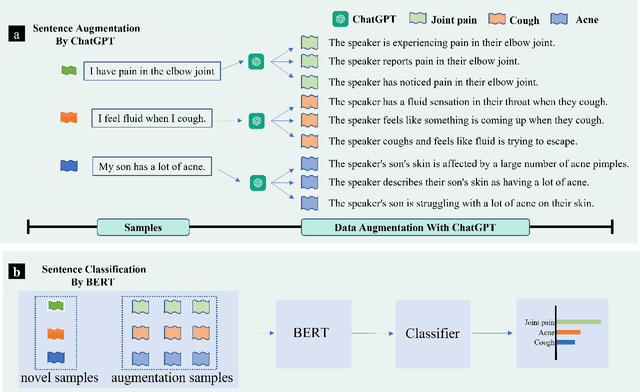
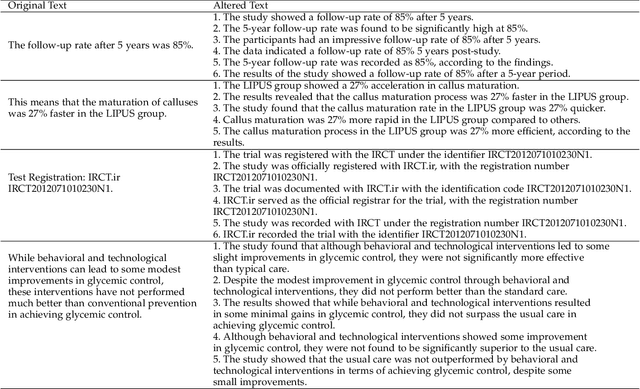
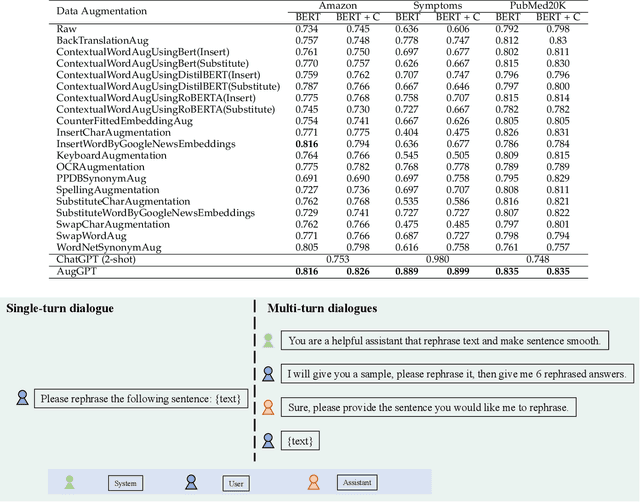
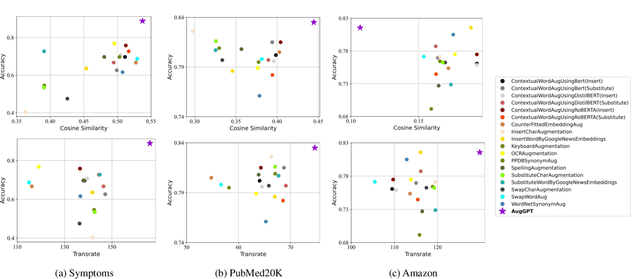
Text data augmentation is an effective strategy for overcoming the challenge of limited sample sizes in many natural language processing (NLP) tasks. This challenge is especially prominent in the few-shot learning scenario, where the data in the target domain is generally much scarcer and of lowered quality. A natural and widely-used strategy to mitigate such challenges is to perform data augmentation to better capture the data invariance and increase the sample size. However, current text data augmentation methods either can't ensure the correct labeling of the generated data (lacking faithfulness) or can't ensure sufficient diversity in the generated data (lacking compactness), or both. Inspired by the recent success of large language models, especially the development of ChatGPT, which demonstrated improved language comprehension abilities, in this work, we propose a text data augmentation approach based on ChatGPT (named AugGPT). AugGPT rephrases each sentence in the training samples into multiple conceptually similar but semantically different samples. The augmented samples can then be used in downstream model training. Experiment results on few-shot learning text classification tasks show the superior performance of the proposed AugGPT approach over state-of-the-art text data augmentation methods in terms of testing accuracy and distribution of the augmented samples.
DeID-GPT: Zero-shot Medical Text De-Identification by GPT-4
Mar 20, 2023
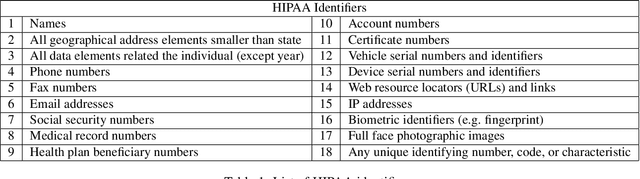

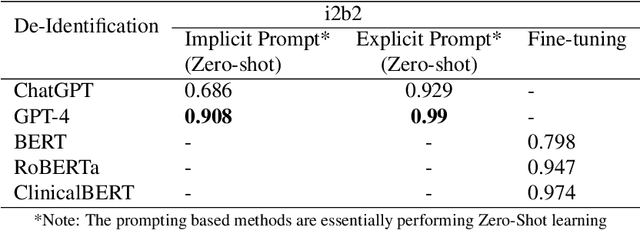
The digitization of healthcare has facilitated the sharing and re-using of medical data but has also raised concerns about confidentiality and privacy. HIPAA (Health Insurance Portability and Accountability Act) mandates removing re-identifying information before the dissemination of medical records. Thus, effective and efficient solutions for de-identifying medical data, especially those in free-text forms, are highly needed. While various computer-assisted de-identification methods, including both rule-based and learning-based, have been developed and used in prior practice, such solutions still lack generalizability or need to be fine-tuned according to different scenarios, significantly imposing restrictions in wider use. The advancement of large language models (LLM), such as ChatGPT and GPT-4, have shown great potential in processing text data in the medical domain with zero-shot in-context learning, especially in the task of privacy protection, as these models can identify confidential information by their powerful named entity recognition (NER) capability. In this work, we developed a novel GPT4-enabled de-identification framework ("DeID-GPT") to automatically identify and remove the identifying information. Compared to existing commonly used medical text data de-identification methods, our developed DeID-GPT showed the highest accuracy and remarkable reliability in masking private information from the unstructured medical text while preserving the original structure and meaning of the text. This study is one of the earliest to utilize ChatGPT and GPT-4 for medical text data processing and de-identification, which provides insights for further research and solution development on the use of LLMs such as ChatGPT/GPT-4 in healthcare. Codes and benchmarking data information are available at https://github.com/yhydhx/ChatGPT-API.
Communication-Efficient Design for Quantized Decentralized Federated Learning
Mar 15, 2023Decentralized federated learning (DFL) is a variant of federated learning, where edge nodes only communicate with their one-hop neighbors to learn the optimal model. However, as information exchange is restricted in a range of one-hop in DFL, inefficient information exchange leads to more communication rounds to reach the targeted training loss. This greatly reduces the communication efficiency. In this paper, we propose a new non-uniform quantization of model parameters to improve DFL convergence. Specifically, we apply the Lloyd-Max algorithm to DFL (LM-DFL) first to minimize the quantization distortion by adjusting the quantization levels adaptively. Convergence guarantee of LM-DFL is established without convex loss assumption. Based on LM-DFL, we then propose a new doubly-adaptive DFL, which jointly considers the ascending number of quantization levels to reduce the amount of communicated information in the training and adapts the quantization levels for non-uniform gradient distributions. Experiment results based on MNIST and CIFAR-10 datasets illustrate the superiority of LM-DFL with the optimal quantized distortion and show that doubly-adaptive DFL can greatly improve communication efficiency.
An ASR-free Fluency Scoring Approach with Self-Supervised Learning
Mar 13, 2023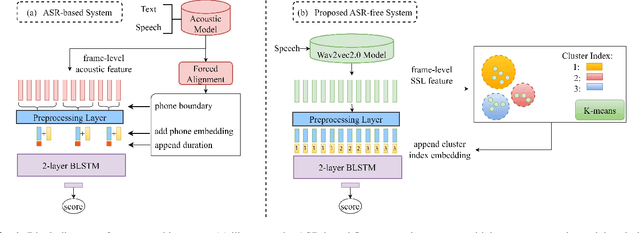
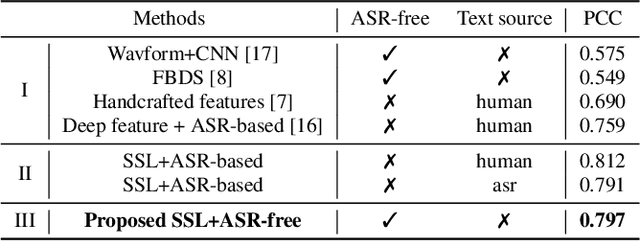

A typical fluency scoring system generally relies on an automatic speech recognition (ASR) system to obtain time stamps in input speech for either the subsequent calculation of fluency-related features or directly modeling speech fluency with an end-to-end approach. This paper describes a novel ASR-free approach for automatic fluency assessment using self-supervised learning (SSL). Specifically, wav2vec2.0 is used to extract frame-level speech features, followed by K-means clustering to assign a pseudo label (cluster index) to each frame. A BLSTM-based model is trained to predict an utterance-level fluency score from frame-level SSL features and the corresponding cluster indexes. Neither speech transcription nor time stamp information is required in the proposed system. It is ASR-free and can potentially avoid the ASR errors effect in practice. Experimental results carried out on non-native English databases show that the proposed approach significantly improves the performance in the "open response" scenario as compared to previous methods and matches the recently reported performance in the "read aloud" scenario.
Leveraging phone-level linguistic-acoustic similarity for utterance-level pronunciation scoring
Mar 13, 2023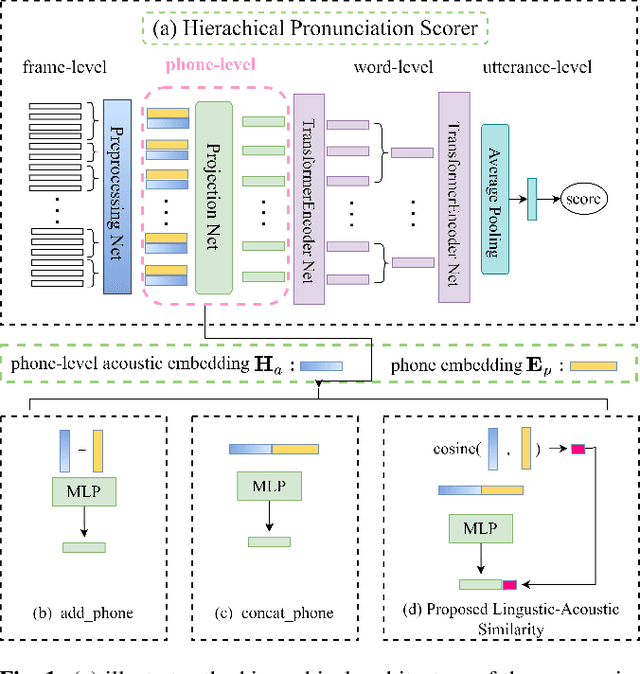
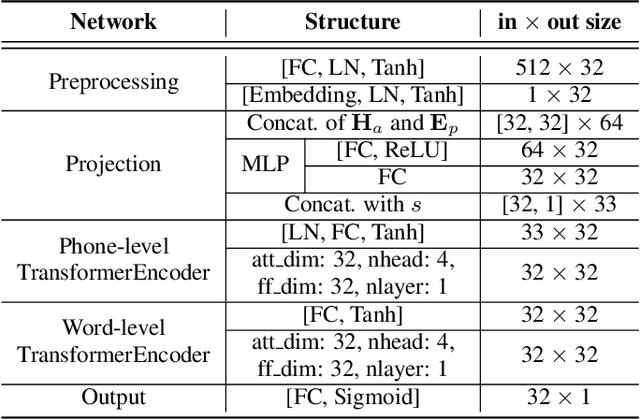
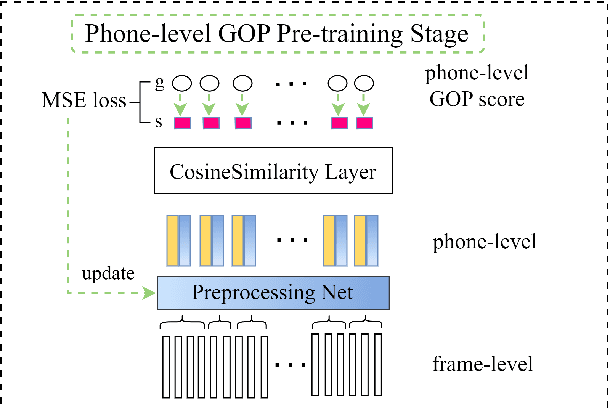
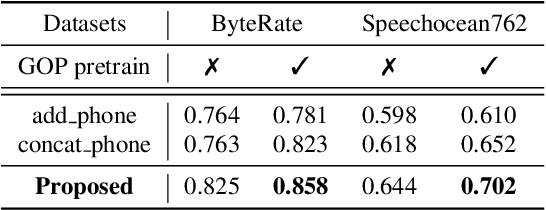
Recent studies on pronunciation scoring have explored the effect of introducing phone embeddings as reference pronunciation, but mostly in an implicit manner, i.e., addition or concatenation of reference phone embedding and actual pronunciation of the target phone as the phone-level pronunciation quality representation. In this paper, we propose to use linguistic-acoustic similarity to explicitly measure the deviation of non-native production from its native reference for pronunciation assessment. Specifically, the deviation is first estimated by the cosine similarity between reference phone embedding and corresponding acoustic embedding. Next, a phone-level Goodness of pronunciation (GOP) pre-training stage is introduced to guide this similarity-based learning for better initialization of the aforementioned two embeddings. Finally, a transformer-based hierarchical pronunciation scorer is used to map a sequence of phone embeddings, acoustic embeddings along with their similarity measures to predict the final utterance-level score. Experimental results on the non-native databases suggest that the proposed system significantly outperforms the baselines, where the acoustic and phone embeddings are simply added or concatenated. A further examination shows that the phone embeddings learned in the proposed approach are able to capture linguistic-acoustic attributes of native pronunciation as reference.
CrossFormer++: A Versatile Vision Transformer Hinging on Cross-scale Attention
Mar 13, 2023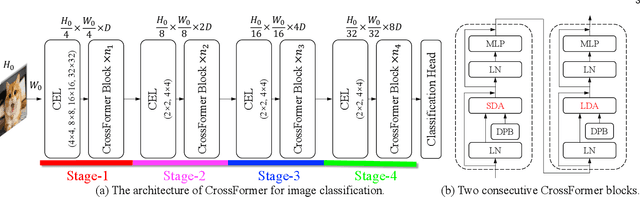
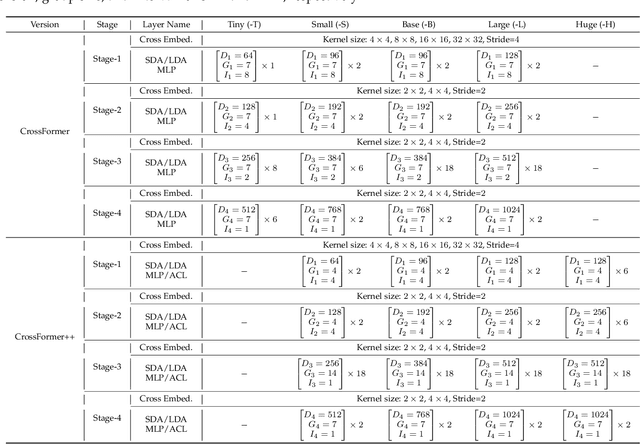
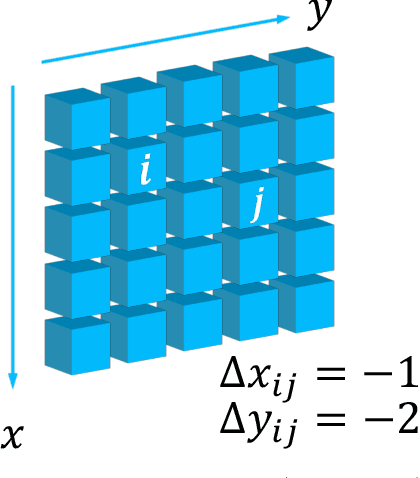
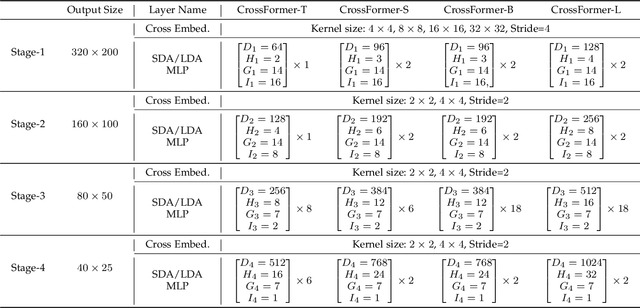
While features of different scales are perceptually important to visual inputs, existing vision transformers do not yet take advantage of them explicitly. To this end, we first propose a cross-scale vision transformer, CrossFormer. It introduces a cross-scale embedding layer (CEL) and a long-short distance attention (LSDA). On the one hand, CEL blends each token with multiple patches of different scales, providing the self-attention module itself with cross-scale features. On the other hand, LSDA splits the self-attention module into a short-distance one and a long-distance counterpart, which not only reduces the computational burden but also keeps both small-scale and large-scale features in the tokens. Moreover, through experiments on CrossFormer, we observe another two issues that affect vision transformers' performance, i.e. the enlarging self-attention maps and amplitude explosion. Thus, we further propose a progressive group size (PGS) paradigm and an amplitude cooling layer (ACL) to alleviate the two issues, respectively. The CrossFormer incorporating with PGS and ACL is called CrossFormer++. Extensive experiments show that CrossFormer++ outperforms the other vision transformers on image classification, object detection, instance segmentation, and semantic segmentation tasks. The code will be available at: https://github.com/cheerss/CrossFormer.
A Systematic Survey of Control Techniques and Applications: From Autonomous Vehicles to Connected and Automated Vehicles
Mar 10, 2023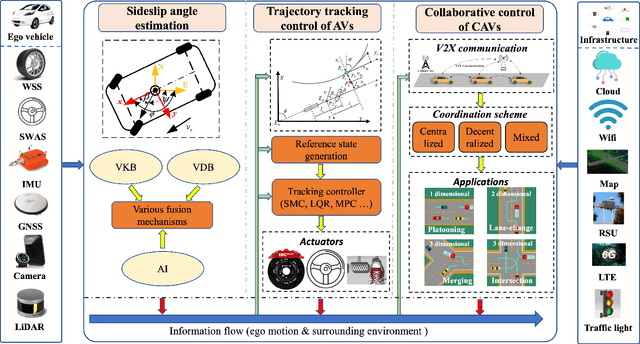
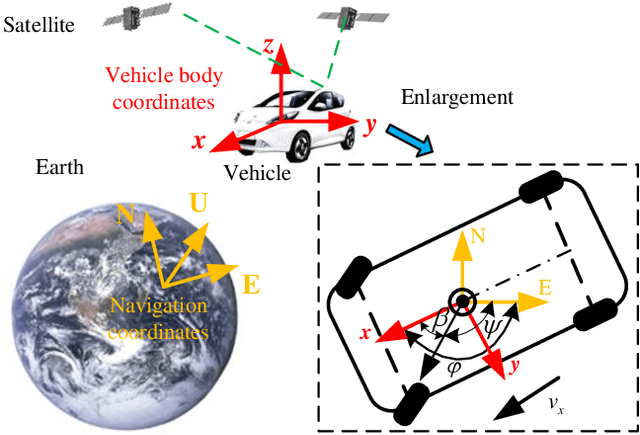
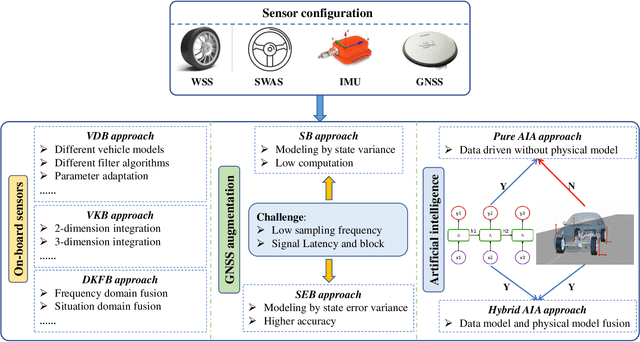
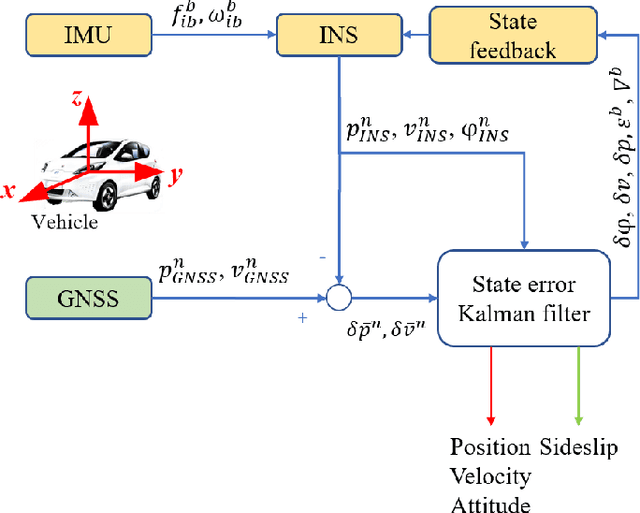
Vehicle control is one of the most critical challenges in autonomous vehicles (AVs) and connected and automated vehicles (CAVs), and it is paramount in vehicle safety, passenger comfort, transportation efficiency, and energy saving. This survey attempts to provide a comprehensive and thorough overview of the current state of vehicle control technology, focusing on the evolution from vehicle state estimation and trajectory tracking control in AVs at the microscopic level to collaborative control in CAVs at the macroscopic level. First, this review starts with vehicle key state estimation, specifically vehicle sideslip angle, which is the most pivotal state for vehicle trajectory control, to discuss representative approaches. Then, we present symbolic vehicle trajectory tracking control approaches for AVs. On top of that, we further review the collaborative control frameworks for CAVs and corresponding applications. Finally, this survey concludes with a discussion of future research directions and the challenges. This survey aims to provide a contextualized and in-depth look at state of the art in vehicle control for AVs and CAVs, identifying critical areas of focus and pointing out the potential areas for further exploration.