 Add to Chrome
 Add to Firefox
 Add to Edge
Autonomous Driving in Unstructured Environments: How Far Have We Come?
Oct 10, 2024

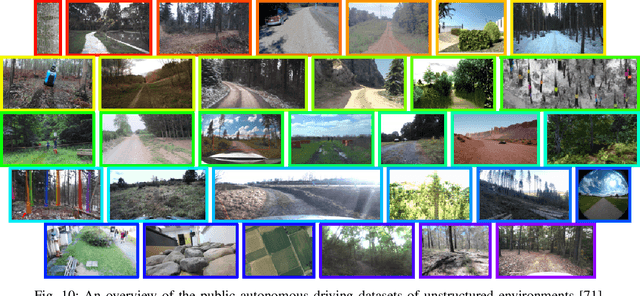
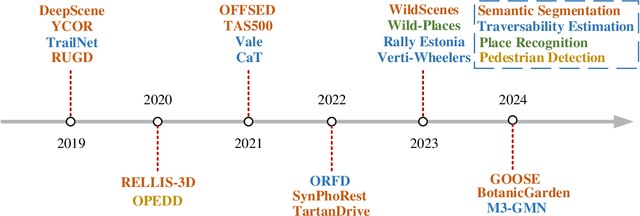
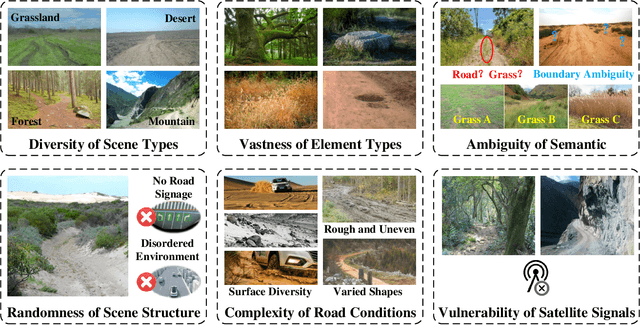
Research on autonomous driving in unstructured outdoor environments is less advanced than in structured urban settings due to challenges like environmental diversities and scene complexity. These environments-such as rural areas and rugged terrains-pose unique obstacles that are not common in structured urban areas. Despite these difficulties, autonomous driving in unstructured outdoor environments is crucial for applications in agriculture, mining, and military operations. Our survey reviews over 250 papers for autonomous driving in unstructured outdoor environments, covering offline mapping, pose estimation, environmental perception, path planning, end-to-end autonomous driving, datasets, and relevant challenges. We also discuss emerging trends and future research directions. This review aims to consolidate knowledge and encourage further research for autonomous driving in unstructured environments. To support ongoing work, we maintain an active repository with up-to-date literature and open-source projects at: https://github.com/chaytonmin/Survey-Autonomous-Driving-in-Unstructured-Environments.

Enhancing Multimodal LLM for Detailed and Accurate Video Captioning using Multi-Round Preference Optimization
Oct 09, 2024

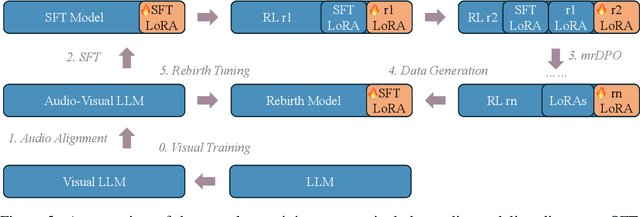

Videos contain a wealth of information, and generating detailed and accurate descriptions in natural language is a key aspect of video understanding. In this paper, we present video-SALMONN 2, an advanced audio-visual large language model (LLM) with low-rank adaptation (LoRA) designed for enhanced video (with paired audio) captioning through directed preference optimization (DPO). We propose new metrics to evaluate the completeness and accuracy of video descriptions, which are optimized using DPO. To further improve training, we introduce a novel multi-round DPO (mrDPO) approach, which involves periodically updating the DPO reference model, merging and re-initializing the LoRA module as a proxy for parameter updates after each training round (1,000 steps), and incorporating guidance from ground-truth video captions to stabilize the process. To address potential catastrophic forgetting of non-captioning abilities due to mrDPO, we propose rebirth tuning, which finetunes the pre-DPO LLM by using the captions generated by the mrDPO-trained model as supervised labels. Experiments show that mrDPO significantly enhances video-SALMONN 2's captioning accuracy, reducing global and local error rates by 40\% and 20\%, respectively, while decreasing the repetition rate by 35\%. The final video-SALMONN 2 model, with just 7 billion parameters, surpasses leading models such as GPT-4o and Gemini-1.5-Pro in video captioning tasks, while maintaining competitive performance to the state-of-the-art on widely used video question-answering benchmark among models of similar size. Upon acceptance, we will release the code, model checkpoints, and training and test data. Demos are available at \href{https://video-salmonn-2.github.io}{https://video-salmonn-2.github.io}.
Video Instruction Tuning With Synthetic Data
Oct 03, 2024


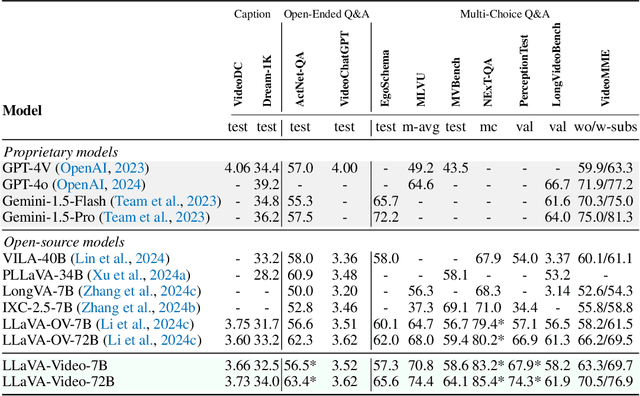
The development of video large multimodal models (LMMs) has been hindered by the difficulty of curating large amounts of high-quality raw data from the web. To address this, we propose an alternative approach by creating a high-quality synthetic dataset specifically for video instruction-following, namely LLaVA-Video-178K. This dataset includes key tasks such as detailed captioning, open-ended question-answering (QA), and multiple-choice QA. By training on this dataset, in combination with existing visual instruction tuning data, we introduce LLaVA-Video, a new video LMM. Our experiments demonstrate that LLaVA-Video achieves strong performance across various video benchmarks, highlighting the effectiveness of our dataset. We plan to release the dataset, its generation pipeline, and the model checkpoints.
MinerU: An Open-Source Solution for Precise Document Content Extraction
Sep 27, 2024


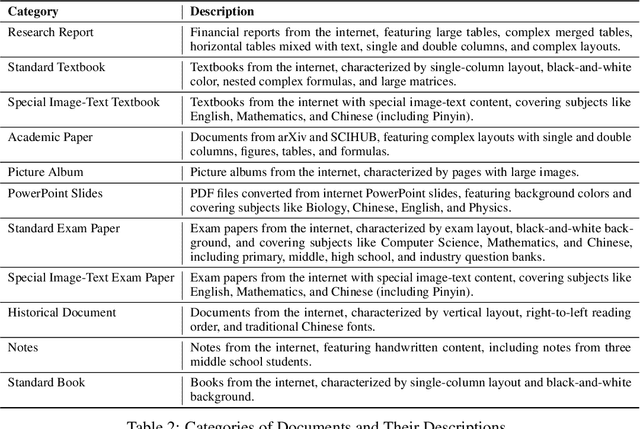
Document content analysis has been a crucial research area in computer vision. Despite significant advancements in methods such as OCR, layout detection, and formula recognition, existing open-source solutions struggle to consistently deliver high-quality content extraction due to the diversity in document types and content. To address these challenges, we present MinerU, an open-source solution for high-precision document content extraction. MinerU leverages the sophisticated PDF-Extract-Kit models to extract content from diverse documents effectively and employs finely-tuned preprocessing and postprocessing rules to ensure the accuracy of the final results. Experimental results demonstrate that MinerU consistently achieves high performance across various document types, significantly enhancing the quality and consistency of content extraction. The MinerU open-source project is available at https://github.com/opendatalab/MinerU.
A Generalized Tensor Formulation for Hyperspectral Image Super-Resolution Under General Spatial Blurring
Sep 27, 2024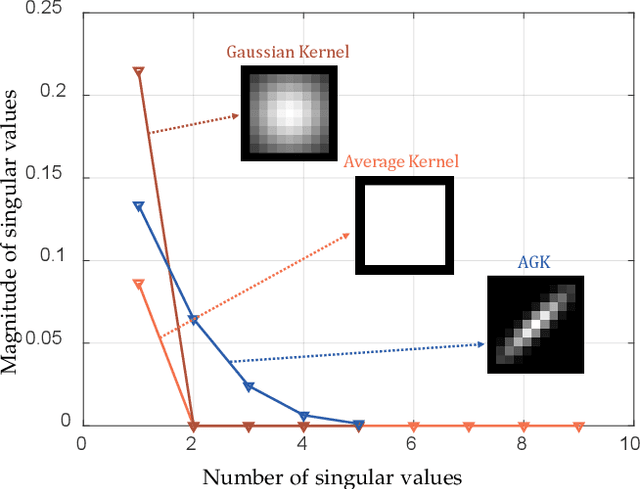
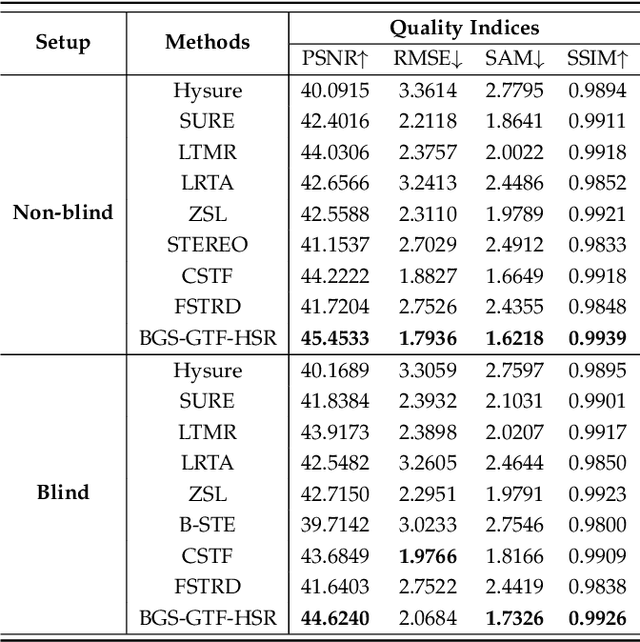
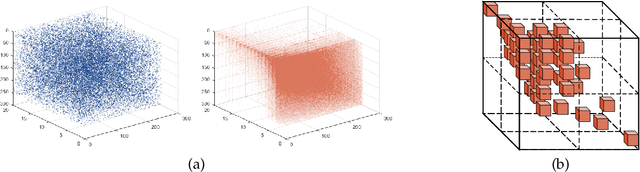
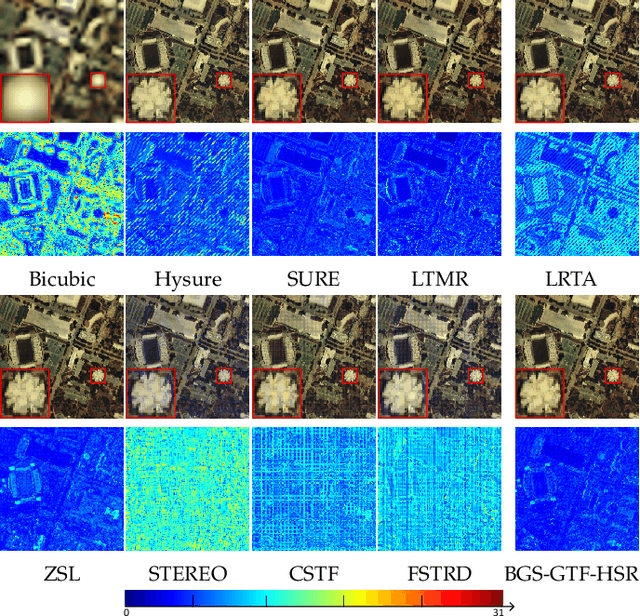
Hyperspectral super-resolution is commonly accomplished by the fusing of a hyperspectral imaging of low spatial resolution with a multispectral image of high spatial resolution, and many tensor-based approaches to this task have been recently proposed. Yet, it is assumed in such tensor-based methods that the spatial-blurring operation that creates the observed hyperspectral image from the desired super-resolved image is separable into independent horizontal and vertical blurring. Recent work has argued that such separable spatial degradation is ill-equipped to model the operation of real sensors which may exhibit, for example, anisotropic blurring. To accommodate this fact, a generalized tensor formulation based on a Kronecker decomposition is proposed to handle any general spatial-degradation matrix, including those that are not separable as previously assumed. Analysis of the generalized formulation reveals conditions under which exact recovery of the desired super-resolved image is guaranteed, and a practical algorithm for such recovery, driven by a blockwise-group-sparsity regularization, is proposed. Extensive experimental results demonstrate that the proposed generalized tensor approach outperforms not only traditional matrix-based techniques but also state-of-the-art tensor-based methods; the gains with respect to the latter are especially significant in cases of anisotropic spatial blurring.
Contrasformer: A Brain Network Contrastive Transformer for Neurodegenerative Condition Identification
Sep 17, 2024Understanding neurological disorder is a fundamental problem in neuroscience, which often requires the analysis of brain networks derived from functional magnetic resonance imaging (fMRI) data. Despite the prevalence of Graph Neural Networks (GNNs) and Graph Transformers in various domains, applying them to brain networks faces challenges. Specifically, the datasets are severely impacted by the noises caused by distribution shifts across sub-populations and the neglect of node identities, both obstruct the identification of disease-specific patterns. To tackle these challenges, we propose Contrasformer, a novel contrastive brain network Transformer. It generates a prior-knowledge-enhanced contrast graph to address the distribution shifts across sub-populations by a two-stream attention mechanism. A cross attention with identity embedding highlights the identity of nodes, and three auxiliary losses ensure group consistency. Evaluated on 4 functional brain network datasets over 4 different diseases, Contrasformer outperforms the state-of-the-art methods for brain networks by achieving up to 10.8\% improvement in accuracy, which demonstrates its efficacy in neurological disorder identification. Case studies illustrate its interpretability, especially in the context of neuroscience. This paper provides a solution for analyzing brain networks, offering valuable insights into neurological disorders. Our code is available at \url{https://github.com/AngusMonroe/Contrasformer}.
BihoT: A Large-Scale Dataset and Benchmark for Hyperspectral Camouflaged Object Tracking
Aug 22, 2024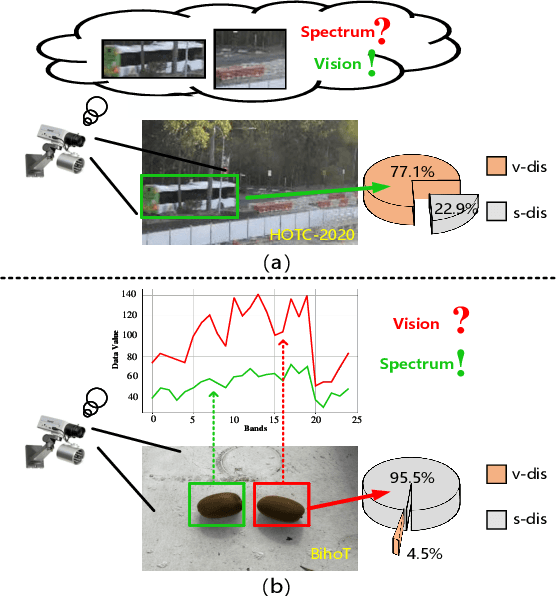
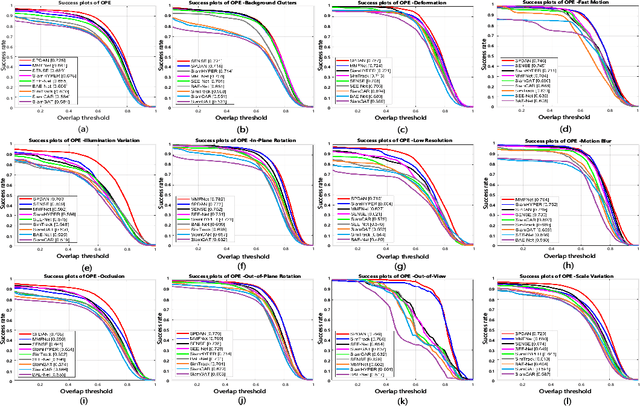
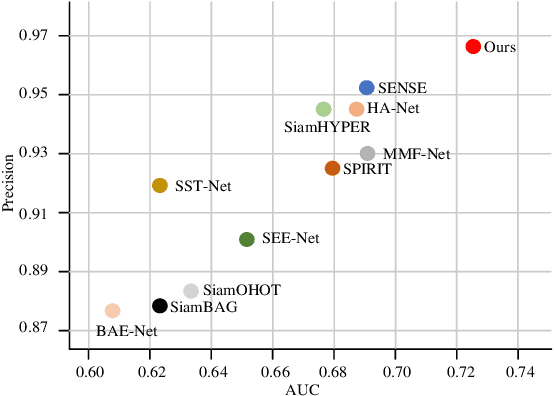
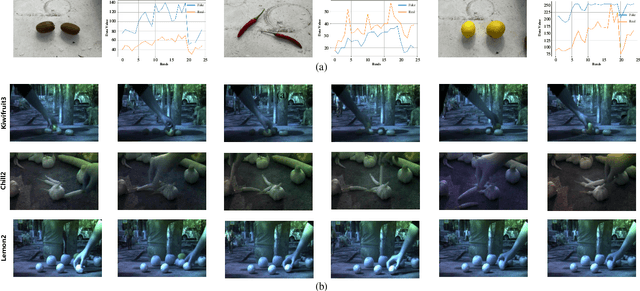
Hyperspectral object tracking (HOT) has exhibited potential in various applications, particularly in scenes where objects are camouflaged. Existing trackers can effectively retrieve objects via band regrouping because of the bias in existing HOT datasets, where most objects tend to have distinguishing visual appearances rather than spectral characteristics. This bias allows the tracker to directly use the visual features obtained from the false-color images generated by hyperspectral images without the need to extract spectral features. To tackle this bias, we find that the tracker should focus on the spectral information when object appearance is unreliable. Thus, we provide a new task called hyperspectral camouflaged object tracking (HCOT) and meticulously construct a large-scale HCOT dataset, termed BihoT, which consists of 41,912 hyperspectral images covering 49 video sequences. The dataset covers various artificial camouflage scenes where objects have similar appearances, diverse spectrums, and frequent occlusion, making it a very challenging dataset for HCOT. Besides, a simple but effective baseline model, named spectral prompt-based distractor-aware network (SPDAN), is proposed, comprising a spectral embedding network (SEN), a spectral prompt-based backbone network (SPBN), and a distractor-aware module (DAM). Specifically, the SEN extracts spectral-spatial features via 3-D and 2-D convolutions. Then, the SPBN fine-tunes powerful RGB trackers with spectral prompts and alleviates the insufficiency of training samples. Moreover, the DAM utilizes a novel statistic to capture the distractor caused by occlusion from objects and background. Extensive experiments demonstrate that our proposed SPDAN achieves state-of-the-art performance on the proposed BihoT and other HOT datasets.
Subspace Prototype Guidance for Mitigating Class Imbalance in Point Cloud Semantic Segmentation
Aug 20, 2024

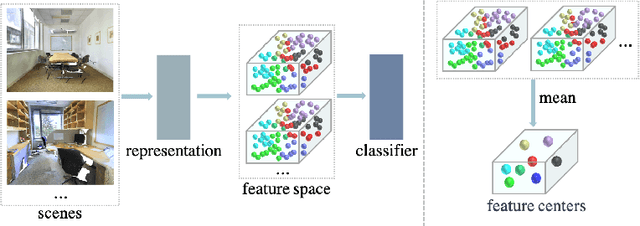
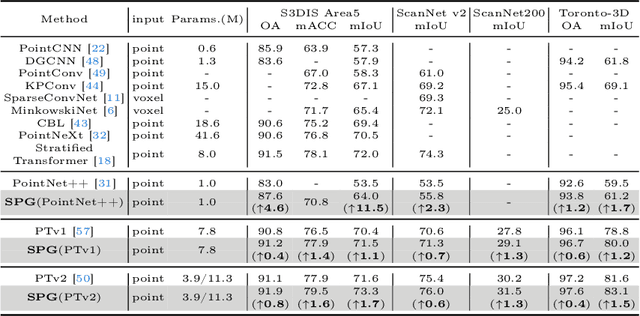
Point cloud semantic segmentation can significantly enhance the perception of an intelligent agent. Nevertheless, the discriminative capability of the segmentation network is influenced by the quantity of samples available for different categories. To mitigate the cognitive bias induced by class imbalance, this paper introduces a novel method, namely subspace prototype guidance (\textbf{SPG}), to guide the training of segmentation network. Specifically, the point cloud is initially separated into independent point sets by category to provide initial conditions for the generation of feature subspaces. The auxiliary branch which consists of an encoder and a projection head maps these point sets into separate feature subspaces. Subsequently, the feature prototypes which are extracted from the current separate subspaces and then combined with prototypes of historical subspaces guide the feature space of main branch to enhance the discriminability of features of minority categories. The prototypes derived from the feature space of main branch are also employed to guide the training of the auxiliary branch, forming a supervisory loop to maintain consistent convergence of the entire network. The experiments conducted on the large public benchmarks (i.e. S3DIS, ScanNet v2, ScanNet200, Toronto-3D) and collected real-world data illustrate that the proposed method significantly improves the segmentation performance and surpasses the state-of-the-art method. The code is available at \url{https://github.com/Javion11/PointLiBR.git}.
Deep Code Search with Naming-Agnostic Contrastive Multi-View Learning
Aug 18, 2024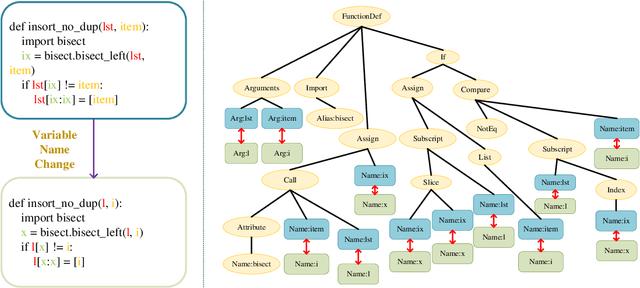
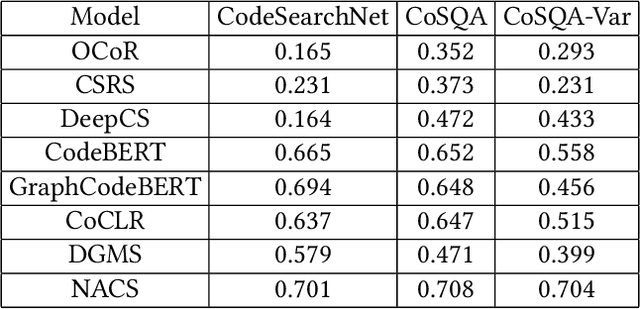
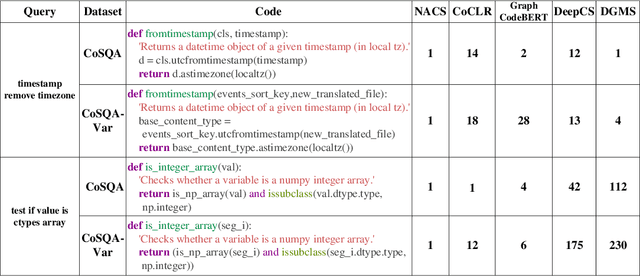
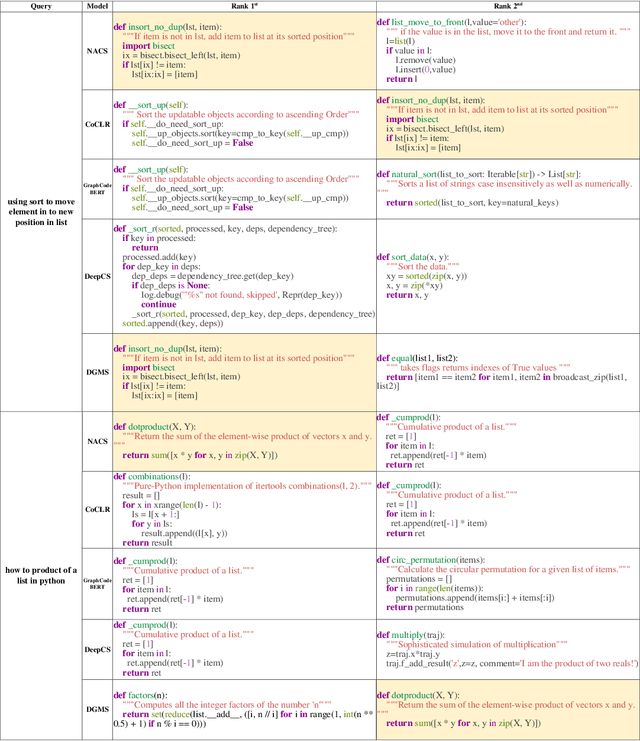
Software development is a repetitive task, as developers usually reuse or get inspiration from existing implementations. Code search, which refers to the retrieval of relevant code snippets from a codebase according to the developer's intent that has been expressed as a query, has become increasingly important in the software development process. Due to the success of deep learning in various applications, a great number of deep learning based code search approaches have sprung up and achieved promising results. However, developers may not follow the same naming conventions and the same variable may have different variable names in different implementations, bringing a challenge to deep learning based code search methods that rely on explicit variable correspondences to understand source code. To overcome this challenge, we propose a naming-agnostic code search method (NACS) based on contrastive multi-view code representation learning. NACS strips information bound to variable names from Abstract Syntax Tree (AST), the representation of the abstract syntactic structure of source code, and focuses on capturing intrinsic properties solely from AST structures. We use semantic-level and syntax-level augmentation techniques to prepare realistically rational data and adopt contrastive learning to design a graph-view modeling component in NACS to enhance the understanding of code snippets. We further model ASTs in a path view to strengthen the graph-view modeling component through multi-view learning. Extensive experiments show that NACS provides superior code search performance compared to baselines and NACS can be adapted to help existing code search methods overcome the impact of different naming conventions.
ChemVLM: Exploring the Power of Multimodal Large Language Models in Chemistry Area
Aug 16, 2024

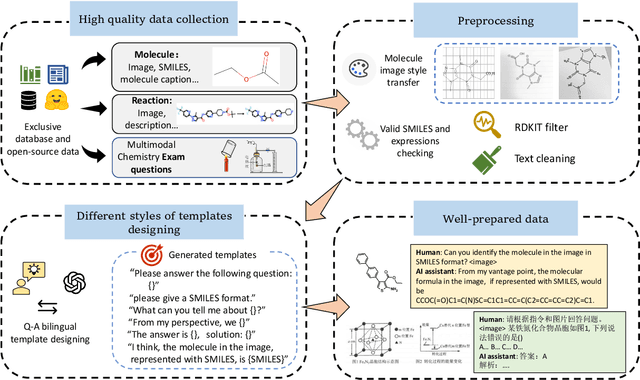

Large Language Models (LLMs) have achieved remarkable success and have been applied across various scientific fields, including chemistry. However, many chemical tasks require the processing of visual information, which cannot be successfully handled by existing chemical LLMs. This brings a growing need for models capable of integrating multimodal information in the chemical domain. In this paper, we introduce \textbf{ChemVLM}, an open-source chemical multimodal large language model specifically designed for chemical applications. ChemVLM is trained on a carefully curated bilingual multimodal dataset that enhances its ability to understand both textual and visual chemical information, including molecular structures, reactions, and chemistry examination questions. We develop three datasets for comprehensive evaluation, tailored to Chemical Optical Character Recognition (OCR), Multimodal Chemical Reasoning (MMCR), and Multimodal Molecule Understanding tasks. We benchmark ChemVLM against a range of open-source and proprietary multimodal large language models on various tasks. Experimental results demonstrate that ChemVLM achieves competitive performance across all evaluated tasks. Our model can be found at https://huggingface.co/AI4Chem/ChemVLM-26B.