 Add to Chrome
 Add to Firefox
 Add to Edge
LLaVA-OneVision-2: Towards Next-Generation Perceptual Intelligence
May 25, 2026
We introduce LLaVA-OneVision-2 (LLaVA-OV-2), the most capable vision-language model in the LLaVA-OneVision series to date, achieving superior performance across a broad range of multimodal benchmarks. The model builds on a native OneVision-Encoder and incorporates Windowed Attention for efficient local computation while maintaining native resolution. Its key advance is codec-stream tokenization: it treats compressed video as a continuous bit-cost stream, where bit-cost dynamics determine adaptive temporal groups, and motion-residual cues select salient spatial evidence into compact visual canvases. This allocation concentrates a limited token budget on event-bearing content, enabling more stable long-video token compression than fixed groups of pictures. A shared 3D RoPE further places codec canvases, sampled frames, and images in a unified spatiotemporal coordinate system. Furthermore, we build the LLaVA-OV-2 data and training stack around large-scale open supervision: approximately 8M re-captioned video samples for pretraining, a 4M-sample spatial corpus for fine-tuning. We also introduce JumpScore, a temporal-localization benchmark targeting fine-grained grounding in high-frequency, densely repeated motion, a regime underrepresented by existing video evaluations. A standout capability of LLaVA-OV-2 is its unified perception across video understanding, temporal grounding, spatial grounding, and manipulation-trace reasoning. On JumpScore, LLaVA-OneVision-2-8B reaches 74.9 JumpScore mAP, surpassing Qwen3-VL-8B (30.1) by +44.8 points; under matched visual-token budgets on the same benchmark, codec-stream inputs improve temporal grounding over frame sampling by +9.7 points. Across standard benchmarks, LLaVA-OneVision-2-8B further outperforms Qwen3-VL-8B by +4.3 average points on video tasks, +5.3 on spatial tasks, and +15.6 average J&F on tracking tasks.

UniT: Unified Multimodal Chain-of-Thought Test-time Scaling
Feb 12, 2026Unified models can handle both multimodal understanding and generation within a single architecture, yet they typically operate in a single pass without iteratively refining their outputs. Many multimodal tasks, especially those involving complex spatial compositions, multiple interacting objects, or evolving instructions, require decomposing instructions, verifying intermediate results, and making iterative corrections. While test-time scaling (TTS) has demonstrated that allocating additional inference compute for iterative reasoning substantially improves language model performance, extending this paradigm to unified multimodal models remains an open challenge. We introduce UniT, a framework for multimodal chain-of-thought test-time scaling that enables a single unified model to reason, verify, and refine across multiple rounds. UniT combines agentic data synthesis, unified model training, and flexible test-time inference to elicit cognitive behaviors including verification, subgoal decomposition, and content memory. Our key findings are: (1) unified models trained on short reasoning trajectories generalize to longer inference chains at test time; (2) sequential chain-of-thought reasoning provides a more scalable and compute-efficient TTS strategy than parallel sampling; (3) training on generation and editing trajectories improves out-of-distribution visual reasoning. These results establish multimodal test-time scaling as an effective paradigm for advancing both generation and understanding in unified models.
OneVision-Encoder: Codec-Aligned Sparsity as a Foundational Principle for Multimodal Intelligence
Feb 09, 2026Hypothesis. Artificial general intelligence is, at its core, a compression problem. Effective compression demands resonance: deep learning scales best when its architecture aligns with the fundamental structure of the data. These are the fundamental principles. Yet, modern vision architectures have strayed from these truths: visual signals are highly redundant, while discriminative information, the surprise, is sparse. Current models process dense pixel grids uniformly, wasting vast compute on static background rather than focusing on the predictive residuals that define motion and meaning. We argue that to solve visual understanding, we must align our architectures with the information-theoretic principles of video, i.e., Codecs. Method. OneVision-Encoder encodes video by compressing predictive visual structure into semantic meaning. By adopting Codec Patchification, OV-Encoder abandons uniform computation to focus exclusively on the 3.1%-25% of regions rich in signal entropy. To unify spatial and temporal reasoning under irregular token layouts, OneVision-Encoder employs a shared 3D RoPE and is trained with a large-scale cluster discrimination objective over more than one million semantic concepts, jointly capturing object permanence and motion dynamics. Evidence. The results validate our core hypothesis: efficiency and accuracy are not a trade-off; they are positively correlated. When integrated into LLM, it consistently outperforms strong vision backbones such as Qwen3-ViT and SigLIP2 across 16 image, video, and document understanding benchmarks, despite using substantially fewer visual tokens and pretraining data. Notably, on video understanding tasks, OV-Encoder achieves an average improvement of 4.1% over Qwen3-ViT. Codec-aligned, patch-level sparsity is a foundational principle, enabling OV-Encoder as a scalable engine for next-generation visual generalists.
Seed1.5-VL Technical Report
May 11, 2025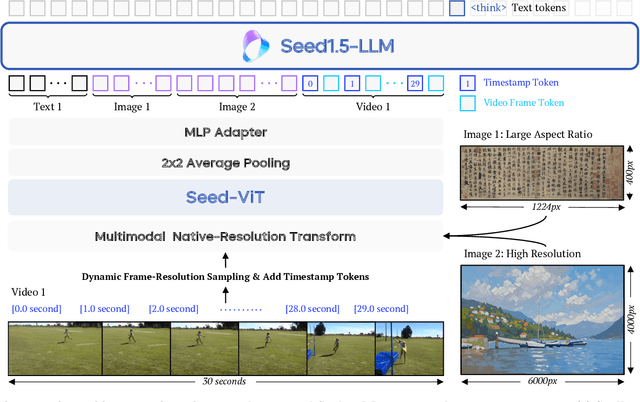

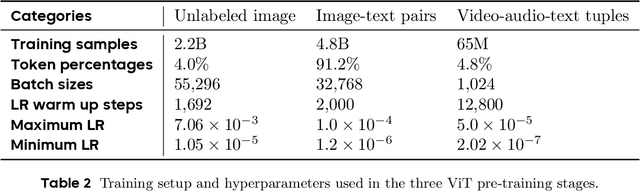
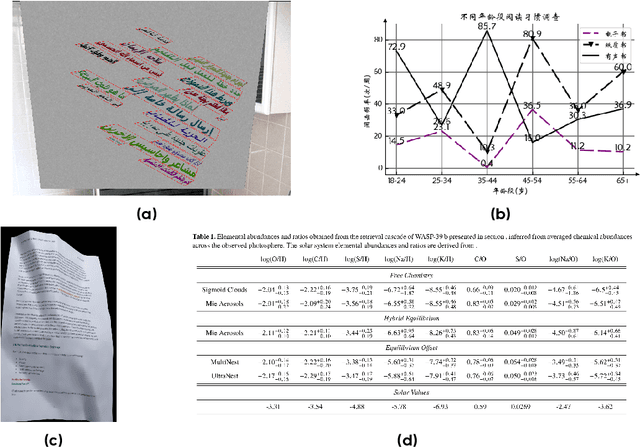
We present Seed1.5-VL, a vision-language foundation model designed to advance general-purpose multimodal understanding and reasoning. Seed1.5-VL is composed with a 532M-parameter vision encoder and a Mixture-of-Experts (MoE) LLM of 20B active parameters. Despite its relatively compact architecture, it delivers strong performance across a wide spectrum of public VLM benchmarks and internal evaluation suites, achieving the state-of-the-art performance on 38 out of 60 public benchmarks. Moreover, in agent-centric tasks such as GUI control and gameplay, Seed1.5-VL outperforms leading multimodal systems, including OpenAI CUA and Claude 3.7. Beyond visual and video understanding, it also demonstrates strong reasoning abilities, making it particularly effective for multimodal reasoning challenges such as visual puzzles. We believe these capabilities will empower broader applications across diverse tasks. In this report, we mainly provide a comprehensive review of our experiences in building Seed1.5-VL across model design, data construction, and training at various stages, hoping that this report can inspire further research. Seed1.5-VL is now accessible at https://www.volcengine.com/ (Volcano Engine Model ID: doubao-1-5-thinking-vision-pro-250428)
Painting with Words: Elevating Detailed Image Captioning with Benchmark and Alignment Learning
Mar 10, 2025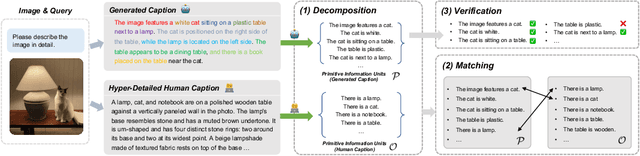
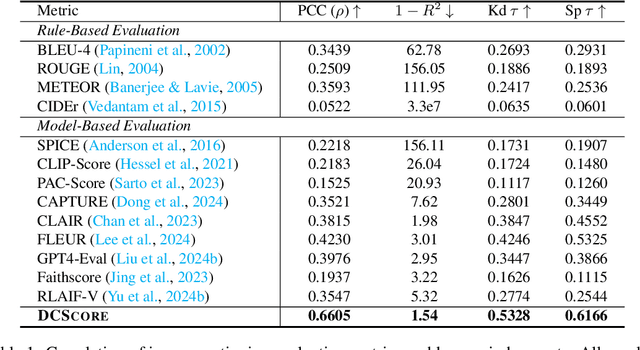
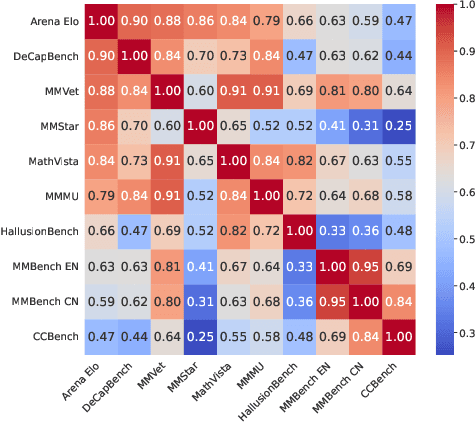
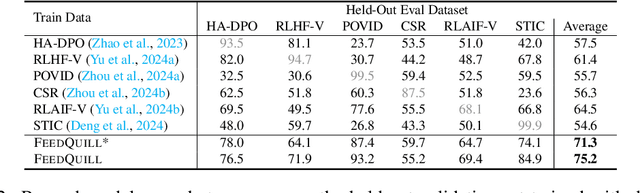
Image captioning has long been a pivotal task in visual understanding, with recent advancements in vision-language models (VLMs) significantly enhancing the ability to generate detailed image captions. However, the evaluation of detailed image captioning remains underexplored due to outdated evaluation metrics and coarse annotations. In this paper, we introduce DeCapBench along with a novel metric, DCScore, specifically designed for detailed captioning tasks. DCScore evaluates hallucinations and fine-grained comprehensiveness by deconstructing responses into the smallest self-sufficient units, termed primitive information units, and assessing them individually. Our evaluation shows that DCScore aligns more closely with human judgment than other rule-based or model-based metrics. Concurrently, DeCapBench exhibits a high correlation with VLM arena results on descriptive tasks, surpassing existing benchmarks for vision-language models. Additionally, we present an automatic fine-grained feedback collection method, FeedQuill, for preference optimization based on our advanced metric, showing robust generalization capabilities across auto-generated preference data. Extensive experiments on multiple VLMs demonstrate that our method not only significantly reduces hallucinations but also enhances performance across various benchmarks, achieving superior detail captioning performance while surpassing GPT-4o.
Video Instruction Tuning With Synthetic Data
Oct 03, 2024


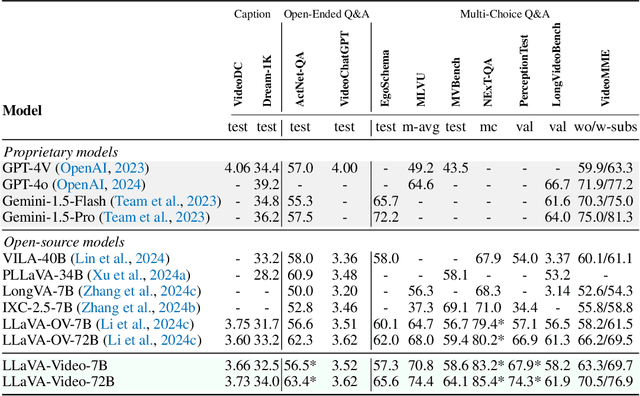
The development of video large multimodal models (LMMs) has been hindered by the difficulty of curating large amounts of high-quality raw data from the web. To address this, we propose an alternative approach by creating a high-quality synthetic dataset specifically for video instruction-following, namely LLaVA-Video-178K. This dataset includes key tasks such as detailed captioning, open-ended question-answering (QA), and multiple-choice QA. By training on this dataset, in combination with existing visual instruction tuning data, we introduce LLaVA-Video, a new video LMM. Our experiments demonstrate that LLaVA-Video achieves strong performance across various video benchmarks, highlighting the effectiveness of our dataset. We plan to release the dataset, its generation pipeline, and the model checkpoints.
LLaVA-Critic: Learning to Evaluate Multimodal Models
Oct 03, 2024We introduce LLaVA-Critic, the first open-source large multimodal model (LMM) designed as a generalist evaluator to assess performance across a wide range of multimodal tasks. LLaVA-Critic is trained using a high-quality critic instruction-following dataset that incorporates diverse evaluation criteria and scenarios. Our experiments demonstrate the model's effectiveness in two key areas: (1) LMM-as-a-Judge, where LLaVA-Critic provides reliable evaluation scores, performing on par with or surpassing GPT models on multiple evaluation benchmarks; and (2) Preference Learning, where it generates reward signals for preference learning, enhancing model alignment capabilities. This work underscores the potential of open-source LMMs in self-critique and evaluation, setting the stage for future research into scalable, superhuman alignment feedback mechanisms for LMMs.
SAM2Point: Segment Any 3D as Videos in Zero-shot and Promptable Manners
Aug 29, 2024


We introduce SAM2Point, a preliminary exploration adapting Segment Anything Model 2 (SAM 2) for zero-shot and promptable 3D segmentation. SAM2Point interprets any 3D data as a series of multi-directional videos, and leverages SAM 2 for 3D-space segmentation, without further training or 2D-3D projection. Our framework supports various prompt types, including 3D points, boxes, and masks, and can generalize across diverse scenarios, such as 3D objects, indoor scenes, outdoor environments, and raw sparse LiDAR. Demonstrations on multiple 3D datasets, e.g., Objaverse, S3DIS, ScanNet, Semantic3D, and KITTI, highlight the robust generalization capabilities of SAM2Point. To our best knowledge, we present the most faithful implementation of SAM in 3D, which may serve as a starting point for future research in promptable 3D segmentation. Online Demo: https://huggingface.co/spaces/ZiyuG/SAM2Point . Code: https://github.com/ZiyuGuo99/SAM2Point .
LLaVA-OneVision: Easy Visual Task Transfer
Aug 06, 2024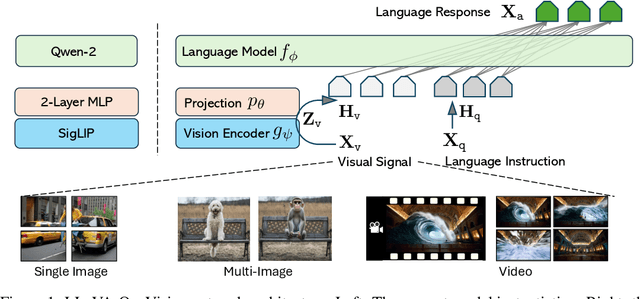


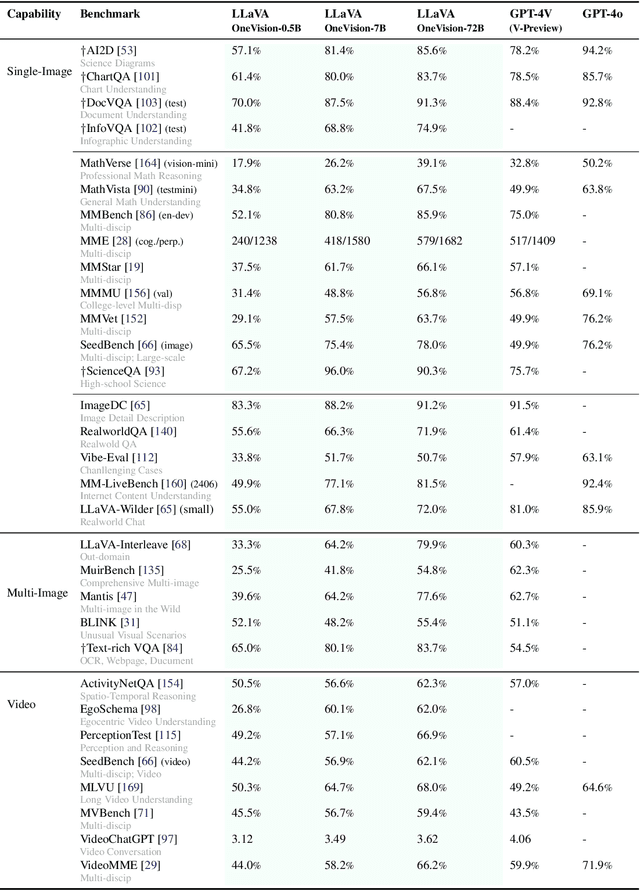
We present LLaVA-OneVision, a family of open large multimodal models (LMMs) developed by consolidating our insights into data, models, and visual representations in the LLaVA-NeXT blog series. Our experimental results demonstrate that LLaVA-OneVision is the first single model that can simultaneously push the performance boundaries of open LMMs in three important computer vision scenarios: single-image, multi-image, and video scenarios. Importantly, the design of LLaVA-OneVision allows strong transfer learning across different modalities/scenarios, yielding new emerging capabilities. In particular, strong video understanding and cross-scenario capabilities are demonstrated through task transfer from images to videos.
LMMs-Eval: Reality Check on the Evaluation of Large Multimodal Models
Jul 17, 2024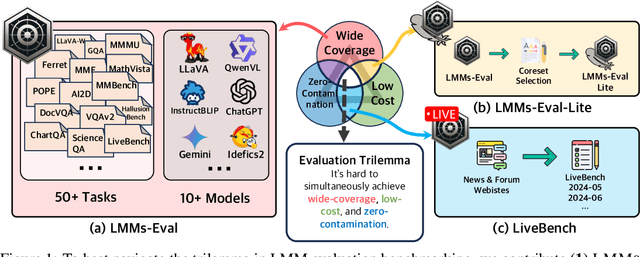
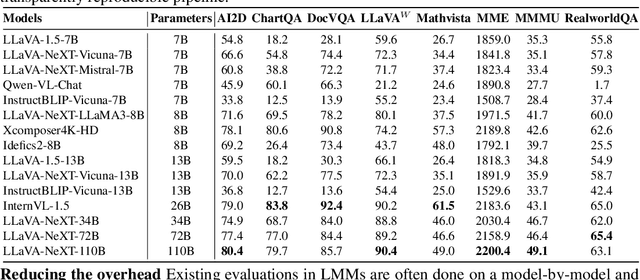
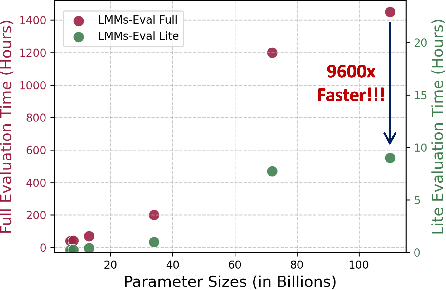
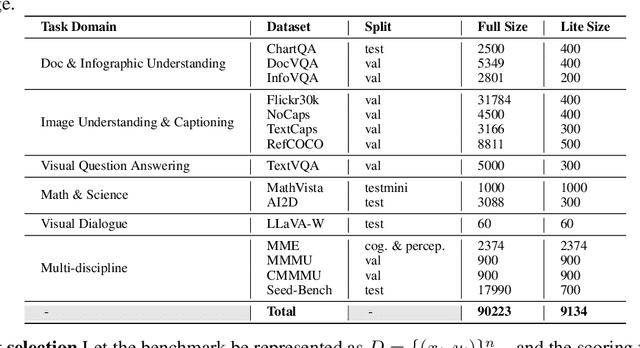
The advances of large foundation models necessitate wide-coverage, low-cost, and zero-contamination benchmarks. Despite continuous exploration of language model evaluations, comprehensive studies on the evaluation of Large Multi-modal Models (LMMs) remain limited. In this work, we introduce LMMS-EVAL, a unified and standardized multimodal benchmark framework with over 50 tasks and more than 10 models to promote transparent and reproducible evaluations. Although LMMS-EVAL offers comprehensive coverage, we find it still falls short in achieving low cost and zero contamination. To approach this evaluation trilemma, we further introduce LMMS-EVAL LITE, a pruned evaluation toolkit that emphasizes both coverage and efficiency. Additionally, we present Multimodal LIVEBENCH that utilizes continuously updating news and online forums to assess models' generalization abilities in the wild, featuring a low-cost and zero-contamination evaluation approach. In summary, our work highlights the importance of considering the evaluation trilemma and provides practical solutions to navigate the trade-offs in evaluating large multi-modal models, paving the way for more effective and reliable benchmarking of LMMs. We opensource our codebase and maintain leaderboard of LIVEBENCH at https://github.com/EvolvingLMMs-Lab/lmms-eval and https://huggingface.co/spaces/lmms-lab/LiveBench.