 Add to Chrome
 Add to Firefox
 Add to Edge
UNIMO-2: End-to-End Unified Vision-Language Grounded Learning
Mar 17, 2022
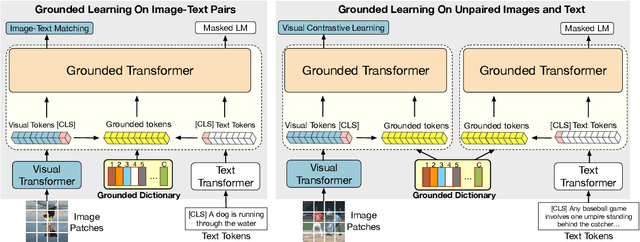
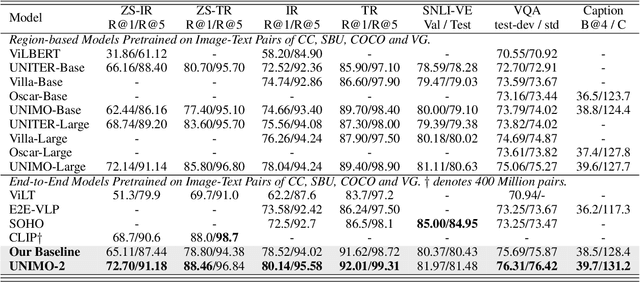
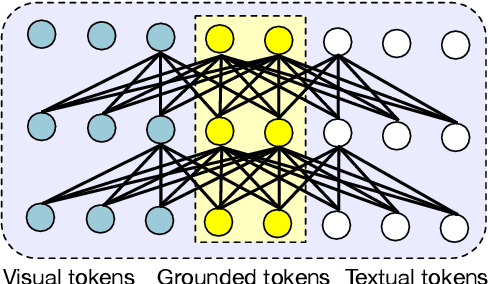
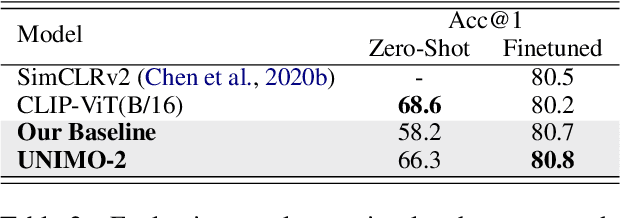
Vision-Language Pre-training (VLP) has achieved impressive performance on various cross-modal downstream tasks. However, most existing methods can only learn from aligned image-caption data and rely heavily on expensive regional features, which greatly limits their scalability and performance. In this paper, we propose an end-to-end unified-modal pre-training framework, namely UNIMO-2, for joint learning on both aligned image-caption data and unaligned image-only and text-only corpus. We build a unified Transformer model to jointly learn visual representations, textual representations and semantic alignment between images and texts. In particular, we propose to conduct grounded learning on both images and texts via a sharing grounded space, which helps bridge unaligned images and texts, and align the visual and textual semantic spaces on different types of corpora. The experiments show that our grounded learning method can improve textual and visual semantic alignment for improving performance on various cross-modal tasks. Moreover, benefiting from effective joint modeling of different types of corpora, our model also achieves impressive performance on single-modal visual and textual tasks. Our code and models are public at the UNIMO project page https://unimo-ptm.github.io/.

DU-VLG: Unifying Vision-and-Language Generation via Dual Sequence-to-Sequence Pre-training
Mar 17, 2022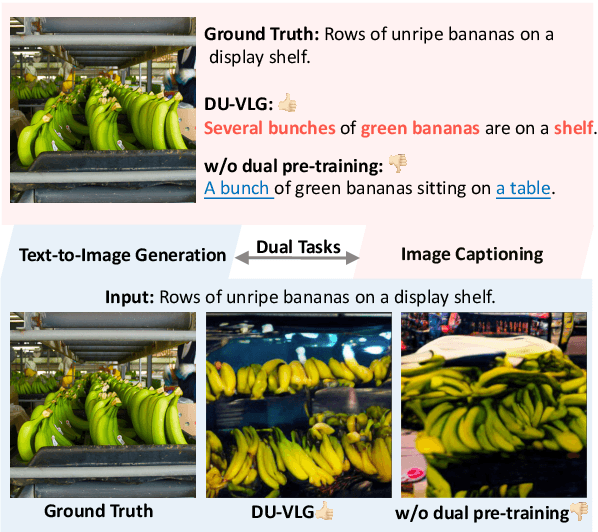
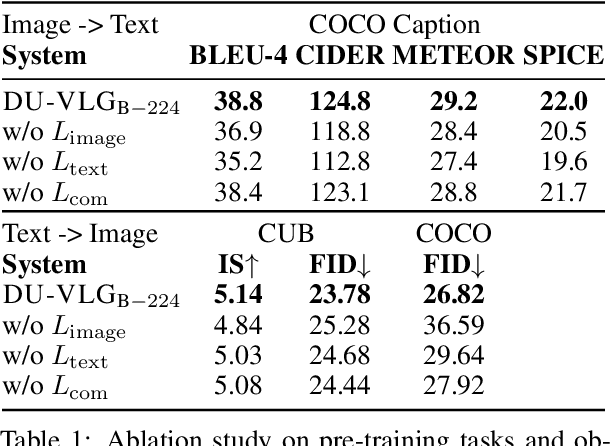
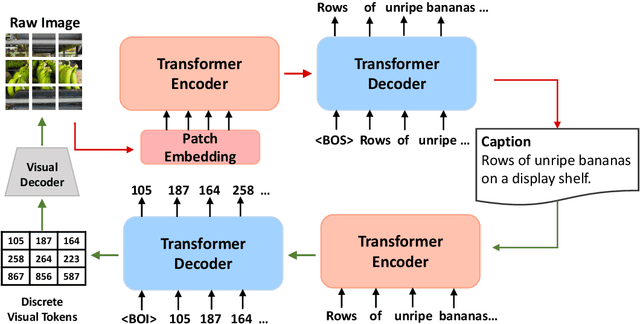
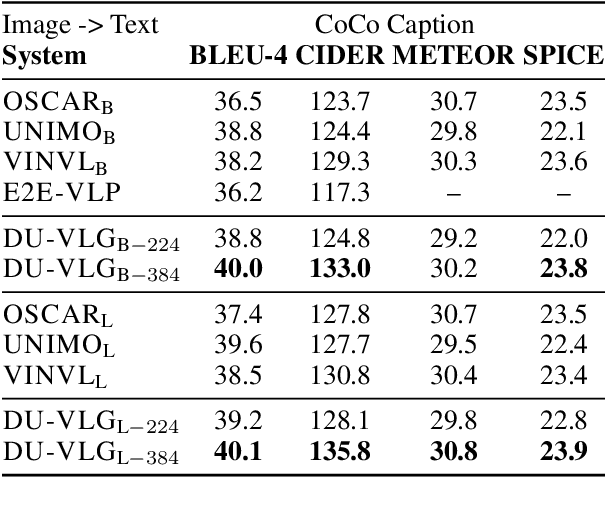
Due to the limitations of the model structure and pre-training objectives, existing vision-and-language generation models cannot utilize pair-wise images and text through bi-directional generation. In this paper, we propose DU-VLG, a framework which unifies vision-and-language generation as sequence generation problems. DU-VLG is trained with novel dual pre-training tasks: multi-modal denoising autoencoder tasks and modality translation tasks. To bridge the gap between image understanding and generation, we further design a novel commitment loss. We compare pre-training objectives on image captioning and text-to-image generation datasets. Results show that DU-VLG yields better performance than variants trained with uni-directional generation objectives or the variant without the commitment loss. We also obtain higher scores compared to previous state-of-the-art systems on three vision-and-language generation tasks. In addition, human judges further confirm that our model generates real and relevant images as well as faithful and informative captions.
Long Time No See! Open-Domain Conversation with Long-Term Persona Memory
Mar 14, 2022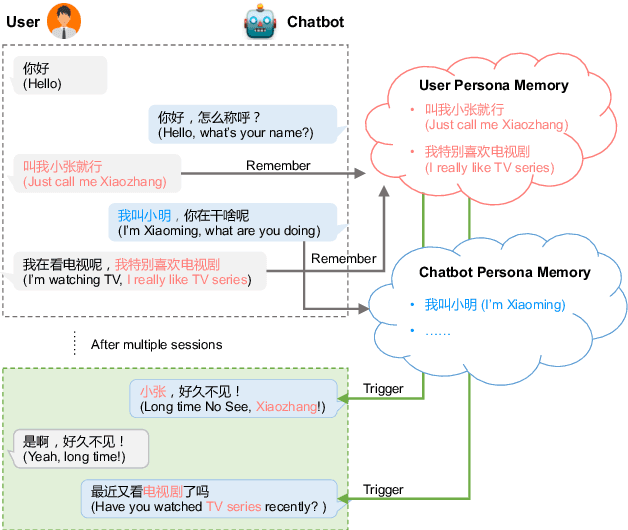
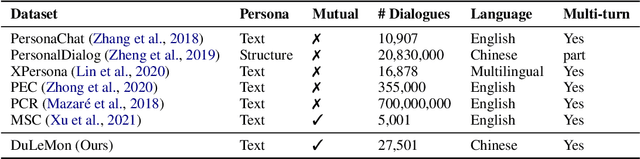
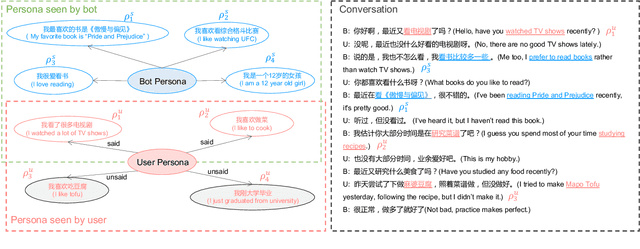
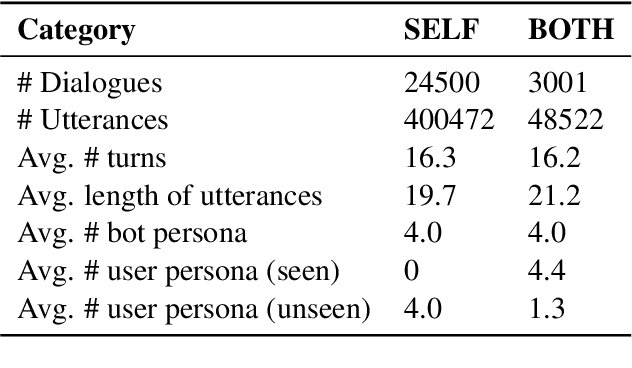
Most of the open-domain dialogue models tend to perform poorly in the setting of long-term human-bot conversations. The possible reason is that they lack the capability of understanding and memorizing long-term dialogue history information. To address this issue, we present a novel task of Long-term Memory Conversation (LeMon) and then build a new dialogue dataset DuLeMon and a dialogue generation framework with Long-Term Memory (LTM) mechanism (called PLATO-LTM). This LTM mechanism enables our system to accurately extract and continuously update long-term persona memory without requiring multiple-session dialogue datasets for model training. To our knowledge, this is the first attempt to conduct real-time dynamic management of persona information of both parties, including the user and the bot. Results on DuLeMon indicate that PLATO-LTM can significantly outperform baselines in terms of long-term dialogue consistency, leading to better dialogue engagingness.
Faithfulness in Natural Language Generation: A Systematic Survey of Analysis, Evaluation and Optimization Methods
Mar 10, 2022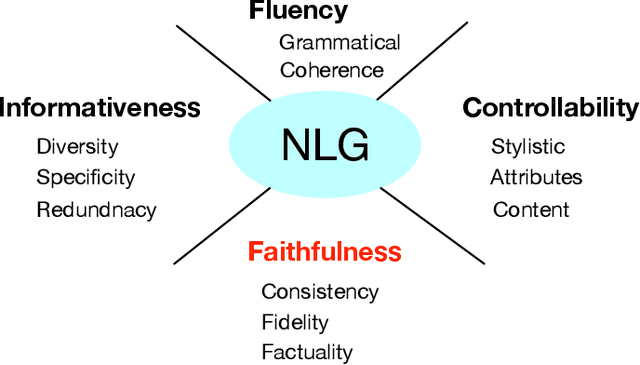
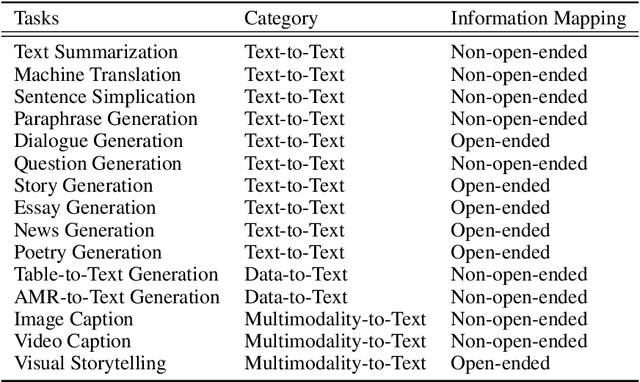
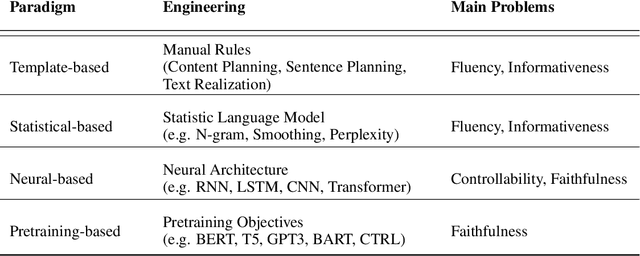
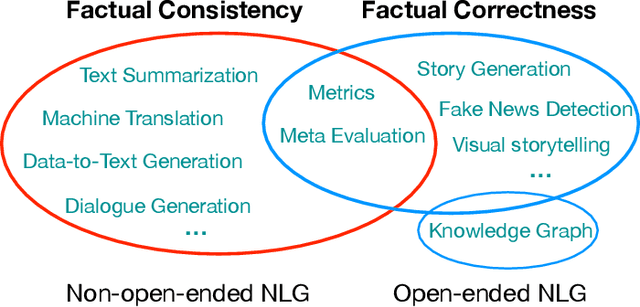
Natural Language Generation (NLG) has made great progress in recent years due to the development of deep learning techniques such as pre-trained language models. This advancement has resulted in more fluent, coherent and even properties controllable (e.g. stylistic, sentiment, length etc.) generation, naturally leading to development in downstream tasks such as abstractive summarization, dialogue generation, machine translation, and data-to-text generation. However, the faithfulness problem that the generated text usually contains unfaithful or non-factual information has become the biggest challenge, which makes the performance of text generation unsatisfactory for practical applications in many real-world scenarios. Many studies on analysis, evaluation, and optimization methods for faithfulness problems have been proposed for various tasks, but have not been organized, compared and discussed in a combined manner. In this survey, we provide a systematic overview of the research progress on the faithfulness problem of NLG, including problem analysis, evaluation metrics and optimization methods. We organize the evaluation and optimization methods for different tasks into a unified taxonomy to facilitate comparison and learning across tasks. Several research trends are discussed further.
ERNIE-ViLG: Unified Generative Pre-training for Bidirectional Vision-Language Generation
Dec 31, 2021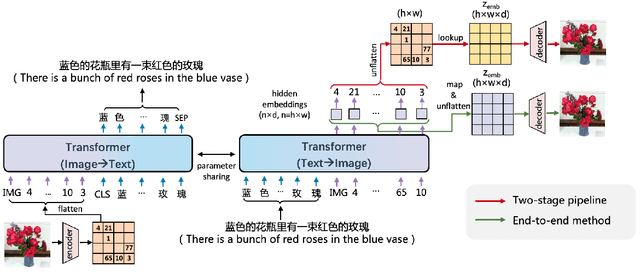
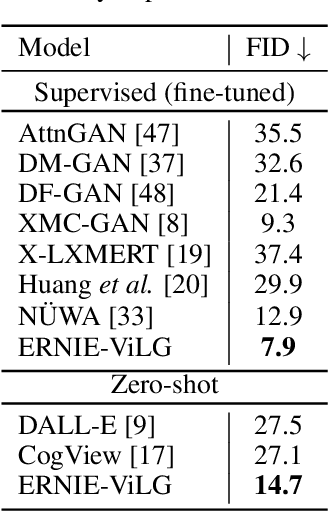
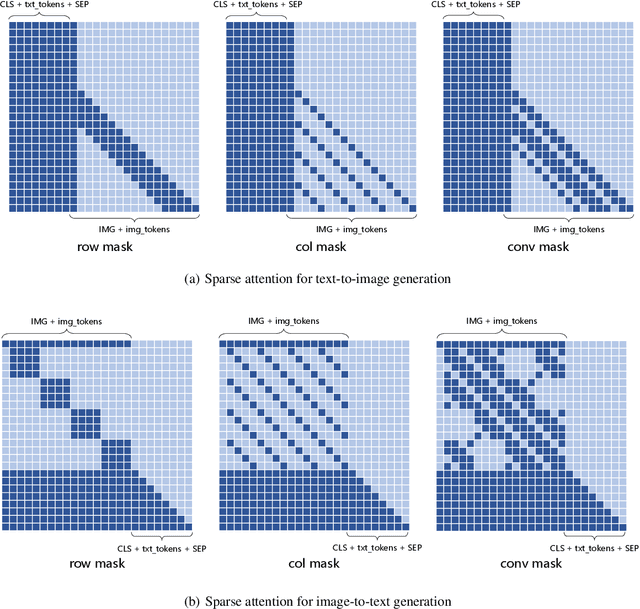

Conventional methods for the image-text generation tasks mainly tackle the naturally bidirectional generation tasks separately, focusing on designing task-specific frameworks to improve the quality and fidelity of the generated samples. Recently, Vision-Language Pre-training models have greatly improved the performance of the image-to-text generation tasks, but large-scale pre-training models for text-to-image synthesis task are still under-developed. In this paper, we propose ERNIE-ViLG, a unified generative pre-training framework for bidirectional image-text generation with transformer model. Based on the image quantization models, we formulate both image generation and text generation as autoregressive generative tasks conditioned on the text/image input. The bidirectional image-text generative modeling eases the semantic alignments across vision and language. For the text-to-image generation process, we further propose an end-to-end training method to jointly learn the visual sequence generator and the image reconstructor. To explore the landscape of large-scale pre-training for bidirectional text-image generation, we train a 10-billion parameter ERNIE-ViLG model on a large-scale dataset of 145 million (Chinese) image-text pairs which achieves state-of-the-art performance for both text-to-image and image-to-text tasks, obtaining an FID of 7.9 on MS-COCO for text-to-image synthesis and best results on COCO-CN and AIC-ICC for image captioning.
ERNIE 3.0 Titan: Exploring Larger-scale Knowledge Enhanced Pre-training for Language Understanding and Generation
Dec 23, 2021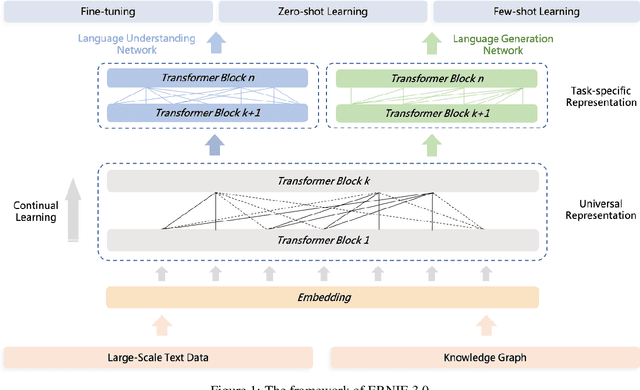
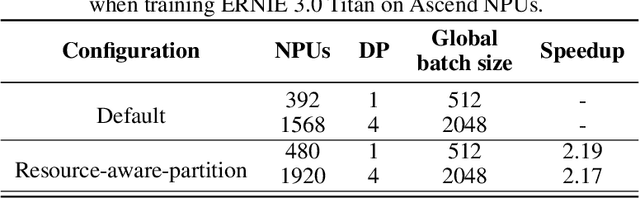
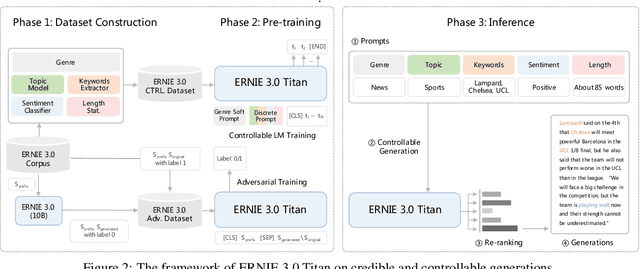
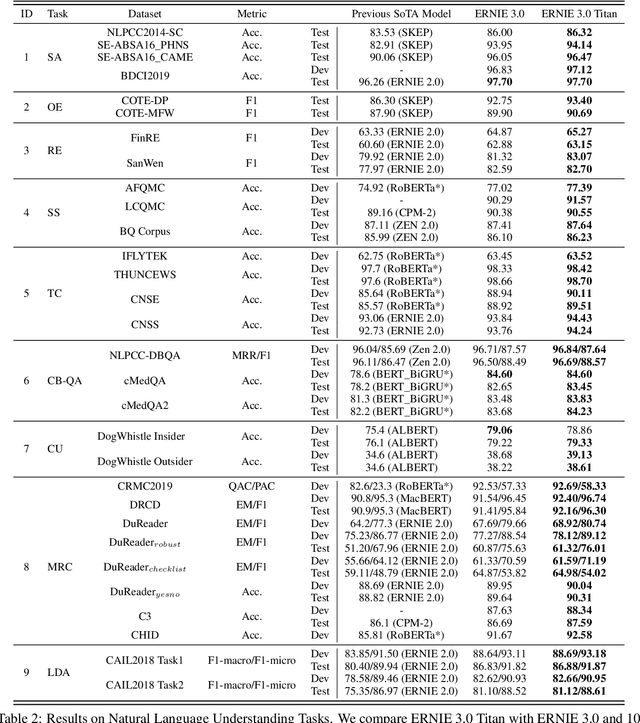
Pre-trained language models have achieved state-of-the-art results in various Natural Language Processing (NLP) tasks. GPT-3 has shown that scaling up pre-trained language models can further exploit their enormous potential. A unified framework named ERNIE 3.0 was recently proposed for pre-training large-scale knowledge enhanced models and trained a model with 10 billion parameters. ERNIE 3.0 outperformed the state-of-the-art models on various NLP tasks. In order to explore the performance of scaling up ERNIE 3.0, we train a hundred-billion-parameter model called ERNIE 3.0 Titan with up to 260 billion parameters on the PaddlePaddle platform. Furthermore, we design a self-supervised adversarial loss and a controllable language modeling loss to make ERNIE 3.0 Titan generate credible and controllable texts. To reduce the computation overhead and carbon emission, we propose an online distillation framework for ERNIE 3.0 Titan, where the teacher model will teach students and train itself simultaneously. ERNIE 3.0 Titan is the largest Chinese dense pre-trained model so far. Empirical results show that the ERNIE 3.0 Titan outperforms the state-of-the-art models on 68 NLP datasets.
TOD-DA: Towards Boosting the Robustness of Task-oriented Dialogue Modeling on Spoken Conversations
Dec 23, 2021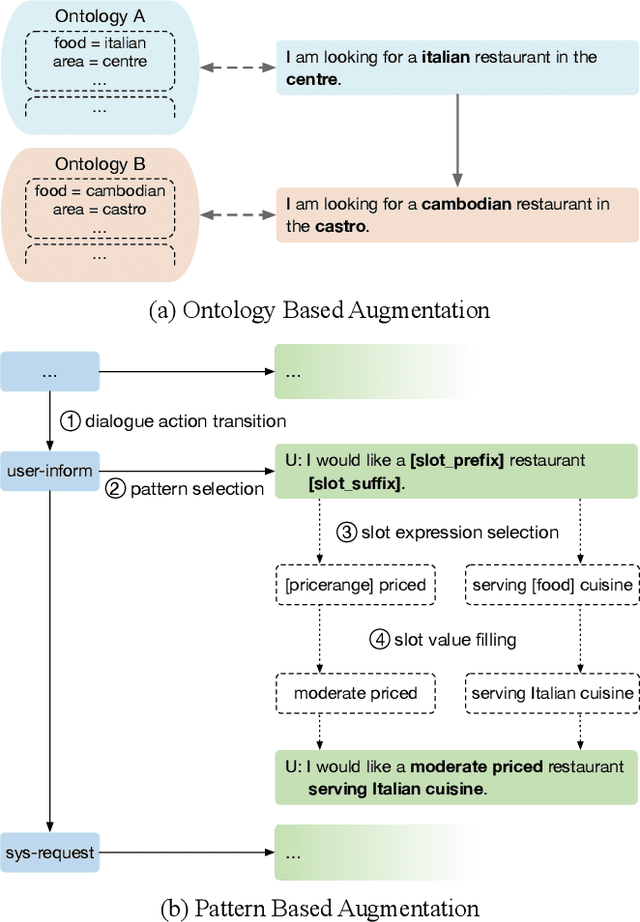
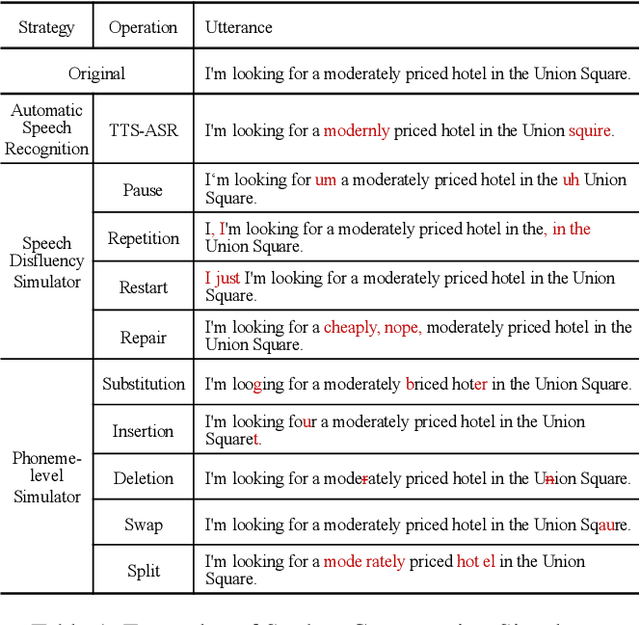
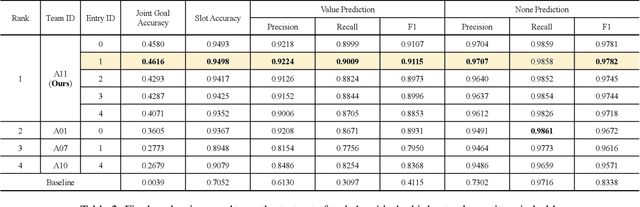
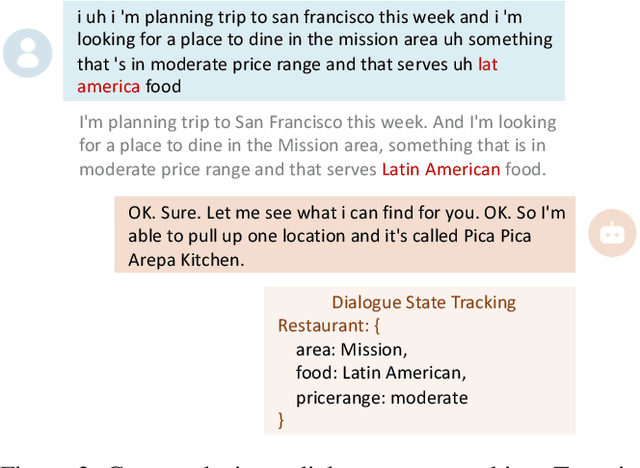
Task-oriented dialogue systems have been plagued by the difficulties of obtaining large-scale and high-quality annotated conversations. Furthermore, most of the publicly available datasets only include written conversations, which are insufficient to reflect actual human behaviors in practical spoken dialogue systems. In this paper, we propose Task-oriented Dialogue Data Augmentation (TOD-DA), a novel model-agnostic data augmentation paradigm to boost the robustness of task-oriented dialogue modeling on spoken conversations. The TOD-DA consists of two modules: 1) Dialogue Enrichment to expand training data on task-oriented conversations for easing data sparsity and 2) Spoken Conversation Simulator to imitate oral style expressions and speech recognition errors in diverse granularities for bridging the gap between written and spoken conversations. With such designs, our approach ranked first in both tasks of DSTC10 Track2, a benchmark for task-oriented dialogue modeling on spoken conversations, demonstrating the superiority and effectiveness of our proposed TOD-DA.
DuQM: A Chinese Dataset of Linguistically Perturbed Natural Questions for Evaluating the Robustness of Question Matching Models
Dec 16, 2021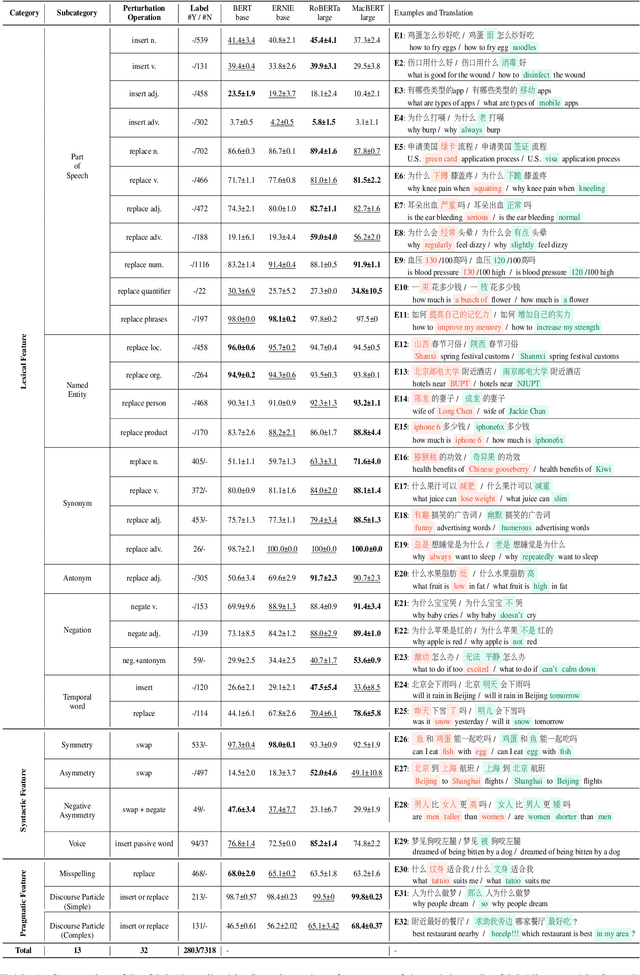
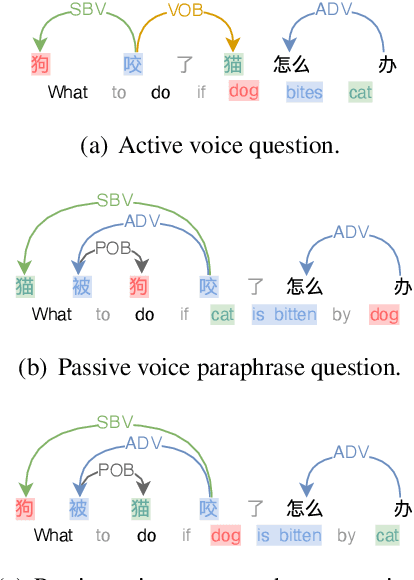
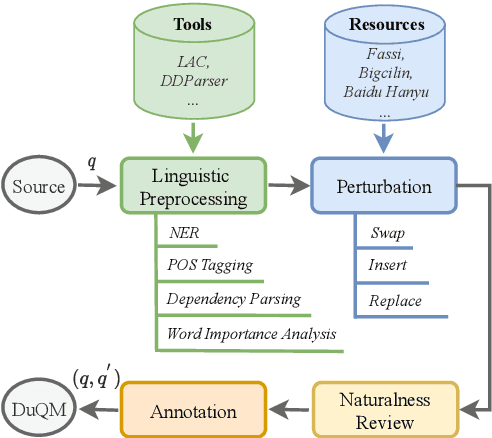
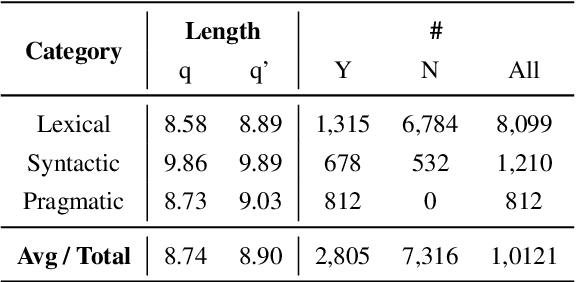
In this paper, we focus on studying robustness evaluation of Chinese question matching. Most of the previous work on analyzing robustness issue focus on just one or a few types of artificial adversarial examples. Instead, we argue that it is necessary to formulate a comprehensive evaluation about the linguistic capabilities of models on natural texts. For this purpose, we create a Chinese dataset namely DuQM which contains natural questions with linguistic perturbations to evaluate the robustness of question matching models. DuQM contains 3 categories and 13 subcategories with 32 linguistic perturbations. The extensive experiments demonstrate that DuQM has a better ability to distinguish different models. Importantly, the detailed breakdown of evaluation by linguistic phenomenon in DuQM helps us easily diagnose the strength and weakness of different models. Additionally, our experiment results show that the effect of artificial adversarial examples does not work on the natural texts.
CELLS: Cost-Effective Evolution in Latent Space for Goal-Directed Molecular Generation
Dec 05, 2021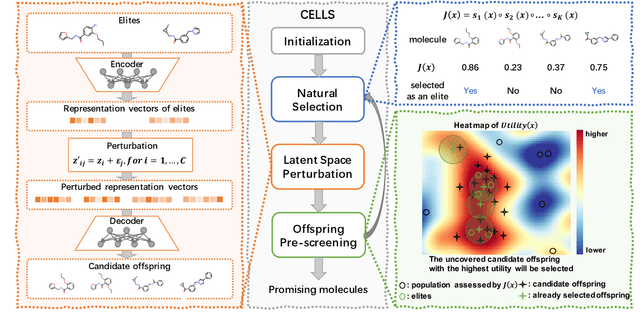
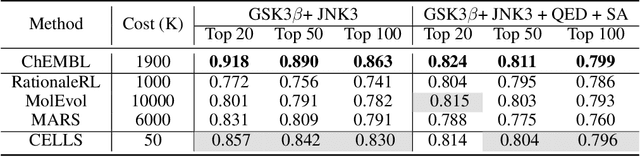
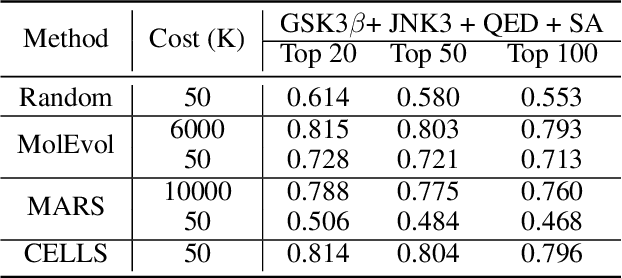
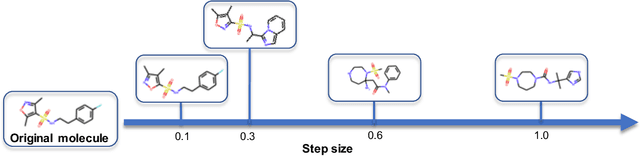
Efficiently discovering molecules that meet various property requirements can significantly benefit the drug discovery industry. Since it is infeasible to search over the entire chemical space, recent works adopt generative models for goal-directed molecular generation. They tend to utilize the iterative processes, optimizing the parameters of the molecular generative models at each iteration to produce promising molecules for further validation. Assessments are exploited to evaluate the generated molecules at each iteration, providing direction for model optimization. However, most previous works require a massive number of expensive and time-consuming assessments, e.g., wet experiments and molecular dynamic simulations, leading to the lack of practicability. To reduce the assessments in the iterative process, we propose a cost-effective evolution strategy in latent space, which optimizes the molecular latent representation vectors instead. We adopt a pre-trained molecular generative model to map the latent and observation spaces, taking advantage of the large-scale unlabeled molecules to learn chemical knowledge. To further reduce the number of expensive assessments, we introduce a pre-screener as the proxy to the assessments. We conduct extensive experiments on multiple optimization tasks comparing the proposed framework to several advanced techniques, showing that the proposed framework achieves better performance with fewer assessments.
Docking-based Virtual Screening with Multi-Task Learning
Nov 18, 2021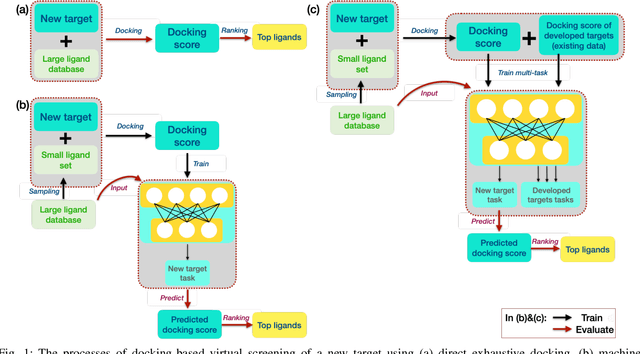
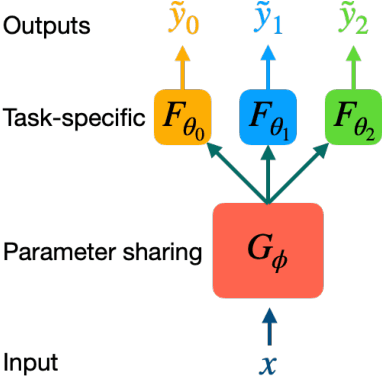
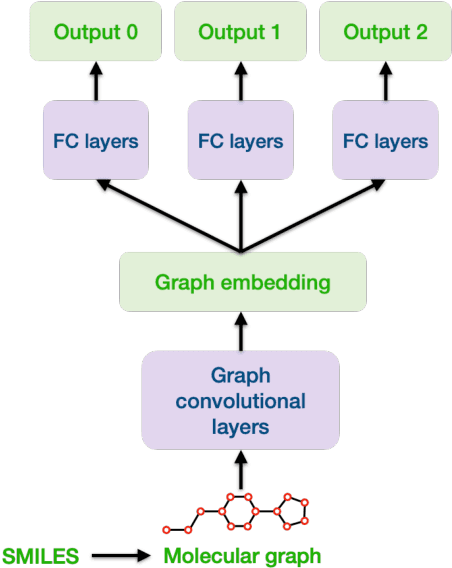
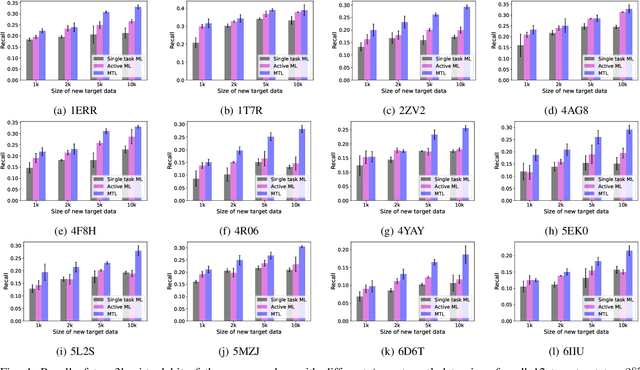
Machine learning shows great potential in virtual screening for drug discovery. Current efforts on accelerating docking-based virtual screening do not consider using existing data of other previously developed targets. To make use of the knowledge of the other targets and take advantage of the existing data, in this work, we apply multi-task learning to the problem of docking-based virtual screening. With two large docking datasets, the results of extensive experiments show that multi-task learning can achieve better performances on docking score prediction. By learning knowledge across multiple targets, the model trained by multi-task learning shows a better ability to adapt to a new target. Additional empirical study shows that other problems in drug discovery, such as the experimental drug-target affinity prediction, may also benefit from multi-task learning. Our results demonstrate that multi-task learning is a promising machine learning approach for docking-based virtual screening and accelerating the process of drug discovery.