 Add to Chrome
 Add to Firefox
 Add to Edge
LemonHarness Technical Report
Jun 23, 2026
As large language model (LLM) agents are applied to longer tasks, they increasingly modify workspace state across multiple rounds of iteration. However, agents typically observe only tool outputs and log fragments, while the actual state changes occur in the file system. Without explicit workspace boundaries, state-changing operations such as file writes and temporary artifact generation may scatter changes across paths. Over time, these weakly constrained changes accumulate, making states such as modified files difficult to track. This paper presents LemonHarness, an integrated execution framework for long-horizon agents. LemonHarness establishes an explicit execution boundary by constraining state-changing operations within a clearly defined workspace and bringing model invocation, tool execution, and rule knowledge within a single controlled boundary. State-changing operations, including file writes, dependency installation, and temporary artifact creation, are executed through structured tool interfaces, with execution feedback recorded as observations available to subsequent model decisions. The system also introduces a reusable rule knowledge base, which turns recurring execution rules and acceptance criteria into runtime knowledge. LemonHarness further adds a time-aware execution mechanism that exposes elapsed and remaining budget to the model, so it can rebalance exploration, implementation, and validation effort as time pressure shifts and avoid timeouts from long waits or excessive verification. On Terminal-Bench 2.0, LemonHarness_GPT-5.3-CodeX reached 84.49% accuracy over 445 trials; pairing the same framework with the stronger GPT-5.5 backbone raised the average accuracy to 86.52% across five jobs. The results suggest that a unified runtime boundary, callable rule knowledge, and time-aware execution can improve the stability of long-horizon agent execution.

Agentic Large Language Models for Automated Structural Analysis of 3D Frame Systems
Jun 02, 2026Large language models (LLMs) have emerged as powerful foundation models with strong reasoning capabilities across domains. Beyond reactive text generation, agentic LLMs enable autonomous workflow execution through modular task decomposition and coordinated tool use. In structural engineering, recent efforts have developed agentic LLMs for automated analysis of plane frames. However, their extension to 3D frames remains underexplored due to challenges in irregular geometric representation, topological consistency, and long-horizon reasoning. This paper proposes an agentic LLM framework for automated structural analysis of 3D frames from natural language inputs. Irregular 3D frames are represented by projection onto a 2D plan, where orthogonal gridlines define spatial coordinates and a matrix of number of stories encodes vertical extrusion of each grid cell. Building on this representation, the framework establishes a multi-agent pipeline: a problem analysis agent parses input into structured JSON; a floor decomposition agent derives the spatial layout of each floor; the 3D geometry is assembled by node, girder, slab, and column agents; support and load agents assign boundary and loading conditions, and code translation agents generate executable SAP2000 script. Evaluated on ten representative 3D frames, the proposed framework achieves an average accuracy of 90% across repeated trials, demonstrating consistent and reliable performance.
From Fact Overwriting to Knowledge Evolution: Causal Editing via On-Policy Self-Distillation
May 27, 2026While Knowledge Editing (KE) enables efficient updates, its dominant Static Fact Overwriting paradigm treats LLMs as discrete databases, forcibly injecting isolated facts. Fracturing pre-trained logical topologies, this triggers Epistemic Dissonance -- a pathology where un-evolved legacy priors force the model to explicitly negate the injected update. Idealized interventions reveal that this is an inherent structural flaw rather than mere algorithmic noise, with a zero-distortion proxy yielding a catastrophic 95.6% self-refutation rate. Given the causally driven nature of real-world knowledge, grounding updates in explicit causal narratives effectively collapses this conflict rate to just 6.6%, underscoring the imperative for a paradigm shift toward Causal Editing. To internalize this evolution, we propose CODE (Causal On-policy Distillation for Editing). By coupling causal bootstrapping with asymmetric on-policy distillation, CODE engraves causal transition logic directly into parametric memory. Experiments on LLaMA-3.1 and Qwen-2.5 show CODE drastically suppresses self-refutation to 1.8% while securing robust multi-hop accuracy (up to 83.5%), seamlessly transforming discrete fact injection into coherent knowledge evolution. Code is available at https://github.com/CrashBugger/CODE.
AI for Auto-Research: Roadmap & User Guide
May 18, 2026AI-assisted research is crossing a threshold: fully automated systems can now generate research papers for as little as $15, while long-horizon agents can execute experiments, draft manuscripts, and simulate critique with minimal human input. Yet this productivity frontier exposes a deeper integrity problem: under scientific pressure, even frontier LLMs still fabricate results, miss hidden errors, and fail to judge novelty reliably. Studying developments through April 2026, we present an end-to-end analysis of AI across the complete research lifecycle, organized into four epistemological phases: Creation (idea generation, literature review, coding & experiments, tables & figures), Writing (paper writing), Validation (peer review, rebuttal & revision), and Dissemination (posters, slides, videos, social media, project pages, and interactive agents). We identify a sharp, stage-dependent boundary between reliable assistance and unreliable autonomy: AI excels at structured, retrieval-grounded, and tool-mediated tasks, but remains fragile for genuinely novel ideas, research-level experiments, and scientific judgment. Generated ideas often degrade after implementation, research code lags far behind pattern-matching benchmarks, and end-to-end autonomous systems have not yet consistently reached major-venue acceptance standards. We further show that greater automation can obscure rather than eliminate failure modes, making human-governed collaboration the most credible deployment paradigm. Finally, we provide a structured taxonomy, benchmark suite, and tool inventory, cross-stage design principles, and a practitioner-oriented playbook, with resources maintained at our project page.
The Last Human-Written Paper: Agent-Native Research Artifacts
Apr 27, 2026Scientific publication compresses a branching, iterative research process into a linear narrative, discarding the majority of what was discovered along the way. This compilation imposes two structural costs: a Storytelling Tax, where failed experiments, rejected hypotheses, and the branching exploration process are discarded to fit a linear narrative; and an Engineering Tax, where the gap between reviewer-sufficient prose and agent-sufficient specification leaves critical implementation details unwritten. Tolerable for human readers, these costs become critical when AI agents must understand, reproduce, and extend published work. We introduce the Agent-Native Research Artifact (Ara), a protocol that replaces the narrative paper with a machine-executable research package structured around four layers: scientific logic, executable code with full specifications, an exploration graph that preserves the failures compilation discards, and evidence grounding every claim in raw outputs. Three mechanisms support the ecosystem: a Live Research Manager that captures decisions and dead ends during ordinary development; an Ara Compiler that translates legacy PDFs and repos into Aras; and an Ara-native review system that automates objective checks so human reviewers can focus on significance, novelty, and taste. On PaperBench and RE-Bench, Ara raises question-answering accuracy from 72.4% to 93.7% and reproduction success from 57.4% to 64.4%. On RE-Bench's five open-ended extension tasks, preserved failure traces in Ara accelerate progress, but can also constrain a capable agent from stepping outside the prior-run box depending on the agent's capabilities.
Automating Structural Analysis Across Multiple Software Platforms Using Large Language Models
Apr 10, 2026Recent advances in large language models (LLMs) have shown the promise to significantly accelerate the workflow by automating structural modeling and analysis. However, existing studies primarily focus on enabling LLMs to operate a single structural analysis software platform. In practice, structural engineers often rely on multiple finite element analysis (FEA) tools, such as ETABS, SAP2000, and OpenSees, depending on project needs, user preferences, and company constraints. This limitation restricts the practical deployment of LLM-assisted engineering workflows. To address this gap, this study develops LLMs capable of automating frame structural analysis across multiple software platforms. The LLMs adopt a two-stage multi-agent architecture. In Stage 1, a cohort of agents collaboratively interpret user input and perform structured reasoning to infer geometric, material, boundary, and load information required for finite element modeling. The outputs of these agents are compiled into a unified JSON representation. In Stage 2, code translation agents operate in parallel to convert the JSON file into executable scripts across multiple structural analysis platforms. Each agent is prompted with the syntax rules and modeling workflows of its target software. The LLMs are evaluated using 20 representative frame problems across three widely used platforms: ETABS, SAP2000, and OpenSees. Results from ten repeated trials demonstrate consistently reliable performance, achieving accuracy exceeding 90% across all cases.
A Novel Multi-Agent Architecture to Reduce Hallucinations of Large Language Models in Multi-Step Structural Modeling
Mar 08, 2026Large language models (LLMs) such as GPT and Gemini have demonstrated remarkable capabilities in contextual understanding and reasoning. The strong performance of LLMs has sparked growing interest in leveraging them to automate tasks traditionally dependent on human expertise. Recently, LLMs have been integrated into intelligent agents capable of operating structural analysis software (e.g., OpenSees) to construct structural models and perform analyses. However, existing LLMs are limited in handling multi-step structural modeling due to frequent hallucinations and error accumulation during long-sequence operations. To this end, this study presents a novel multi-agent architecture to automate the structural modeling and analysis using OpenSeesPy. First, problem analysis and construction planning agents extract key parameters from user descriptions and formulate a stepwise modeling plan. Node and element agents then operate in parallel to assemble the frame geometry, followed by a load assignment agent. The resulting geometric and load information is translated into executable OpenSeesPy scripts by code translation agents. The proposed architecture is evaluated on a benchmark of 20 frame problems over ten repeated trials, achieving 100% accuracy in 18 cases and 90% in the remaining two. The architecture also significantly improves computational efficiency and demonstrates scalability to larger structural systems.
Sci-Reasoning: A Dataset Decoding AI Innovation Patterns
Jan 08, 2026While AI innovation accelerates rapidly, the intellectual process behind breakthroughs -- how researchers identify gaps, synthesize prior work, and generate insights -- remains poorly understood. The lack of structured data on scientific reasoning hinders systematic analysis and development of AI research agents. We introduce Sci-Reasoning, the first dataset capturing the intellectual synthesis behind high-quality AI research. Using community-validated quality signals and an LLM-accelerated, human-verified pipeline, we trace Oral and Spotlight papers across NeurIPS, ICML, and ICLR (2023-2025) to its key predecessors, articulating specific reasoning links in a structured format. Our analysis identifies 15 distinct thinking patterns, with three dominant strategies accounting for 52.7%: Gap-Driven Reframing (24.2%), Cross-Domain Synthesis (18.0%), and Representation Shift (10.5%). The most powerful innovation recipes combine multiple patterns: Gap-Driven Reframing + Representation Shift, Cross-Domain Synthesis + Representation Shift, and Gap-Driven Reframing + Cross-Domain Synthesis. This dataset enables quantitative studies of scientific progress and provides structured reasoning trajectories for training the next generation AI research agents.
M-SEVIQ: A Multi-band Stereo Event Visual-Inertial Quadruped-based Dataset for Perception under Rapid Motion and Challenging Illumination
Jan 06, 2026Agile locomotion in legged robots poses significant challenges for visual perception. Traditional frame-based cameras often fail in these scenarios for producing blurred images, particularly under low-light conditions. In contrast, event cameras capture changes in brightness asynchronously, offering low latency, high temporal resolution, and high dynamic range. These advantages make them suitable for robust perception during rapid motion and under challenging illumination. However, existing event camera datasets exhibit limitations in stereo configurations and multi-band sensing domains under various illumination conditions. To address this gap, we present M-SEVIQ, a multi-band stereo event visual and inertial quadruped dataset collected using a Unitree Go2 equipped with stereo event cameras, a frame-based camera, an inertial measurement unit (IMU), and joint encoders. This dataset contains more than 30 real-world sequences captured across different velocity levels, illumination wavelengths, and lighting conditions. In addition, comprehensive calibration data, including intrinsic, extrinsic, and temporal alignments, are provided to facilitate accurate sensor fusion and benchmarking. Our M-SEVIQ can be used to support research in agile robot perception, sensor fusion, semantic segmentation and multi-modal vision in challenging environments.
EXP-Bench: Can AI Conduct AI Research Experiments?
May 30, 2025
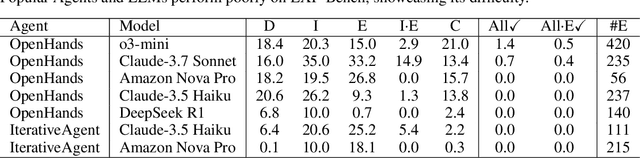
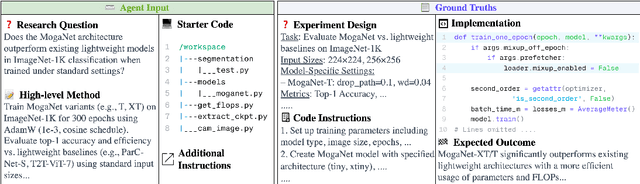
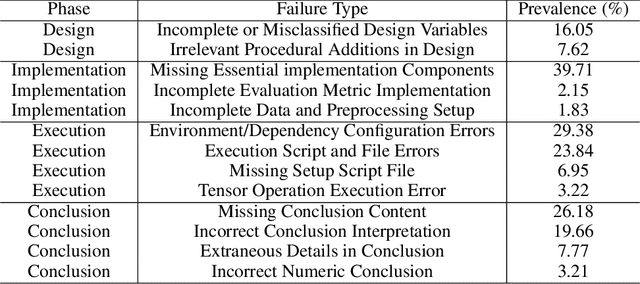
Automating AI research holds immense potential for accelerating scientific progress, yet current AI agents struggle with the complexities of rigorous, end-to-end experimentation. We introduce EXP-Bench, a novel benchmark designed to systematically evaluate AI agents on complete research experiments sourced from influential AI publications. Given a research question and incomplete starter code, EXP-Bench challenges AI agents to formulate hypotheses, design and implement experimental procedures, execute them, and analyze results. To enable the creation of such intricate and authentic tasks with high-fidelity, we design a semi-autonomous pipeline to extract and structure crucial experimental details from these research papers and their associated open-source code. With the pipeline, EXP-Bench curated 461 AI research tasks from 51 top-tier AI research papers. Evaluations of leading LLM-based agents, such as OpenHands and IterativeAgent on EXP-Bench demonstrate partial capabilities: while scores on individual experimental aspects such as design or implementation correctness occasionally reach 20-35%, the success rate for complete, executable experiments was a mere 0.5%. By identifying these bottlenecks and providing realistic step-by-step experiment procedures, EXP-Bench serves as a vital tool for future AI agents to improve their ability to conduct AI research experiments. EXP-Bench is open-sourced at https://github.com/Just-Curieous/Curie/tree/main/benchmark/exp_bench.