 Add to Chrome
 Add to Firefox
 Add to Edge
MaVEn: An Effective Multi-granularity Hybrid Visual Encoding Framework for Multimodal Large Language Model
Aug 26, 2024
This paper presents MaVEn, an innovative Multi-granularity Visual Encoding framework designed to enhance the capabilities of Multimodal Large Language Models (MLLMs) in multi-image reasoning. Current MLLMs primarily focus on single-image visual understanding, limiting their ability to interpret and integrate information across multiple images. MaVEn addresses this limitation by combining discrete visual symbol sequences, which abstract coarse-grained semantic concepts, with traditional continuous representation sequences that model fine-grained features. This dual approach bridges the semantic gap between visual and textual data, thereby improving the model's ability to process and interpret information from multiple images effectively. Additionally, we design a dynamic reduction mechanism by for long-sequence continuous features to enhance multi-image processing efficiency. Experimental results demonstrate that MaVEn significantly enhances MLLMs' understanding in complex multi-image scenarios, while also improving performance in single-image contexts.

Predicting Rewards Alongside Tokens: Non-disruptive Parameter Insertion for Efficient Inference Intervention in Large Language Model
Aug 20, 2024
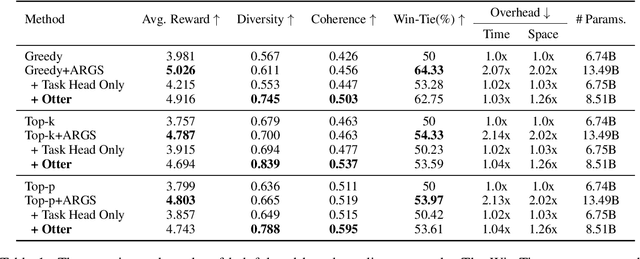
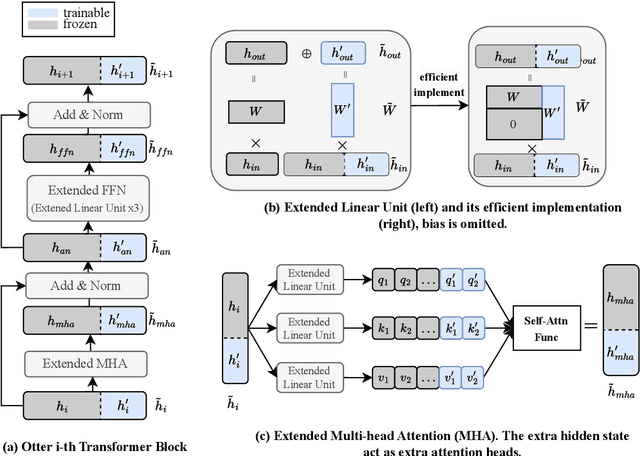

Transformer-based large language models (LLMs) exhibit limitations such as generating unsafe responses, unreliable reasoning, etc. Existing inference intervention approaches attempt to mitigate these issues by finetuning additional models to produce calibration signals (such as rewards) that guide the LLM's decoding process. However, this solution introduces substantial time and space overhead due to the separate models required. This work proposes Non-disruptive parameters insertion (Otter), inserting extra parameters into the transformer architecture to predict calibration signals along with the original LLM output. Otter offers state-of-the-art performance on multiple demanding tasks while saving up to 86.5\% extra space and 98.5\% extra time. Furthermore, Otter seamlessly integrates with existing inference engines, requiring only a one-line code change, and the original model response remains accessible after the parameter insertion. Our code is publicly available at \url{https://github.com/chenhan97/Otter}
mPLUG-Owl3: Towards Long Image-Sequence Understanding in Multi-Modal Large Language Models
Aug 09, 2024
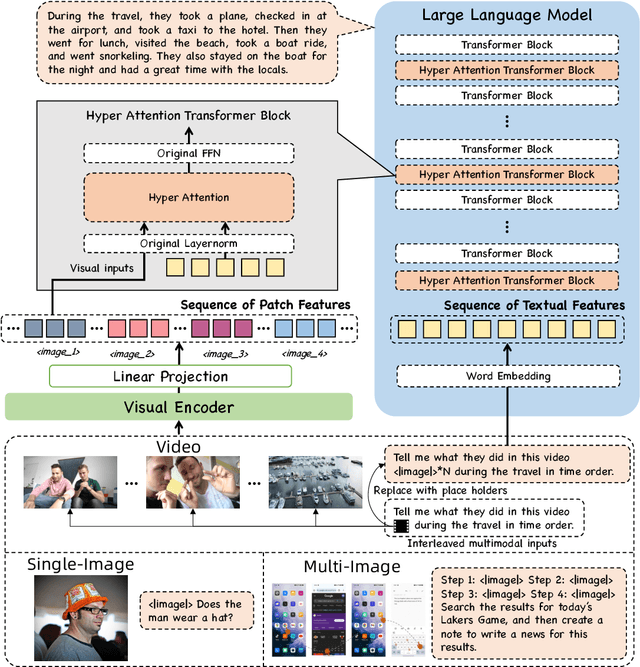

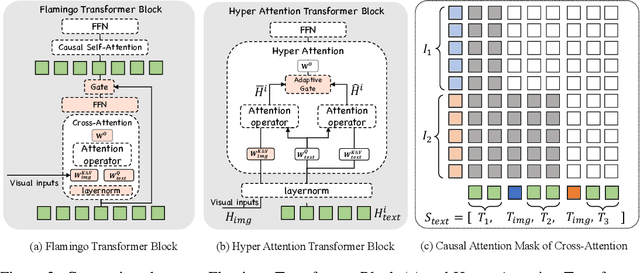
Multi-modal Large Language Models (MLLMs) have demonstrated remarkable capabilities in executing instructions for a variety of single-image tasks. Despite this progress, significant challenges remain in modeling long image sequences. In this work, we introduce the versatile multi-modal large language model, mPLUG-Owl3, which enhances the capability for long image-sequence understanding in scenarios that incorporate retrieved image-text knowledge, interleaved image-text, and lengthy videos. Specifically, we propose novel hyper attention blocks to efficiently integrate vision and language into a common language-guided semantic space, thereby facilitating the processing of extended multi-image scenarios. Extensive experimental results suggest that mPLUG-Owl3 achieves state-of-the-art performance among models with a similar size on single-image, multi-image, and video benchmarks. Moreover, we propose a challenging long visual sequence evaluation named Distractor Resistance to assess the ability of models to maintain focus amidst distractions. Finally, with the proposed architecture, mPLUG-Owl3 demonstrates outstanding performance on ultra-long visual sequence inputs. We hope that mPLUG-Owl3 can contribute to the development of more efficient and powerful multimodal large language models.
Extend Model Merging from Fine-Tuned to Pre-Trained Large Language Models via Weight Disentanglement
Aug 06, 2024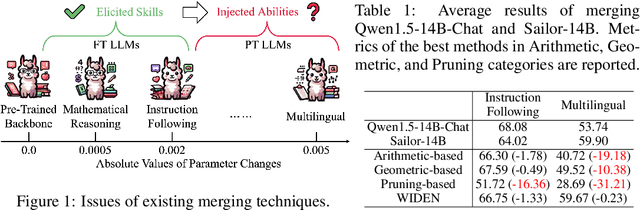
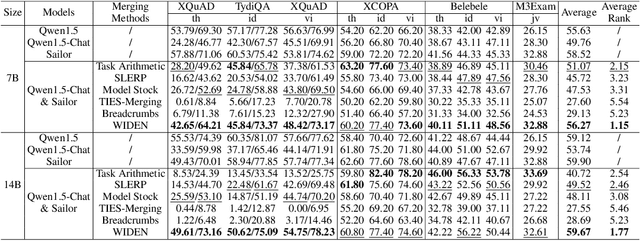
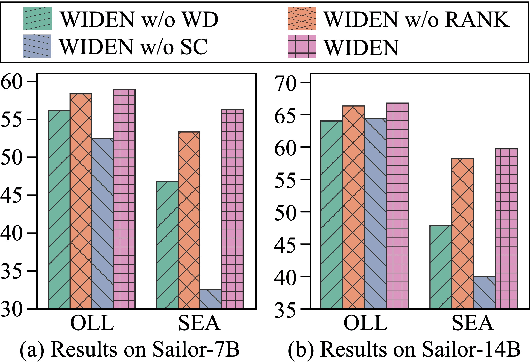
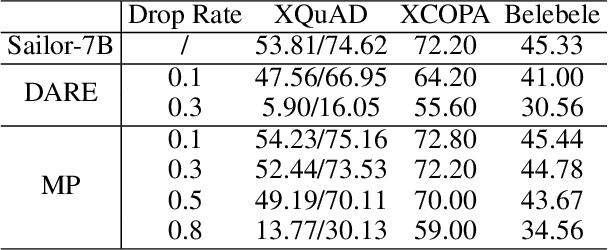
Merging Large Language Models (LLMs) aims to amalgamate multiple homologous LLMs into one with all the capabilities. Ideally, any LLMs sharing the same backbone should be mergeable, irrespective of whether they are Fine-Tuned (FT) with minor parameter changes or Pre-Trained (PT) with substantial parameter shifts. However, existing methods often manually assign the model importance, rendering them feasible only for LLMs with similar parameter alterations, such as multiple FT LLMs. The diverse parameter changed ranges between FT and PT LLMs pose challenges for current solutions in empirically determining the optimal combination. In this paper, we make a pioneering effort to broaden the applicability of merging techniques from FT to PT LLMs. We initially examine the efficacy of current methods in merging FT and PT LLMs, discovering that they struggle to deal with PT LLMs. Subsequently, we introduce an approach based on WeIght DisENtanglement (WIDEN) to effectively extend the merging scope, which first disentangles model weights into magnitude and direction components, and then performs adaptive fusion by considering their respective contributions. In the experiments, we merge Qwen1.5-Chat (an FT LLM with instruction-following skills) with Sailor (a PT LLM with multilingual abilities) across 7B and 14B model scales. Results reveal that: (1) existing solutions usually fail when merging Sailor, either losing both abilities or only retaining instruction-following skills; (2) WIDEN successfully injects the multilingual abilities of Sailor into Qwen1.5-Chat and make it proficient in Southeast Asian languages, achieving enhancements in the fundamental capabilities. In light of previous research, we also merge multiple 13B FT LLMs and observe that WIDEN achieves a balanced amalgamation of instruction following, mathematical reasoning, and code generation skills.
mGTE: Generalized Long-Context Text Representation and Reranking Models for Multilingual Text Retrieval
Jul 29, 2024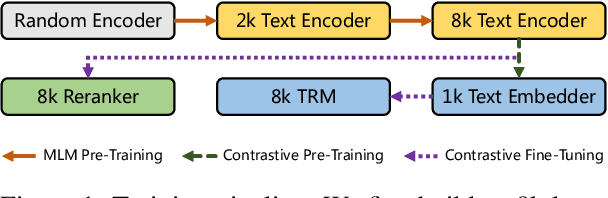

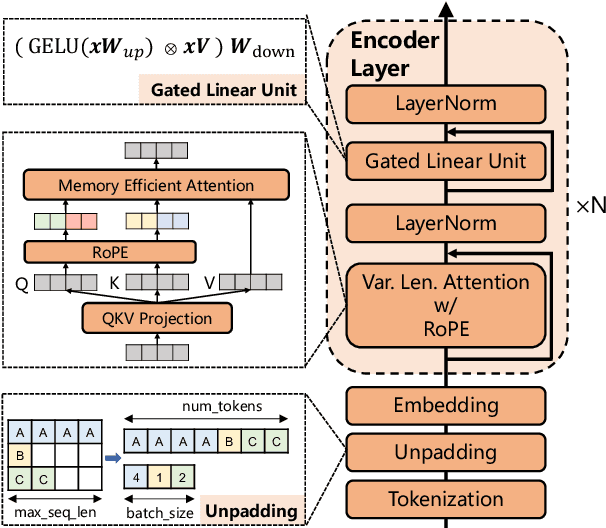
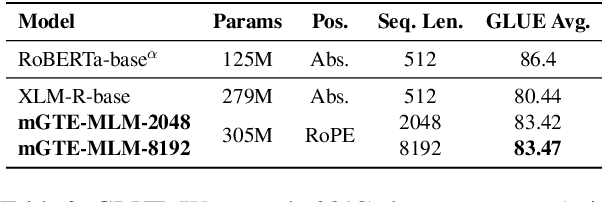
We present systematic efforts in building long-context multilingual text representation model (TRM) and reranker from scratch for text retrieval. We first introduce a text encoder (base size) enhanced with RoPE and unpadding, pre-trained in a native 8192-token context (longer than 512 of previous multilingual encoders). Then we construct a hybrid TRM and a cross-encoder reranker by contrastive learning. Evaluations show that our text encoder outperforms the same-sized previous state-of-the-art XLM-R. Meanwhile, our TRM and reranker match the performance of large-sized state-of-the-art BGE-M3 models and achieve better results on long-context retrieval benchmarks. Further analysis demonstrate that our proposed models exhibit higher efficiency during both training and inference. We believe their efficiency and effectiveness could benefit various researches and industrial applications.
Knowledge Mechanisms in Large Language Models: A Survey and Perspective
Jul 22, 2024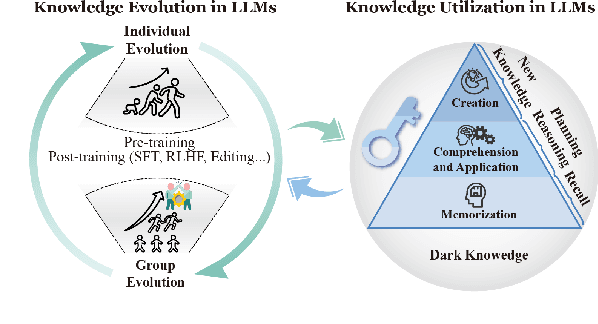


Understanding knowledge mechanisms in Large Language Models (LLMs) is crucial for advancing towards trustworthy AGI. This paper reviews knowledge mechanism analysis from a novel taxonomy including knowledge utilization and evolution. Knowledge utilization delves into the mechanism of memorization, comprehension and application, and creation. Knowledge evolution focuses on the dynamic progression of knowledge within individual and group LLMs. Moreover, we discuss what knowledge LLMs have learned, the reasons for the fragility of parametric knowledge, and the potential dark knowledge (hypothesis) that will be challenging to address. We hope this work can help understand knowledge in LLMs and provide insights for future research.
MIBench: Evaluating Multimodal Large Language Models over Multiple Images
Jul 21, 2024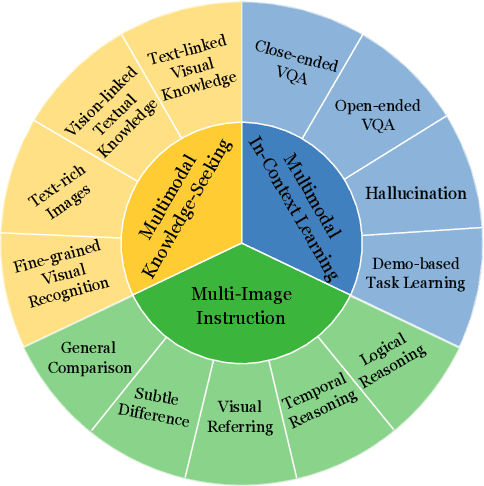

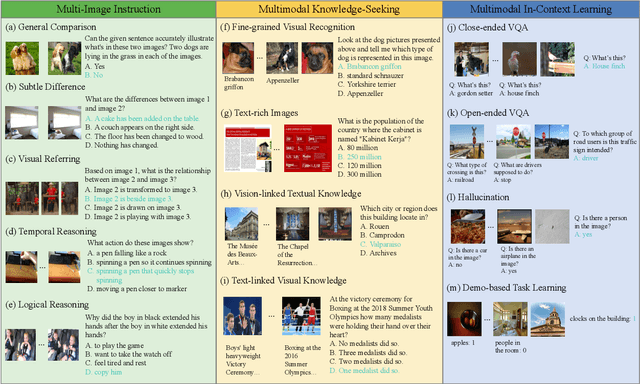

Built on the power of LLMs, numerous multimodal large language models (MLLMs) have recently achieved remarkable performance on various vision-language tasks across multiple benchmarks. However, most existing MLLMs and benchmarks primarily focus on single-image input scenarios, leaving the performance of MLLMs when handling realistic multiple images remain underexplored. Although a few benchmarks consider multiple images, their evaluation dimensions and samples are very limited. Therefore, in this paper, we propose a new benchmark MIBench, to comprehensively evaluate fine-grained abilities of MLLMs in multi-image scenarios. Specifically, MIBench categorizes the multi-image abilities into three scenarios: multi-image instruction (MII), multimodal knowledge-seeking (MKS) and multimodal in-context learning (MIC), and constructs 13 tasks with a total of 13K annotated samples. During data construction, for MII and MKS, we extract correct options from manual annotations and create challenging distractors to obtain multiple-choice questions. For MIC, to enable an in-depth evaluation, we set four sub-tasks and transform the original datasets into in-context learning formats. We evaluate several open-source MLLMs and close-source MLLMs on the proposed MIBench. The results reveal that although current models excel in single-image tasks, they exhibit significant shortcomings when faced with multi-image inputs, such as confused fine-grained perception, limited multi-image reasoning, and unstable in-context learning. The annotated data in MIBench is available at https://huggingface.co/datasets/StarBottle/MIBench.
Visual Text Generation in the Wild
Jul 19, 2024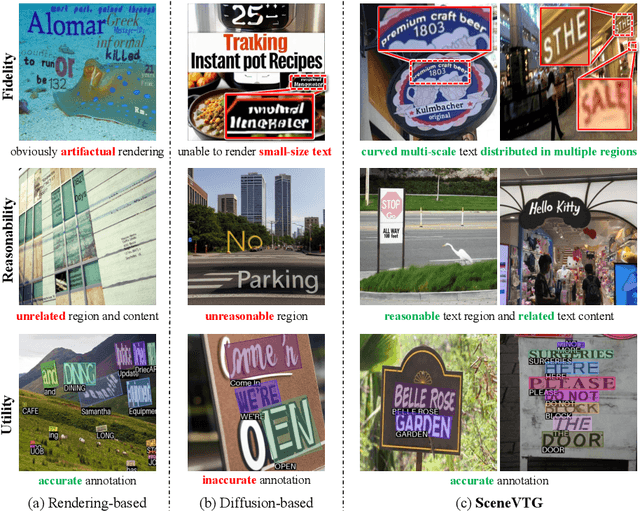
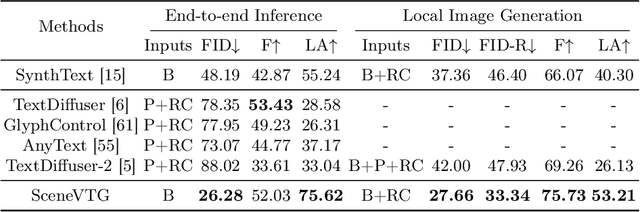
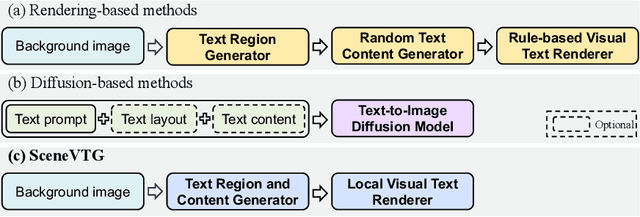

Recently, with the rapid advancements of generative models, the field of visual text generation has witnessed significant progress. However, it is still challenging to render high-quality text images in real-world scenarios, as three critical criteria should be satisfied: (1) Fidelity: the generated text images should be photo-realistic and the contents are expected to be the same as specified in the given conditions; (2) Reasonability: the regions and contents of the generated text should cohere with the scene; (3) Utility: the generated text images can facilitate related tasks (e.g., text detection and recognition). Upon investigation, we find that existing methods, either rendering-based or diffusion-based, can hardly meet all these aspects simultaneously, limiting their application range. Therefore, we propose in this paper a visual text generator (termed SceneVTG), which can produce high-quality text images in the wild. Following a two-stage paradigm, SceneVTG leverages a Multimodal Large Language Model to recommend reasonable text regions and contents across multiple scales and levels, which are used by a conditional diffusion model as conditions to generate text images. Extensive experiments demonstrate that the proposed SceneVTG significantly outperforms traditional rendering-based methods and recent diffusion-based methods in terms of fidelity and reasonability. Besides, the generated images provide superior utility for tasks involving text detection and text recognition. Code and datasets are available at AdvancedLiterateMachinery.
Qwen2 Technical Report
Jul 16, 2024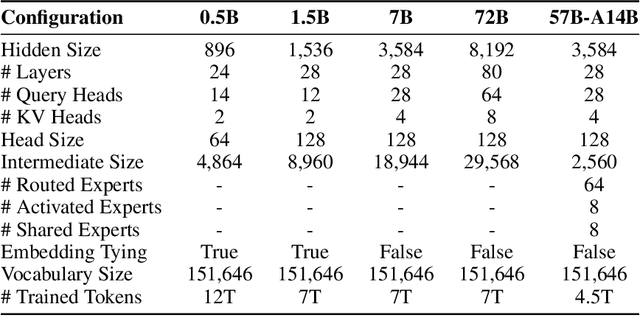
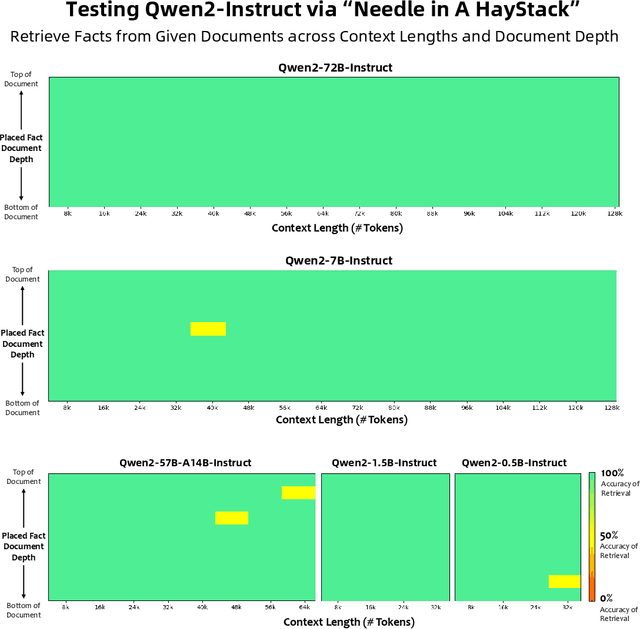
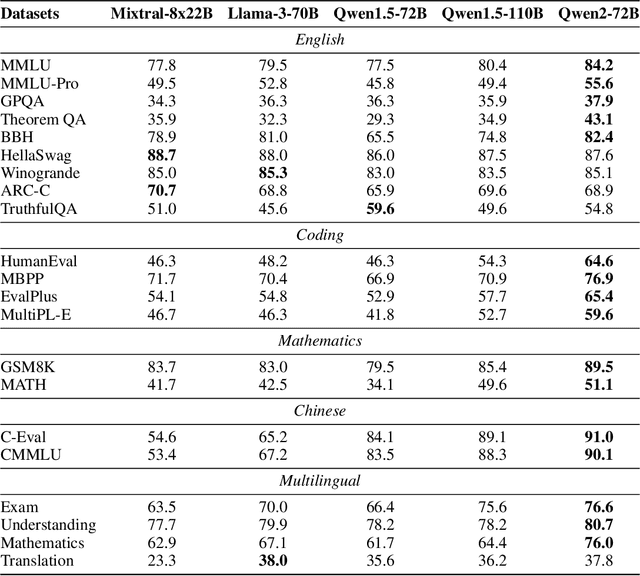
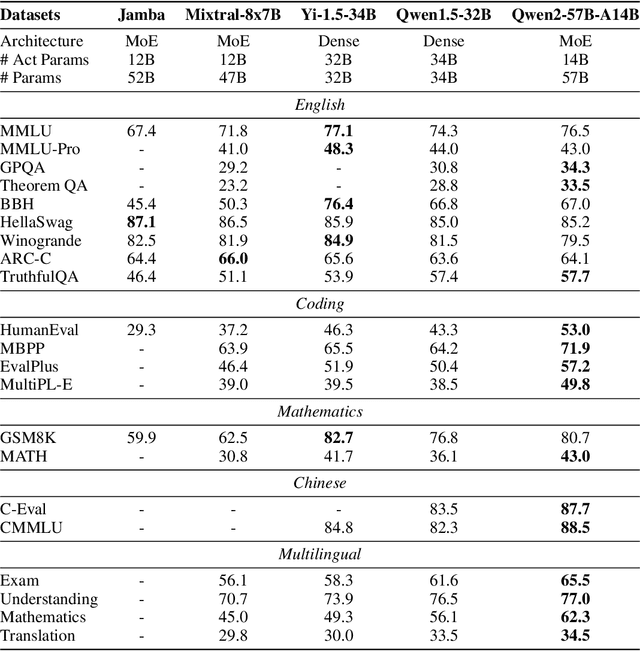
This report introduces the Qwen2 series, the latest addition to our large language models and large multimodal models. We release a comprehensive suite of foundational and instruction-tuned language models, encompassing a parameter range from 0.5 to 72 billion, featuring dense models and a Mixture-of-Experts model. Qwen2 surpasses most prior open-weight models, including its predecessor Qwen1.5, and exhibits competitive performance relative to proprietary models across diverse benchmarks on language understanding, generation, multilingual proficiency, coding, mathematics, and reasoning. The flagship model, Qwen2-72B, showcases remarkable performance: 84.2 on MMLU, 37.9 on GPQA, 64.6 on HumanEval, 89.5 on GSM8K, and 82.4 on BBH as a base language model. The instruction-tuned variant, Qwen2-72B-Instruct, attains 9.1 on MT-Bench, 48.1 on Arena-Hard, and 35.7 on LiveCodeBench. Moreover, Qwen2 demonstrates robust multilingual capabilities, proficient in approximately 30 languages, spanning English, Chinese, Spanish, French, German, Arabic, Russian, Korean, Japanese, Thai, Vietnamese, and more, underscoring its versatility and global reach. To foster community innovation and accessibility, we have made the Qwen2 model weights openly available on Hugging Face and ModelScope, and the supplementary materials including example code on GitHub. These platforms also include resources for quantization, fine-tuning, and deployment, facilitating a wide range of applications and research endeavors.
Retrieved In-Context Principles from Previous Mistakes
Jul 08, 2024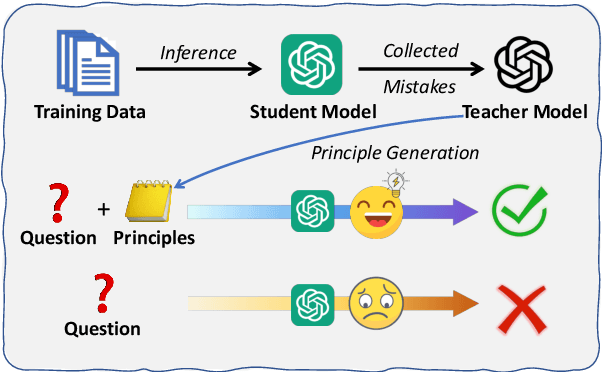
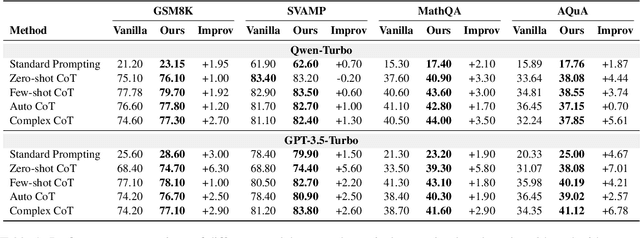
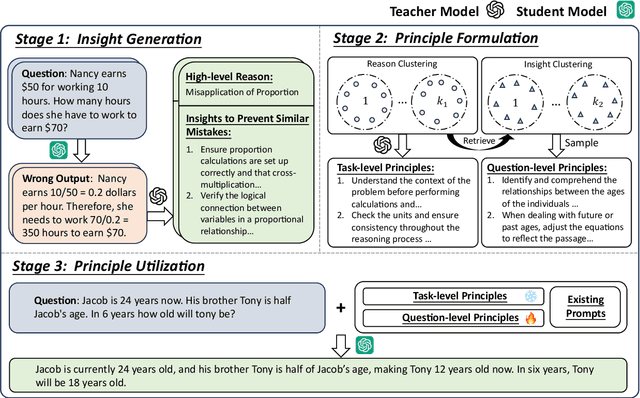
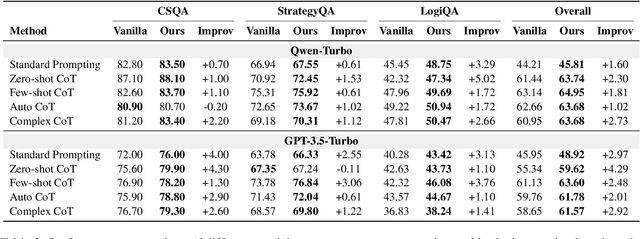
In-context learning (ICL) has been instrumental in adapting Large Language Models (LLMs) to downstream tasks using correct input-output examples. Recent advances have attempted to improve model performance through principles derived from mistakes, yet these approaches suffer from lack of customization and inadequate error coverage. To address these limitations, we propose Retrieved In-Context Principles (RICP), a novel teacher-student framework. In RICP, the teacher model analyzes mistakes from the student model to generate reasons and insights for preventing similar mistakes. These mistakes are clustered based on their underlying reasons for developing task-level principles, enhancing the error coverage of principles. During inference, the most relevant mistakes for each question are retrieved to create question-level principles, improving the customization of the provided guidance. RICP is orthogonal to existing prompting methods and does not require intervention from the teacher model during inference. Experimental results across seven reasoning benchmarks reveal that RICP effectively enhances performance when applied to various prompting strategies.