 Add to Chrome
 Add to Firefox
 Add to Edge
TradingMoE: Routing the Right Experts in Evolving Markets
Aug 12, 2026
Large language models (LLMs) have shown strong potential for financial analysis and trading, but direct trading remains challenging because the predictive capabilities required can vary across assets, decision fields, and market conditions. Existing LLM-based trading systems either coordinate human-defined external experts or adopt conventional internal Mixture-of-Experts (MoE) routers that do not directly evaluate how individual experts contribute to trading decisions. Moreover, these routers receive no direct signal indicating when an inactive expert has become more suitable as market conditions change. We find that native router scores poorly reflect how much individual experts improve trading decisions, frequently leaving better alternatives unselected. We further reveal that token-specific expert usefulness exhibits a compact low-dimensional structure. Based on these findings, we propose TradingMoE, a trading-oriented sparse MoE that augments a frozen dense LLM with lightweight residual experts. We introduce a Query-Key router that represents the expertise required by each token under the current market context as a low-dimensional query and matches it with learnable expert keys. We further propose a sparse expert selection update mechanism that samples a few inactive experts during training and estimates whether they should replace the weakest expert in the current Top-k route. This mechanism enables the router to update expert selection as market conditions change while preserving sparse computation. Experiments against 22 baselines on stock and cryptocurrency markets show that TradingMoE improves cumulative return over the best-performing baselines by 30.89% and 30.7%, respectively. Rolling paper-trading experiments further demonstrate that its advantage persists under forward-only deployment.

A Benchmark and Multi-Agent System for Instruction-driven Cinematic Video Compilation
Apr 12, 2026The surging demand for adapting long-form cinematic content into short videos has motivated the need for versatile automatic video compilation systems. However, existing compilation methods are limited to predefined tasks, and the community lacks a comprehensive benchmark to evaluate the cinematic compilation. To address this, we introduce CineBench, the first benchmark for instruction-driven cinematic video compilation, featuring diverse user instructions and high-quality ground-truth compilations annotated by professional editors. To overcome contextual collapse and temporal fragmentation, we present CineAgents, a multi-agent system that reformulates cinematic video compilation into ``design-and-compose'' paradigm. CineAgents performs script reverse-engineering to construct a hierarchical narrative memory to provide multi-level context and employs an iterative narrative planning process that refines a creative blueprint into a final compiled script. Extensive experiments demonstrate that CineAgents significantly outperforms existing methods, generating compilations with superior narrative coherence and logical coherence.
Crab$^{+}$: A Scalable and Unified Audio-Visual Scene Understanding Model with Explicit Cooperation
Mar 04, 2026Developing Audio-Visual Large Language Models (AV-LLMs) for unified scene understanding is pivotal in multimodal intelligence. While instruction tuning enables pre-trained models with multi-task abilities, we observe that conventional multi-task unification methods often suffer from severe negative transfer, where nearly 55% of tasks degrade compared to single-task training. We attribute this phenomenon to audio-visual task heterogeneity, characterized by disparate task granularity and divergent capability demands, which lead to negative interference under joint training. To tackle this, we present Crab$^{+}$, a scalable and unified audio-visual scene understanding model that addresses task heterogeneity through explicit cooperation from both data and model perspectives. On the data side, we introduce AV-UIE v2, a comprehensive Audio-Visual Unified Instruction-tuning dataset with Explicit reasoning processes. It contains approximately 222K samples spanning 17 datasets and 7 tasks, enabling the model to capture cross-task relationships at different levels of granularity. On the model side, we design a unified interface to align heterogeneous task formulations, and propose Interaction-aware LoRA (I-LoRA), which explicitly models inter-task relationships via dynamic routing to coordinate distinct audio-visual interaction patterns, mitigating parameter interference. Extensive experiments show Crab$^{+}$ covers broader tasks than existing unified models while outperforming specialized models on various benchmarks. We successfully reverse the negative transfer trend, achieving positive transfer where multi-task learning surpasses single-task baselines in nearly 88% of tasks. These results hold across diverse AV-LLM paradigms and are validated through in-depth visualization, positioning Crab$^{+}$ as a robust step towards holistic audio-visual scene understanding.
APPO: Attention-guided Perception Policy Optimization for Video Reasoning
Mar 03, 2026Complex video reasoning, actually, relies excessively on fine-grained perception rather than on expert (e.g., Ph.D, Science)-level reasoning. Through extensive empirical observation, we have recognized the critical impact of perception. In particular, when perception ability is almost fixed, enhancing reasoning from Qwen3-8B to OpenAI-o3 yields only 0.7% performance improvement. Conversely, even minimal change in perception model scale (from 7B to 32B) boosts performance by 1.4%, indicating enhancing perception, rather than reasoning, is more critical to improve performance. Therefore, exploring how to enhance perception ability through reasoning without the need for expensive fine-grained annotation information is worthwhile. To achieve this goal, we specially propose APPO, the Attention-guided Perception Policy Optimization algorithm that leverages token-level dense rewards to improve model's fine-grained perception. The core idea behind APPO is to optimize those tokens from different responses that primarily focus on the same crucial video frame (called intra-group perception tokens). Experimental results on diverse video benchmarks and models with different scales (3/7B) demonstrate APPO consistently outperforms GRPO and DAPO (0.5%~4%). We hope our work provides a promising approach to effectively enhance model's perception abilities through reasoning in a low-cost manner, serving diverse scenarios and demands.
EDCO: Dynamic Curriculum Orchestration for Domain-specific Large Language Model Fine-tuning
Jan 07, 2026Domain-specific large language models (LLMs), typically developed by fine-tuning a pre-trained general-purpose LLM on specialized datasets, represent a significant advancement in applied AI. A common strategy in LLM fine-tuning is curriculum learning, which pre-orders training samples based on metrics like difficulty to improve learning efficiency compared to a random sampling strategy. However, most existing methods for LLM fine-tuning rely on a static curriculum, designed prior to training, which lacks adaptability to the model's evolving needs during fine-tuning. To address this, we propose EDCO, a novel framework based on two key concepts: inference entropy and dynamic curriculum orchestration. Inspired by recent findings that maintaining high answer entropy benefits long-term reasoning gains, EDCO prioritizes samples with high inference entropy in a continuously adapted curriculum. EDCO integrates three core components: an efficient entropy estimator that uses prefix tokens to approximate full-sequence entropy, an entropy-based curriculum generator that selects data points with the highest inference entropy, and an LLM trainer that optimizes the model on the selected curriculum. Comprehensive experiments in communication, medicine and law domains, EDCO outperforms traditional curriculum strategies for fine-tuning Qwen3-4B and Llama3.2-3B models under supervised and reinforcement learning settings. Furthermore, the proposed efficient entropy estimation reduces computational time by 83.5% while maintaining high accuracy.
Video Detective: Seek Critical Clues Recurrently to Answer Question from Long Videos
Dec 19, 2025Long Video Question-Answering (LVQA) presents a significant challenge for Multi-modal Large Language Models (MLLMs) due to immense context and overloaded information, which could also lead to prohibitive memory consumption. While existing methods attempt to address these issues by reducing visual tokens or extending model's context length, they may miss useful information or take considerable computation. In fact, when answering given questions, only a small amount of crucial information is required. Therefore, we propose an efficient question-aware memory mechanism, enabling MLLMs to recurrently seek these critical clues. Our approach, named VideoDetective, simplifies this task by iteratively processing video sub-segments. For each sub-segment, a question-aware compression strategy is employed by introducing a few special memory tokens to achieve purposefully compression. This allows models to effectively seek critical clues while reducing visual tokens. Then, due to history context could have a significant impact, we recurrently aggregate and store these memory tokens to update history context, which would be reused for subsequent sub-segments. Furthermore, to more effectively measure model's long video understanding ability, we introduce GLVC (Grounding Long Video Clues), a long video question-answering dataset, which features grounding critical and concrete clues scattered throughout entire videos. Experimental results demonstrate our method enables MLLMs with limited context length of 32K to efficiently process 100K tokens (3600 frames, an hour-long video sampled at 1fps), requiring only 2 minutes and 37GB GPU memory usage. Evaluation results across multiple long video benchmarks illustrate our method can more effectively seek critical clues from massive information.
Investigating Data Pruning for Pretraining Biological Foundation Models at Scale
Dec 15, 2025Biological foundation models (BioFMs), pretrained on large-scale biological sequences, have recently shown strong potential in providing meaningful representations for diverse downstream bioinformatics tasks. However, such models often rely on millions to billions of training sequences and billions of parameters, resulting in prohibitive computational costs and significant barriers to reproducibility and accessibility, particularly for academic labs. To address these challenges, we investigate the feasibility of data pruning for BioFM pretraining and propose a post-hoc influence-guided data pruning framework tailored to biological domains. Our approach introduces a subset-based self-influence formulation that enables efficient estimation of sample importance at low computational cost, and builds upon it two simple yet effective selection strategies, namely Top-k Influence (Top I) and Coverage-Centric Influence (CCI). We empirically validate our method on two representative BioFMs, RNA-FM and ESM-C. For RNA, our framework consistently outperforms random selection baselines under an extreme pruning rate of over 99 percent, demonstrating its effectiveness. Furthermore, we show the generalizability of our framework on protein-related tasks using ESM-C. In particular, our coreset even outperforms random subsets that are ten times larger in both RNA and protein settings, revealing substantial redundancy in biological sequence datasets. These findings underscore the potential of influence-guided data pruning to substantially reduce the computational cost of BioFM pretraining, paving the way for more efficient, accessible, and sustainable biological AI research.
MolGA: Molecular Graph Adaptation with Pre-trained 2D Graph Encoder
Oct 08, 2025Molecular graph representation learning is widely used in chemical and biomedical research. While pre-trained 2D graph encoders have demonstrated strong performance, they overlook the rich molecular domain knowledge associated with submolecular instances (atoms and bonds). While molecular pre-training approaches incorporate such knowledge into their pre-training objectives, they typically employ designs tailored to a specific type of knowledge, lacking the flexibility to integrate diverse knowledge present in molecules. Hence, reusing widely available and well-validated pre-trained 2D encoders, while incorporating molecular domain knowledge during downstream adaptation, offers a more practical alternative. In this work, we propose MolGA, which adapts pre-trained 2D graph encoders to downstream molecular applications by flexibly incorporating diverse molecular domain knowledge. First, we propose a molecular alignment strategy that bridge the gap between pre-trained topological representations with domain-knowledge representations. Second, we introduce a conditional adaptation mechanism that generates instance-specific tokens to enable fine-grained integration of molecular domain knowledge for downstream tasks. Finally, we conduct extensive experiments on eleven public datasets, demonstrating the effectiveness of MolGA.
Feeling Machines: Ethics, Culture, and the Rise of Emotional AI
Jun 14, 2025This paper explores the growing presence of emotionally responsive artificial intelligence through a critical and interdisciplinary lens. Bringing together the voices of early-career researchers from multiple fields, it explores how AI systems that simulate or interpret human emotions are reshaping our interactions in areas such as education, healthcare, mental health, caregiving, and digital life. The analysis is structured around four central themes: the ethical implications of emotional AI, the cultural dynamics of human-machine interaction, the risks and opportunities for vulnerable populations, and the emerging regulatory, design, and technical considerations. The authors highlight the potential of affective AI to support mental well-being, enhance learning, and reduce loneliness, as well as the risks of emotional manipulation, over-reliance, misrepresentation, and cultural bias. Key challenges include simulating empathy without genuine understanding, encoding dominant sociocultural norms into AI systems, and insufficient safeguards for individuals in sensitive or high-risk contexts. Special attention is given to children, elderly users, and individuals with mental health challenges, who may interact with AI in emotionally significant ways. However, there remains a lack of cognitive or legal protections which are necessary to navigate such engagements safely. The report concludes with ten recommendations, including the need for transparency, certification frameworks, region-specific fine-tuning, human oversight, and longitudinal research. A curated supplementary section provides practical tools, models, and datasets to support further work in this domain.
Rationales Are Not Silver Bullets: Measuring the Impact of Rationales on Model Performance and Reliability
May 30, 2025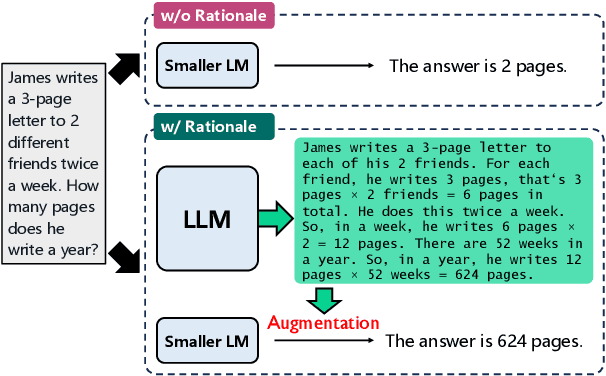
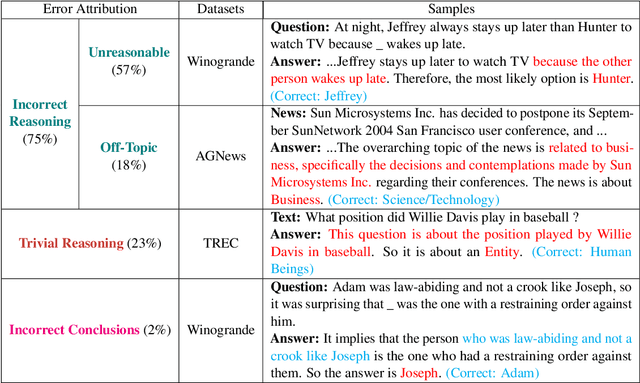
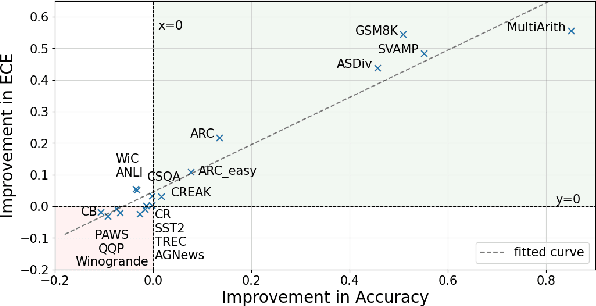
Training language models with rationales augmentation has been shown to be beneficial in many existing works. In this paper, we identify that such a prevailing view does not hold consistently. We conduct comprehensive investigations to thoroughly inspect the impact of rationales on model performance as well as a novel perspective of model reliability. The results lead to several key findings that add new insights upon existing understandings: 1) Rationales can, at times, deteriorate model performance; 2) Rationales can, at times, improve model reliability, even outperforming their untrained counterparts; 3) A linear correspondence exists in between the performance and reliability improvements, while both are driven by the intrinsic difficulty of the task. These findings provide informative regulations on the broad utilization of rationales and raise critical implications on the procedure of explicitly aligning language models with implicit human thoughts. Codes can be found at https://github.com/Ignoramus0817/rationales.