 Add to Chrome
 Add to Firefox
 Add to Edge
Radiology-GPT: A Large Language Model for Radiology
Jun 14, 2023
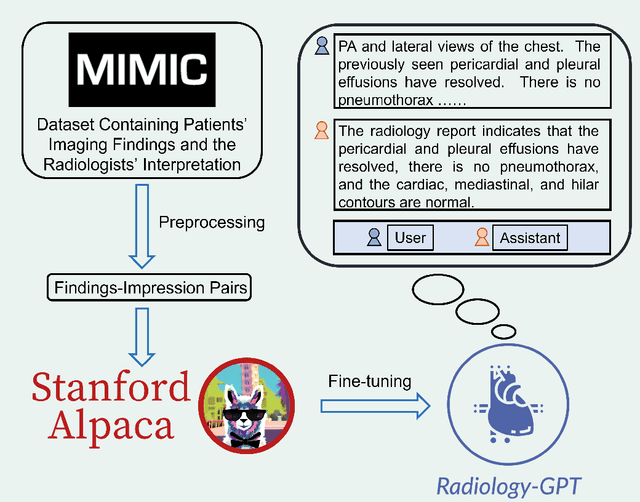
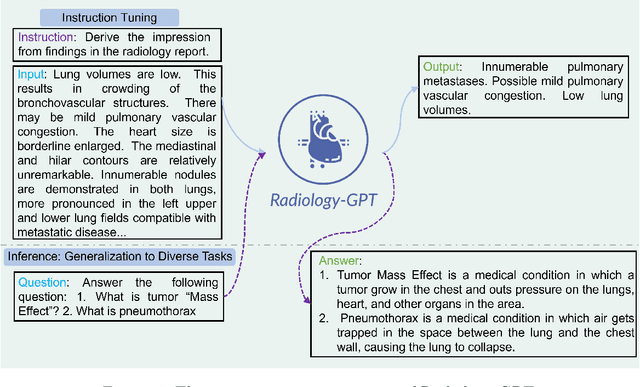
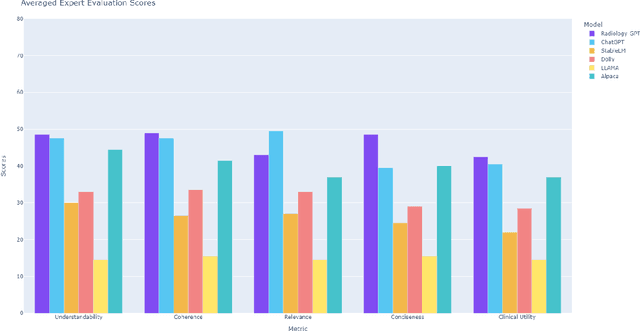
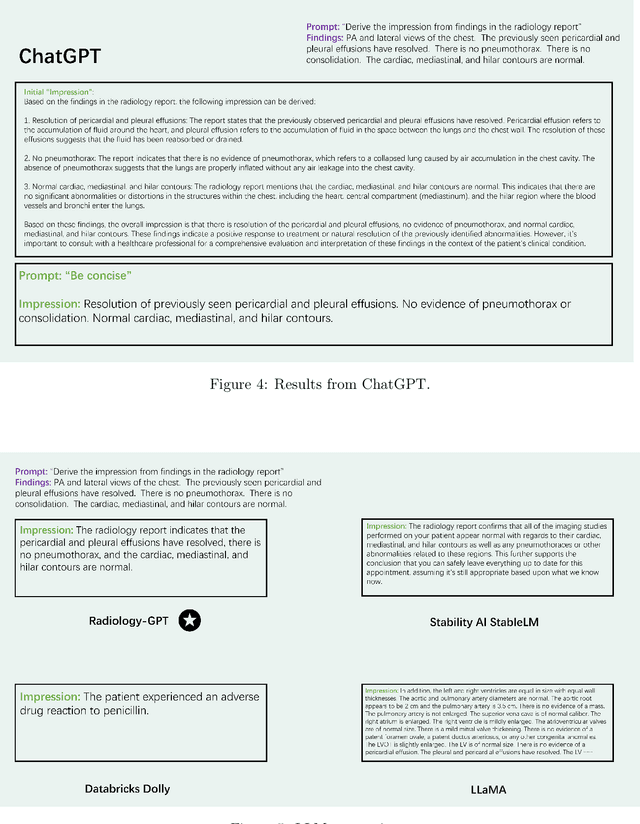
We introduce Radiology-GPT, a large language model for radiology. Using an instruction tuning approach on an extensive dataset of radiology domain knowledge, Radiology-GPT demonstrates superior performance compared to general language models such as StableLM, Dolly and LLaMA. It exhibits significant versatility in radiological diagnosis, research, and communication. This work serves as a catalyst for future developments in clinical NLP. The successful implementation of Radiology-GPT is indicative of the potential of localizing generative large language models, specifically tailored for distinctive medical specialties, while ensuring adherence to privacy standards such as HIPAA. The prospect of developing individualized, large-scale language models that cater to specific needs of various hospitals presents a promising direction. The fusion of conversational competence and domain-specific knowledge in these models is set to foster future development in healthcare AI. A demo of Radiology-GPT is available at https://huggingface.co/spaces/allen-eric/radiology-gpt.

ChatCAD+: Towards a Universal and Reliable Interactive CAD using LLMs
May 26, 2023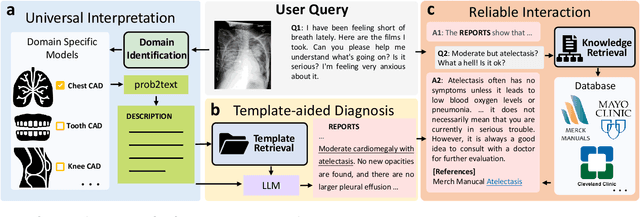
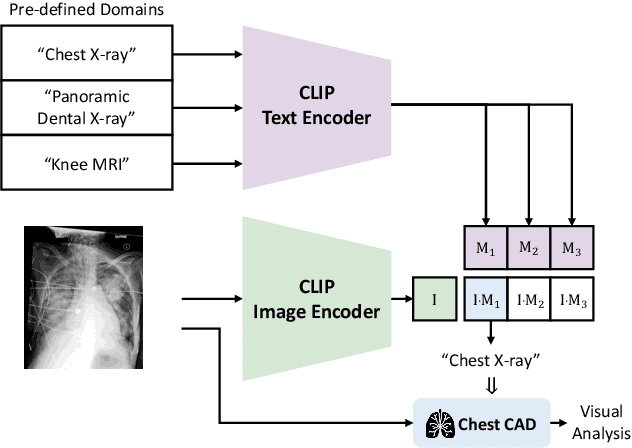
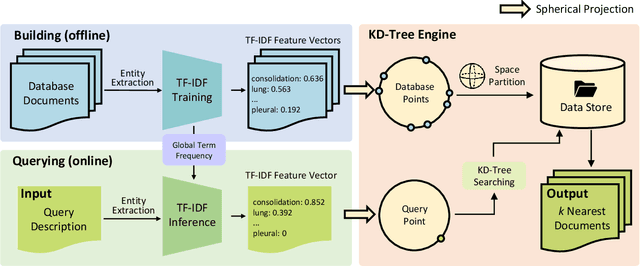
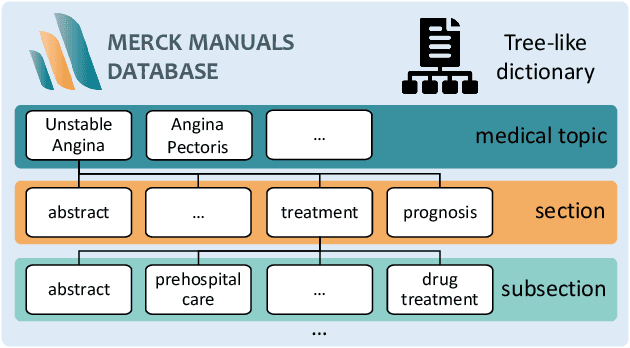
The potential of integrating Computer-Assisted Diagnosis (CAD) with Large Language Models (LLMs) in clinical applications, particularly in digital family doctor and clinic assistant roles, shows promise. However, existing works have limitations in terms of reliability, effectiveness, and their narrow applicability to specific image domains, which restricts their overall processing capabilities. Moreover, the mismatch in writing style between LLMs and radiologists undermines their practical utility. To address these challenges, we present ChatCAD+, an interactive CAD system that is universal, reliable, and capable of handling medical images from diverse domains. ChatCAD+ utilizes current information obtained from reputable medical websites to offer precise medical advice. Additionally, it incorporates a template retrieval system that emulates real-world diagnostic reporting, thereby improving its seamless integration into existing clinical workflows. The source code is available at https://github.com/zhaozh10/ChatCAD. The online demo will be available soon.
Learning Better Contrastive View from Radiologist's Gaze
May 15, 2023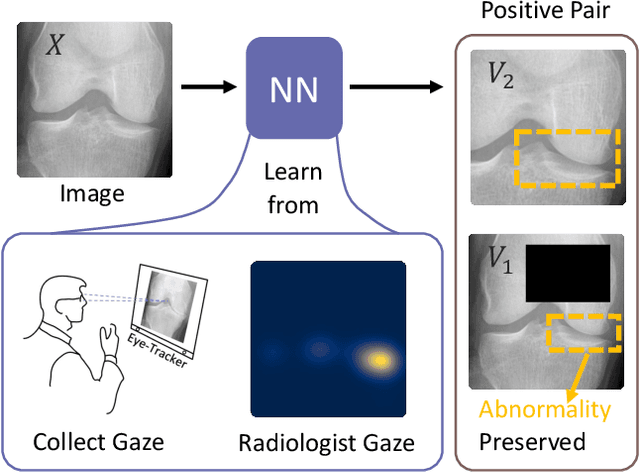
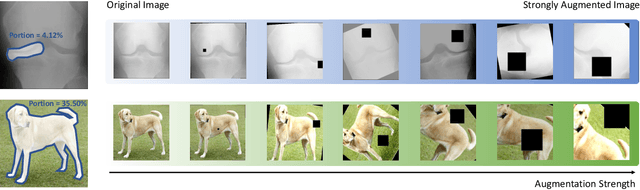
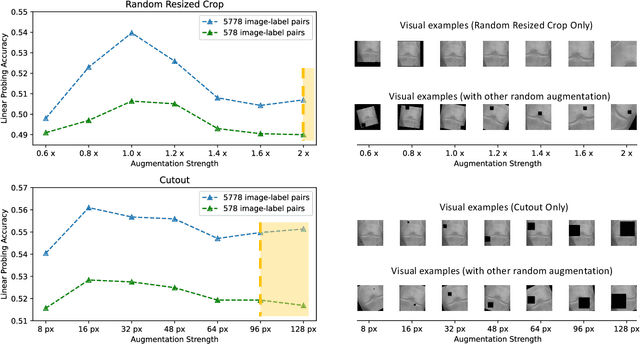
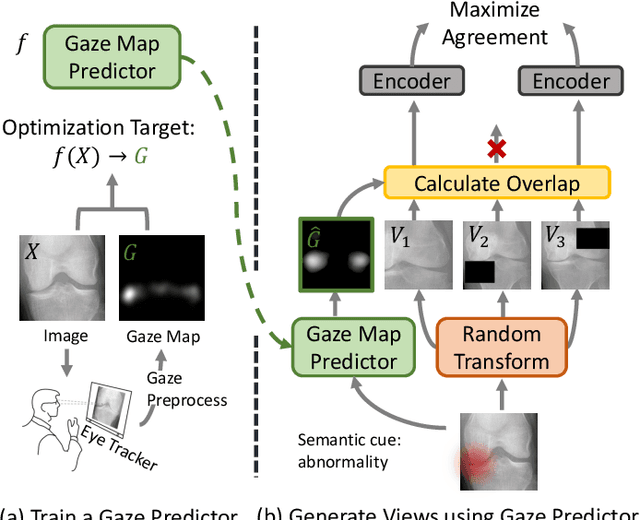
Recent self-supervised contrastive learning methods greatly benefit from the Siamese structure that aims to minimizing distances between positive pairs. These methods usually apply random data augmentation to input images, expecting the augmented views of the same images to be similar and positively paired. However, random augmentation may overlook image semantic information and degrade the quality of augmented views in contrastive learning. This issue becomes more challenging in medical images since the abnormalities related to diseases can be tiny, and are easy to be corrupted (e.g., being cropped out) in the current scheme of random augmentation. In this work, we first demonstrate that, for widely-used X-ray images, the conventional augmentation prevalent in contrastive pre-training can affect the performance of the downstream diagnosis or classification tasks. Then, we propose a novel augmentation method, i.e., FocusContrast, to learn from radiologists' gaze in diagnosis and generate contrastive views for medical images with guidance from radiologists' visual attention. Specifically, we track the gaze movement of radiologists and model their visual attention when reading to diagnose X-ray images. The learned model can predict visual attention of the radiologists given a new input image, and further guide the attention-aware augmentation that hardly neglects the disease-related abnormalities. As a plug-and-play and framework-agnostic module, FocusContrast consistently improves state-of-the-art contrastive learning methods of SimCLR, MoCo, and BYOL by 4.0~7.0% in classification accuracy on a knee X-ray dataset.
Spatial and Modal Optimal Transport for Fast Cross-Modal MRI Reconstruction
May 04, 2023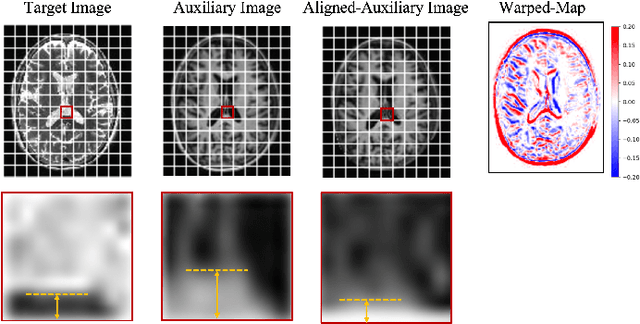
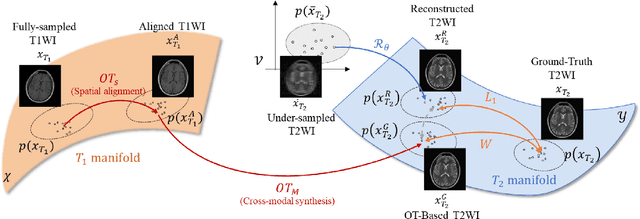
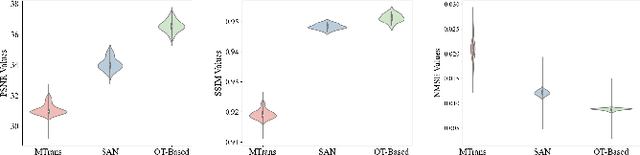
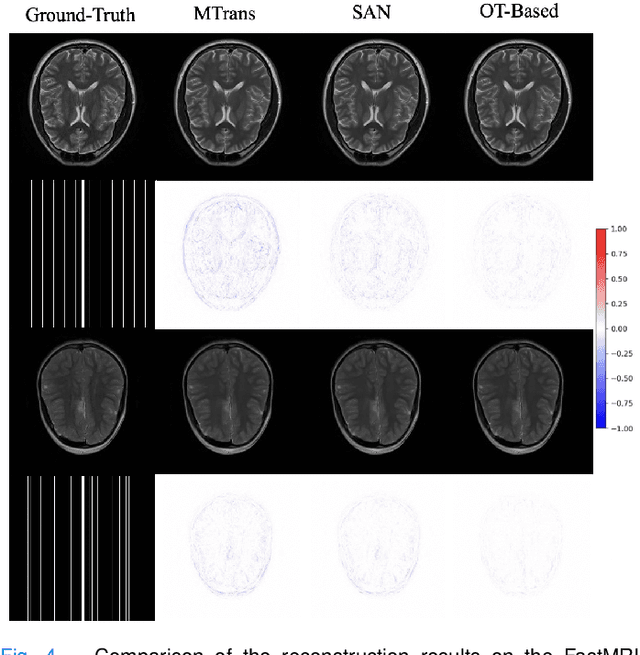
Multi-modal Magnetic Resonance Imaging (MRI) plays an important role in clinical medicine. However, the acquisitions of some modalities, such as the T2-weighted modality, need a long time and they are always accompanied by motion artifacts. On the other hand, the T1-weighted image (T1WI) shares the same underlying information with T2-weighted image (T2WI), which needs a shorter scanning time. Therefore, in this paper we accelerate the acquisition of the T2WI by introducing the auxiliary modality (T1WI). Concretely, we first reconstruct high-quality T2WIs with under-sampled T2WIs. Here, we realize fast T2WI reconstruction by reducing the sampling rate in the k-space. Second, we establish a cross-modal synthesis task to generate the synthetic T2WIs for guiding better T2WI reconstruction. Here, we obtain the synthetic T2WIs by decomposing the whole cross-modal generation mapping into two OT processes, the spatial alignment mapping on the T1 image manifold and the cross-modal synthesis mapping from aligned T1WIs to T2WIs. It overcomes the negative transfer caused by the spatial misalignment. Then, we prove the reconstruction and the synthesis tasks are well complementary. Finally, we compare it with state-of-the-art approaches on an open dataset FastMRI and an in-house dataset to testify the validity of the proposed method.
Mining fMRI Dynamics with Parcellation Prior for Brain Disease Diagnosis
May 04, 2023

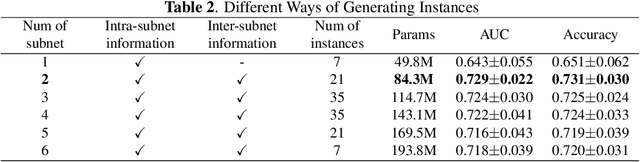

To characterize atypical brain dynamics under diseases, prevalent studies investigate functional magnetic resonance imaging (fMRI). However, most of the existing analyses compress rich spatial-temporal information as the brain functional networks (BFNs) and directly investigate the whole-brain network without neurological priors about functional subnetworks. We thus propose a novel graph learning framework to mine fMRI signals with topological priors from brain parcellation for disease diagnosis. Specifically, we 1) detect diagnosis-related temporal features using a "Transformer" for a higher-level BFN construction, and process it with a following graph convolutional network, and 2) apply an attention-based multiple instance learning strategy to emphasize the disease-affected subnetworks to further enhance the diagnosis performance and interpretability. Experiments demonstrate higher effectiveness of our method than compared methods in the diagnosis of early mild cognitive impairment. More importantly, our method is capable of localizing crucial brain subnetworks during the diagnosis, providing insights into the pathogenic source of mild cognitive impairment.
ImpressionGPT: An Iterative Optimizing Framework for Radiology Report Summarization with ChatGPT
May 03, 2023The 'Impression' section of a radiology report is a critical basis for communication between radiologists and other physicians, and it is typically written by radiologists based on the 'Findings' section. However, writing numerous impressions can be laborious and error-prone for radiologists. Although recent studies have achieved promising results in automatic impression generation using large-scale medical text data for pre-training and fine-tuning pre-trained language models, such models often require substantial amounts of medical text data and have poor generalization performance. While large language models (LLMs) like ChatGPT have shown strong generalization capabilities and performance, their performance in specific domains, such as radiology, remains under-investigated and potentially limited. To address this limitation, we propose ImpressionGPT, which leverages the in-context learning capability of LLMs by constructing dynamic contexts using domain-specific, individualized data. This dynamic prompt approach enables the model to learn contextual knowledge from semantically similar examples from existing data. Additionally, we design an iterative optimization algorithm that performs automatic evaluation on the generated impression results and composes the corresponding instruction prompts to further optimize the model. The proposed ImpressionGPT model achieves state-of-the-art performance on both MIMIC-CXR and OpenI datasets without requiring additional training data or fine-tuning the LLMs. This work presents a paradigm for localizing LLMs that can be applied in a wide range of similar application scenarios, bridging the gap between general-purpose LLMs and the specific language processing needs of various domains.
Instruction-ViT: Multi-Modal Prompts for Instruction Learning in ViT
Apr 29, 2023Prompts have been proven to play a crucial role in large language models, and in recent years, vision models have also been using prompts to improve scalability for multiple downstream tasks. In this paper, we focus on adapting prompt design based on instruction tuning into a visual transformer model for image classification which we called Instruction-ViT. The key idea is to implement multi-modal prompts (text or image prompt) related to category information to guide the fine-tuning of the model. Based on the experiments of several image captionining tasks, the performance and domain adaptability were improved. Our work provided an innovative strategy to fuse multi-modal prompts with better performance and faster adaptability for visual classification models.
Prompt Engineering for Healthcare: Methodologies and Applications
Apr 28, 2023This review will introduce the latest advances in prompt engineering in the field of natural language processing (NLP) for the medical domain. First, we will provide a brief overview of the development of prompt engineering and emphasize its significant contributions to healthcare NLP applications such as question-answering systems, text summarization, and machine translation. With the continuous improvement of general large language models, the importance of prompt engineering in the healthcare domain is becoming increasingly prominent. The aim of this article is to provide useful resources and bridges for healthcare NLP researchers to better explore the application of prompt engineering in this field. We hope that this review can provide new ideas and inspire ample possibilities for research and application in medical NLP.
ChatABL: Abductive Learning via Natural Language Interaction with ChatGPT
Apr 21, 2023Large language models (LLMs) such as ChatGPT have recently demonstrated significant potential in mathematical abilities, providing valuable reasoning paradigm consistent with human natural language. However, LLMs currently have difficulty in bridging perception, language understanding and reasoning capabilities due to incompatibility of the underlying information flow among them, making it challenging to accomplish tasks autonomously. On the other hand, abductive learning (ABL) frameworks for integrating the two abilities of perception and reasoning has seen significant success in inverse decipherment of incomplete facts, but it is limited by the lack of semantic understanding of logical reasoning rules and the dependence on complicated domain knowledge representation. This paper presents a novel method (ChatABL) for integrating LLMs into the ABL framework, aiming at unifying the three abilities in a more user-friendly and understandable manner. The proposed method uses the strengths of LLMs' understanding and logical reasoning to correct the incomplete logical facts for optimizing the performance of perceptual module, by summarizing and reorganizing reasoning rules represented in natural language format. Similarly, perceptual module provides necessary reasoning examples for LLMs in natural language format. The variable-length handwritten equation deciphering task, an abstract expression of the Mayan calendar decoding, is used as a testbed to demonstrate that ChatABL has reasoning ability beyond most existing state-of-the-art methods, which has been well supported by comparative studies. To our best knowledge, the proposed ChatABL is the first attempt to explore a new pattern for further approaching human-level cognitive ability via natural language interaction with ChatGPT.
Domain Generalization for Mammographic Image Analysis via Contrastive Learning
Apr 20, 2023Mammographic image analysis is a fundamental problem in the computer-aided diagnosis scheme, which has recently made remarkable progress with the advance of deep learning. However, the construction of a deep learning model requires training data that are large and sufficiently diverse in terms of image style and quality. In particular, the diversity of image style may be majorly attributed to the vendor factor. However, mammogram collection from vendors as many as possible is very expensive and sometimes impractical for laboratory-scale studies. Accordingly, to further augment the generalization capability of deep learning models to various vendors with limited resources, a new contrastive learning scheme is developed. Specifically, the backbone network is firstly trained with a multi-style and multi-view unsupervised self-learning scheme for the embedding of invariant features to various vendor styles. Afterward, the backbone network is then recalibrated to the downstream tasks of mass detection, multi-view mass matching, BI-RADS classification and breast density classification with specific supervised learning. The proposed method is evaluated with mammograms from four vendors and two unseen public datasets. The experimental results suggest that our approach can effectively improve analysis performance on both seen and unseen domains, and outperforms many state-of-the-art (SOTA) generalization methods.