 Add to Chrome
 Add to Firefox
 Add to Edge
ESL-Bench: An Event-Driven Synthetic Longitudinal Benchmark for Health Agents
Apr 03, 2026
Longitudinal health agents must reason across multi-source trajectories that combine continuous device streams, sparse clinical exams, and episodic life events - yet evaluating them is hard: real-world data cannot be released at scale, and temporally grounded attribution questions seldom admit definitive answers without structured ground truth. We present ESL-Bench, an event-driven synthesis framework and benchmark providing 100 synthetic users, each with a 1-5 year trajectory comprising a health profile, a multi-phase narrative plan, daily device measurements, periodic exam records, and an event log with explicit per-indicator impact parameters. Each indicator follows a baseline stochastic process driven by discrete events with sigmoid-onset, exponential-decay kernels under saturation and projection constraints; a hybrid pipeline delegates sparse semantic artifacts to LLM-based planning and dense indicator dynamics to algorithmic simulation with hard physiological bounds. Users are each paired with 100 evaluation queries across five dimensions - Lookup, Trend, Comparison, Anomaly, Explanation - stratified into Easy, Medium, and Hard tiers, with all ground-truth answers programmatically computable from the recorded event-indicator relationships. Evaluating 13 methods spanning LLMs with tools, DB-native agents, and memory-augmented RAG, we find that DB agents (48-58%) substantially outperform memory RAG baselines (30-38%), with the gap concentrated on Comparison and Explanation queries where multi-hop reasoning and evidence attribution are required.

Fake It Right: Injecting Anatomical Logic into Synthetic Supervised Pre-training for Medical Segmentation
Mar 01, 2026Vision Transformers (ViTs) excel in 3D medical segmentation but require massive annotated datasets. While Self-Supervised Learning (SSL) mitigates this using unlabeled data, it still faces strict privacy and logistical barriers. Formula-Driven Supervised Learning (FDSL) offers a privacy-preserving alternative by pre-training on synthetic mathematical primitives. However, a critical semantic gap limits its efficacy: generic shapes lack the morphological fidelity, fixed spatial layouts, and inter-organ relationships of real anatomy, preventing models from learning essential global structural priors. To bridge this gap, we propose an Anatomy-Informed Synthetic Supervised Pre-training framework unifying FDSL's infinite scalability with anatomical realism. We replace basic primitives with a lightweight shape bank with de-identified, label-only segmentation masks from 5 subjects. Furthermore, we introduce a structure-aware sequential placement strategy to govern the patch synthesis process. Instead of random placement, we enforce physiological plausibility using spatial anchors for correct localization and a topological graph to manage inter-organ interactions (e.g., preventing impossible overlaps). Extensive experiments on BTCV and MSD datasets demonstrate that our method significantly outperforms state-of-the-art FDSL baselines and SSL methods by 1.74\% and up to 1.66\%, while exhibiting a robust scaling effect where performance improves with increased synthetic data volume. This provides a data-efficient, privacy-compliant solution for medical segmentation. The code will be made publicly available upon acceptance.
The Texture-Shape Dilemma: Boundary-Safe Synthetic Generation for 3D Medical Transformers
Mar 01, 2026Vision Transformers (ViTs) have revolutionized medical image analysis, yet their data-hungry nature clashes with the scarcity and privacy constraints of clinical archives. Formula-Driven Supervised Learning (FDSL) has emerged as a promising solution to this bottleneck, synthesizing infinite annotated samples from mathematical formulas without utilizing real patient data. However, existing FDSL paradigms rely on simple geometric shapes with homogeneous intensities, creating a substantial gap by neglecting tissue textures and noise patterns inherent in modalities like CT and MRI. In this paper, we identify a critical optimization conflict termed boundary aliasing: when high-frequency synthetic textures are naively added, they corrupt the image gradient signals necessary for learning structural boundaries, causing the model to fail in delineating real anatomical margins. To bridge this gap, we propose a novel Physics-inspired Spatially-Decoupled Synthesis framework. Our approach orthogonalizes the synthesis process: it first constructs a gradient-shielded buffer zone based on boundary distance to ensure stable shape learning, and subsequently injects physics-driven spectral textures into the object core. This design effectively reconciles robust shape representation learning with invariance to acquisition noise. Extensive experiments on the BTCV and MSD datasets demonstrate that our method significantly outperforms previous FDSL, as well as SSL methods trained on real-world medical datasets, by 1.43% on BTCV and up to 1.51% on MSD task, offering a scalable, annotation-free foundation for medical ViTs. The code will be made publicly available upon acceptance.
Referring Layer Decomposition
Feb 22, 2026Precise, object-aware control over visual content is essential for advanced image editing and compositional generation. Yet, most existing approaches operate on entire images holistically, limiting the ability to isolate and manipulate individual scene elements. In contrast, layered representations, where scenes are explicitly separated into objects, environmental context, and visual effects, provide a more intuitive and structured framework for interpreting and editing visual content. To bridge this gap and enable both compositional understanding and controllable editing, we introduce the Referring Layer Decomposition (RLD) task, which predicts complete RGBA layers from a single RGB image, conditioned on flexible user prompts, such as spatial inputs (e.g., points, boxes, masks), natural language descriptions, or combinations thereof. At the core is the RefLade, a large-scale dataset comprising 1.11M image-layer-prompt triplets produced by our scalable data engine, along with 100K manually curated, high-fidelity layers. Coupled with a perceptually grounded, human-preference-aligned automatic evaluation protocol, RefLade establishes RLD as a well-defined and benchmarkable research task. Building on this foundation, we present RefLayer, a simple baseline designed for prompt-conditioned layer decomposition, achieving high visual fidelity and semantic alignment. Extensive experiments show our approach enables effective training, reliable evaluation, and high-quality image decomposition, while exhibiting strong zero-shot generalization capabilities.
DRACO: a Cross-Domain Benchmark for Deep Research Accuracy, Completeness, and Objectivity
Feb 12, 2026We present DRACO (Deep Research Accuracy, Completeness, and Objectivity), a benchmark of complex deep research tasks. These tasks, which span 10 domains and draw on information sources from 40 countries, originate from anonymized real-world usage patterns within a large-scale deep research system. Tasks are sampled from a de-identified dataset of Perplexity Deep Research requests, then filtered and augmented to ensure that the tasks are anonymized, open-ended and complex, objectively evaluable, and representative of the broad scope of real-world deep research use cases. Outputs are graded against task-specific rubrics along four dimensions: factual accuracy (accuracy), breadth and depth of analysis (including completeness), presentation quality (including objectivity), and citation quality. DRACO is publicly available at https://hf.co/datasets/perplexity-ai/draco.
LDRNet: Large Deformation Registration Model for Chest CT Registration
Feb 02, 2026Most of the deep learning based medical image registration algorithms focus on brain image registration tasks.Compared with brain registration, the chest CT registration has larger deformation, more complex background and region over-lap. In this paper, we propose a fast unsupervised deep learning method, LDRNet, for large deformation image registration of chest CT images. We first predict a coarse resolution registration field, then refine it from coarse to fine. We propose two innovative technical components: 1) a refine block that is used to refine the registration field in different resolutions, 2) a rigid block that is used to learn transformation matrix from high-level features. We train and evaluate our model on the private dataset and public dataset SegTHOR. We compare our performance with state-of-the-art traditional registration methods as well as deep learning registration models VoxelMorph, RCN, and LapIRN. The results demonstrate that our model achieves state-of-the-art performance for large deformation images registration and is much faster.
Off-Policy Actor-Critic with Sigmoid-Bounded Entropy for Real-World Robot Learning
Jan 22, 2026Deploying reinforcement learning in the real world remains challenging due to sample inefficiency, sparse rewards, and noisy visual observations. Prior work leverages demonstrations and human feedback to improve learning efficiency and robustness. However, offline-to-online methods need large datasets and can be unstable, while VLA-assisted RL relies on large-scale pretraining and fine-tuning. As a result, a low-cost real-world RL method with minimal data requirements has yet to emerge. We introduce \textbf{SigEnt-SAC}, an off-policy actor-critic method that learns from scratch using a single expert trajectory. Our key design is a sigmoid-bounded entropy term that prevents negative-entropy-driven optimization toward out-of-distribution actions and reduces Q-function oscillations. We benchmark SigEnt-SAC on D4RL tasks against representative baselines. Experiments show that SigEnt-SAC substantially alleviates Q-function oscillations and reaches a 100\% success rate faster than prior methods. Finally, we validate SigEnt-SAC on four real-world robotic tasks across multiple embodiments, where agents learn from raw images and sparse rewards; results demonstrate that SigEnt-SAC can learn successful policies with only a small number of real-world interactions, suggesting a low-cost and practical pathway for real-world RL deployment.
EchoFoley: Event-Centric Hierarchical Control for Video Grounded Creative Sound Generation
Dec 31, 2025Sound effects build an essential layer of multimodal storytelling, shaping the emotional atmosphere and the narrative semantics of videos. Despite recent advancement in video-text-to-audio (VT2A), the current formulation faces three key limitations: First, an imbalance between visual and textual conditioning that leads to visual dominance; Second, the absence of a concrete definition for fine-grained controllable generation; Third, weak instruction understanding and following, as existing datasets rely on brief categorical tags. To address these limitations, we introduce EchoFoley, a new task designed for video-grounded sound generation with both event level local control and hierarchical semantic control. Our symbolic representation for sounding events specifies when, what, and how each sound is produced within a video or instruction, enabling fine-grained controls like sound generation, insertion, and editing. To support this task, we construct EchoFoley-6k, a large-scale, expert-curated benchmark containing over 6,000 video-instruction-annotation triplets. Building upon this foundation, we propose EchoVidia a sounding-event-centric agentic generation framework with slow-fast thinking strategy. Experiments show that EchoVidia surpasses recent VT2A models by 40.7% in controllability and 12.5% in perceptual quality.
Research on Evaluation Methods for Patent Novelty Search Systems and Empirical Analysis
Aug 25, 2025Patent novelty search systems are critical to IP protection and innovation assessment; their retrieval accuracy directly impacts patent quality. We propose a comprehensive evaluation methodology that builds high-quality, reproducible datasets from examiner citations and X-type citations extracted from technically consistent family patents, and evaluates systems using invention descriptions as inputs. Using Top-k Detection Rate and Recall as core metrics, we further conduct multi-dimensional analyses by language, technical field (IPC), and filing jurisdiction. Experiments show the method effectively exposes performance differences across scenarios and offers actionable evidence for system improvement. The framework is scalable and practical, providing a useful reference for development and optimization of patent novelty search systems
Legal Evalutions and Challenges of Large Language Models
Nov 15, 2024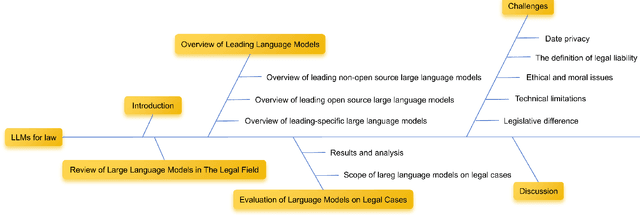
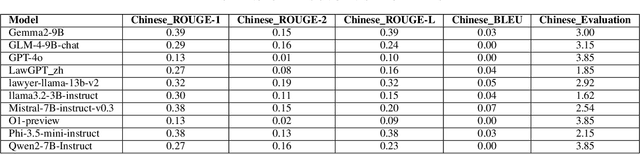

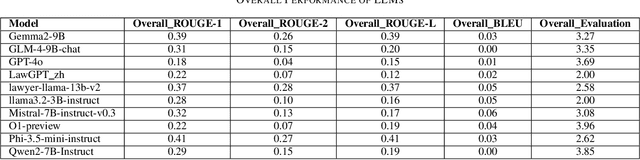
In this paper, we review legal testing methods based on Large Language Models (LLMs), using the OPENAI o1 model as a case study to evaluate the performance of large models in applying legal provisions. We compare current state-of-the-art LLMs, including open-source, closed-source, and legal-specific models trained specifically for the legal domain. Systematic tests are conducted on English and Chinese legal cases, and the results are analyzed in depth. Through systematic testing of legal cases from common law systems and China, this paper explores the strengths and weaknesses of LLMs in understanding and applying legal texts, reasoning through legal issues, and predicting judgments. The experimental results highlight both the potential and limitations of LLMs in legal applications, particularly in terms of challenges related to the interpretation of legal language and the accuracy of legal reasoning. Finally, the paper provides a comprehensive analysis of the advantages and disadvantages of various types of models, offering valuable insights and references for the future application of AI in the legal field.