 Add to Chrome
 Add to Firefox
 Add to Edge
Single-Loop Deterministic and Stochastic Interior-Point Algorithms for Nonlinearly Constrained Optimization
Aug 29, 2024
An interior-point algorithm framework is proposed, analyzed, and tested for solving nonlinearly constrained continuous optimization problems. The main setting of interest is when the objective and constraint functions may be nonlinear and/or nonconvex, and when constraint values and derivatives are tractable to compute, but objective function values and derivatives can only be estimated. The algorithm is intended primarily for a setting that is similar for stochastic-gradient methods for unconstrained optimization, namely, the setting when stochastic-gradient estimates are available and employed in place of gradients of the objective, and when no objective function values (nor estimates of them) are employed. This is achieved by the interior-point framework having a single-loop structure rather than the nested-loop structure that is typical of contemporary interior-point methods. For completeness, convergence guarantees for the framework are provided both for deterministic and stochastic settings. Numerical experiments show that the algorithm yields good performance on a large set of test problems.

Bridging and Modeling Correlations in Pairwise Data for Direct Preference Optimization
Aug 14, 2024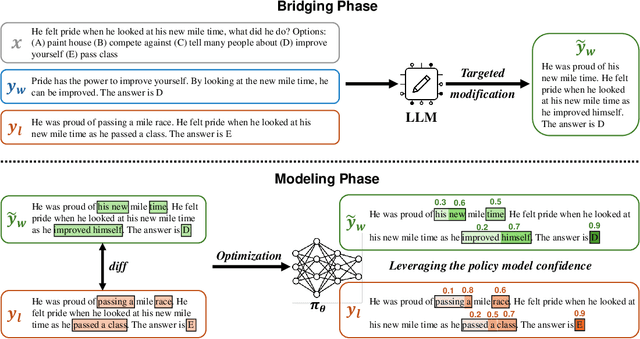
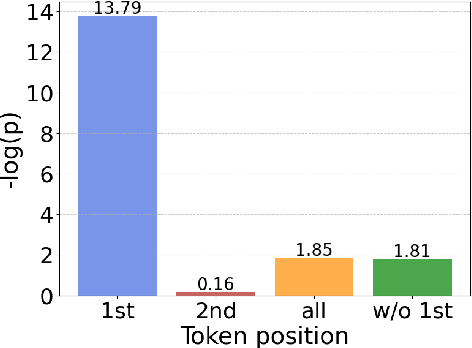
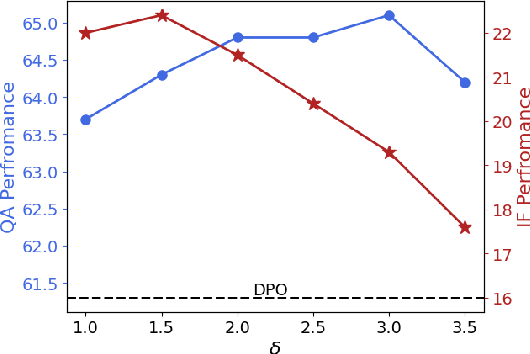
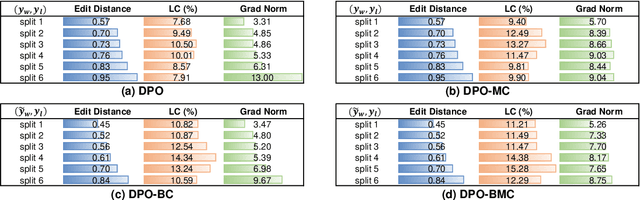
Direct preference optimization (DPO), a widely adopted offline preference optimization algorithm, aims to align large language models (LLMs) with human-desired behaviors using pairwise preference data. However, the winning response and the losing response within pairwise data are generated isolatedly, leading to weak correlations between them as well as suboptimal alignment performance. To address this issue, we propose an effective framework named BMC, for bridging and modeling correlations in pairwise data. Firstly, we increase the consistency and informativeness of the pairwise preference signals by targeted modifications, synthesizing a pseudo winning response through improving the losing response based on the winning response. Secondly, we identify that DPO alone is insufficient to model these correlations and capture nuanced variations. Therefore, we propose learning token-level correlations by dynamically leveraging the policy model's confidence during training. Comprehensive experiments on QA, math, and instruction-following tasks demonstrate the effectiveness of our approach, significantly surpassing competitive baselines, including DPO. Additionally, our in-depth quantitative analysis reveals the reasons behind our method's superior performance over DPO and showcases its versatility to other DPO variants.
Open-domain Implicit Format Control for Large Language Model Generation
Aug 08, 2024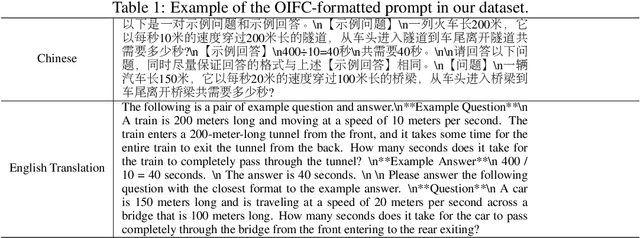
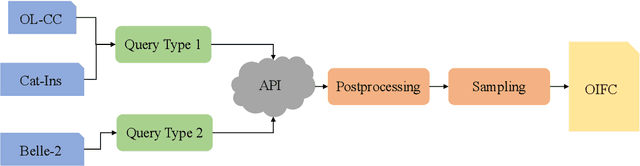
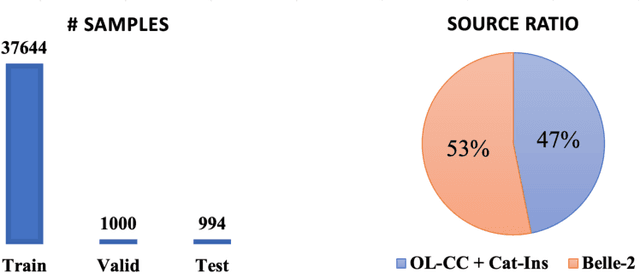
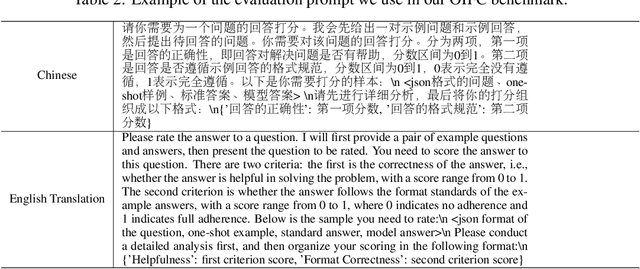
Controlling the format of outputs generated by large language models (LLMs) is a critical functionality in various applications. Current methods typically employ constrained decoding with rule-based automata or fine-tuning with manually crafted format instructions, both of which struggle with open-domain format requirements. To address this limitation, we introduce a novel framework for controlled generation in LLMs, leveraging user-provided, one-shot QA pairs. This study investigates LLMs' capabilities to follow open-domain, one-shot constraints and replicate the format of the example answers. We observe that this is a non-trivial problem for current LLMs. We also develop a dataset collection methodology for supervised fine-tuning that enhances the open-domain format control of LLMs without degrading output quality, as well as a benchmark on which we evaluate both the helpfulness and format correctness of LLM outputs. The resulting datasets, named OIFC-SFT, along with the related code, will be made publicly available at https://github.com/cofe-ai/OIFC.
Deep Uncertainty-Based Explore for Index Construction and Retrieval in Recommendation System
Aug 06, 2024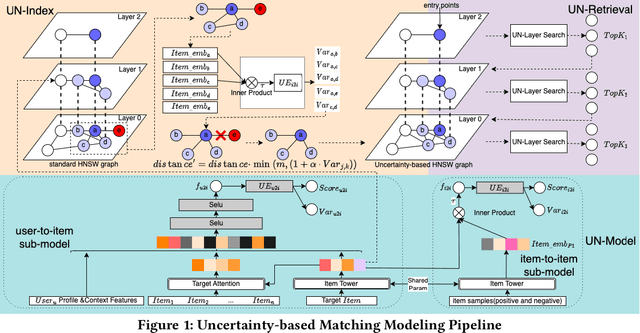
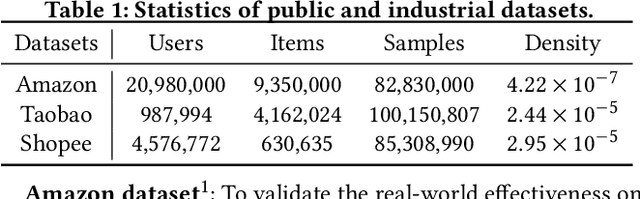
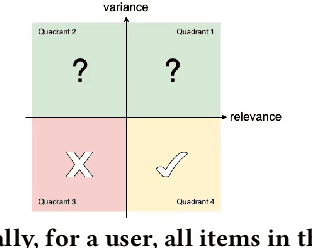
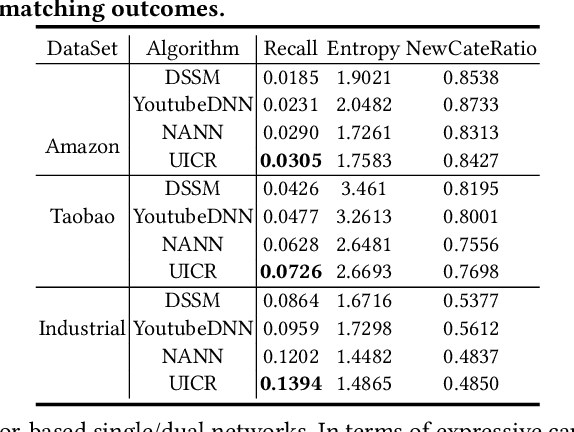
In recommendation systems, the relevance and novelty of the final results are selected through a cascade system of Matching -> Ranking -> Strategy. The matching model serves as the starting point of the pipeline and determines the upper bound of the subsequent stages. Balancing the relevance and novelty of matching results is a crucial step in the design and optimization of recommendation systems, contributing significantly to improving recommendation quality. However, the typical matching algorithms have not simultaneously addressed the relevance and novelty perfectly. One main reason is that deep matching algorithms exhibit significant uncertainty when estimating items in the long tail (e.g., due to insufficient training samples) items.The uncertainty not only affects the training of the models but also influences the confidence in the index construction and beam search retrieval process of these models. This paper proposes the UICR (Uncertainty-based explore for Index Construction and Retrieval) algorithm, which introduces the concept of uncertainty modeling in the matching stage and achieves multi-task modeling of model uncertainty and index uncertainty. The final matching results are obtained by combining the relevance score and uncertainty score infered by the model. Experimental results demonstrate that the UICR improves novelty without sacrificing relevance on realworld industrial productive environments and multiple open-source datasets. Remarkably, online A/B test results of display advertising in Shopee demonstrates the effectiveness of the proposed algorithm.
Can Modifying Data Address Graph Domain Adaptation?
Jul 27, 2024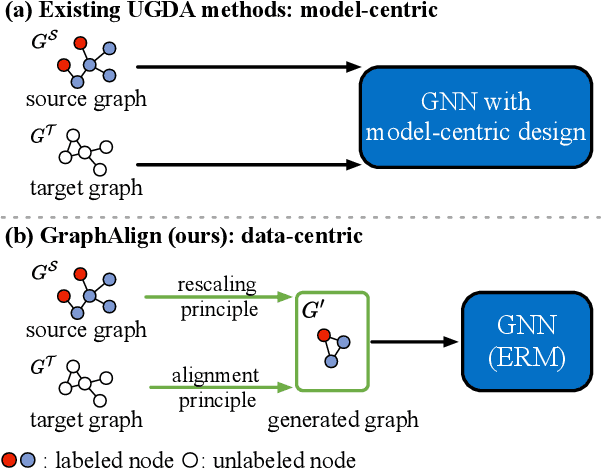
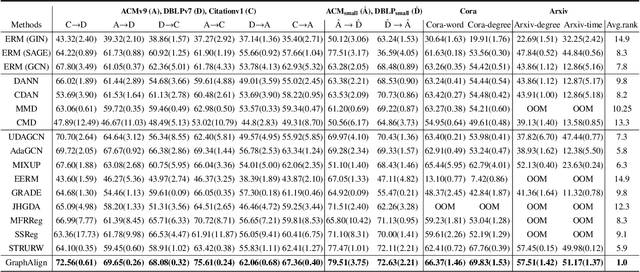

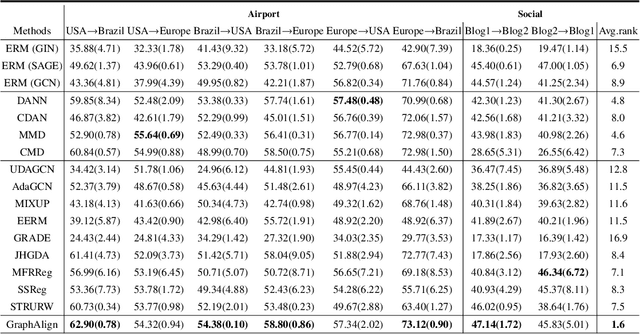
Graph neural networks (GNNs) have demonstrated remarkable success in numerous graph analytical tasks. Yet, their effectiveness is often compromised in real-world scenarios due to distribution shifts, limiting their capacity for knowledge transfer across changing environments or domains. Recently, Unsupervised Graph Domain Adaptation (UGDA) has been introduced to resolve this issue. UGDA aims to facilitate knowledge transfer from a labeled source graph to an unlabeled target graph. Current UGDA efforts primarily focus on model-centric methods, such as employing domain invariant learning strategies and designing model architectures. However, our critical examination reveals the limitations inherent to these model-centric methods, while a data-centric method allowed to modify the source graph provably demonstrates considerable potential. This insight motivates us to explore UGDA from a data-centric perspective. By revisiting the theoretical generalization bound for UGDA, we identify two data-centric principles for UGDA: alignment principle and rescaling principle. Guided by these principles, we propose GraphAlign, a novel UGDA method that generates a small yet transferable graph. By exclusively training a GNN on this new graph with classic Empirical Risk Minimization (ERM), GraphAlign attains exceptional performance on the target graph. Extensive experiments under various transfer scenarios demonstrate the GraphAlign outperforms the best baselines by an average of 2.16%, training on the generated graph as small as 0.25~1% of the original training graph.
IMAGDressing-v1: Customizable Virtual Dressing
Jul 17, 2024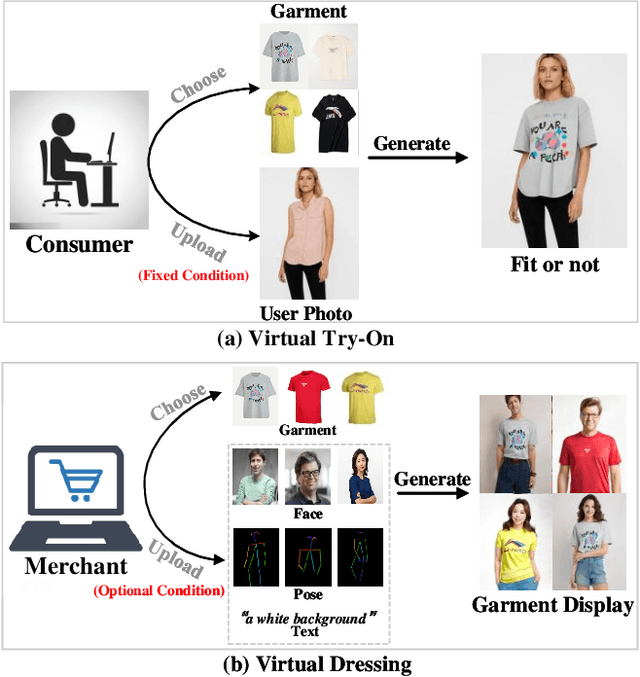
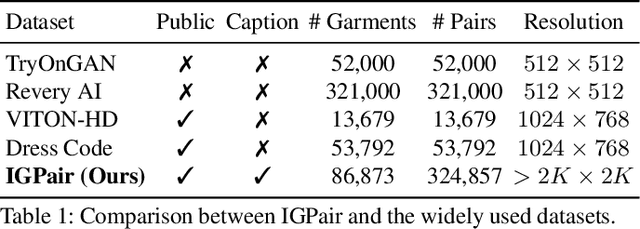
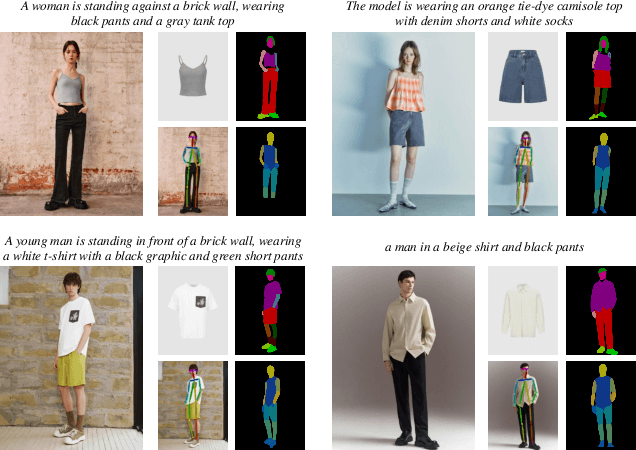
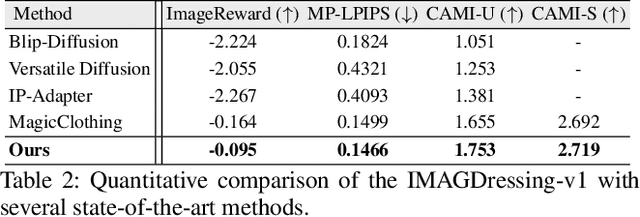
Latest advances have achieved realistic virtual try-on (VTON) through localized garment inpainting using latent diffusion models, significantly enhancing consumers' online shopping experience. However, existing VTON technologies neglect the need for merchants to showcase garments comprehensively, including flexible control over garments, optional faces, poses, and scenes. To address this issue, we define a virtual dressing (VD) task focused on generating freely editable human images with fixed garments and optional conditions. Meanwhile, we design a comprehensive affinity metric index (CAMI) to evaluate the consistency between generated images and reference garments. Then, we propose IMAGDressing-v1, which incorporates a garment UNet that captures semantic features from CLIP and texture features from VAE. We present a hybrid attention module, including a frozen self-attention and a trainable cross-attention, to integrate garment features from the garment UNet into a frozen denoising UNet, ensuring users can control different scenes through text. IMAGDressing-v1 can be combined with other extension plugins, such as ControlNet and IP-Adapter, to enhance the diversity and controllability of generated images. Furthermore, to address the lack of data, we release the interactive garment pairing (IGPair) dataset, containing over 300,000 pairs of clothing and dressed images, and establish a standard pipeline for data assembly. Extensive experiments demonstrate that our IMAGDressing-v1 achieves state-of-the-art human image synthesis performance under various controlled conditions. The code and model will be available at https://github.com/muzishen/IMAGDressing.
52B to 1T: Lessons Learned via Tele-FLM Series
Jul 03, 2024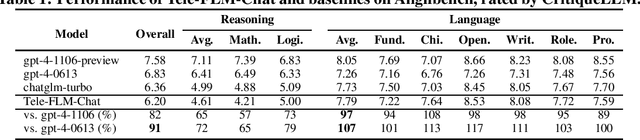



Large Language Models (LLMs) represent a significant stride toward Artificial General Intelligence. As scaling laws underscore the potential of increasing model sizes, the academic community has intensified its investigations into LLMs with capacities exceeding 50 billion parameters. This technical report builds on our prior work with Tele-FLM (also known as FLM-2), a publicly available 52-billion-parameter model. We delve into two primary areas: we first discuss our observation of Supervised Fine-tuning (SFT) on Tele-FLM-52B, which supports the "less is more" approach for SFT data construction; second, we demonstrate our experiments and analyses on the best practices for progressively growing a model from 52 billion to 102 billion, and subsequently to 1 trillion parameters. We will open-source a 1T model checkpoint, namely Tele-FLM-1T, to advance further training and research.
Chain-of-Probe: Examing the Necessity and Accuracy of CoT Step-by-Step
Jun 23, 2024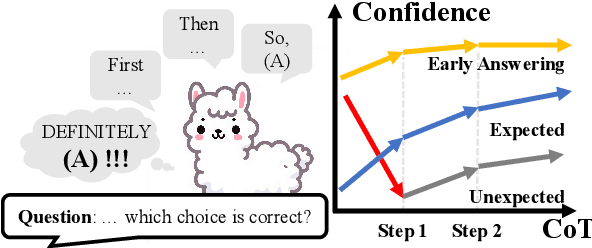
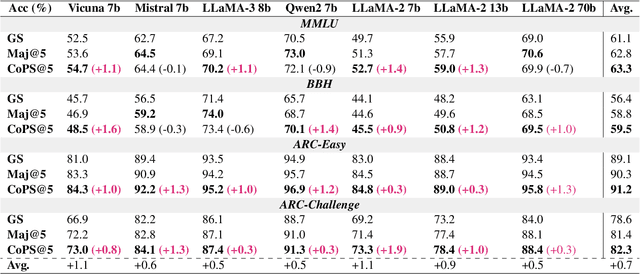
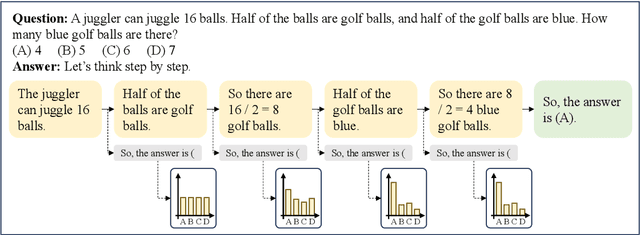
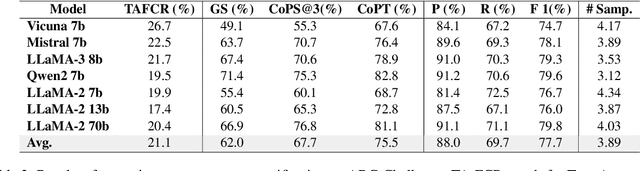
Current research found the issue of Early Answering in large language models (LLMs), where the models already have an answer before generating the Chain-of-Thought (CoT). This phenomenon suggests a potential lack of necessary dependency between the predicted answer and the reasoning process. Consequently, two important questions arise: (1) Is CoT still necessary if the model already has an answer? (2) Can the correctness of the answer serve as valid evidence for the correctness of CoT? To address these questions, we propose a method, namely Chain-of-Probe (CoP), to probe changes in the mind during the model's reasoning. The probing results show that in a significant number of question-answer cases, CoT appears to be unnecessary, and this necessity correlates with the simplicity of the task, defined by reasoning steps required. Furthermore, by analyzing patterns in mind change, we examine the correctness of the model's reasoning. Our validation reveals that many responses, although correct in their final answer, contain errors in their reasoning process. To this end, we propose a strategic approach based on CoP to prioritize answers with correct reasoning among multiple candidates, thereby bolstering the reliability of the model's reasoning.
QuickLLaMA: Query-aware Inference Acceleration for Large Language Models
Jun 11, 2024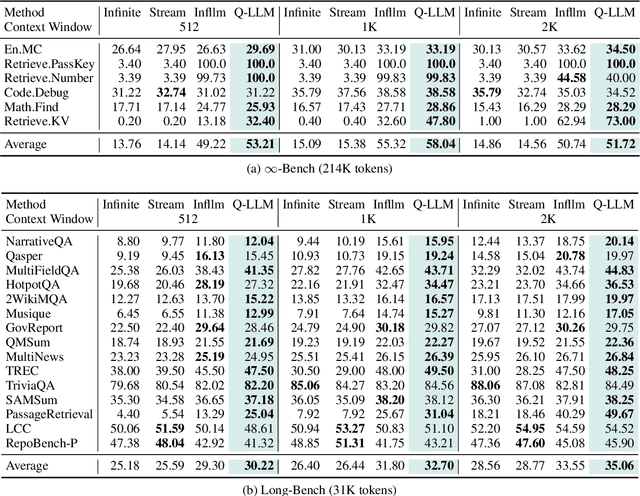

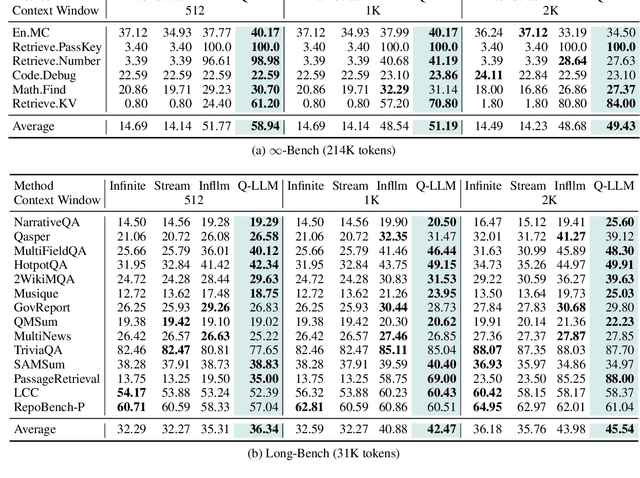
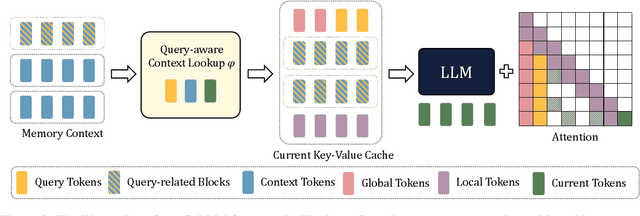
The capacity of Large Language Models (LLMs) to comprehend and reason over long contexts is pivotal for advancements in diverse fields. Yet, they still stuggle with capturing long-distance dependencies within sequences to deeply understand semantics. To address this issue, we introduce Query-aware Inference for LLMs (Q-LLM), a system designed to process extensive sequences akin to human cognition. By focusing on memory data relevant to a given query, Q-LLM can accurately capture pertinent information within a fixed window size and provide precise answers to queries. It doesn't require extra training and can be seamlessly integrated with any LLMs. Q-LLM using LLaMA3 (QuickLLaMA) can read Harry Potter within 30s and accurately answer the questions. Q-LLM improved by 7.17% compared to the current state-of-the-art on LLaMA3, and by 3.26% on Mistral on the $\infty$-bench. In the Needle-in-a-Haystack task, On widely recognized benchmarks, Q-LLM improved upon the current SOTA by 7.0% on Mistral and achieves 100% on LLaMA3. Our code can be found in https://github.com/dvlab-research/Q-LLM.
Autonomous Quilt Spreading for Caregiving Robots
May 24, 2024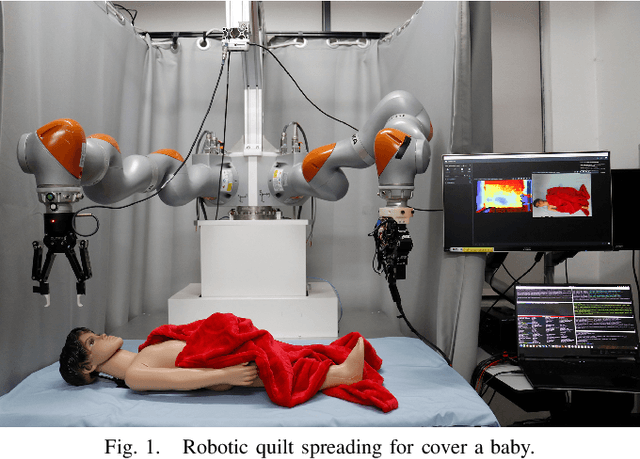
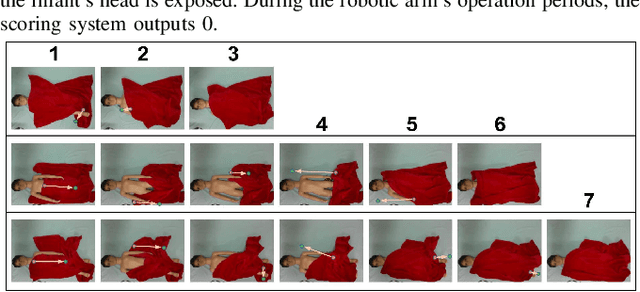
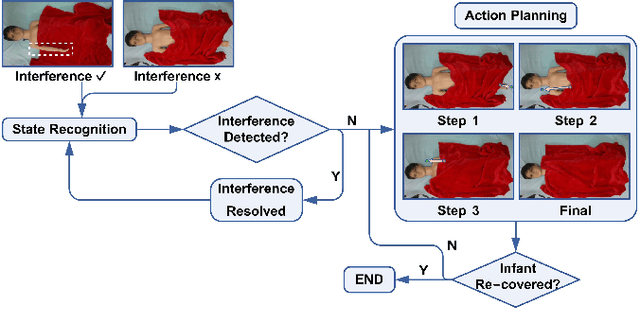
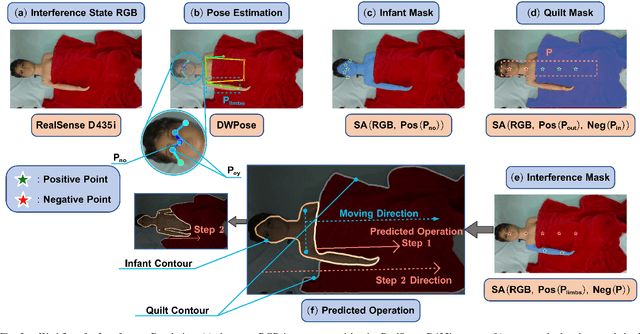
In this work, we propose a novel strategy to ensure infants, who inadvertently displace their quilts during sleep, are promptly and accurately re-covered. Our approach is formulated into two subsequent steps: interference resolution and quilt spreading. By leveraging the DWPose human skeletal detection and the Segment Anything instance segmentation models, the proposed method can accurately recognize the states of the infant and the quilt over her, which involves addressing the interferences resulted from an infant's limbs laid on part of the quilt. Building upon prior research, the EM*D deep learning model is employed to forecast quilt state transitions before and after quilt spreading actions. To improve the sensitivity of the network in distinguishing state variation of the handled quilt, we introduce an enhanced loss function that translates the voxelized quilt state into a more representative one. Both simulation and real-world experiments validate the efficacy of our method, in spreading and recover a quilt over an infant.