 Add to Chrome
 Add to Firefox
 Add to Edge
Dynamical system prediction from sparse observations using deep neural networks with Voronoi tessellation and physics constraint
Aug 31, 2024
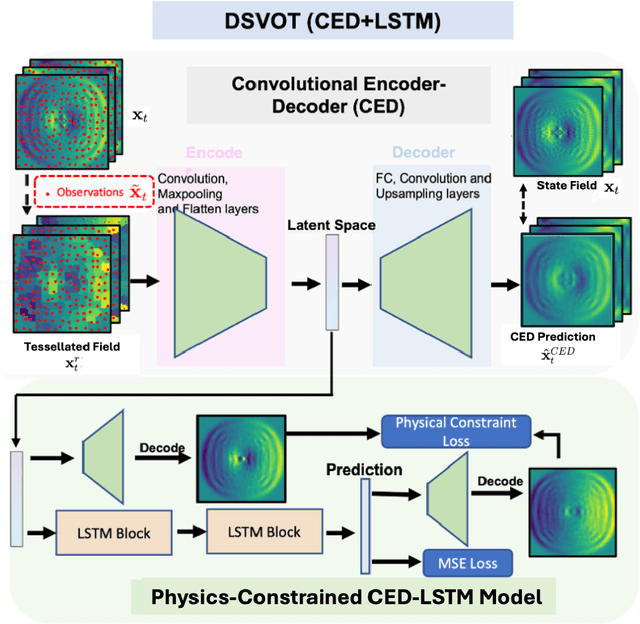
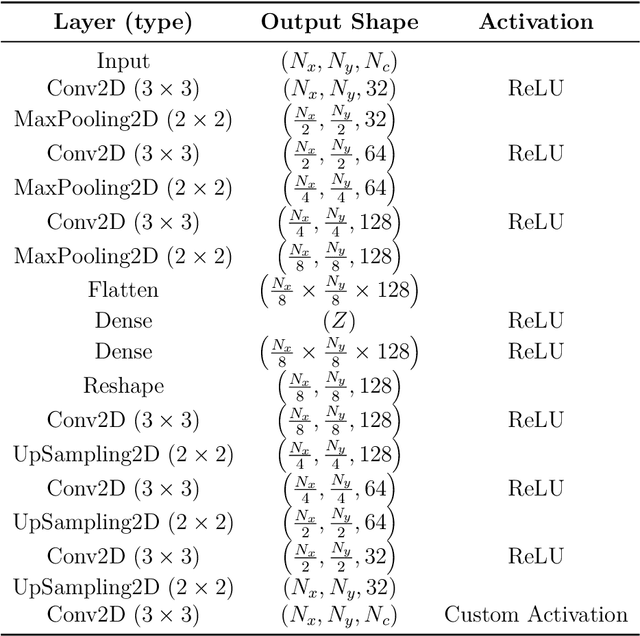
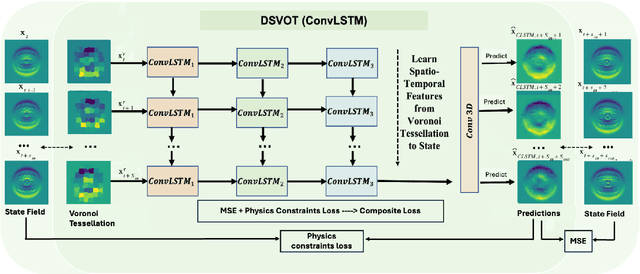
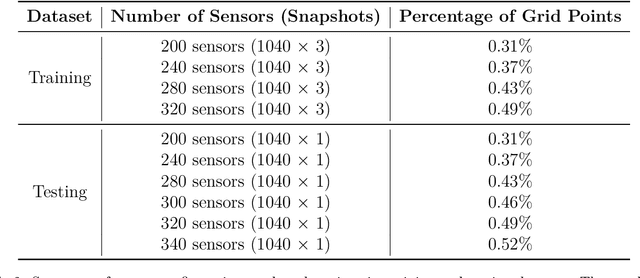
Despite the success of various methods in addressing the issue of spatial reconstruction of dynamical systems with sparse observations, spatio-temporal prediction for sparse fields remains a challenge. Existing Kriging-based frameworks for spatio-temporal sparse field prediction fail to meet the accuracy and inference time required for nonlinear dynamic prediction problems. In this paper, we introduce the Dynamical System Prediction from Sparse Observations using Voronoi Tessellation (DSOVT) framework, an innovative methodology based on Voronoi tessellation which combines convolutional encoder-decoder (CED) and long short-term memory (LSTM) and utilizing Convolutional Long Short-Term Memory (ConvLSTM). By integrating Voronoi tessellations with spatio-temporal deep learning models, DSOVT is adept at predicting dynamical systems with unstructured, sparse, and time-varying observations. CED-LSTM maps Voronoi tessellations into a low-dimensional representation for time series prediction, while ConvLSTM directly uses these tessellations in an end-to-end predictive model. Furthermore, we incorporate physics constraints during the training process for dynamical systems with explicit formulas. Compared to purely data-driven models, our physics-based approach enables the model to learn physical laws within explicitly formulated dynamics, thereby enhancing the robustness and accuracy of rolling forecasts. Numerical experiments on real sea surface data and shallow water systems clearly demonstrate our framework's accuracy and computational efficiency with sparse and time-varying observations.

MoE-LPR: Multilingual Extension of Large Language Models through Mixture-of-Experts with Language Priors Routing
Aug 21, 2024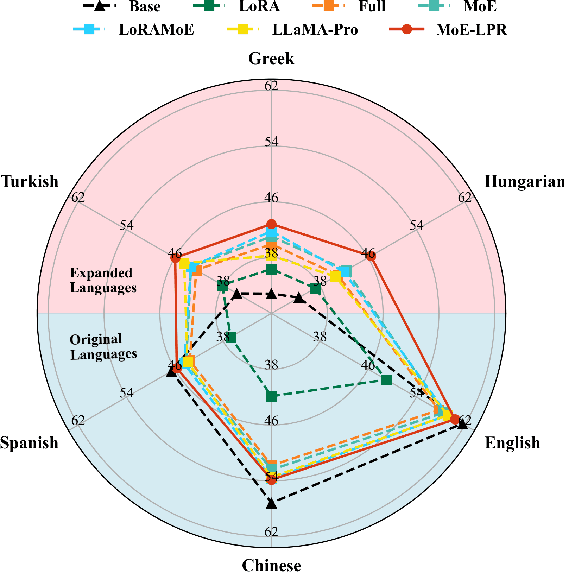
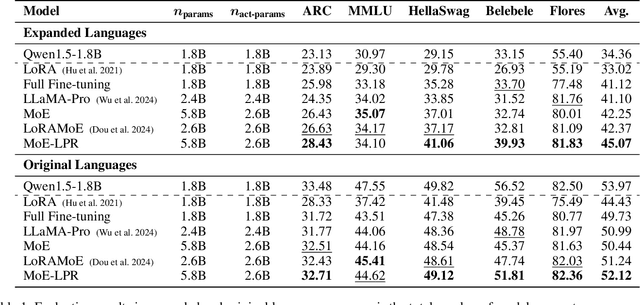


Large Language Models (LLMs) are often English-centric due to the disproportionate distribution of languages in their pre-training data. Enhancing non-English language capabilities through post-pretraining often results in catastrophic forgetting of the ability of original languages. Previous methods either achieve good expansion with severe forgetting or slight forgetting with poor expansion, indicating the challenge of balancing language expansion while preventing forgetting. In this paper, we propose a method called MoE-LPR (Mixture-of-Experts with Language Priors Routing) to alleviate this problem. MoE-LPR employs a two-stage training approach to enhance the multilingual capability. First, the model is post-pretrained into a Mixture-of-Experts (MoE) architecture by upcycling, where all the original parameters are frozen and new experts are added. In this stage, we focus improving the ability on expanded languages, without using any original language data. Then, the model reviews the knowledge of the original languages with replay data amounting to less than 1% of post-pretraining, where we incorporate language priors routing to better recover the abilities of the original languages. Evaluations on multiple benchmarks show that MoE-LPR outperforms other post-pretraining methods. Freezing original parameters preserves original language knowledge while adding new experts preserves the learning ability. Reviewing with LPR enables effective utilization of multilingual knowledge within the parameters. Additionally, the MoE architecture maintains the same inference overhead while increasing total model parameters. Extensive experiments demonstrate MoE-LPR's effectiveness in improving expanded languages and preserving original language proficiency with superior scalability. Code and scripts are freely available at https://github.com/zjwang21/MoE-LPR.git.
STATE: A Robust ATE Estimator of Heavy-Tailed Metrics for Variance Reduction in Online Controlled Experiments
Jul 23, 2024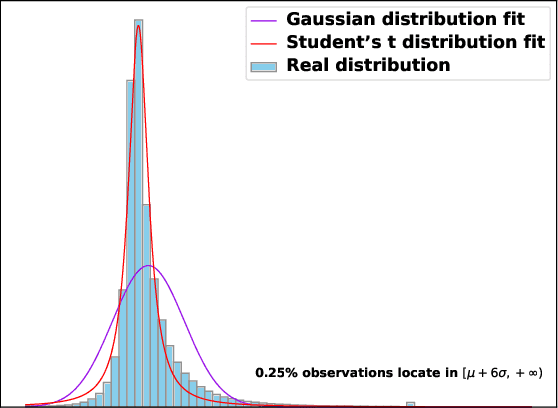


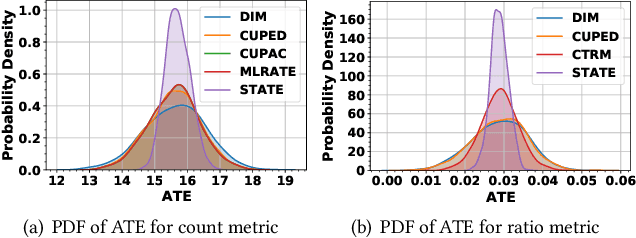
Online controlled experiments play a crucial role in enabling data-driven decisions across a wide range of companies. Variance reduction is an effective technique to improve the sensitivity of experiments, achieving higher statistical power while using fewer samples and shorter experimental periods. However, typical variance reduction methods (e.g., regression-adjusted estimators) are built upon the intuitional assumption of Gaussian distributions and cannot properly characterize the real business metrics with heavy-tailed distributions. Furthermore, outliers diminish the correlation between pre-experiment covariates and outcome metrics, greatly limiting the effectiveness of variance reduction. In this paper, we develop a novel framework that integrates the Student's t-distribution with machine learning tools to fit heavy-tailed metrics and construct a robust average treatment effect estimator in online controlled experiments, which we call STATE. By adopting a variational EM method to optimize the loglikehood function, we can infer a robust solution that greatly eliminates the negative impact of outliers and achieves significant variance reduction. Moreover, we extend the STATE method from count metrics to ratio metrics by utilizing linear transformation that preserves unbiased estimation, whose variance reduction is more complex but less investigated in existing works. Finally, both simulations on synthetic data and long-term empirical results on Meituan experiment platform demonstrate the effectiveness of our method. Compared with the state-of-the-art estimators (CUPAC/MLRATE), STATE achieves over 50% variance reduction, indicating it can reach the same statistical power with only half of the observations, or half the experimental duration.
I Know About "Up"! Enhancing Spatial Reasoning in Visual Language Models Through 3D Reconstruction
Jul 19, 2024
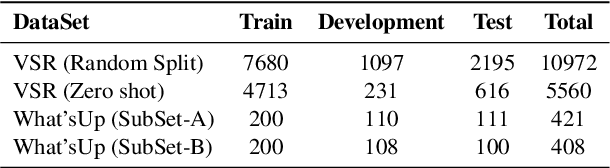

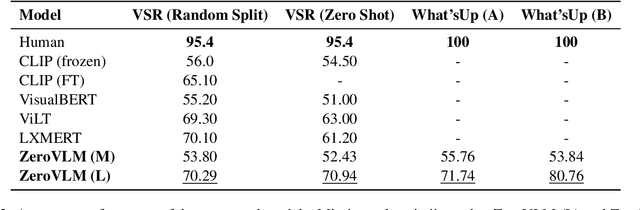
Visual Language Models (VLMs) are essential for various tasks, particularly visual reasoning tasks, due to their robust multi-modal information integration, visual reasoning capabilities, and contextual awareness. However, existing \VLMs{}' visual spatial reasoning capabilities are often inadequate, struggling even with basic tasks such as distinguishing left from right. To address this, we propose the \ours{} model, designed to enhance the visual spatial reasoning abilities of VLMS. ZeroVLM employs Zero-1-to-3, a 3D reconstruction model for obtaining different views of the input images and incorporates a prompting mechanism to further improve visual spatial reasoning. Experimental results on four visual spatial reasoning datasets show that our \ours{} achieves up to 19.48% accuracy improvement, which indicates the effectiveness of the 3D reconstruction and prompting mechanisms of our ZeroVLM.
Open-Vocabulary 3D Semantic Segmentation with Text-to-Image Diffusion Models
Jul 18, 2024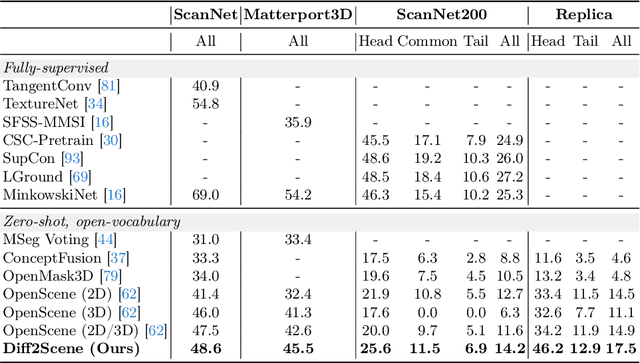
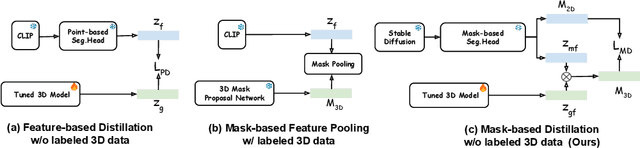

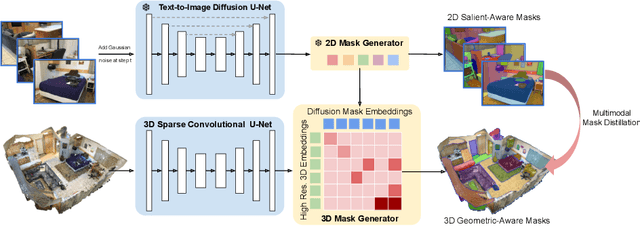
In this paper, we investigate the use of diffusion models which are pre-trained on large-scale image-caption pairs for open-vocabulary 3D semantic understanding. We propose a novel method, namely Diff2Scene, which leverages frozen representations from text-image generative models, along with salient-aware and geometric-aware masks, for open-vocabulary 3D semantic segmentation and visual grounding tasks. Diff2Scene gets rid of any labeled 3D data and effectively identifies objects, appearances, materials, locations and their compositions in 3D scenes. We show that it outperforms competitive baselines and achieves significant improvements over state-of-the-art methods. In particular, Diff2Scene improves the state-of-the-art method on ScanNet200 by 12%.
Decision Focused Causal Learning for Direct Counterfactual Marketing Optimization
Jul 18, 2024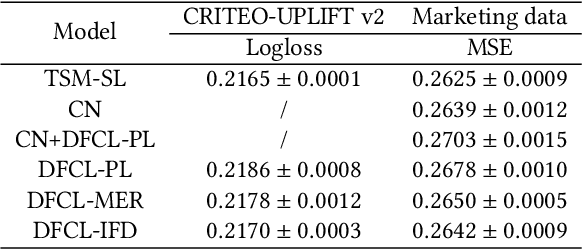
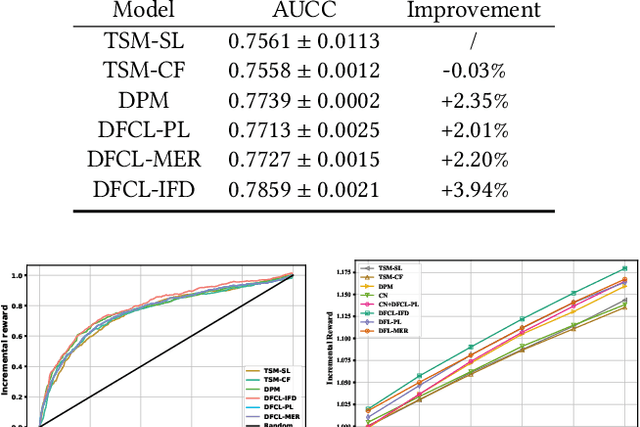
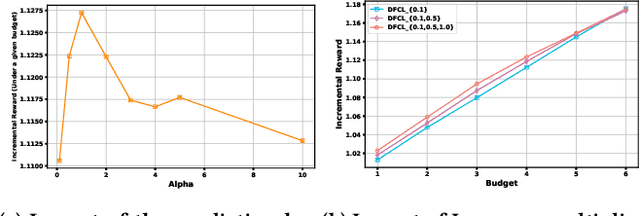
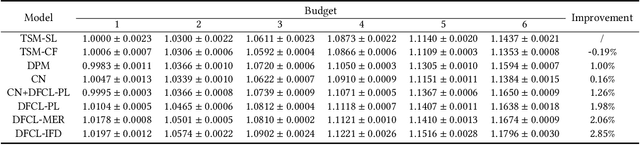
Marketing optimization plays an important role to enhance user engagement in online Internet platforms. Existing studies usually formulate this problem as a budget allocation problem and solve it by utilizing two fully decoupled stages, i.e., machine learning (ML) and operation research (OR). However, the learning objective in ML does not take account of the downstream optimization task in OR, which causes that the prediction accuracy in ML may be not positively related to the decision quality. Decision Focused Learning (DFL) integrates ML and OR into an end-to-end framework, which takes the objective of the downstream task as the decision loss function and guarantees the consistency of the optimization direction between ML and OR. However, deploying DFL in marketing is non-trivial due to multiple technological challenges. Firstly, the budget allocation problem in marketing is a 0-1 integer stochastic programming problem and the budget is uncertain and fluctuates a lot in real-world settings, which is beyond the general problem background in DFL. Secondly, the counterfactual in marketing causes that the decision loss cannot be directly computed and the optimal solution can never be obtained, both of which disable the common gradient-estimation approaches in DFL. Thirdly, the OR solver is called frequently to compute the decision loss during model training in DFL, which produces huge computational cost and cannot support large-scale training data. In this paper, we propose a decision focused causal learning framework (DFCL) for direct counterfactual marketing optimization, which overcomes the above technological challenges. Both offline experiments and online A/B testing demonstrate the effectiveness of DFCL over the state-of-the-art methods. Currently, DFCL has been deployed in several marketing scenarios in Meituan, one of the largest online food delivery platform in the world.
Safety-Critical Control with Uncertainty Quantification using Adaptive Conformal Prediction
Jul 04, 2024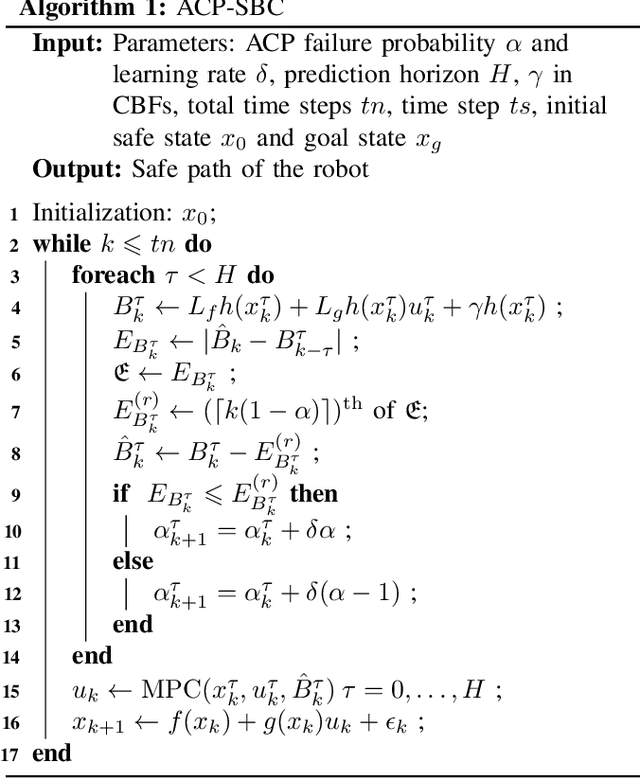
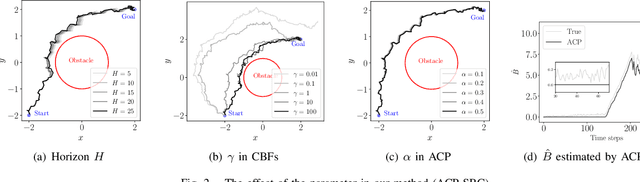
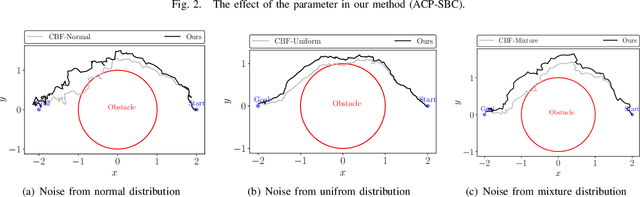
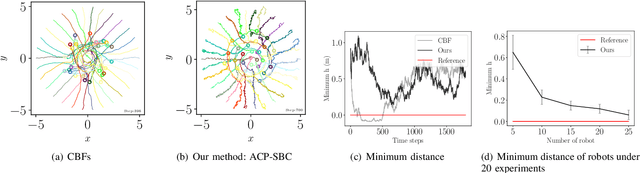
Safety assurance is critical in the planning and control of robotic systems. For robots operating in the real world, the safety-critical design often needs to explicitly address uncertainties and the pre-computed guarantees often rely on the assumption of the particular distribution of the uncertainty. However, it is difficult to characterize the actual uncertainty distribution beforehand and thus the established safety guarantee may be violated due to possible distribution mismatch. In this paper, we propose a novel safe control framework that provides a high-probability safety guarantee for stochastic dynamical systems following unknown distributions of motion noise. Specifically, this framework adopts adaptive conformal prediction to dynamically quantify the prediction uncertainty from online observations and combines that with the probabilistic extension of the control barrier functions (CBFs) to characterize the uncertainty-aware control constraints. By integrating the constraints in the model predictive control scheme, it allows robots to adaptively capture the true prediction uncertainty online in a distribution-free setting and enjoys formally provable high-probability safety assurance. Simulation results on multi-robot systems with stochastic single-integrator dynamics and unicycle dynamics are provided to demonstrate the effectiveness of our framework.
SGSM: A Foundation-model-like Semi-generalist Sensing Model
Jun 15, 2024

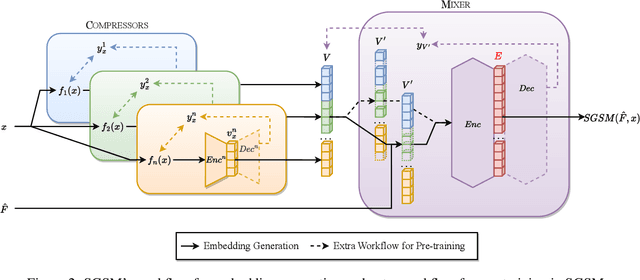

The significance of intelligent sensing systems is growing in the realm of smart services. These systems extract relevant signal features and generate informative representations for particular tasks. However, building the feature extraction component for such systems requires extensive domain-specific expertise or data. The exceptionally rapid development of foundation models is likely to usher in newfound abilities in such intelligent sensing. We propose a new scheme for sensing model, which we refer to as semi-generalist sensing model (SGSM). SGSM is able to semiautomatically solve various tasks using relatively less task-specific labeled data compared to traditional systems. Built through the analysis of the common theoretical model, SGSM can depict different modalities, such as the acoustic and Wi-Fi signal. Experimental results on such two heterogeneous sensors illustrate that SGSM functions across a wide range of scenarios, thereby establishing its broad applicability. In some cases, SGSM even achieves better performance than sensor-specific specialized solutions. Wi-Fi evaluations indicate a 20\% accuracy improvement when applying SGSM to an existing sensing model.
Learning Multi-view Molecular Representations with Structured and Unstructured Knowledge
Jun 14, 2024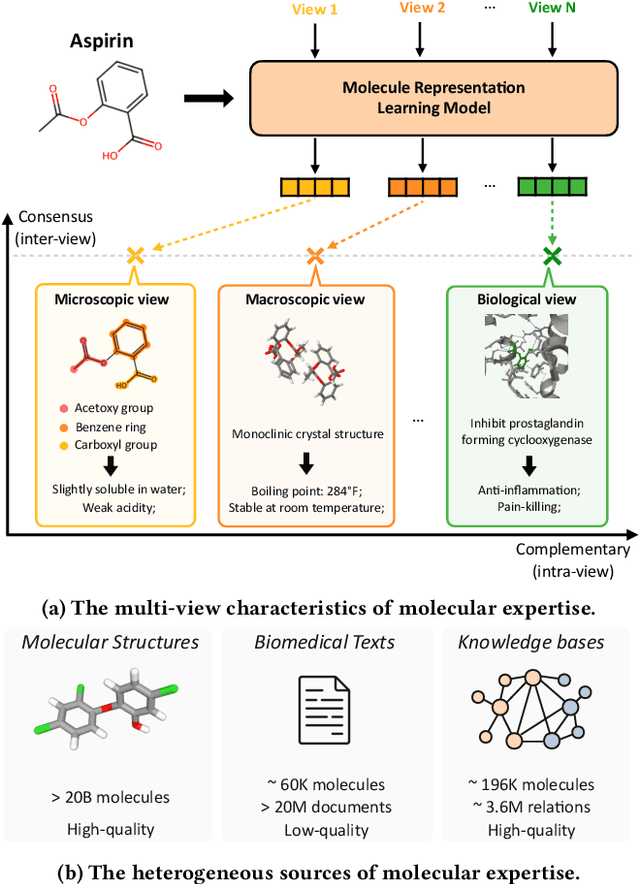
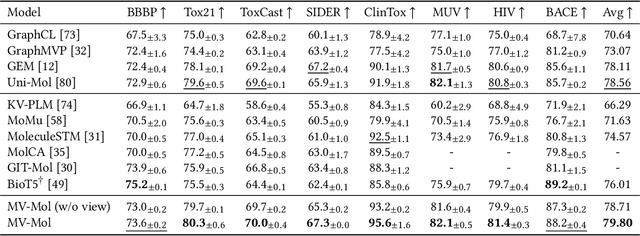
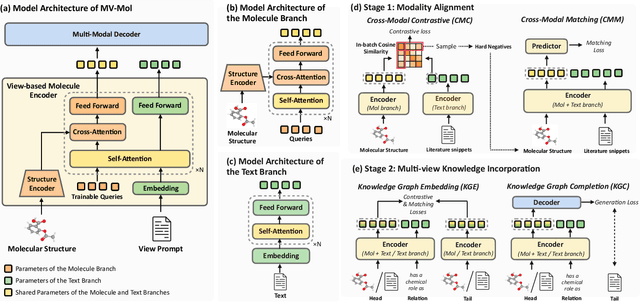
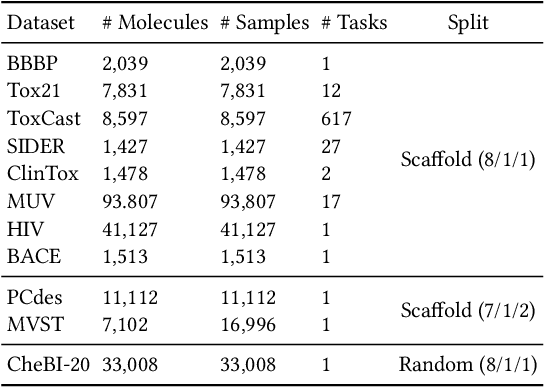
Capturing molecular knowledge with representation learning approaches holds significant potential in vast scientific fields such as chemistry and life science. An effective and generalizable molecular representation is expected to capture the consensus and complementary molecular expertise from diverse views and perspectives. However, existing works fall short in learning multi-view molecular representations, due to challenges in explicitly incorporating view information and handling molecular knowledge from heterogeneous sources. To address these issues, we present MV-Mol, a molecular representation learning model that harvests multi-view molecular expertise from chemical structures, unstructured knowledge from biomedical texts, and structured knowledge from knowledge graphs. We utilize text prompts to model view information and design a fusion architecture to extract view-based molecular representations. We develop a two-stage pre-training procedure, exploiting heterogeneous data of varying quality and quantity. Through extensive experiments, we show that MV-Mol provides improved representations that substantially benefit molecular property prediction. Additionally, MV-Mol exhibits state-of-the-art performance in multi-modal comprehension of molecular structures and texts. Code and data are available at https://github.com/PharMolix/OpenBioMed.
Skim then Focus: Integrating Contextual and Fine-grained Views for Repetitive Action Counting
Jun 13, 2024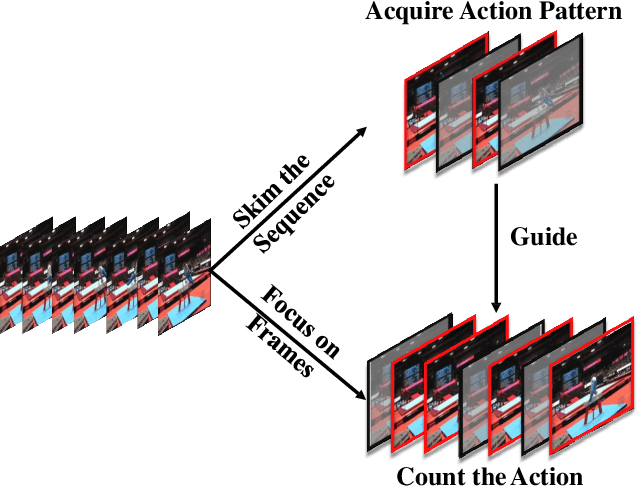
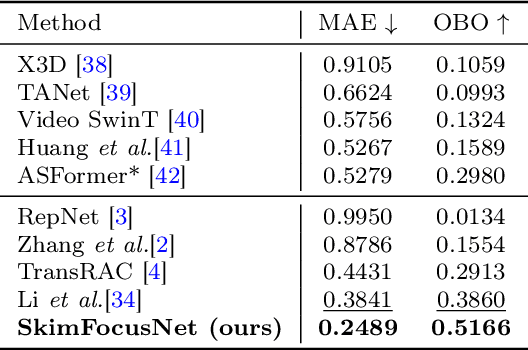
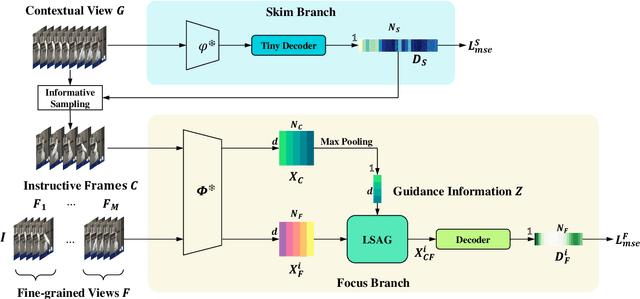
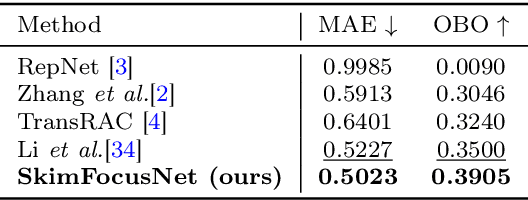
The key to action counting is accurately locating each video's repetitive actions. Instead of estimating the probability of each frame belonging to an action directly, we propose a dual-branch network, i.e., SkimFocusNet, working in a two-step manner. The model draws inspiration from empirical observations indicating that humans typically engage in coarse skimming of entire sequences to grasp the general action pattern initially, followed by a finer, frame-by-frame focus to determine if it aligns with the target action. Specifically, SkimFocusNet incorporates a skim branch and a focus branch. The skim branch scans the global contextual information throughout the sequence to identify potential target action for guidance. Subsequently, the focus branch utilizes the guidance to diligently identify repetitive actions using a long-short adaptive guidance (LSAG) block. Additionally, we have observed that videos in existing datasets often feature only one type of repetitive action, which inadequately represents real-world scenarios. To more accurately describe real-life situations, we establish the Multi-RepCount dataset, which includes videos containing multiple repetitive motions. On Multi-RepCount, our SkimFoucsNet can perform specified action counting, that is, to enable counting a particular action type by referencing an exemplary video. This capability substantially exhibits the robustness of our method. Extensive experiments demonstrate that SkimFocusNet achieves state-of-the-art performances with significant improvements. We also conduct a thorough ablation study to evaluate the network components. The source code will be published upon acceptance.