 Add to Chrome
 Add to Firefox
 Add to Edge
Personalization Meets Safety:Mechanisms,Risks,and Mitigations in Personalized LLMs
Jun 08, 2026
Large Language Models (LLMs) have enabled increasingly personalized interactions by adapting to users' preferences, contexts, and long-term histories. However, the mechanisms that enable personalization also expand the safety landscape in ways not systematically addressed by existing literature. Existing reviews typically focus either on personalization or safety, leaving their intersection largely unexplored. We present the first comprehensive, safety-aware review of personalized LLMs. We organize personalization along three dimensions-user representation, personalization paradigm, and evaluation-and introduce a unified taxonomy of safety risks. At the representation level, we analyze risks arising from diverse user representations. Across mainstream personalization paradigms, we delineate vulnerabilities inherent to prompting, retrieval augmentation, parameter fine-tuning, reinforcement learning, Mixture-of-Experts (MoE), pruning, agent frameworks, and multimodal personalization, and synthesize mitigation strategies across the model lifecycle. Beyond these fine-grained risks, we characterize paradigm-agnostic safety risks arising from personalized adaptation. We further summarize personalized datasets and evaluation methodologies. Through a case study of OpenClaw, we analyze deployment trends in personalized agent ecosystems. Our analysis reveals three structural inadequacies in existing research: safety is evaluated as user-invariant rather than relational, personalization techniques are analyzed in isolation rather than in composition, and evaluation frameworks cannot capture emergent long-term risks. By jointly examining personalized representations, personalization paradigms, safety risks, defenses, and evaluation methods, we provide a unified framework for developing safe personalized LLMs and highlight key directions for future research.

ChildEval: When large language models meet children's personalities
May 27, 2026While LLMs enable personalized chatbots, their effectiveness in child-centered personalization remains unclear, as systematic evaluation of child-specific preferences is still lacking. To address this gap, we introduce ChildEval, a benchmark for evaluating LLMs' ability to infer and follow child-centered preferences in long-context conversations. ChildEval contains 29K synthesized persona profiles of children aged 3-6, providing relatively static background information. Each persona is associated with a child preference-which may align with, conflict with, or be independent of the persona-expressed either explicitly in a single sentence or implicitly through 6-10 turn dialogues. Explicit and implicit preferences are designed to reflect the same underlying preference but differ in expression, capturing dynamic aspects of preference expression rather than changes in the static persona. The benchmark spans five top-level and fourteen sub-level categories covering children's daily lives and development. We further propose fine-grained, child-centric evaluation protocols to systematically assess open-source LLMs. Experimental results demonstrate how different personalized representations affect LLM responses and suggest that finetuning on ChildEval can enhance child-centered performance. Our code and dataset are available at https://github.com/ziyanluo/ChildEval.
MambaRain: Multi-Scale Mamba-Attention Framework for 0-3 Hour Precipitation Nowcasting
May 14, 2026Accurate precipitation nowcasting over extended horizons (0-3 hours) is essential for disaster mitigation and operational decision-making, yet remains a critical challenge in the field. Existing deterministic approaches are predominantly constrained to shorter prediction windows (0-2 hours), exhibiting severe performance degradation beyond 90 minutes owing to their inherent difficulty in capturing long-range spatiotemporal dependencies from radar-derived observations. To address these fundamental limitations, we propose MambaRain, a novel multi-scale encoder-decoder architecture that synergistically integrates Mamba's linear-complexity long-range temporal modeling with self-attention mechanisms for explicit spatial correlation capture. The core innovation lies in a hybrid design paradigm wherein Mamba blocks leverage selective state space mechanisms to model global temporal dynamics across extended sequences with computational efficiency, while self-attention modules explicitly characterize spatial correlations within precipitation fields - a capability inherently absent in Mamba's sequential processing paradigm. This complementary synergy enables comprehensive spatiotemporal representation learning, effectively extending the viable forecasting horizon to 2-3 hours with substantial accuracy improvements. Furthermore, we introduce a spectral loss formulation to mitigate blurring artifacts characteristic of chaotic precipitation systems, thereby preserving fine-scale motion details critical for nowcasting accuracy. Experimental validation demonstrates that MambaRain substantially outperforms existing deterministic methodologies in 0-3 hour nowcasting tasks, with particularly pronounced performance gains in the challenging 2-3 hour prediction range.
Self-Improving Multilingual Long Reasoning via Translation-Reasoning Integrated Training
Feb 05, 2026Long reasoning models often struggle in multilingual settings: they tend to reason in English for non-English questions; when constrained to reasoning in the question language, accuracies drop substantially. The struggle is caused by the limited abilities for both multilingual question understanding and multilingual reasoning. To address both problems, we propose TRIT (Translation-Reasoning Integrated Training), a self-improving framework that integrates the training of translation into multilingual reasoning. Without external feedback or additional multilingual data, our method jointly enhances multilingual question understanding and response generation. On MMATH, our method outperforms multiple baselines by an average of 7 percentage points, improving both answer correctness and language consistency. Further analysis reveals that integrating translation training improves cross-lingual question alignment by over 10 percentage points and enhances translation quality for both mathematical questions and general-domain text, with gains up to 8.4 COMET points on FLORES-200.
PEGRL: Improving Machine Translation by Post-Editing Guided Reinforcement Learning
Feb 03, 2026Reinforcement learning (RL) has shown strong promise for LLM-based machine translation, with recent methods such as GRPO demonstrating notable gains; nevertheless, translation-oriented RL remains challenged by noisy learning signals arising from Monte Carlo return estimation, as well as a large trajectory space that favors global exploration over fine-grained local optimization. We introduce \textbf{PEGRL}, a \textit{two-stage} RL framework that uses post-editing as an auxiliary task to stabilize training and guide overall optimization. At each iteration, translation outputs are sampled to construct post-editing inputs, allowing return estimation in the post-editing stage to benefit from conditioning on the current translation behavior, while jointly supporting both global exploration and fine-grained local optimization. A task-specific weighting scheme further balances the contributions of translation and post-editing objectives, yielding a biased yet more sample-efficient estimator. Experiments on English$\to$Finnish, English$\to$Turkish, and English$\leftrightarrow$Chinese show consistent gains over RL baselines, and for English$\to$Turkish, performance on COMET-KIWI is comparable to advanced LLM-based systems (DeepSeek-V3.2).
Align to the Pivot: Dual Alignment with Self-Feedback for Multilingual Math Reasoning
Jan 25, 2026Despite the impressive reasoning abilities demonstrated by large language models (LLMs), empirical evidence indicates that they are not language agnostic as expected, leading to performance declines in multilingual settings, especially for low-resource languages. We attribute the decline to the model's inconsistent multilingual understanding and reasoning alignment. To address this, we present Pivot-Aligned Self-Feedback Multilingual Reasoning (PASMR), aiming to improve the alignment of multilingual math reasoning abilities in LLMs. This approach designates the model's primary language as the pivot language. During training, the model first translates questions into the pivot language to facilitate better alignment of reasoning patterns. The reasoning process in the target language is then supervised by the pivot language's reasoning answers, thereby establishing a cross-lingual self-feedback mechanism without relying on external correct answers or reward models. Extensive experimental results demonstrate that our method enhances both the model's understanding of questions and its reasoning capabilities, leading to notable task improvements.
Understanding LLMs' Cross-Lingual Context Retrieval: How Good It Is And Where It Comes From
Apr 15, 2025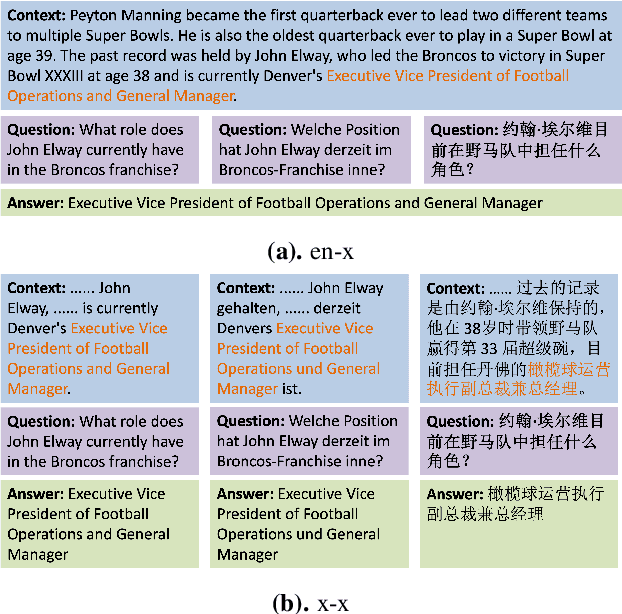
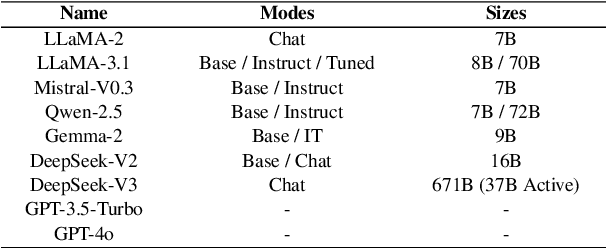
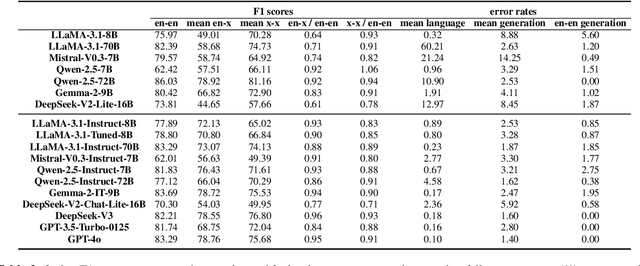
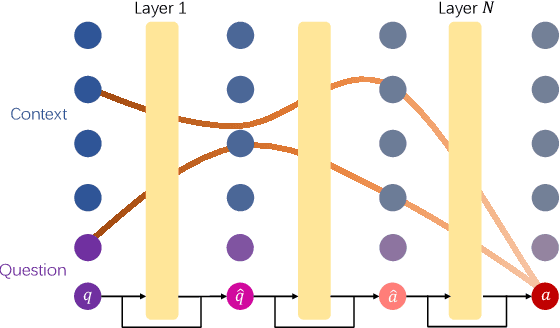
The ability of cross-lingual context retrieval is a fundamental aspect of cross-lingual alignment of large language models (LLMs), where the model extracts context information in one language based on requests in another language. Despite its importance in real-life applications, this ability has not been adequately investigated for state-of-the-art models. In this paper, we evaluate the cross-lingual context retrieval ability of over 40 LLMs across 12 languages to understand the source of this ability, using cross-lingual machine reading comprehension (xMRC) as a representative scenario. Our results show that several small, post-trained open LLMs show strong cross-lingual context retrieval ability, comparable to closed-source LLMs such as GPT-4o, and their estimated oracle performances greatly improve after post-training. Our interpretability analysis shows that the cross-lingual context retrieval process can be divided into two main phases: question encoding and answer retrieval, which are formed in pre-training and post-training, respectively. The phasing stability correlates with xMRC performance, and the xMRC bottleneck lies at the last model layers in the second phase, where the effect of post-training can be evidently observed. Our results also indicate that larger-scale pretraining cannot improve the xMRC performance. Instead, larger LLMs need further multilingual post-training to fully unlock their cross-lingual context retrieval potential. Our code and is available at https://github.com/NJUNLP/Cross-Lingual-Context-Retrieval
Investigating and Scaling up Code-Switching for Multilingual Language Model Pre-Training
Apr 02, 2025Large language models (LLMs) exhibit remarkable multilingual capabilities despite the extreme language imbalance in the pre-training data. In this paper, we closely examine the reasons behind this phenomenon, focusing on the pre-training corpus. We find that the existence of code-switching, alternating between different languages within a context, is key to multilingual capabilities. We conduct an analysis to investigate code-switching in the pre-training corpus, examining its presence and categorizing it into four types within two quadrants. We then assess its impact on multilingual performance. These types of code-switching data are unbalanced in proportions and demonstrate different effects on facilitating language transfer. To better explore the power of code-switching for language alignment during pre-training, we investigate the strategy of synthetic code-switching. We continuously scale up the synthetic code-switching data and observe remarkable improvements in both benchmarks and representation space. Extensive experiments indicate that incorporating synthetic code-switching data enables better language alignment and generalizes well to high, medium, and low-resource languages with pre-training corpora of varying qualities.
Ticktack : Long Span Temporal Alignment of Large Language Models Leveraging Sexagenary Cycle Time Expression
Mar 07, 2025Large language models (LLMs) suffer from temporal misalignment issues especially across long span of time. The issue arises from knowing that LLMs are trained on large amounts of data where temporal information is rather sparse over long times, such as thousands of years, resulting in insufficient learning or catastrophic forgetting by the LLMs. This paper proposes a methodology named "Ticktack" for addressing the LLM's long-time span misalignment in a yearly setting. Specifically, we first propose to utilize the sexagenary year expression instead of the Gregorian year expression employed by LLMs, achieving a more uniform distribution in yearly granularity. Then, we employ polar coordinates to model the sexagenary cycle of 60 terms and the year order within each term, with additional temporal encoding to ensure LLMs understand them. Finally, we present a temporal representational alignment approach for post-training LLMs that effectively distinguishes time points with relevant knowledge, hence improving performance on time-related tasks, particularly over a long period. We also create a long time span benchmark for evaluation. Experimental results prove the effectiveness of our proposal.
A new framework for X-ray absorption spectroscopy data analysis based on machine learning: XASDAML
Feb 23, 2025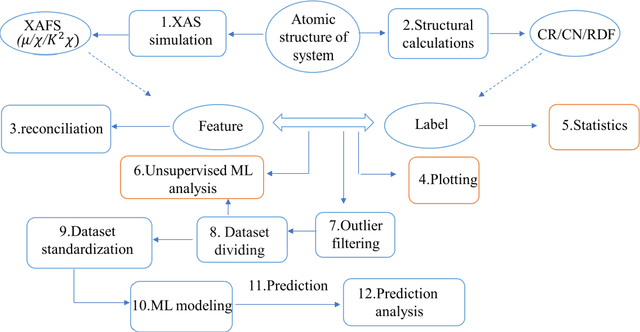
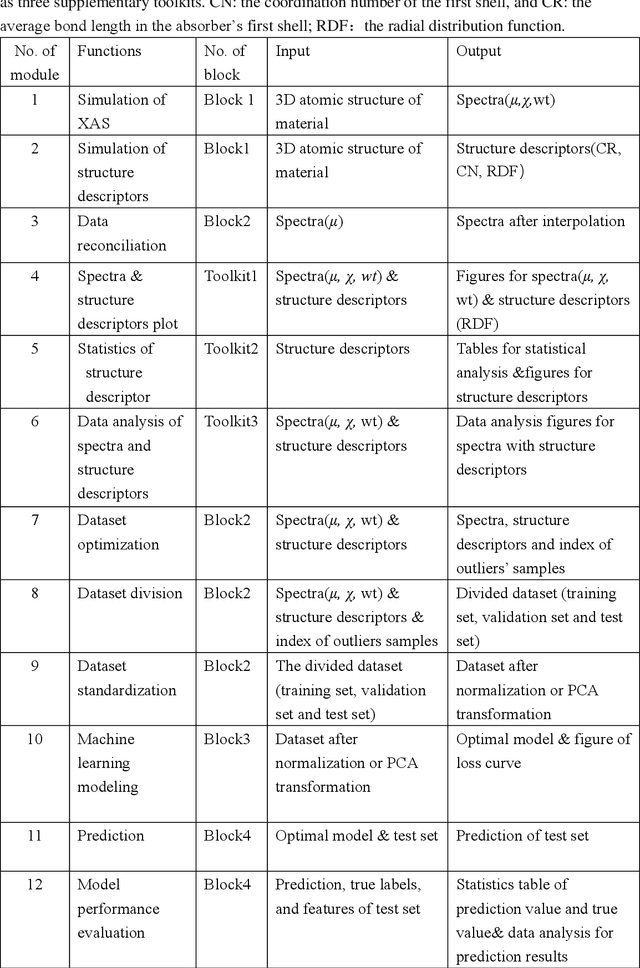
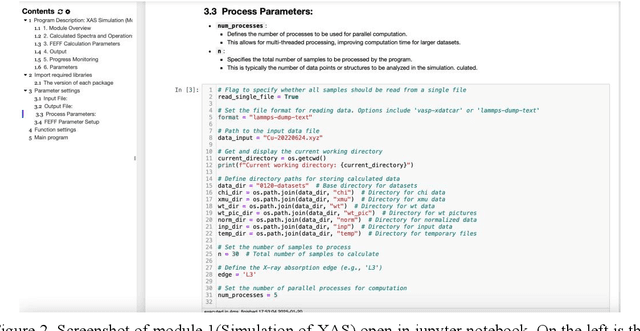
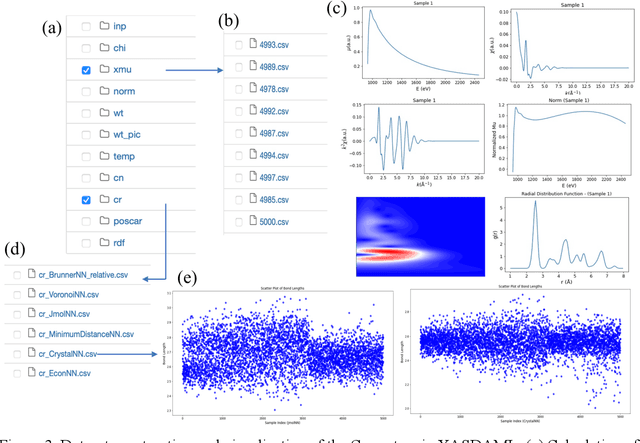
X-ray absorption spectroscopy (XAS) is a powerful technique to probe the electronic and structural properties of materials. With the rapid growth in both the volume and complexity of XAS datasets driven by advancements in synchrotron radiation facilities, there is an increasing demand for advanced computational tools capable of efficiently analyzing large-scale data. To address these needs, we introduce XASDAML,a flexible, machine learning based framework that integrates the entire data-processing workflow-including dataset construction for spectra and structural descriptors, data filtering, ML modeling, prediction, and model evaluation-into a unified platform. Additionally, it supports comprehensive statistical analysis, leveraging methods such as principal component analysis and clustering to reveal potential patterns and relationships within large datasets. Each module operates independently, allowing users to modify or upgrade modules in response to evolving research needs or technological advances. Moreover, the platform provides a user-friendly interface via Jupyter Notebook, making it accessible to researchers at varying levels of expertise. The versatility and effectiveness of XASDAML are exemplified by its application to a copper dataset, where it efficiently manages large and complex data, supports both supervised and unsupervised machine learning models, provides comprehensive statistics for structural descriptors, generates spectral plots, and accurately predicts coordination numbers and bond lengths. Furthermore, the platform streamlining the integration of XAS with machine learning and lowering the barriers to entry for new users.