 Add to Chrome
 Add to Firefox
 Add to Edge
MMIR-TCM: Memory-Integrated Multimodal Inference and Retrieval for TCM Clinical Decision Support
Jul 02, 2026
Traditional Chinese Medicine (TCM) diagnosis, particularly through tongue inspection, faces persistent challenges in subjectivity and reproducibility. The application of multimodal artificial intelligence to TCM clinical tasks, such as syndrome differentiation and prescription generation, is significantly hampered by the semantic gap between visual tongue features and textual reasoning, as well as the lack of large-scale, standardized datasets. To address these challenges, we introduce MMIR-TCM, a novel framework that emulates the diagnostic process of TCM experts by integrating multimodal large language model(MLLM) with memory-augmented segmentation and retrieval-augmented generation (RAG). Employing a three-stage architecture, MMIR-TCM integrates a training-free Memory-SAM module for robust tongue extraction, a fine-tuned Qwen3-VL model for structured tongue diagnosis generation, and a Qwen3-based RAG component for evidence-grounded clinical decision support generation. The framework was developed and validated using MedTCM, a new large-scale multimodal dataset that we introduce specifically for advanced TCM research. To properly evaluate our framework's clinical accuracy, which existing metrics fail to capture, we also developed TDEU, a domain-specific evaluation metric incorporating semantic understanding and diagnostic importance. Our comprehensive experiments demonstrate that MMIR-TCM significantly outperforms leading models, including GPT-4o and Gemini 2.5 Flash.

Sketched Linear Contrastive Learning: Approximation, Optimization, and Statistical Scaling
Jun 25, 2026Scaling laws describe how learning performance varies with model size, data size, and compute. While recent theoretical work has established scaling laws for sketched linear regression, much less is understood for contrastive representation learning. In this paper, we study a sketched linear model for contrastive learning under a paired Gaussian latent-variable setup. The learner observes only sketched views of two correlated variables and trains a bilinear contrastive score by full-batch empirical gradient descent. We analyze a Gaussian-negative quadratic contrastive surrogate under aligned power-law spectra and a contrastive source condition, where we derive a risk decomposition into irreducible risk, approximation error, GD bias, GD variance, and a cross term. The cross term is controlled by the bias and variance and therefore does not affect the upper-bound scaling. Our main theorem gives an explicit scaling law with respect to sketch dimension $M$, sample size $N$, and effective optimization horizon $L_{\mathrm{eff}}γ$. Compared with standard linear-regression scaling laws, the contrastive setting must learn interactions between two views, and this changes how optimization and finite-sample noise scale with model size, data, and training time. This provides a first theoretical step toward understanding scaling behavior in contrastive learning and gives guidance for balancing model size, data, and optimization compute.
From One-Pass SGD to Data Reuse: Mini-Batch Scaling Laws in Sketched Linear Regression
May 23, 2026Scaling laws provide compact descriptions of how prediction error varies with compute, model size, and data, but existing theory mainly treats single-sample SGD or full data reuse, leaving the role of mini-batching unclear. We study batch scaling laws for sketched linear regression under a power-law covariance spectrum and a source condition on the target parameter. We analyze one-pass batch SGD, multi-pass batch SGD with replacement, and multi-pass batch SGD without replacement. Our first result is a risk decomposition: all three procedures share the same irreducible and approximation terms, while their stochastic terms depend on the sampling protocol. One-pass batch SGD splits into bias and variance, whereas the two multi-pass methods split into GD bias, GD variance, and a fluctuation term around a common GD reference trajectory. We then prove source-condition scaling laws for one-pass and multi-pass mini-batch methods. For one-pass batch SGD, mini-batching preserves the approximation and optimization-bias exponents, while the variance scales as $O(\min(M,(T_{\mathrm{eff}}γ)^{1/a})/(B T_{\mathrm{eff}}))$. Thus the usual $1/B$ covariance reduction holds at fixed update count $T$, but in the one-pass regime $T=N/B$ it is partly offset by the shorter optimization horizon. For multi-pass batch SGD, with- and without-replacement sampling have identical approximation and GD bias/variance terms; they differ only in the fluctuation covariance prefactor, which is $1/B$ with replacement and $ρ_{N,B}=(N-B)/(B(N-1))$ without replacement. Hence without-replacement sampling is less noisy for $B>1$, and when $B=N$ the fluctuation vanishes, recovering deterministic gradient descent. These results place batch size on the same theoretical footing as compute, data, and model dimension in sketched linear regression.
CARE: Covariance-Aware and Rank-Enhanced Decomposition for Enabling Multi-Head Latent Attention
Mar 18, 2026Converting pretrained attention modules such as grouped-query attention (GQA) into multi-head latent attention (MLA) can improve expressivity without increasing KV-cache cost, making it attractive for efficient inference. However, many practical conversion baselines rely on weight-only low-rank approximations (e.g., SVD-style initializations) and uniform rank allocation. They focus on minimizing the difference between weight matrices rather than on how those weights affect input activations, ignore the covariance structure of activations, and enforce uniform rank across layers, causing activation drift and degraded attention fidelity. To address these issues, we propose CARE, a Covariance-Aware, Rank-Enhanced MLA conversion pipeline under a fixed KV width. CARE introduces three key steps: (i) activation-preserving factorization, which aligns the approximation with the actual input activations rather than just the weights; (ii) adjusted-rank allocation, which spreads a fixed KV budget across layers by giving more capacity to layers that need it most; and (iii) KV-parity mapping, which reparameterizes the converted K and V to fit the MLA format while keeping the KV-cache size unchanged. Our method outperforms a uniform-rank SVD baseline on Qwen3-4B/30B-A3B-Instruct-2507 and Llama-3.1-8B/70B-Instruct, reducing one-shot perplexity by up to 215x and improving mean accuracy by up to 1.70x at matched KV budgets. With a brief post-SVD healing fine-tune, we fully recover the original model's accuracy.
From Perception to Reasoning: Deep Thinking Empowers Multimodal Large Language Models
Nov 18, 2025With the remarkable success of Multimodal Large Language Models (MLLMs) in perception tasks, enhancing their complex reasoning capabilities has emerged as a critical research focus. Existing models still suffer from challenges such as opaque reasoning paths and insufficient generalization ability. Chain-of-Thought (CoT) reasoning, which has demonstrated significant efficacy in language models by enhancing reasoning transparency and output interpretability, holds promise for improving model reasoning capabilities when extended to the multimodal domain. This paper provides a systematic review centered on "Multimodal Chain-of-Thought" (MCoT). First, it analyzes the background and theoretical motivations for its inception from the perspectives of technical evolution and task demands. Then, it introduces mainstream MCoT methods from three aspects: CoT paradigms, the post-training stage, and the inference stage, while also analyzing their underlying mechanisms. Furthermore, the paper summarizes existing evaluation benchmarks and metrics, and discusses the application scenarios of MCoT. Finally, it analyzes the challenges currently facing MCoT and provides an outlook on its future research directions.
EndoWave: Rational-Wavelet 4D Gaussian Splatting for Endoscopic Reconstruction
Oct 27, 2025In robot-assisted minimally invasive surgery, accurate 3D reconstruction from endoscopic video is vital for downstream tasks and improved outcomes. However, endoscopic scenarios present unique challenges, including photometric inconsistencies, non-rigid tissue motion, and view-dependent highlights. Most 3DGS-based methods that rely solely on appearance constraints for optimizing 3DGS are often insufficient in this context, as these dynamic visual artifacts can mislead the optimization process and lead to inaccurate reconstructions. To address these limitations, we present EndoWave, a unified spatio-temporal Gaussian Splatting framework by incorporating an optical flow-based geometric constraint and a multi-resolution rational wavelet supervision. First, we adopt a unified spatio-temporal Gaussian representation that directly optimizes primitives in a 4D domain. Second, we propose a geometric constraint derived from optical flow to enhance temporal coherence and effectively constrain the 3D structure of the scene. Third, we propose a multi-resolution rational orthogonal wavelet as a constraint, which can effectively separate the details of the endoscope and enhance the rendering performance. Extensive evaluations on two real surgical datasets, EndoNeRF and StereoMIS, demonstrate that our method EndoWave achieves state-of-the-art reconstruction quality and visual accuracy compared to the baseline method.
SimpleGVR: A Simple Baseline for Latent-Cascaded Video Super-Resolution
Jun 24, 2025Latent diffusion models have emerged as a leading paradigm for efficient video generation. However, as user expectations shift toward higher-resolution outputs, relying solely on latent computation becomes inadequate. A promising approach involves decoupling the process into two stages: semantic content generation and detail synthesis. The former employs a computationally intensive base model at lower resolutions, while the latter leverages a lightweight cascaded video super-resolution (VSR) model to achieve high-resolution output. In this work, we focus on studying key design principles for latter cascaded VSR models, which are underexplored currently. First, we propose two degradation strategies to generate training pairs that better mimic the output characteristics of the base model, ensuring alignment between the VSR model and its upstream generator. Second, we provide critical insights into VSR model behavior through systematic analysis of (1) timestep sampling strategies, (2) noise augmentation effects on low-resolution (LR) inputs. These findings directly inform our architectural and training innovations. Finally, we introduce interleaving temporal unit and sparse local attention to achieve efficient training and inference, drastically reducing computational overhead. Extensive experiments demonstrate the superiority of our framework over existing methods, with ablation studies confirming the efficacy of each design choice. Our work establishes a simple yet effective baseline for cascaded video super-resolution generation, offering practical insights to guide future advancements in efficient cascaded synthesis systems.
TurboFill: Adapting Few-step Text-to-image Model for Fast Image Inpainting
Apr 01, 2025This paper introduces TurboFill, a fast image inpainting model that enhances a few-step text-to-image diffusion model with an inpainting adapter for high-quality and efficient inpainting. While standard diffusion models generate high-quality results, they incur high computational costs. We overcome this by training an inpainting adapter on a few-step distilled text-to-image model, DMD2, using a novel 3-step adversarial training scheme to ensure realistic, structurally consistent, and visually harmonious inpainted regions. To evaluate TurboFill, we propose two benchmarks: DilationBench, which tests performance across mask sizes, and HumanBench, based on human feedback for complex prompts. Experiments show that TurboFill outperforms both multi-step BrushNet and few-step inpainting methods, setting a new benchmark for high-performance inpainting tasks. Our project page: https://liangbinxie.github.io/projects/TurboFill/
Hyperspectral image reconstruction by deep learning with super-Rayleigh speckles
Feb 26, 2025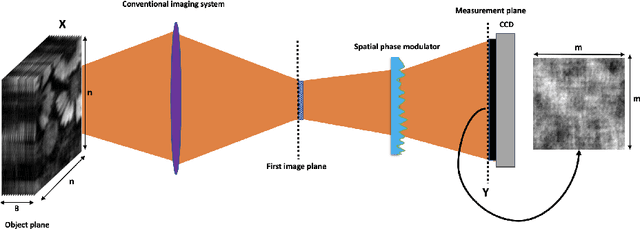
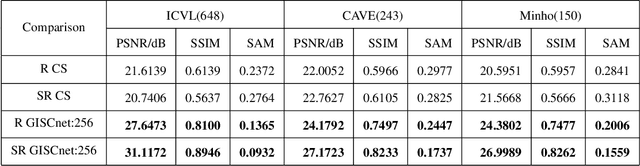
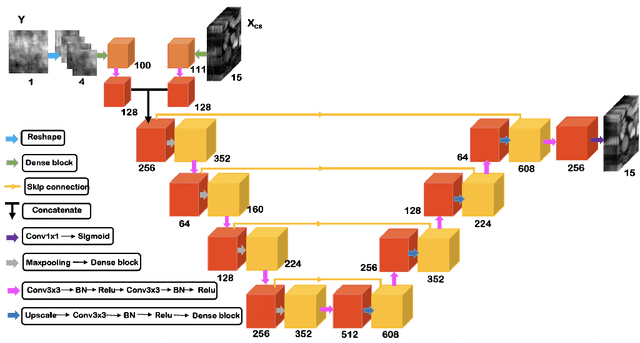
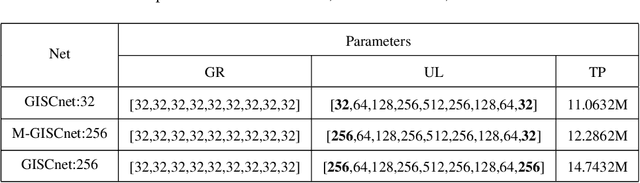
Ghost imaging via sparsity constraints (GISC) spectral camera modulates the three-dimensional (3D) hyperspectral image into a two-dimensional (2D) compressive image with speckles in a single shot. It obtains a 3D hyperspectral image (HSI) by reconstruction algorithms. The rapid development of deep learning has provided a new method for 3D HSI reconstruction. Moreover, the imaging performance of the GISC spectral camera can be improved by optimizing the speckle modulation. In this paper, we propose an end-to-end GISCnet with super-Rayleigh speckle modulation to improve the imaging quality of the GISC spectral camera. The structure of GISCnet is very simple but effective, and we can easily adjust the network structure parameters to improve the image reconstruction quality. Relative to Rayleigh speckles, our super-Rayleigh speckles modulation exhibits a wealth of detail in reconstructing 3D HSIs. After evaluating 648 3D HSIs, it was found that the average peak signal-to-noise ratio increased from 27 dB to 31 dB. Overall, the proposed GISCnet with super-Rayleigh speckle modulation can effectively improve the imaging quality of the GISC spectral camera by taking advantage of both optimized super-Rayleigh modulation and deep-learning image reconstruction, inspiring joint optimization of light-field modulation and image reconstruction to improve ghost imaging performance.
DiffVSR: Enhancing Real-World Video Super-Resolution with Diffusion Models for Advanced Visual Quality and Temporal Consistency
Jan 17, 2025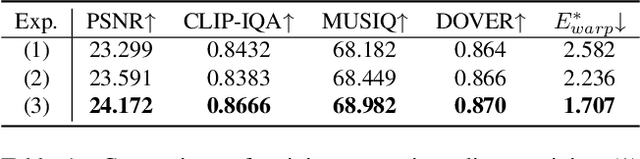
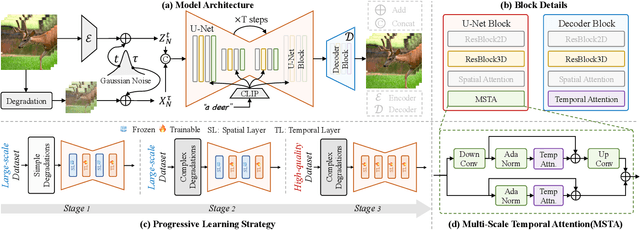
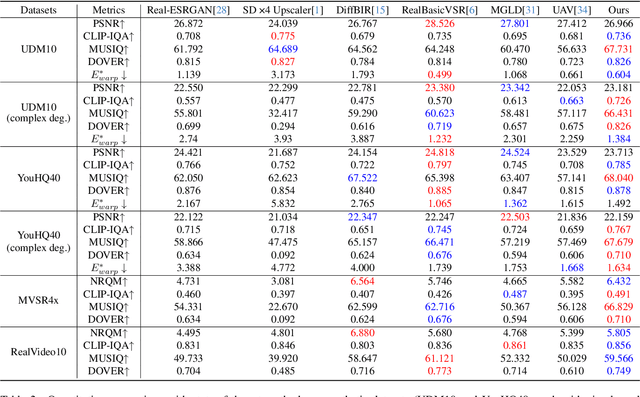
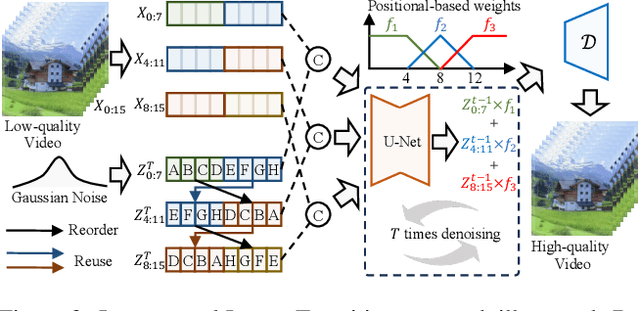
Diffusion models have demonstrated exceptional capabilities in image generation and restoration, yet their application to video super-resolution faces significant challenges in maintaining both high fidelity and temporal consistency. We present DiffVSR, a diffusion-based framework for real-world video super-resolution that effectively addresses these challenges through key innovations. For intra-sequence coherence, we develop a multi-scale temporal attention module and temporal-enhanced VAE decoder that capture fine-grained motion details. To ensure inter-sequence stability, we introduce a noise rescheduling mechanism with an interweaved latent transition approach, which enhances temporal consistency without additional training overhead. We propose a progressive learning strategy that transitions from simple to complex degradations, enabling robust optimization despite limited high-quality video data. Extensive experiments demonstrate that DiffVSR delivers superior results in both visual quality and temporal consistency, setting a new performance standard in real-world video super-resolution.