 Add to Chrome
 Add to Firefox
 Add to Edge
ProCon: Projection-Consistency Memory for Training-Free Anomaly Detection
Jul 06, 2026
Memory-based anomaly detection is attractive because it localizes defects from normal images without training a decoder or synthesizing pseudo anomalies. However, most memory methods still use the memory bank as a nearest-neighbor lookup table: a test patch is treated as normal if it has one nearby normal anchor. This hard retrieval view is vulnerable to false-normal matches and does not test whether the patch is consistently supported by a local normal neighborhood. We propose ProCon, a training-free framework that turns memory retrieval into decoder-free reconstruction. ProCon softly projects each test patch onto nearby normal memory vectors and uses the projection residual as anomaly evidence. To stabilize this residual, it constructs seed-perturbed layer-wise memories, aggregates bank residuals by a median, and fuses depth-specific residual maps by layer consensus. ProCon requires no decoder training, backbone fine-tuning, learned fusion weights, or pseudo-anomaly supervision. Across MVTec-AD, VisA, and Real-IAD under the single-category evaluation protocol, ProCon achieves strong image- and pixel-level performance under seven standard metrics, including image AUROC scores of 99.8%, 99.2%, and 93.2%, respectively. Ablations show that the gains come from replacing hard retrieval with soft normal projection and stabilizing the residuals through memory and depth consensus. The code is available at https://github.com/jw-chae/Procon

MMIR-TCM: Memory-Integrated Multimodal Inference and Retrieval for TCM Clinical Decision Support
Jul 02, 2026Traditional Chinese Medicine (TCM) diagnosis, particularly through tongue inspection, faces persistent challenges in subjectivity and reproducibility. The application of multimodal artificial intelligence to TCM clinical tasks, such as syndrome differentiation and prescription generation, is significantly hampered by the semantic gap between visual tongue features and textual reasoning, as well as the lack of large-scale, standardized datasets. To address these challenges, we introduce MMIR-TCM, a novel framework that emulates the diagnostic process of TCM experts by integrating multimodal large language model(MLLM) with memory-augmented segmentation and retrieval-augmented generation (RAG). Employing a three-stage architecture, MMIR-TCM integrates a training-free Memory-SAM module for robust tongue extraction, a fine-tuned Qwen3-VL model for structured tongue diagnosis generation, and a Qwen3-based RAG component for evidence-grounded clinical decision support generation. The framework was developed and validated using MedTCM, a new large-scale multimodal dataset that we introduce specifically for advanced TCM research. To properly evaluate our framework's clinical accuracy, which existing metrics fail to capture, we also developed TDEU, a domain-specific evaluation metric incorporating semantic understanding and diagnostic importance. Our comprehensive experiments demonstrate that MMIR-TCM significantly outperforms leading models, including GPT-4o and Gemini 2.5 Flash.
StructCore: Structure-Aware Image-Level Scoring for Training-Free Unsupervised Anomaly Detection
Feb 19, 2026Max pooling is the de facto standard for converting anomaly score maps into image-level decisions in memory-bank-based unsupervised anomaly detection (UAD). However, because it relies on a single extreme response, it discards most information about how anomaly evidence is distributed and structured across the image, often causing normal and anomalous scores to overlap. We propose StructCore, a training-free, structure-aware image-level scoring method that goes beyond max pooling. Given an anomaly score map, StructCore computes a low-dimensional structural descriptor phi(S) that captures distributional and spatial characteristics, and refines image-level scoring via a diagonal Mahalanobis calibration estimated from train-good samples, without modifying pixel-level localization. StructCore achieves image-level AUROC scores of 99.6% on MVTec AD and 98.4% on VisA, demonstrating robust image-level anomaly detection by exploiting structural signatures missed by max pooling.
Mapping the maturation of TCM as an adjuvant to radiotherapy
Jan 17, 2026The integration of complementary medicine into oncology represents a paradigm shift that has seen to increasing adoption of Traditional Chinese Medicine (TCM) as an adjuvant to radiotherapy. About twenty-five years since the formal institutionalization of integrated oncology, it is opportune to synthesize the trajectory of evidence for TCM as an adjuvant to radiotherapy. Here we conduct a large-scale analysis of 69,745 publications (2000 - 2025), emerging a cyclical evolution defined by coordinated expansion and contraction in publication output, international collaboration, and funding commitments that mirrors a define-ideate-test pattern. Using a theme modeling workflow designed to determine a stable thematic structure of the field, we identify five dominant thematic axes - cancer types, supportive care, clinical endpoints, mechanisms, and methodology - that signal a focus on patient well-being, scientific rigor and mechanistic exploration. Cross-theme integration of TCM is patient-centered and systems-oriented. Together with the emergent cycles of evolution, the thematic structure demonstrates progressive specialization and potential defragmentation of the field or saturation of existing research agenda. The analysis points to a field that has matured its current research agenda and is likely at the cusp of something new. Additionally, the field exhibits positive reporting of findings that is homogeneous across publication types, thematic areas, and the cycles of evolution suggesting a system-wide positive reporting bias agnostic to structural drivers.
GCR: Geometry-Consistent Routing for Task-Agnostic Continual Anomaly Detection
Jan 08, 2026Feature-based anomaly detection is widely adopted in industrial inspection due to the strong representational power of large pre-trained vision encoders. While most existing methods focus on improving within-category anomaly scoring, practical deployments increasingly require task-agnostic operation under continual category expansion, where the category identity is unknown at test time. In this setting, overall performance is often dominated by expert selection, namely routing an input to an appropriate normality model before any head-specific scoring is applied. However, routing rules that compare head-specific anomaly scores across independently constructed heads are unreliable in practice, as score distributions can differ substantially across categories in scale and tail behavior. We propose GCR, a lightweight mixture-of-experts framework for stabilizing task-agnostic continual anomaly detection through geometry-consistent routing. GCR routes each test image directly in a shared frozen patch-embedding space by minimizing an accumulated nearest-prototype distance to category-specific prototype banks, and then computes anomaly maps only within the routed expert using a standard prototype-based scoring rule. By separating cross-head decision making from within-head anomaly scoring, GCR avoids cross-head score comparability issues without requiring end-to-end representation learning. Experiments on MVTec AD and VisA show that geometry-consistent routing substantially improves routing stability and mitigates continual performance collapse, achieving near-zero forgetting while maintaining competitive detection and localization performance. These results indicate that many failures previously attributed to representation forgetting can instead be explained by decision-rule instability in cross-head routing. Code is available at https://github.com/jw-chae/GCR
Grid-augmented vision: A simple yet effective approach for enhanced spatial understanding in multi-modal agents
Dec 03, 2024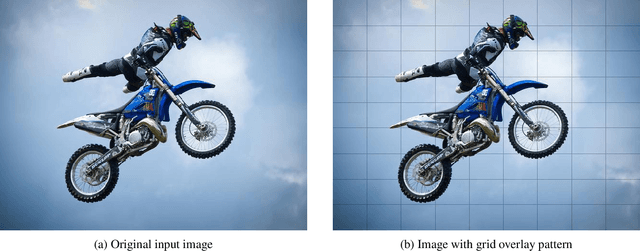
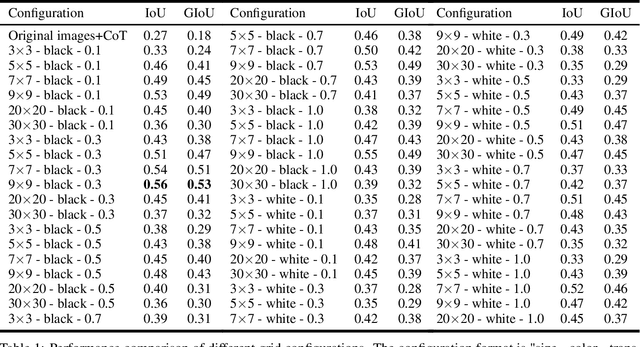
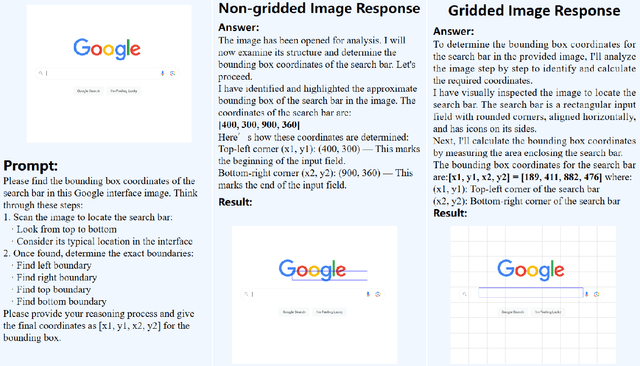
Recent advances in multimodal models have demonstrated impressive capabilities in object recognition and scene understanding. However, these models often struggle with precise spatial localization - a critical capability for real-world applications. Inspired by how humans use grid-based references like chess boards and maps, we propose introducing explicit visual position encoding through a simple grid overlay approach. By adding a 9x9 black grid pattern onto input images, our method provides visual spatial guidance analogous to how positional encoding works in transformers, but in an explicit, visual form. Experiments on the COCO 2017 dataset demonstrate that our grid-based approach achieves significant improvements in localization accuracy, with a 107.4% increase in IoU (from 0.27 to 0.56) and a 194.4% improvement in GIoU (from 0.18 to 0.53) compared to baseline performance. Through attention visualization analysis, we show how this visual position encoding helps models better ground spatial relationships. Our method's simplicity and effectiveness make it particularly valuable for applications requiring accurate spatial reasoning, such as robotic manipulation, medical imaging, and autonomous navigation.
COVID-19: post infection implications in different age groups, mechanism, diagnosis, effective prevention, treatment, and recommendations
Jun 02, 2024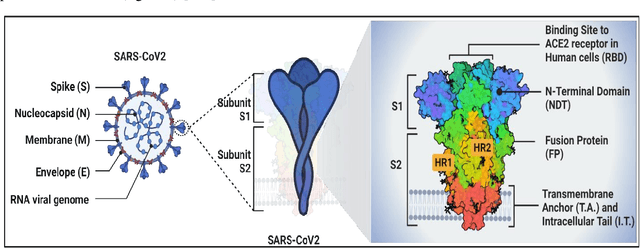
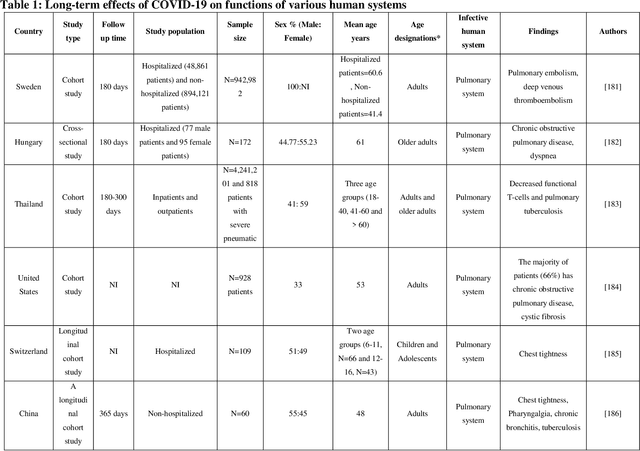
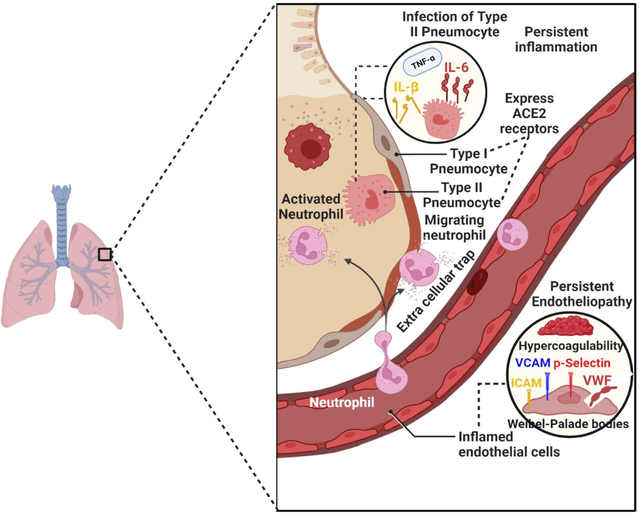
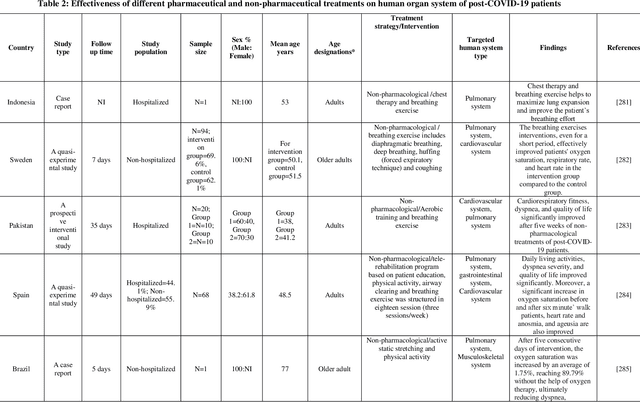
SARS-CoV-2, the highly contagious pathogen responsible for the COVID-19 pandemic, has persistent effects that begin four weeks after initial infection and last for an undetermined duration. These chronic effects are more harmful than acute ones. This review explores the long-term impact of the virus on various human organs, including the pulmonary, cardiovascular, neurological, reproductive, gastrointestinal, musculoskeletal, endocrine, and lymphoid systems, particularly in older adults. Regarding diagnosis, RT-PCR is the gold standard for detecting COVID-19, though it requires specialized equipment, skilled personnel, and considerable time to produce results. To address these limitations, artificial intelligence in imaging and microfluidics technologies offers promising alternatives for diagnosing COVID-19 efficiently. Pharmacological and non-pharmacological strategies are effective in mitigating the persistent impacts of COVID-19. These strategies enhance immunity in post-COVID-19 patients by reducing cytokine release syndrome, improving T cell response, and increasing the circulation of activated natural killer and CD8 T cells in blood and tissues. This, in turn, alleviates symptoms such as fever, nausea, fatigue, muscle weakness, and pain. Vaccines, including inactivated viral, live attenuated viral, protein subunit, viral vectored, mRNA, DNA, and nanoparticle vaccines, significantly reduce the adverse long-term effects of the virus. However, no vaccine has been reported to provide lifetime protection against COVID-19. Consequently, protective measures such as physical distancing, mask usage, and hand hygiene remain essential strategies. This review offers a comprehensive understanding of the persistent effects of COVID-19 on individuals of varying ages, along with insights into diagnosis, treatment, vaccination, and future preventative measures against the spread of SARS-CoV-2.
Benchmarking the Cell Image Segmentation Models Robustness under the Microscope Optical Aberrations
Apr 12, 2024Cell segmentation is essential in biomedical research for analyzing cellular morphology and behavior. Deep learning methods, particularly convolutional neural networks (CNNs), have revolutionized cell segmentation by extracting intricate features from images. However, the robustness of these methods under microscope optical aberrations remains a critical challenge. This study comprehensively evaluates the performance of cell instance segmentation models under simulated aberration conditions using the DynamicNuclearNet (DNN) and LIVECell datasets. Aberrations, including Astigmatism, Coma, Spherical, and Trefoil, were simulated using Zernike polynomial equations. Various segmentation models, such as Mask R-CNN with different network heads (FPN, C3) and backbones (ResNet, VGG19, SwinS), were trained and tested under aberrated conditions. Results indicate that FPN combined with SwinS demonstrates superior robustness in handling simple cell images affected by minor aberrations. Conversely, Cellpose2.0 proves effective for complex cell images under similar conditions. Our findings provide insights into selecting appropriate segmentation models based on cell morphology and aberration severity, enhancing the reliability of cell segmentation in biomedical applications. Further research is warranted to validate these methods with diverse aberration types and emerging segmentation models. Overall, this research aims to guide researchers in effectively utilizing cell segmentation models in the presence of minor optical aberrations.
The neural network models with delays for solving absolute value equations
Oct 17, 2023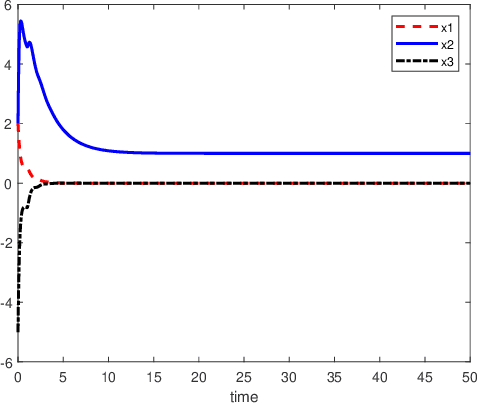
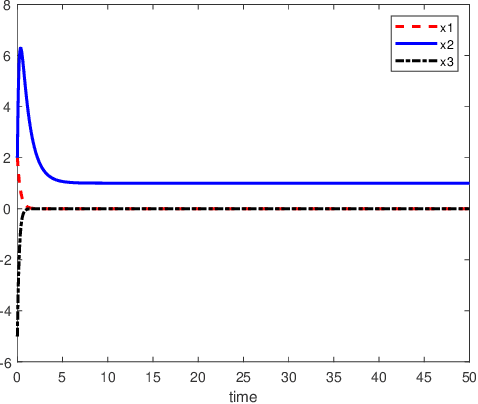
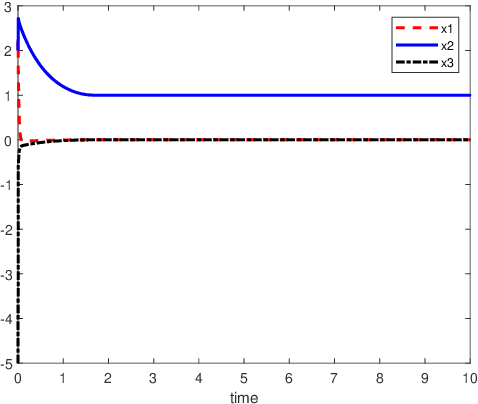
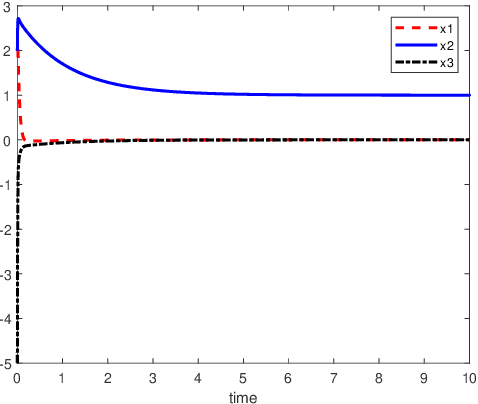
An inverse-free neural network model with mixed delays is proposed for solving the absolute value equation (AVE) $Ax -|x| - b =0$, which includes an inverse-free neural network model with discrete delay as a special case. By using the Lyapunov-Krasovskii theory and the linear matrix inequality (LMI) method, the developed neural network models are proved to be exponentially convergent to the solution of the AVE. Compared with the existing neural network models for solving the AVE, the proposed models feature the ability of solving a class of AVE with $\|A^{-1}\|>1$. Numerical simulations are given to show the effectiveness of the two delayed neural network models.
Ammonia-Net: A Multi-task Joint Learning Model for Multi-class Segmentation and Classification in Tooth-marked Tongue Diagnosis
Oct 05, 2023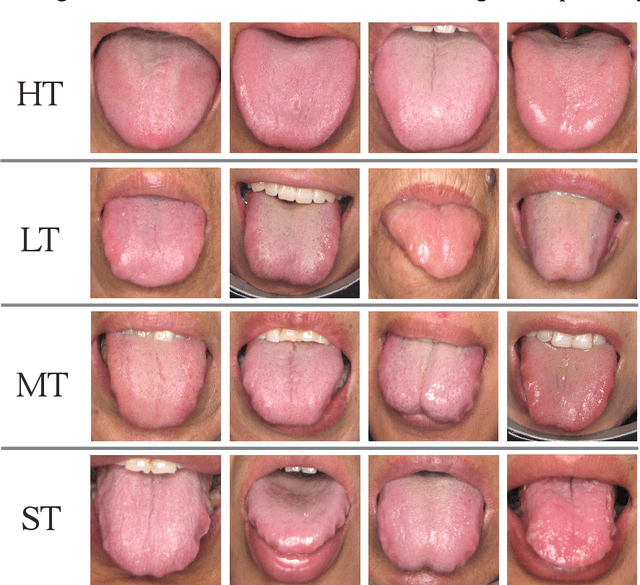
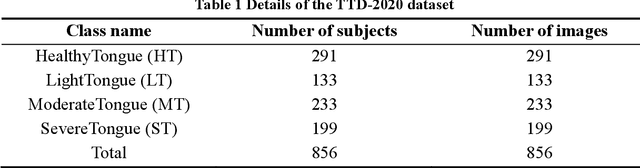

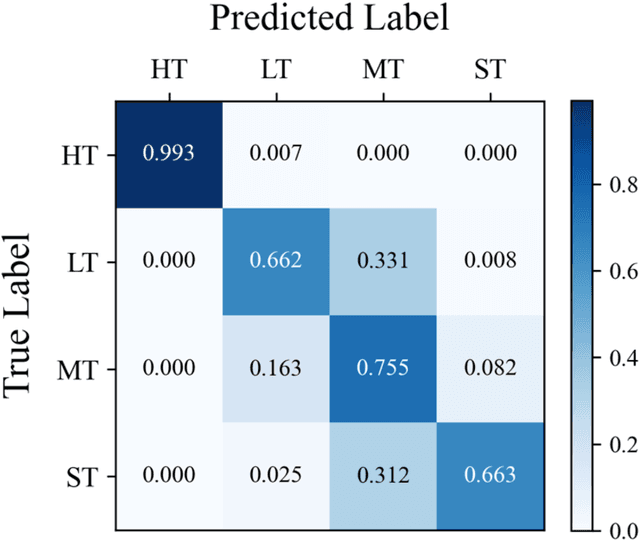
In Traditional Chinese Medicine, the tooth marks on the tongue, stemming from prolonged dental pressure, serve as a crucial indicator for assessing qi (yang) deficiency, which is intrinsically linked to visceral health. Manual diagnosis of tooth-marked tongue solely relies on experience. Nonetheless, the diversity in shape, color, and type of tooth marks poses a challenge to diagnostic accuracy and consistency. To address these problems, herein we propose a multi-task joint learning model named Ammonia-Net. This model employs a convolutional neural network-based architecture, specifically designed for multi-class segmentation and classification of tongue images. Ammonia-Net performs semantic segmentation of tongue images to identify tongue and tooth marks. With the assistance of segmentation output, it classifies the images into the desired number of classes: healthy tongue, light tongue, moderate tongue, and severe tongue. As far as we know, this is the first attempt to apply the semantic segmentation results of tooth marks for tooth-marked tongue classification. To train Ammonia-Net, we collect 856 tongue images from 856 subjects. After a number of extensive experiments, the experimental results show that the proposed model achieves 99.06% accuracy in the two-class classification task of tooth-marked tongue identification and 80.02%. As for the segmentation task, mIoU for tongue and tooth marks amounts to 71.65%.