 Add to Chrome
 Add to Firefox
 Add to Edge
Evaluation of OpenAI o1: Opportunities and Challenges of AGI
Sep 27, 2024
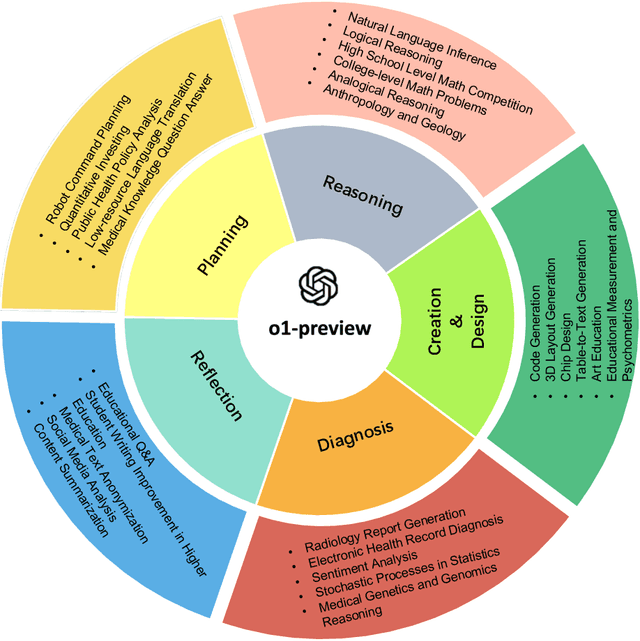
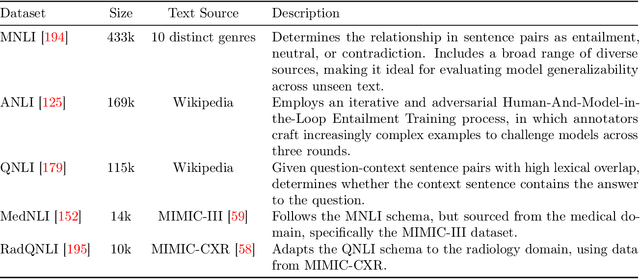


This comprehensive study evaluates the performance of OpenAI's o1-preview large language model across a diverse array of complex reasoning tasks, spanning multiple domains, including computer science, mathematics, natural sciences, medicine, linguistics, and social sciences. Through rigorous testing, o1-preview demonstrated remarkable capabilities, often achieving human-level or superior performance in areas ranging from coding challenges to scientific reasoning and from language processing to creative problem-solving. Key findings include: -83.3% success rate in solving complex competitive programming problems, surpassing many human experts. -Superior ability in generating coherent and accurate radiology reports, outperforming other evaluated models. -100% accuracy in high school-level mathematical reasoning tasks, providing detailed step-by-step solutions. -Advanced natural language inference capabilities across general and specialized domains like medicine. -Impressive performance in chip design tasks, outperforming specialized models in areas such as EDA script generation and bug analysis. -Remarkable proficiency in anthropology and geology, demonstrating deep understanding and reasoning in these specialized fields. -Strong capabilities in quantitative investing. O1 has comprehensive financial knowledge and statistical modeling skills. -Effective performance in social media analysis, including sentiment analysis and emotion recognition. The model excelled particularly in tasks requiring intricate reasoning and knowledge integration across various fields. While some limitations were observed, including occasional errors on simpler problems and challenges with certain highly specialized concepts, the overall results indicate significant progress towards artificial general intelligence.

EMOVA: Empowering Language Models to See, Hear and Speak with Vivid Emotions
Sep 26, 2024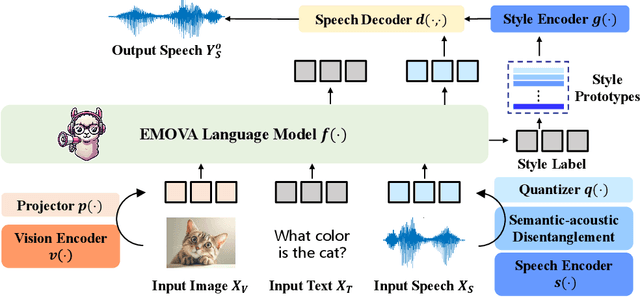
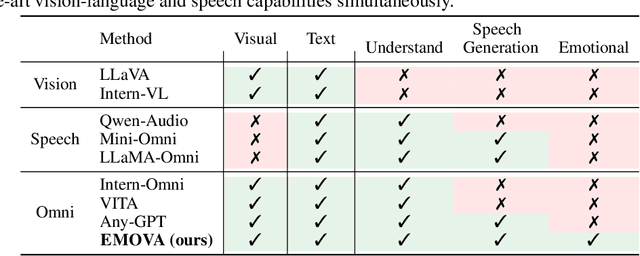
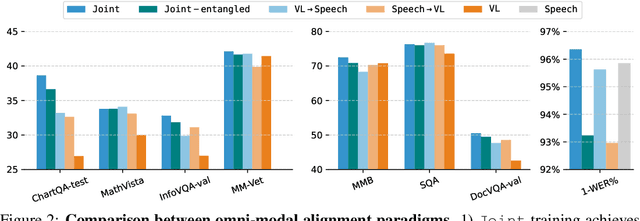
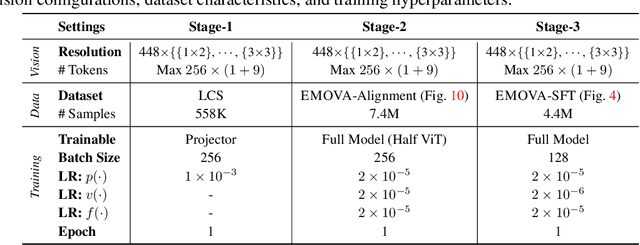
GPT-4o, an omni-modal model that enables vocal conversations with diverse emotions and tones, marks a milestone for omni-modal foundation models. However, empowering Large Language Models to perceive and generate images, texts, and speeches end-to-end with publicly available data remains challenging in the open-source community. Existing vision-language models rely on external tools for the speech processing, while speech-language models still suffer from limited or even without vision-understanding abilities. To address this gap, we propose EMOVA (EMotionally Omni-present Voice Assistant), to enable Large Language Models with end-to-end speech capabilities while maintaining the leading vision-language performance. With a semantic-acoustic disentangled speech tokenizer, we notice surprisingly that omni-modal alignment can further enhance vision-language and speech abilities compared with the corresponding bi-modal aligned counterparts. Moreover, a lightweight style module is proposed for flexible speech style controls (e.g., emotions and pitches). For the first time, EMOVA achieves state-of-the-art performance on both the vision-language and speech benchmarks, and meanwhile, supporting omni-modal spoken dialogue with vivid emotions.
General Compression Framework for Efficient Transformer Object Tracking
Sep 26, 2024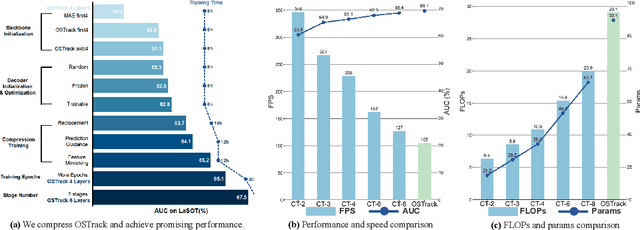


Transformer-based trackers have established a dominant role in the field of visual object tracking. While these trackers exhibit promising performance, their deployment on resource-constrained devices remains challenging due to inefficiencies. To improve the inference efficiency and reduce the computation cost, prior approaches have aimed to either design lightweight trackers or distill knowledge from larger teacher models into more compact student trackers. However, these solutions often sacrifice accuracy for speed. Thus, we propose a general model compression framework for efficient transformer object tracking, named CompressTracker, to reduce the size of a pre-trained tracking model into a lightweight tracker with minimal performance degradation. Our approach features a novel stage division strategy that segments the transformer layers of the teacher model into distinct stages, enabling the student model to emulate each corresponding teacher stage more effectively. Additionally, we also design a unique replacement training technique that involves randomly substituting specific stages in the student model with those from the teacher model, as opposed to training the student model in isolation. Replacement training enhances the student model's ability to replicate the teacher model's behavior. To further forcing student model to emulate teacher model, we incorporate prediction guidance and stage-wise feature mimicking to provide additional supervision during the teacher model's compression process. Our framework CompressTracker is structurally agnostic, making it compatible with any transformer architecture. We conduct a series of experiment to verify the effectiveness and generalizability of CompressTracker. Our CompressTracker-4 with 4 transformer layers, which is compressed from OSTrack, retains about 96% performance on LaSOT (66.1% AUC) while achieves 2.17x speed up.
Dataset Distillation-based Hybrid Federated Learning on Non-IID Data
Sep 26, 2024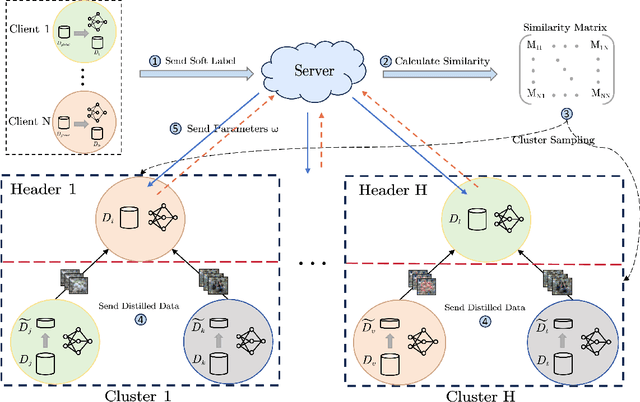
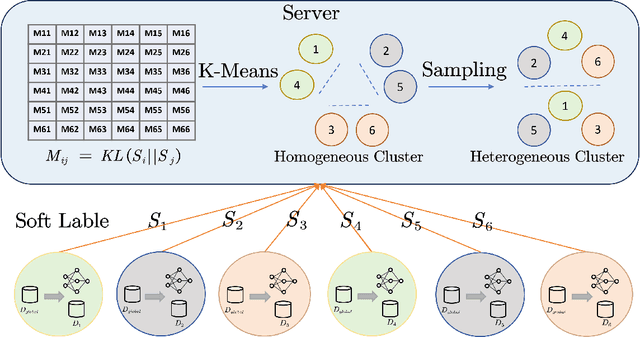
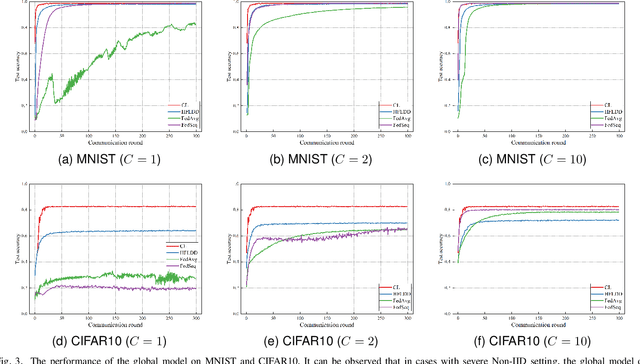
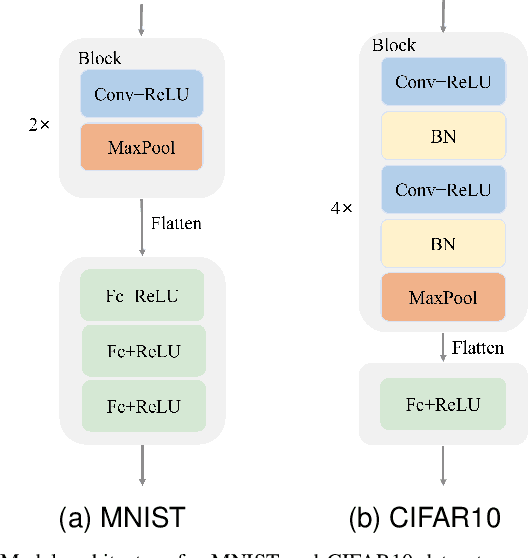
In federated learning, the heterogeneity of client data has a great impact on the performance of model training. Many heterogeneity issues in this process are raised by non-independently and identically distributed (Non-IID) data. This study focuses on the issue of label distribution skew. To address it, we propose a hybrid federated learning framework called HFLDD, which integrates dataset distillation to generate approximately independent and equally distributed (IID) data, thereby improving the performance of model training. Particularly, we partition the clients into heterogeneous clusters, where the data labels among different clients within a cluster are unbalanced while the data labels among different clusters are balanced. The cluster headers collect distilled data from the corresponding cluster members, and conduct model training in collaboration with the server. This training process is like traditional federated learning on IID data, and hence effectively alleviates the impact of Non-IID data on model training. Furthermore, we compare our proposed method with typical baseline methods on public datasets. Experimental results demonstrate that when the data labels are severely imbalanced, the proposed HFLDD outperforms the baseline methods in terms of both test accuracy and communication cost.
Achieving Stable High-Speed Locomotion for Humanoid Robots with Deep Reinforcement Learning
Sep 25, 2024Humanoid robots offer significant versatility for performing a wide range of tasks, yet their basic ability to walk and run, especially at high velocities, remains a challenge. This letter presents a novel method that combines deep reinforcement learning with kinodynamic priors to achieve stable locomotion control (KSLC). KSLC promotes coordinated arm movements to counteract destabilizing forces, enhancing overall stability. Compared to the baseline method, KSLC provides more accurate tracking of commanded velocities and better generalization in velocity control. In simulation tests, the KSLC-enabled humanoid robot successfully tracked a target velocity of 3.5 m/s with reduced fluctuations. Sim-to-sim validation in a high-fidelity environment further confirmed its robust performance, highlighting its potential for real-world applications.
Atmospheric Turbulence-Immune Free Space Optical Communication System based on Discrete-Time Analog Transmission
Sep 18, 2024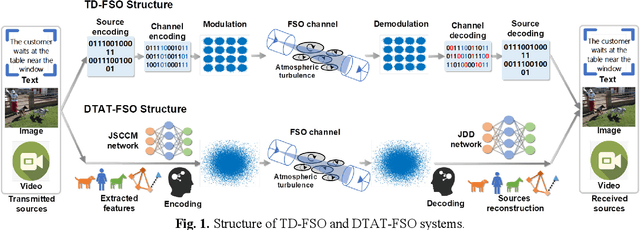
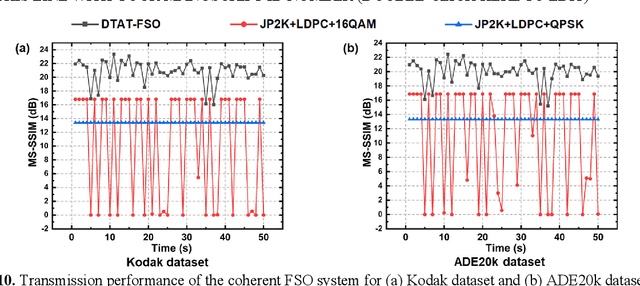
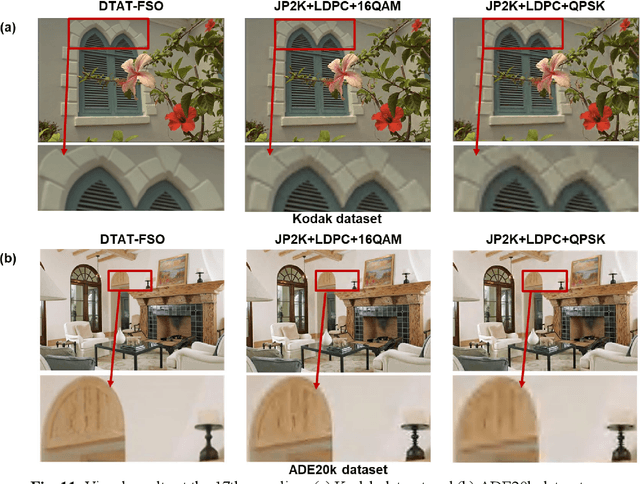
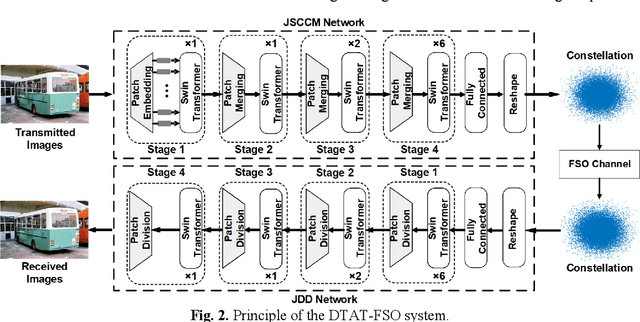
To effectively mitigate the influence of atmospheric turbulence, a novel discrete-time analog transmission free-space optical (DTAT-FSO) communication scheme is proposed. It directly maps information sources to discrete-time analog symbols via joint source-channel coding and modulation. Differently from traditional digital free space optical (TD-FSO) schemes, the proposed DTAT-FSO approach can automatically adapt to the variation of the channel state, with no need to adjust the specific modulation and coding scheme. The performance of the DTAT-FSO system was evaluated in both intensity modulation/direct detection (IM/DD) and coherent FSO systems for high-resolution image transmission. The results show that the DTAT-FSO reliably transmits images at low received optical powers (ROPs) and automatically enhances quality at high ROPs, while the TD-FSO experiences cliff and leveling effects when the channel state varies. With respect to the TD-FSO scheme, the DTAT-FSO scheme improved receiver sensitivity by 2.5 dB in the IM/DD FSO system and 0.8 dB in the coherent FSO system, and it achieved superior image fidelity under the same ROP. The automatic adaptation feature and improved performance of the DTAT-FSO suggest its potential for terrestrial, airborne, and satellite optical networks, addressing challenges posed by atmospheric turbulence.
Matrix Profile for Anomaly Detection on Multidimensional Time Series
Sep 14, 2024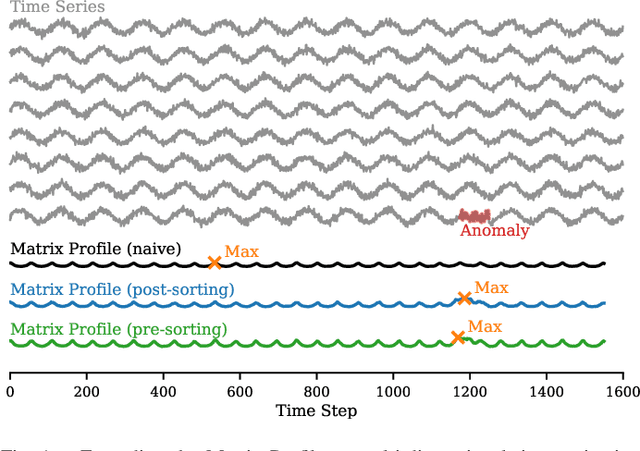
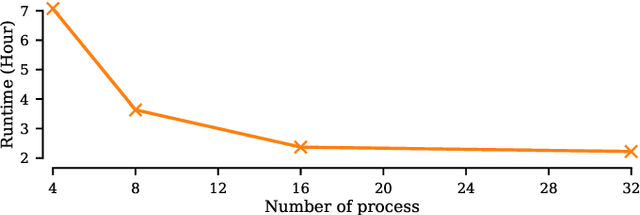

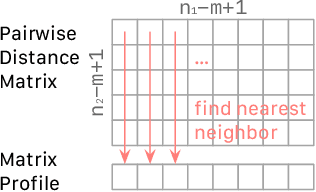
The Matrix Profile (MP), a versatile tool for time series data mining, has been shown effective in time series anomaly detection (TSAD). This paper delves into the problem of anomaly detection in multidimensional time series, a common occurrence in real-world applications. For instance, in a manufacturing factory, multiple sensors installed across the site collect time-varying data for analysis. The Matrix Profile, named for its role in profiling the matrix storing pairwise distance between subsequences of univariate time series, becomes complex in multidimensional scenarios. If the input univariate time series has n subsequences, the pairwise distance matrix is a n x n matrix. In a multidimensional time series with d dimensions, the pairwise distance information must be stored in a n x n x d tensor. In this paper, we first analyze different strategies for condensing this tensor into a profile vector. We then investigate the potential of extending the MP to efficiently find k-nearest neighbors for anomaly detection. Finally, we benchmark the multidimensional MP against 19 baseline methods on 119 multidimensional TSAD datasets. The experiments covers three learning setups: unsupervised, supervised, and semi-supervised. MP is the only method that consistently delivers high performance across all setups.
E2LLM: Encoder Elongated Large Language Models for Long-Context Understanding and Reasoning
Sep 10, 2024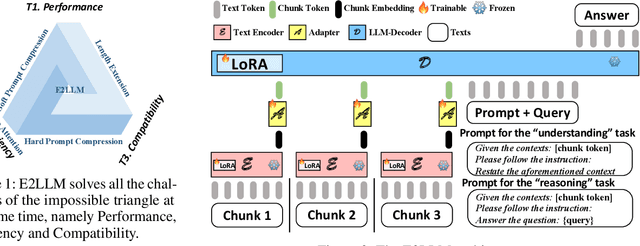
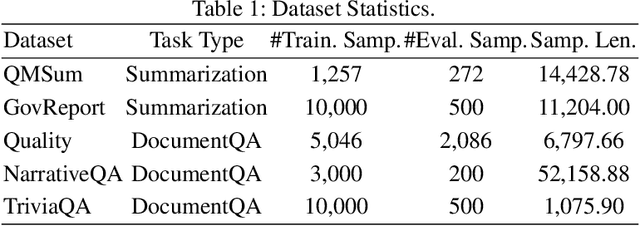

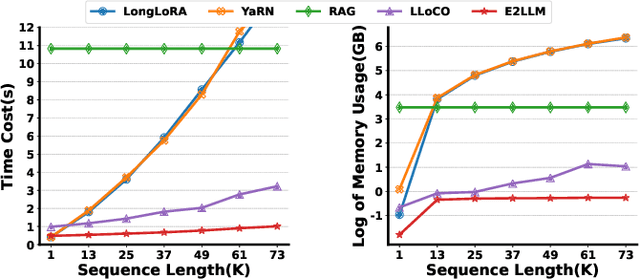
In the realm of Large Language Models (LLMs), the ability to process long contexts is increasingly crucial for tasks such as multi-round dialogues, code generation, and document summarization. This paper addresses the challenges of enhancing the long-context performance, reducing computational complexity, and leveraging pretrained models collectively termed the "impossible triangle." We introduce E2LLM (Encoder Elongated Large Language Models), a novel approach that effectively navigates this paradox. The method involves splitting long contexts into chunks, compressing each into embedding vectors via a pretrained text encoder, and utilizing an adapter to align these representations with a decoder-only LLM. Two training objectives, focusing on reconstruction of the encoder output and long-context instruction fine-tuning, are employed to facilitate the understanding of soft prompts by the LLM. Experimental results demonstrate that E2LLM achieves superior performance in long-context scenarios while balancing efficiency, performance, and compatibility with pretrained models. Our framework thus represents a significant advancement in the field, contributing to effective long-text modeling.
LSVOS Challenge Report: Large-scale Complex and Long Video Object Segmentation
Sep 09, 2024


Despite the promising performance of current video segmentation models on existing benchmarks, these models still struggle with complex scenes. In this paper, we introduce the 6th Large-scale Video Object Segmentation (LSVOS) challenge in conjunction with ECCV 2024 workshop. This year's challenge includes two tasks: Video Object Segmentation (VOS) and Referring Video Object Segmentation (RVOS). In this year, we replace the classic YouTube-VOS and YouTube-RVOS benchmark with latest datasets MOSE, LVOS, and MeViS to assess VOS under more challenging complex environments. This year's challenge attracted 129 registered teams from more than 20 institutes across over 8 countries. This report include the challenge and dataset introduction, and the methods used by top 7 teams in two tracks. More details can be found in our homepage https://lsvos.github.io/.
Cycle Pixel Difference Network for Crisp Edge Detection
Sep 06, 2024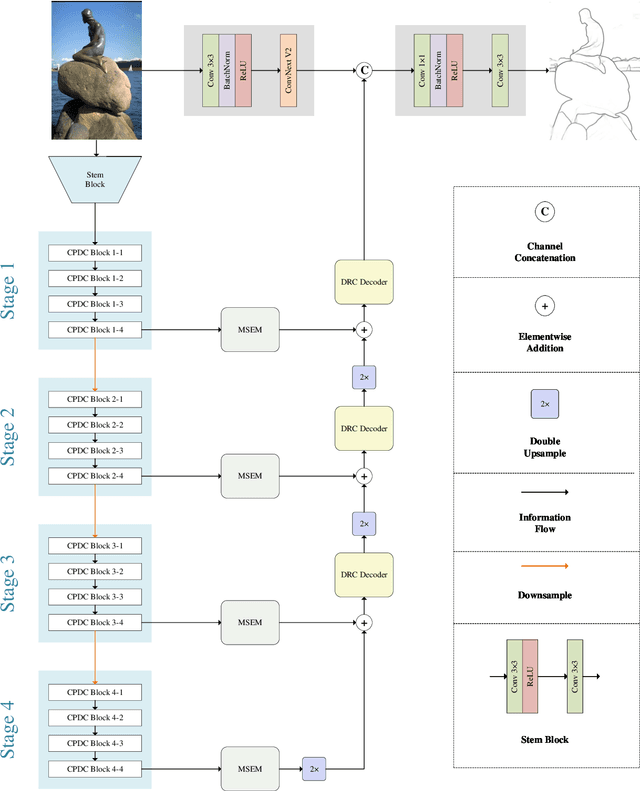
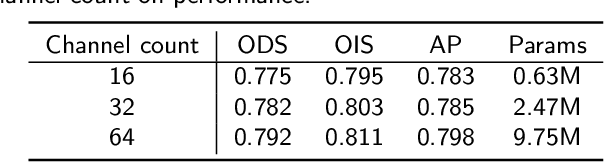
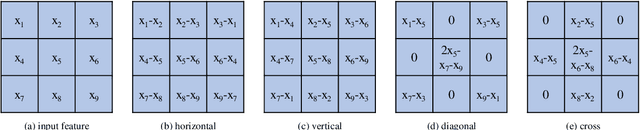

Edge detection, as a fundamental task in computer vision, has garnered increasing attention. The advent of deep learning has significantly advanced this field. However, recent deep learning-based methods which rely on large-scale pre-trained weights cannot be trained from scratch, with very limited research addressing this issue. This paper proposes a novel cycle pixel difference convolution (CPDC), which effectively integrates image gradient information with modern convolution operations. Based on the CPDC, we develop a U-shape encoder-decoder model named CPD-Net, which is a purely end-to-end network. Additionally, to address the issue of edge thickness produced by most existing methods, we construct a multi-scale information enhancement module (MSEM) to enhance the discriminative ability of the model, thereby generating crisp and clean contour maps. Comprehensive experiments conducted on three standard benchmarks demonstrate that our method achieves competitive performance on the BSDS500 dataset (ODS=0.813), NYUD-V2 (ODS=0.760), and BIPED dataset (ODS=0.898). Our approach provides a novel perspective for addressing these challenges in edge detection.