 Add to Chrome
 Add to Firefox
 Add to Edge
High-fidelity lunar topographic reconstruction across diverse terrain and illumination environments using deep learning
Jan 14, 2026
Topographic models are essential for characterizing planetary surfaces and for inferring underlying geological processes. Nevertheless, meter-scale topographic data remain limited, which constrains detailed planetary investigations, even for the Moon, where extensive high-resolution orbital images are available. Recent advances in deep learning (DL) exploit single-view imagery, constrained by low-resolution topography, for fast and flexible reconstruction of fine-scale topography. However, their robustness and general applicability across diverse lunar landforms and illumination conditions remain insufficiently explored. In this study, we build upon our previously proposed DL framework by incorporating a more robust scale recovery scheme and extending the model to polar regions under low solar illumination conditions. We demonstrate that, compared with single-view shape-from-shading methods, the proposed DL approach exhibits greater robustness to varying illumination and achieves more consistent and accurate topographic reconstructions. Furthermore, it reliably reconstructs topography across lunar features of diverse scales, morphologies, and geological ages. High-quality topographic models are also produced for the lunar south polar areas, including permanently shadowed regions, demonstrating the method's capability in reconstructing complex and low-illumination terrain. These findings suggest that DL-based approaches have the potential to leverage extensive lunar datasets to support advanced exploration missions and enable investigations of the Moon at unprecedented topographic resolution.

The Semantic Lifecycle in Embodied AI: Acquisition, Representation and Storage via Foundation Models
Jan 12, 2026Semantic information in embodied AI is inherently multi-source and multi-stage, making it challenging to fully leverage for achieving stable perception-to-action loops in real-world environments. Early studies have combined manual engineering with deep neural networks, achieving notable progress in specific semantic-related embodied tasks. However, as embodied agents encounter increasingly complex environments and open-ended tasks, the demand for more generalizable and robust semantic processing capabilities has become imperative. Recent advances in foundation models (FMs) address this challenge through their cross-domain generalization abilities and rich semantic priors, reshaping the landscape of embodied AI research. In this survey, we propose the Semantic Lifecycle as a unified framework to characterize the evolution of semantic knowledge within embodied AI driven by foundation models. Departing from traditional paradigms that treat semantic processing as isolated modules or disjoint tasks, our framework offers a holistic perspective that captures the continuous flow and maintenance of semantic knowledge. Guided by this embodied semantic lifecycle, we further analyze and compare recent advances across three key stages: acquisition, representation, and storage. Finally, we summarize existing challenges and outline promising directions for future research.
Beyond Hard Masks: Progressive Token Evolution for Diffusion Language Models
Jan 12, 2026Diffusion Language Models (DLMs) offer a promising alternative for language modeling by enabling parallel decoding through iterative refinement. However, most DLMs rely on hard binary masking and discrete token assignments, which hinder the revision of early decisions and underutilize intermediate probabilistic representations. In this paper, we propose EvoToken-DLM, a novel diffusion-based language modeling approach that replaces hard binary masks with evolving soft token distributions. EvoToken-DLM enables a progressive transition from masked states to discrete outputs, supporting revisable decoding. To effectively support this evolution, we introduce continuous trajectory supervision, which aligns training objectives with iterative probabilistic updates. Extensive experiments across multiple benchmarks show that EvoToken-DLM consistently achieves superior performance, outperforming strong diffusion-based and masked DLM baselines. Project webpage: https://aim-uofa.github.io/EvoTokenDLM.
Green's-Function Spherical Neural Operators for Biological Heterogeneity
Jan 08, 2026Spherical deep learning has been widely applied to a broad range of real-world problems. Existing approaches often face challenges in balancing strong spherical geometric inductive biases with the need to model real-world heterogeneity. To solve this while retaining spherical geometry, we first introduce a designable Green's function framework (DGF) to provide new spherical operator solution strategy: Design systematic Green's functions under rotational group. Based on DGF, to model biological heterogeneity, we propose Green's-Function Spherical Neural Operator (GSNO) fusing 3 operator solutions: (1) Equivariant Solution derived from Equivariant Green's Function for symmetry-consistent modeling; (2) Invariant Solution derived from Invariant Green's Function to eliminate nuisance heterogeneity, e.g., consistent background field; (3) Anisotropic Solution derived from Anisotropic Green's Function to model anisotropic systems, especially fibers with preferred direction. Therefore, the resulting model, GSNO can adapt to real-world heterogeneous systems with nuisance variability and anisotropy while retaining spectral efficiency. Evaluations on spherical MNIST, Shallow Water Equation, diffusion MRI fiber prediction, cortical parcellation and molecule structure modeling demonstrate the superiority of GSNO.
CD4LM: Consistency Distillation and aDaptive Decoding for Diffusion Language Models
Jan 05, 2026Autoregressive large language models achieve strong results on many benchmarks, but decoding remains fundamentally latency-limited by sequential dependence on previously generated tokens. Diffusion language models (DLMs) promise parallel generation but suffer from a fundamental static-to-dynamic misalignment: Training optimizes local transitions under fixed schedules, whereas efficient inference requires adaptive "long-jump" refinements through unseen states. Our goal is to enable highly parallel decoding for DLMs with low number of function evaluations while preserving generation quality. To achieve this, we propose CD4LM, a framework that decouples training from inference via Discrete-Space Consistency Distillation (DSCD) and Confidence-Adaptive Decoding (CAD). Unlike standard objectives, DSCD trains a student to be trajectory-invariant, mapping diverse noisy states directly to the clean distribution. This intrinsic robustness enables CAD to dynamically allocate compute resources based on token confidence, aggressively skipping steps without the quality collapse typical of heuristic acceleration. On GSM8K, CD4LM matches the LLaDA baseline with a 5.18x wall-clock speedup; across code and math benchmarks, it strictly dominates the accuracy-efficiency Pareto frontier, achieving a 3.62x mean speedup while improving average accuracy. Code is available at https://github.com/yihao-liang/CDLM
CrownGen: Patient-customized Crown Generation via Point Diffusion Model
Dec 26, 2025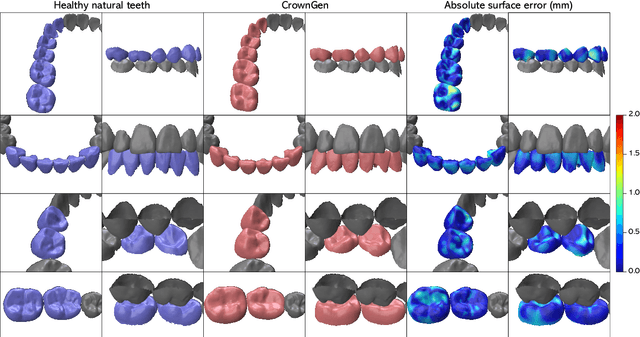
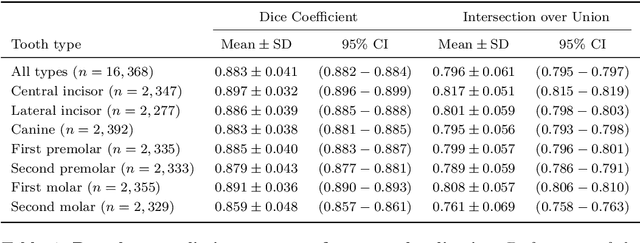
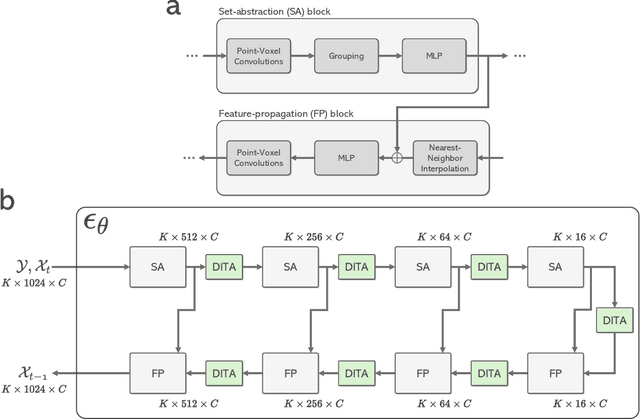
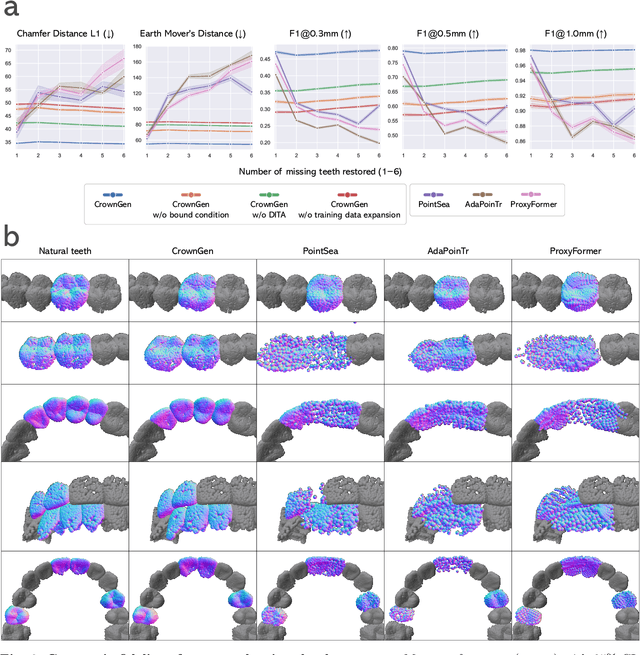
Digital crown design remains a labor-intensive bottleneck in restorative dentistry. We present \textbf{CrownGen}, a generative framework that automates patient-customized crown design using a denoising diffusion model on a novel tooth-level point cloud representation. The system employs two core components: a boundary prediction module to establish spatial priors and a diffusion-based generative module to synthesize high-fidelity morphology for multiple teeth in a single inference pass. We validated CrownGen through a quantitative benchmark on 496 external scans and a clinical study of 26 restoration cases. Results demonstrate that CrownGen surpasses state-of-the-art models in geometric fidelity and significantly reduces active design time. Clinical assessments by trained dentists confirmed that CrownGen-assisted crowns are statistically non-inferior in quality to those produced by expert technicians using manual workflows. By automating complex prosthetic modeling, CrownGen offers a scalable solution to lower costs, shorten turnaround times, and enhance patient access to high-quality dental care.
TableGPT-R1: Advancing Tabular Reasoning Through Reinforcement Learning
Dec 23, 2025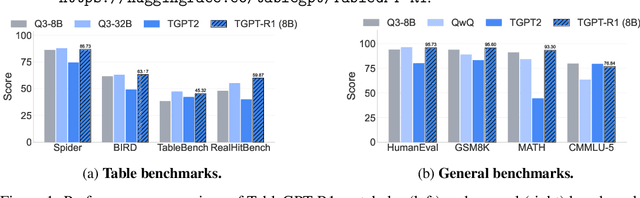
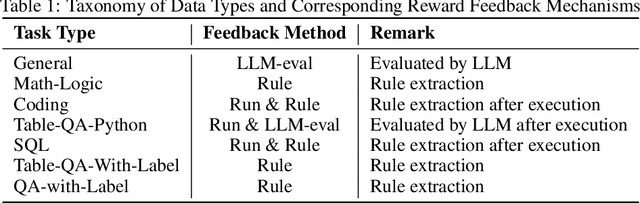
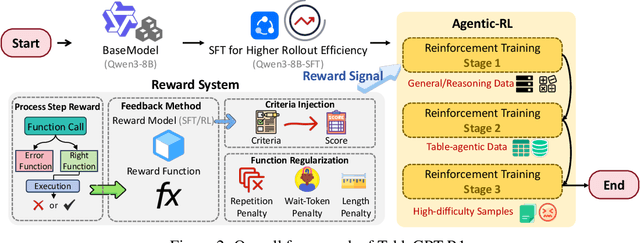
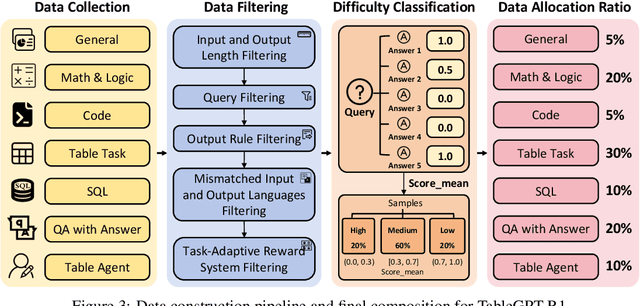
Tabular data serves as the backbone of modern data analysis and scientific research. While Large Language Models (LLMs) fine-tuned via Supervised Fine-Tuning (SFT) have significantly improved natural language interaction with such structured data, they often fall short in handling the complex, multi-step reasoning and robust code execution required for real-world table tasks. Reinforcement Learning (RL) offers a promising avenue to enhance these capabilities, yet its application in the tabular domain faces three critical hurdles: the scarcity of high-quality agentic trajectories with closed-loop code execution and environment feedback on diverse table structures, the extreme heterogeneity of feedback signals ranging from rigid SQL execution to open-ended data interpretation, and the risk of catastrophic forgetting of general knowledge during vertical specialization. To overcome these challenges and unlock advanced reasoning on complex tables, we introduce \textbf{TableGPT-R1}, a specialized tabular model built on a systematic RL framework. Our approach integrates a comprehensive data engineering pipeline that synthesizes difficulty-stratified agentic trajectories for both supervised alignment and RL rollouts, a task-adaptive reward system that combines rule-based verification with a criteria-injected reward model and incorporates process-level step reward shaping with behavioral regularization, and a multi-stage training framework that progressively stabilizes reasoning before specializing in table-specific tasks. Extensive evaluations demonstrate that TableGPT-R1 achieves state-of-the-art performance on authoritative benchmarks, significantly outperforming baseline models while retaining robust general capabilities. Our model is available at https://huggingface.co/tablegpt/TableGPT-R1.
Dynamic Stream Network for Combinatorial Explosion Problem in Deformable Medical Image Registration
Dec 22, 2025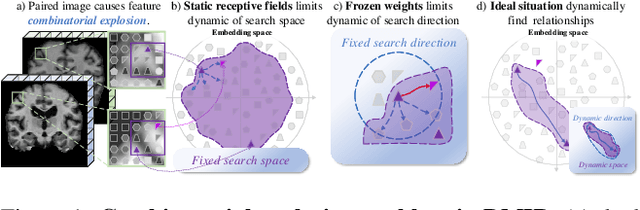
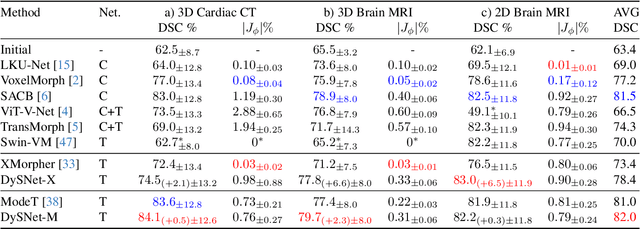
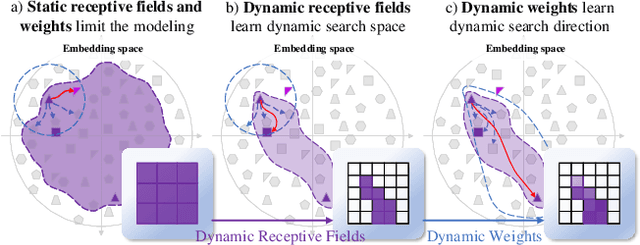
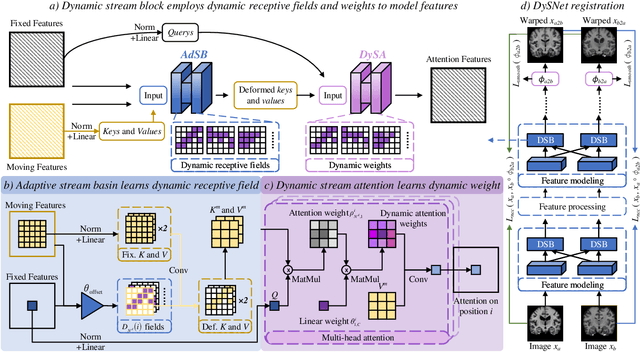
Combinatorial explosion problem caused by dual inputs presents a critical challenge in Deformable Medical Image Registration (DMIR). Since DMIR processes two images simultaneously as input, the combination relationships between features has grown exponentially, ultimately the model considers more interfering features during the feature modeling process. Introducing dynamics in the receptive fields and weights of the network enable the model to eliminate the interfering features combination and model the potential feature combination relationships. In this paper, we propose the Dynamic Stream Network (DySNet), which enables the receptive fields and weights to be dynamically adjusted. This ultimately enables the model to ignore interfering feature combinations and model the potential feature relationships. With two key innovations: 1) Adaptive Stream Basin (AdSB) module dynamically adjusts the shape of the receptive field, thereby enabling the model to focus on the feature relationships with greater correlation. 2) Dynamic Stream Attention (DySA) mechanism generates dynamic weights to search for more valuable feature relationships. Extensive experiments have shown that DySNet consistently outperforms the most advanced DMIR methods, highlighting its outstanding generalization ability. Our code will be released on the website: https://github.com/ShaochenBi/DySNet.
MambaMIL+: Modeling Long-Term Contextual Patterns for Gigapixel Whole Slide Image
Dec 19, 2025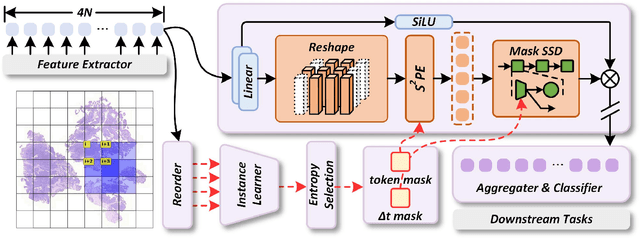
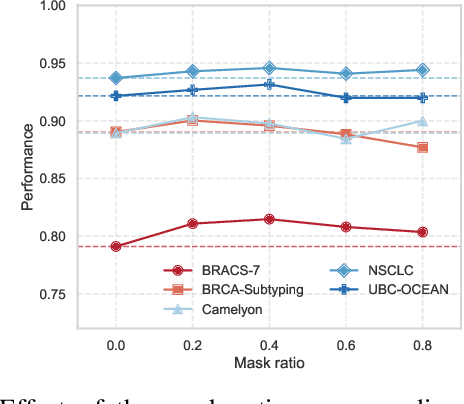
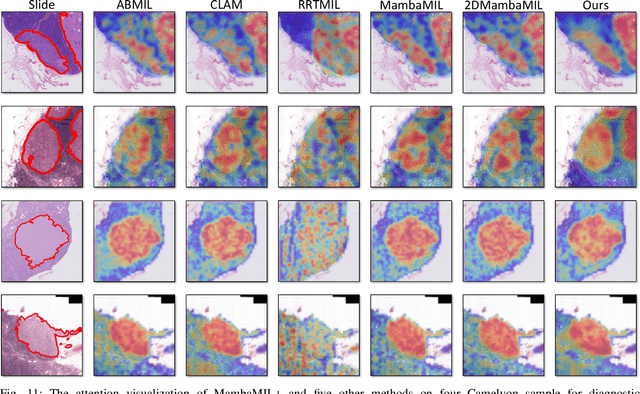
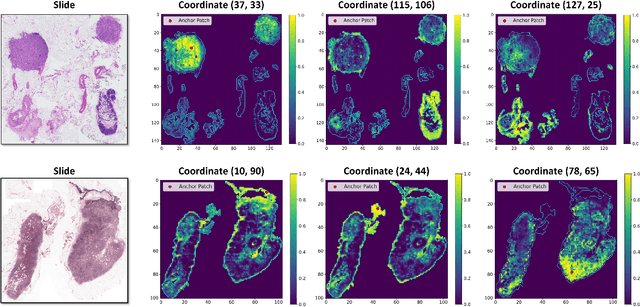
Whole-slide images (WSIs) are an important data modality in computational pathology, yet their gigapixel resolution and lack of fine-grained annotations challenge conventional deep learning models. Multiple instance learning (MIL) offers a solution by treating each WSI as a bag of patch-level instances, but effectively modeling ultra-long sequences with rich spatial context remains difficult. Recently, Mamba has emerged as a promising alternative for long sequence learning, scaling linearly to thousands of tokens. However, despite its efficiency, it still suffers from limited spatial context modeling and memory decay, constraining its effectiveness to WSI analysis. To address these limitations, we propose MambaMIL+, a new MIL framework that explicitly integrates spatial context while maintaining long-range dependency modeling without memory forgetting. Specifically, MambaMIL+ introduces 1) overlapping scanning, which restructures the patch sequence to embed spatial continuity and instance correlations; 2) a selective stripe position encoder (S2PE) that encodes positional information while mitigating the biases of fixed scanning orders; and 3) a contextual token selection (CTS) mechanism, which leverages supervisory knowledge to dynamically enlarge the contextual memory for stable long-range modeling. Extensive experiments on 20 benchmarks across diagnostic classification, molecular prediction, and survival analysis demonstrate that MambaMIL+ consistently achieves state-of-the-art performance under three feature extractors (ResNet-50, PLIP, and CONCH), highlighting its effectiveness and robustness for large-scale computational pathology
Probing Scientific General Intelligence of LLMs with Scientist-Aligned Workflows
Dec 18, 2025Despite advances in scientific AI, a coherent framework for Scientific General Intelligence (SGI)-the ability to autonomously conceive, investigate, and reason across scientific domains-remains lacking. We present an operational SGI definition grounded in the Practical Inquiry Model (PIM: Deliberation, Conception, Action, Perception) and operationalize it via four scientist-aligned tasks: deep research, idea generation, dry/wet experiments, and experimental reasoning. SGI-Bench comprises over 1,000 expert-curated, cross-disciplinary samples inspired by Science's 125 Big Questions, enabling systematic evaluation of state-of-the-art LLMs. Results reveal gaps: low exact match (10--20%) in deep research despite step-level alignment; ideas lacking feasibility and detail; high code executability but low execution result accuracy in dry experiments; low sequence fidelity in wet protocols; and persistent multimodal comparative-reasoning challenges. We further introduce Test-Time Reinforcement Learning (TTRL), which optimizes retrieval-augmented novelty rewards at inference, enhancing hypothesis novelty without reference answer. Together, our PIM-grounded definition, workflow-centric benchmark, and empirical insights establish a foundation for AI systems that genuinely participate in scientific discovery.