 Add to Chrome
 Add to Firefox
 Add to Edge
ViewCrafter: Taming Video Diffusion Models for High-fidelity Novel View Synthesis
Sep 03, 2024
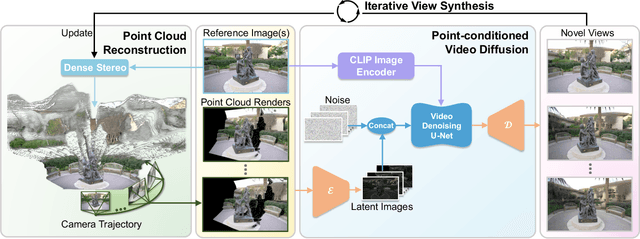
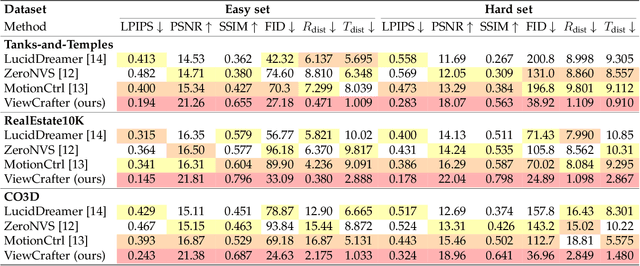

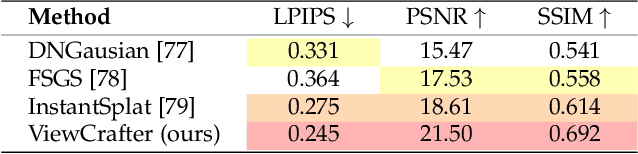
Despite recent advancements in neural 3D reconstruction, the dependence on dense multi-view captures restricts their broader applicability. In this work, we propose \textbf{ViewCrafter}, a novel method for synthesizing high-fidelity novel views of generic scenes from single or sparse images with the prior of video diffusion model. Our method takes advantage of the powerful generation capabilities of video diffusion model and the coarse 3D clues offered by point-based representation to generate high-quality video frames with precise camera pose control. To further enlarge the generation range of novel views, we tailored an iterative view synthesis strategy together with a camera trajectory planning algorithm to progressively extend the 3D clues and the areas covered by the novel views. With ViewCrafter, we can facilitate various applications, such as immersive experiences with real-time rendering by efficiently optimizing a 3D-GS representation using the reconstructed 3D points and the generated novel views, and scene-level text-to-3D generation for more imaginative content creation. Extensive experiments on diverse datasets demonstrate the strong generalization capability and superior performance of our method in synthesizing high-fidelity and consistent novel views.

Event Stream based Human Action Recognition: A High-Definition Benchmark Dataset and Algorithms
Aug 19, 2024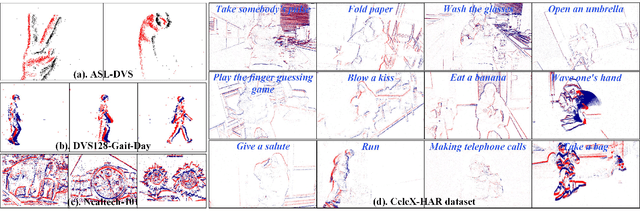


Human Action Recognition (HAR) stands as a pivotal research domain in both computer vision and artificial intelligence, with RGB cameras dominating as the preferred tool for investigation and innovation in this field. However, in real-world applications, RGB cameras encounter numerous challenges, including light conditions, fast motion, and privacy concerns. Consequently, bio-inspired event cameras have garnered increasing attention due to their advantages of low energy consumption, high dynamic range, etc. Nevertheless, most existing event-based HAR datasets are low resolution ($346 \times 260$). In this paper, we propose a large-scale, high-definition ($1280 \times 800$) human action recognition dataset based on the CeleX-V event camera, termed CeleX-HAR. It encompasses 150 commonly occurring action categories, comprising a total of 124,625 video sequences. Various factors such as multi-view, illumination, action speed, and occlusion are considered when recording these data. To build a more comprehensive benchmark dataset, we report over 20 mainstream HAR models for future works to compare. In addition, we also propose a novel Mamba vision backbone network for event stream based HAR, termed EVMamba, which equips the spatial plane multi-directional scanning and novel voxel temporal scanning mechanism. By encoding and mining the spatio-temporal information of event streams, our EVMamba has achieved favorable results across multiple datasets. Both the dataset and source code will be released on \url{https://github.com/Event-AHU/CeleX-HAR}
Time-Dependent VAE for Building Latent Factor from Visual Neural Activity with Complex Dynamics
Aug 15, 2024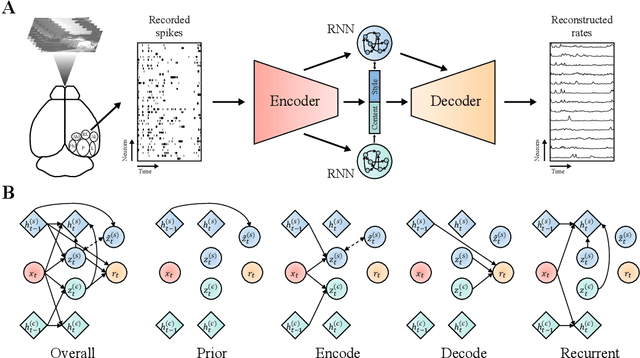

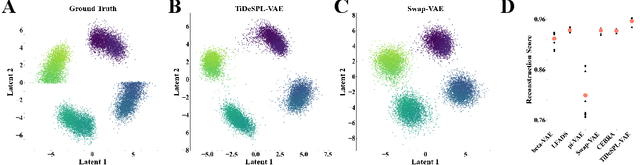
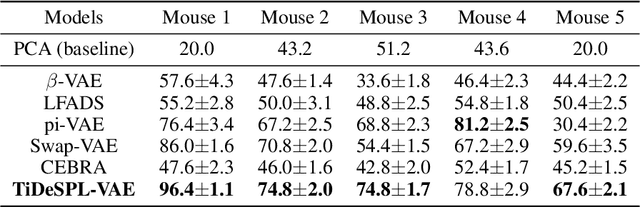
Seeking high-quality neural latent representations to reveal the intrinsic correlation between neural activity and behavior or sensory stimulation has attracted much interest. Currently, some deep latent variable models rely on behavioral information (e.g., movement direction and position) as an aid to build expressive embeddings while being restricted by fixed time scales. Visual neural activity from passive viewing lacks clearly correlated behavior or task information, and high-dimensional visual stimulation leads to intricate neural dynamics. To cope with such conditions, we propose Time-Dependent SwapVAE, following the approach of separating content and style spaces in Swap-VAE, on the basis of which we introduce state variables to construct conditional distributions with temporal dependence for the above two spaces. Our model progressively generates latent variables along neural activity sequences, and we apply self-supervised contrastive learning to shape its latent space. In this way, it can effectively analyze complex neural dynamics from sequences of arbitrary length, even without task or behavioral data as auxiliary inputs. We compare TiDe-SwapVAE with alternative models on synthetic data and neural data from mouse visual cortex. The results show that our model not only accurately decodes complex visual stimuli but also extracts explicit temporal neural dynamics, demonstrating that it builds latent representations more relevant to visual stimulation.
HoloDreamer: Holistic 3D Panoramic World Generation from Text Descriptions
Jul 21, 2024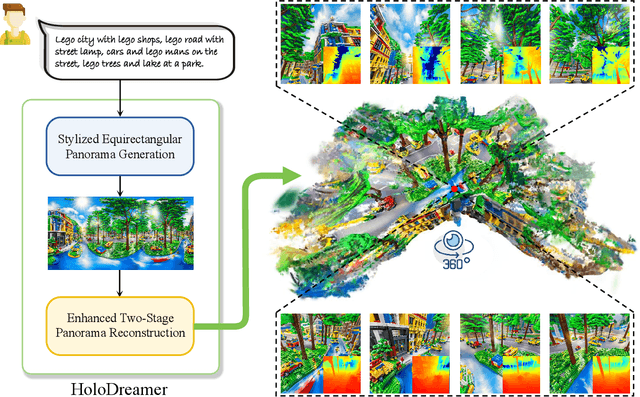

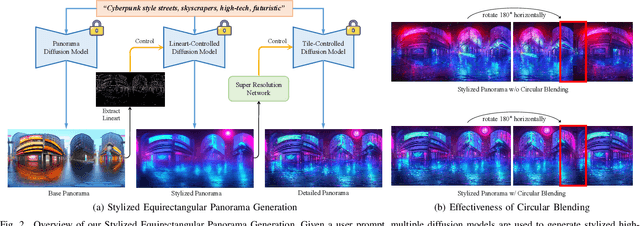
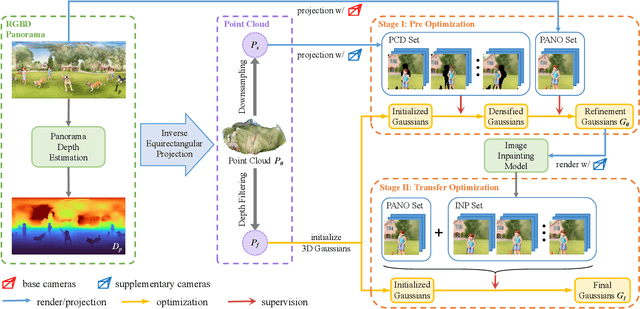
3D scene generation is in high demand across various domains, including virtual reality, gaming, and the film industry. Owing to the powerful generative capabilities of text-to-image diffusion models that provide reliable priors, the creation of 3D scenes using only text prompts has become viable, thereby significantly advancing researches in text-driven 3D scene generation. In order to obtain multiple-view supervision from 2D diffusion models, prevailing methods typically employ the diffusion model to generate an initial local image, followed by iteratively outpainting the local image using diffusion models to gradually generate scenes. Nevertheless, these outpainting-based approaches prone to produce global inconsistent scene generation results without high degree of completeness, restricting their broader applications. To tackle these problems, we introduce HoloDreamer, a framework that first generates high-definition panorama as a holistic initialization of the full 3D scene, then leverage 3D Gaussian Splatting (3D-GS) to quickly reconstruct the 3D scene, thereby facilitating the creation of view-consistent and fully enclosed 3D scenes. Specifically, we propose Stylized Equirectangular Panorama Generation, a pipeline that combines multiple diffusion models to enable stylized and detailed equirectangular panorama generation from complex text prompts. Subsequently, Enhanced Two-Stage Panorama Reconstruction is introduced, conducting a two-stage optimization of 3D-GS to inpaint the missing region and enhance the integrity of the scene. Comprehensive experiments demonstrated that our method outperforms prior works in terms of overall visual consistency and harmony as well as reconstruction quality and rendering robustness when generating fully enclosed scenes.
Efficient Event Stream Super-Resolution with Recursive Multi-Branch Fusion
Jun 28, 2024
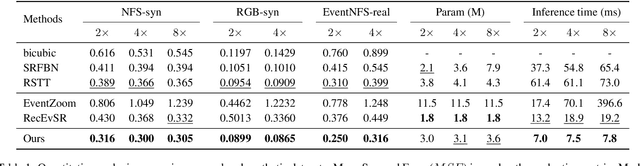
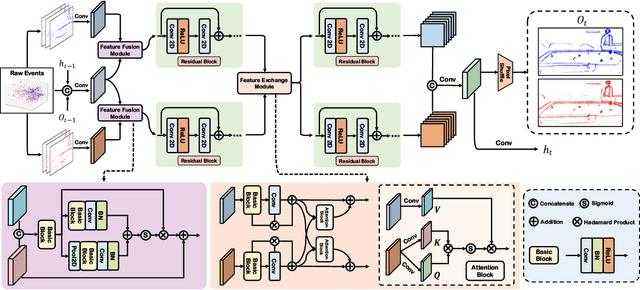
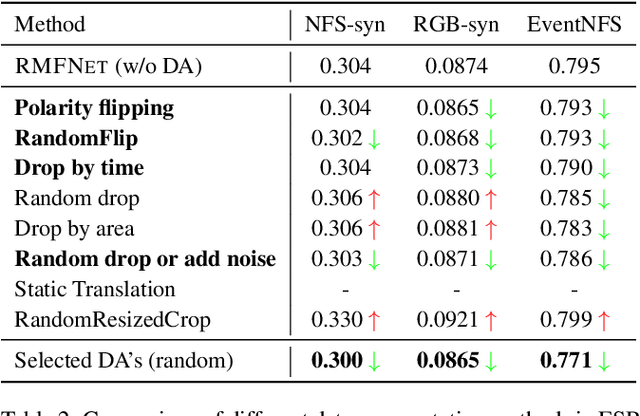
Current Event Stream Super-Resolution (ESR) methods overlook the redundant and complementary information present in positive and negative events within the event stream, employing a direct mixing approach for super-resolution, which may lead to detail loss and inefficiency. To address these issues, we propose an efficient Recursive Multi-Branch Information Fusion Network (RMFNet) that separates positive and negative events for complementary information extraction, followed by mutual supplementation and refinement. Particularly, we introduce Feature Fusion Modules (FFM) and Feature Exchange Modules (FEM). FFM is designed for the fusion of contextual information within neighboring event streams, leveraging the coupling relationship between positive and negative events to alleviate the misleading of noises in the respective branches. FEM efficiently promotes the fusion and exchange of information between positive and negative branches, enabling superior local information enhancement and global information complementation. Experimental results demonstrate that our approach achieves over 17% and 31% improvement on synthetic and real datasets, accompanied by a 2.3X acceleration. Furthermore, we evaluate our method on two downstream event-driven applications, \emph{i.e.}, object recognition and video reconstruction, achieving remarkable results that outperform existing methods. Our code and Supplementary Material are available at https://github.com/Lqm26/RMFNet.
Retain, Blend, and Exchange: A Quality-aware Spatial-Stereo Fusion Approach for Event Stream Recognition
Jun 27, 2024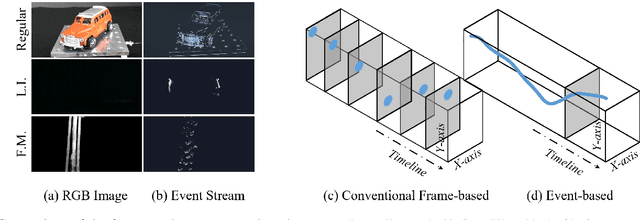
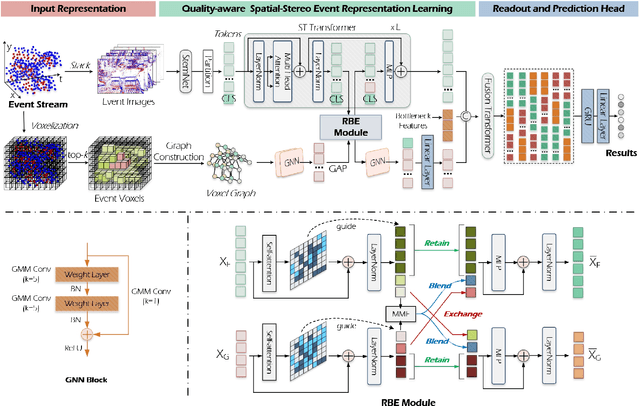
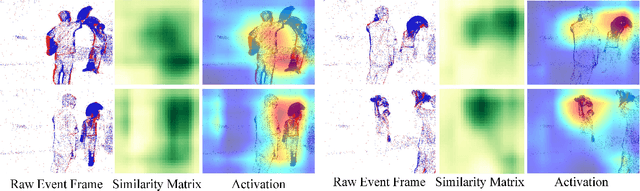
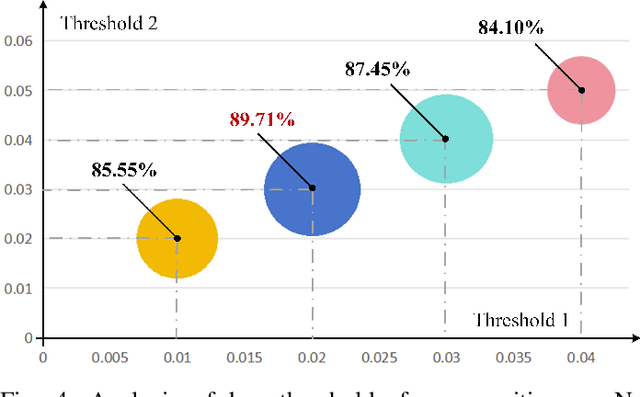
Existing event stream-based pattern recognition models usually represent the event stream as the point cloud, voxel, image, etc., and design various deep neural networks to learn their features. Although considerable results can be achieved in simple cases, however, the model performance may be limited by monotonous modality expressions, sub-optimal fusion, and readout mechanisms. In this paper, we propose a novel dual-stream framework for event stream-based pattern recognition via differentiated fusion, termed EFV++. It models two common event representations simultaneously, i.e., event images and event voxels. The spatial and three-dimensional stereo information can be learned separately by utilizing Transformer and Graph Neural Network (GNN). We believe the features of each representation still contain both efficient and redundant features and a sub-optimal solution may be obtained if we directly fuse them without differentiation. Thus, we divide each feature into three levels and retain high-quality features, blend medium-quality features, and exchange low-quality features. The enhanced dual features will be fed into the fusion Transformer together with bottleneck features. In addition, we introduce a novel hybrid interaction readout mechanism to enhance the diversity of features as final representations. Extensive experiments demonstrate that our proposed framework achieves state-of-the-art performance on multiple widely used event stream-based classification datasets. Specifically, we achieve new state-of-the-art performance on the Bullying10k dataset, i.e., $90.51\%$, which exceeds the second place by $+2.21\%$. The source code of this paper has been released on \url{https://github.com/Event-AHU/EFV_event_classification/tree/EFVpp}.
SVFormer: A Direct Training Spiking Transformer for Efficient Video Action Recognition
Jun 21, 2024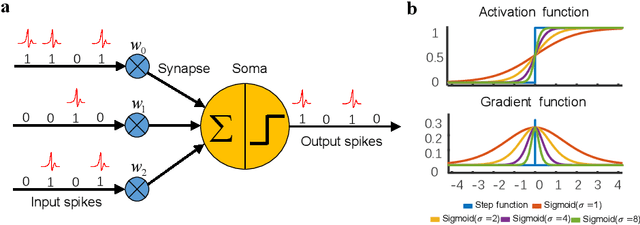
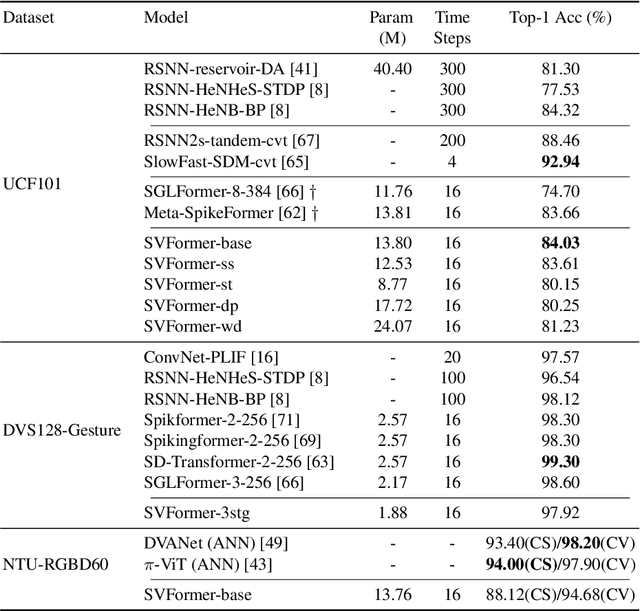
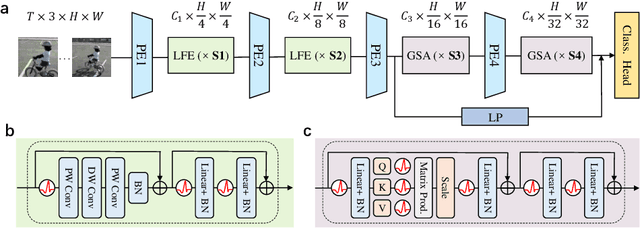

Video action recognition (VAR) plays crucial roles in various domains such as surveillance, healthcare, and industrial automation, making it highly significant for the society. Consequently, it has long been a research spot in the computer vision field. As artificial neural networks (ANNs) are flourishing, convolution neural networks (CNNs), including 2D-CNNs and 3D-CNNs, as well as variants of the vision transformer (ViT), have shown impressive performance on VAR. However, they usually demand huge computational cost due to the large data volume and heavy information redundancy introduced by the temporal dimension. To address this challenge, some researchers have turned to brain-inspired spiking neural networks (SNNs), such as recurrent SNNs and ANN-converted SNNs, leveraging their inherent temporal dynamics and energy efficiency. Yet, current SNNs for VAR also encounter limitations, such as nontrivial input preprocessing, intricate network construction/training, and the need for repetitive processing of the same video clip, hindering their practical deployment. In this study, we innovatively propose the directly trained SVFormer (Spiking Video transFormer) for VAR. SVFormer integrates local feature extraction, global self-attention, and the intrinsic dynamics, sparsity, and spike-driven nature of SNNs, to efficiently and effectively extract spatio-temporal features. We evaluate SVFormer on two RGB datasets (UCF101, NTU-RGBD60) and one neuromorphic dataset (DVS128-Gesture), demonstrating comparable performance to the mainstream models in a more efficient way. Notably, SVFormer achieves a top-1 accuracy of 84.03% with ultra-low power consumption (21 mJ/video) on UCF101, which is state-of-the-art among directly trained deep SNNs, showcasing significant advantages over prior models.
EvaGaussians: Event Stream Assisted Gaussian Splatting from Blurry Images
May 29, 2024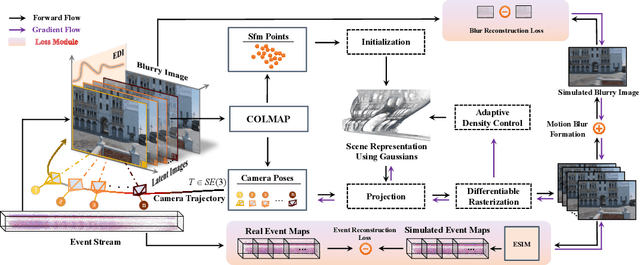


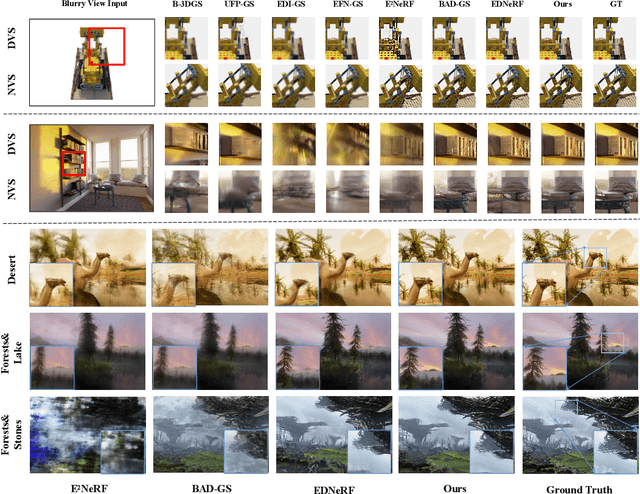
3D Gaussian Splatting (3D-GS) has demonstrated exceptional capabilities in 3D scene reconstruction and novel view synthesis. However, its training heavily depends on high-quality, sharp images and accurate camera poses. Fulfilling these requirements can be challenging in non-ideal real-world scenarios, where motion-blurred images are commonly encountered in high-speed moving cameras or low-light environments that require long exposure times. To address these challenges, we introduce Event Stream Assisted Gaussian Splatting (EvaGaussians), a novel approach that integrates event streams captured by an event camera to assist in reconstructing high-quality 3D-GS from blurry images. Capitalizing on the high temporal resolution and dynamic range offered by the event camera, we leverage the event streams to explicitly model the formation process of motion-blurred images and guide the deblurring reconstruction of 3D-GS. By jointly optimizing the 3D-GS parameters and recovering camera motion trajectories during the exposure time, our method can robustly facilitate the acquisition of high-fidelity novel views with intricate texture details. We comprehensively evaluated our method and compared it with previous state-of-the-art deblurring rendering methods. Both qualitative and quantitative comparisons demonstrate that our method surpasses existing techniques in restoring fine details from blurry images and producing high-fidelity novel views.
High-Performance Temporal Reversible Spiking Neural Networks with $O(L)$ Training Memory and $O(1)$ Inference Cost
May 26, 2024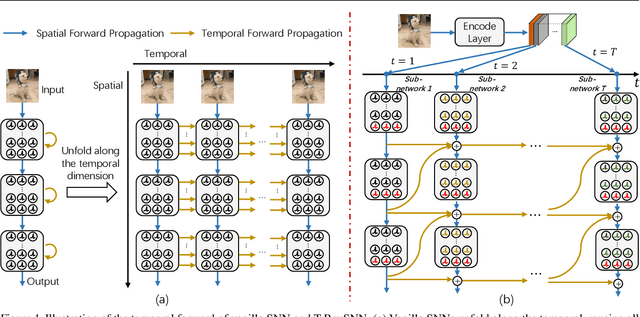
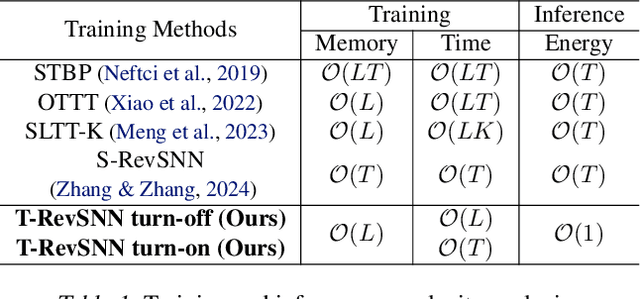

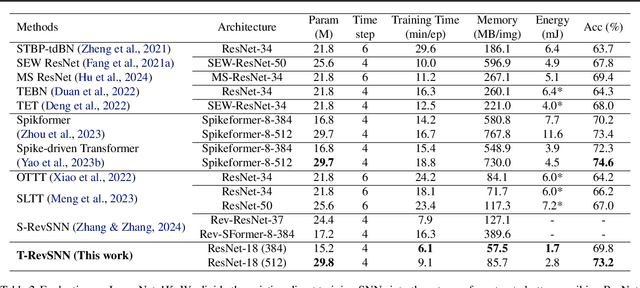
Multi-timestep simulation of brain-inspired Spiking Neural Networks (SNNs) boost memory requirements during training and increase inference energy cost. Current training methods cannot simultaneously solve both training and inference dilemmas. This work proposes a novel Temporal Reversible architecture for SNNs (T-RevSNN) to jointly address the training and inference challenges by altering the forward propagation of SNNs. We turn off the temporal dynamics of most spiking neurons and design multi-level temporal reversible interactions at temporal turn-on spiking neurons, resulting in a $O(L)$ training memory. Combined with the temporal reversible nature, we redesign the input encoding and network organization of SNNs to achieve $O(1)$ inference energy cost. Then, we finely adjust the internal units and residual connections of the basic SNN block to ensure the effectiveness of sparse temporal information interaction. T-RevSNN achieves excellent accuracy on ImageNet, while the memory efficiency, training time acceleration, and inference energy efficiency can be significantly improved by $8.6 \times$, $2.0 \times$, and $1.6 \times$, respectively. This work is expected to break the technical bottleneck of significantly increasing memory cost and training time for large-scale SNNs while maintaining high performance and low inference energy cost. Source code and models are available at: https://github.com/BICLab/T-RevSNN.
Sensitivity Decouple Learning for Image Compression Artifacts Reduction
May 15, 2024With the benefit of deep learning techniques, recent researches have made significant progress in image compression artifacts reduction. Despite their improved performances, prevailing methods only focus on learning a mapping from the compressed image to the original one but ignore the intrinsic attributes of the given compressed images, which greatly harms the performance of downstream parsing tasks. Different from these methods, we propose to decouple the intrinsic attributes into two complementary features for artifacts reduction,ie, the compression-insensitive features to regularize the high-level semantic representations during training and the compression-sensitive features to be aware of the compression degree. To achieve this, we first employ adversarial training to regularize the compressed and original encoded features for retaining high-level semantics, and we then develop the compression quality-aware feature encoder for compression-sensitive features. Based on these dual complementary features, we propose a Dual Awareness Guidance Network (DAGN) to utilize these awareness features as transformation guidance during the decoding phase. In our proposed DAGN, we develop a cross-feature fusion module to maintain the consistency of compression-insensitive features by fusing compression-insensitive features into the artifacts reduction baseline. Our method achieves an average 2.06 dB PSNR gains on BSD500, outperforming state-of-the-art methods, and only requires 29.7 ms to process one image on BSD500. Besides, the experimental results on LIVE1 and LIU4K also demonstrate the efficiency, effectiveness, and superiority of the proposed method in terms of quantitative metrics, visual quality, and downstream machine vision tasks.