 Add to Chrome
 Add to Firefox
 Add to Edge
A Comprehensive Evaluation of Quantization Strategies for Large Language Models
Feb 26, 2024
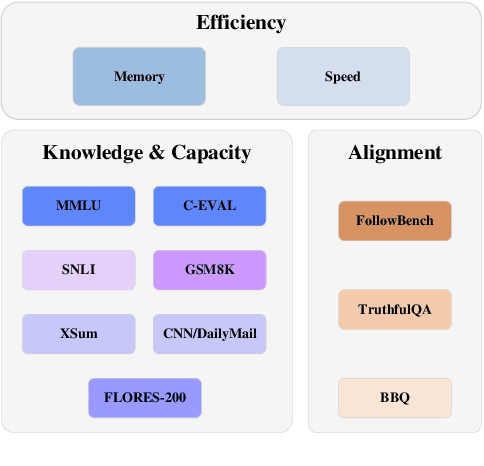
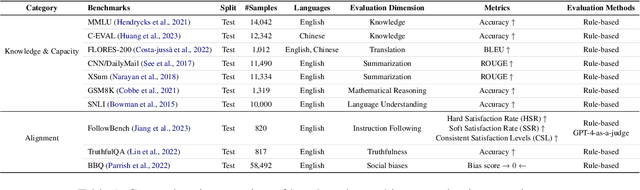
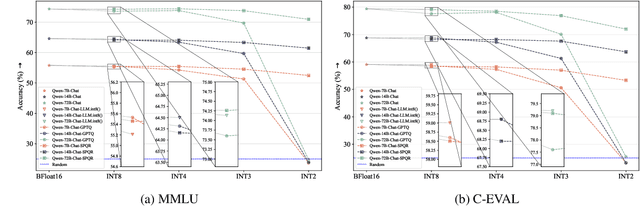
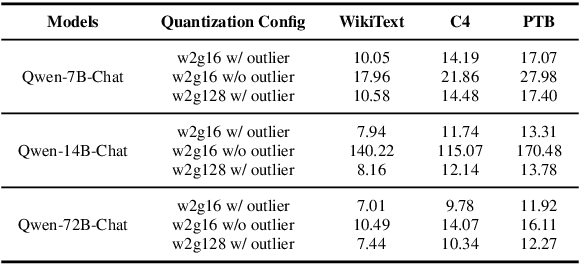
Increasing the number of parameters in large language models (LLMs) usually improves performance in downstream tasks but raises compute and memory costs, making deployment difficult in resource-limited settings. Quantization techniques, which reduce the bits needed for model weights or activations with minimal performance loss, have become popular due to the rise of LLMs. However, most quantization studies use pre-trained LLMs, and the impact of quantization on instruction-tuned LLMs and the relationship between perplexity and benchmark performance of quantized LLMs are not well understood. Evaluation of quantized LLMs is often limited to language modeling and a few classification tasks, leaving their performance on other benchmarks unclear. To address these gaps, we propose a structured evaluation framework consisting of three critical dimensions: (1) knowledge \& capacity, (2) alignment, and (3) efficiency, and conduct extensive experiments across ten diverse benchmarks. Our experimental results indicate that LLMs with 4-bit quantization can retain performance comparable to their non-quantized counterparts, and perplexity can serve as a proxy metric for quantized LLMs on most benchmarks. Furthermore, quantized LLMs with larger parameter scales can outperform smaller LLMs. Despite the memory savings achieved through quantization, it can also slow down the inference speed of LLMs. Consequently, substantial engineering efforts and hardware support are imperative to achieve a balanced optimization of decoding speed and memory consumption in the context of quantized LLMs.

Multi-Constraint Safe RL with Objective Suppression for Safety-Critical Applications
Feb 23, 2024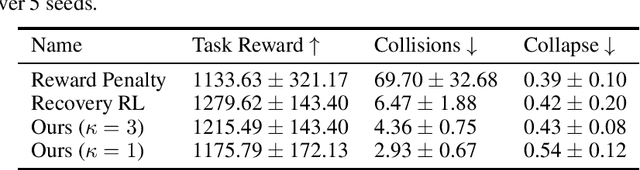

Safe reinforcement learning tasks with multiple constraints are a challenging domain despite being very common in the real world. To address this challenge, we propose Objective Suppression, a novel method that adaptively suppresses the task reward maximizing objectives according to a safety critic. We benchmark Objective Suppression in two multi-constraint safety domains, including an autonomous driving domain where any incorrect behavior can lead to disastrous consequences. Empirically, we demonstrate that our proposed method, when combined with existing safe RL algorithms, can match the task reward achieved by our baselines with significantly fewer constraint violations.
Analysing The Impact of Sequence Composition on Language Model Pre-Training
Feb 21, 2024
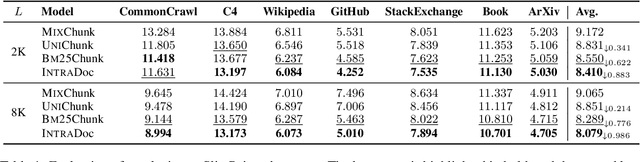
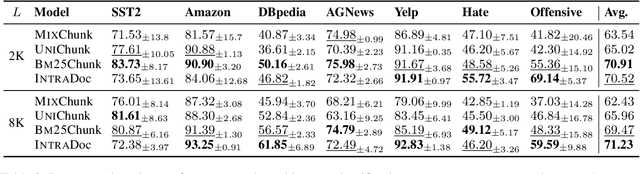
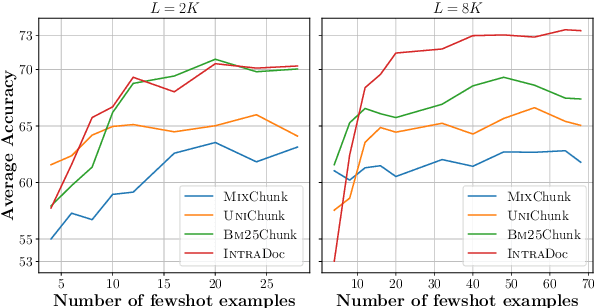
Most language model pre-training frameworks concatenate multiple documents into fixed-length sequences and use causal masking to compute the likelihood of each token given its context; this strategy is widely adopted due to its simplicity and efficiency. However, to this day, the influence of the pre-training sequence composition strategy on the generalisation properties of the model remains under-explored. In this work, we find that applying causal masking can lead to the inclusion of distracting information from previous documents during pre-training, which negatively impacts the performance of the models on language modelling and downstream tasks. In intra-document causal masking, the likelihood of each token is only conditioned on the previous tokens in the same document, eliminating potential distracting information from previous documents and significantly improving performance. Furthermore, we find that concatenating related documents can reduce some potential distractions during pre-training, and our proposed efficient retrieval-based sequence construction method, BM25Chunk, can improve in-context learning (+11.6\%), knowledge memorisation (+9.8\%), and context utilisation (+7.2\%) abilities of language models without sacrificing efficiency.
AICAttack: Adversarial Image Captioning Attack with Attention-Based Optimization
Feb 20, 2024Recent advances in deep learning research have shown remarkable achievements across many tasks in computer vision (CV) and natural language processing (NLP). At the intersection of CV and NLP is the problem of image captioning, where the related models' robustness against adversarial attacks has not been well studied. In this paper, we present a novel adversarial attack strategy, which we call AICAttack (Attention-based Image Captioning Attack), designed to attack image captioning models through subtle perturbations on images. Operating within a black-box attack scenario, our algorithm requires no access to the target model's architecture, parameters, or gradient information. We introduce an attention-based candidate selection mechanism that identifies the optimal pixels to attack, followed by Differential Evolution (DE) for perturbing pixels' RGB values. We demonstrate AICAttack's effectiveness through extensive experiments on benchmark datasets with multiple victim models. The experimental results demonstrate that our method surpasses current leading-edge techniques by effectively distributing the alignment and semantics of words in the output.
ChemLLM: A Chemical Large Language Model
Feb 10, 2024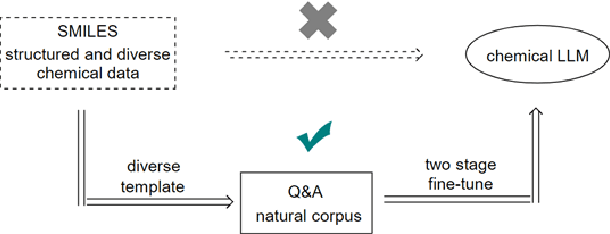

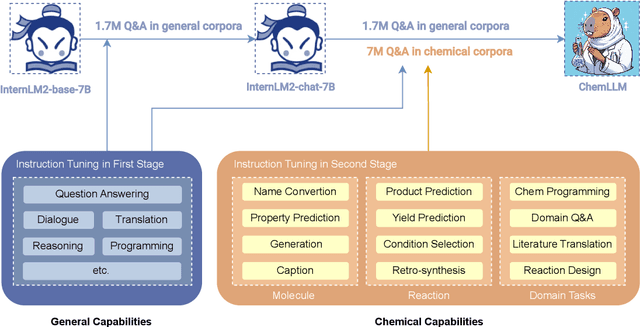

Large language models (LLMs) have made impressive progress in chemistry applications, including molecular property prediction, molecular generation, experimental protocol design, etc. However, the community lacks a dialogue-based model specifically designed for chemistry. The challenge arises from the fact that most chemical data and scientific knowledge are primarily stored in structured databases, and the direct use of these structured data compromises the model's ability to maintain coherent dialogue. To tackle this issue, we develop a novel template-based instruction construction method that transforms structured knowledge into plain dialogue, making it suitable for language model training. By leveraging this approach, we develop ChemLLM, the first large language model dedicated to chemistry, capable of performing various tasks across chemical disciplines with smooth dialogue interaction. ChemLLM beats GPT-3.5 on all three principal tasks in chemistry, i.e., name conversion, molecular caption, and reaction prediction, and surpasses GPT-4 on two of them. Remarkably, ChemLLM also shows exceptional adaptability to related mathematical and physical tasks despite being trained mainly on chemical-centric corpora. Furthermore, ChemLLM demonstrates proficiency in specialized NLP tasks within chemistry, such as literature translation and cheminformatic programming. ChemLLM opens up a new avenue for exploration within chemical studies, while our method of integrating structured chemical knowledge into dialogue systems sets a new frontier for developing LLMs across various scientific fields. Codes, Datasets, and Model weights are publicly accessible at hf.co/AI4Chem/ChemLLM-7B-Chat.
Poisson Process for Bayesian Optimization
Feb 05, 2024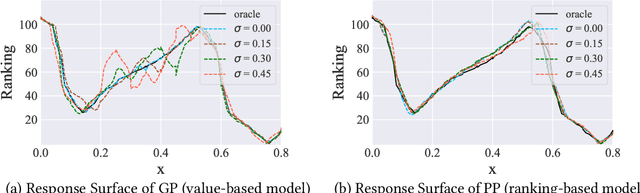
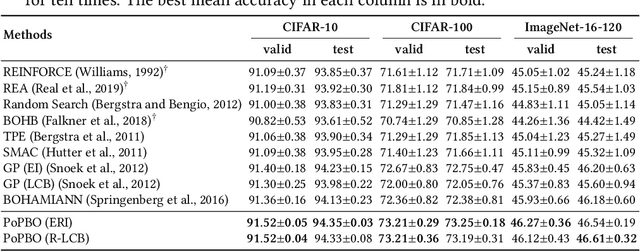
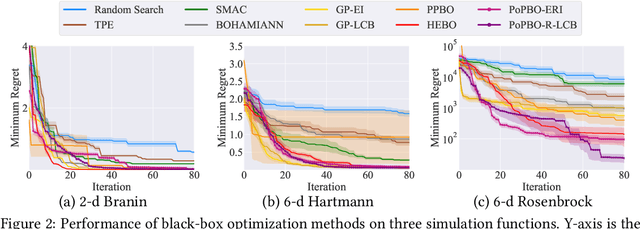
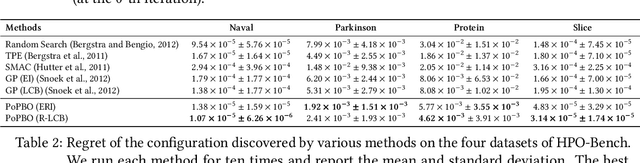
BayesianOptimization(BO) is a sample-efficient black-box optimizer, and extensive methods have been proposed to build the absolute function response of the black-box function through a probabilistic surrogate model, including Tree-structured Parzen Estimator (TPE), random forest (SMAC), and Gaussian process (GP). However, few methods have been explored to estimate the relative rankings of candidates, which can be more robust to noise and have better practicality than absolute function responses, especially when the function responses are intractable but preferences can be acquired. To this end, we propose a novel ranking-based surrogate model based on the Poisson process and introduce an efficient BO framework, namely Poisson Process Bayesian Optimization (PoPBO). Two tailored acquisition functions are further derived from classic LCB and EI to accommodate it. Compared to the classic GP-BO method, our PoPBO has lower computation costs and better robustness to noise, which is verified by abundant experiments. The results on both simulated and real-world benchmarks, including hyperparameter optimization (HPO) and neural architecture search (NAS), show the effectiveness of PoPBO.
Enhancing Human Experience in Human-Agent Collaboration: A Human-Centered Modeling Approach Based on Positive Human Gain
Jan 28, 2024
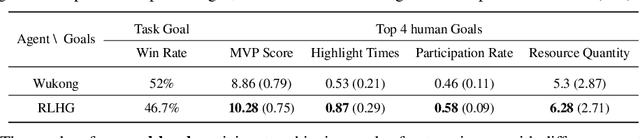
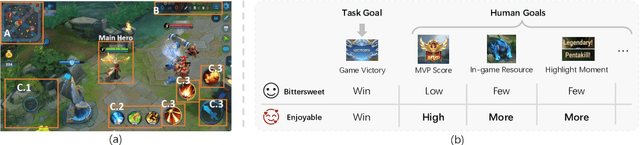

Existing game AI research mainly focuses on enhancing agents' abilities to win games, but this does not inherently make humans have a better experience when collaborating with these agents. For example, agents may dominate the collaboration and exhibit unintended or detrimental behaviors, leading to poor experiences for their human partners. In other words, most game AI agents are modeled in a "self-centered" manner. In this paper, we propose a "human-centered" modeling scheme for collaborative agents that aims to enhance the experience of humans. Specifically, we model the experience of humans as the goals they expect to achieve during the task. We expect that agents should learn to enhance the extent to which humans achieve these goals while maintaining agents' original abilities (e.g., winning games). To achieve this, we propose the Reinforcement Learning from Human Gain (RLHG) approach. The RLHG approach introduces a "baseline", which corresponds to the extent to which humans primitively achieve their goals, and encourages agents to learn behaviors that can effectively enhance humans in achieving their goals better. We evaluate the RLHG agent in the popular Multi-player Online Battle Arena (MOBA) game, Honor of Kings, by conducting real-world human-agent tests. Both objective performance and subjective preference results show that the RLHG agent provides participants better gaming experience.
A Systematic Literature Review on Explainability for Machine/Deep Learning-based Software Engineering Research
Jan 26, 2024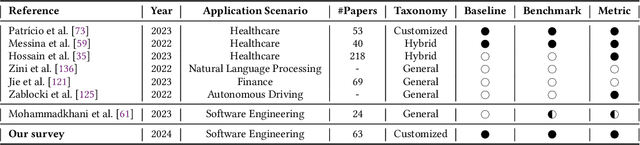

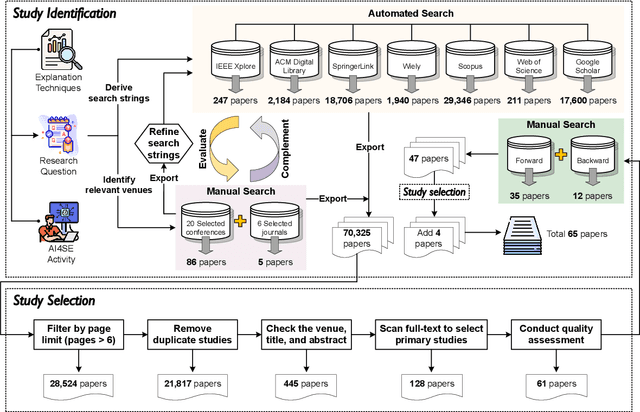
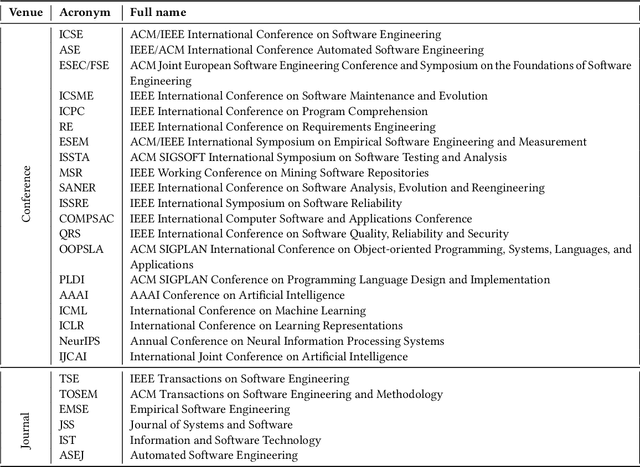
The remarkable achievements of Artificial Intelligence (AI) algorithms, particularly in Machine Learning (ML) and Deep Learning (DL), have fueled their extensive deployment across multiple sectors, including Software Engineering (SE). However, due to their black-box nature, these promising AI-driven SE models are still far from being deployed in practice. This lack of explainability poses unwanted risks for their applications in critical tasks, such as vulnerability detection, where decision-making transparency is of paramount importance. This paper endeavors to elucidate this interdisciplinary domain by presenting a systematic literature review of approaches that aim to improve the explainability of AI models within the context of SE. The review canvasses work appearing in the most prominent SE & AI conferences and journals, and spans 63 papers across 21 unique SE tasks. Based on three key Research Questions (RQs), we aim to (1) summarize the SE tasks where XAI techniques have shown success to date; (2) classify and analyze different XAI techniques; and (3) investigate existing evaluation approaches. Based on our findings, we identified a set of challenges remaining to be addressed in existing studies, together with a roadmap highlighting potential opportunities we deemed appropriate and important for future work.
Inducing High Energy-Latency of Large Vision-Language Models with Verbose Images
Jan 20, 2024Large vision-language models (VLMs) such as GPT-4 have achieved exceptional performance across various multi-modal tasks. However, the deployment of VLMs necessitates substantial energy consumption and computational resources. Once attackers maliciously induce high energy consumption and latency time (energy-latency cost) during inference of VLMs, it will exhaust computational resources. In this paper, we explore this attack surface about availability of VLMs and aim to induce high energy-latency cost during inference of VLMs. We find that high energy-latency cost during inference of VLMs can be manipulated by maximizing the length of generated sequences. To this end, we propose verbose images, with the goal of crafting an imperceptible perturbation to induce VLMs to generate long sentences during inference. Concretely, we design three loss objectives. First, a loss is proposed to delay the occurrence of end-of-sequence (EOS) token, where EOS token is a signal for VLMs to stop generating further tokens. Moreover, an uncertainty loss and a token diversity loss are proposed to increase the uncertainty over each generated token and the diversity among all tokens of the whole generated sequence, respectively, which can break output dependency at token-level and sequence-level. Furthermore, a temporal weight adjustment algorithm is proposed, which can effectively balance these losses. Extensive experiments demonstrate that our verbose images can increase the length of generated sequences by 7.87 times and 8.56 times compared to original images on MS-COCO and ImageNet datasets, which presents potential challenges for various applications. Our code is available at https://github.com/KuofengGao/Verbose_Images.
The Radiation Oncology NLP Database
Jan 19, 2024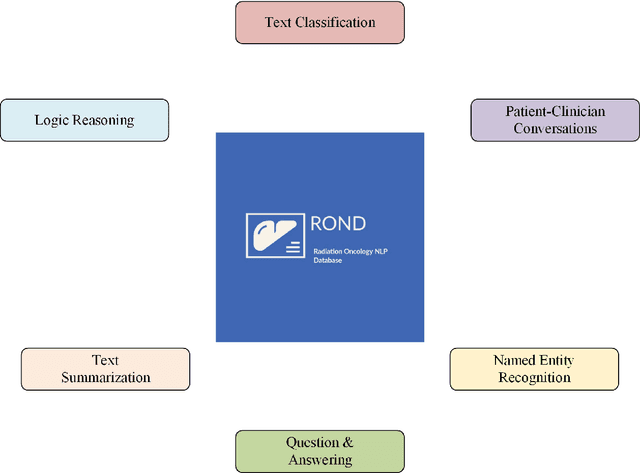
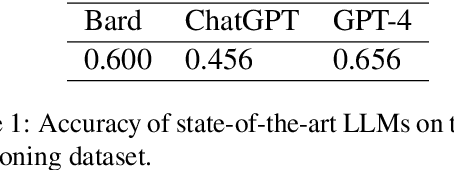
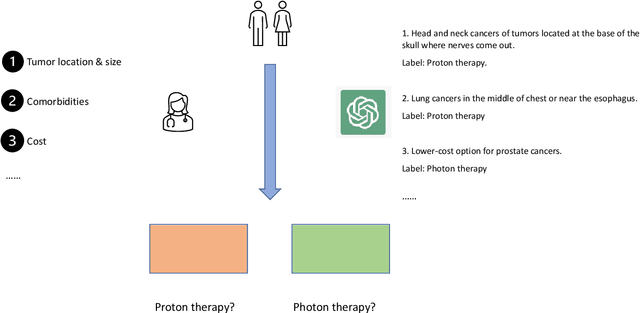
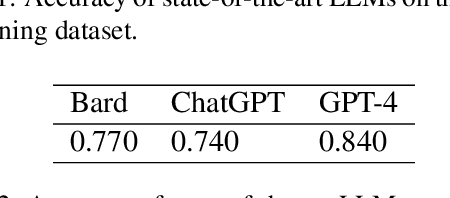
We present the Radiation Oncology NLP Database (ROND), the first dedicated Natural Language Processing (NLP) dataset for radiation oncology, an important medical specialty that has received limited attention from the NLP community in the past. With the advent of Artificial General Intelligence (AGI), there is an increasing need for specialized datasets and benchmarks to facilitate research and development. ROND is specifically designed to address this gap in the domain of radiation oncology, a field that offers many opportunities for NLP exploration. It encompasses various NLP tasks including Logic Reasoning, Text Classification, Named Entity Recognition (NER), Question Answering (QA), Text Summarization, and Patient-Clinician Conversations, each with a distinct focus on radiation oncology concepts and application cases. In addition, we have developed an instruction-tuning dataset consisting of over 20k instruction pairs (based on ROND) and trained a large language model, CancerChat. This serves to demonstrate the potential of instruction-tuning large language models within a highly-specialized medical domain. The evaluation results in this study could serve as baseline results for future research. ROND aims to stimulate advancements in radiation oncology and clinical NLP by offering a platform for testing and improving algorithms and models in a domain-specific context. The ROND dataset is a joint effort of multiple U.S. health institutions. The data is available at https://github.com/zl-liu/Radiation-Oncology-NLP-Database.