 Add to Chrome
 Add to Firefox
 Add to Edge
PEAM: Parametric Embodied Agent Memory through Contrastive Internalization of Experience in Minecraft
May 26, 2026
We present PEAM, a Parametric Embodied Agent Memory framework in Minecraft that transforms agent memory from inference-time retrieval into parameter-resident skills internalized through experience. PEAM pairs a slow deliberative LLM for open-ended reasoning with a fast parametric module for reflexive execution of consolidated skills. The fast module is a multimodal Mixture-of-Experts LoRA architecture with per-category physically isolated adapters, enabling parameter-level continual learning without catastrophic forgetting. We treat failure as a first-class training signal: failure--correction trajectory pairs are internalized through a joint behavioral-cloning and contrastive objective, so the agent learns not only what succeeds but also how corrected actions differ from failed ones. To govern consolidation, PEAM introduces a parameterization-worthiness score for deciding which experience should be internalized, and a scale-free self-triggered consolidation mechanism for deciding when to internalize without task-specific hand-tuned thresholds, making the agent self-evolving as the trigger transfers across task distributions without re-tuning. Experiments in Minecraft show that PEAM improves long-horizon task performance, mitigates forgetting on previously consolidated skills, and improves parametric-versus-retrieval efficiency over retrieval-based embodied agents and parametric memory variants.

Can Segmentation Models Understand the World? Towards Proactive Affordance Reasoning via Visual Chain-of-Thought
May 26, 2026Recent segmentation models couple large language models (LLMs) with mask decoders to ground complex language expressions into masks, yet their instructions remain target-referential: they describe, constrain, or imply the region to be segmented. However, in real-world embodied interaction, human instructions are often at the intent-level, which includes the desired outcome without naming the region that enables it. To bridge this gap, we introduce SegWorld, where the model reasons about the scene through a multi-level visual chain-of-thought (CoT) before committing to a mask. Before receiving any instructions, it proactively observes the scene, describing visible objects and inferring plausible events they may support. Given an instruction, it continues the chain: from the object relevant to the intent, through the action that satisfies it, to the physical interaction site, the object part that affords the action. We formalize SegWorld as probabilistic inference, in which proactive observation supplies a linguistic scene context that improves mask prediction when instructions are given at the level of intent. We construct an intent-to-part benchmark for evaluating affordance-bearing part segmentation from high-level goals. Experiments show SegWorld matches instruction-driven baselines on target-referential instructions and improves substantially on intent-level ones.
SplitAvatar: One-shot Head Avatar with Autoregressive Gaussian Splitting
May 25, 20263D Gaussian Splatting (3DGS) provides an efficient method for high-quality scene reconstruction using anisotropic Gaussians. Recently, 3DGS-based methods have significantly improved the rendering quality of human avatars while enabling real-time performance. However, existing methods suffer from a magnitude mismatch in the number of Gaussians generated by image-based and 3DMM-based approaches. This discrepancy results in reconstructed expressions that lack fine-grained detail. In this paper, we introduce a novel method for reconstructing an animatable head avatar from a single image. We propose a Graph splitting network to progressively generate Gaussians from coarse to fine using an autoregressive architecture. To address the graph inconsistency caused by split Gaussians, we employ a mesh topology extension method to align the GNN's connectivity with the increased Gaussian count. Furthermore, we introduce a novel density control method that includes a gating mechanism that generates soft masks for Gaussians, preventing over-densification after the splitting operation. This allows for dynamic control over Gaussian density across different facial regions. For smooth and rapid training, we employ a delayed filtering strategy to avoid re-computing the graph topology during training. Experimental results demonstrate that our autoregressive structure effectively improves expression representation ability by progressively splitting Gaussians. This process, enabled by the GNN-guided splitting, synthesizes more precise facial details and achieves higher reconstruction quality.
LumiVideo: An Intelligent Agentic System for Video Color Grading
Apr 02, 2026Video color grading is a critical post-production process that transforms flat, log-encoded raw footage into emotionally resonant cinematic visuals. Existing automated methods act as static, black-box executors that directly output edited pixels, lacking both interpretability and the iterative control required by professionals. We introduce LumiVideo, an agentic system that mimics the cognitive workflow of professional colorists through four stages: Perception, Reasoning, Execution, and Reflection. Given only raw log video, LumiVideo autonomously produces a cinematic base grade by analyzing the scene's physical lighting and semantic content. Its Reasoning engine synergizes an LLM's internalized cinematic knowledge with a Retrieval-Augmented Generation (RAG) framework via a Tree of Thoughts (ToT) search to navigate the non-linear color parameter space. Rather than generating pixels, the system compiles the deduced parameters into industry-standard ASC-CDL configurations and a globally consistent 3D LUT, analytically guaranteeing temporal consistency. An optional Reflection loop then allows creators to refine the result via natural language feedback. We further introduce LumiGrade, the first log-encoded video benchmark for evaluating automated grading. Experiments show that LumiVideo approaches human expert quality in fully automatic mode while enabling precise iterative control when directed.
FunduSAM: A Specialized Deep Learning Model for Enhanced Optic Disc and Cup Segmentation in Fundus Images
Feb 10, 2025The Segment Anything Model (SAM) has gained popularity as a versatile image segmentation method, thanks to its strong generalization capabilities across various domains. However, when applied to optic disc (OD) and optic cup (OC) segmentation tasks, SAM encounters challenges due to the complex structures, low contrast, and blurred boundaries typical of fundus images, leading to suboptimal performance. To overcome these challenges, we introduce a novel model, FunduSAM, which incorporates several Adapters into SAM to create a deep network specifically designed for OD and OC segmentation. The FunduSAM utilizes Adapter into each transformer block after encoder for parameter fine-tuning (PEFT). It enhances SAM's feature extraction capabilities by designing a Convolutional Block Attention Module (CBAM), addressing issues related to blurred boundaries and low contrast. Given the unique requirements of OD and OC segmentation, polar transformation is used to convert the original fundus OD images into a format better suited for training and evaluating FunduSAM. A joint loss is used to achieve structure preservation between the OD and OC, while accurate segmentation. Extensive experiments on the REFUGE dataset, comprising 1,200 fundus images, demonstrate the superior performance of FunduSAM compared to five mainstream approaches.
Goal-Driven Reasoning in DatalogMTL with Magic Sets
Dec 10, 2024

DatalogMTL is a powerful rule-based language for temporal reasoning. Due to its high expressive power and flexible modeling capabilities, it is suitable for a wide range of applications, including tasks from industrial and financial sectors. However, due its high computational complexity, practical reasoning in DatalogMTL is highly challenging. To address this difficulty, we introduce a new reasoning method for DatalogMTL which exploits the magic sets technique -- a rewriting approach developed for (non-temporal) Datalog to simulate top-down evaluation with bottom-up reasoning. We implement this approach and evaluate it on several publicly available benchmarks, showing that the proposed approach significantly and consistently outperforms performance of the state-of-the-art reasoning techniques.
Accelerate Neural Subspace-Based Reduced-Order Solver of Deformable Simulation by Lipschitz Optimization
Sep 05, 2024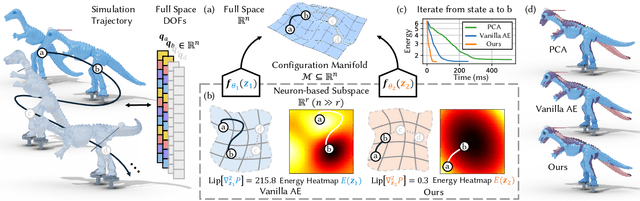
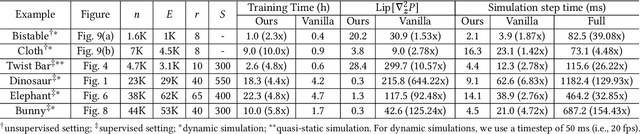
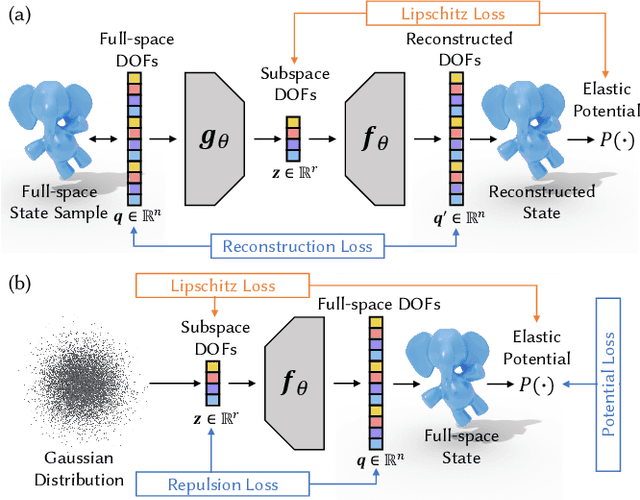
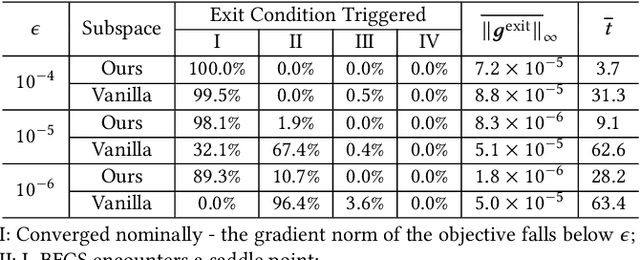
Reduced-order simulation is an emerging method for accelerating physical simulations with high DOFs, and recently developed neural-network-based methods with nonlinear subspaces have been proven effective in diverse applications as more concise subspaces can be detected. However, the complexity and landscape of simulation objectives within the subspace have not been optimized, which leaves room for enhancement of the convergence speed. This work focuses on this point by proposing a general method for finding optimized subspace mappings, enabling further acceleration of neural reduced-order simulations while capturing comprehensive representations of the configuration manifolds. We achieve this by optimizing the Lipschitz energy of the elasticity term in the simulation objective, and incorporating the cubature approximation into the training process to manage the high memory and time demands associated with optimizing the newly introduced energy. Our method is versatile and applicable to both supervised and unsupervised settings for optimizing the parameterizations of the configuration manifolds. We demonstrate the effectiveness of our approach through general cases in both quasi-static and dynamics simulations. Our method achieves acceleration factors of up to 6.83 while consistently preserving comparable simulation accuracy in various cases, including large twisting, bending, and rotational deformations with collision handling. This novel approach offers significant potential for accelerating physical simulations, and can be a good add-on to existing neural-network-based solutions in modeling complex deformable objects.
Multiple-Crop Human Mesh Recovery with Contrastive Learning and Camera Consistency in A Single Image
Feb 03, 2024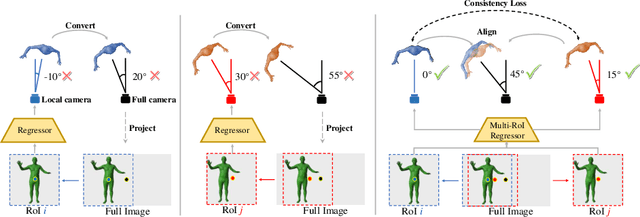


We tackle the problem of single-image Human Mesh Recovery (HMR). Previous approaches are mostly based on a single crop. In this paper, we shift the single-crop HMR to a novel multiple-crop HMR paradigm. Cropping a human from image multiple times by shifting and scaling the original bounding box is feasible in practice, easy to implement, and incurs neglectable cost, but immediately enriches available visual details. With multiple crops as input, we manage to leverage the relation among these crops to extract discriminative features and reduce camera ambiguity. Specifically, (1) we incorporate a contrastive learning scheme to enhance the similarity between features extracted from crops of the same human. (2) We also propose a crop-aware fusion scheme to fuse the features of multiple crops for regressing the target mesh. (3) We compute local cameras for all the input crops and build a camera-consistency loss between the local cameras, which reward us with less ambiguous cameras. Based on the above innovations, our proposed method outperforms previous approaches as demonstrated by the extensive experiments.
Interleaving One-Class and Weakly-Supervised Models with Adaptive Thresholding for Unsupervised Video Anomaly Detection
Jan 24, 2024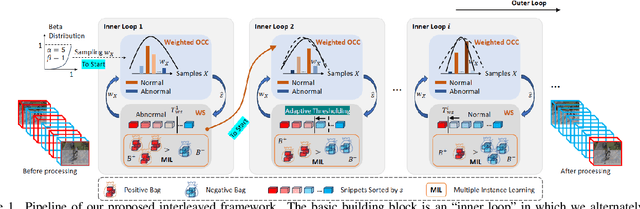
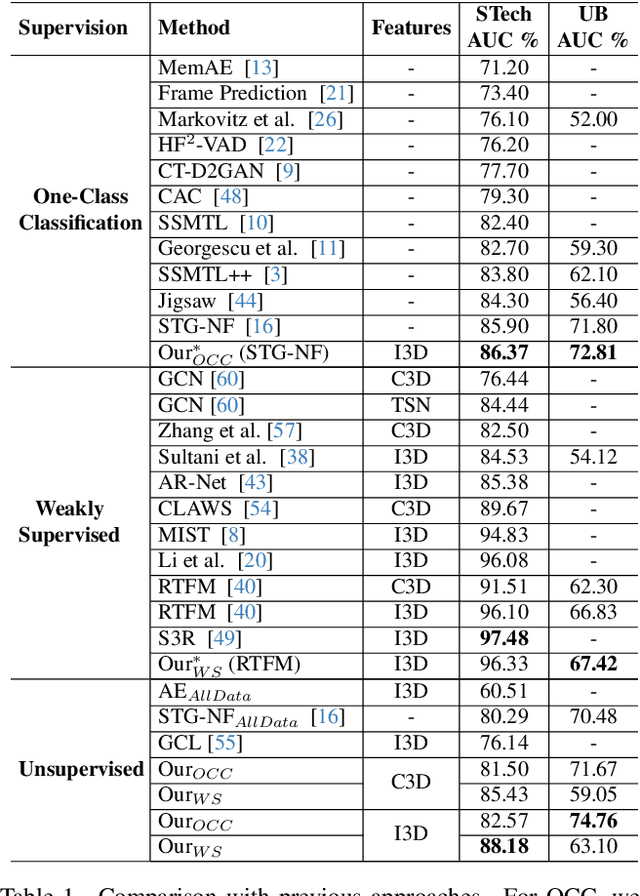
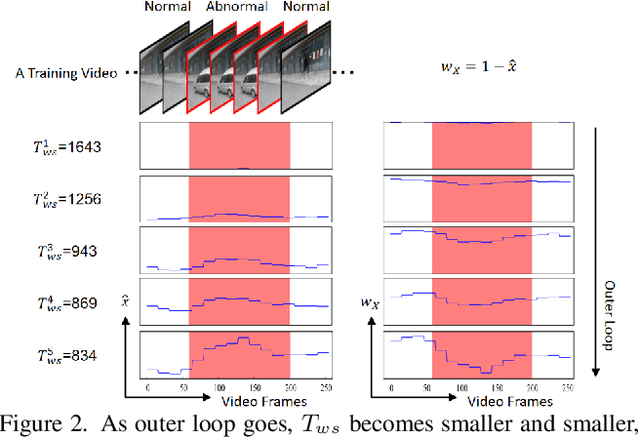

Without human annotations, a typical Unsupervised Video Anomaly Detection (UVAD) method needs to train two models that generate pseudo labels for each other. In previous work, the two models are closely entangled with each other, and it is not known how to upgrade their method without modifying their training framework significantly. Second, previous work usually adopts fixed thresholding to obtain pseudo labels, however the user-specified threshold is not reliable which inevitably introduces errors into the training process. To alleviate these two problems, we propose a novel interleaved framework that alternately trains a One-Class Classification (OCC) model and a Weakly-Supervised (WS) model for UVAD. The OCC or WS models in our method can be easily replaced with other OCC or WS models, which facilitates our method to upgrade with the most recent developments in both fields. For handling the fixed thresholding problem, we break through the conventional cognitive boundary and propose a weighted OCC model that can be trained on both normal and abnormal data. We also propose an adaptive mechanism for automatically finding the optimal threshold for the WS model in a loose to strict manner. Experiments demonstrate that the proposed UVAD method outperforms previous approaches.
The Radiation Oncology NLP Database
Jan 19, 2024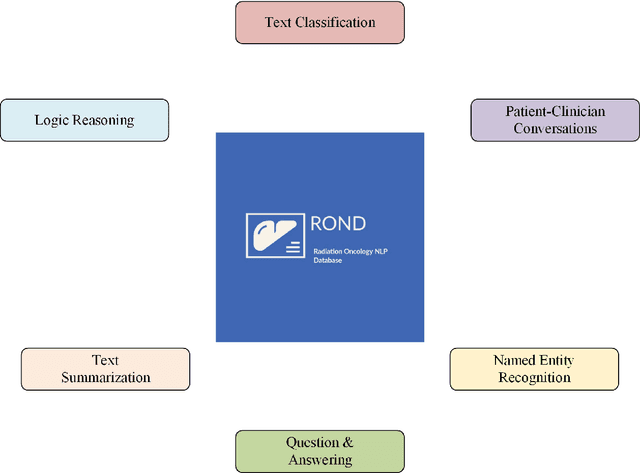
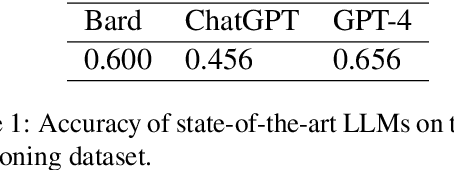
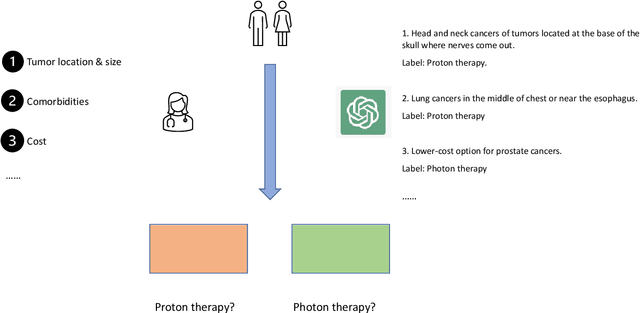
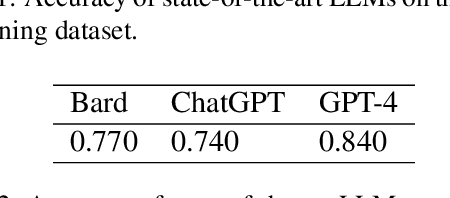
We present the Radiation Oncology NLP Database (ROND), the first dedicated Natural Language Processing (NLP) dataset for radiation oncology, an important medical specialty that has received limited attention from the NLP community in the past. With the advent of Artificial General Intelligence (AGI), there is an increasing need for specialized datasets and benchmarks to facilitate research and development. ROND is specifically designed to address this gap in the domain of radiation oncology, a field that offers many opportunities for NLP exploration. It encompasses various NLP tasks including Logic Reasoning, Text Classification, Named Entity Recognition (NER), Question Answering (QA), Text Summarization, and Patient-Clinician Conversations, each with a distinct focus on radiation oncology concepts and application cases. In addition, we have developed an instruction-tuning dataset consisting of over 20k instruction pairs (based on ROND) and trained a large language model, CancerChat. This serves to demonstrate the potential of instruction-tuning large language models within a highly-specialized medical domain. The evaluation results in this study could serve as baseline results for future research. ROND aims to stimulate advancements in radiation oncology and clinical NLP by offering a platform for testing and improving algorithms and models in a domain-specific context. The ROND dataset is a joint effort of multiple U.S. health institutions. The data is available at https://github.com/zl-liu/Radiation-Oncology-NLP-Database.