 Add to Chrome
 Add to Firefox
 Add to Edge
Intelligent Reflecting Surfaces for Integrated Sensing and Communications: A Survey
Nov 14, 2025
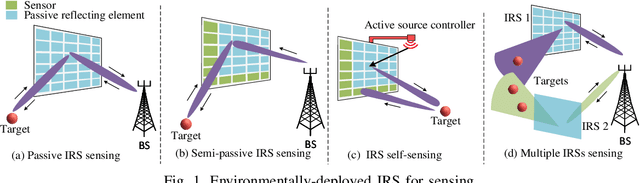

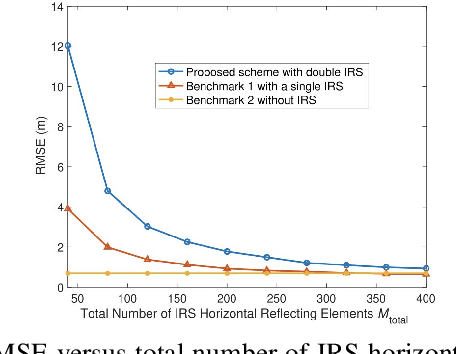
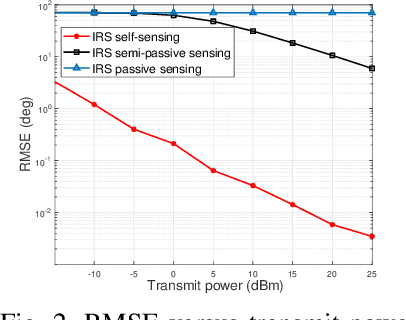
The rapid development of sixth-generation (6G) wireless networks requires seamless integration of communication and sensing to support ubiquitous intelligence and real-time, high-reliability applications. Integrated sensing and communication (ISAC) has emerged as a key solution for achieving this convergence, offering joint utilization of spectral, hardware, and computing resources. However, realizing high-performance ISAC remains challenging due to environmental line-of-sight (LoS) blockage, limited spatial resolution, and the inherent coverage asymmetry and resource coupling between sensing and communication. Intelligent reflecting surfaces (IRSs), featuring low-cost, energy-efficient, and programmable electromagnetic reconfiguration, provide a promising solution to overcome these limitations. This article presents a comprehensive overview of IRS-aided wireless sensing and ISAC technologies, including IRS architectures, target detection and estimation techniques, beamforming designs, and performance metrics. It further explores IRS-enabled new opportunities for more efficient performance balancing, coexistence, and networking in ISAC systems, focuses on current design bottlenecks, and outlines future research directions. This article aims to offer a unified design framework that guides the development of practical and scalable IRS-aided ISAC systems for the next-generation wireless network.

MeCaMIL: Causality-Aware Multiple Instance Learning for Fair and Interpretable Whole Slide Image Diagnosis
Nov 14, 2025Multiple instance learning (MIL) has emerged as the dominant paradigm for whole slide image (WSI) analysis in computational pathology, achieving strong diagnostic performance through patch-level feature aggregation. However, existing MIL methods face critical limitations: (1) they rely on attention mechanisms that lack causal interpretability, and (2) they fail to integrate patient demographics (age, gender, race), leading to fairness concerns across diverse populations. These shortcomings hinder clinical translation, where algorithmic bias can exacerbate health disparities. We introduce \textbf{MeCaMIL}, a causality-aware MIL framework that explicitly models demographic confounders through structured causal graphs. Unlike prior approaches treating demographics as auxiliary features, MeCaMIL employs principled causal inference -- leveraging do-calculus and collider structures -- to disentangle disease-relevant signals from spurious demographic correlations. Extensive evaluation on three benchmarks demonstrates state-of-the-art performance across CAMELYON16 (ACC/AUC/F1: 0.939/0.983/0.946), TCGA-Lung (0.935/0.979/0.931), and TCGA-Multi (0.977/0.993/0.970, five cancer types). Critically, MeCaMIL achieves superior fairness -- demographic disparity variance drops by over 65% relative reduction on average across attributes, with notable improvements for underserved populations. The framework generalizes to survival prediction (mean C-index: 0.653, +0.017 over best baseline across five cancer types). Ablation studies confirm causal graph structure is essential -- alternative designs yield 0.048 lower accuracy and 4.2x times worse fairness. These results establish MeCaMIL as a principled framework for fair, interpretable, and clinically actionable AI in digital pathology. Code will be released upon acceptance.
Rotatable IRS Aided Wireless Communication
Nov 13, 2025Rotatable intelligent reflecting surface (IRS) introduces a new spatial degree of freedom (DoF) by dynamically adjusting orientations without the need of changing its elements' positions in real time. To unleash the full potential of rotatable IRSs for wireless communications, this paper investigates the joint optimization of IRS rotation angles to maximize the minimum expected signal-to-noise ratio (SNR) over all locations within a given target area. We first propose an angle-dependent channel model that accurately characterizes the reception and reflection of each IRS element. Different from the conventional cosine-law assumption, the proposed model captures the practical electromagnetic characteristics of the IRS, including the effective reception area and reflection efficiency. For the single target location case, a particle swarm optimization (PSO)-based algorithm is developed to solve the SNR maximization problem, and a closed-form expression for a near-optimal solution is derived to provide useful insights. For the general area coverage enhancement case, the optimal rotation is obtained through a two-loop PSO-based iterative algorithm with null-point detection. In this algorithm, the outer loop updates the global rotation angles to maximize the minimum SNR over the target area, whereas the inner loop evaluates the SNR distribution within the area to identify the location corresponding to the minimum SNR through null-point detection. Numerical results demonstrate significant SNR improvement achieved by the proposed rotatable IRS design over various benchmark schemes under different system setups.
Flexible Concept Bottleneck Model
Nov 10, 2025Concept bottleneck models (CBMs) improve neural network interpretability by introducing an intermediate layer that maps human-understandable concepts to predictions. Recent work has explored the use of vision-language models (VLMs) to automate concept selection and annotation. However, existing VLM-based CBMs typically require full model retraining when new concepts are involved, which limits their adaptability and flexibility in real-world scenarios, especially considering the rapid evolution of vision-language foundation models. To address these issues, we propose Flexible Concept Bottleneck Model (FCBM), which supports dynamic concept adaptation, including complete replacement of the original concept set. Specifically, we design a hypernetwork that generates prediction weights based on concept embeddings, allowing seamless integration of new concepts without retraining the entire model. In addition, we introduce a modified sparsemax module with a learnable temperature parameter that dynamically selects the most relevant concepts, enabling the model to focus on the most informative features. Extensive experiments on five public benchmarks demonstrate that our method achieves accuracy comparable to state-of-the-art baselines with a similar number of effective concepts. Moreover, the model generalizes well to unseen concepts with just a single epoch of fine-tuning, demonstrating its strong adaptability and flexibility.
TimeSearch-R: Adaptive Temporal Search for Long-Form Video Understanding via Self-Verification Reinforcement Learning
Nov 07, 2025Temporal search aims to identify a minimal set of relevant frames from tens of thousands based on a given query, serving as a foundation for accurate long-form video understanding. Existing works attempt to progressively narrow the search space. However, these approaches typically rely on a hand-crafted search process, lacking end-to-end optimization for learning optimal search strategies. In this paper, we propose TimeSearch-R, which reformulates temporal search as interleaved text-video thinking, seamlessly integrating searching video clips into the reasoning process through reinforcement learning (RL). However, applying RL training methods, such as Group Relative Policy Optimization (GRPO), to video reasoning can result in unsupervised intermediate search decisions. This leads to insufficient exploration of the video content and inconsistent logical reasoning. To address these issues, we introduce GRPO with Completeness Self-Verification (GRPO-CSV), which gathers searched video frames from the interleaved reasoning process and utilizes the same policy model to verify the adequacy of searched frames, thereby improving the completeness of video reasoning. Additionally, we construct datasets specifically designed for the SFT cold-start and RL training of GRPO-CSV, filtering out samples with weak temporal dependencies to enhance task difficulty and improve temporal search capabilities. Extensive experiments demonstrate that TimeSearch-R achieves significant improvements on temporal search benchmarks such as Haystack-LVBench and Haystack-Ego4D, as well as long-form video understanding benchmarks like VideoMME and MLVU. Notably, TimeSearch-R establishes a new state-of-the-art on LongVideoBench with 4.1% improvement over the base model Qwen2.5-VL and 2.0% over the advanced video reasoning model Video-R1. Our code is available at https://github.com/Time-Search/TimeSearch-R.
Channel Knowledge Map Construction: Recent Advances and Open Challenges
Nov 07, 2025Channel knowledge map (CKM) has emerged as a pivotal technology for environment-aware wireless communications and sensing, which provides a priori location-specific channel knowledge to facilitate network optimization. Efficient CKM construction is an important technical problem for its effective implementation. This article provides a comprehensive overview of recent advances in CKM construction. First, we examine classical interpolation-based CKM construction methods, highlighting their limitations in practical deployments. Next, we explore image processing and generative artificial intelligence (AI) techniques, which leverage feature extraction to construct CKMs based on environmental knowledge. Furthermore, we present emerging wireless radiance field (WRF) frameworks that exploit neural radiance fields or Gaussian splatting to construct high-fidelity CKMs from sparse measurement data. Finally, we outline various future research directions in real-time and cross-domain CKM construction, as well as cost-efficient deployment of CKMs.
Synapse: Adaptive Arbitration of Complementary Expertise in Time Series Foundational Models
Nov 07, 2025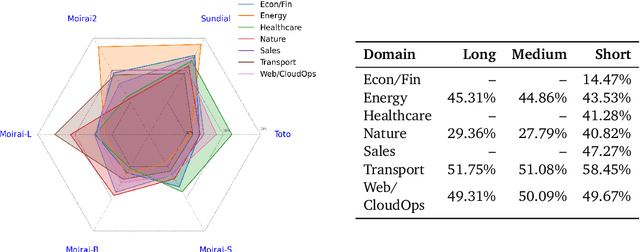
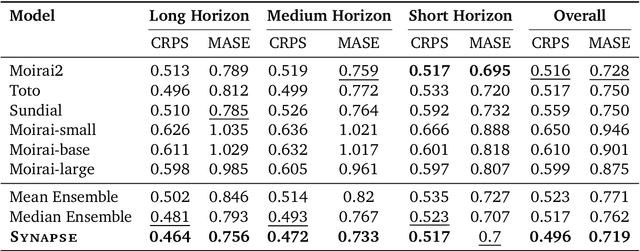
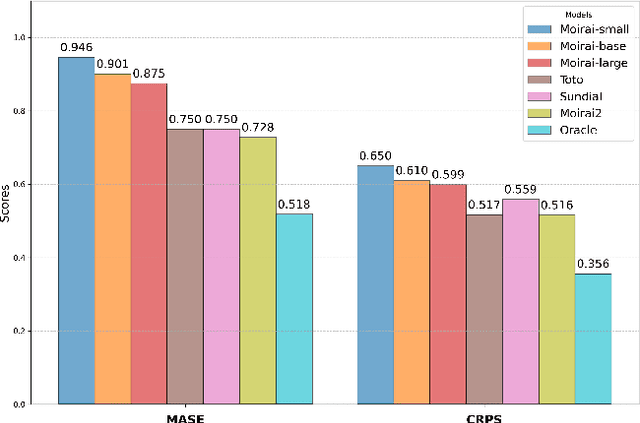

Pre-trained Time Series Foundational Models (TSFMs) represent a significant advance, capable of forecasting diverse time series with complex characteristics, including varied seasonalities, trends, and long-range dependencies. Despite their primary goal of universal time series forecasting, their efficacy is far from uniform; divergent training protocols and data sources cause individual TSFMs to exhibit highly variable performance across different forecasting tasks, domains, and horizons. Leveraging this complementary expertise by arbitrating existing TSFM outputs presents a compelling strategy, yet this remains a largely unexplored area of research. In this paper, we conduct a thorough examination of how different TSFMs exhibit specialized performance profiles across various forecasting settings, and how we can effectively leverage this behavior in arbitration between different time series models. We specifically analyze how factors such as model selection and forecast horizon distribution can influence the efficacy of arbitration strategies. Based on this analysis, we propose Synapse, a novel arbitration framework for TSFMs. Synapse is designed to dynamically leverage a pool of TSFMs, assign and adjust predictive weights based on their relative, context-dependent performance, and construct a robust forecast distribution by adaptively sampling from the output quantiles of constituent models. Experimental results demonstrate that Synapse consistently outperforms other popular ensembling techniques as well as individual TSFMs, demonstrating Synapse's efficacy in time series forecasting.
Fundamental Models and Signal Processing for Movable Antenna-Enhanced Wireless Communications and Sensing
Nov 07, 2025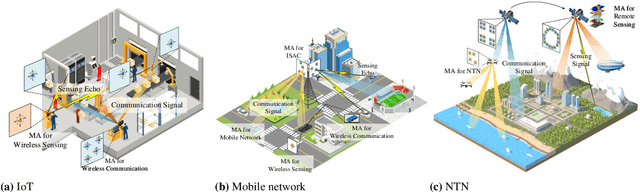
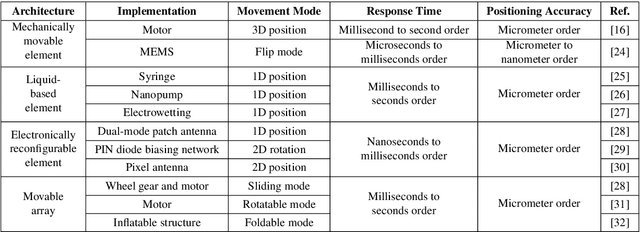
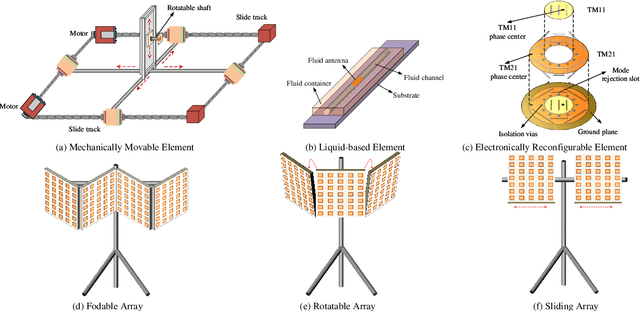
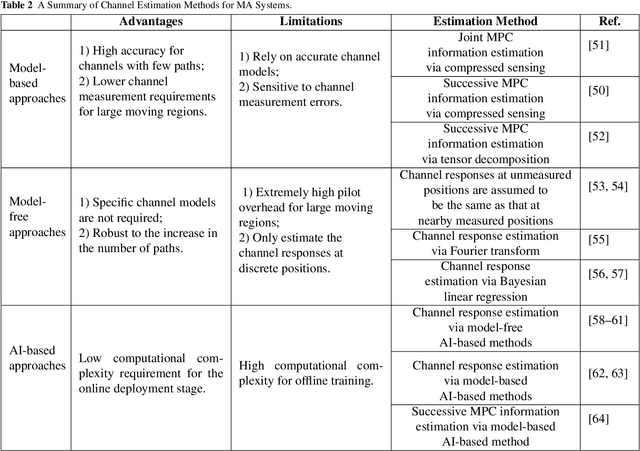
Movable antenna (MA) has been recognized as a promising technology for performance enhancement in wireless communication and sensing systems by exploiting the spatial degrees of freedom (DoFs) in flexible antenna movement. However, the integration of MAs into next-generation wireless networks still faces design challenges due to the paradigm shift from conventional fixed-position antennas (FPAs) to MAs, which motivates this paper to provide a comprehensive overview of the models, scenarios, and signal processing techniques for MA-enhanced wireless networks. First, we introduce several efficient methods to realize flexible antenna movement. Next, channel models based on field response and spatial correlation are presented to characterize the channel variations with respect to MA movement. Then, we discuss the advantages and challenges of applying MAs to typical application scenarios of wireless communications and sensing. Moreover, we show the signal processing techniques for MA-enhanced communication and sensing systems, including channel acquisition and antenna position optimization. Finally, we highlight promising research directions to inspire future investigations.
Accumulative SGD Influence Estimation for Data Attribution
Oct 30, 2025Modern data-centric AI needs precise per-sample influence. Standard SGD-IE approximates leave-one-out effects by summing per-epoch surrogates and ignores cross-epoch compounding, which misranks critical examples. We propose ACC-SGD-IE, a trajectory-aware estimator that propagates the leave-one-out perturbation across training and updates an accumulative influence state at each step. In smooth strongly convex settings it achieves geometric error contraction and, in smooth non-convex regimes, it tightens error bounds; larger mini-batches further reduce constants. Empirically, on Adult, 20 Newsgroups, and MNIST under clean and corrupted data and both convex and non-convex training, ACC-SGD-IE yields more accurate influence estimates, especially over long epochs. For downstream data cleansing it more reliably flags noisy samples, producing models trained on ACC-SGD-IE cleaned data that outperform those cleaned with SGD-IE.
6D Channel Knowledge Map Construction via Bidirectional Wireless Gaussian Splatting
Oct 30, 2025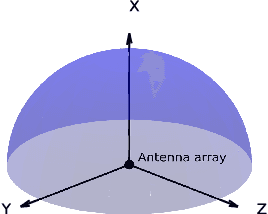
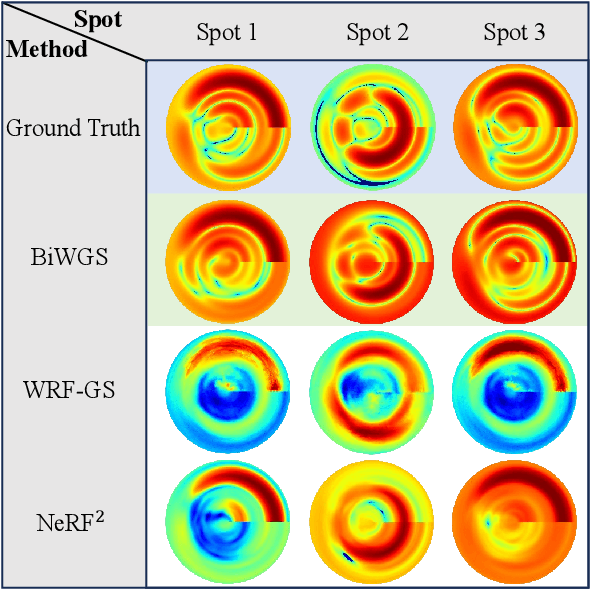
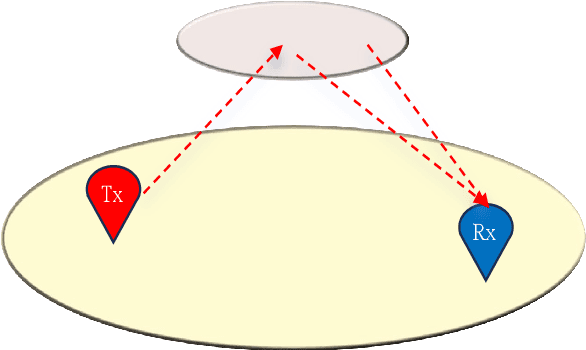
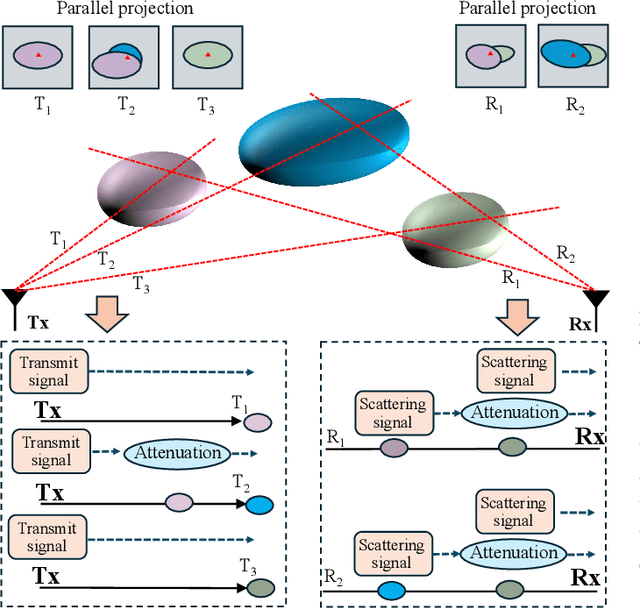
This paper investigates the construction of channel knowledge map (CKM) from sparse channel measurements. Dif ferent from conventional two-/three-dimensional (2D/3D) CKM approaches assuming fixed base station configurations, we present a six-dimensional (6D) CKM framework named bidirectional wireless Gaussian splatting (BiWGS), which is capable of mod eling wireless channels across dynamic transmitter (Tx) and receiver (Rx) positions in 3D space. BiWGS uses Gaussian el lipsoids to represent virtual scatterer clusters and environmental obstacles in the wireless environment. By properly learning the bidirectional scattering patterns and complex attenuation profiles based on channel measurements, these ellipsoids inherently cap ture the electromagnetic transmission characteristics of wireless environments, thereby accurately modeling signal transmission under varying transceiver configurations. Experiment results show that BiWGS significantly outperforms classic multi-layer perception (MLP) for the construction of 6D channel power gain map with varying Tx-Rx positions, and achieves spatial spectrum prediction accuracy comparable to the state-of-the art wireless radiation field Gaussian splatting (WRF-GS) for 3D CKM construction. This validates the capability of the proposed BiWGS in accomplishing dimensional expansion of 6D CKM construction, without compromising fidelity.