 Add to Chrome
 Add to Firefox
 Add to Edge
DeepMath-103K: A Large-Scale, Challenging, Decontaminated, and Verifiable Mathematical Dataset for Advancing Reasoning
Apr 15, 2025
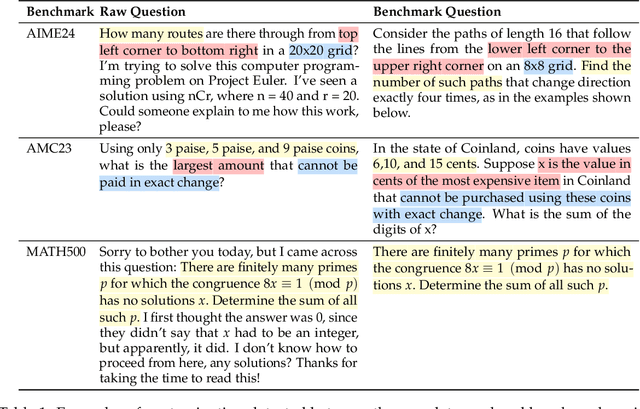
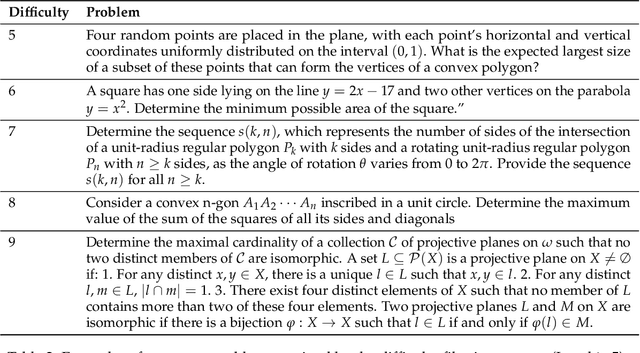
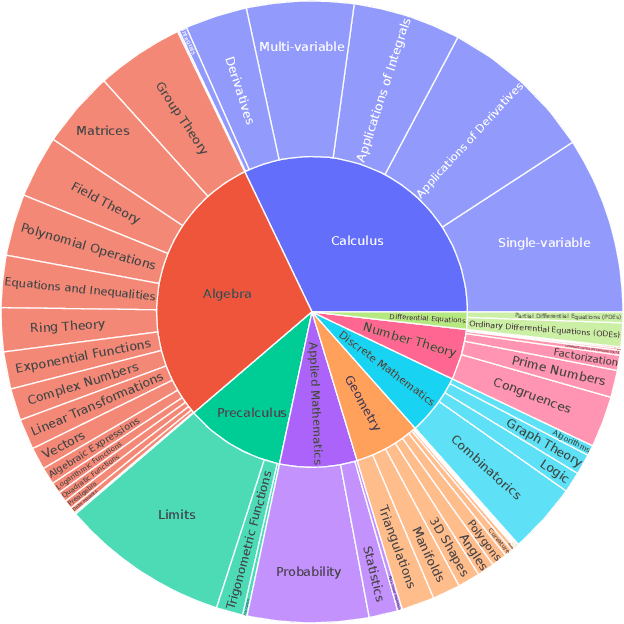
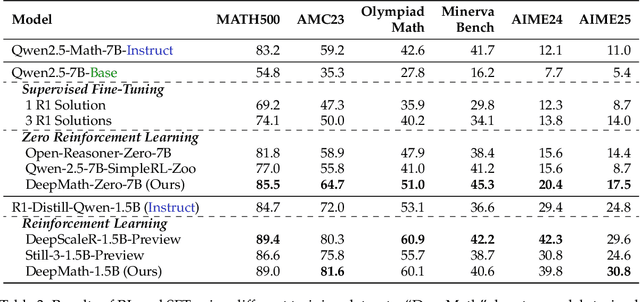
The capacity for complex mathematical reasoning is a key benchmark for artificial intelligence. While reinforcement learning (RL) applied to LLMs shows promise, progress is significantly hindered by the lack of large-scale training data that is sufficiently challenging, possesses verifiable answer formats suitable for RL, and is free from contamination with evaluation benchmarks. To address these limitations, we introduce DeepMath-103K, a new, large-scale dataset comprising approximately 103K mathematical problems, specifically designed to train advanced reasoning models via RL. DeepMath-103K is curated through a rigorous pipeline involving source analysis, stringent decontamination against numerous benchmarks, and filtering for high difficulty (primarily Levels 5-9), significantly exceeding existing open resources in challenge. Each problem includes a verifiable final answer, enabling rule-based RL, and three distinct R1-generated solutions suitable for diverse training paradigms like supervised fine-tuning or distillation. Spanning a wide range of mathematical topics, DeepMath-103K promotes the development of generalizable reasoning. We demonstrate that models trained on DeepMath-103K achieve significant improvements on challenging mathematical benchmarks, validating its effectiveness. We release DeepMath-103K publicly to facilitate community progress in building more capable AI reasoning systems: https://github.com/zwhe99/DeepMath.

Low-Overhead Channel Estimation Framework for Beyond Diagonal Reconfigurable Intelligent Surface Assisted Multi-User MIMO Communication
Apr 15, 2025Beyond diagonal reconfigurable intelligent surface (BD-RIS) refers to a family of RIS architectures characterized by scattering matrices not limited to being diagonal and enables higher wave manipulation flexibility and large performance gains over conventional (diagonal) RIS. To achieve those promising gains, accurate channel state information (CSI) needs to be acquired in BD-RIS assisted communication systems. However, the number of coefficients in the cascaded channels to be estimated in BD-RIS assisted systems is significantly larger than that in conventional RIS assisted systems, because the channels associated with the off-diagonal elements of the scattering matrix have to be estimated as well. Surprisingly, for the first time in the literature, this paper rigorously shows that the uplink channel estimation overhead in BD-RIS assisted systems is actually of the same order as that in the conventional RIS assisted systems. This amazing result stems from a key observation: for each user antenna, its cascaded channel matrix associated with one reference BD-RIS element is a scaled version of that associated with any other BD-RIS element due to the common RIS-base station (BS) channel. In other words, the number of independent unknown variables is far less than it would seem at first glance. Building upon this property, this paper manages to characterize the minimum overhead to perfectly estimate all the channels in the ideal case without noise at the BS, and propose a twophase estimation framework for the practical case with noise at the BS. Numerical results demonstrate outstanding channel estimation overhead reduction over existing schemes in BD-RIS assisted systems.
OmniVDiff: Omni Controllable Video Diffusion for Generation and Understanding
Apr 15, 2025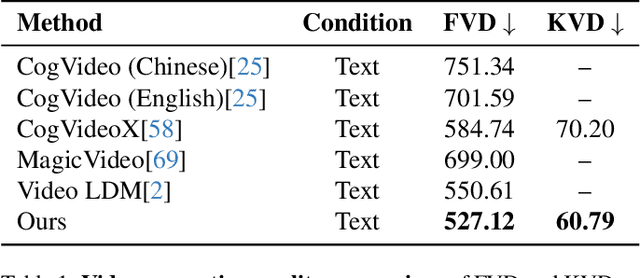
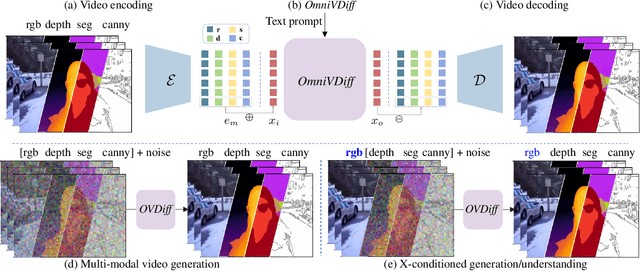
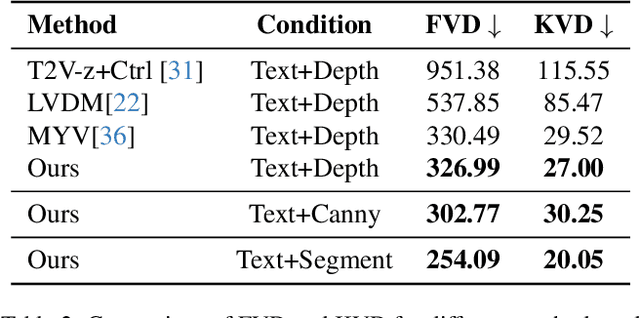
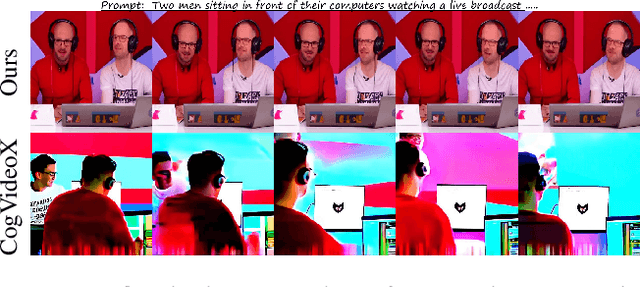
In this paper, we propose a novel framework for controllable video diffusion, OmniVDiff, aiming to synthesize and comprehend multiple video visual content in a single diffusion model. To achieve this, OmniVDiff treats all video visual modalities in the color space to learn a joint distribution, while employing an adaptive control strategy that dynamically adjusts the role of each visual modality during the diffusion process, either as a generation modality or a conditioning modality. This allows flexible manipulation of each modality's role, enabling support for a wide range of tasks. Consequently, our model supports three key functionalities: (1) Text-conditioned video generation: multi-modal visual video sequences (i.e., rgb, depth, canny, segmentaion) are generated based on the text conditions in one diffusion process; (2) Video understanding: OmniVDiff can estimate the depth, canny map, and semantic segmentation across the input rgb frames while ensuring coherence with the rgb input; and (3) X-conditioned video generation: OmniVDiff generates videos conditioned on fine-grained attributes (e.g., depth maps or segmentation maps). By integrating these diverse tasks into a unified video diffusion framework, OmniVDiff enhances the flexibility and scalability for controllable video diffusion, making it an effective tool for a variety of downstream applications, such as video-to-video translation. Extensive experiments demonstrate the effectiveness of our approach, highlighting its potential for various video-related applications.
Seaweed-7B: Cost-Effective Training of Video Generation Foundation Model
Apr 11, 2025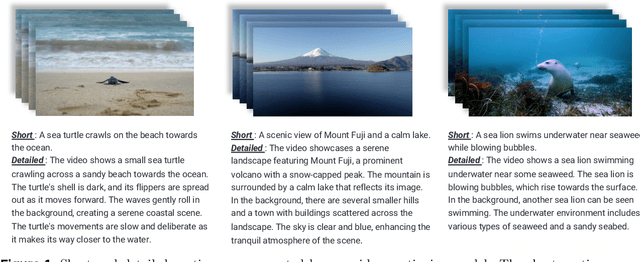
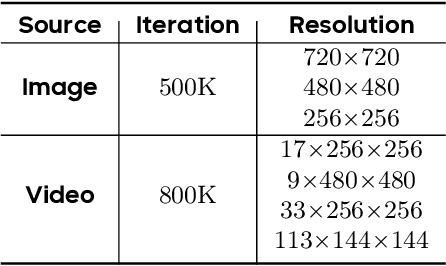
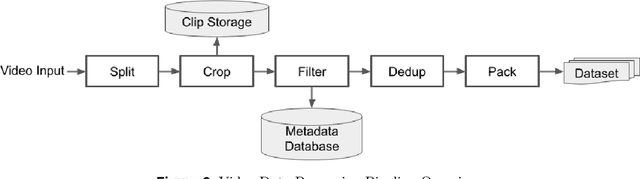

This technical report presents a cost-efficient strategy for training a video generation foundation model. We present a mid-sized research model with approximately 7 billion parameters (7B) called Seaweed-7B trained from scratch using 665,000 H100 GPU hours. Despite being trained with moderate computational resources, Seaweed-7B demonstrates highly competitive performance compared to contemporary video generation models of much larger size. Design choices are especially crucial in a resource-constrained setting. This technical report highlights the key design decisions that enhance the performance of the medium-sized diffusion model. Empirically, we make two observations: (1) Seaweed-7B achieves performance comparable to, or even surpasses, larger models trained on substantially greater GPU resources, and (2) our model, which exhibits strong generalization ability, can be effectively adapted across a wide range of downstream applications either by lightweight fine-tuning or continue training. See the project page at https://seaweed.video/
SkyReels-A2: Compose Anything in Video Diffusion Transformers
Apr 03, 2025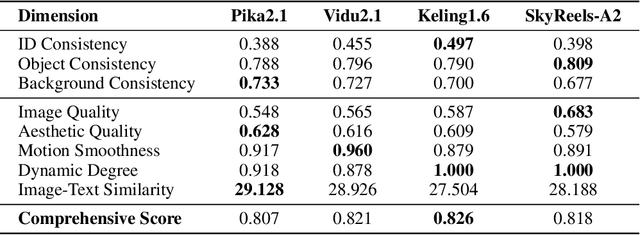
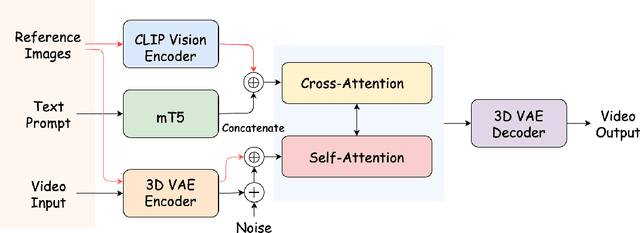
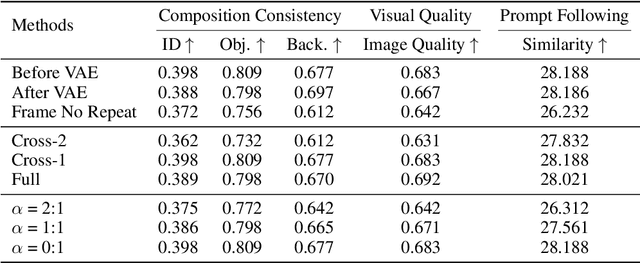
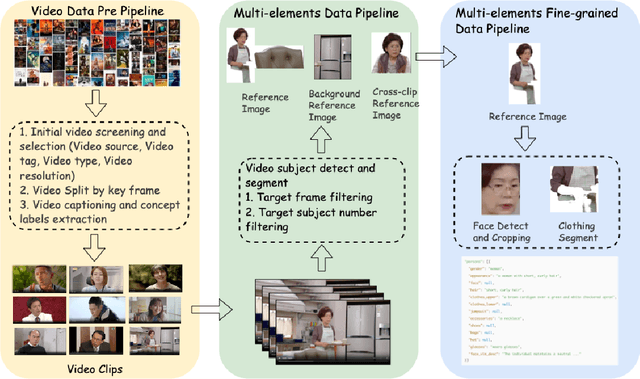
This paper presents SkyReels-A2, a controllable video generation framework capable of assembling arbitrary visual elements (e.g., characters, objects, backgrounds) into synthesized videos based on textual prompts while maintaining strict consistency with reference images for each element. We term this task elements-to-video (E2V), whose primary challenges lie in preserving the fidelity of each reference element, ensuring coherent composition of the scene, and achieving natural outputs. To address these, we first design a comprehensive data pipeline to construct prompt-reference-video triplets for model training. Next, we propose a novel image-text joint embedding model to inject multi-element representations into the generative process, balancing element-specific consistency with global coherence and text alignment. We also optimize the inference pipeline for both speed and output stability. Moreover, we introduce a carefully curated benchmark for systematic evaluation, i.e, A2 Bench. Experiments demonstrate that our framework can generate diverse, high-quality videos with precise element control. SkyReels-A2 is the first open-source commercial grade model for the generation of E2V, performing favorably against advanced closed-source commercial models. We anticipate SkyReels-A2 will advance creative applications such as drama and virtual e-commerce, pushing the boundaries of controllable video generation.
Learning to Normalize on the SPD Manifold under Bures-Wasserstein Geometry
Apr 01, 2025
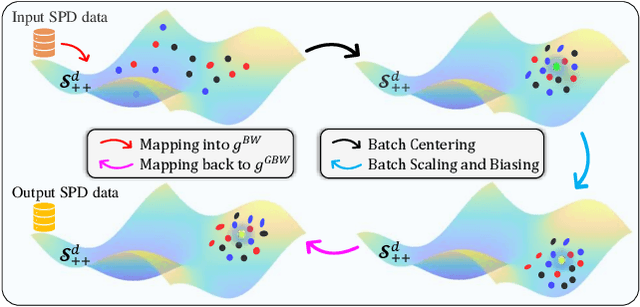
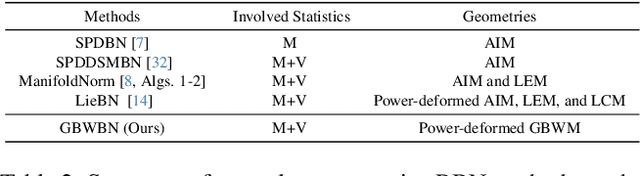
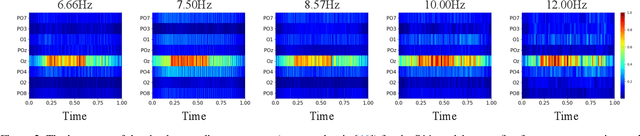
Covariance matrices have proven highly effective across many scientific fields. Since these matrices lie within the Symmetric Positive Definite (SPD) manifold - a Riemannian space with intrinsic non-Euclidean geometry, the primary challenge in representation learning is to respect this underlying geometric structure. Drawing inspiration from the success of Euclidean deep learning, researchers have developed neural networks on the SPD manifolds for more faithful covariance embedding learning. A notable advancement in this area is the implementation of Riemannian batch normalization (RBN), which has been shown to improve the performance of SPD network models. Nonetheless, the Riemannian metric beneath the existing RBN might fail to effectively deal with the ill-conditioned SPD matrices (ICSM), undermining the effectiveness of RBN. In contrast, the Bures-Wasserstein metric (BWM) demonstrates superior performance for ill-conditioning. In addition, the recently introduced Generalized BWM (GBWM) parameterizes the vanilla BWM via an SPD matrix, allowing for a more nuanced representation of vibrant geometries of the SPD manifold. Therefore, we propose a novel RBN algorithm based on the GBW geometry, incorporating a learnable metric parameter. Moreover, the deformation of GBWM by matrix power is also introduced to further enhance the representational capacity of GBWM-based RBN. Experimental results on different datasets validate the effectiveness of our proposed method.
Exploring the Effect of Reinforcement Learning on Video Understanding: Insights from SEED-Bench-R1
Mar 31, 2025
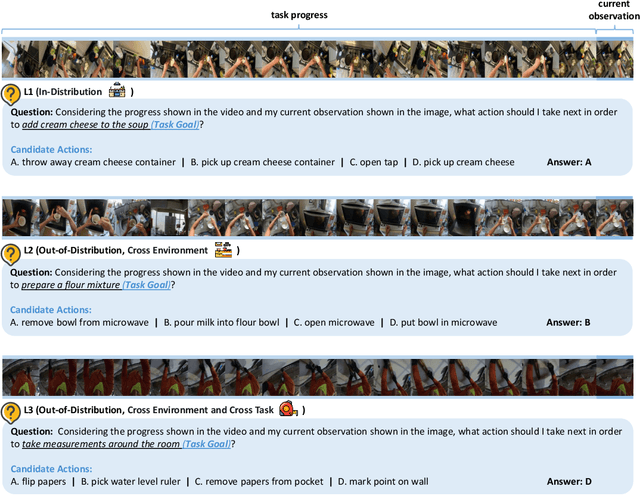


Recent advancements in Chain of Thought (COT) generation have significantly improved the reasoning capabilities of Large Language Models (LLMs), with reinforcement learning (RL) emerging as an effective post-training approach. Multimodal Large Language Models (MLLMs) inherit this reasoning potential but remain underexplored in tasks requiring both perception and logical reasoning. To address this, we introduce SEED-Bench-R1, a benchmark designed to systematically evaluate post-training methods for MLLMs in video understanding. It includes intricate real-world videos and complex everyday planning tasks in the format of multiple-choice questions, requiring sophisticated perception and reasoning. SEED-Bench-R1 assesses generalization through a three-level hierarchy: in-distribution, cross-environment, and cross-environment-task scenarios, equipped with a large-scale training dataset with easily verifiable ground-truth answers. Using Qwen2-VL-Instruct-7B as a base model, we compare RL with supervised fine-tuning (SFT), demonstrating RL's data efficiency and superior performance on both in-distribution and out-of-distribution tasks, even outperforming SFT on general video understanding benchmarks like LongVideoBench. Our detailed analysis reveals that RL enhances visual perception but often produces less logically coherent reasoning chains. We identify key limitations such as inconsistent reasoning and overlooked visual cues, and suggest future improvements in base model reasoning, reward modeling, and RL robustness against noisy signals.
Harnessing the Reasoning Economy: A Survey of Efficient Reasoning for Large Language Models
Mar 31, 2025Recent advancements in Large Language Models (LLMs) have significantly enhanced their ability to perform complex reasoning tasks, transitioning from fast and intuitive thinking (System 1) to slow and deep reasoning (System 2). While System 2 reasoning improves task accuracy, it often incurs substantial computational costs due to its slow thinking nature and inefficient or unnecessary reasoning behaviors. In contrast, System 1 reasoning is computationally efficient but leads to suboptimal performance. Consequently, it is critical to balance the trade-off between performance (benefits) and computational costs (budgets), giving rise to the concept of reasoning economy. In this survey, we provide a comprehensive analysis of reasoning economy in both the post-training and test-time inference stages of LLMs, encompassing i) the cause of reasoning inefficiency, ii) behavior analysis of different reasoning patterns, and iii) potential solutions to achieve reasoning economy. By offering actionable insights and highlighting open challenges, we aim to shed light on strategies for improving the reasoning economy of LLMs, thereby serving as a valuable resource for advancing research in this evolving area. We also provide a public repository to continually track developments in this fast-evolving field.
Dancing with Critiques: Enhancing LLM Reasoning with Stepwise Natural Language Self-Critique
Mar 21, 2025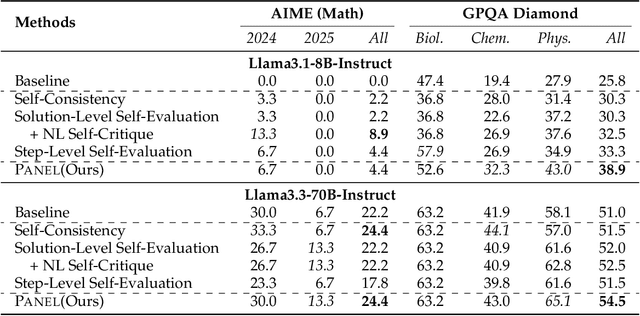
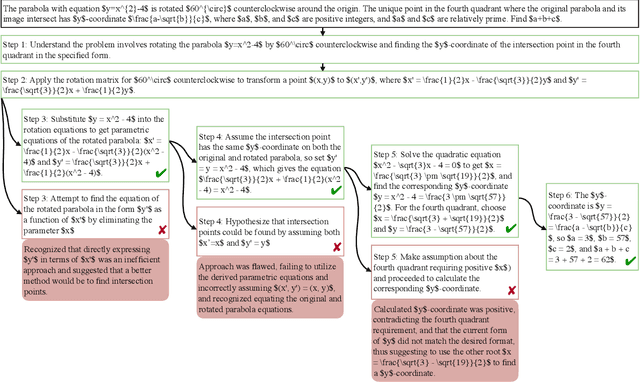
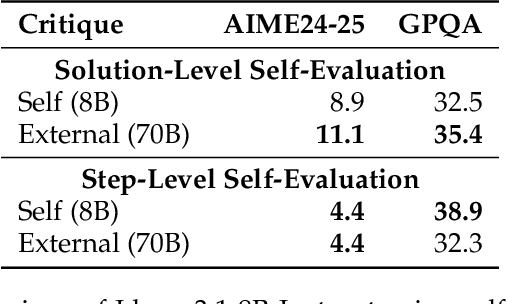
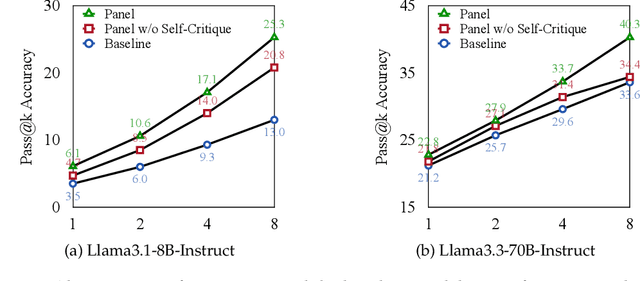
Enhancing the reasoning capabilities of large language models (LLMs), particularly for complex tasks requiring multi-step logical deductions, remains a significant challenge. Traditional inference time scaling methods utilize scalar reward signals from process reward models to evaluate candidate reasoning steps, but these scalar rewards lack the nuanced qualitative information essential for understanding and justifying each step. In this paper, we propose a novel inference-time scaling approach -- stepwise natural language self-critique (PANEL), which employs self-generated natural language critiques as feedback to guide the step-level search process. By generating rich, human-readable critiques for each candidate reasoning step, PANEL retains essential qualitative information, facilitating better-informed decision-making during inference. This approach bypasses the need for task-specific verifiers and the associated training overhead, making it broadly applicable across diverse tasks. Experimental results on challenging reasoning benchmarks, including AIME and GPQA, demonstrate that PANEL significantly enhances reasoning performance, outperforming traditional scalar reward-based methods. Our code is available at https://github.com/puddingyeah/PANEL to support and encourage future research in this promising field.
MagicMotion: Controllable Video Generation with Dense-to-Sparse Trajectory Guidance
Mar 20, 2025Recent advances in video generation have led to remarkable improvements in visual quality and temporal coherence. Upon this, trajectory-controllable video generation has emerged to enable precise object motion control through explicitly defined spatial paths. However, existing methods struggle with complex object movements and multi-object motion control, resulting in imprecise trajectory adherence, poor object consistency, and compromised visual quality. Furthermore, these methods only support trajectory control in a single format, limiting their applicability in diverse scenarios. Additionally, there is no publicly available dataset or benchmark specifically tailored for trajectory-controllable video generation, hindering robust training and systematic evaluation. To address these challenges, we introduce MagicMotion, a novel image-to-video generation framework that enables trajectory control through three levels of conditions from dense to sparse: masks, bounding boxes, and sparse boxes. Given an input image and trajectories, MagicMotion seamlessly animates objects along defined trajectories while maintaining object consistency and visual quality. Furthermore, we present MagicData, a large-scale trajectory-controlled video dataset, along with an automated pipeline for annotation and filtering. We also introduce MagicBench, a comprehensive benchmark that assesses both video quality and trajectory control accuracy across different numbers of objects. Extensive experiments demonstrate that MagicMotion outperforms previous methods across various metrics. Our project page are publicly available at https://quanhaol.github.io/magicmotion-site.