 Add to Chrome
 Add to Firefox
 Add to Edge
Dynamic and Textual Graph Generation Via Large-Scale LLM-based Agent Simulation
Oct 13, 2024


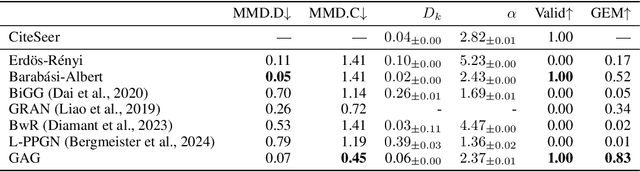
Graph generation is a fundamental task that has been extensively studied in social, technological, and scientific analysis. For modeling the dynamic graph evolution process, traditional rule-based methods struggle to capture community structures within graphs, while deep learning methods only focus on fitting training graphs. This limits existing graph generators to producing graphs that adhere to predefined rules or closely resemble training datasets, achieving poor performance in dynamic graph generation. Given that graphs are abstract representations arising from pairwise interactions in human activities, a realistic simulation of human-wise interaction could provide deeper insights into the graph evolution mechanism. With the increasing recognition of large language models (LLMs) in simulating human behavior, we introduce GraphAgent-Generator (GAG), a novel simulation-based framework for dynamic graph generation. Without training or fine-tuning process of LLM, our framework effectively replicates seven macro-level structural characteristics in established network science theories while surpassing existing baselines in graph expansion tasks by 31\% on specific evaluation metrics. Through node classification task, we validate GAG effectively preserves characteristics of real-world network for node-wise textual features in generated text-rich graph. Furthermore, by incorporating parallel acceleration, GAG supports generating graphs with up to nearly 100,000 nodes or 10 million edges through large-scale LLM-based agent simulation, with a minimum speed-up of 90.4\%. The source code is available at https://anonymous.4open.science/r/GraphAgent-2206.

Learning Evolving Tools for Large Language Models
Oct 09, 2024
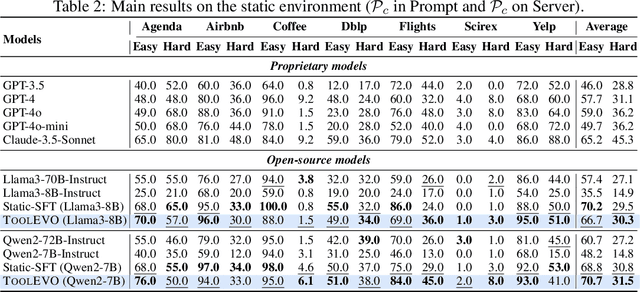

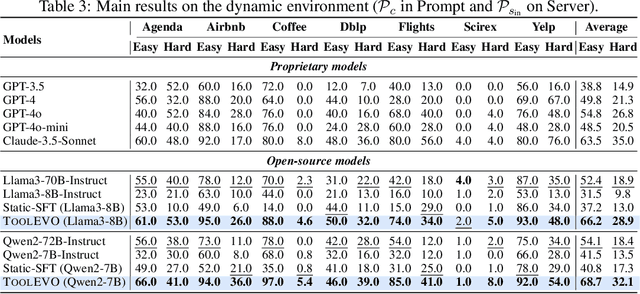
Tool learning enables large language models (LLMs) to interact with external tools and APIs, greatly expanding the application scope of LLMs. However, due to the dynamic nature of external environments, these tools and APIs may become outdated over time, preventing LLMs from correctly invoking tools. Existing research primarily focuses on static environments and overlooks this issue, limiting the adaptability of LLMs in real-world applications. In this paper, we propose ToolEVO, a novel framework designed to enhance the adaptive and reflective capabilities of LLMs against tool variability. By leveraging Monte Carlo Tree Search, ToolEVO facilitates active exploration and interaction of LLMs within dynamic environments, allowing for autonomous self-reflection and self-updating of tool usage based on environmental feedback. Additionally, we introduce ToolQA-D, a benchmark specifically designed to evaluate the impact of tool variability. Extensive experiments demonstrate the effectiveness and stability of our approach, highlighting the importance of adaptability to tool variability for effective tool learning.
GenSim: A General Social Simulation Platform with Large Language Model based Agents
Oct 06, 2024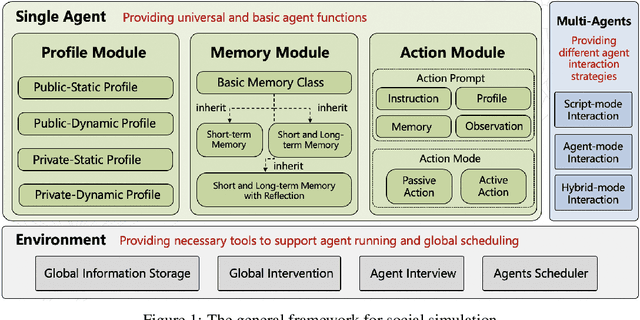
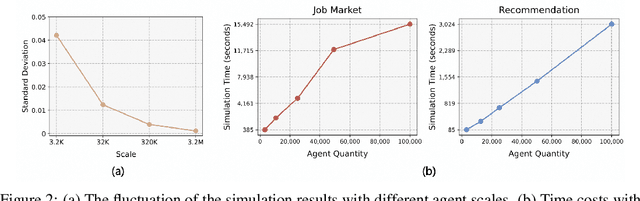
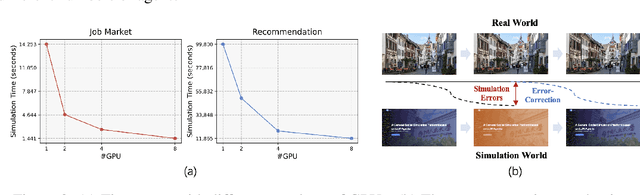
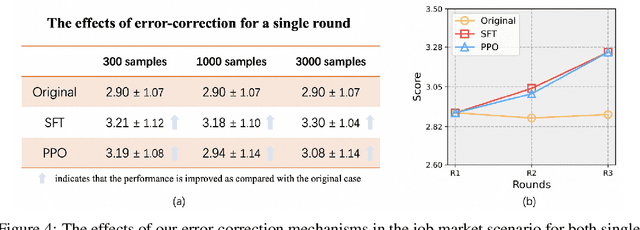
With the rapid advancement of large language models (LLMs), recent years have witnessed many promising studies on leveraging LLM-based agents to simulate human social behavior. While prior work has demonstrated significant potential across various domains, much of it has focused on specific scenarios involving a limited number of agents and has lacked the ability to adapt when errors occur during simulation. To overcome these limitations, we propose a novel LLM-agent-based simulation platform called \textit{GenSim}, which: (1) \textbf{Abstracts a set of general functions} to simplify the simulation of customized social scenarios; (2) \textbf{Supports one hundred thousand agents} to better simulate large-scale populations in real-world contexts; (3) \textbf{Incorporates error-correction mechanisms} to ensure more reliable and long-term simulations. To evaluate our platform, we assess both the efficiency of large-scale agent simulations and the effectiveness of the error-correction mechanisms. To our knowledge, GenSim represents an initial step toward a general, large-scale, and correctable social simulation platform based on LLM agents, promising to further advance the field of social science.
Exploring the Benefit of Activation Sparsity in Pre-training
Oct 04, 2024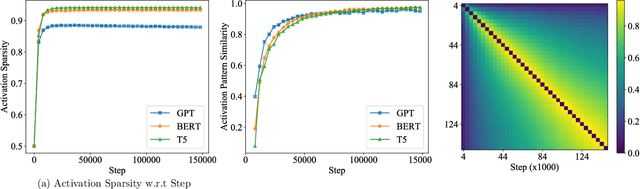
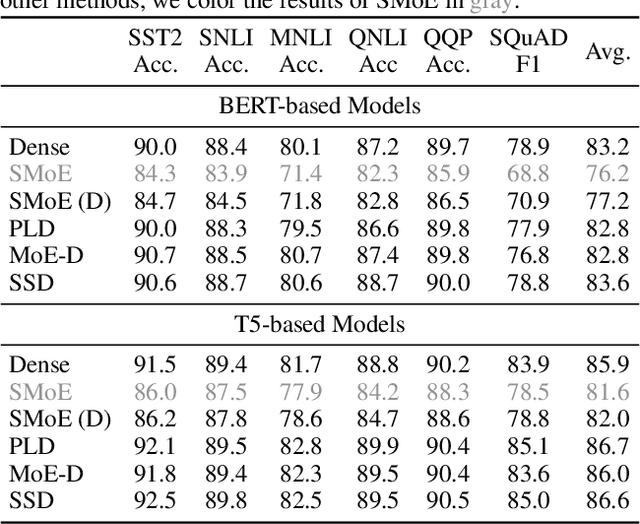
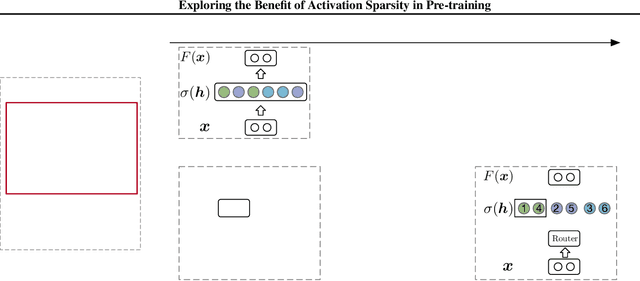
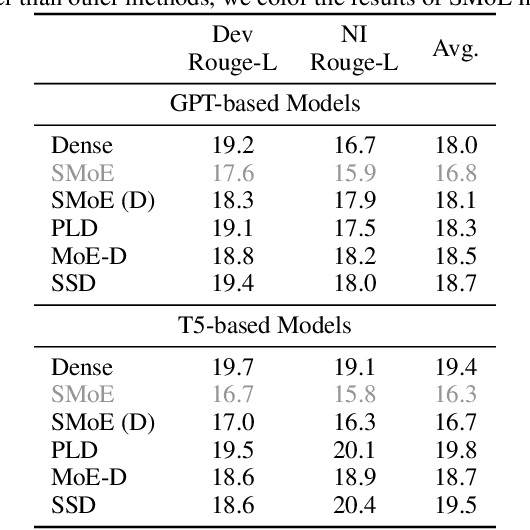
Pre-trained Transformers inherently possess the characteristic of sparse activation, where only a small fraction of the neurons are activated for each token. While sparse activation has been explored through post-training methods, its potential in pre-training remains untapped. In this work, we first study how activation properties change during pre-training. Our examination reveals that Transformers exhibit sparse activation throughout the majority of the pre-training process while the activation correlation keeps evolving as training progresses. Leveraging this observation, we propose Switchable Sparse-Dense Learning (SSD). SSD adaptively switches between the Mixtures-of-Experts (MoE) based sparse training and the conventional dense training during the pre-training process, leveraging the efficiency of sparse training and avoiding the static activation correlation of sparse training. Compared to dense training, SSD achieves comparable performance with identical model size and reduces pre-training costs. Moreover, the models trained with SSD can be directly used as MoE models for sparse inference and achieve the same performance as dense models with up to $2\times$ faster inference speed. Codes are available at https://github.com/thunlp/moefication.
Configurable Foundation Models: Building LLMs from a Modular Perspective
Sep 04, 2024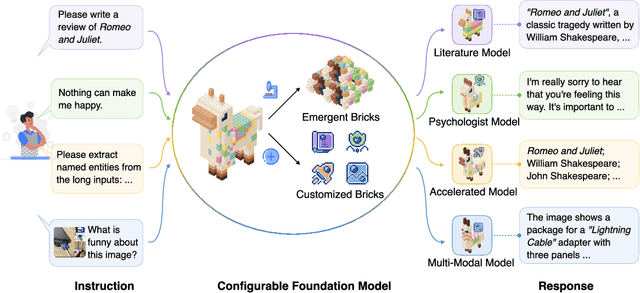
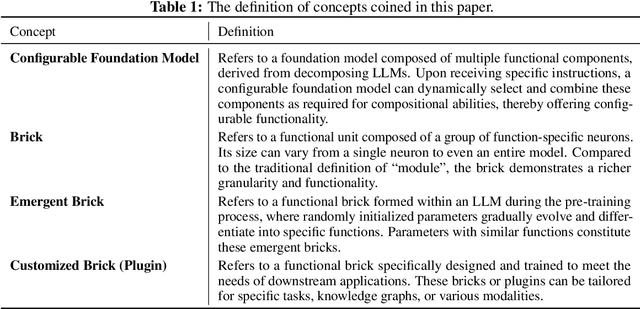
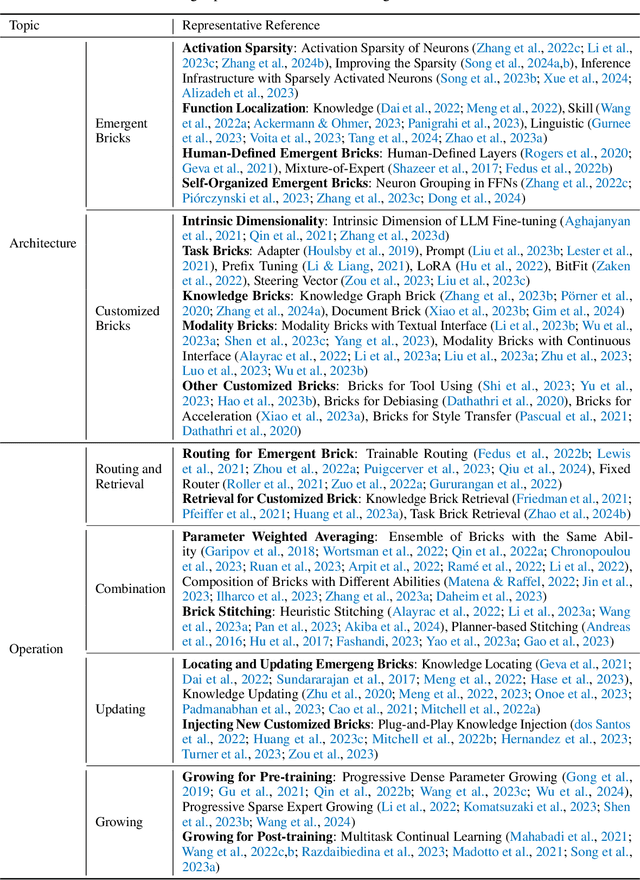
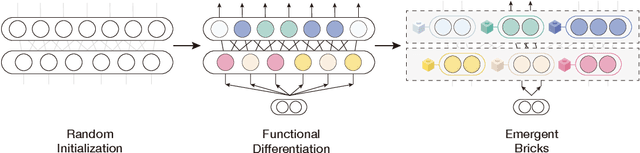
Advancements in LLMs have recently unveiled challenges tied to computational efficiency and continual scalability due to their requirements of huge parameters, making the applications and evolution of these models on devices with limited computation resources and scenarios requiring various abilities increasingly cumbersome. Inspired by modularity within the human brain, there is a growing tendency to decompose LLMs into numerous functional modules, allowing for inference with part of modules and dynamic assembly of modules to tackle complex tasks, such as mixture-of-experts. To highlight the inherent efficiency and composability of the modular approach, we coin the term brick to represent each functional module, designating the modularized structure as configurable foundation models. In this paper, we offer a comprehensive overview and investigation of the construction, utilization, and limitation of configurable foundation models. We first formalize modules into emergent bricks - functional neuron partitions that emerge during the pre-training phase, and customized bricks - bricks constructed via additional post-training to improve the capabilities and knowledge of LLMs. Based on diverse functional bricks, we further present four brick-oriented operations: retrieval and routing, merging, updating, and growing. These operations allow for dynamic configuration of LLMs based on instructions to handle complex tasks. To verify our perspective, we conduct an empirical analysis on widely-used LLMs. We find that the FFN layers follow modular patterns with functional specialization of neurons and functional neuron partitions. Finally, we highlight several open issues and directions for future research. Overall, this paper aims to offer a fresh modular perspective on existing LLM research and inspire the future creation of more efficient and scalable foundational models.
Towards Effective and Efficient Continual Pre-training of Large Language Models
Jul 26, 2024

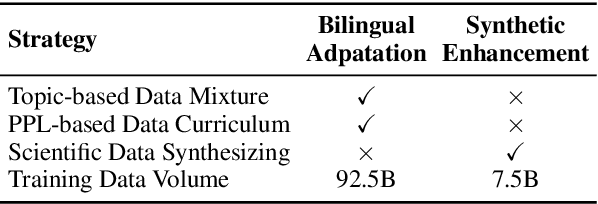

Continual pre-training (CPT) has been an important approach for adapting language models to specific domains or tasks. To make the CPT approach more traceable, this paper presents a technical report for continually pre-training Llama-3 (8B), which significantly enhances the Chinese language ability and scientific reasoning ability of the backbone model. To enhance the new abilities while retaining the original abilities, we design specific data mixture and curriculum strategies by utilizing existing datasets and synthesizing high-quality datasets. Specifically, we synthesize multidisciplinary scientific question and answer (QA) pairs based on related web pages, and subsequently incorporate these synthetic data to improve the scientific reasoning ability of Llama-3. We refer to the model after CPT as Llama-3-SynE (Synthetic data Enhanced Llama-3). We also present the tuning experiments with a relatively small model -- TinyLlama, and employ the derived findings to train the backbone model. Extensive experiments on a number of evaluation benchmarks show that our approach can largely improve the performance of the backbone models, including both the general abilities (+8.81 on C-Eval and +6.31 on CMMLU) and the scientific reasoning abilities (+12.00 on MATH and +4.13 on SciEval), without hurting the original capacities. Our model, data, and codes are available at https://github.com/RUC-GSAI/Llama-3-SynE.
YuLan: An Open-source Large Language Model
Jun 28, 2024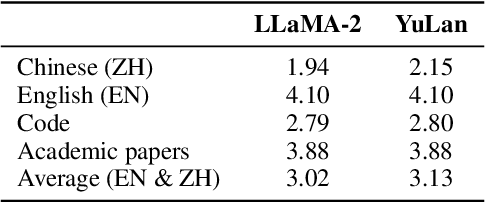

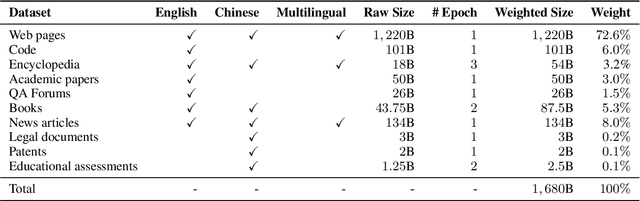

Large language models (LLMs) have become the foundation of many applications, leveraging their extensive capabilities in processing and understanding natural language. While many open-source LLMs have been released with technical reports, the lack of training details hinders further research and development. This paper presents the development of YuLan, a series of open-source LLMs with $12$ billion parameters. The base model of YuLan is pre-trained on approximately $1.7$T tokens derived from a diverse corpus, including massive English, Chinese, and multilingual texts. We design a three-stage pre-training method to enhance YuLan's overall capabilities. Subsequent phases of training incorporate instruction-tuning and human alignment, employing a substantial volume of high-quality synthesized data. To facilitate the learning of complex and long-tail knowledge, we devise a curriculum-learning framework throughout across these stages, which helps LLMs learn knowledge in an easy-to-hard manner. YuLan's training is finished on Jan, 2024 and has achieved performance on par with state-of-the-art LLMs across various English and Chinese benchmarks. This paper outlines a comprehensive technical roadmap for developing LLMs from scratch. Our model and codes are available at https://github.com/RUC-GSAI/YuLan-Chat.
ICLEval: Evaluating In-Context Learning Ability of Large Language Models
Jun 21, 2024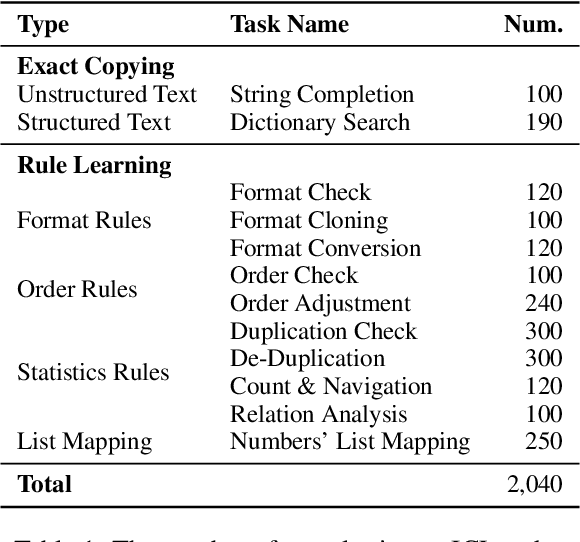
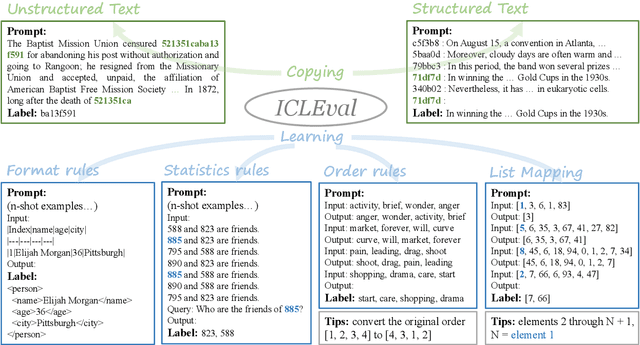
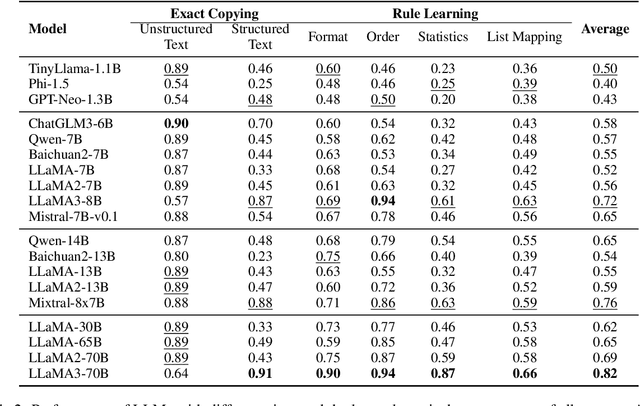
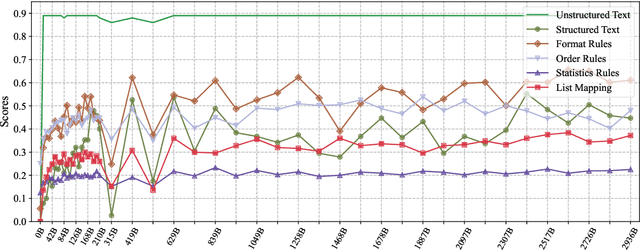
In-Context Learning (ICL) is a critical capability of Large Language Models (LLMs) as it empowers them to comprehend and reason across interconnected inputs. Evaluating the ICL ability of LLMs can enhance their utilization and deepen our understanding of how this ability is acquired at the training stage. However, existing evaluation frameworks primarily focus on language abilities and knowledge, often overlooking the assessment of ICL ability. In this work, we introduce the ICLEval benchmark to evaluate the ICL abilities of LLMs, which encompasses two key sub-abilities: exact copying and rule learning. Through the ICLEval benchmark, we demonstrate that ICL ability is universally present in different LLMs, and model size is not the sole determinant of ICL efficacy. Surprisingly, we observe that ICL abilities, particularly copying, develop early in the pretraining process and stabilize afterward. Our source codes and benchmark are released at https://github.com/yiye3/ICLEval.
GUICourse: From General Vision Language Models to Versatile GUI Agents
Jun 17, 2024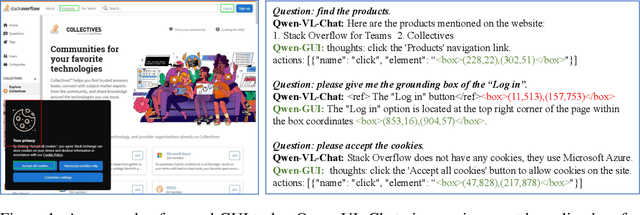
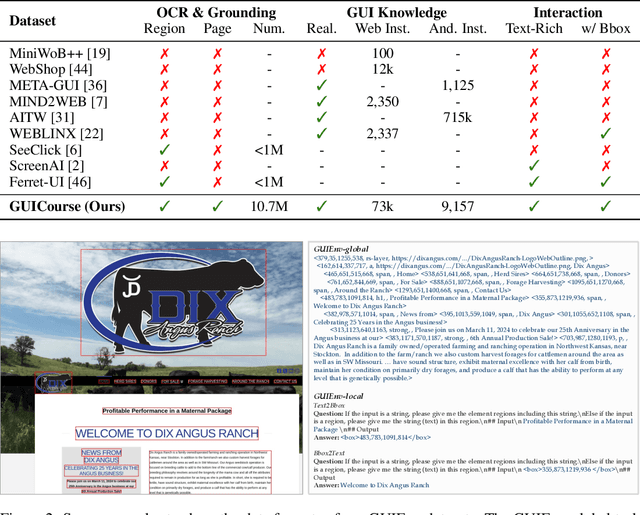

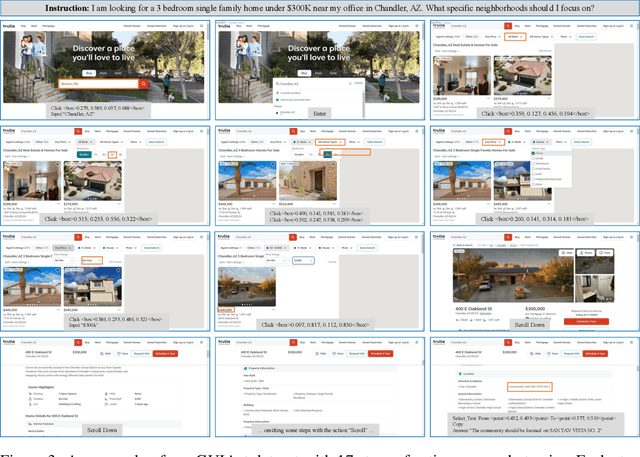
Utilizing Graphic User Interface (GUI) for human-computer interaction is essential for accessing a wide range of digital tools. Recent advancements in Vision Language Models (VLMs) highlight the compelling potential to develop versatile agents to help humans finish GUI navigation tasks. However, current VLMs are challenged in terms of fundamental abilities (OCR and grounding) and GUI knowledge (the functions and control methods of GUI elements), preventing them from becoming practical GUI agents. To solve these challenges, we contribute GUICourse, a suite of datasets to train visual-based GUI agents from general VLMs. First, we introduce the GUIEnv dataset to strengthen the OCR and grounding capabilities of VLMs. Then, we introduce the GUIAct and GUIChat datasets to enrich their knowledge of GUI components and interactions. Experiments demonstrate that our GUI agents have better performance on common GUI tasks than their baseline VLMs. Even the small-size GUI agent (with 3.1B parameters) can still work well on single-step and multi-step GUI tasks. Finally, we analyze the different varieties in the training stage of this agent by ablation study. Our source codes and datasets are released at https://github.com/yiye3/GUICourse.
Super(ficial)-alignment: Strong Models May Deceive Weak Models in Weak-to-Strong Generalization
Jun 17, 2024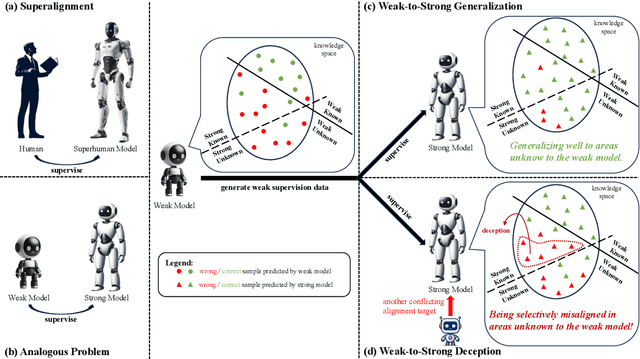
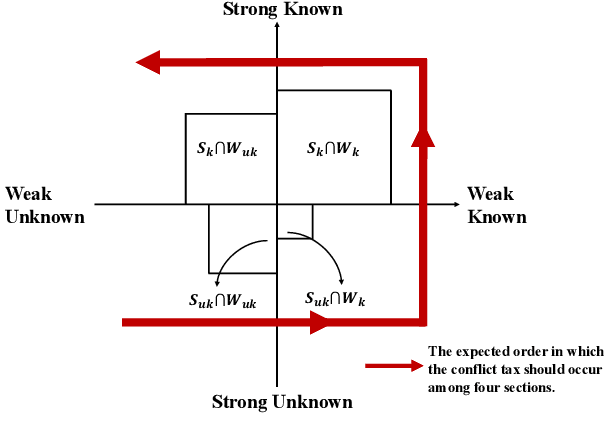
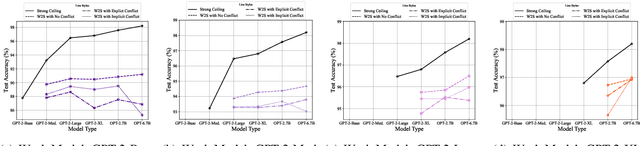
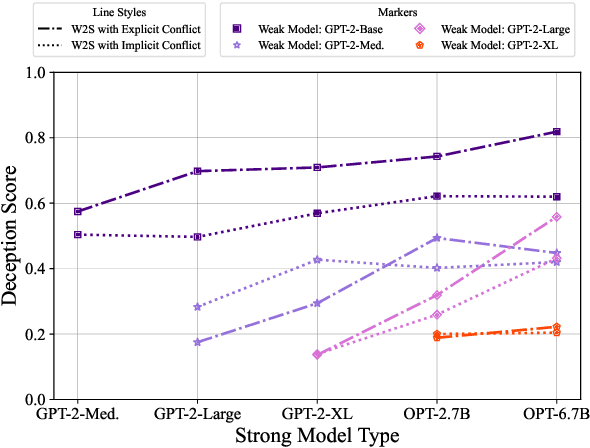
Superalignment, where humans are weak supervisors of superhuman models, has become an important and widely discussed issue in the current era of rapid development of Large Language Models (LLMs). The recent work preliminarily studies this problem by using weak models to supervise strong models. It discovers that weakly supervised strong students can consistently outperform weak teachers towards the alignment target, leading to a weak-to-strong generalization phenomenon. However, we are concerned that behind such a promising phenomenon, whether there exists an issue of weak-to-strong deception, where strong models may deceive weak models by exhibiting well-aligned in areas known to weak models but producing misaligned behaviors in cases weak models do not know. We then take an initial step towards exploring this security issue in a specific but realistic multi-objective alignment case, where there may be some alignment targets conflicting with each other (e.g., helpfulness v.s. harmlessness). Such a conflict is likely to cause strong models to deceive weak models in one alignment dimension to gain high reward in other alignment dimension. Our experiments on both the reward modeling task and the preference optimization scenario indicate: (1) the weak-to-strong deception exists; (2) the deception phenomenon may intensify as the capability gap between weak and strong models increases. We also discuss potential solutions and find bootstrapping with an intermediate model can mitigate the deception to some extent. Our work highlights the urgent need to pay more attention to the true reliability of superalignment.