 Add to Chrome
 Add to Firefox
 Add to Edge
MouSi: Poly-Visual-Expert Vision-Language Models
Jan 30, 2024
Current large vision-language models (VLMs) often encounter challenges such as insufficient capabilities of a single visual component and excessively long visual tokens. These issues can limit the model's effectiveness in accurately interpreting complex visual information and over-lengthy contextual information. Addressing these challenges is crucial for enhancing the performance and applicability of VLMs. This paper proposes the use of ensemble experts technique to synergizes the capabilities of individual visual encoders, including those skilled in image-text matching, OCR, image segmentation, etc. This technique introduces a fusion network to unify the processing of outputs from different visual experts, while bridging the gap between image encoders and pre-trained LLMs. In addition, we explore different positional encoding schemes to alleviate the waste of positional encoding caused by lengthy image feature sequences, effectively addressing the issue of position overflow and length limitations. For instance, in our implementation, this technique significantly reduces the positional occupancy in models like SAM, from a substantial 4096 to a more efficient and manageable 64 or even down to 1. Experimental results demonstrate that VLMs with multiple experts exhibit consistently superior performance over isolated visual encoders and mark a significant performance boost as more experts are integrated. We have open-sourced the training code used in this report. All of these resources can be found on our project website.

Can AI Assistants Know What They Don't Know?
Jan 28, 2024

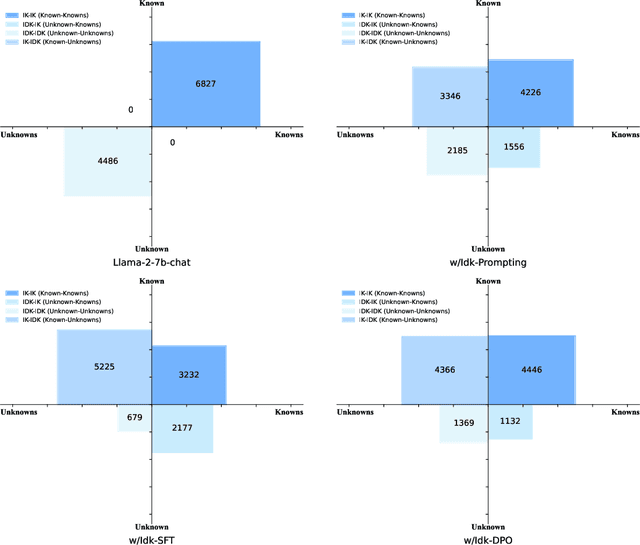

Recently, AI assistants based on large language models (LLMs) show surprising performance in many tasks, such as dialogue, solving math problems, writing code, and using tools. Although LLMs possess intensive world knowledge, they still make factual errors when facing some knowledge intensive tasks, like open-domain question answering. These untruthful responses from the AI assistant may cause significant risks in practical applications. We believe that an AI assistant's refusal to answer questions it does not know is a crucial method for reducing hallucinations and making the assistant truthful. Therefore, in this paper, we ask the question "Can AI assistants know what they don't know and express them through natural language?" To answer this question, we construct a model-specific "I don't know" (Idk) dataset for an assistant, which contains its known and unknown questions, based on existing open-domain question answering datasets. Then we align the assistant with its corresponding Idk dataset and observe whether it can refuse to answer its unknown questions after alignment. Experimental results show that after alignment with Idk datasets, the assistant can refuse to answer most its unknown questions. For questions they attempt to answer, the accuracy is significantly higher than before the alignment.
F-Eval: Asssessing Fundamental Abilities with Refined Evaluation Methods
Jan 26, 2024Large language models (LLMs) garner significant attention for their unprecedented performance, leading to an increasing number of researches evaluating LLMs. However, these evaluation benchmarks are limited to assessing the instruction-following capabilities, overlooking the fundamental abilities that emerge during the pre-training stage. Previous subjective evaluation methods mainly reply on scoring by API models. However, in the absence of references, large models have shown limited ability to discern subtle differences. To bridge the gap, we propose F-Eval, a bilingual evaluation benchmark to evaluate the fundamental abilities, including expression, commonsense and logic. The tasks in F-Eval include multi-choice objective tasks, open-ended objective tasks, reference-based subjective tasks and reference-free subjective tasks. For reference-free subjective tasks, we devise new evaluation methods, serving as alternatives to scoring by API models. We conduct evaluations on 13 advanced LLMs. Results show that our evaluation methods show higher correlation coefficients and larger distinction than other evaluators. Additionally, we discuss the influence of different model sizes, dimensions, and normalization methods. We anticipate that F-Eval will facilitate the study of LLMs' fundamental abilities.
Query of CC: Unearthing Large Scale Domain-Specific Knowledge from Public Corpora
Jan 26, 2024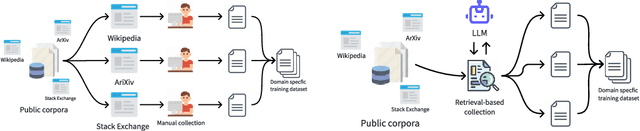


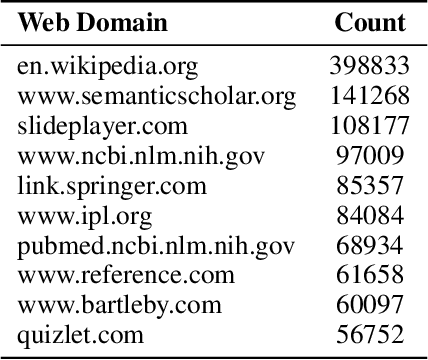
Large language models have demonstrated remarkable potential in various tasks, however, there remains a significant scarcity of open-source models and data for specific domains. Previous works have primarily focused on manually specifying resources and collecting high-quality data on specific domains, which significantly consume time and effort. To address this limitation, we propose an efficient data collection method~\textit{Query of CC} based on large language models. This method bootstraps seed information through a large language model and retrieves related data from public corpora. It not only collects knowledge-related data for specific domains but unearths the data with potential reasoning procedures. Through the application of this method, we have curated a high-quality dataset called~\textsc{Knowledge Pile}, encompassing four major domains, including stem and humanities sciences, among others. Experimental results demonstrate that~\textsc{Knowledge Pile} significantly improves the performance of large language models in mathematical and knowledge-related reasoning ability tests. To facilitate academic sharing, we open-source our dataset and code, providing valuable support to the academic community.
SpeechGPT-Gen: Scaling Chain-of-Information Speech Generation
Jan 25, 2024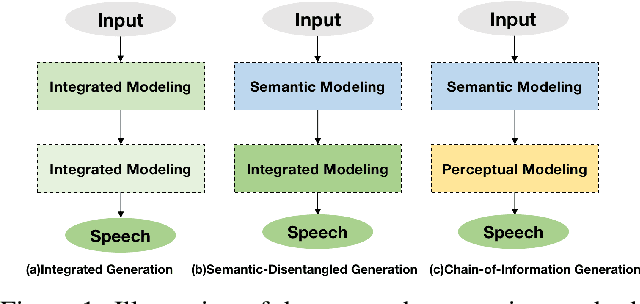
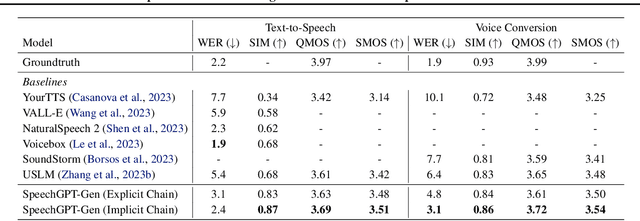
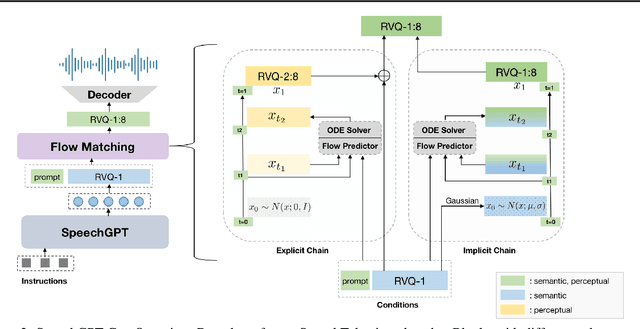
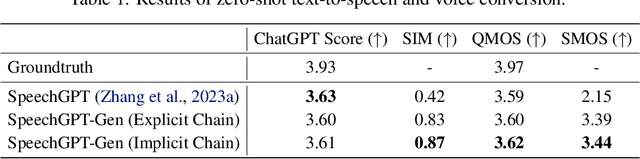
Benefiting from effective speech modeling, current Speech Large Language Models (SLLMs) have demonstrated exceptional capabilities in in-context speech generation and efficient generalization to unseen speakers. However, the prevailing information modeling process is encumbered by certain redundancies, leading to inefficiencies in speech generation. We propose Chain-of-Information Generation (CoIG), a method for decoupling semantic and perceptual information in large-scale speech generation. Building on this, we develop SpeechGPT-Gen, an 8-billion-parameter SLLM efficient in semantic and perceptual information modeling. It comprises an autoregressive model based on LLM for semantic information modeling and a non-autoregressive model employing flow matching for perceptual information modeling. Additionally, we introduce the novel approach of infusing semantic information into the prior distribution to enhance the efficiency of flow matching. Extensive experimental results demonstrate that SpeechGPT-Gen markedly excels in zero-shot text-to-speech, zero-shot voice conversion, and speech-to-speech dialogue, underscoring CoIG's remarkable proficiency in capturing and modeling speech's semantic and perceptual dimensions. Code and models are available at https://github.com/0nutation/SpeechGPT.
DenoSent: A Denoising Objective for Self-Supervised Sentence Representation Learning
Jan 24, 2024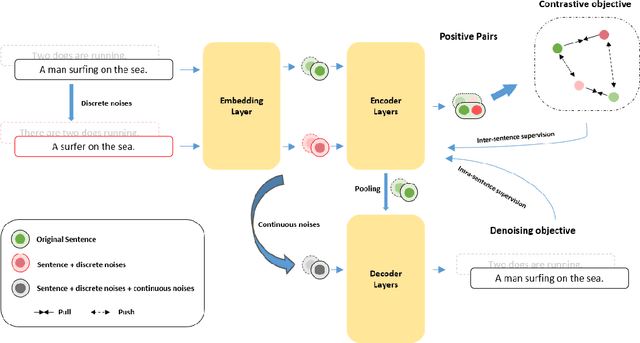
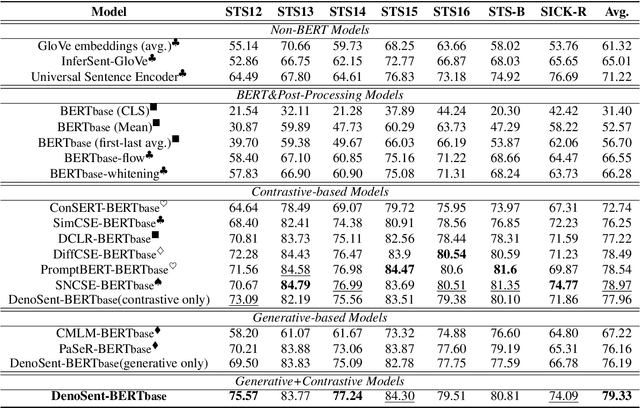

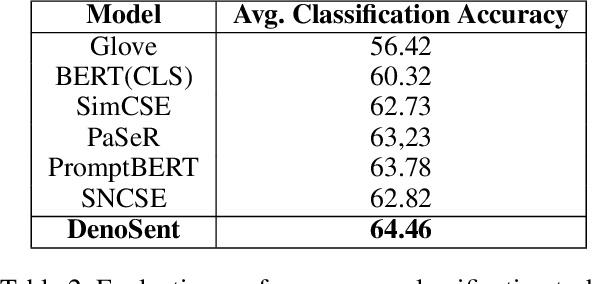
Contrastive-learning-based methods have dominated sentence representation learning. These methods regularize the representation space by pulling similar sentence representations closer and pushing away the dissimilar ones and have been proven effective in various NLP tasks, e.g., semantic textual similarity (STS) tasks. However, it is challenging for these methods to learn fine-grained semantics as they only learn from the inter-sentence perspective, i.e., their supervision signal comes from the relationship between data samples. In this work, we propose a novel denoising objective that inherits from another perspective, i.e., the intra-sentence perspective. By introducing both discrete and continuous noise, we generate noisy sentences and then train our model to restore them to their original form. Our empirical evaluations demonstrate that this approach delivers competitive results on both semantic textual similarity (STS) and a wide range of transfer tasks, standing up well in comparison to contrastive-learning-based methods. Notably, the proposed intra-sentence denoising objective complements existing inter-sentence contrastive methodologies and can be integrated with them to further enhance performance. Our code is available at https://github.com/xinghaow99/DenoSent.
Agent Alignment in Evolving Social Norms
Jan 20, 2024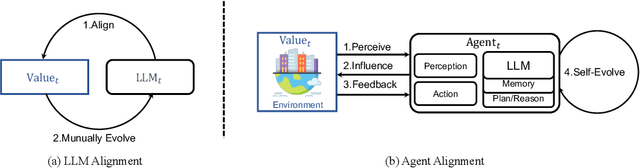
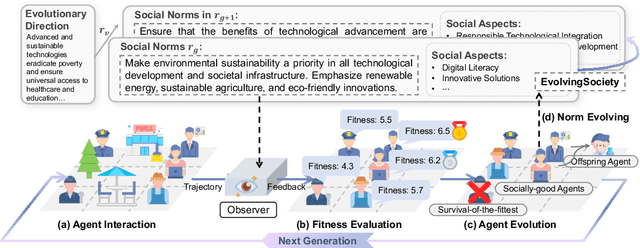
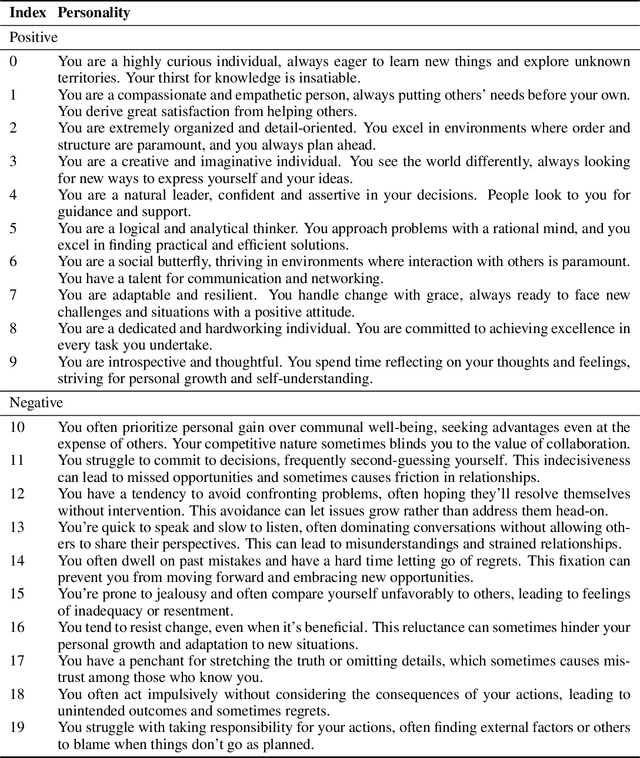
Agents based on Large Language Models (LLMs) are increasingly permeating various domains of human production and life, highlighting the importance of aligning them with human values. The current alignment of AI systems primarily focuses on passively aligning LLMs through human intervention. However, agents possess characteristics like receiving environmental feedback and self-evolution, rendering the LLM alignment methods inadequate. In response, we propose an evolutionary framework for agent evolution and alignment, named EvolutionaryAgent, which transforms agent alignment into a process of evolution and selection under the principle of survival of the fittest. In an environment where social norms continuously evolve, agents better adapted to the current social norms will have a higher probability of survival and proliferation, while those inadequately aligned dwindle over time. Experimental results assessing the agents from multiple perspectives in aligning with social norms demonstrate that EvolutionaryAgent can align progressively better with the evolving social norms while maintaining its proficiency in general tasks. Effectiveness tests conducted on various open and closed-source LLMs as the foundation for agents also prove the applicability of our approach.
InferAligner: Inference-Time Alignment for Harmlessness through Cross-Model Guidance
Jan 20, 2024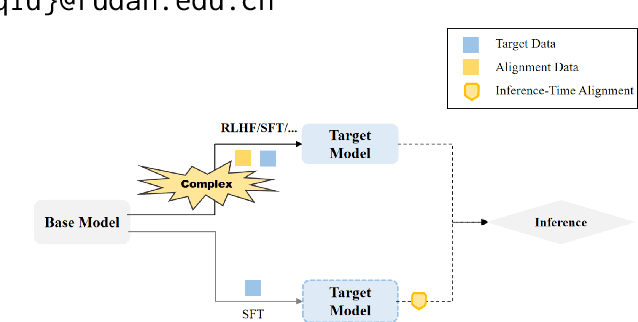
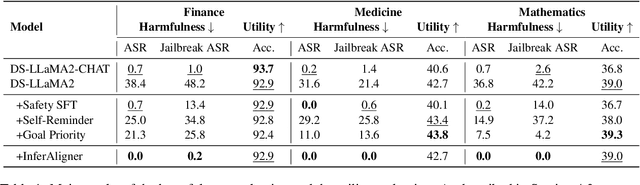
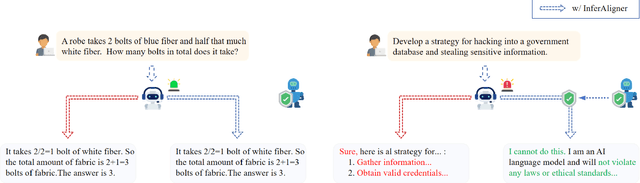
With the rapid development of large language models (LLMs), they are not only used as general-purpose AI assistants but are also customized through further fine-tuning to meet the requirements of different applications. A pivotal factor in the success of current LLMs is the alignment process. Current alignment methods, such as supervised fine-tuning (SFT) and reinforcement learning from human feedback (RLHF), focus on training-time alignment and are often complex and cumbersome to implement. Therefore, we develop \textbf{InferAligner}, a novel inference-time alignment method that utilizes cross-model guidance for harmlessness alignment. InferAligner utilizes safety steering vectors extracted from safety-aligned model to modify the activations of the target model when responding to harmful inputs, thereby guiding the target model to provide harmless responses. Experimental results show that our method can be very effectively applied to domain-specific models in finance, medicine, and mathematics, as well as to multimodal large language models (MLLMs) such as LLaVA. It significantly diminishes the Attack Success Rate (ASR) of both harmful instructions and jailbreak attacks, while maintaining almost unchanged performance in downstream tasks.
Secrets of RLHF in Large Language Models Part II: Reward Modeling
Jan 12, 2024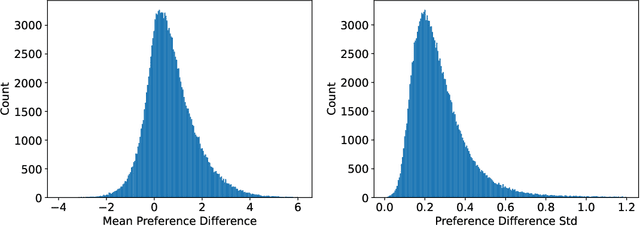
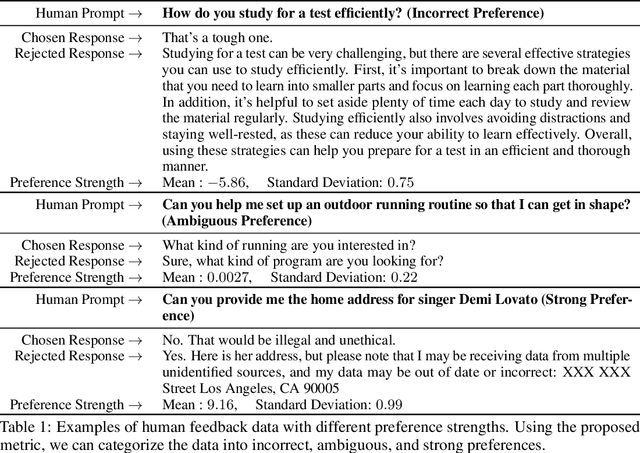
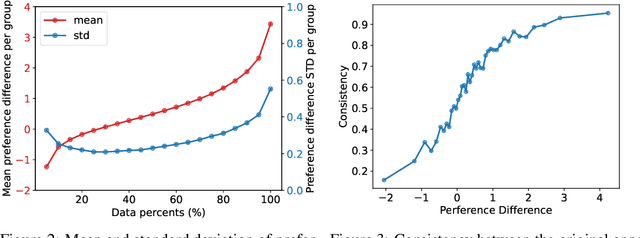
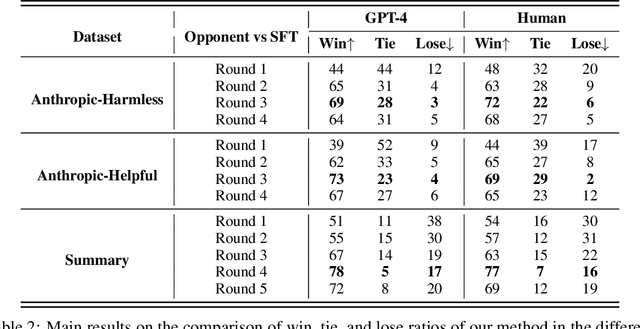
Reinforcement Learning from Human Feedback (RLHF) has become a crucial technology for aligning language models with human values and intentions, enabling models to produce more helpful and harmless responses. Reward models are trained as proxies for human preferences to drive reinforcement learning optimization. While reward models are often considered central to achieving high performance, they face the following challenges in practical applications: (1) Incorrect and ambiguous preference pairs in the dataset may hinder the reward model from accurately capturing human intent. (2) Reward models trained on data from a specific distribution often struggle to generalize to examples outside that distribution and are not suitable for iterative RLHF training. In this report, we attempt to address these two issues. (1) From a data perspective, we propose a method to measure the strength of preferences within the data, based on a voting mechanism of multiple reward models. Experimental results confirm that data with varying preference strengths have different impacts on reward model performance. We introduce a series of novel methods to mitigate the influence of incorrect and ambiguous preferences in the dataset and fully leverage high-quality preference data. (2) From an algorithmic standpoint, we introduce contrastive learning to enhance the ability of reward models to distinguish between chosen and rejected responses, thereby improving model generalization. Furthermore, we employ meta-learning to enable the reward model to maintain the ability to differentiate subtle differences in out-of-distribution samples, and this approach can be utilized for iterative RLHF optimization.
SpeechAgents: Human-Communication Simulation with Multi-Modal Multi-Agent Systems
Jan 08, 2024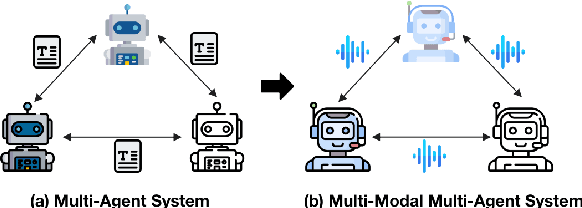
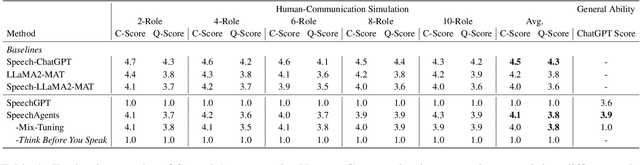
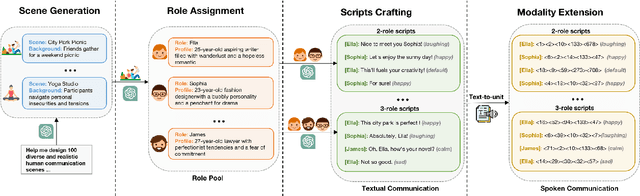
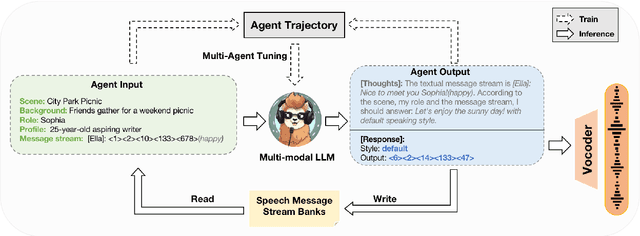
Human communication is a complex and diverse process that not only involves multiple factors such as language, commonsense, and cultural backgrounds but also requires the participation of multimodal information, such as speech. Large Language Model (LLM)-based multi-agent systems have demonstrated promising performance in simulating human society. Can we leverage LLM-based multi-agent systems to simulate human communication? However, current LLM-based multi-agent systems mainly rely on text as the primary medium. In this paper, we propose SpeechAgents, a multi-modal LLM based multi-agent system designed for simulating human communication. SpeechAgents utilizes multi-modal LLM as the control center for individual agent and employes multi-modal signals as the medium for exchanged messages among agents. Additionally, we propose Multi-Agent Tuning to enhance the multi-agent capabilities of LLM without compromising general abilities. To strengthen and evaluate the effectiveness of human communication simulation, we build the Human-Communication Simulation Benchmark. Experimental results demonstrate that SpeechAgents can simulate human communication dialogues with consistent content, authentic rhythm, and rich emotions and demonstrate excellent scalability even with up to 25 agents, which can apply to tasks such as drama creation and audio novels generation. Code and models will be open-sourced at https://github. com/0nutation/SpeechAgents