 Add to Chrome
 Add to Firefox
 Add to Edge
DiffusionGPT: LLM-Driven Text-to-Image Generation System
Jan 18, 2024
Diffusion models have opened up new avenues for the field of image generation, resulting in the proliferation of high-quality models shared on open-source platforms. However, a major challenge persists in current text-to-image systems are often unable to handle diverse inputs, or are limited to single model results. Current unified attempts often fall into two orthogonal aspects: i) parse Diverse Prompts in input stage; ii) activate expert model to output. To combine the best of both worlds, we propose DiffusionGPT, which leverages Large Language Models (LLM) to offer a unified generation system capable of seamlessly accommodating various types of prompts and integrating domain-expert models. DiffusionGPT constructs domain-specific Trees for various generative models based on prior knowledge. When provided with an input, the LLM parses the prompt and employs the Trees-of-Thought to guide the selection of an appropriate model, thereby relaxing input constraints and ensuring exceptional performance across diverse domains. Moreover, we introduce Advantage Databases, where the Tree-of-Thought is enriched with human feedback, aligning the model selection process with human preferences. Through extensive experiments and comparisons, we demonstrate the effectiveness of DiffusionGPT, showcasing its potential for pushing the boundaries of image synthesis in diverse domains.

Passive Beamforming For Practical RIS-Assisted Communication Systems With Non-Ideal Hardware
Jan 15, 2024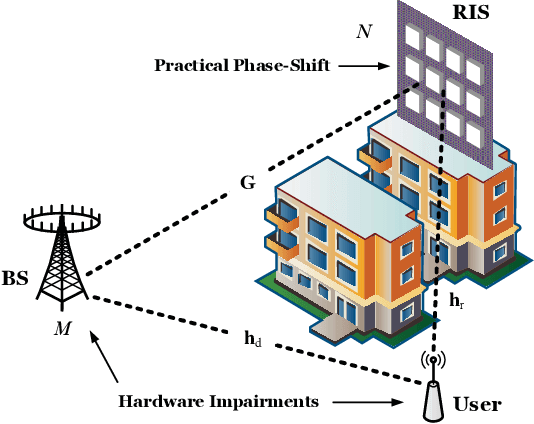
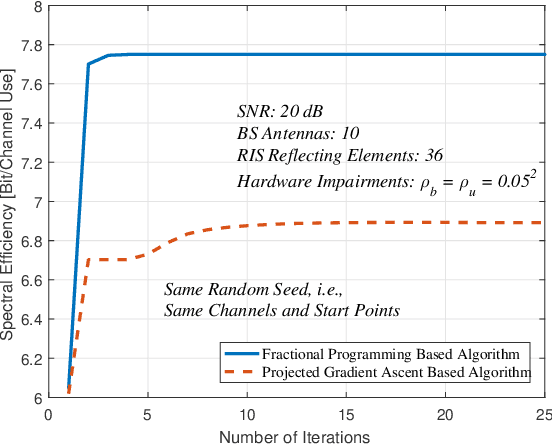
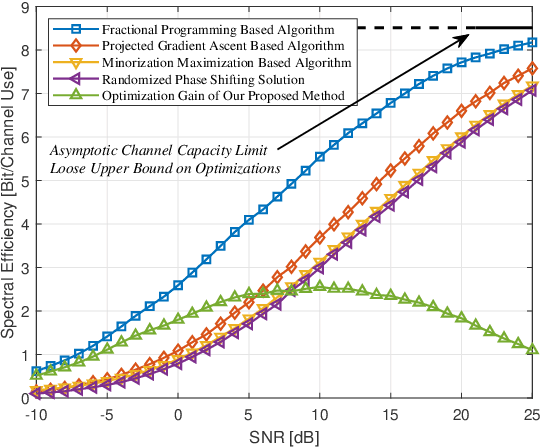
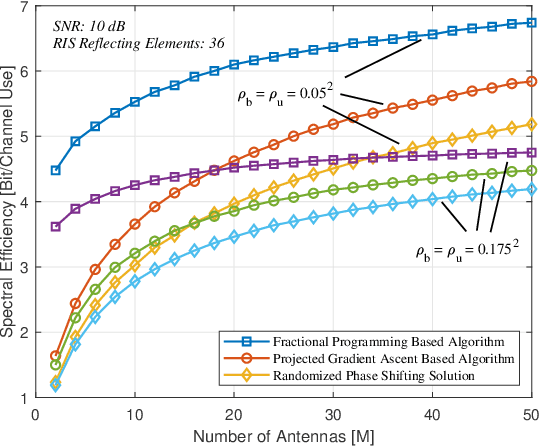
Reconfigurable intelligent surface (RIS) technology is a promising solution to improve the performance of existing wireless communications. To achieve its cost-effectiveness advantage, there inevitably exist certain hardware impairments in the system. Therefore, it is more reasonable to design passive beamforming in this scenario. Some existing research has considered such problems under transceiver impairments. However, their performance still leaves room for improvement, possibly due to their algorithms not properly handling the fractional structure of the objective function. To address this, the passive beamforming is redesigned in this correspondence paper, taking into account both transceiver impairments and the practical phase-shift model. We tackle the fractional structure of the problem by employing the quadratic transform. The remaining sub-problems are addressed utilizing the penalty-based method and the difference-of-convex programming. Since we provide closed-form solutions for all sub-problems, our algorithm is highly efficient. The simulation results demonstrate the superiority of our proposed algorithm.
Toward distortion-aware change detection in realistic scenarios
Jan 10, 2024In the conventional change detection (CD) pipeline, two manually registered and labeled remote sensing datasets serve as the input of the model for training and prediction. However, in realistic scenarios, data from different periods or sensors could fail to be aligned as a result of various coordinate systems. Geometric distortion caused by coordinate shifting remains a thorny issue for CD algorithms. In this paper, we propose a reusable self-supervised framework for bitemporal geometric distortion in CD tasks. The whole framework is composed of Pretext Representation Pre-training, Bitemporal Image Alignment, and Down-stream Decoder Fine-Tuning. With only single-stage pre-training, the key components of the framework can be reused for assistance in the bitemporal image alignment, while simultaneously enhancing the performance of the CD decoder. Experimental results in 2 large-scale realistic scenarios demonstrate that our proposed method can alleviate the bitemporal geometric distortion in CD tasks.
LEAP-VO: Long-term Effective Any Point Tracking for Visual Odometry
Jan 03, 2024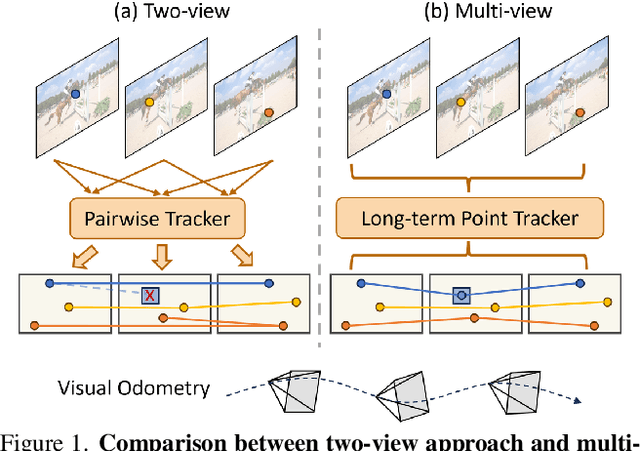
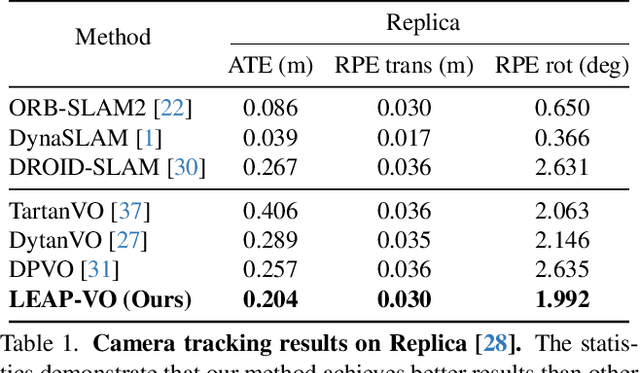
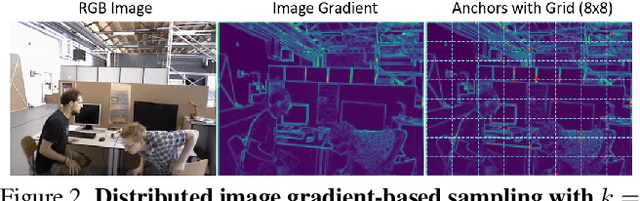

Visual odometry estimates the motion of a moving camera based on visual input. Existing methods, mostly focusing on two-view point tracking, often ignore the rich temporal context in the image sequence, thereby overlooking the global motion patterns and providing no assessment of the full trajectory reliability. These shortcomings hinder performance in scenarios with occlusion, dynamic objects, and low-texture areas. To address these challenges, we present the Long-term Effective Any Point Tracking (LEAP) module. LEAP innovatively combines visual, inter-track, and temporal cues with mindfully selected anchors for dynamic track estimation. Moreover, LEAP's temporal probabilistic formulation integrates distribution updates into a learnable iterative refinement module to reason about point-wise uncertainty. Based on these traits, we develop LEAP-VO, a robust visual odometry system adept at handling occlusions and dynamic scenes. Our mindful integration showcases a novel practice by employing long-term point tracking as the front-end. Extensive experiments demonstrate that the proposed pipeline significantly outperforms existing baselines across various visual odometry benchmarks.
Boosting Large Language Model for Speech Synthesis: An Empirical Study
Dec 30, 2023Large language models (LLMs) have made significant advancements in natural language processing and are concurrently extending the language ability to other modalities, such as speech and vision. Nevertheless, most of the previous work focuses on prompting LLMs with perception abilities like auditory comprehension, and the effective approach for augmenting LLMs with speech synthesis capabilities remains ambiguous. In this paper, we conduct a comprehensive empirical exploration of boosting LLMs with the ability to generate speech, by combining pre-trained LLM LLaMA/OPT and text-to-speech synthesis model VALL-E. We compare three integration methods between LLMs and speech synthesis models, including directly fine-tuned LLMs, superposed layers of LLMs and VALL-E, and coupled LLMs and VALL-E using LLMs as a powerful text encoder. Experimental results show that, using LoRA method to fine-tune LLMs directly to boost the speech synthesis capability does not work well, and superposed LLMs and VALL-E can improve the quality of generated speech both in speaker similarity and word error rate (WER). Among these three methods, coupled methods leveraging LLMs as the text encoder can achieve the best performance, making it outperform original speech synthesis models with a consistently better speaker similarity and a significant (10.9%) WER reduction.
Exploring 3D-aware Lifespan Face Aging via Disentangled Shape-Texture Representations
Dec 28, 2023Existing face aging methods often focus on modeling either texture aging or using an entangled shape-texture representation to achieve face aging. However, shape and texture are two distinct factors that mutually affect the human face aging process. In this paper, we propose 3D-STD, a novel 3D-aware Shape-Texture Disentangled face aging network that explicitly disentangles the facial image into shape and texture representations using 3D face reconstruction. Additionally, to facilitate high-fidelity texture synthesis, we propose a novel texture generation method based on Empirical Mode Decomposition (EMD). Extensive qualitative and quantitative experiments show that our method achieves state-of-the-art performance in terms of shape and texture transformation. Moreover, our method supports producing plausible 3D face aging results, which is rarely accomplished by current methods.
SSR-Encoder: Encoding Selective Subject Representation for Subject-Driven Generation
Dec 26, 2023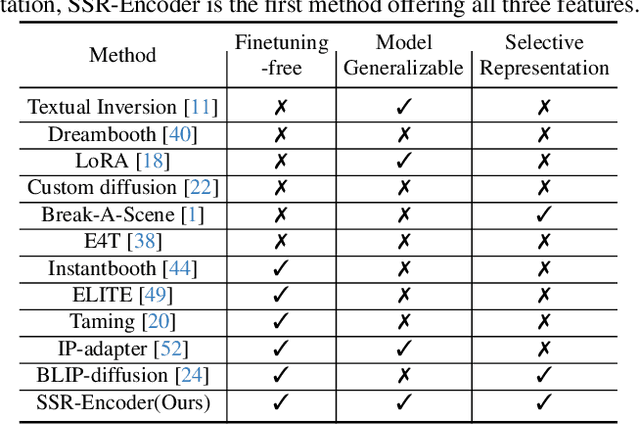
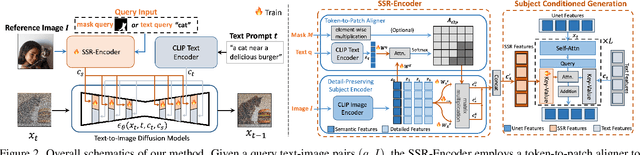
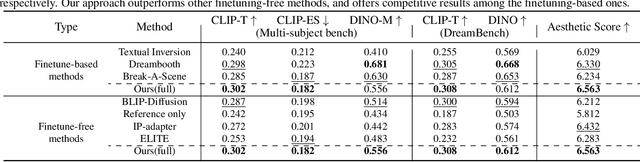
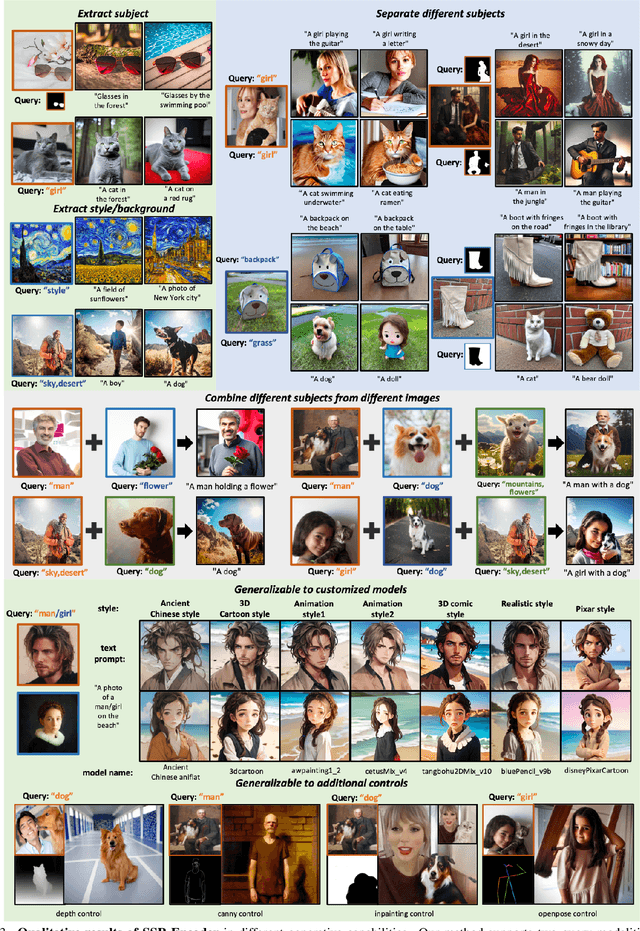
Recent advancements in subject-driven image generation have led to zero-shot generation, yet precise selection and focus on crucial subject representations remain challenging. Addressing this, we introduce the SSR-Encoder, a novel architecture designed for selectively capturing any subject from single or multiple reference images. It responds to various query modalities including text and masks, without necessitating test-time fine-tuning. The SSR-Encoder combines a Token-to-Patch Aligner that aligns query inputs with image patches and a Detail-Preserving Subject Encoder for extracting and preserving fine features of the subjects, thereby generating subject embeddings. These embeddings, used in conjunction with original text embeddings, condition the generation process. Characterized by its model generalizability and efficiency, the SSR-Encoder adapts to a range of custom models and control modules. Enhanced by the Embedding Consistency Regularization Loss for improved training, our extensive experiments demonstrate its effectiveness in versatile and high-quality image generation, indicating its broad applicability. Project page: https://ssr-encoder.github.io
Near-Field Localization and Phase Shift Optimization for RIS-Assisted Non-Ideal OFDM Systems
Dec 19, 2023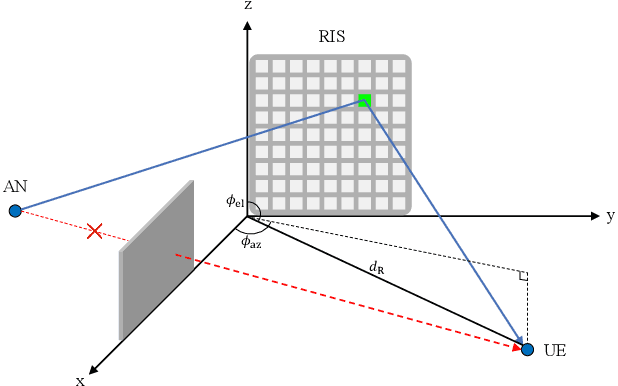
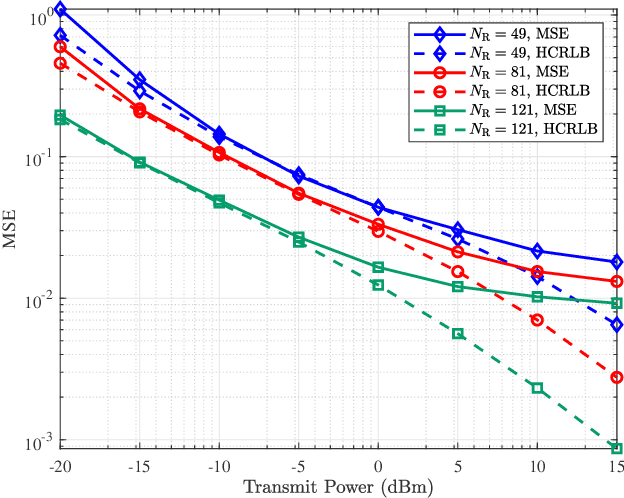
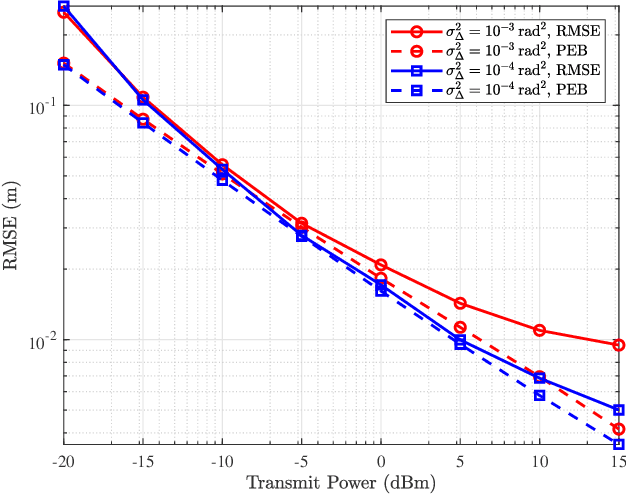
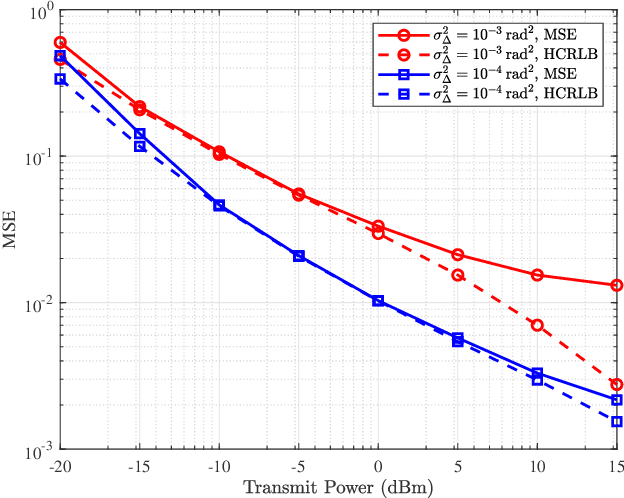
By incorporating reconfigurable intelligent surface (RIS) into communication-assisted localization systems, the issue of signal blockage caused by obstacles can be addressed, and passive beamforming can be employed to enhance localization accuracy. However, existing works mainly consider ideal channels and do not account for the effects of realistic impairments like carrier frequency offset (CFO) and phase noise (PN) on localization. This paper proposes an iterative joint estimation algorithm for CFO, PN, and user position based on maximum a posteriori (MAP) criterion and gradient descent (GD) algorithm. Closed-form expressions for CFO and PN updates are provided. The hybrid Cram\'{e}r-Rao lower bound (HCRLB) for the estimation parameters is derived, and the ambiguity in CFO and PN estimation is analyzed. To minimize the HCRLB, a non-convex RIS shift optimization problem is formulated and is transformed into a convex semidefinite programming (SDP) problem using the technique of semidefinite relaxation (SDR) and Schur complement. After optimizing the RIS phase shift, the theoretical positioning accuracy within the area of interest (AOI) can be improved by two orders of magnitude, with a maximum positioning root mean square error (RMSE) lower than $\rm 10^{-2}m$.
Rethinking Dimensional Rationale in Graph Contrastive Learning from Causal Perspective
Dec 16, 2023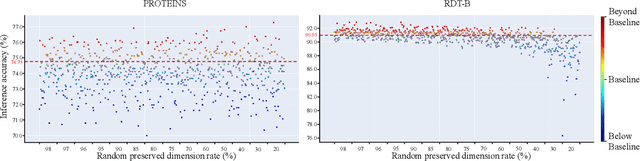
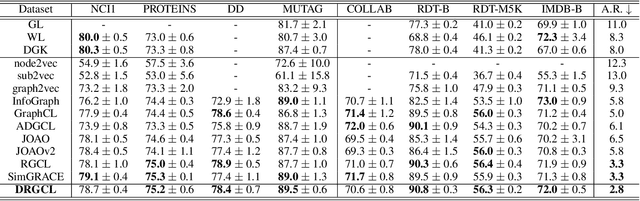
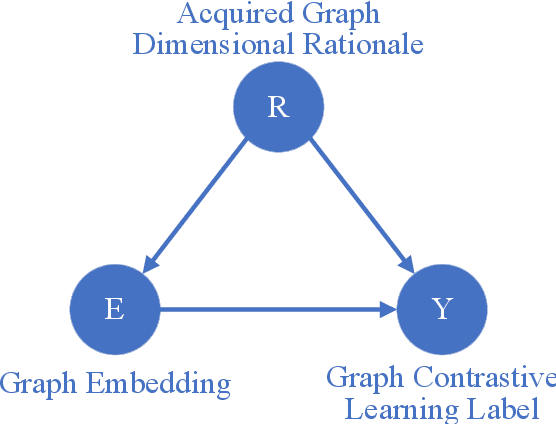
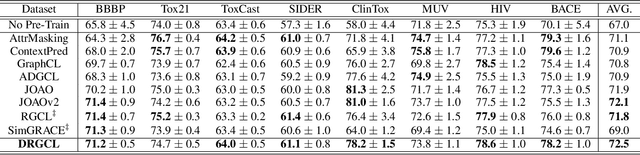
Graph contrastive learning is a general learning paradigm excelling at capturing invariant information from diverse perturbations in graphs. Recent works focus on exploring the structural rationale from graphs, thereby increasing the discriminability of the invariant information. However, such methods may incur in the mis-learning of graph models towards the interpretability of graphs, and thus the learned noisy and task-agnostic information interferes with the prediction of graphs. To this end, with the purpose of exploring the intrinsic rationale of graphs, we accordingly propose to capture the dimensional rationale from graphs, which has not received sufficient attention in the literature. The conducted exploratory experiments attest to the feasibility of the aforementioned roadmap. To elucidate the innate mechanism behind the performance improvement arising from the dimensional rationale, we rethink the dimensional rationale in graph contrastive learning from a causal perspective and further formalize the causality among the variables in the pre-training stage to build the corresponding structural causal model. On the basis of the understanding of the structural causal model, we propose the dimensional rationale-aware graph contrastive learning approach, which introduces a learnable dimensional rationale acquiring network and a redundancy reduction constraint. The learnable dimensional rationale acquiring network is updated by leveraging a bi-level meta-learning technique, and the redundancy reduction constraint disentangles the redundant features through a decorrelation process during learning. Empirically, compared with state-of-the-art methods, our method can yield significant performance boosts on various benchmarks with respect to discriminability and transferability. The code implementation of our method is available at https://github.com/ByronJi/DRGCL.
Unsupervised Social Event Detection via Hybrid Graph Contrastive Learning and Reinforced Incremental Clustering
Dec 15, 2023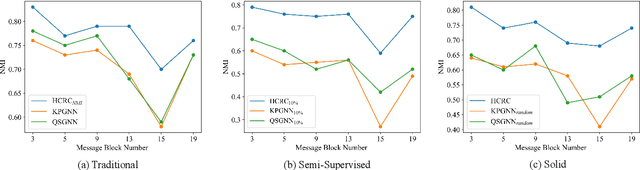
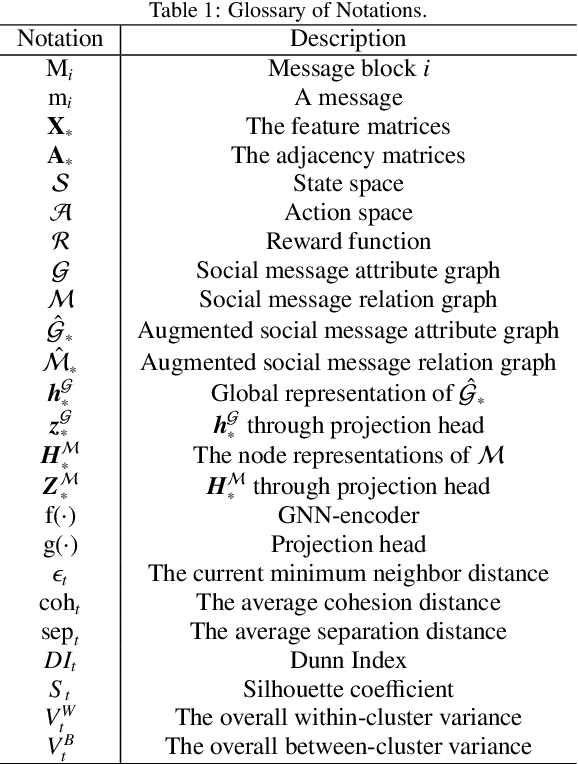


Detecting events from social media data streams is gradually attracting researchers. The innate challenge for detecting events is to extract discriminative information from social media data thereby assigning the data into different events. Due to the excessive diversity and high updating frequency of social data, using supervised approaches to detect events from social messages is hardly achieved. To this end, recent works explore learning discriminative information from social messages by leveraging graph contrastive learning (GCL) and embedding clustering in an unsupervised manner. However, two intrinsic issues exist in benchmark methods: conventional GCL can only roughly explore partial attributes, thereby insufficiently learning the discriminative information of social messages; for benchmark methods, the learned embeddings are clustered in the latent space by taking advantage of certain specific prior knowledge, which conflicts with the principle of unsupervised learning paradigm. In this paper, we propose a novel unsupervised social media event detection method via hybrid graph contrastive learning and reinforced incremental clustering (HCRC), which uses hybrid graph contrastive learning to comprehensively learn semantic and structural discriminative information from social messages and reinforced incremental clustering to perform efficient clustering in a solidly unsupervised manner. We conduct comprehensive experiments to evaluate HCRC on the Twitter and Maven datasets. The experimental results demonstrate that our approach yields consistent significant performance boosts. In traditional incremental setting, semi-supervised incremental setting and solidly unsupervised setting, the model performance has achieved maximum improvements of 53%, 45%, and 37%, respectively.