 Add to Chrome
 Add to Firefox
 Add to Edge
EIPE-text: Evaluation-Guided Iterative Plan Extraction for Long-Form Narrative Text Generation
Oct 12, 2023
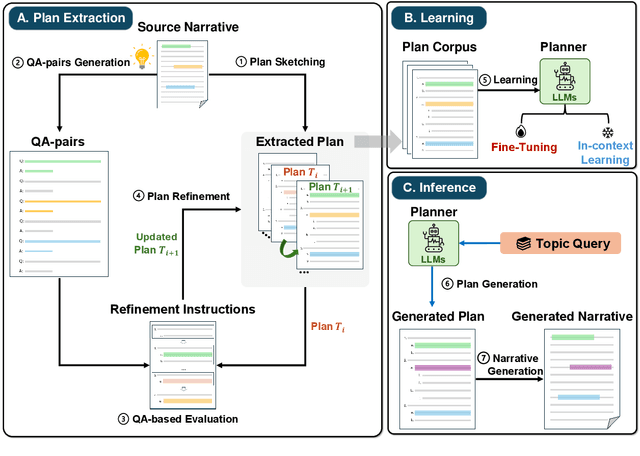
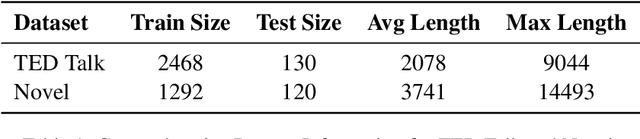
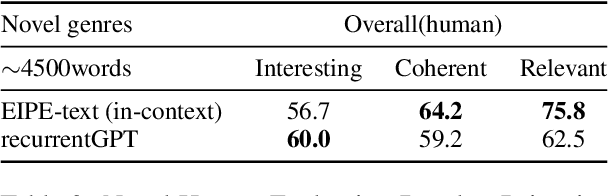
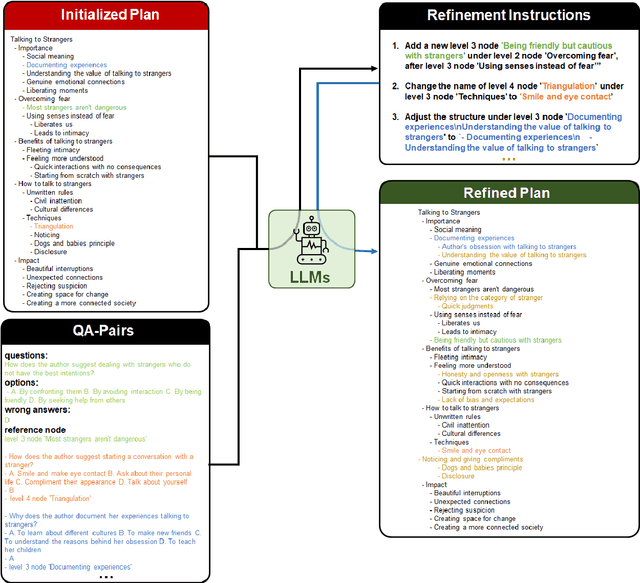
Plan-and-Write is a common hierarchical approach in long-form narrative text generation, which first creates a plan to guide the narrative writing. Following this approach, several studies rely on simply prompting large language models for planning, which often yields suboptimal results. In this paper, we propose a new framework called Evaluation-guided Iterative Plan Extraction for long-form narrative text generation (EIPE-text), which extracts plans from the corpus of narratives and utilizes the extracted plans to construct a better planner. EIPE-text has three stages: plan extraction, learning, and inference. In the plan extraction stage, it iteratively extracts and improves plans from the narrative corpus and constructs a plan corpus. We propose a question answer (QA) based evaluation mechanism to automatically evaluate the plans and generate detailed plan refinement instructions to guide the iterative improvement. In the learning stage, we build a better planner by fine-tuning with the plan corpus or in-context learning with examples in the plan corpus. Finally, we leverage a hierarchical approach to generate long-form narratives. We evaluate the effectiveness of EIPE-text in the domains of novels and storytelling. Both GPT-4-based evaluations and human evaluations demonstrate that our method can generate more coherent and relevant long-form narratives. Our code will be released in the future.

ToRA: A Tool-Integrated Reasoning Agent for Mathematical Problem Solving
Oct 04, 2023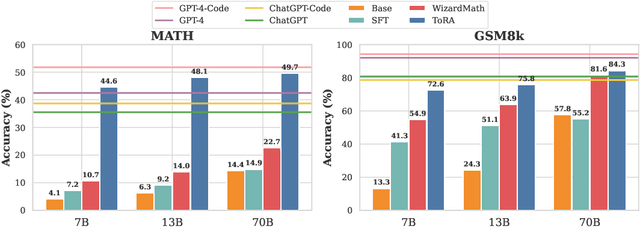

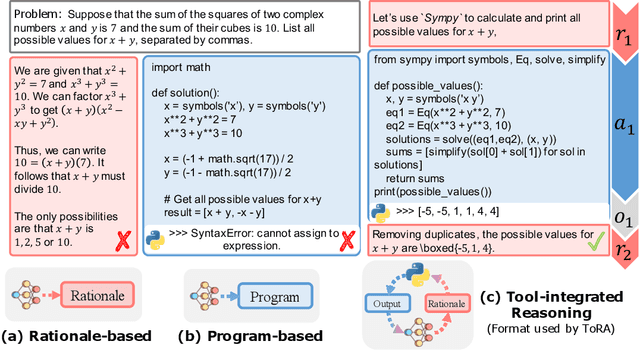
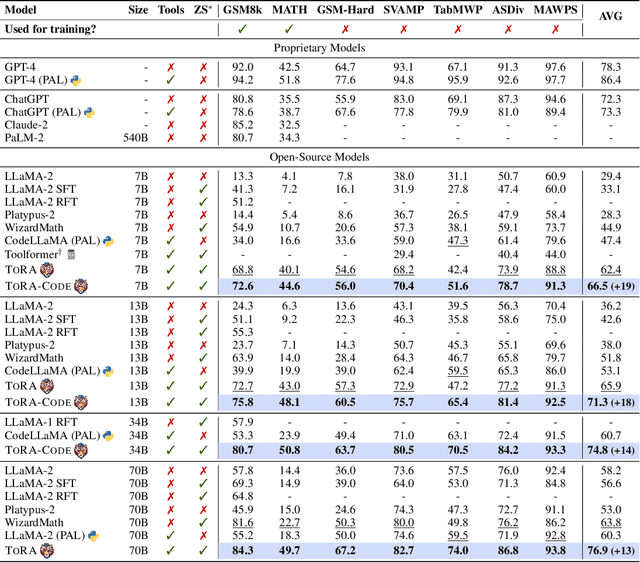
Large language models have made significant progress in various language tasks, yet they still struggle with complex mathematics. In this paper, we propose ToRA a series of Tool-integrated Reasoning Agents designed to solve challenging mathematical problems by seamlessly integrating natural language reasoning with the utilization of external tools (e.g., computation libraries and symbolic solvers), thereby amalgamating the analytical prowess of language and the computational efficiency of tools. To train ToRA, we curate interactive tool-use trajectories on mathematical datasets, apply imitation learning on the annotations, and propose output space shaping to further refine models' reasoning behavior. As a result, ToRA models significantly outperform open-source models on 10 mathematical reasoning datasets across all scales with 13%-19% absolute improvements on average. Notably, ToRA-7B reaches 44.6% on the competition-level dataset MATH, surpassing the best open-source model WizardMath-70B by 22% absolute. ToRA-Code-34B is also the first open-source model that achieves an accuracy exceeding 50% on MATH, which significantly outperforms GPT-4's CoT result, and is competitive with GPT-4 solving problems with programs. Additionally, we conduct a comprehensive analysis of the benefits and remaining challenges of tool interaction for mathematical reasoning, providing valuable insights for future research.
Enhancing Large Language Models in Coding Through Multi-Perspective Self-Consistency
Sep 29, 2023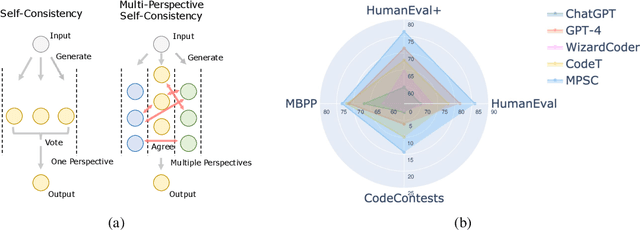
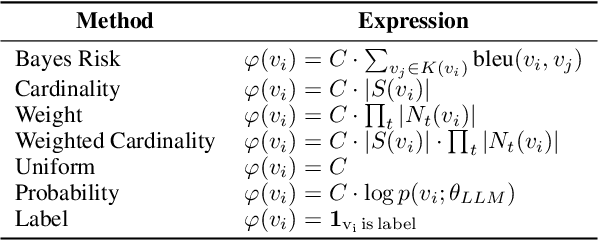
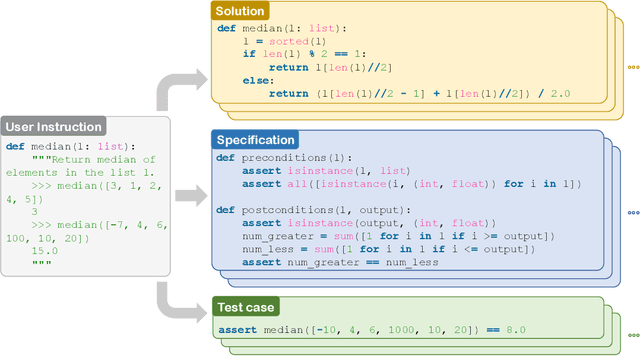
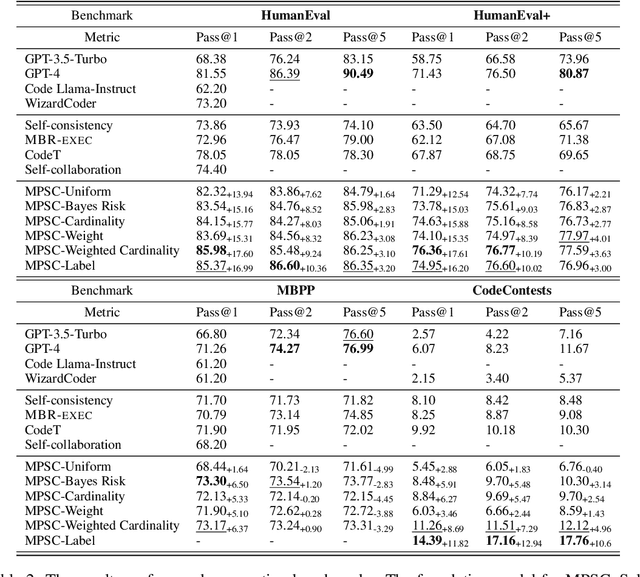
Large language models (LLMs) have exhibited remarkable ability in textual generation. However, in complex reasoning tasks such as code generation, generating the correct answer in a single attempt remains a formidable challenge for LLMs. Previous research has explored solutions by aggregating multiple outputs, leveraging the consistency among them. However, none of them have comprehensively captured this consistency from different perspectives. In this paper, we propose the Multi-Perspective Self-Consistency (MPSC) framework, a novel decoding strategy for LLM that incorporates both inter-consistency across outputs from multiple perspectives and intra-consistency within a single perspective. Specifically, we ask LLMs to sample multiple diverse outputs from various perspectives for a given query and then construct a multipartite graph based on them. With two predefined measures of consistency, we embed both inter- and intra-consistency information into the graph. The optimal choice is then determined based on consistency analysis in the graph. We conduct comprehensive evaluation on the code generation task by introducing solution, specification and test case as three perspectives. We leverage a code interpreter to quantitatively measure the inter-consistency and propose several intra-consistency measure functions. Our MPSC framework significantly boosts the performance on various popular benchmarks, including HumanEval (+17.60%), HumanEval Plus (+17.61%), MBPP (+6.50%) and CodeContests (+11.82%) in Pass@1, when compared to original outputs generated from ChatGPT, and even surpassing GPT-4.
LayoutNUWA: Revealing the Hidden Layout Expertise of Large Language Models
Sep 19, 2023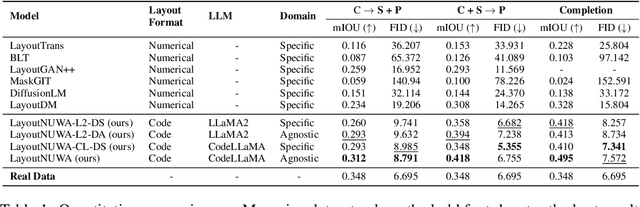
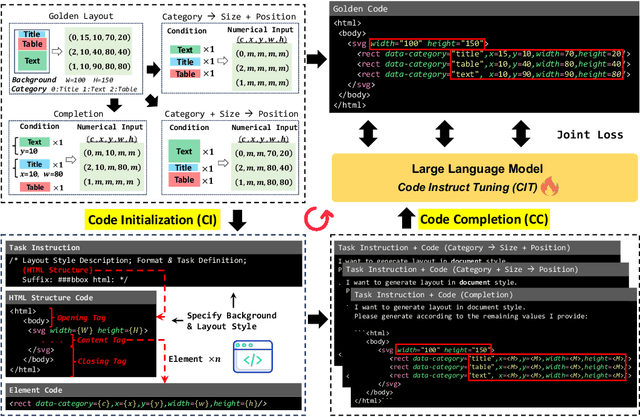
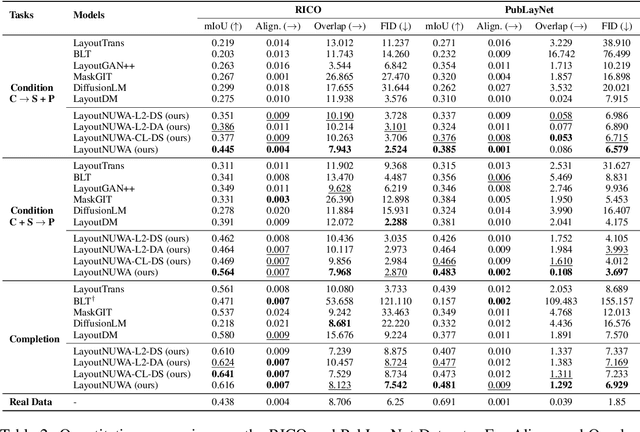
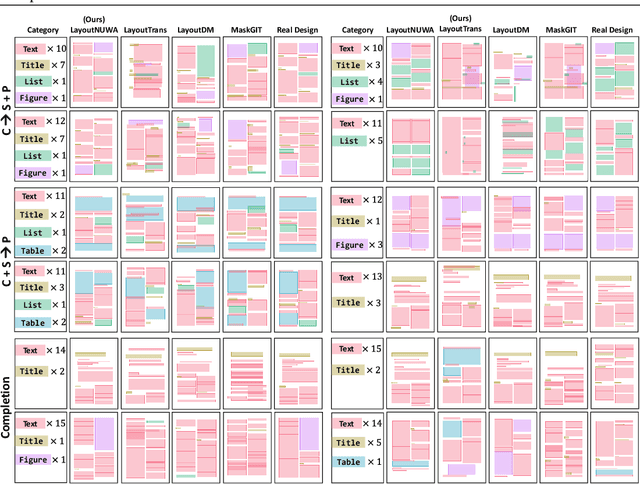
Graphic layout generation, a growing research field, plays a significant role in user engagement and information perception. Existing methods primarily treat layout generation as a numerical optimization task, focusing on quantitative aspects while overlooking the semantic information of layout, such as the relationship between each layout element. In this paper, we propose LayoutNUWA, the first model that treats layout generation as a code generation task to enhance semantic information and harness the hidden layout expertise of large language models~(LLMs). More concretely, we develop a Code Instruct Tuning (CIT) approach comprising three interconnected modules: 1) the Code Initialization (CI) module quantifies the numerical conditions and initializes them as HTML code with strategically placed masks; 2) the Code Completion (CC) module employs the formatting knowledge of LLMs to fill in the masked portions within the HTML code; 3) the Code Rendering (CR) module transforms the completed code into the final layout output, ensuring a highly interpretable and transparent layout generation procedure that directly maps code to a visualized layout. We attain significant state-of-the-art performance (even over 50\% improvements) on multiple datasets, showcasing the strong capabilities of LayoutNUWA. Our code is available at https://github.com/ProjectNUWA/LayoutNUWA.
ORES: Open-vocabulary Responsible Visual Synthesis
Aug 26, 2023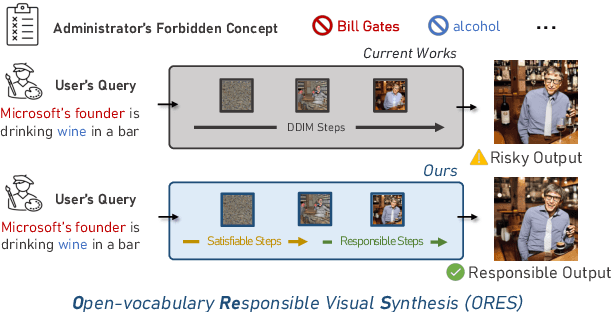

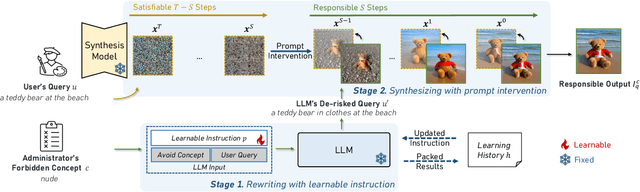

Avoiding synthesizing specific visual concepts is an essential challenge in responsible visual synthesis. However, the visual concept that needs to be avoided for responsible visual synthesis tends to be diverse, depending on the region, context, and usage scenarios. In this work, we formalize a new task, Open-vocabulary Responsible Visual Synthesis (ORES), where the synthesis model is able to avoid forbidden visual concepts while allowing users to input any desired content. To address this problem, we present a Two-stage Intervention (TIN) framework. By introducing 1) rewriting with learnable instruction through a large-scale language model (LLM) and 2) synthesizing with prompt intervention on a diffusion synthesis model, it can effectively synthesize images avoiding any concepts but following the user's query as much as possible. To evaluate on ORES, we provide a publicly available dataset, baseline models, and benchmark. Experimental results demonstrate the effectiveness of our method in reducing risks of image generation. Our work highlights the potential of LLMs in responsible visual synthesis. Our code and dataset is public available.
GameEval: Evaluating LLMs on Conversational Games
Aug 19, 2023The rapid advancements in large language models (LLMs) have presented challenges in evaluating those models. Existing evaluation methods are either reference-based or preference based, which inevitably need human intervention or introduce test bias caused by evaluator models. In this paper, we propose GameEval, a novel approach to evaluating LLMs through goal-driven conversational games, overcoming the limitations of previous methods. GameEval treats LLMs as game players and assigns them distinct roles with specific goals achieved by launching conversations of various forms, including discussion, question answering, and voting. We design three unique games with cooperative or adversarial objectives, accompanied by corresponding evaluation metrics, to show how this new paradigm comprehensively evaluates model performance.Through extensive experiments, we show that GameEval can effectively differentiate the capabilities of various LLMs, providing a comprehensive assessment of their integrated abilities to solve complex problems. Our public anonymous code is available at https://github.com/GameEval/GameEval.
DragNUWA: Fine-grained Control in Video Generation by Integrating Text, Image, and Trajectory
Aug 16, 2023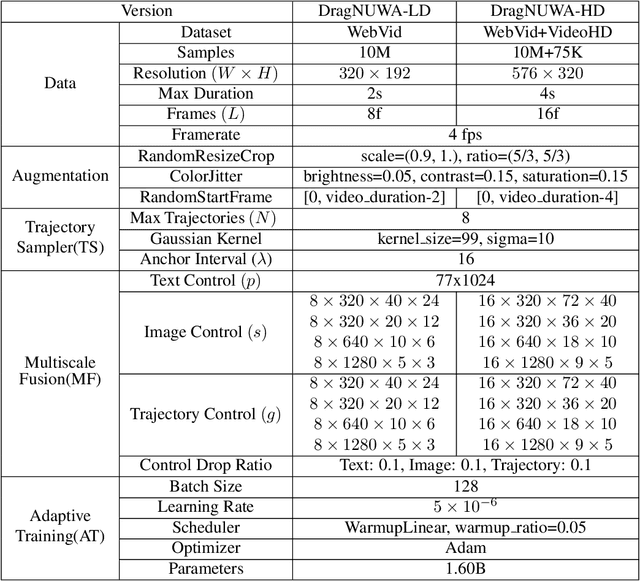
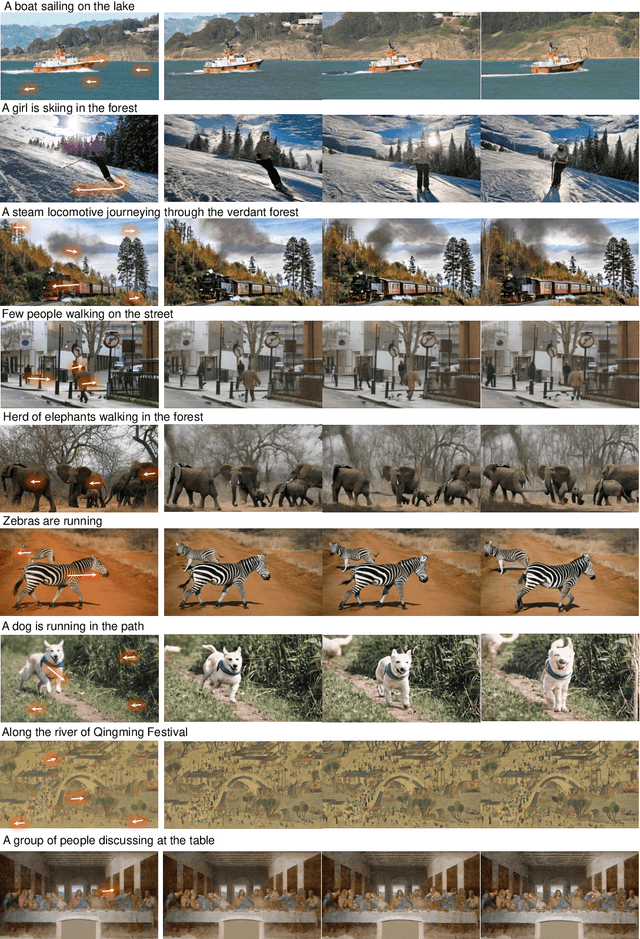
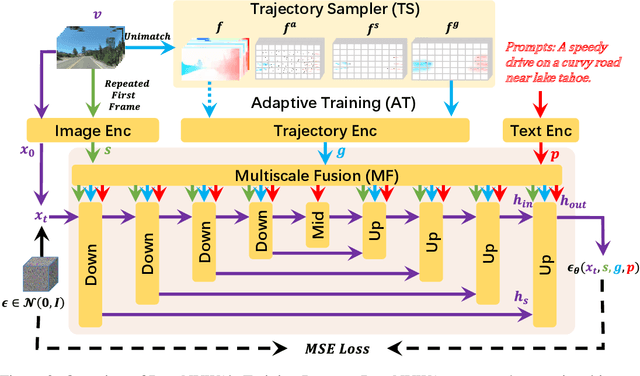
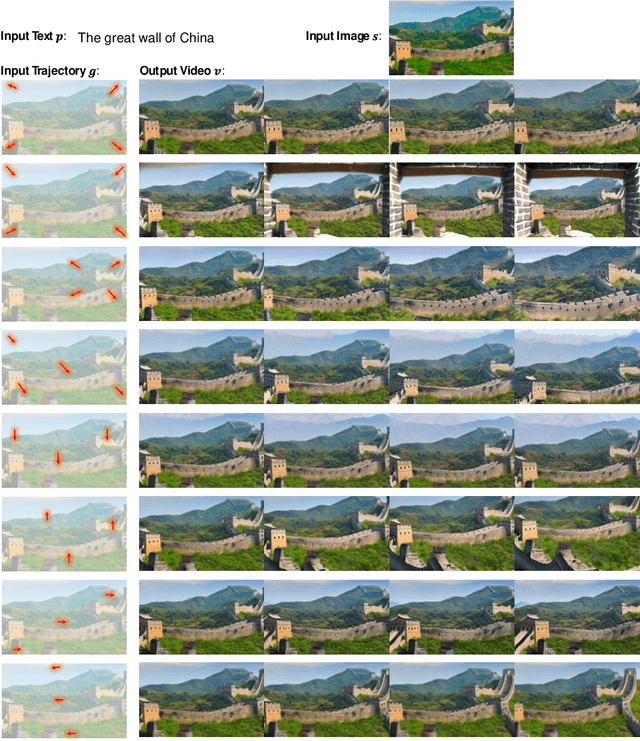
Controllable video generation has gained significant attention in recent years. However, two main limitations persist: Firstly, most existing works focus on either text, image, or trajectory-based control, leading to an inability to achieve fine-grained control in videos. Secondly, trajectory control research is still in its early stages, with most experiments being conducted on simple datasets like Human3.6M. This constraint limits the models' capability to process open-domain images and effectively handle complex curved trajectories. In this paper, we propose DragNUWA, an open-domain diffusion-based video generation model. To tackle the issue of insufficient control granularity in existing works, we simultaneously introduce text, image, and trajectory information to provide fine-grained control over video content from semantic, spatial, and temporal perspectives. To resolve the problem of limited open-domain trajectory control in current research, We propose trajectory modeling with three aspects: a Trajectory Sampler (TS) to enable open-domain control of arbitrary trajectories, a Multiscale Fusion (MF) to control trajectories in different granularities, and an Adaptive Training (AT) strategy to generate consistent videos following trajectories. Our experiments validate the effectiveness of DragNUWA, demonstrating its superior performance in fine-grained control in video generation. The homepage link is \url{https://www.microsoft.com/en-us/research/project/dragnuwa/}
Constructing Multilingual Code Search Dataset Using Neural Machine Translation
Jun 27, 2023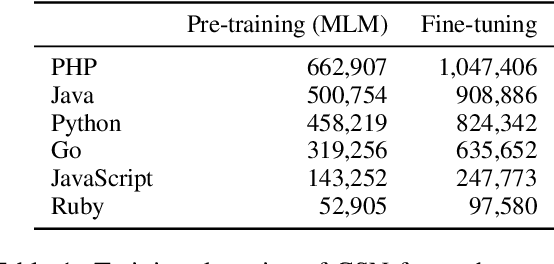
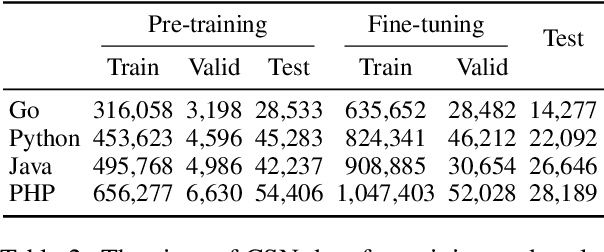
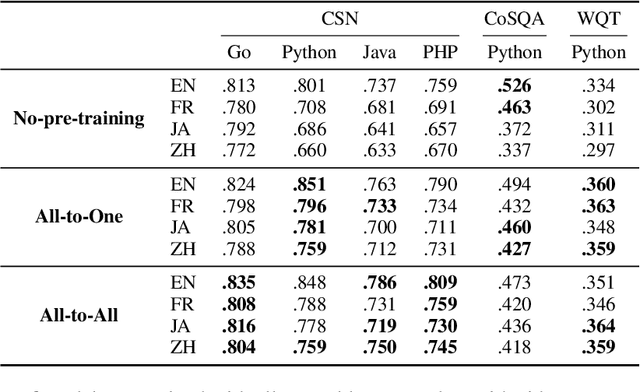
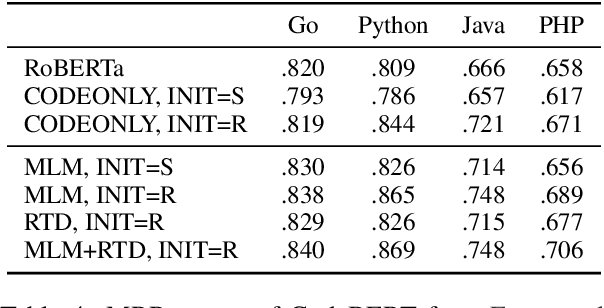
Code search is a task to find programming codes that semantically match the given natural language queries. Even though some of the existing datasets for this task are multilingual on the programming language side, their query data are only in English. In this research, we create a multilingual code search dataset in four natural and four programming languages using a neural machine translation model. Using our dataset, we pre-train and fine-tune the Transformer-based models and then evaluate them on multiple code search test sets. Our results show that the model pre-trained with all natural and programming language data has performed best in most cases. By applying back-translation data filtering to our dataset, we demonstrate that the translation quality affects the model's performance to a certain extent, but the data size matters more.
GroundNLQ @ Ego4D Natural Language Queries Challenge 2023
Jun 27, 2023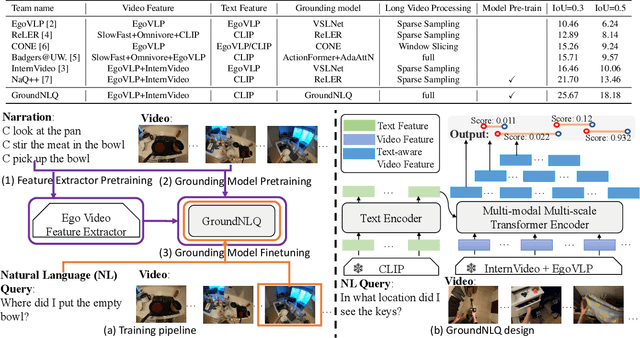
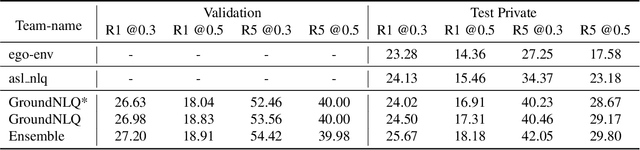
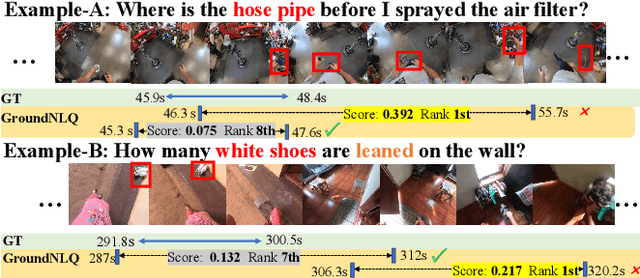
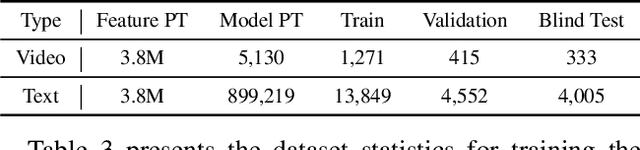
In this report, we present our champion solution for Ego4D Natural Language Queries (NLQ) Challenge in CVPR 2023. Essentially, to accurately ground in a video, an effective egocentric feature extractor and a powerful grounding model are required. Motivated by this, we leverage a two-stage pre-training strategy to train egocentric feature extractors and the grounding model on video narrations, and further fine-tune the model on annotated data. In addition, we introduce a novel grounding model GroundNLQ, which employs a multi-modal multi-scale grounding module for effective video and text fusion and various temporal intervals, especially for long videos. On the blind test set, GroundNLQ achieves 25.67 and 18.18 for R1@IoU=0.3 and R1@IoU=0.5, respectively, and surpasses all other teams by a noticeable margin. Our code will be released at\url{https://github.com/houzhijian/GroundNLQ}.
LongCoder: A Long-Range Pre-trained Language Model for Code Completion
Jun 26, 2023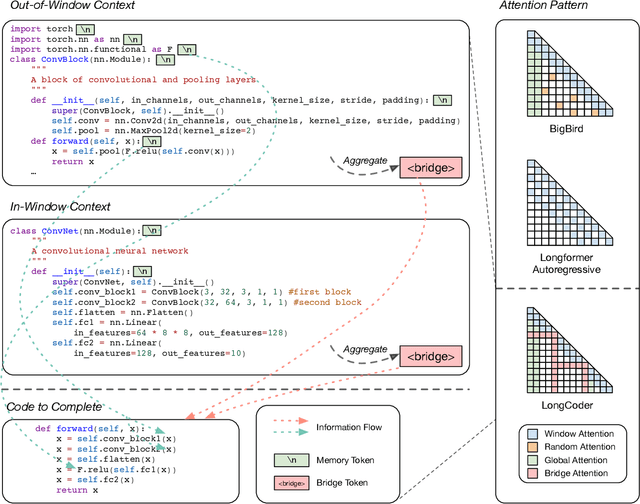
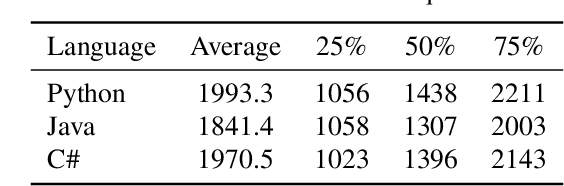
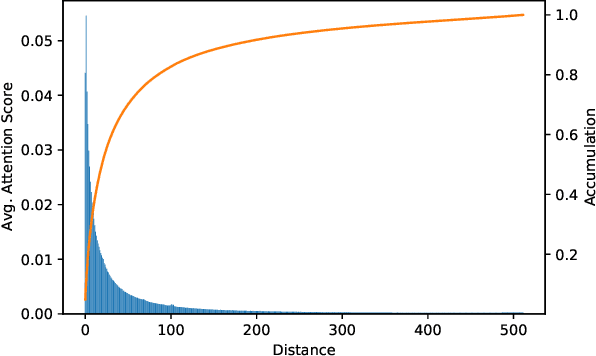
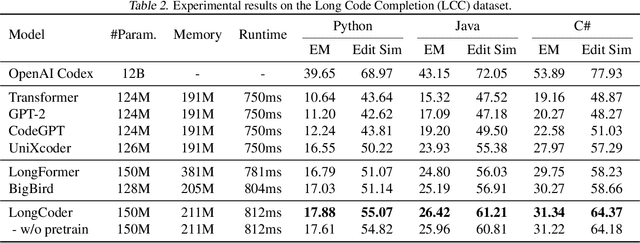
In this paper, we introduce a new task for code completion that focuses on handling long code input and propose a sparse Transformer model, called LongCoder, to address this task. LongCoder employs a sliding window mechanism for self-attention and introduces two types of globally accessible tokens - bridge tokens and memory tokens - to improve performance and efficiency. Bridge tokens are inserted throughout the input sequence to aggregate local information and facilitate global interaction, while memory tokens are included to highlight important statements that may be invoked later and need to be memorized, such as package imports and definitions of classes, functions, or structures. We conduct experiments on a newly constructed dataset that contains longer code context and the publicly available CodeXGLUE benchmark. Experimental results demonstrate that LongCoder achieves superior performance on code completion tasks compared to previous models while maintaining comparable efficiency in terms of computational resources during inference. All the codes and data are available at https://github.com/microsoft/CodeBERT.