 Add to Chrome
 Add to Firefox
 Add to Edge
MatNexus: A Comprehensive Text Mining and Analysis Suite for Materials Discover
Nov 07, 2023
MatNexus is a specialized software for the automated collection, processing, and analysis of text from scientific articles. Through an integrated suite of modules, the MatNexus facilitates the retrieval of scientific articles, processes textual data for insights, generates vector representations suitable for machine learning, and offers visualization capabilities for word embeddings. With the vast volume of scientific publications, MatNexus stands out as an end-to-end tool for researchers aiming to gain insights from scientific literature in material science, making the exploration of materials, such as the electrocatalyst examples we show here, efficient and insightful.

Optimization-Free Test-Time Adaptation for Cross-Person Activity Recognition
Oct 28, 2023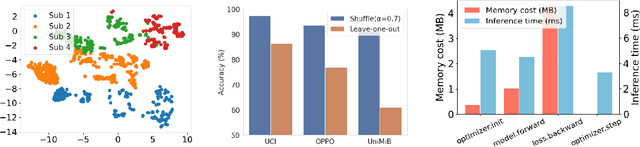
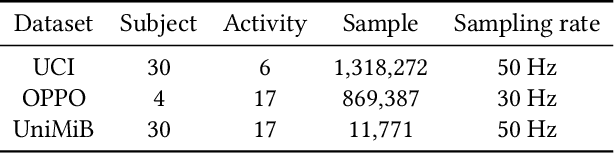

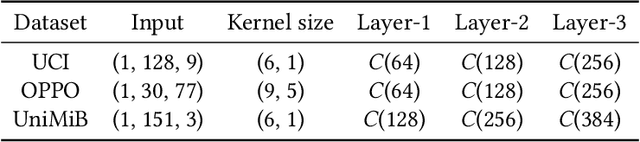
Human Activity Recognition (HAR) models often suffer from performance degradation in real-world applications due to distribution shifts in activity patterns across individuals. Test-Time Adaptation (TTA) is an emerging learning paradigm that aims to utilize the test stream to adjust predictions in real-time inference, which has not been explored in HAR before. However, the high computational cost of optimization-based TTA algorithms makes it intractable to run on resource-constrained edge devices. In this paper, we propose an Optimization-Free Test-Time Adaptation (OFTTA) framework for sensor-based HAR. OFTTA adjusts the feature extractor and linear classifier simultaneously in an optimization-free manner. For the feature extractor, we propose Exponential DecayTest-time Normalization (EDTN) to replace the conventional batch normalization (CBN) layers. EDTN combines CBN and Test-time batch Normalization (TBN) to extract reliable features against domain shifts with TBN's influence decreasing exponentially in deeper layers. For the classifier, we adjust the prediction by computing the distance between the feature and the prototype, which is calculated by a maintained support set. In addition, the update of the support set is based on the pseudo label, which can benefit from reliable features extracted by EDTN. Extensive experiments on three public cross-person HAR datasets and two different TTA settings demonstrate that OFTTA outperforms the state-of-the-art TTA approaches in both classification performance and computational efficiency. Finally, we verify the superiority of our proposed OFTTA on edge devices, indicating possible deployment in real applications. Our code is available at \href{https://github.com/Claydon-Wang/OFTTA}{this https URL}.
A Wireless AI-Generated Content (AIGC) Provisioning Framework Empowered by Semantic Communication
Oct 26, 2023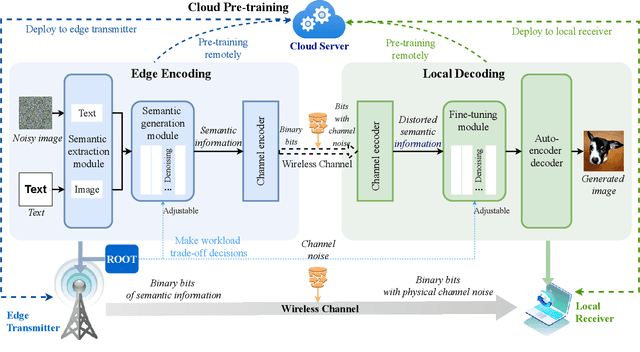
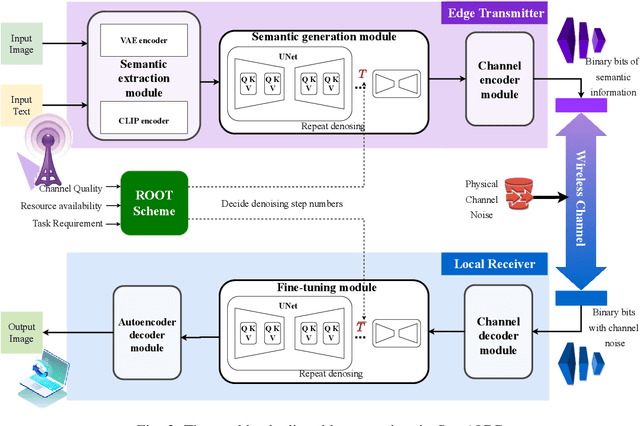
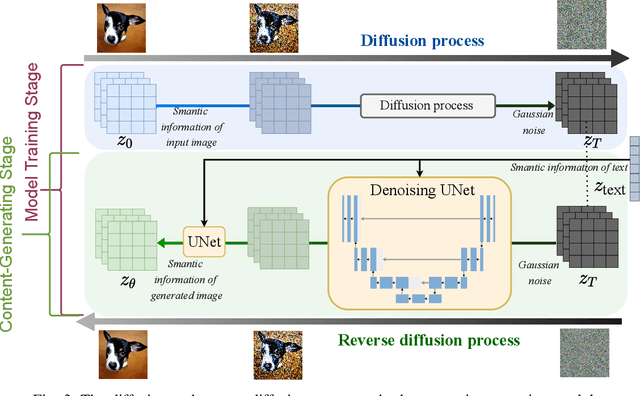
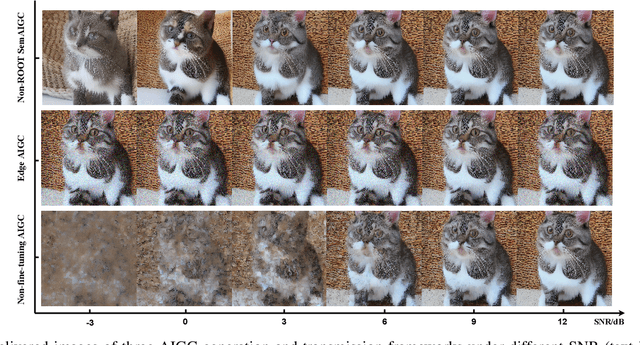
Generative AI applications are recently catering to a vast user base by creating diverse and high-quality AI-generated content (AIGC). With the proliferation of mobile devices and rapid growth of mobile traffic, providing ubiquitous access to high-quality AIGC services via wireless communication networks is becoming the future direction for AIGC products. However, it is challenging to provide optimal AIGC services in wireless networks with unstable channels, limited bandwidth resources, and unevenly distributed computational resources. To tackle these challenges, we propose a semantic communication (SemCom)-empowered AIGC (SemAIGC) generation and transmission framework, where only semantic information of the content rather than all the binary bits should be extracted and transmitted by using SemCom. Specifically, SemAIGC integrates diffusion-based models within the semantic encoder and decoder for efficient content generation and flexible adjustment of the computing workload of both transmitter and receiver. Meanwhile, we devise a resource-aware workload trade-off (ROOT) scheme into the SemAIGC framework to intelligently decide transmitter/receiver workload, thus adjusting the utilization of computational resource according to service requirements. Simulations verify the superiority of our proposed SemAIGC framework in terms of latency and content quality compared to conventional approaches.
Adapt Anything: Tailor Any Image Classifiers across Domains And Categories Using Text-to-Image Diffusion Models
Oct 25, 2023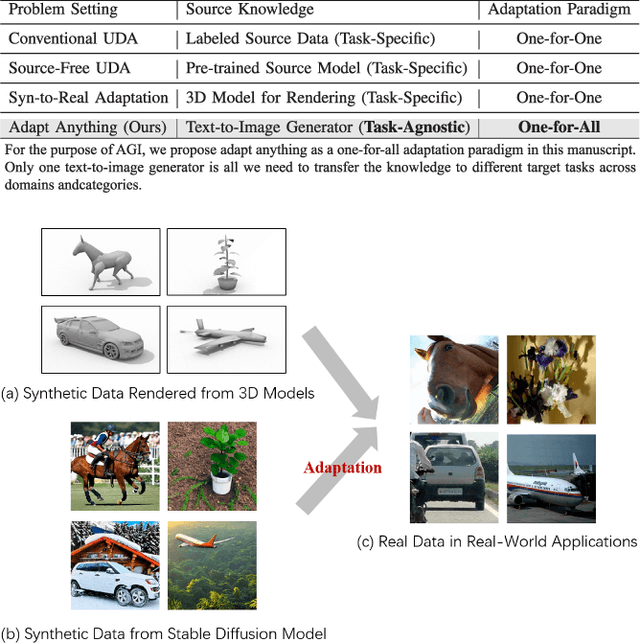
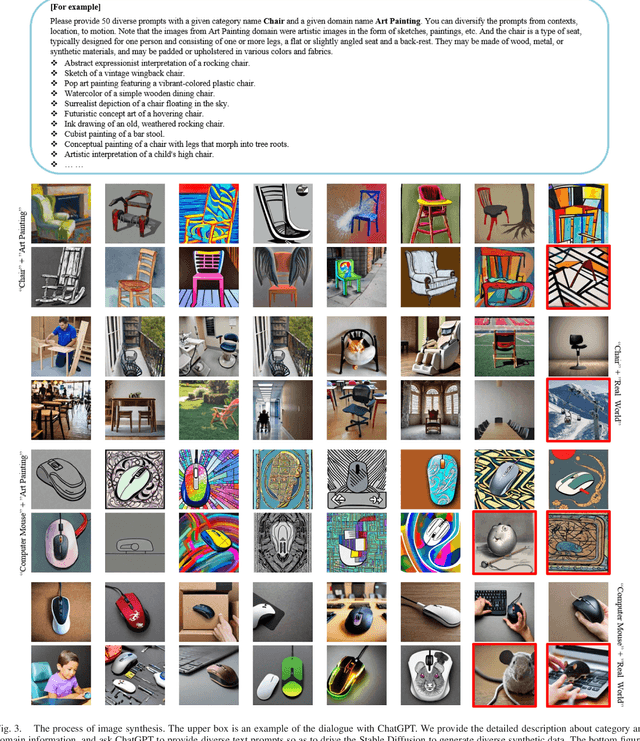
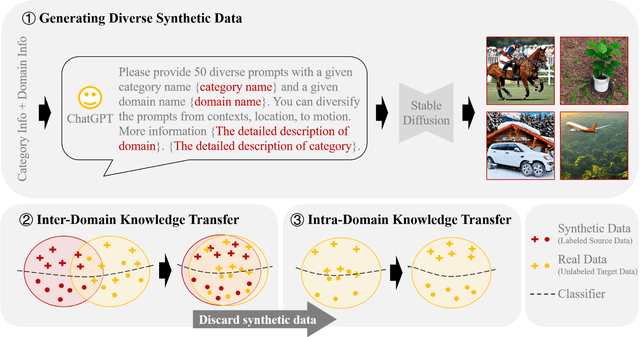
We do not pursue a novel method in this paper, but aim to study if a modern text-to-image diffusion model can tailor any task-adaptive image classifier across domains and categories. Existing domain adaptive image classification works exploit both source and target data for domain alignment so as to transfer the knowledge learned from the labeled source data to the unlabeled target data. However, as the development of the text-to-image diffusion model, we wonder if the high-fidelity synthetic data from the text-to-image generator can serve as a surrogate of the source data in real world. In this way, we do not need to collect and annotate the source data for each domain adaptation task in a one-for-one manner. Instead, we utilize only one off-the-shelf text-to-image model to synthesize images with category labels derived from the corresponding text prompts, and then leverage the surrogate data as a bridge to transfer the knowledge embedded in the task-agnostic text-to-image generator to the task-oriented image classifier via domain adaptation. Such a one-for-all adaptation paradigm allows us to adapt anything in the world using only one text-to-image generator as well as the corresponding unlabeled target data. Extensive experiments validate the feasibility of the proposed idea, which even surpasses the state-of-the-art domain adaptation works using the source data collected and annotated in real world.
Inject Semantic Concepts into Image Tagging for Open-Set Recognition
Oct 23, 2023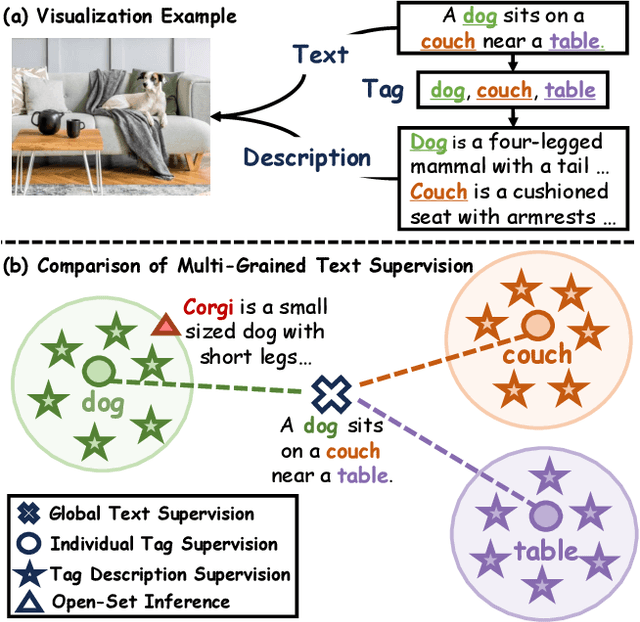
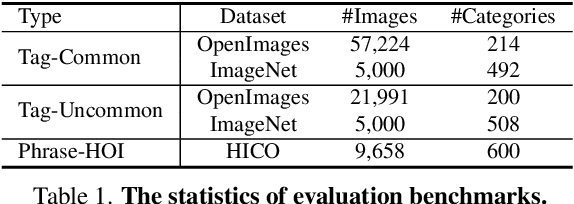
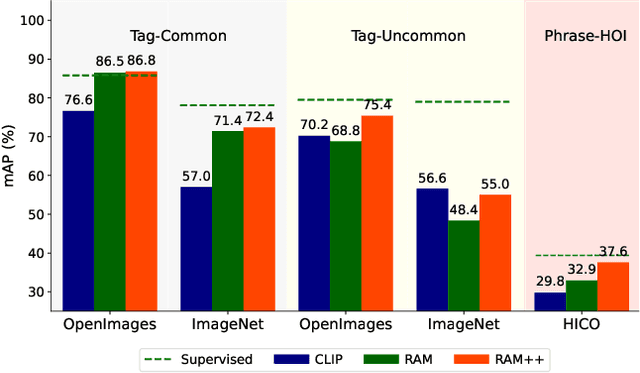
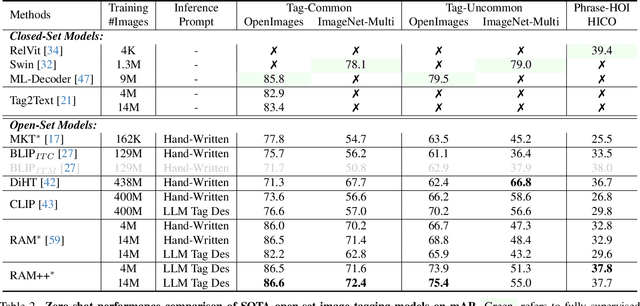
In this paper, we introduce the Recognize Anything Plus Model~(RAM++), a fundamental image recognition model with strong open-set recognition capabilities, by injecting semantic concepts into image tagging training framework. Previous approaches are either image tagging models constrained by limited semantics, or vision-language models with shallow interaction for suboptimal performance in multi-tag recognition. In contrast, RAM++ integrates image-text alignment and image-tagging within a unified fine-grained interaction framework based on image-tags-text triplets. This design enables RAM++ not only excel in identifying predefined categories, but also significantly augment the recognition ability in open-set categories. Moreover, RAM++ employs large language models~(LLMs) to generate diverse visual tag descriptions, pioneering the integration of LLM's knowledge into image tagging training. This approach empowers RAM++ to integrate visual description concepts for open-set recognition during inference. Evaluations on comprehensive image recognition benchmarks demonstrate RAM++ exceeds existing state-of-the-art (SOTA) fundamental image recognition models on most aspects. Specifically, for predefined common-used tag categories, RAM++ showcases 10.2 mAP and 15.4 mAP enhancements over CLIP on OpenImages and ImageNet. For open-set categories beyond predefined, RAM++ records improvements of 5 mAP and 6.4 mAP over CLIP and RAM respectively on OpenImages. For diverse human-object interaction phrases, RAM++ achieves 7.8 mAP and 4.7 mAP improvements on the HICO benchmark. Code, datasets and pre-trained models are available at \url{https://github.com/xinyu1205/recognize-anything}.
HumanTOMATO: Text-aligned Whole-body Motion Generation
Oct 19, 2023This work targets a novel text-driven whole-body motion generation task, which takes a given textual description as input and aims at generating high-quality, diverse, and coherent facial expressions, hand gestures, and body motions simultaneously. Previous works on text-driven motion generation tasks mainly have two limitations: they ignore the key role of fine-grained hand and face controlling in vivid whole-body motion generation, and lack a good alignment between text and motion. To address such limitations, we propose a Text-aligned whOle-body Motion generATiOn framework, named HumanTOMATO, which is the first attempt to our knowledge towards applicable holistic motion generation in this research area. To tackle this challenging task, our solution includes two key designs: (1) a Holistic Hierarchical VQ-VAE (aka H$^2$VQ) and a Hierarchical-GPT for fine-grained body and hand motion reconstruction and generation with two structured codebooks; and (2) a pre-trained text-motion-alignment model to help generated motion align with the input textual description explicitly. Comprehensive experiments verify that our model has significant advantages in both the quality of generated motions and their alignment with text.
Progressive3D: Progressively Local Editing for Text-to-3D Content Creation with Complex Semantic Prompts
Oct 18, 2023Recent text-to-3D generation methods achieve impressive 3D content creation capacity thanks to the advances in image diffusion models and optimizing strategies. However, current methods struggle to generate correct 3D content for a complex prompt in semantics, i.e., a prompt describing multiple interacted objects binding with different attributes. In this work, we propose a general framework named Progressive3D, which decomposes the entire generation into a series of locally progressive editing steps to create precise 3D content for complex prompts, and we constrain the content change to only occur in regions determined by user-defined region prompts in each editing step. Furthermore, we propose an overlapped semantic component suppression technique to encourage the optimization process to focus more on the semantic differences between prompts. Extensive experiments demonstrate that the proposed Progressive3D framework generates precise 3D content for prompts with complex semantics and is general for various text-to-3D methods driven by different 3D representations.
Label-efficient Segmentation via Affinity Propagation
Oct 17, 2023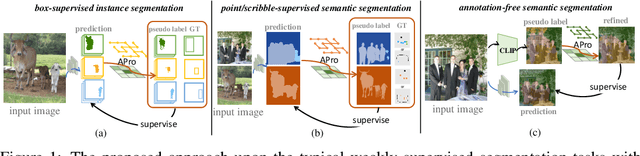
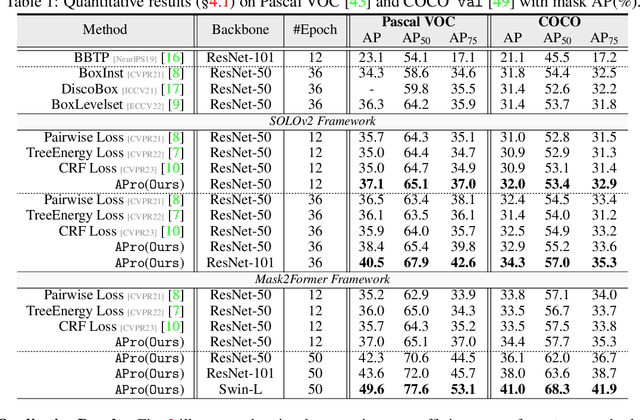
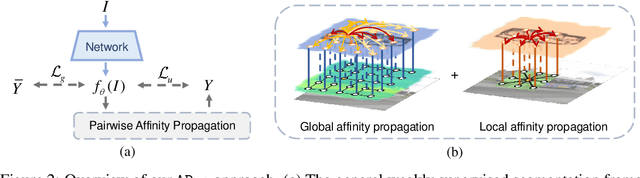
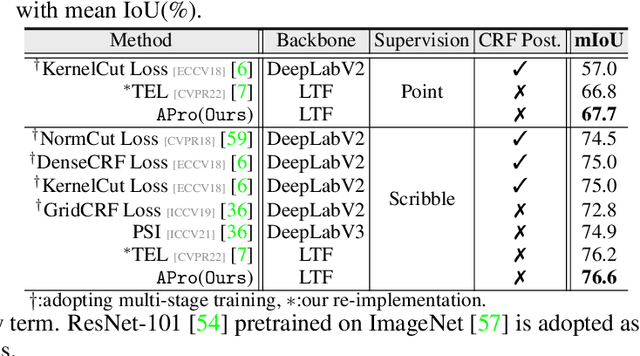
Weakly-supervised segmentation with label-efficient sparse annotations has attracted increasing research attention to reduce the cost of laborious pixel-wise labeling process, while the pairwise affinity modeling techniques play an essential role in this task. Most of the existing approaches focus on using the local appearance kernel to model the neighboring pairwise potentials. However, such a local operation fails to capture the long-range dependencies and ignores the topology of objects. In this work, we formulate the affinity modeling as an affinity propagation process, and propose a local and a global pairwise affinity terms to generate accurate soft pseudo labels. An efficient algorithm is also developed to reduce significantly the computational cost. The proposed approach can be conveniently plugged into existing segmentation networks. Experiments on three typical label-efficient segmentation tasks, i.e. box-supervised instance segmentation, point/scribble-supervised semantic segmentation and CLIP-guided semantic segmentation, demonstrate the superior performance of the proposed approach.
Transport-Hub-Aware Spatial-Temporal Adaptive Graph Transformer for Traffic Flow Prediction
Oct 16, 2023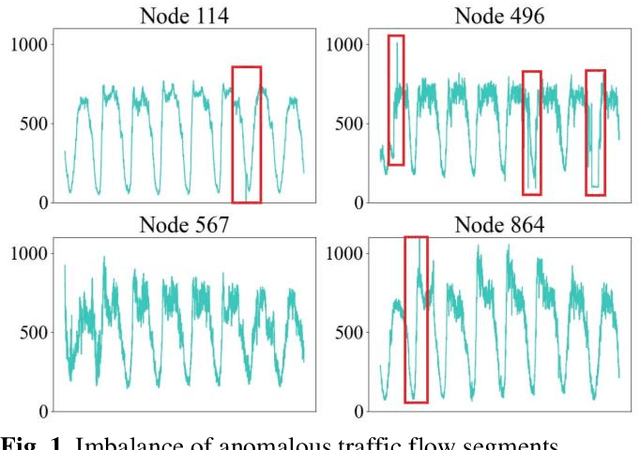
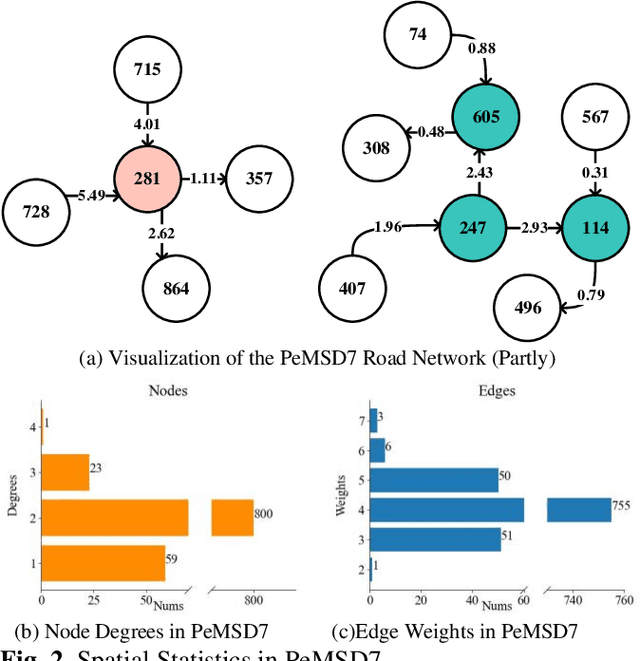
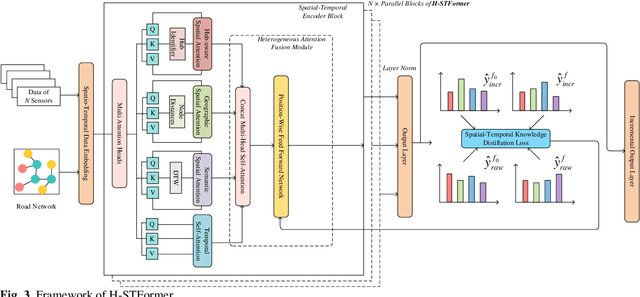
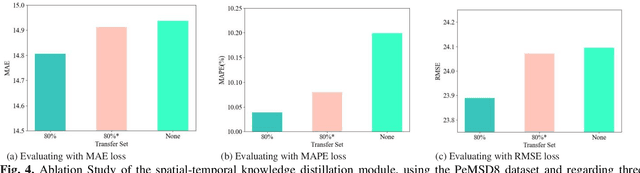
As a core technology of Intelligent Transportation System (ITS), traffic flow prediction has a wide range of applications. Traffic flow data are spatial-temporal, which are not only correlated to spatial locations in road networks, but also vary with temporal time indices. Existing methods have solved the challenges in traffic flow prediction partly, focusing on modeling spatial-temporal dependencies effectively, while not all intrinsic properties of traffic flow data are utilized fully. Besides, there are very few attempts at incremental learning of spatial-temporal data mining, and few previous works can be easily transferred to the traffic flow prediction task. Motivated by the challenge of incremental learning methods for traffic flow prediction and the underutilization of intrinsic properties of road networks, we propose a Transport-Hub-aware Spatial-Temporal adaptive graph transFormer (H-STFormer) for traffic flow prediction. Specifically, we first design a novel spatial self-attention module to capture the dynamic spatial dependencies. Three graph masking matrices are integrated into spatial self-attentions to highlight both short- and long-term dependences. Additionally, we employ a temporal self-attention module to detect dynamic temporal patterns in the traffic flow data. Finally, we design an extra spatial-temporal knowledge distillation module for incremental learning of traffic flow prediction tasks. Through extensive experiments, we show the effectiveness of H-STFormer in normal and incremental traffic flow prediction tasks. The code is available at https://github.com/Fantasy-Shaw/H-STFormer.
TOSS:High-quality Text-guided Novel View Synthesis from a Single Image
Oct 16, 2023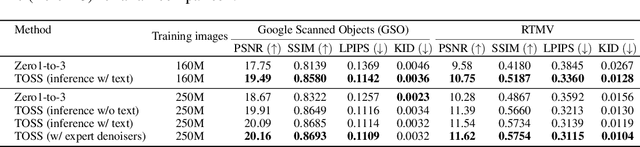
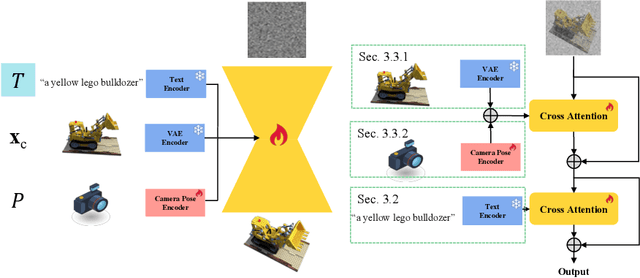


In this paper, we present TOSS, which introduces text to the task of novel view synthesis (NVS) from just a single RGB image. While Zero-1-to-3 has demonstrated impressive zero-shot open-set NVS capability, it treats NVS as a pure image-to-image translation problem. This approach suffers from the challengingly under-constrained nature of single-view NVS: the process lacks means of explicit user control and often results in implausible NVS generations. To address this limitation, TOSS uses text as high-level semantic information to constrain the NVS solution space. TOSS fine-tunes text-to-image Stable Diffusion pre-trained on large-scale text-image pairs and introduces modules specifically tailored to image and camera pose conditioning, as well as dedicated training for pose correctness and preservation of fine details. Comprehensive experiments are conducted with results showing that our proposed TOSS outperforms Zero-1-to-3 with more plausible, controllable and multiview-consistent NVS results. We further support these results with comprehensive ablations that underscore the effectiveness and potential of the introduced semantic guidance and architecture design.