 Add to Chrome
 Add to Firefox
 Add to Edge
R-Eval: A Unified Toolkit for Evaluating Domain Knowledge of Retrieval Augmented Large Language Models
Jun 17, 2024
Large language models have achieved remarkable success on general NLP tasks, but they may fall short for domain-specific problems. Recently, various Retrieval-Augmented Large Language Models (RALLMs) are proposed to address this shortcoming. However, existing evaluation tools only provide a few baselines and evaluate them on various domains without mining the depth of domain knowledge. In this paper, we address the challenges of evaluating RALLMs by introducing the R-Eval toolkit, a Python toolkit designed to streamline the evaluation of different RAG workflows in conjunction with LLMs. Our toolkit, which supports popular built-in RAG workflows and allows for the incorporation of customized testing data on the specific domain, is designed to be user-friendly, modular, and extensible. We conduct an evaluation of 21 RALLMs across three task levels and two representative domains, revealing significant variations in the effectiveness of RALLMs across different tasks and domains. Our analysis emphasizes the importance of considering both task and domain requirements when choosing a RAG workflow and LLM combination. We are committed to continuously maintaining our platform at https://github.com/THU-KEG/R-Eval to facilitate both the industry and the researchers.

HyperSIGMA: Hyperspectral Intelligence Comprehension Foundation Model
Jun 17, 2024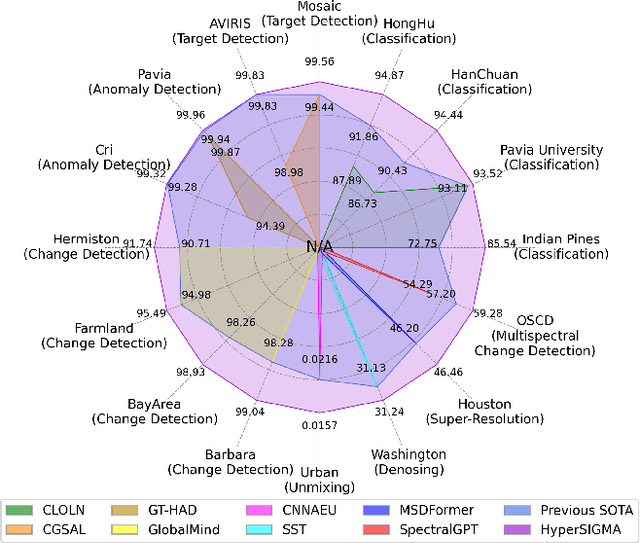
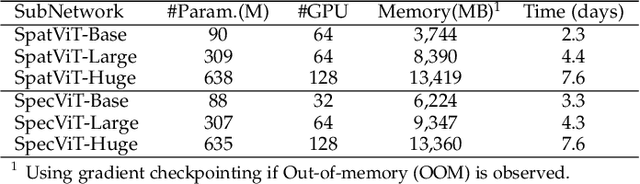
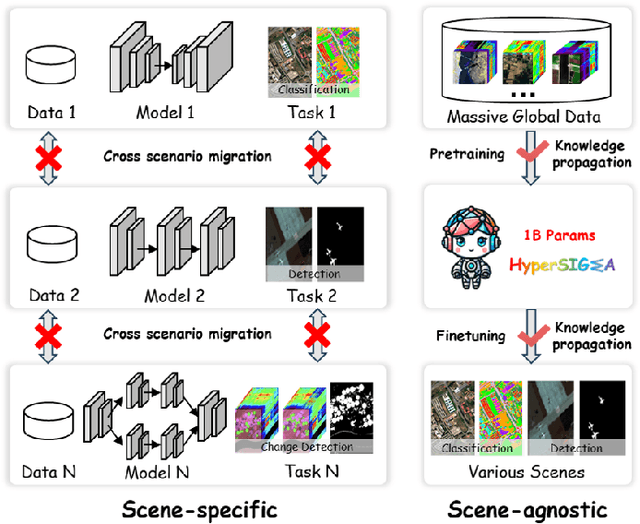
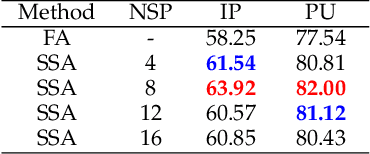
Foundation models (FMs) are revolutionizing the analysis and understanding of remote sensing (RS) scenes, including aerial RGB, multispectral, and SAR images. However, hyperspectral images (HSIs), which are rich in spectral information, have not seen much application of FMs, with existing methods often restricted to specific tasks and lacking generality. To fill this gap, we introduce HyperSIGMA, a vision transformer-based foundation model for HSI interpretation, scalable to over a billion parameters. To tackle the spectral and spatial redundancy challenges in HSIs, we introduce a novel sparse sampling attention (SSA) mechanism, which effectively promotes the learning of diverse contextual features and serves as the basic block of HyperSIGMA. HyperSIGMA integrates spatial and spectral features using a specially designed spectral enhancement module. In addition, we construct a large-scale hyperspectral dataset, HyperGlobal-450K, for pre-training, which contains about 450K hyperspectral images, significantly surpassing existing datasets in scale. Extensive experiments on various high-level and low-level HSI tasks demonstrate HyperSIGMA's versatility and superior representational capability compared to current state-of-the-art methods. Moreover, HyperSIGMA shows significant advantages in scalability, robustness, cross-modal transferring capability, and real-world applicability.
Nemotron-4 340B Technical Report
Jun 17, 2024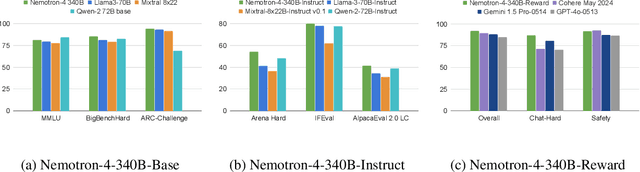

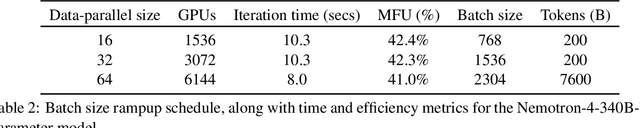
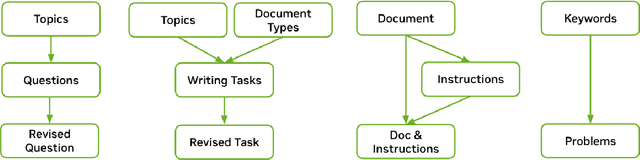
We release the Nemotron-4 340B model family, including Nemotron-4-340B-Base, Nemotron-4-340B-Instruct, and Nemotron-4-340B-Reward. Our models are open access under the NVIDIA Open Model License Agreement, a permissive model license that allows distribution, modification, and use of the models and its outputs. These models perform competitively to open access models on a wide range of evaluation benchmarks, and were sized to fit on a single DGX H100 with 8 GPUs when deployed in FP8 precision. We believe that the community can benefit from these models in various research studies and commercial applications, especially for generating synthetic data to train smaller language models. Notably, over 98% of data used in our model alignment process is synthetically generated, showcasing the effectiveness of these models in generating synthetic data. To further support open research and facilitate model development, we are also open-sourcing the synthetic data generation pipeline used in our model alignment process.
Technique Report of CVPR 2024 PBDL Challenges
Jun 15, 2024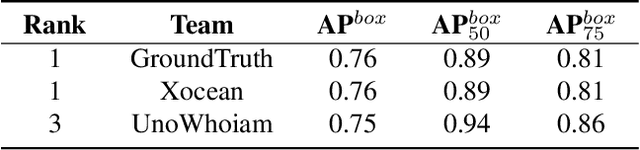
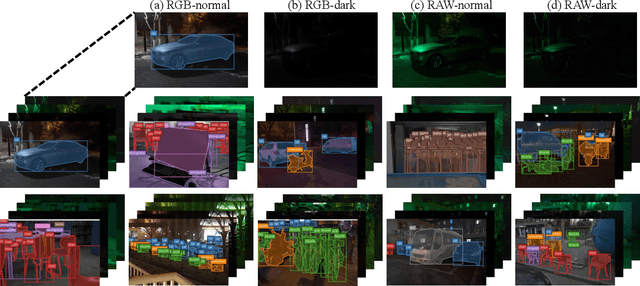
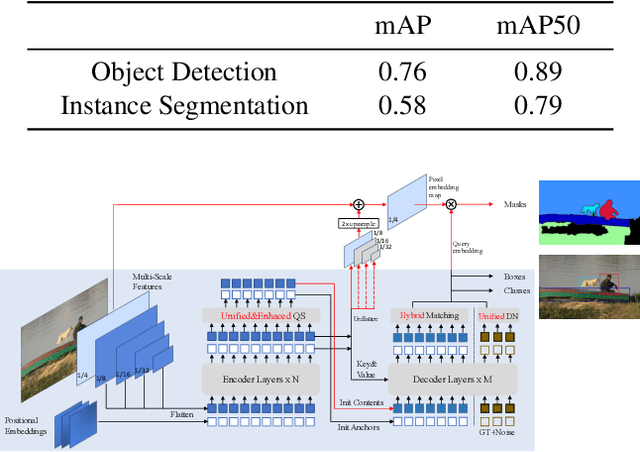

The intersection of physics-based vision and deep learning presents an exciting frontier for advancing computer vision technologies. By leveraging the principles of physics to inform and enhance deep learning models, we can develop more robust and accurate vision systems. Physics-based vision aims to invert the processes to recover scene properties such as shape, reflectance, light distribution, and medium properties from images. In recent years, deep learning has shown promising improvements for various vision tasks, and when combined with physics-based vision, these approaches can enhance the robustness and accuracy of vision systems. This technical report summarizes the outcomes of the Physics-Based Vision Meets Deep Learning (PBDL) 2024 challenge, held in CVPR 2024 workshop. The challenge consisted of eight tracks, focusing on Low-Light Enhancement and Detection as well as High Dynamic Range (HDR) Imaging. This report details the objectives, methodologies, and results of each track, highlighting the top-performing solutions and their innovative approaches.
Hidden Question Representations Tell Non-Factuality Within and Across Large Language Models
Jun 08, 2024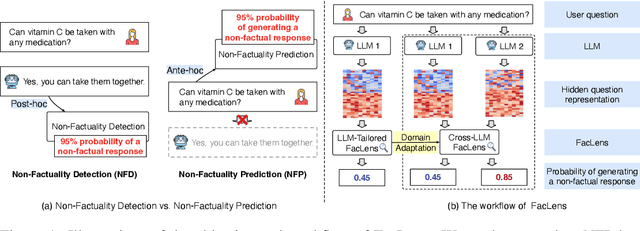
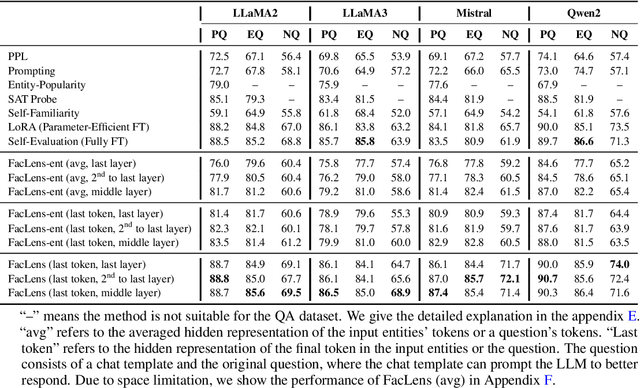
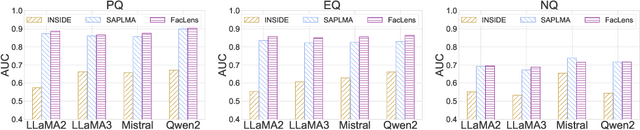
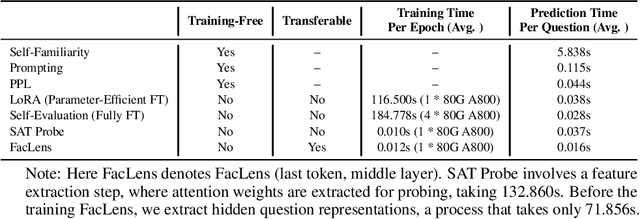
Despite the remarkable advance of large language models (LLMs), the prevalence of non-factual responses remains a common issue. This work studies non-factuality prediction (NFP), which predicts whether an LLM will generate non-factual responses to a question before the generation process. Previous efforts on NFP usually rely on extensive computation. In this work, we conduct extensive analysis to explore the capabilities of using a lightweight probe to elicit ``whether an LLM knows'' from the hidden representations of questions. Additionally, we discover that the non-factuality probe employs similar patterns for NFP across multiple LLMs. Motivated by the intriguing finding, we conduct effective transfer learning for cross-LLM NFP and propose a question-aligned strategy to ensure the efficacy of mini-batch based training.
3rd Place Solution for MOSE Track in CVPR 2024 PVUW workshop: Complex Video Object Segmentation
Jun 06, 2024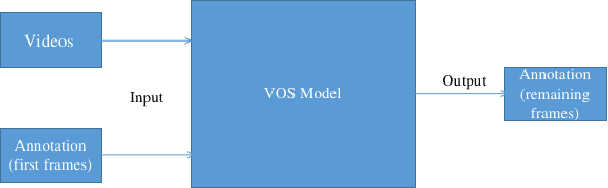
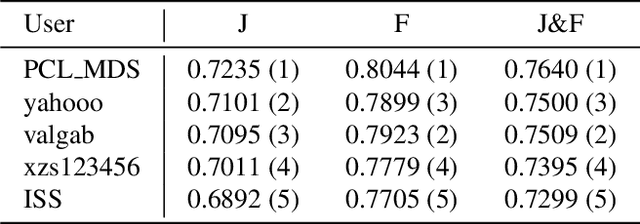
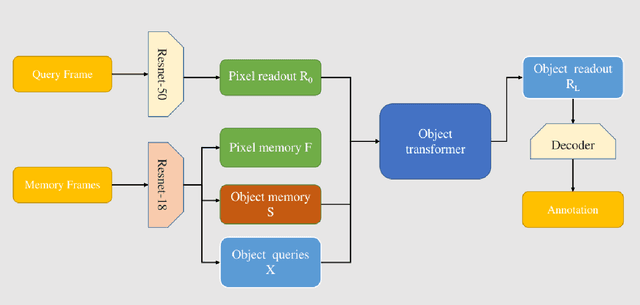
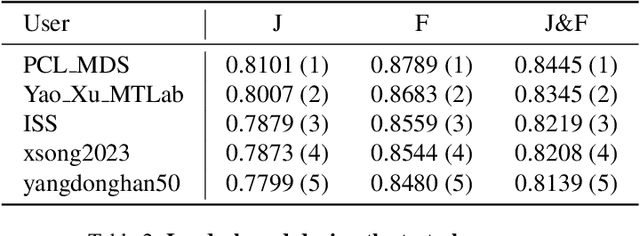
Video Object Segmentation (VOS) is a vital task in computer vision, focusing on distinguishing foreground objects from the background across video frames. Our work draws inspiration from the Cutie model, and we investigate the effects of object memory, the total number of memory frames, and input resolution on segmentation performance. This report validates the effectiveness of our inference method on the coMplex video Object SEgmentation (MOSE) dataset, which features complex occlusions. Our experimental results demonstrate that our approach achieves a J\&F score of 0.8139 on the test set, securing the third position in the final ranking. These findings highlight the robustness and accuracy of our method in handling challenging VOS scenarios.
Diffusion Actor-Critic: Formulating Constrained Policy Iteration as Diffusion Noise Regression for Offline Reinforcement Learning
May 31, 2024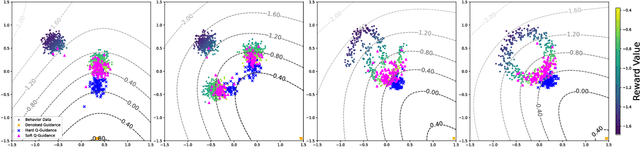
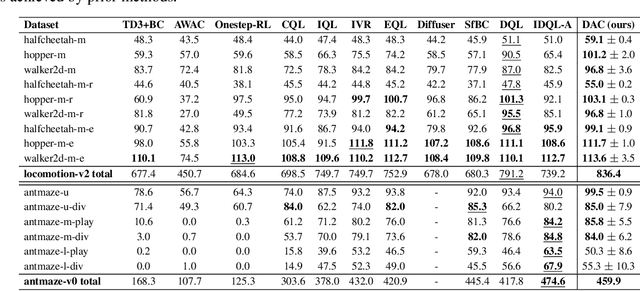

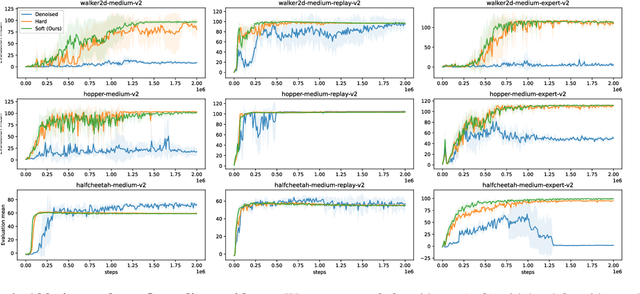
In offline reinforcement learning (RL), it is necessary to manage out-of-distribution actions to prevent overestimation of value functions. Policy-regularized methods address this problem by constraining the target policy to stay close to the behavior policy. Although several approaches suggest representing the behavior policy as an expressive diffusion model to boost performance, it remains unclear how to regularize the target policy given a diffusion-modeled behavior sampler. In this paper, we propose Diffusion Actor-Critic (DAC) that formulates the Kullback-Leibler (KL) constraint policy iteration as a diffusion noise regression problem, enabling direct representation of target policies as diffusion models. Our approach follows the actor-critic learning paradigm that we alternatively train a diffusion-modeled target policy and a critic network. The actor training loss includes a soft Q-guidance term from the Q-gradient. The soft Q-guidance grounds on the theoretical solution of the KL constraint policy iteration, which prevents the learned policy from taking out-of-distribution actions. For critic training, we train a Q-ensemble to stabilize the estimation of Q-gradient. Additionally, DAC employs lower confidence bound (LCB) to address the overestimation and underestimation of value targets due to function approximation error. Our approach is evaluated on the D4RL benchmarks and outperforms the state-of-the-art in almost all environments. Code is available at \href{https://github.com/Fang-Lin93/DAC}{\texttt{github.com/Fang-Lin93/DAC}}.
You Only Scan Once: Efficient Multi-dimension Sequential Modeling with LightNet
May 31, 2024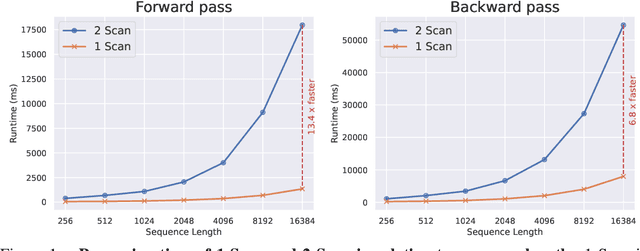


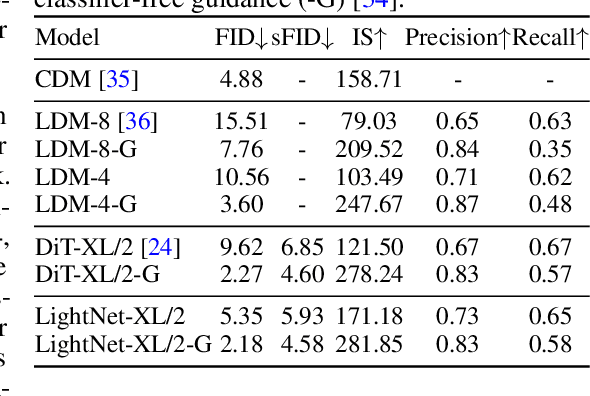
Linear attention mechanisms have gained prominence in causal language models due to their linear computational complexity and enhanced speed. However, the inherent decay mechanism in linear attention presents challenges when applied to multi-dimensional sequence modeling tasks, such as image processing and multi-modal learning. In these scenarios, the utilization of sequential scanning to establish a global receptive field necessitates multiple scans for multi-dimensional data, thereby leading to inefficiencies. This paper identifies the inefficiency caused by a multiplicative linear recurrence and proposes an efficient alternative additive linear recurrence to avoid the issue, as it can handle multi-dimensional data within a single scan. We further develop an efficient multi-dimensional sequential modeling framework called LightNet based on the new recurrence. Moreover, we present two new multi-dimensional linear relative positional encoding methods, MD-TPE and MD-LRPE to enhance the model's ability to discern positional information in multi-dimensional scenarios. Our empirical evaluations across various tasks, including image classification, image generation, bidirectional language modeling, and autoregressive language modeling, demonstrate the efficacy of LightNet, showcasing its potential as a versatile and efficient solution for multi-dimensional sequential modeling.
FlightPatchNet: Multi-Scale Patch Network with Differential Coding for Flight Trajectory Prediction
May 25, 2024
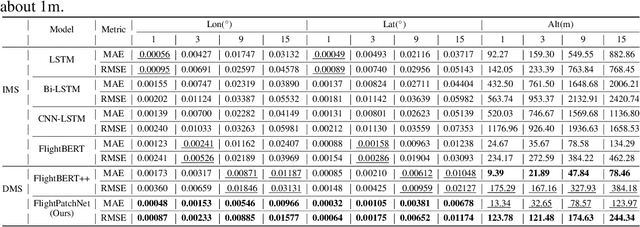
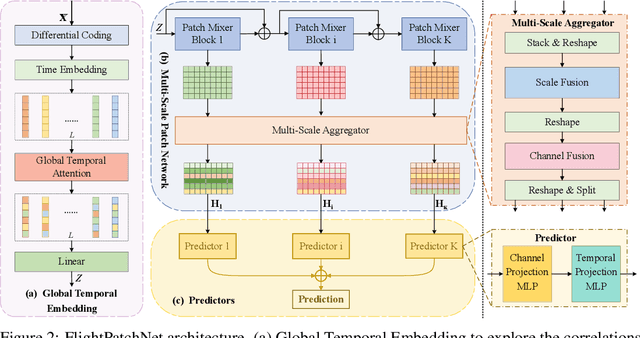
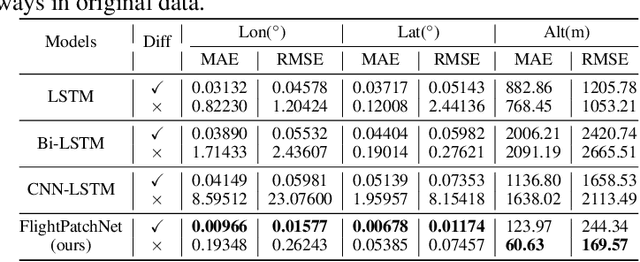
Accurate multi-step flight trajectory prediction plays an important role in Air Traffic Control, which can ensure the safety of air transportation. Two main issues limit the flight trajectory prediction performance of existing works. The first issue is the negative impact on prediction accuracy caused by the significant differences in data range. The second issue is that real-world flight trajectories involve underlying temporal dependencies, and existing methods fail to reveal the hidden complex temporal variations and only extract features from one single time scale. To address the above issues, we propose FlightPatchNet, a multi-scale patch network with differential coding for flight trajectory prediction. Specifically, FlightPatchNet first utilizes the differential coding to encode the original values of longitude and latitude into first-order differences and generates embeddings for all variables at each time step. Then, a global temporal attention is introduced to explore the dependencies between different time steps. To fully explore the diverse temporal patterns in flight trajectories, a multi-scale patch network is delicately designed to serve as the backbone. The multi-scale patch network exploits stacked patch mixer blocks to capture inter- and intra-patch dependencies under different time scales, and further integrates multi-scale temporal features across different scales and variables. Finally, FlightPatchNet ensembles multiple predictors to make direct multi-step prediction. Extensive experiments on ADS-B datasets demonstrate that our model outperforms the competitive baselines. Code is available at: https://github.com/FlightTrajectoryResearch/FlightPatchNet.
A Solution-based LLM API-using Methodology for Academic Information Seeking
May 24, 2024Applying large language models (LLMs) for academic API usage shows promise in reducing researchers' academic information seeking efforts. However, current LLM API-using methods struggle with complex API coupling commonly encountered in academic queries. To address this, we introduce SoAy, a solution-based LLM API-using methodology for academic information seeking. It uses code with a solution as the reasoning method, where a solution is a pre-constructed API calling sequence. The addition of the solution reduces the difficulty for the model to understand the complex relationships between APIs. Code improves the efficiency of reasoning. To evaluate SoAy, we introduce SoAyBench, an evaluation benchmark accompanied by SoAyEval, built upon a cloned environment of APIs from AMiner. Experimental results demonstrate a 34.58-75.99\% performance improvement compared to state-of-the-art LLM API-based baselines. All datasets, codes, tuned models, and deployed online services are publicly accessible at https://github.com/RUCKBReasoning/SoAy.