 Add to Chrome
 Add to Firefox
 Add to Edge
RoboOS-NeXT: A Unified Memory-based Framework for Lifelong, Scalable, and Robust Multi-Robot Collaboration
Oct 30, 2025
The proliferation of collaborative robots across diverse tasks and embodiments presents a central challenge: achieving lifelong adaptability, scalable coordination, and robust scheduling in multi-agent systems. Existing approaches, from vision-language-action (VLA) models to hierarchical frameworks, fall short due to their reliance on limited or dividual-agent memory. This fundamentally constrains their ability to learn over long horizons, scale to heterogeneous teams, or recover from failures, highlighting the need for a unified memory representation. To address these limitations, we introduce RoboOS-NeXT, a unified memory-based framework for lifelong, scalable, and robust multi-robot collaboration. At the core of RoboOS-NeXT is the novel Spatio-Temporal-Embodiment Memory (STEM), which integrates spatial scene geometry, temporal event history, and embodiment profiles into a shared representation. This memory-centric design is integrated into a brain-cerebellum framework, where a high-level brain model performs global planning by retrieving and updating STEM, while low-level controllers execute actions locally. This closed loop between cognition, memory, and execution enables dynamic task allocation, fault-tolerant collaboration, and consistent state synchronization. We conduct extensive experiments spanning complex coordination tasks in restaurants, supermarkets, and households. Our results demonstrate that RoboOS-NeXT achieves superior performance across heterogeneous embodiments, validating its effectiveness in enabling lifelong, scalable, and robust multi-robot collaboration. Project website: https://flagopen.github.io/RoboOS/

Emu3.5: Native Multimodal Models are World Learners
Oct 30, 2025We introduce Emu3.5, a large-scale multimodal world model that natively predicts the next state across vision and language. Emu3.5 is pre-trained end-to-end with a unified next-token prediction objective on a corpus of vision-language interleaved data containing over 10 trillion tokens, primarily derived from sequential frames and transcripts of internet videos. The model naturally accepts interleaved vision-language inputs and generates interleaved vision-language outputs. Emu3.5 is further post-trained with large-scale reinforcement learning to enhance multimodal reasoning and generation. To improve inference efficiency, we propose Discrete Diffusion Adaptation (DiDA), which converts token-by-token decoding into bidirectional parallel prediction, accelerating per-image inference by about 20x without sacrificing performance. Emu3.5 exhibits strong native multimodal capabilities, including long-horizon vision-language generation, any-to-image (X2I) generation, and complex text-rich image generation. It also exhibits generalizable world-modeling abilities, enabling spatiotemporally consistent world exploration and open-world embodied manipulation across diverse scenarios and tasks. For comparison, Emu3.5 achieves performance comparable to Gemini 2.5 Flash Image (Nano Banana) on image generation and editing tasks and demonstrates superior results on a suite of interleaved generation tasks. We open-source Emu3.5 at https://github.com/baaivision/Emu3.5 to support community research.
ViTacGen: Robotic Pushing with Vision-to-Touch Generation
Oct 15, 2025Robotic pushing is a fundamental manipulation task that requires tactile feedback to capture subtle contact forces and dynamics between the end-effector and the object. However, real tactile sensors often face hardware limitations such as high costs and fragility, and deployment challenges involving calibration and variations between different sensors, while vision-only policies struggle with satisfactory performance. Inspired by humans' ability to infer tactile states from vision, we propose ViTacGen, a novel robot manipulation framework designed for visual robotic pushing with vision-to-touch generation in reinforcement learning to eliminate the reliance on high-resolution real tactile sensors, enabling effective zero-shot deployment on visual-only robotic systems. Specifically, ViTacGen consists of an encoder-decoder vision-to-touch generation network that generates contact depth images, a standardized tactile representation, directly from visual image sequence, followed by a reinforcement learning policy that fuses visual-tactile data with contrastive learning based on visual and generated tactile observations. We validate the effectiveness of our approach in both simulation and real world experiments, demonstrating its superior performance and achieving a success rate of up to 86\%.
FlowDrive: Energy Flow Field for End-to-End Autonomous Driving
Sep 17, 2025Recent advances in end-to-end autonomous driving leverage multi-view images to construct BEV representations for motion planning. In motion planning, autonomous vehicles need considering both hard constraints imposed by geometrically occupied obstacles (e.g., vehicles, pedestrians) and soft, rule-based semantics with no explicit geometry (e.g., lane boundaries, traffic priors). However, existing end-to-end frameworks typically rely on BEV features learned in an implicit manner, lacking explicit modeling of risk and guidance priors for safe and interpretable planning. To address this, we propose FlowDrive, a novel framework that introduces physically interpretable energy-based flow fields-including risk potential and lane attraction fields-to encode semantic priors and safety cues into the BEV space. These flow-aware features enable adaptive refinement of anchor trajectories and serve as interpretable guidance for trajectory generation. Moreover, FlowDrive decouples motion intent prediction from trajectory denoising via a conditional diffusion planner with feature-level gating, alleviating task interference and enhancing multimodal diversity. Experiments on the NAVSIM v2 benchmark demonstrate that FlowDrive achieves state-of-the-art performance with an EPDMS of 86.3, surpassing prior baselines in both safety and planning quality. The project is available at https://astrixdrive.github.io/FlowDrive.github.io/.
Hunyuan3D Studio: End-to-End AI Pipeline for Game-Ready 3D Asset Generation
Sep 16, 2025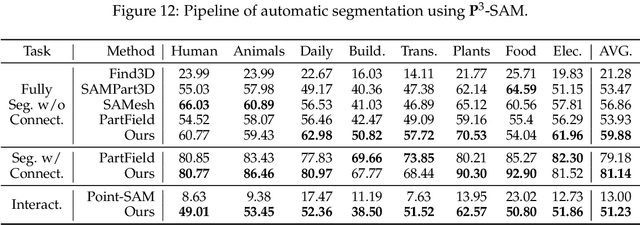
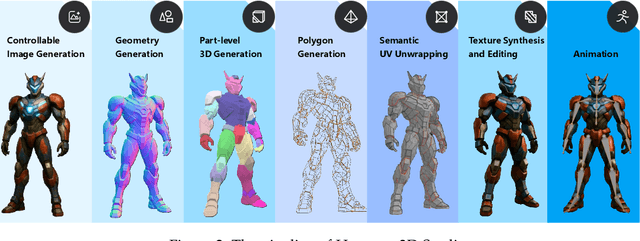

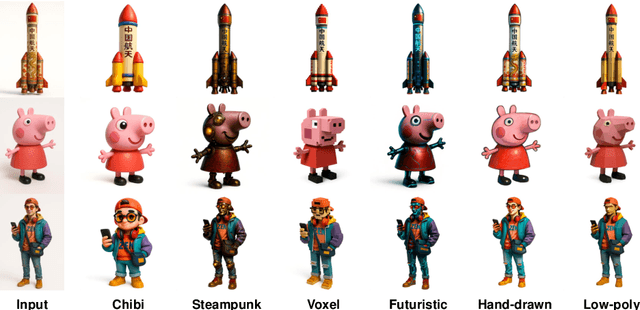
The creation of high-quality 3D assets, a cornerstone of modern game development, has long been characterized by labor-intensive and specialized workflows. This paper presents Hunyuan3D Studio, an end-to-end AI-powered content creation platform designed to revolutionize the game production pipeline by automating and streamlining the generation of game-ready 3D assets. At its core, Hunyuan3D Studio integrates a suite of advanced neural modules (such as Part-level 3D Generation, Polygon Generation, Semantic UV, etc.) into a cohesive and user-friendly system. This unified framework allows for the rapid transformation of a single concept image or textual description into a fully-realized, production-quality 3D model complete with optimized geometry and high-fidelity PBR textures. We demonstrate that assets generated by Hunyuan3D Studio are not only visually compelling but also adhere to the stringent technical requirements of contemporary game engines, significantly reducing iteration time and lowering the barrier to entry for 3D content creation. By providing a seamless bridge from creative intent to technical asset, Hunyuan3D Studio represents a significant leap forward for AI-assisted workflows in game development and interactive media.
Scaling Agents via Continual Pre-training
Sep 16, 2025Large language models (LLMs) have evolved into agentic systems capable of autonomous tool use and multi-step reasoning for complex problem-solving. However, post-training approaches building upon general-purpose foundation models consistently underperform in agentic tasks, particularly in open-source implementations. We identify the root cause: the absence of robust agentic foundation models forces models during post-training to simultaneously learn diverse agentic behaviors while aligning them to expert demonstrations, thereby creating fundamental optimization tensions. To this end, we are the first to propose incorporating Agentic Continual Pre-training (Agentic CPT) into the deep research agents training pipeline to build powerful agentic foundational models. Based on this approach, we develop a deep research agent model named AgentFounder. We evaluate our AgentFounder-30B on 10 benchmarks and achieve state-of-the-art performance while retains strong tool-use ability, notably 39.9% on BrowseComp-en, 43.3% on BrowseComp-zh, and 31.5% Pass@1 on HLE.
X-Part: high fidelity and structure coherent shape decomposition
Sep 10, 2025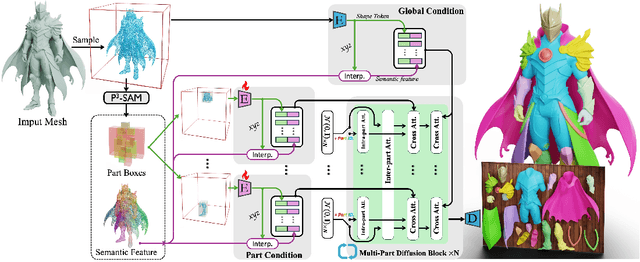
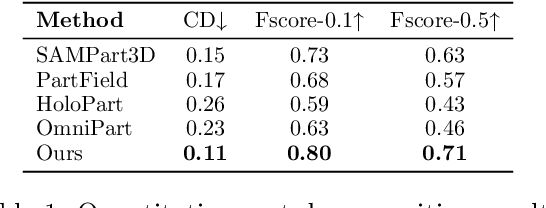
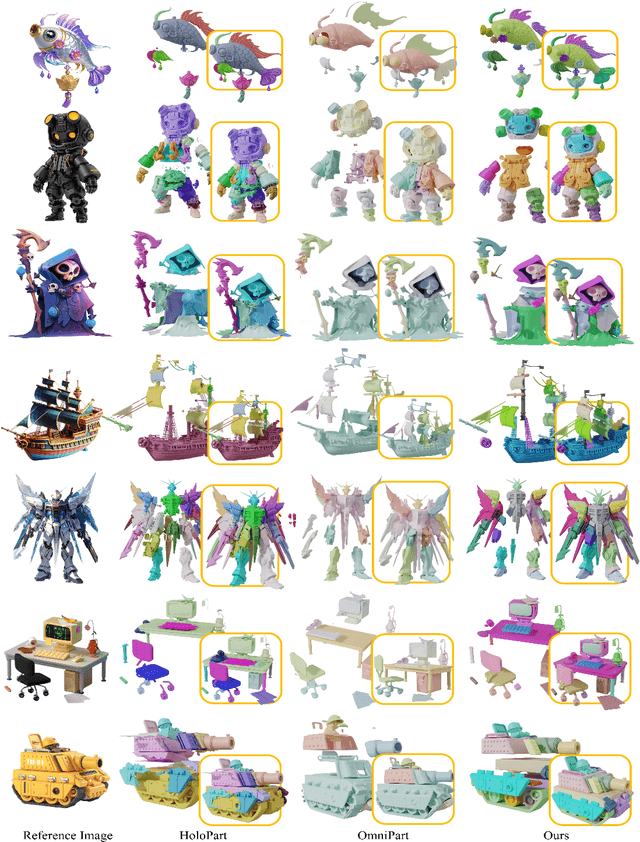
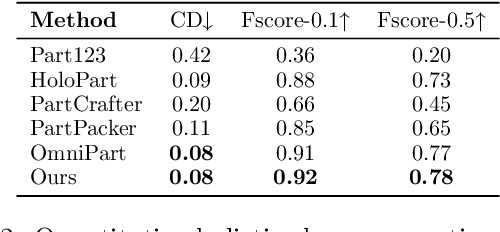
Generating 3D shapes at part level is pivotal for downstream applications such as mesh retopology, UV mapping, and 3D printing. However, existing part-based generation methods often lack sufficient controllability and suffer from poor semantically meaningful decomposition. To this end, we introduce X-Part, a controllable generative model designed to decompose a holistic 3D object into semantically meaningful and structurally coherent parts with high geometric fidelity. X-Part exploits the bounding box as prompts for the part generation and injects point-wise semantic features for meaningful decomposition. Furthermore, we design an editable pipeline for interactive part generation. Extensive experimental results show that X-Part achieves state-of-the-art performance in part-level shape generation. This work establishes a new paradigm for creating production-ready, editable, and structurally sound 3D assets. Codes will be released for public research.
Dataset Distillation as Data Compression: A Rate-Utility Perspective
Jul 23, 2025Driven by the ``scale-is-everything'' paradigm, modern machine learning increasingly demands ever-larger datasets and models, yielding prohibitive computational and storage requirements. Dataset distillation mitigates this by compressing an original dataset into a small set of synthetic samples, while preserving its full utility. Yet, existing methods either maximize performance under fixed storage budgets or pursue suitable synthetic data representations for redundancy removal, without jointly optimizing both objectives. In this work, we propose a joint rate-utility optimization method for dataset distillation. We parameterize synthetic samples as optimizable latent codes decoded by extremely lightweight networks. We estimate the Shannon entropy of quantized latents as the rate measure and plug any existing distillation loss as the utility measure, trading them off via a Lagrange multiplier. To enable fair, cross-method comparisons, we introduce bits per class (bpc), a precise storage metric that accounts for sample, label, and decoder parameter costs. On CIFAR-10, CIFAR-100, and ImageNet-128, our method achieves up to $170\times$ greater compression than standard distillation at comparable accuracy. Across diverse bpc budgets, distillation losses, and backbone architectures, our approach consistently establishes better rate-utility trade-offs.
RoboBrain 2.0 Technical Report
Jul 02, 2025We introduce RoboBrain 2.0, our latest generation of embodied vision-language foundation models, designed to unify perception, reasoning, and planning for complex embodied tasks in physical environments. It comes in two variants: a lightweight 7B model and a full-scale 32B model, featuring a heterogeneous architecture with a vision encoder and a language model. Despite its compact size, RoboBrain 2.0 achieves strong performance across a wide spectrum of embodied reasoning tasks. On both spatial and temporal benchmarks, the 32B variant achieves leading results, surpassing prior open-source and proprietary models. In particular, it supports key real-world embodied AI capabilities, including spatial understanding (e.g., affordance prediction, spatial referring, trajectory forecasting) and temporal decision-making (e.g., closed-loop interaction, multi-agent long-horizon planning, and scene graph updating). This report details the model architecture, data construction, multi-stage training strategies, infrastructure and practical applications. We hope RoboBrain 2.0 advances embodied AI research and serves as a practical step toward building generalist embodied agents. The code, checkpoint and benchmark are available at https://superrobobrain.github.io.
Auto-Connect: Connectivity-Preserving RigFormer with Direct Preference Optimization
Jun 13, 2025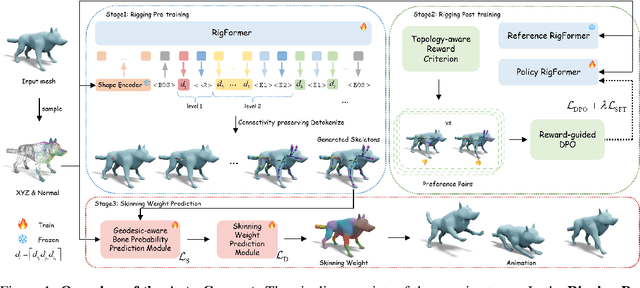
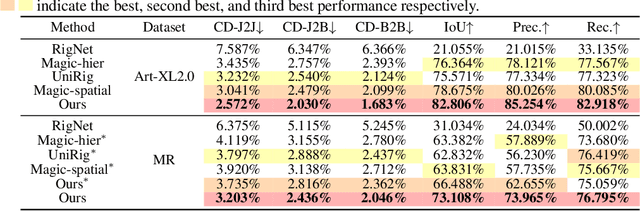
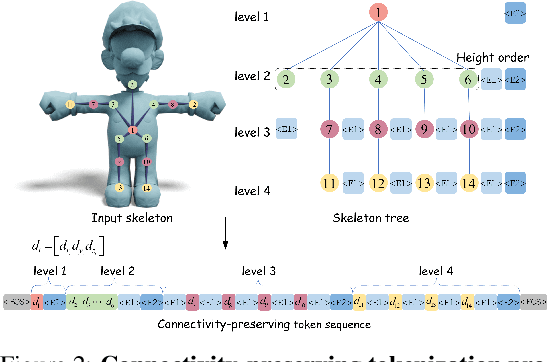
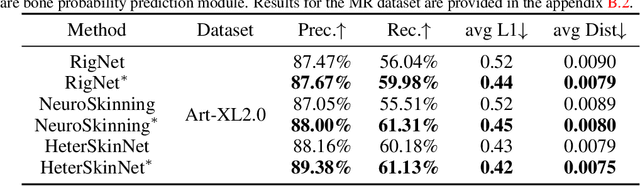
We introduce Auto-Connect, a novel approach for automatic rigging that explicitly preserves skeletal connectivity through a connectivity-preserving tokenization scheme. Unlike previous methods that predict bone positions represented as two joints or first predict points before determining connectivity, our method employs special tokens to define endpoints for each joint's children and for each hierarchical layer, effectively automating connectivity relationships. This approach significantly enhances topological accuracy by integrating connectivity information directly into the prediction framework. To further guarantee high-quality topology, we implement a topology-aware reward function that quantifies topological correctness, which is then utilized in a post-training phase through reward-guided Direct Preference Optimization. Additionally, we incorporate implicit geodesic features for latent top-k bone selection, which substantially improves skinning quality. By leveraging geodesic distance information within the model's latent space, our approach intelligently determines the most influential bones for each vertex, effectively mitigating common skinning artifacts. This combination of connectivity-preserving tokenization, reward-guided fine-tuning, and geodesic-aware bone selection enables our model to consistently generate more anatomically plausible skeletal structures with superior deformation properties.